BARMM Ambush, Budget Scrutiny, and Impeachment Trial
A snapshot of the day's conversation on the ambush of BARMM Chief Minister Macacua, the Senate impeachment trial of VP Sara Duterte, and the scrutiny of the P7.2-T national budget.
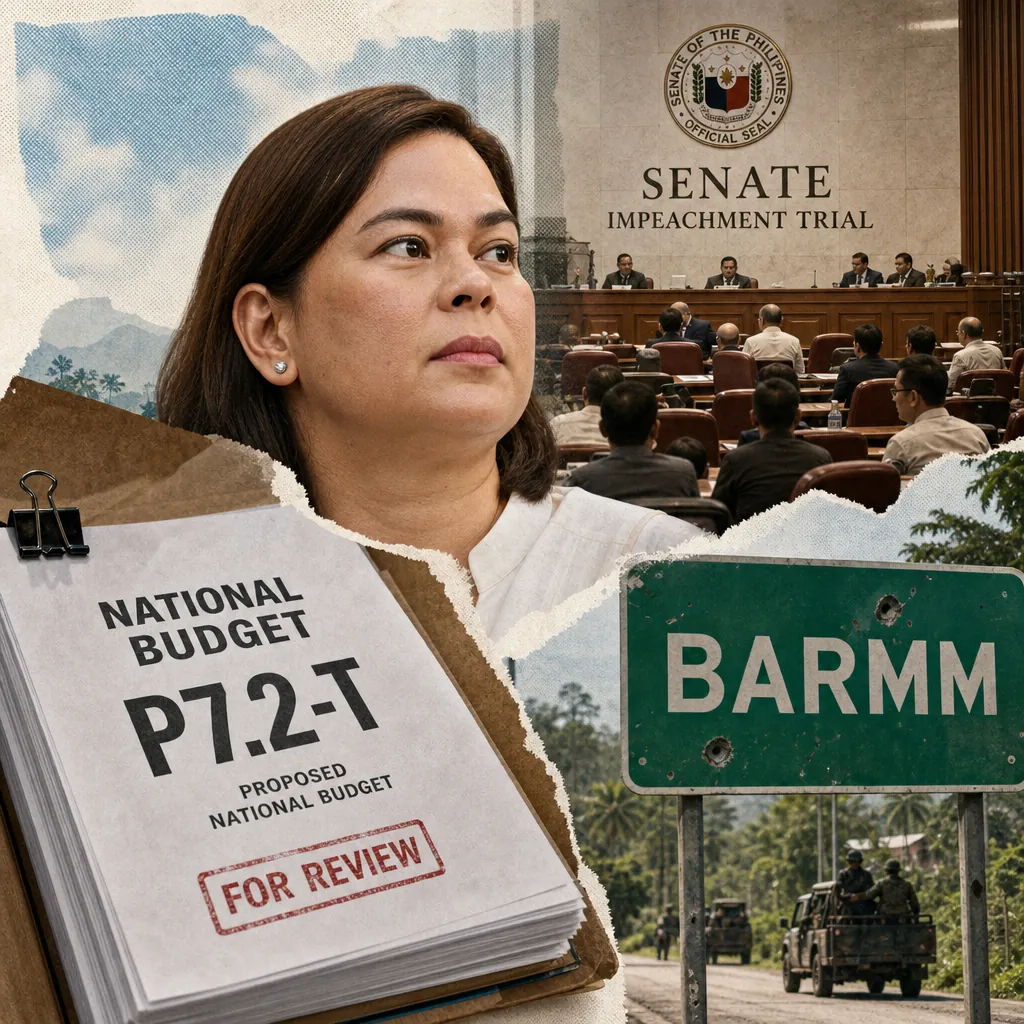
The day's conversation was dominated by three interlocking crises: the ambush of the BARMM interim chief minister, the impeachment trial of Vice President Sara Duterte, and the scrutiny of the proposed national budget. Each drew intense public reaction, but the ambush carried the most immediate consequence, while the budget and impeachment stories revealed deep public cynicism and political polarization.
Key themes
- Ambush of BARMM Chief Minister Macacua: Gunmen attacked the convoy of Abdulraof Macacua, the interim chief minister of the Bangsamoro Autonomous Region in Muslim Mindanao (BARMM), on August 15. Macacua survived, but the attack raised serious questions about security in the region ahead of the first parliamentary elections.
- Comelec orders probe: The Commission on Elections (Comelec) directed the Philippine National Police (PNP) and the Armed Forces of the Philippines (AFP) to investigate the ambush, signaling that authorities are treating it as a potential election-related security threat.
- Public reaction split along political lines: On Facebook, reactions to the ambush included both sadness and laughter, indicating that the public's response was fractured by political loyalties rather than unified in condemnation.
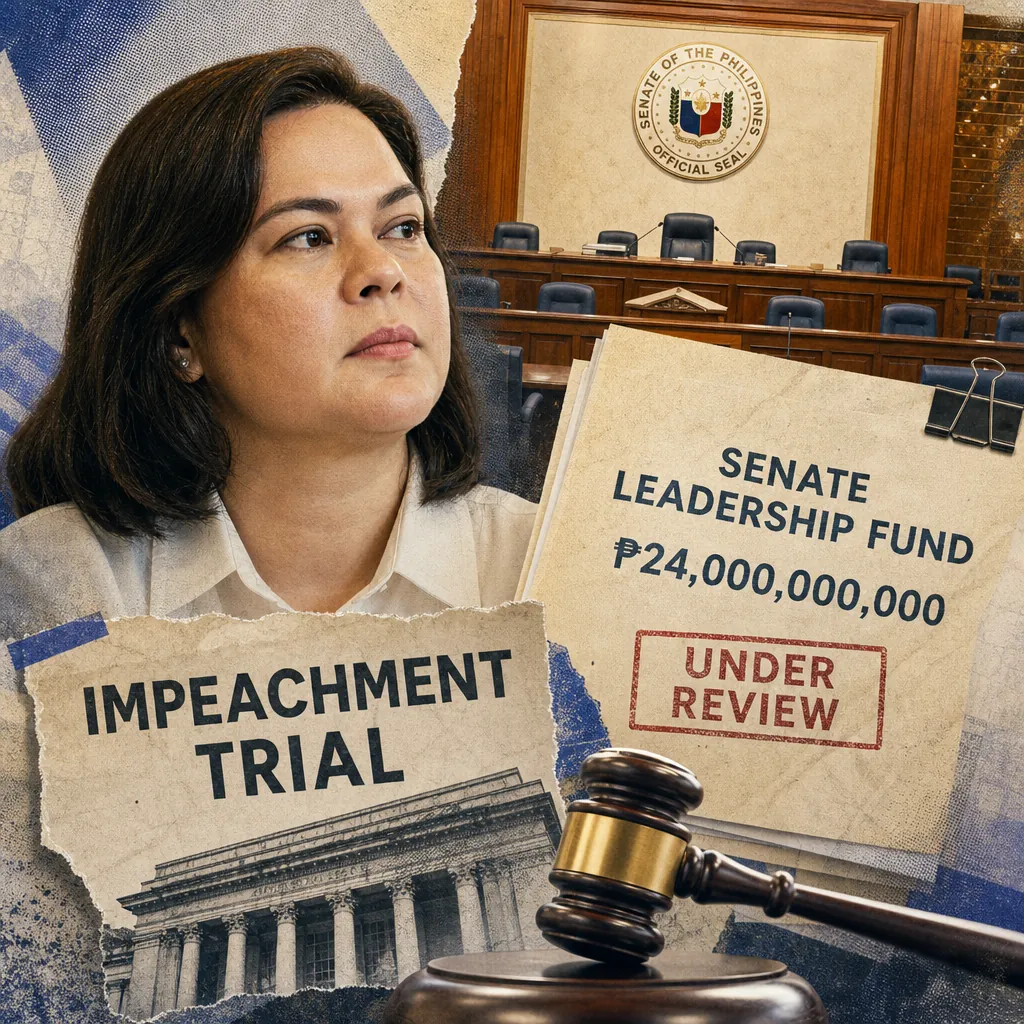
- Budget scrutiny and 'leadership funds': Senator Panfilo Lacson raised concerns about questionable lump-sum appropriations in the P7.2-trillion national budget, and the revelation of a P24-billion Senate 'leadership fund' drew widespread mockery and anger.
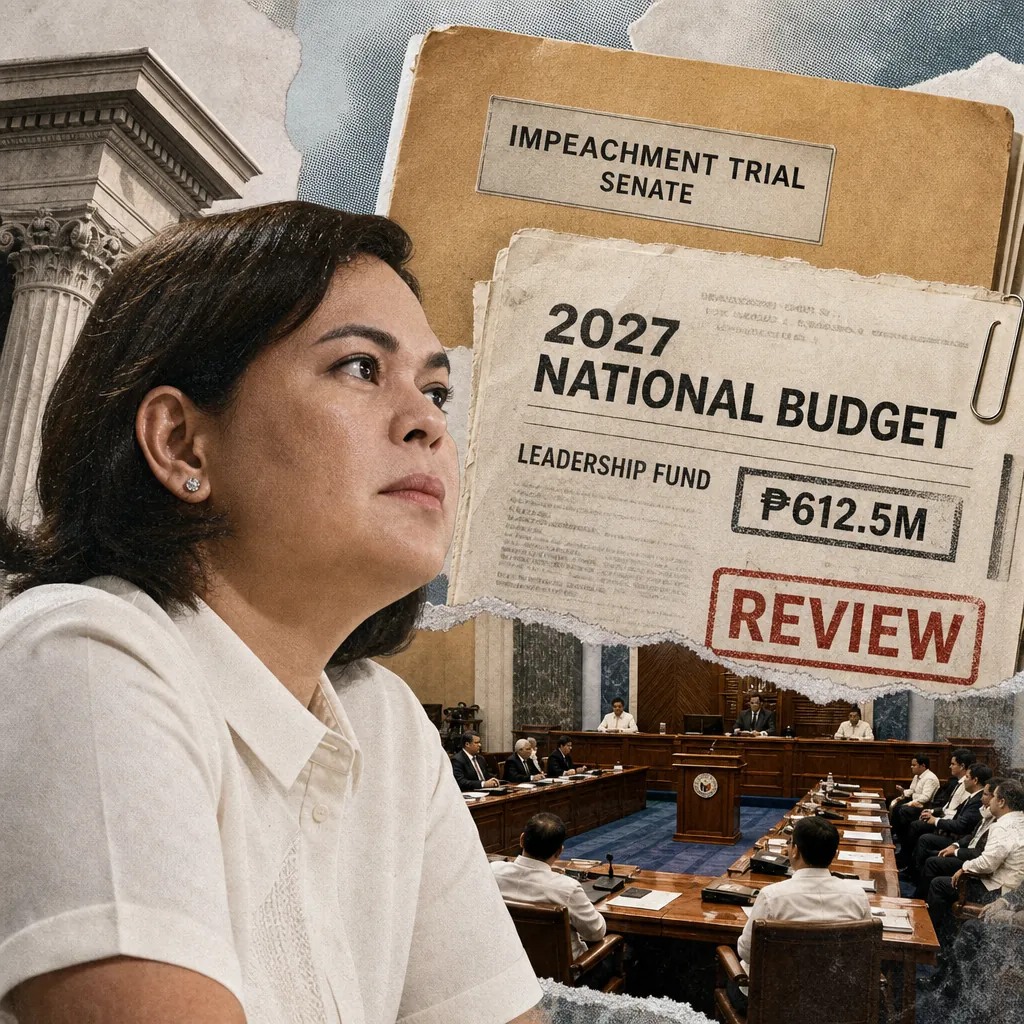
- Impeachment trial of VP Sara Duterte: The Senate trial continued, with Representative Benny Abante declaring the Vice President guilty of betrayal of public trust over her alleged assassination threat. Social media reactions were heavily derisive, with thousands of 'haha' reactions.
- Infrastructure failures and flood damage: Unfinished drainage projects and stolen pumping station cables were linked to the P4-billion damage from recent typhoons, fueling a narrative of government incompetence.
- DOH undersecretaries resign: Two undersecretaries of the Department of Health resigned amid allegations of a 'medicine racket' involving expired drugs, adding to the day's accountability stories.
- Positive counter-narrative: A DPWH secretary's visit to a flood control site in Calumpit drew positive engagement, offering a rare upbeat story in an otherwise negative news cycle.
How the narratives stack
- Dominant: The ambush of BARMM Chief Minister Macacua was the most significant news event of the day, given its immediate security implications and the involvement of the Comelec. Within the captured set, it drew substantial coverage across online news outlets, with the Inquirer's report alone carrying an estimated advertising-equivalent value of over ₱300,000.
- Counter-narrative: The positive story of the DPWH secretary's visit to Calumpit provided a counterpoint to the dominant narrative of government failure, showing that visible action can shift public perception.
- Emerging: The 'leadership funds' scandal is emerging as a major issue, with the public's reaction suggesting it will be a recurring flashpoint during budget deliberations.
- Suppressed: The story of the DOH undersecretaries' resignations and the alleged 'medicine racket' received relatively little engagement compared to the impeachment and budget stories, despite its potential significance for public health.
Platform insights
- Facebook: The primary battleground for emotional reactions. Posts about the ambush and the impeachment trial drew thousands of reactions, with 'haha' reactions notably high, indicating public cynicism and political tribalism.
- Twitter: Served as an alert system for breaking news, with lower engagement but high view counts on posts about the ambush and budget. Users were more passive, consuming headlines rather than debating.
- YouTube: Video content of the bullet-riddled vehicles and investigative segments drew significant attention, amplifying the emotional impact of the ambush.
Key voices and communities
- Mainstream news outlets and journalists: Provided the foundational factual reporting, with the Inquirer and Daily Tribune leading coverage of the ambush and the impeachment trial.
- Local government officials: Cotabato City Mayor Bruce Matabalao called for a swift and transparent investigation, acting as a stabilizing voice.
- General engaged public on Facebook: Reacted emotionally, with a mix of sadness, anger, and dark humor, reflecting deep political divisions.
- Political party affiliates: The Bangsamoro Federalist Party condemned the ambush, framing it as an attack on the peace process.
- Digital news aggregators: Amplified the news on Twitter, ensuring the story remained trending.
Narrative streams
The Ambush and Its Aftermath
The ambush of BARMM Interim Chief Minister Abdulraof Macacua occurred at around 4:45 p.m. along the General Santos–Cotabato National Highway in Datu Odin Sinsuat, Maguindanao del Norte. Macacua was returning from a party assembly of the Bangsamoro Federalist Party in Kabuntalan. His convoy was fired upon, but he was unharmed. The Commission on Elections (Comelec) chairman, George Erwin Garcia, directed the PNP and AFP to investigate, stating, "Whether this is election-related or not, the maintenance of peace and order in the area is of utmost importance." The Bangsamoro Federalist Party condemned the attack as "a cowardly ambush" and an assault on the peace and stability of the region. The incident drew heavy coverage, with the Inquirer's report alone carrying an estimated advertising-equivalent value of over ₱300,000. Public reaction on Facebook was split, with some expressing sadness and others using 'haha' reactions, reflecting political divisions. The attack raises serious concerns about security ahead of the first parliamentary elections in the BARMM, scheduled for September 14, where over 2 million voters are expected to elect their own parliament for the first time.
The Impeachment Trial of VP Sara Duterte
The Senate impeachment trial of Vice President Sara Duterte continued, with Representative Benny Abante declaring that the prosecution has presented enough evidence to convict her. Abante cited her alleged threat to assassinate President Marcos Jr., First Lady Liza Araneta-Marcos, and former speaker Martin Romualdez as a "betrayal of public trust." Social media reactions were heavily derisive, with one post drawing over 1,000 'haha' reactions. The trial has become a public spectacle, with the public using humor to process the political drama. The prosecution also called out the Vice President's "selective attendance," noting she attended her brother's arraignment but not her own trial. The trial's outcome could have significant implications for the 2028 presidential race, where Duterte was once seen as the frontrunner.
Budget Scrutiny and 'Leadership Funds'
Senator Panfilo Lacson raised concerns about "questionable" lump-sum appropriations in the proposed P7.2-trillion national budget for 2027. The revelation of a P24-billion Senate "leadership fund" drew widespread mockery, with one post receiving 26 'haha' reactions. Former Finance Secretary Benjamin Diokno expressed surprise that flood control projects were funded through these mechanisms. The public's reaction suggests deep cynicism about the budget process, with many using humor to express their distrust. The House of Representatives is set to deliberate on the budget next week, which will likely bring these issues to the forefront.
Infrastructure Failures and Flood Damage
The recent typhoons "Luis" and "Maymay" caused over P4 billion in damages, and the public is connecting these disasters to government mismanagement. A viral video showed unfinished P39-million DPWH drainage culverts in Baseco Compound that had become garbage dumps, drawing mixed reactions of anger and sadness. The theft of grounding cables at the Navotas Pumping Station was also highlighted, with MMDA GM stating that such theft endangers community safety. In contrast, a DPWH secretary's visit to a flood control site in Calumpit drew positive engagement, showing that visible action can shift the narrative.
DOH Resignations and 'Medicine Racket'
Two undersecretaries of the Department of Health resigned amid allegations of a "medicine racket" involving expired drugs. The Ombudsman raised concerns about the DOH's procurement practices. This story received relatively little engagement compared to other topics, but it could signal further instability within the department.
Conversation trajectory
- Ambush investigation: Expect the investigation to intensify over the next 48-72 hours, with more political figures issuing statements. The Comelec's involvement suggests this will become a central case study in election security.
- Budget deliberations: The House's formal deliberations on the budget next week will likely bring the 'leadership funds' controversy to the forefront, driving calls for greater transparency.
- Impeachment trial: The trial will continue to dominate news cycles, but the popularity narrative may prove more influential in shaping long-term public perception.
- Flood response: The ongoing rainy season will keep flood control issues salient for at least another 4-6 weeks, making it a key test of the administration's crisis management credibility.
Trigger events to watch: any official statement from Macacua, the release of investigation findings, the Comelec's security assessment for upcoming elections, and the COA's year-end audit report.
Response guidance
For communicators in the government and public sector, the key is to address the public's cynicism with transparency and visible action. On the budget, publish clear infographics explaining how lump-sum funds are allocated and monitored. On infrastructure, proactively document project completion status and response readiness. On the impeachment trial, focus on legal processes and evidence, avoiding personality attacks. On the ambush, emphasize the institutional response and the continuity of electoral processes. Avoid engaging with speculative commentary on motives or masterminds, and always reinforce calls for calm and due process.
See the full picture behind today's signals.
This report draws from Media Meter's MediaWatch, our real-time monitoring engine tracking 2,470+ Philippine sources across print, broadcast, digital, and social. Explore how the platform turns raw coverage into decision-grade intelligence, then see how it's configured for teams like yours — whether you're in PR agencies, corporate comms, government, or marketing.
Want more? Browse our Report Library for sector and crisis intelligence, or request a demo and we'll have your brand set up before the call.
Want this kind of intelligence on your brand?
This brief is built on the same MediaWatch methodology that runs continuously across every brand we monitor. See your competitive landscape, Impact Score, and narrative trajectory in a 30-minute demo.