Poa Testimony, Flood Failures Dominate Day 21
Day 21 of the Sara Duterte impeachment trial saw former DepEd official Michael Poa testify as a hostile witness, while the government faced scrutiny over flood control failures and a record-low peso. The Senate also advanced an anti-nepotism bill.
The 21st day of Vice President Sara Duterte's impeachment trial on September 2, 2026, placed her own defense counsel, former Department of Education (DepEd) chief of staff Michael Poa, on the witness stand as a hostile witness for the prosecution, while a separate crisis over flooding and infrastructure failures unfolded in parallel. The day's proceedings, which drew intense public engagement across social media, centered on Poa's testimony that he had no firsthand knowledge of how DepEd's confidential funds were used, despite his role in preparing the department's response to audit inquiries. At the same time, President Ferdinand Marcos Jr.'s admission that a decades-old flood control master plan had been left unimplemented sparked widespread mockery online, and the Philippine peso fell to a new record low of 62.565 against the US dollar. The Senate also approved a bill barring relatives of key officials from government contracts, a move explicitly tied to the flood control controversy. These threads—the trial, the disaster response, and the economic fallout—converged into a single narrative about accountability and institutional trust, with the public consuming them as one cohesive political drama rather than isolated news items.123474
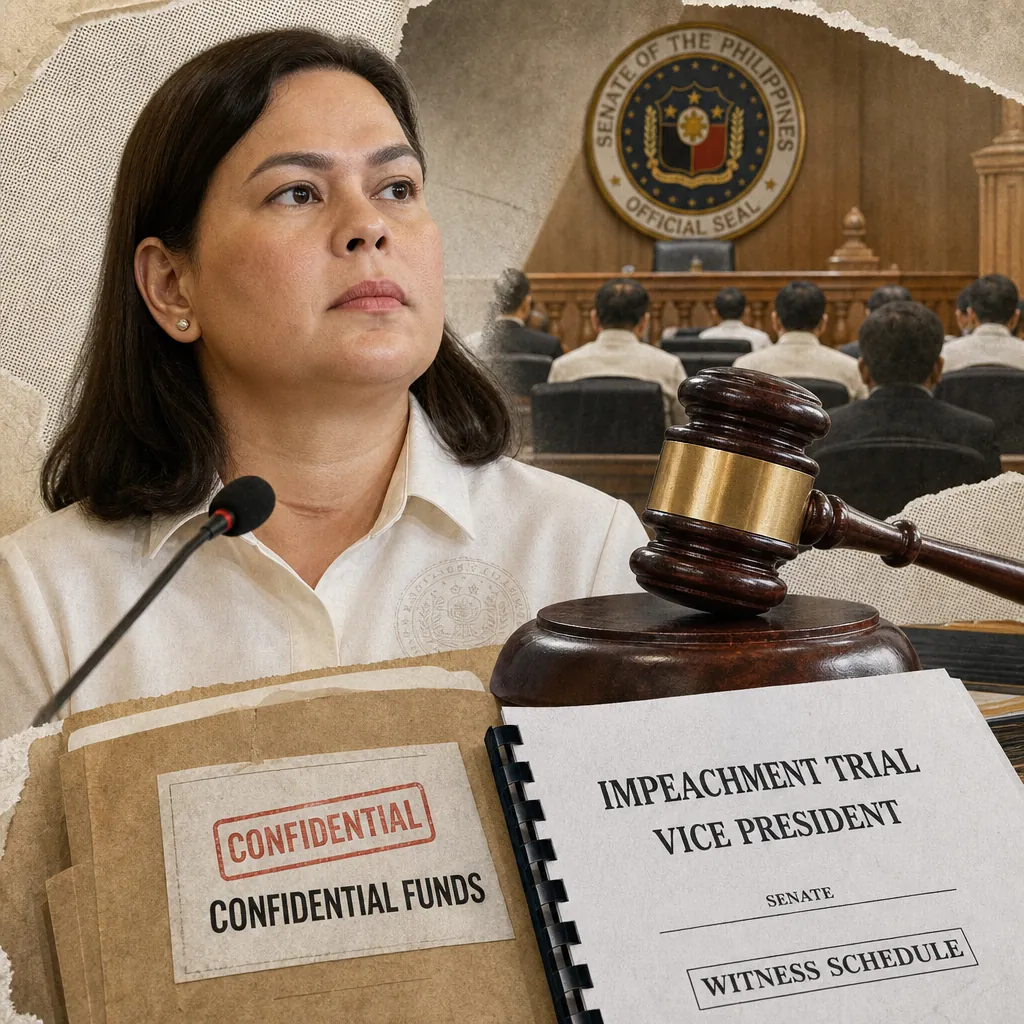
The trial's central figure, Michael Poa, testified that he reported directly to then-Education Secretary Sara Duterte, received her instructions on department operations, and sought her guidance before media interviews, yet he maintained he had no operational knowledge of how the agency's confidential funds were used. The prosecution, led by private prosecutor Benjamin Tolosa Jr., highlighted this contradiction, questioning why Poa was selected to answer Commission on Audit (COA) inquiries about P112.5 million in confidential funds if he was unaware of the underlying operations. Poa's testimony revealed that he relied on reports from other officials—who also lacked firsthand knowledge—when preparing DepEd's response to the COA. When asked directly whether Duterte's use of the funds was legal, Poa invoked attorney-client privilege, declining to answer. This exchange drew significant reaction on Facebook, with one Inquirer post about the questioning garnering 225 likes and 98 comments, reflecting strong public appetite for accountability narratives.3324757110
The flood crisis provided a grim backdrop to the trial. President Marcos Jr., during an inspection of the Sto. Cristo Dam in Pampanga, said the dam was not damaged but had become clogged with debris, including logs that may have come from illegal logging upstream. He announced a temporary barrier would be installed to prevent further blockage. This admission came amid reports that at least 2,243 schools nationwide had been damaged by the southwest monsoon and recent cyclones, with the DepEd estimating P7.78 billion would be needed for repairs. The death toll from the weather reached 39, according to the Office of Civil Defense. Social media users reacted with sarcasm and anger to Marcos's statements, viewing them as a self-indictment rather than an explanation. The Manila Times published an opinion piece satirizing the situation, asking "What if every household owned a jet ski?" in response to the flooding, capturing the public's mood of weary resignation mixed with dark humor.45889114
Key themes
- Poa's testimony exposes gaps in confidential fund oversight: Former DepEd chief of staff Michael Poa testified he had no firsthand knowledge of how the agency's P112.5 million confidential funds were used, despite preparing the response to COA inquiries. The prosecution used this to question why he was chosen to answer audit questions, drawing 225 likes and 98 comments on one Facebook post.347
- President admits flood control master plan was unimplemented for decades: Marcos Jr. said the Sto. Cristo Dam was clogged with debris, possibly from illegal logging, and acknowledged the long-delayed flood control plan. The admission was met with widespread mockery online, with users viewing it as an indictment of government inaction.489
- Senate passes bill barring officials' kin from government contracts: Senate Bill 1962, explicitly tied by Senate President Gatchalian to the flood control issue, aims to prevent nepotism in government contracting. The bill's passage reflects public anger over perceived cronyism in infrastructure projects.2
- Peso hits record low of 62.565 per dollar: The currency weakened for a fourth consecutive session amid Middle East tensions and safe-haven demand, raising concerns about inflation and consumer costs. Trading volume rose to $1.8 billion from $1.3 billion.74
- Over 2,200 schools damaged by monsoon and cyclones: The DepEd reported 2,243 schools damaged, with 11,167 classrooms affected, requiring an estimated P7.78 billion for repairs. The damage adds to the government's disaster response burden.58
- Prosecution considers dropping bribery article to expedite trial: Rep. Joel Chua said the bribery allegations against Duterte remain strong but may be dropped to speed up proceedings, similar to the Corona impeachment. This strategic move could reshape the trial's scope.48
- Senate schedules budget hearings alongside trial sessions: To expedite work, the Senate will hold budget hearings and plenary sessions after morning trial sessions, reflecting the compressed legislative calendar.80
- Public sentiment shifts from sympathy to cynical detachment: Reaction patterns on trial-related posts show high numbers of "angry" and "haha" reactions but zero "sad" or "care" reactions, indicating the public is processing events through satire and detachment rather than empathy.3
How the narratives stack
Dominant: The impeachment trial of Vice President Sara Duterte, specifically Michael Poa's hostile witness testimony, dominated the day's conversation across all platforms. Within the captured set, this story drew the most sustained engagement, with live updates, analysis, and commentary generating hundreds of reactions and comments. The prosecution's line of questioning—why Poa was chosen to answer COA inquiries if he lacked operational knowledge—resonated strongly with the public, who saw it as evidence of procedural carelessness or deliberate distancing. The trial's dominance reflects both its political significance and the public's intense interest in accountability narratives.336110
Counter-narrative: The flood control and disaster response story served as a counterpoint to the trial, highlighting government failures in infrastructure and disaster preparedness. President Marcos's admission about the unimplemented flood control master plan, combined with the school damage reports and the DSWD food pack quality complaints, painted a picture of administrative neglect. This narrative drew significant engagement, particularly on X (Twitter), where users mocked the President's statements. The Manila Times' satirical column about jet skis captured the public's frustration, suggesting that while the trial dominated headlines, the flood crisis resonated more directly with people's daily lives.458114
Emerging: The economic fallout from the Middle East conflict, including the peso's record low and rising bond yields, is emerging as a significant concern. The peso fell to 62.565 per dollar, its fourth consecutive record low, while the government made a partial award of reissued Treasury bonds as yields climbed. These developments, driven by external geopolitical tensions, could shift public attention from the trial to economic issues, particularly if inflation rises and consumer costs increase. The Senate's proposal to create an economic reinvigoration panel signals lawmakers are already preparing for this shift.6174108
Under-covered: The Visayas power crisis, which saw the grid placed under red alert again on September 2, received comparatively little attention in the captured set despite affecting millions of residents. The National Grid Corporation of the Philippines (NGCP) placed the Visayas grid under red alert from 3 p.m. to 4 p.m. and 5 p.m. to 9 p.m., meaning supply and reserves could not meet demand, potentially leading to rotational brownouts. Similarly, the Bukidnon electric cooperative implemented an emergency shutdown affecting over 100,000 member-consumer-owners. These power issues, which directly impact daily life, were overshadowed by the trial and flood narratives in the monitored coverage.82130
Platform insights
- Facebook: The platform served as the primary arena for emotional and partisan engagement, particularly around the impeachment trial. Posts about Poa's testimony and the prosecution's questioning drew the highest interaction levels, with one Inquirer post receiving 225 likes and 98 comments. Sentiment was sharply divided but leaned toward ridicule and criticism of the defense, evidenced by 50 "Haha" reactions on a post about Tolosa's aggressive questioning style. The discussion was visceral and personality-focused rather than legalistic, with users debating the implications in long threads. Notably, there were zero "Sad" or "Care" reactions across the posts, indicating a shift from sympathy to cynical detachment.3
- X (Twitter): The platform functioned as a high-volume breaking news feed, with major outlets like Manila Bulletin and Inquirer providing rapid-fire updates. The conversation evolved from neutral reporting to user-generated sarcasm around flood control and impeachment topics. Phrases like "PAGOD NA PAGOD NA AKO" (I'm so, so tired) reacting to Senator Zubiri's exhaustion captured the national mood of fatigue. The timeline showed high impressions but relatively low engagement on individual news posts, suggesting a public that was monitoring actively but expressing sentiment largely through shares and occasional reaction posts rather than direct comments.13
- Reddit: The platform provided a more analytical and sober counter-narrative to the emotional tone of other platforms. Users gravitated toward structural issues, such as the broad implications of Senate Bill 1962 and the potential for unintended consequences in its implementation. Discussions on flood control and West Philippine Sea posts took a more geopolitical and long-term view, examining institutional durability rather than daily events. The r/Philippines subreddit engaged with procurement reform and maritime security issues that benefit from evidence-based responses.214
- YouTube: Video content covering key courtroom exchanges consistently attracted several hundred views, with the platform serving as a secondary channel for trial coverage. The prosecution's aggressive style and Poa's testimony were the focus of much of this content, though specific engagement figures were not detailed in the monitoring data.15
Key voices and communities
- National media outlets and news agencies: Traditional news organizations like the Philippine Daily Inquirer, Manila Bulletin, and The Manila Times dominate the conversation across all platforms, serving as primary information brokers. Their content generates moderate engagement—typically tens to low hundreds of reactions—but achieves wide distribution through cross-posting. These outlets simultaneously report on the impeachment proceedings, flood crisis, and legislative developments, effectively setting the public agenda for all three issue clusters. Their framing choices provide the clearest early warning of emerging reputational risks.13110
- Political advocacy communities: Partisan digital communities on Facebook and Twitter are actively engaging with impeachment and governance content, generating the highest engagement intensity observed. Posts touching on Duterte's confidential funds usage draw substantial reaction volumes, with one post receiving 225 likes and 98 comments. This group responds most strongly to content featuring prosecution witnesses, particularly Poa, and their response patterns offer immediate feedback on how political narratives are being received. Sarcastic and mocking engagement frequently outpaces serious responses.3
- Institutional watchers and accountability groups: A smaller but highly engaged cluster of accounts—including former officials, parliamentary observers, and governance-focused commentators—contributes substantive analysis. This group produces the most content-rich commentary, particularly regarding legislative actions like Senate Bill 1962 and the Sandiganbayan's dismissal of cases against former DPWH Secretary Manuel Bonoan. Their content emphasizes systemic governance failures rather than individual political actors, and their commentary frequently anticipates institutional reform trends.18
- Disaster response and crisis communication networks: Accounts associated with government agencies like DSWD, PAGASA, MMDA, and NDRRMC actively distribute operational updates and safety information. This group maintains high posting frequency but generates comparatively lower engagement, suggesting an information-dissemination function rather than conversation-driving role. Content on the DSWD's food pack quality assurance following odor complaints draws mockery rather than serious concern, indicating skepticism among netizens. The trust placed in these official channels during crisis periods makes them essential for public communications monitoring.1718
- Economic and financial commentators: A distinct voice emerged around the peso's record low and bond market movements, with outlets like BusinessWorld and Inquirer Business providing analysis. This group frames economic developments within the context of geopolitical tensions and domestic governance issues, connecting the trial and flood narratives to broader economic consequences. Their commentary on the peso's fall and its impact on consumers adds a material dimension to the day's political drama.6174
Narrative streams
Poa's testimony exposes the gap between authority and knowledge
Michael Poa, former DepEd chief of staff and now a member of Duterte's defense team, took the witness stand as the prosecution's third hostile witness on Day 21 of the impeachment trial. His testimony revealed a striking disconnect: while he reported directly to then-Education Secretary Sara Duterte, received her instructions on department operations, and sought her guidance before media interviews, he repeatedly stated he had no firsthand knowledge of how the agency's confidential funds were used. "I don't have personal knowledge in the operations of DepEd. So, I'm answering based on my understanding, based on what I've read when I was trying to study," he said while discussing his interpretation of confidential-fund requirements.110
The prosecution, led by private prosecutor Benjamin Tolosa Jr., seized on this contradiction. They questioned why Poa was selected to answer the Commission on Audit's (COA) audit observation memorandum on P112.5 million in confidential funds if he was unaware of the underlying operations. Poa testified that he relied on reports from other officials—who also turned out to lack firsthand knowledge—when preparing DepEd's response. The prosecution's statement highlighted that Poa's testimony revealed P15.54 million allegedly spent on confidential-fund rewards was not supported by details in the certification issued by the Armed Forces of the Philippines.3347
The tension escalated when Poa declined to state whether Duterte's use of the funds was legal, invoking attorney-client privilege. Sen. Risa Hontiveros had directly asked whether the use of confidential and intelligence funds at the Office of the Vice President and DepEd complied with the law. Poa said any answer he gave would be biased, a response that drew significant criticism online. The defense's strategy of relying on formal notices and credit documentation was met with mixed emotional responses, with reaction patterns showing notable amusement and anger alongside approval.57
The read for the sector: For government agencies and officials, this testimony underscores the reputational risk of assigning accountability for sensitive financial matters to individuals without operational knowledge. The public's reaction—ridicule and skepticism rather than sympathy—suggests that procedural justifications will not suffice when questions of fund stewardship arise. Agencies must ensure that those who speak to audit findings have genuine firsthand knowledge, or risk being seen as evasive or careless.
Flood control failures become a political liability
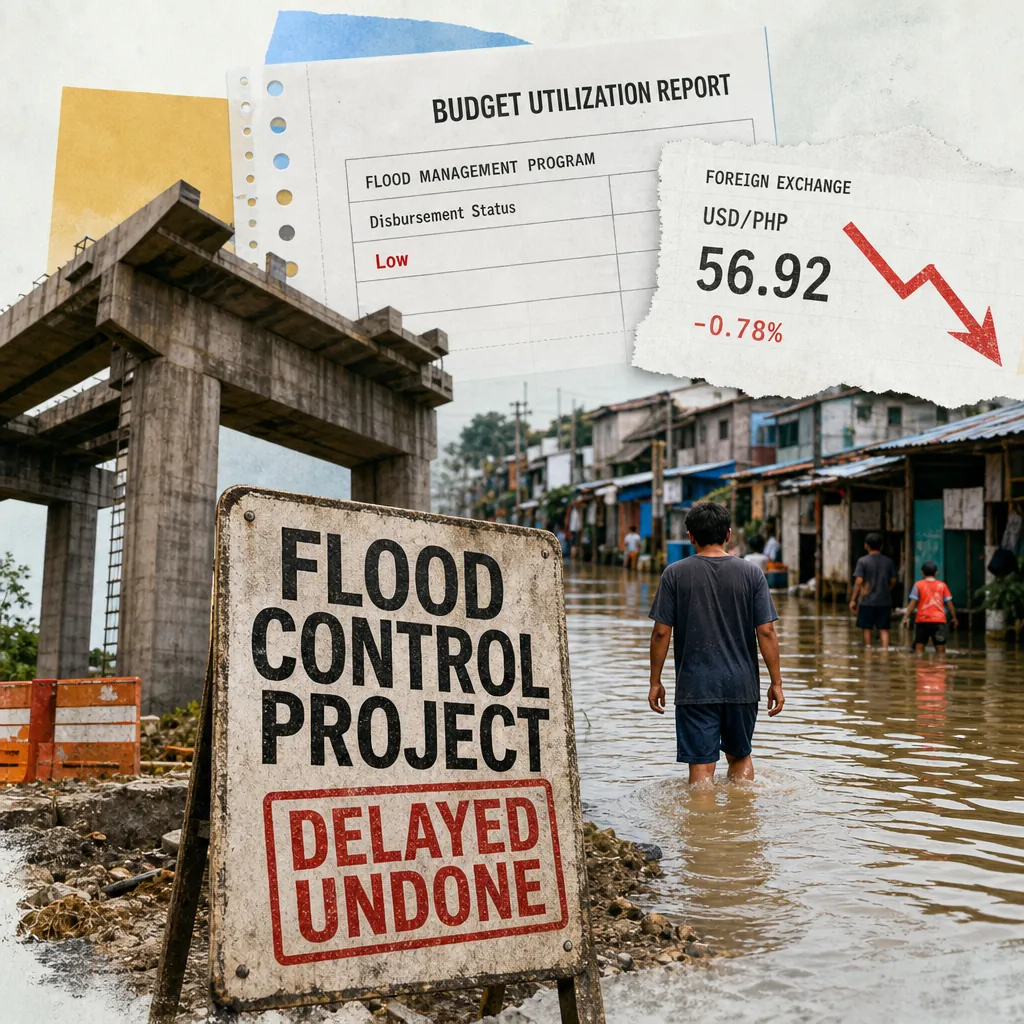
President Ferdinand Marcos Jr.'s admission that a decades-old flood control master plan had been left unimplemented became a focal point of public anger on September 2. During an inspection of the Sto. Cristo Dam in Pampanga, Marcos said the dam was not damaged but had become clogged with debris, including logs that may have come from illegal logging upstream. "Hindi naman pala na-damage 'yung dam. Kung hindi, ang nangyari nabara dahil hindi basura kundi 'yung debris, mga troso na siguro nagpuputol sila na illegal logging sa taas, bumababa rito, nabara ngayon 'yung dam, umikot 'yung tubig," he said, explaining that the dam was blocked by logs from possible illegal logging, causing water to back up.89
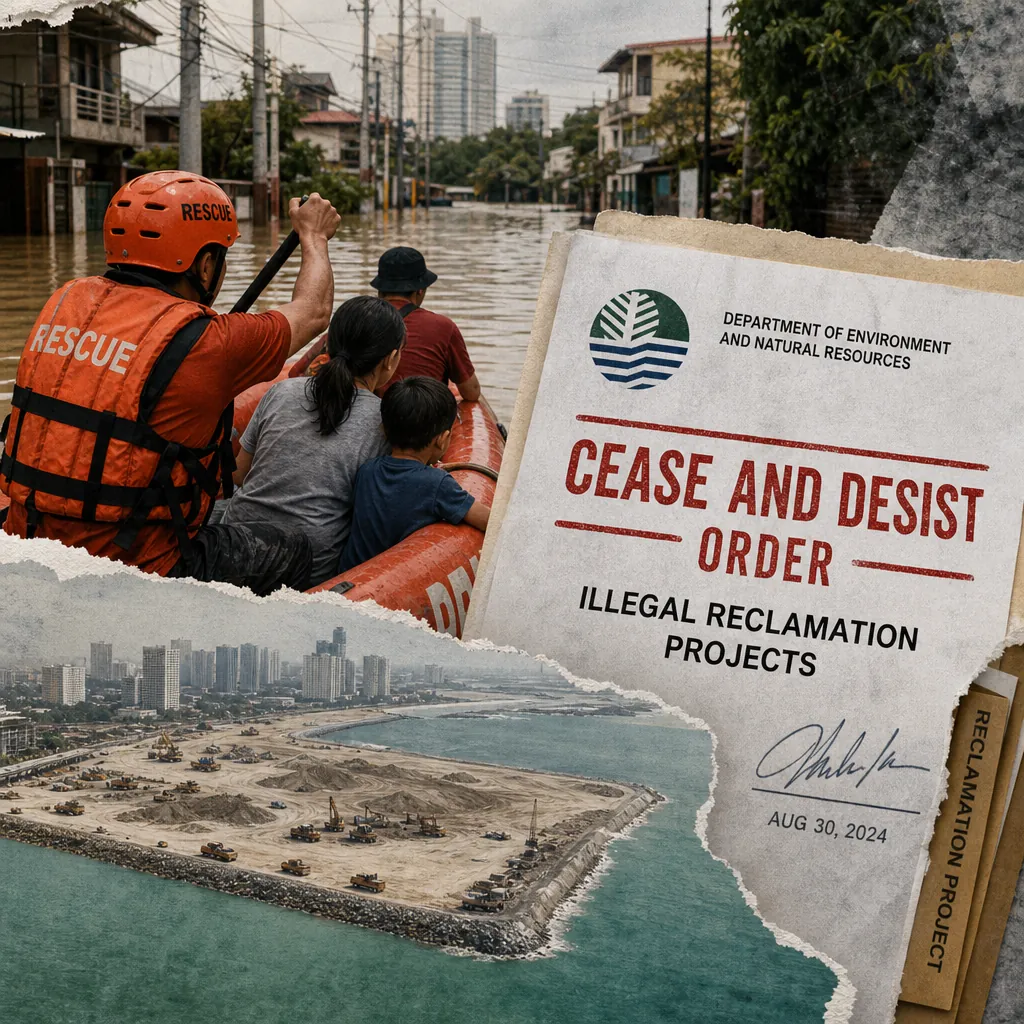
This admission came against a backdrop of severe weather damage. The DepEd reported that at least 2,243 schools nationwide had been damaged by the southwest monsoon and recent tropical cyclones, with an estimated P7.78 billion needed for clearing, repairs, and reconstruction. Of the 11,167 classrooms affected, 6,530 sustained minor damage, 2,389 were classified as having major damage, and 2,248 were totally damaged. Region III recorded the highest number of damage reports at 4,099, followed by Region I with 3,698 and the Cordillera Administrative Region with 1,277.58
Social media users reacted with sarcasm and mockery to Marcos's statements. The Manila Times published an opinion column titled "What if every household owned a jet ski?" that satirized the situation, describing videos of children playing in floodwaters and families on rooftops as examples of "celebrated Filipino resilience" taken to absurd extremes. The column captured the public's mood of weary resignation mixed with dark humor, suggesting that the government's failure to implement flood control measures had become a running joke.114
The read for the sector: For infrastructure and construction firms, the flood control controversy represents both a reputational risk and an opportunity. The public's anger over decades of inaction creates pressure for visible, immediate results. Companies that can demonstrate proactive engagement with flood mitigation solutions—such as the MMDA's rain catchment initiatives—could position themselves as part of the solution rather than the problem. However, any perceived connection to the unimplemented master plan or to officials implicated in the flood control scandal could be severely damaging.
Senate advances anti-nepotism bill amid corruption concerns
The Senate's approval of Senate Bill 1962, which bars relatives of key officials from entering into government contracts, directly capitalized on public anger regarding the flood control controversies. Senate President Sherwin Gatchalian explicitly tied the bill to the flood control issue, framing it as a governance-reform measure that would prevent the kind of cronyism that many believe contributed to infrastructure failures. The bill's passage reflects a broader public perception of impunity and selective justice, with users on Facebook reacting heavily to the concept of "witch hunts" versus genuine accountability.210
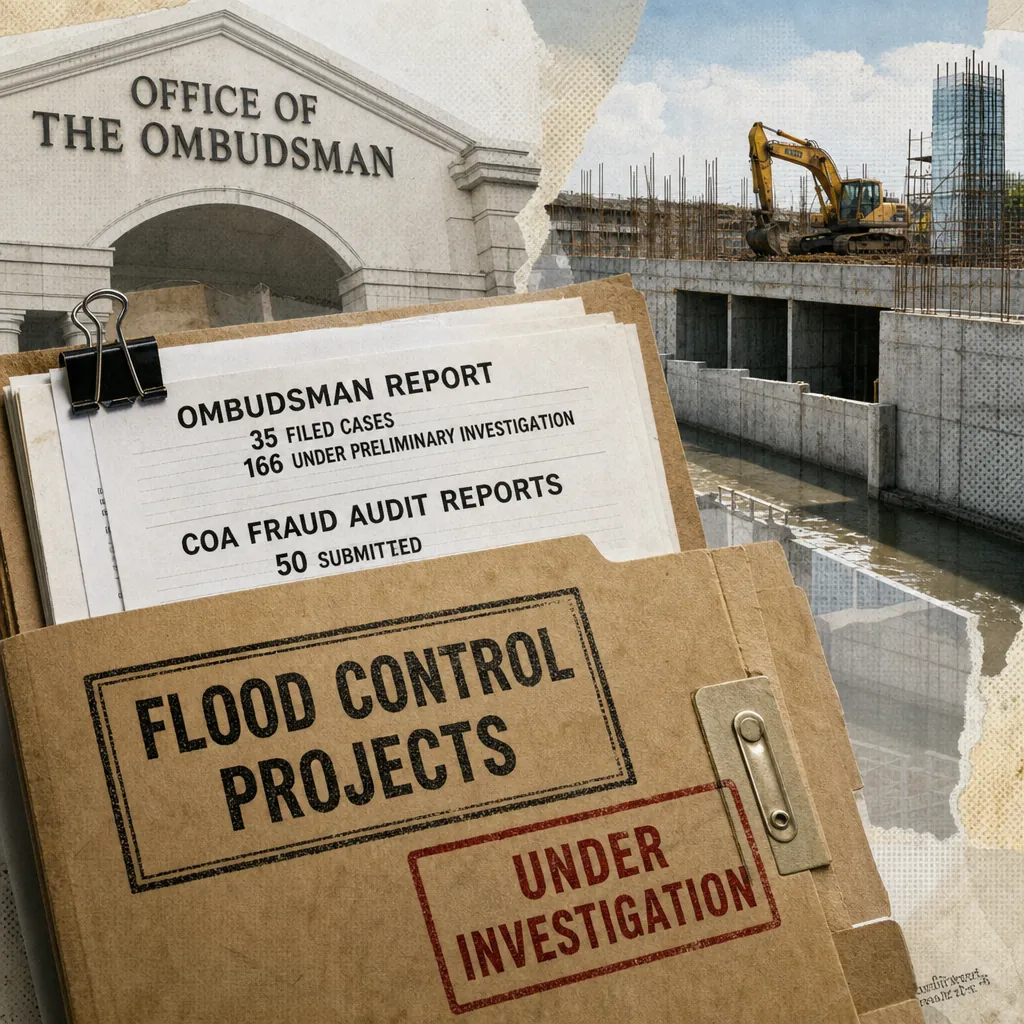
The bill's progress was amplified by related developments. The Sandiganbayan's dismissal of cases against former DPWH Secretary Manuel Bonoan, which Malacañang distanced itself from, and the ensuing Senate spat between Alan Peter Cayetano and Ping Lacson over alleged anomalies in Taguig projects, fed the narrative of systemic corruption. Romualdez's lawyer, Ade Fajardo, also lashed out against the Office of the Ombudsman, questioning why it appeared "fixated" on his client when there was supposedly no evidence against him. These developments created a sense that accountability mechanisms were either working or being circumvented, depending on one's perspective.834
The read for the sector: For businesses that contract with the government, this legislative push signals a volatile regulatory environment where the perception of impropriety can quickly lead to legal crackdowns. Companies must ensure rigorous compliance with procurement rules and maintain transparent records, as public scrutiny of government contracting practices is likely to expand. The bill's passage also creates opportunities for firms that can demonstrate clean, transparent dealings with government agencies.
Peso hits record low as Middle East tensions escalate
The Philippine peso broke past the 62.5-per-dollar level to hit a new record low of 62.565 on September 2, its fourth consecutive record-low session. The currency weakened 16.5 centavos from its previous close, touching an intraday low of 62.69 before paring losses. Trading volume rose to $1.8 billion from $1.3 billion in the previous session. The decline was driven by renewed tensions in the Middle East, where the United States launched a barrage of airstrikes on Iran, prompting Iranian retaliation. Oil prices rose, and the dollar held firm against major currencies as expectations grew that the Federal Reserve would maintain higher interest rates.74
The peso's fall has direct consequences for Filipino consumers, who face higher import costs and potential inflation. The government's partial award of reissued Treasury bonds reflected the risk-off sentiment, with the Bureau of the Treasury borrowing P29.561 billion from the reissued 20-year bonds, just short of the P30-billion target despite total tenders reaching P36.111 billion. The average yield was capped at 7.218% to align the award with market sentiment.61
The read for the sector: For businesses and financial institutions, the peso's weakness creates both challenges and opportunities. Importers face higher costs, while exporters and remittance-dependent households may benefit. The central bank's ability to manage the currency's decline will be tested, and businesses should prepare for continued volatility as long as Middle East tensions persist. The economic fallout could shift public attention from political dramas to pocketbook issues, potentially reshaping the narrative landscape.
Power crisis persists in Visayas and Mindanao
The Visayas grid fell under red alert again on September 2, despite the return of several generating units. The National Grid Corporation of the Philippines (NGCP) placed the grid under red alert from 3 p.m. to 4 p.m. and again from 5 p.m. to 9 p.m., meaning both power supply and reserves could no longer meet demand, potentially leading to rotational brownouts. Yellow alerts covered the intervening periods. The latest alert came even as two major power plants in Cebu returned to service, adding much-needed capacity but not enough to prevent the shortage.130
In Mindanao, the Bukidnon Second Electric Cooperative (BUSECO) implemented an emergency power shutdown on Wednesday afternoon to preserve system stability and prevent a widespread network collapse. The emergency action was triggered by a critical Mindanao grid deficiency that prompted a red alert, requiring BUSECO to execute a Voluntary Load Curtailment ranging from 5MW to 10MW upon request by the NGCP. The service interruptions affected over 100,000 member-consumer-owners across several areas, including entire municipalities in Impasug-ong and Sumilao.82
The read for the sector: For energy companies and policymakers, the persistent power crisis highlights the fragility of the grid and the urgent need for investment in generation capacity and grid infrastructure. The red alerts and emergency shutdowns directly affect businesses and households, potentially dampening economic activity. Companies in the energy sector face both reputational risks and opportunities—those that can provide reliable power or innovative solutions may gain public trust, while those perceived as contributing to the problem may face backlash.
Conversation trajectory
- Prosecution's evidence presentation to conclude by September 9: The House prosecution panel aims to finish presenting evidence by September 9, with signals that they may hold full-day sessions in October if needed. The period immediately following this deadline will see intense commentary on whether the prosecution met its burden. Expect the narrative to crystallize around the strength of the case and the defense's counter-programming. Observation window: 1-2 weeks.6
- House budget deliberations for the Office of the Vice President: The proposed P785.2 million budget for the OVP is moving without customary parliamentary courtesy, providing a parallel forum for fiscal scrutiny. Rep. Jose Alvarez confirmed there are no confidential funds in the proposed OVP budget for 2027, but the debate over transparency and fund allocation is likely to continue. Observation window: 2-4 weeks.2281
- Bicameral conference on the procurement integrity bill: The final language of Senate Bill 1962 will determine whether the anti-nepotism reform narrative gains or loses momentum. If the bill withstands refinement, it could validate the governance-reform narrative tied to the trial; if weakened, it could fuel cynicism about legislative intent. Observation window: 2-4 weeks.2
- Peso and bond market volatility: The peso's record low and rising bond yields are driven by Middle East tensions, which remain unpredictable. The government's ability to manage the currency's decline and the impact on inflation will be closely watched. Expect continued economic commentary to intersect with political narratives. Observation window: 1-4 weeks.6174
- BARMM parliamentary elections on September 14: Security preparations are ramping up for the historic Bangsamoro parliamentary elections, with the military deploying additional battalions and the Comelec making its precinct finder accessible starting September 7. The elections could shift public attention from the impeachment trial to regional governance issues. Observation window: 2 weeks.4960
- Trigger events: The September 9 deadline for the prosecution's evidence presentation; the bicameral conference output on the anti-nepotism bill; any escalation in Middle East conflict affecting oil prices and the peso; the September 14 BARMM elections; and the resumption of Senate budget hearings alongside trial sessions.
Response guidance
- Impeachment trial coverage: Prepare messaging that distinguishes between audit findings (COA credit notices) and operational discretion in confidential fund use. Avoid commenting on witness credibility directly while acknowledging the legitimacy of judicial processes. Frame responses around procedural integrity and separation of powers rather than substantive allegations. The public is filtering all government announcements through the lens of the trial, so any official communication risks being interpreted as a deflection tactic.13
- Flood control and infrastructure: Acknowledge the frustration over decades-long inaction while highlighting current rehabilitation efforts. Avoid defensive postures about past failures, focusing instead on present implementation milestones. For infrastructure and tollway operators, proactively publish real-time flood mitigation updates and post-incident engineering assessments. The current coverage shows public sympathy for stranded motorists but impatience with repeated flooding at the same choke points.2089
- Disaster response and relief: Treat quality complaints as high-risk narrative triggers. The DSWD food pack story shows that even a single credible odor complaint can generate significant mock reactions and erode trust in broader social protection messaging. Pre-approved responses should emphasize operational transparency and measurable progress. Consider deploying visual explainer content that simplifies complex developments, given the predominantly Filipino-language commentary and the emotional reaction patterns observed.25
- Economic and financial communications: Emphasize transparency and compliance in any government-related communications, as public scrutiny of government contracting practices is likely to expand. For banking and financial sector clients, the continuing public focus on confidential funds and audit processes reinforces the importance of demonstrating rigorous compliance controls. Monitor sentiment shifts immediately following the bicameral conference output on the anti-nepotism bill, as the final language will determine whether the reform narrative gains or loses momentum.279
- Power and energy sector: Address the power crisis directly with clear, factual updates on grid status and restoration efforts. The public's patience is wearing thin, and any perception of complacency could be damaging. Companies should demonstrate proactive engagement with solutions, such as investments in generation capacity or demand-side management programs.
See the full picture behind today's signals.
This report draws from Media Meter's MediaWatch, our real-time monitoring engine tracking 2,470+ Philippine sources across print, broadcast, digital, and social. Explore how the platform turns raw coverage into decision-grade intelligence, then see how it's configured for teams like yours — whether you're in PR agencies, corporate comms, government, or marketing.
Want more? Browse our Report Library for sector and crisis intelligence, or request a demo and we'll have your brand set up before the call.
Want this kind of intelligence on your brand?
This brief is built on the same MediaWatch methodology that runs continuously across every brand we monitor. See your competitive landscape, Impact Score, and narrative trajectory in a 30-minute demo.