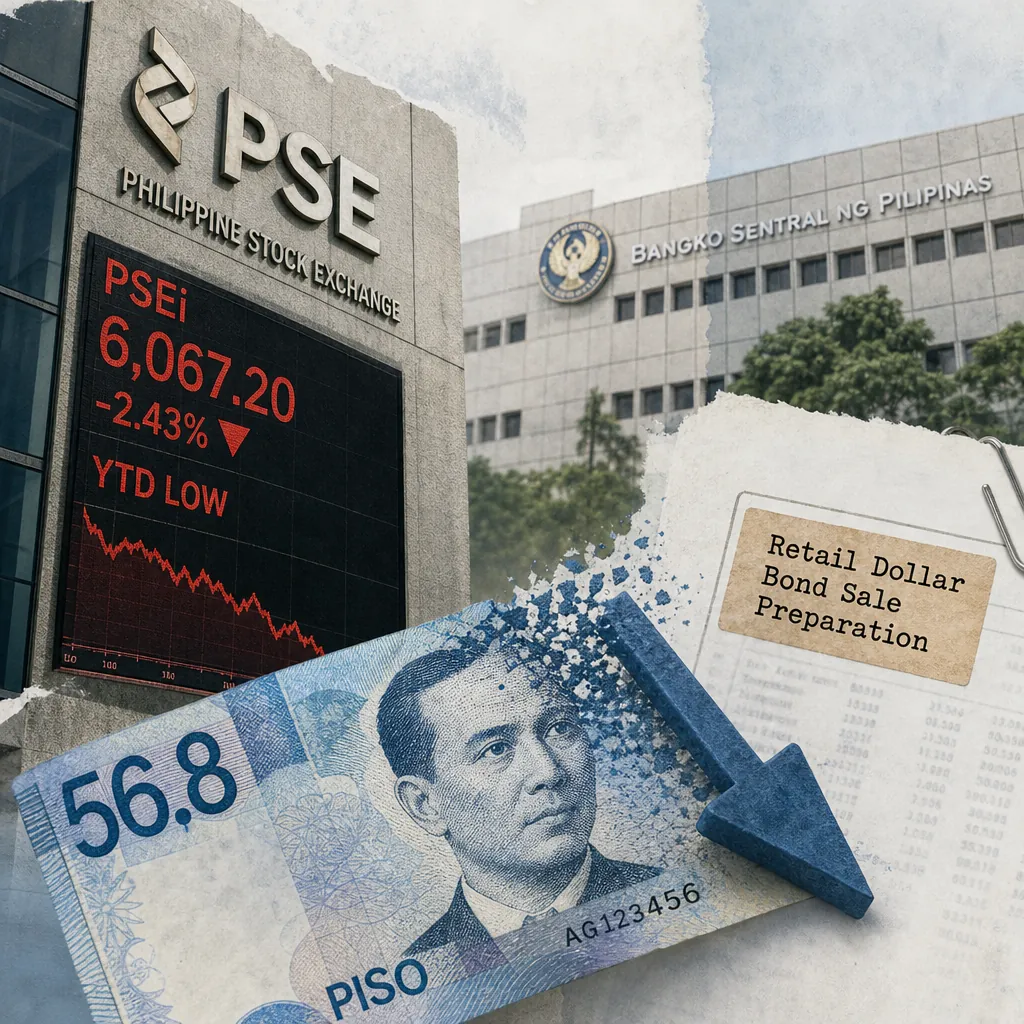
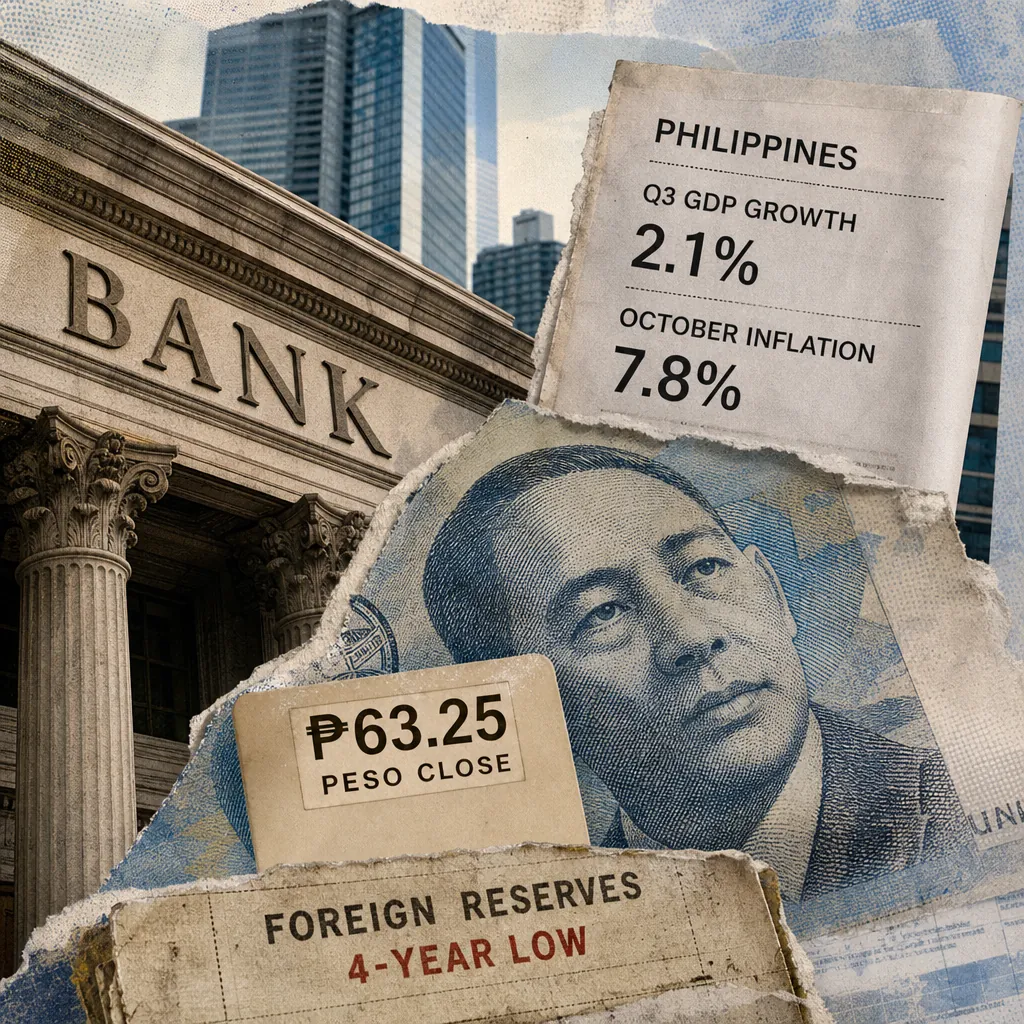
BSP Orders Banks to Tighten Cybersecurity for ASEAN Summit
The Bangko Sentral ng Pilipinas directed banks to strengthen cybersecurity and contingency plans during the 49th ASEAN Summit, while Citi projected inflation staying above target through 2027 and Security Bank reported training 3,000 employees on agentic AI.
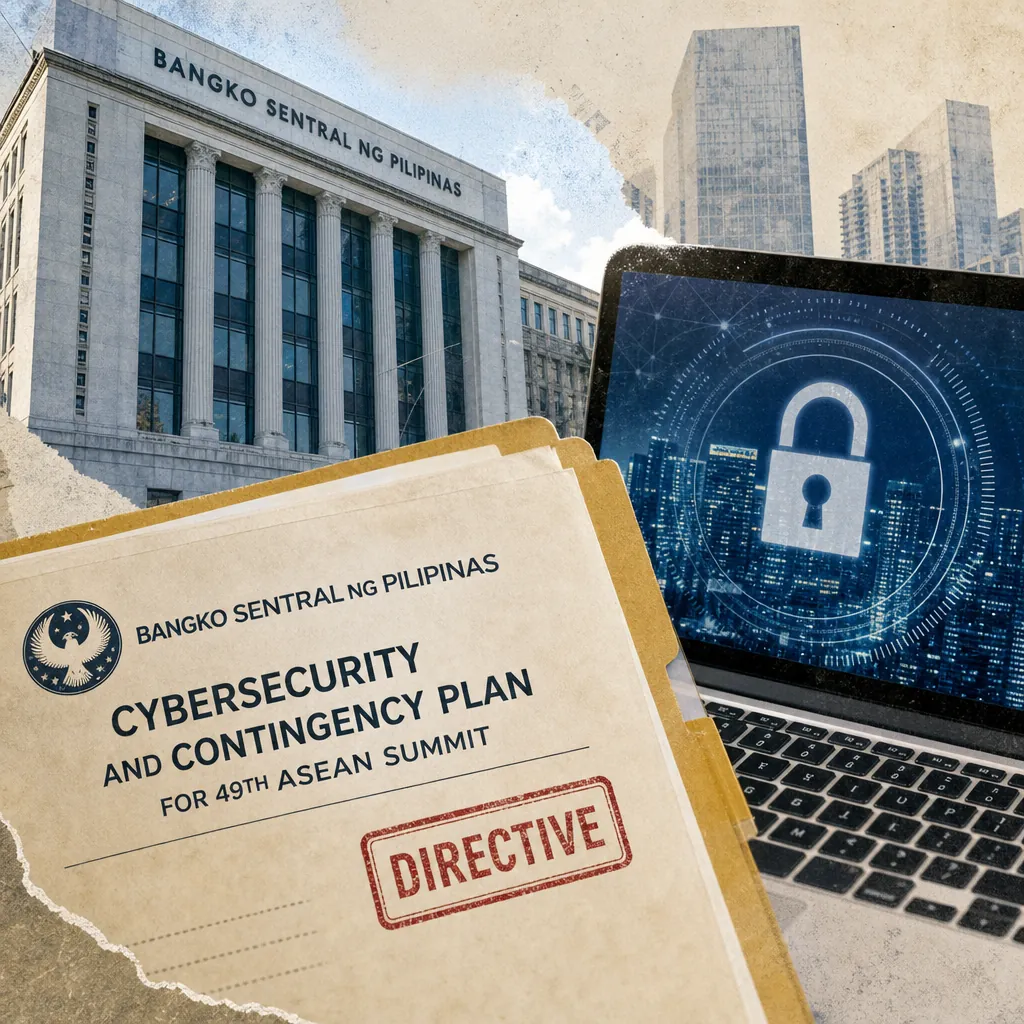
The Bangko Sentral ng Pilipinas (BSP), the country's central bank, told banks and other financial institutions it supervises to keep their services stable and their cybersecurity defenses current through the 49th [Association of Southeast Asian Nations (ASEAN) Summit](https://media-meter.com/report-library/asean-summit-opens-in-manila-with-defa-signed "Asean summit opens in manila with defa signed") and Related Summits, according to a directive reported by Manila Bulletin Online on November 143. The same statement urged the public to rely only on official sources and to be wary of unverified information circulating on social media, as well as calls and text messages that send suspicious links or requests3. The directive was issued as world leaders began arriving in Manila for the summit, which the Philippines is chairing this year8.
The BSP's instruction is the most concrete banking-sector development in the items reviewed for this snapshot, but it is not the only one. Citi's chief Asia economist Johanna Chua said Philippine inflation will average 5.9 percent next year and ease only to 4.3 percent by December 2027, still above the BSP's two-to-four-percent target band32. Security Bank Corp. said it has trained more than 3,000 employees in agentic artificial intelligence and recorded 3,100 AI agents built by its workforce, with 98 percent daily engagement on the tools31. The Management Association of the Philippines (MAP) called on the government to modernize regulation so the country can compete for investment at scale as it hosts the summit36. And a Manila Times column warned that money mules — people who let criminals use their bank accounts to move stolen funds — are increasingly disguising themselves as small businesses using QR payment systems19.
No social-media monitoring writeup accompanied these articles, so the conversation here is carried entirely by the published coverage. The items span online news outlets and business desks, and their combined advertising-equivalent value — the estimated cost of buying the same space as paid advertising — runs into the millions of pesos, with the Security Bank AI story alone accounting for an estimated ₱723,019 in advertising-equivalent value31 and the Citi inflation forecast for ₱302,32432. Those figures measure the notional cost of the coverage, not how many people read it. The BSP directive itself carried an estimated ₱106,304 in advertising-equivalent value in the Manila Bulletin item3.
Key themes
- BSP orders banks to harden cybersecurity during the ASEAN Summit. The central bank directed BSP-supervised financial institutions to strengthen cybersecurity defenses, risk management systems, and contingency plans, citing "the latest technological advances, including frontier AI," and said it is monitoring global financial and technological developments for risks to the financial system3.
- Citi sees inflation above the BSP's target through 2027. Citi projects inflation averaging 5.9 percent in 2027 and easing to 4.3 percent by December 2027, with more than 75 percent of consumer price index components recording inflation above four percent, which Chua said is why "the BSP has to stay hawkish"32.
- Security Bank trains 3,000 staff on agentic AI and records 3,100 agents built. The bank's chief digital and technology officer, Patrick Meneses, said the effort extends beyond technology specialists to business, operations, finance, and risk employees, with human oversight retained for decisions affecting customers31.
- MAP calls for modern regulation to convert summit attention into investment. MAP president Donald Lim said investors looking at Southeast Asia "don't just ask whether they can enter a market. They ask where they can scale," and argued the Philippines needs rules that can stand alongside the best in the region36.
- Money mules are shifting from individuals to small businesses using QR payments. A Manila Times column reported that police arrested 67 people in 60 operations against the sale and misuse of ATM cards, online banking profiles, and e-wallets in January and February, and filed more than 500 cases under the Anti-Financial Account Scamming Act (AFASA), but the model behind those arrests is already changing19.
- Deposit insurance and financial literacy are being framed as a public safety net. A Head Topics piece explained that the Philippine Deposit Insurance Corporation (PDIC) protects eligible bank deposits up to ₱1 million per depositor and argued that financial literacy must now help people understand risks and safeguards, not just earning, spending, and saving22.
- A plunder case against former Speaker Martin Romualdez continues alongside a forfeiture action on 35 bank accounts. Ombudsman Jesus Crispin Remulla said the case remains strong even though the Anti-Money Laundering Council (AMLC) found no deposits from contractors, the Department of Public Works and Highways, or fugitive ex-lawmaker Zaldy Co, and the AMLC confirmed it filed a forfeiture case after examining 1,951 transactions across the accounts from April 2003 to October 20252024.
How the narratives stack
Dominant. The BSP's directive to banks is the lead banking story in this set, carried by Manila Bulletin Online and framed around the ASEAN Summit3. It is dominant within the captured items because it comes from the regulator, applies to every BSP-supervised financial institution, and ties directly to a national event that has brought world leaders to Manila8. The directive's estimated advertising-equivalent value of ₱106,304 is modest compared with some other items, but its consequence for the sector is the broadest: every bank and e-wallet provider in the country falls under the BSP's supervisory reach, and the instruction to prepare contingency plans and watch for AI-enabled threats sets an expectation that will outlast the summit week.
Counter-narrative. Citi's inflation forecast pushes against any expectation that the BSP will loosen policy soon. Chua's projection of 5.9 percent average inflation next year and 4.3 percent by December 2027, both above the two-to-four-percent target, means the central bank's restrictive stance is likely to persist32. The counter-narrative matters because it complicates the summit's investment pitch: MAP is asking for modern regulation to attract investors36, while Citi is telling those same investors that price pressures remain widespread and rates will stay elevated. The two stories are not contradictory — a country can modernize rules and still have high inflation — but together they describe a less comfortable investment climate than the summit headlines alone suggest.
Emerging. Security Bank's disclosure that it has trained more than 3,000 employees on agentic AI and recorded 3,100 AI agents built internally is the clearest signal in this set that Philippine banks are moving AI from pilot projects into daily operations31. The bank says it keeps human oversight on decisions affecting customers, which is the kind of safeguard regulators will be watching as the BSP's directive explicitly names frontier AI as a risk to prepare for3. The money-mule column adds a second emerging thread: criminals are adapting to AFASA enforcement by routing illicit funds through legitimate small businesses and QR payment systems, which means the compliance burden on banks and payment providers is likely to grow rather than shrink19.
Suppressed. No story in this set was actively kept down. The under-covered item is the PDIC deposit-insurance explainer, which ran on Head Topics Online and received an estimated ₱297,312 in advertising-equivalent value but addresses a question most depositors never ask until a bank fails: how much of their money is actually protected22. The piece notes the current maximum deposit insurance coverage of ₱1 million per depositor, a figure that matters to ordinary savers and small businesses but rarely leads a business page. Its placement reflects the news cycle's preference for summit and earnings stories over consumer-finance education, not any effort to suppress it.
Platform insights
- Facebook. No Facebook-specific engagement data appeared in the items reviewed. The BSP's public advisory, which urged the public to rely on official sources and be wary of unverified social-media information, calls and text messages, implies that Facebook and similar platforms are where the misleading content it warns against is circulating3. The central bank's decision to issue that warning alongside its cybersecurity directive suggests it sees social platforms as a channel through which financial scams and misinformation reach depositors.
- X. No X-specific engagement data appeared in the items reviewed. The money-mule column's description of criminals using QR payment systems and legitimate businesses to disguise transactions points to a broader pattern of financial crime that unfolds across messaging and social platforms, but the column does not quantify activity on any specific platform19.
- Reddit. No Reddit-specific engagement data appeared in the items reviewed.
- YouTube. No YouTube-specific engagement data appeared in the items reviewed.
The absence of platform-level engagement figures in this set means the conversation's distribution across social media cannot be measured from the material available. What can be said is that the BSP itself treats social media, calls, and text messages as vectors for unverified financial information, which is a signal about where the regulator believes public attention and risk are concentrated3.
Key voices and communities
The Bangko Sentral ng Pilipinas. As the regulator, the BSP sets the terms of the conversation for every bank and financial institution in the country. Its directive during the summit week frames cybersecurity and service stability as patriotic duties tied to a national event, and its public advisory positions the central bank as a source of trusted information against social-media rumors3. The BSP's voice carries the most weight in this set because compliance is not optional for the institutions it supervises.
Citi's Asia economics team. Johanna Chua's forecast gives the market a timeline for when inflation might return to target, and her statement that "the BSP has to stay hawkish" is the clearest articulation in this set of why interest rates are likely to remain high32. Citi's view matters to borrowers, businesses planning capital spending, and investors weighing Philippine assets against regional alternatives.
Security Bank's technology leadership. Patrick Meneses and the bank's digital team are positioning Security Bank as an early mover in agentic AI among Philippine lenders31. The disclosure of 3,000 trained employees and 3,100 agents built gives other banks a benchmark and gives regulators a concrete example of what AI adoption looks like inside a supervised institution.
The Management Association of the Philippines. MAP president Donald Lim speaks for the business community that wants the summit to produce tangible investment. His argument that investors ask "where they can scale" rather than merely whether they can enter reframes the policy debate around regulatory quality rather than promotional effort36.
Law enforcement and the anti-scam apparatus. The Philippine National Police Anti-Cybercrime Group's 67 arrests in 60 operations and more than 500 AFASA cases, reported in the Manila Times column, represent the enforcement side of the financial-crime conversation19. The Ombudsman and AMLC appear in the Romualdez case, where the forfeiture filing and the freeze order on 35 bank accounts show the state's asset-recovery tools in action2024.
Narrative streams
BSP tells banks to keep services stable and cybersecurity current through the ASEAN Summit
The central bank's directive, reported by Manila Bulletin Online on November 14, instructed banks and other BSP-supervised financial institutions to "continually strengthen and update their cybersecurity defenses, risk management systems, and contingency plans, particularly in light of the latest technological advances, including frontier AI"3. The BSP said in a statement on Friday, November 13, that it is monitoring global financial and technological developments against possible dangers to the country's financial system3. It also encouraged the public to rely only on official sources and to be vigilant against unverified information on social media, as well as calls and text messages that send suspicious content3.
The timing is tied to the 49th ASEAN Summit and Related Summits, which the Philippines is hosting and chairing. World leaders began arriving on Saturday, including Canadian Prime Minister Mark Carney, who met with President Ferdinand Marcos Jr. and signed a joint statement committing to a free trade agreement by 2027, and Australian Prime Minister Anthony Albanese8. A summit of this size concentrates foreign dignitaries, communications traffic, and public attention in Manila, which raises the stakes for any disruption to banking services or any successful cyberattack that could embarrass the host country.
For the sector, the directive means banks should expect scrutiny of their contingency plans and their AI-related risk controls in the coming months. The explicit mention of frontier AI — systems capable of advanced reasoning and autonomous action — signals that the BSP is not treating AI as a purely internal efficiency tool but as a potential source of operational and security risk. Banks that have been experimenting with AI, as Security Bank has, will need to show that their governance keeps pace with their deployment31. The read for the sector is that cybersecurity spending and board-level attention to AI risk are likely to rise, and institutions that cannot demonstrate readiness may face supervisory follow-up after the summit.
Citi projects inflation above target through 2027, keeping the BSP hawkish
Citi chief Asia economist Johanna Chua said inflation is projected to average 5.9 percent next year before easing to 4.3 percent by December 2027, still above the BSP's two-to-four-percent target32. The bank expects inflation to remain at 7.8 percent by end-2026, matching the October reading, before moderating to the three-percent range in 202832. Chua said price pressures remain widespread, with more than 75 percent of the components of the consumer price index recording inflation above four percent32. "So, unfortunately, this is why the BSP has to stay hawkish," she said during a media briefing, referring to the need to maintain a restrictive monetary policy stance32.
The consumer price index is the basket of goods and services the government tracks to measure inflation; when more than three-quarters of its components are rising above four percent, price pressures are broad rather than confined to a few items. That matters because the BSP's main tool for fighting inflation is its policy interest rate, which influences the cost of borrowing across the economy. A "hawkish" stance means the central bank is more inclined to keep rates high or raise them than to cut them.
For the sector, Citi's forecast implies that lending margins may stay supported but loan demand could weaken as businesses and consumers defer borrowing. Banks with large consumer-loan books, credit-card portfolios, and mortgage exposure should plan for a longer period of elevated rates than the summit's investment narrative might suggest. The read for the sector is that banks should stress-test their loan books against a scenario where inflation stays above target into 2028, and should not assume rate cuts will arrive soon enough to rescue marginal borrowers. The Citi item carried an estimated ₱302,324 in advertising-equivalent value in the Philstar Online coverage32.
Security Bank trains 3,000 employees on agentic AI and builds 3,100 agents
Security Bank Corp. has trained more than 3,000 employees in agentic artificial intelligence and seen its workforce develop 3,100 AI agents, according to chief digital and technology officer Patrick Meneses31. Agentic AI refers to systems that can carry out a series of tasks toward a goal, rather than merely responding to individual prompts31. Meneses said the effort extends beyond technology specialists to employees in business, operations, finance, and risk, and that the bank wants AI to handle more routine tasks so employees can focus on customer service and decisions that require human judgment31. The bank recorded 98 percent daily engagement on the tools31.
The disclosure is notable for its scale relative to the Philippine banking industry, where most lenders are still in early pilot stages with generative AI. Security Bank's approach — training broadly across functions rather than concentrating expertise in a technology silo — suggests it is trying to embed AI into everyday workflows rather than run a showcase project. The retention of human oversight on customer-affecting decisions is the governance claim regulators will test, especially as the BSP's summit directive names frontier AI as a risk to prepare for3.
For the sector, Security Bank's numbers set a benchmark that competitors will be measured against, and they raise the competitive pressure on banks that have not yet moved beyond experimentation. The read for the sector is that AI adoption is becoming a differentiator in operating efficiency and customer service, and banks that cannot show measurable deployment may find themselves at a cost disadvantage. The story drew an estimated ₱723,019 in advertising-equivalent value in the Philstar Online item, the highest among the banking stories in this set31.
MAP asks for modern regulation as the summit brings investors to Manila
MAP president Donald Lim said the government has worked hard to put the Philippines in front of investors and that hosting the summit is proof of that, but "the next step is building a regulatory environment that can stand alongside the best in the region"36. He said investors looking at Southeast Asia "don't just ask whether they can enter a market. They ask where they can scale," and argued that modern, responsive rules are what allow companies to grow beyond initial entry36.
The statement lands as the Philippines hosts the 49th ASEAN Summit, which has brought leaders including Carney and Albanese to Manila8. MAP is a longstanding association of senior business executives that regularly weighs in on policy; its intervention here is aimed at converting the summit's visibility into a regulatory reform agenda. The specific reforms MAP wants are not detailed in the item, but the framing — scale, not entry — points to rules on foreign ownership, ease of doing business, and sectoral restrictions that investors often cite as obstacles to expanding operations in the Philippines.
For the sector, MAP's call is a reminder that the banking industry's own regulatory environment is part of the country's investment case. Banks that can move capital and launch products quickly under clear rules benefit when regulation is modernized; those that rely on regulatory ambiguity to protect market share may not. The read for the sector is that the summit's aftermath is likely to bring a renewed push for regulatory changes that affect financial-sector licensing, digital banking, and cross-border capital flows, and banks should engage with that process early. The MAP statement carried an estimated ₱461,485 in advertising-equivalent value in the Philstar Online item36.
Money mules shift toward small businesses and QR payments as AFASA enforcement bites
A Manila Times column reported that in January and February this year, the Philippine National Police Anti-Cybercrime Group arrested 67 people in 60 operations against the sale and misuse of ATM cards, online banking profiles, and e-wallets, and that police have since filed more than 500 cases under the Anti-Financial Account Scamming Act (AFASA)19. AFASA is the law that criminalizes the sale, lending, and misuse of financial accounts for scams; it gives authorities a legal basis to pursue the people whose accounts are used to move stolen money. The column's central observation is that the model behind those arrests is already changing: the mule account increasingly looks less like a student renting out a savings account for a few thousand pesos and more like a small business19.
The column explains that every scam, however it starts, ends at an account, because stolen money has to land at a regulated institution before it can be moved on, withdrawn, spent, or converted into cryptocurrency19. Investigators call each transfer in that chain a "hop," and every hop puts more distance between the stolen funds and the original victim19. The shift toward legitimate businesses and QR payment systems makes the mule activity harder to detect because the transactions resemble ordinary commercial payments.
For the sector, the column implies that banks and payment providers will need to strengthen monitoring of business accounts and QR-based transactions, not just individual retail accounts. The read for the sector is that compliance costs for small-business onboarding and transaction monitoring are likely to rise, and institutions that treat business-account due diligence as a lighter-touch process than retail onboarding may find themselves exposed. The column carried an estimated ₱750,128 in advertising-equivalent value in the Manila Times Online item, the highest among the banking-related stories in this set19.
Deposit insurance and financial literacy as consumer safeguards
A Head Topics Online piece explained that the Philippine Deposit Insurance Corporation (PDIC), the state deposit insurer, protects eligible bank deposits up to the current maximum deposit insurance coverage of ₱1 million per depositor22. The piece argued that as banking becomes more digital and financial products become more complex, financial literacy must go beyond earning, spending, and saving to help people understand risks and the safeguards available to protect their money22.
Deposit insurance is a government-backed guarantee that depositors will be repaid up to a limit if a bank fails; it exists to prevent bank runs by reassuring people that their money is safe even in a crisis. The ₱1 million cap means that depositors with larger balances may need to spread their money across institutions or consider other protections. The piece's framing of deposit insurance as a "key financial safety net" alongside public awareness and confidence in the banking system is consistent with the BSP's own emphasis on public trust during the summit3.
For the sector, the piece is a reminder that consumer confidence is built on visible safeguards, and that banks have an interest in helping depositors understand what is and is not protected. The read for the sector is that financial-literacy campaigns tied to deposit insurance can reduce the risk of panic withdrawals during periods of stress, and banks that participate in those campaigns may find it easier to retain deposits when confidence is tested. The item carried an estimated ₱297,312 in advertising-equivalent value22.
Romualdez plunder case proceeds alongside forfeiture action on 35 bank accounts
Ombudsman Jesus Crispin Remulla said the plunder case against former Speaker Martin Romualdez remains strong even though the Anti-Money Laundering Council (AMLC) could not find any deposits in his bank accounts from contractors, the Department of Public Works and Highways (DPWH), or fugitive ex-lawmaker Zaldy Co20. Testifying at Romualdez's bail hearing, AMLC financial investigator Jan Mark Busa confirmed that the council has filed a forfeiture case against Romualdez's bank accounts as part of an investigation into alleged flood control and infrastructure project kickbacks20. Before the forfeiture filing, the Court of Appeals issued a freeze order on 35 bank accounts linked to Romualdez20. The AMLC examined 1,951 transactions across these accounts from April 2003 to October 2025, noting ₱3.9 billion in transactions before he entered politics and ₱4.5 billion recorded during his tenure as speaker from June 2022 to September 202520.
The AMLC is the government body that investigates suspicious money flows and can ask courts to freeze or forfeit assets. A forfeiture case asks a court to transfer ownership of assets to the state on the argument that they are proceeds of crime. Remulla noted that AMLC records do not capture cash inflows outside the banking system and questioned the source of ₱560.5 million in remittances24.
For the sector, the case is a live demonstration of how anti-money-laundering tools work in practice and how their limits — the inability to see cash outside the banking system — shape what prosecutors can prove. The read for the sector is that banks should expect continued scrutiny of large transactions and politically exposed persons, and that the case may influence how the AMLC and courts treat forfeiture actions in future. The Manila Times item carried an estimated ₱235,972 in advertising-equivalent value20, and the Head Topics item carried an estimated ₱190,22124.
Conversation trajectory
Watch the BSP's post-summit supervisory follow-through (observation window: 4–8 weeks after the summit closes). The directive to strengthen cybersecurity and contingency plans is likely to be followed by examinations or requests for attestation from supervised institutions. Banks that have not updated their incident-response plans or AI governance policies should expect questions. The trigger events are the summit's closing and any public remarks by BSP officials on cybersecurity readiness.
Track the next inflation print and the BSP's policy meeting (observation window: next monthly CPI release and the following Monetary Board meeting). Citi's forecast of 7.8 percent inflation by end-2026 and 5.9 percent average in 2027 will be tested against the next consumer price index release. If inflation comes in above expectations, the case for holding rates steady strengthens; if it surprises lower, the market may begin pricing in cuts earlier than Citi expects. The trigger events are the next CPI announcement and the BSP's scheduled policy rate decision.
Watch for other banks to disclose AI deployment numbers (observation window: 1–2 quarters). Security Bank's disclosure of 3,000 trained employees and 3,100 agents built sets a benchmark that competitors may feel pressure to match or exceed. Earnings calls and annual reports in the coming quarters are the likely venues. The trigger events are the next round of bank earnings disclosures and any BSP guidance on AI governance for financial institutions.
Monitor AFASA enforcement and the shift toward business-account mules (observation window: 3–6 months). The Manila Times column's observation that mule accounts increasingly resemble small businesses suggests enforcement cases will increasingly involve business accounts and QR payment systems. The trigger events are new AFASA case filings, PNP Anti-Cybercrime Group arrest reports, and any BSP circular on business-account monitoring.
Follow the Romualdez forfeiture case and its implications for AMLC powers (observation window: next court hearings). The forfeiture case against 35 bank accounts and the bail hearing will produce rulings that clarify how courts treat AMLC evidence and what happens when cash flows outside the banking system cannot be traced. The trigger events are the next bail hearing and any court ruling on the forfeiture petition.
Watch for MAP's regulatory reform agenda to take concrete form (observation window: 1–3 months after the summit). MAP's call for modern, responsive regulation is likely to be followed by specific proposals or position papers on foreign ownership, ease of doing business, or sectoral restrictions. The trigger events are MAP's next policy statement and any legislative or executive action on investment rules.
Response guidance
Bank communicators should prepare customer-facing explanations of the BSP's summit directive. Depositors who see headlines about cybersecurity warnings may worry about the safety of their accounts. A short, plain-language note explaining that the BSP has asked banks to strengthen defenses and that services remain stable can preempt confusion. Avoid technical jargon about frontier AI; focus on what the bank is doing to protect deposits and where customers can find official information.
Address the inflation outlook in customer communications about loan and deposit products. Citi's forecast that inflation will stay above target through 2027 means borrowers should not expect rate relief soon. Banks that explain this clearly when marketing fixed-rate loans or deposit products can reduce the risk of customer dissatisfaction later. Frame the message around planning and budgeting rather than predicting rate moves.
Treat AI adoption as a governance story, not just a technology story. Security Bank's disclosure included a human-oversight commitment, which is the detail regulators and customers will focus on. Banks announcing AI initiatives should lead with how decisions affecting customers remain under human review, and should be prepared to explain what their AI agents do and what they do not do.
Engage with MAP's regulatory reform agenda through industry associations. MAP's call for modern regulation is likely to shape the policy debate after the summit. Banks that participate in industry consultations on licensing, digital banking, and cross-border capital rules can help ensure that reforms reflect operational realities. Silence leaves the agenda to others.
Strengthen monitoring of business accounts and QR transactions. The money-mule column's finding that mule accounts increasingly look like small businesses means compliance teams should review their risk models for business onboarding and QR payment flows. Communicators should coordinate with compliance to ensure that any customer-facing changes to account verification are explained clearly and in advance.
Use deposit-insurance education as a trust-building tool. The PDIC's ₱1 million coverage limit is a concrete safeguard that many depositors do not understand. Banks that explain it clearly — in branches, on websites, and in mobile apps — can build confidence without making promises about returns. Avoid implying that deposit insurance covers investment products or balances above the cap.
Handle the Romualdez case with care and avoid speculation. The plunder and forfeiture proceedings involve a former Speaker and ongoing court hearings. Bank communicators should not comment on the merits of the case or on any individual's accounts, and should refer inquiries to the AMLC or the courts. If the bank is not a party to the case, a brief statement that it cooperates with lawful investigations is sufficient.
Prepare for summit-related service disruptions and communicate them in advance. The ASEAN Summit brings road closures, security cordons, and heavy communications traffic in Manila. Banks with branches or data centers in affected areas should notify customers of any changes to branch hours or digital-service availability, and should coordinate with the BSP on contingency plans as the directive requires3.
See the full picture behind today's signals.
This report draws from Media Meter's MediaWatch, our real-time monitoring engine tracking 2,470+ Philippine sources across print, broadcast, digital, and social. Explore how the platform turns raw coverage into decision-grade intelligence, then see how it's configured for teams like yours — whether you're in PR agencies, corporate comms, government, or marketing.
Want more? Browse our Report Library for sector and crisis intelligence, or request a demo and we'll have your brand set up before the call.
Want this kind of intelligence on your brand?
This brief is built on the same MediaWatch methodology that runs continuously across every brand we monitor. See your competitive landscape, Impact Score, and narrative trajectory in a 30-minute demo.