BSP Tightens Rules on Money Service Firms as GCash Posts 43% Q3 Jump
The Bangko Sentral ng Pilipinas proposed higher capital and licensing requirements for remittance companies and money changers, while Mynt, the operator of GCash, reported a 43.3 percent rise in third-quarter net income and Al-Amanah Islamic Bank signed on to GCash services in Mindanao.
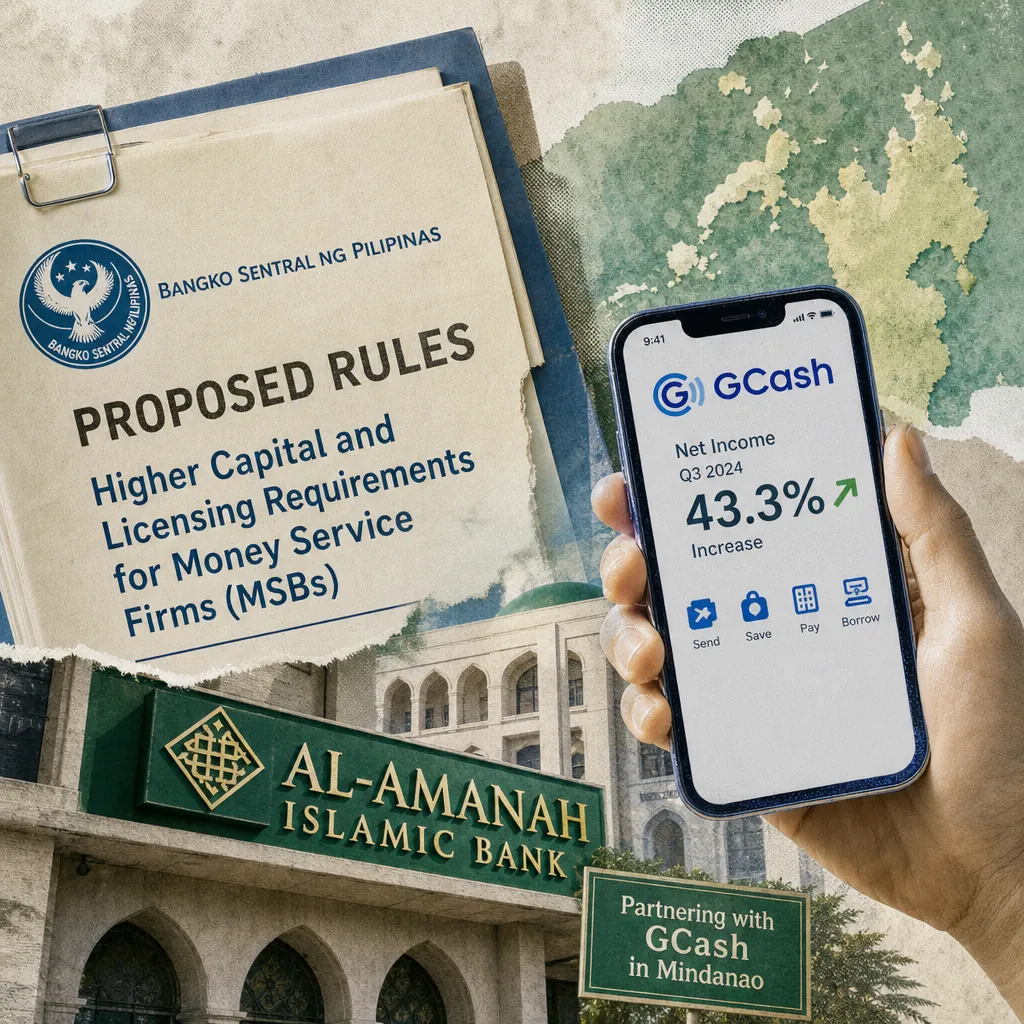
The Bangko Sentral ng Pilipinas (BSP), the country's central bank, wants remittance companies to hold at least ₱50 million in capital and money changers at least ₱10 million before they can operate, according to draft amendments the bank has opened for industry comment47. The proposal, reported by Philstar and by Inquirer's business desk, would replace a regime in which those capital floors applied only to large-scale operators — remittance firms processing at least ₱75 million in average monthly transactions — and extend them to the whole nonbank money-services sector1547. Money service businesses, as the BSP defines them, are nonbank firms handling electronic money, virtual assets, remittances and currency exchange; the draft also requires license applicants to show their operations are viable and can be run in a safe and prudent manner15.
The same day brought the other half of the story. Mynt Inc., the company behind the GCash e-wallet, reported a 43.3 percent increase in third-quarter net income to ₱5.6 billion from ₱3.9 billion a year earlier, on revenues up 16.5 percent to ₱24.1 billion4. For the first nine months of 2026, net income rose 17.4 percent to ₱16.5 billion and revenues 12.5 percent to ₱67.4 billion4. Mynt is now a publicly listed company after a $966-million (₱60.9-billion) initial public offering, and it is sending executives to the Singapore Fintech Festival for the fourth straight year to present the Philippine financial-inclusion story to a global audience41.
Two smaller items round out the day's regulatory picture. The Insurance Commission said its new digital reporting platform, Iris, will become the only accepted channel for quarterly regulatory submissions by the end of the first quarter of 2027, with insurers given until Nov. 27 to comment on the draft circular13. And an Inquirer business column described a central-bank-regulated electronic money issuer that lost access to inbound transfers after roughly ₱1 billion moved to a virtual asset service provider at high speed, a sum large enough to trigger regulatory alarm16.
Key themes
- The BSP wants ₱50 million behind every remittance counter. Draft rules would set a ₱50-million base capital requirement for remittance and transfer companies and ₱10 million for money changers and foreign exchange dealers, levels that until now applied only to large-scale operators47. Smaller players face higher compliance costs; the central bank frames the change as risk management for a sector whose operations are growing more complex15.
- Mynt's third-quarter net income rose 43.3 percent to ₱5.6 billion. The GCash operator's nine-month net income reached ₱16.5 billion, up 17.4 percent, on revenues of ₱67.4 billion4. Analysts quoted in the report are now asking whether the pace can be sustained as the company widens its financial-services ecosystem4.
- Al-Amanah Islamic Bank will run GCash services across its network in Mindanao. The state-owned bank signed a memorandum of agreement to offer Bills Pay, Scan to Pay and a Funds Disbursement Service, which lets money move directly into customers' GCash accounts12. The bank's stated aim is financial inclusion in a region where branch access is thin12.
- The Insurance Commission will accept only digital submissions from the first quarter of 2027. The Iris platform replaces largely manual reporting; firms must file the Dec. 31 quarter through both Iris and the old portal, and after the March 31, 2027 quarter, printed and emailed copies will no longer count as valid submissions13.
- About ₱1 billion moved from an e-money issuer to a virtual asset provider before regulators cut off inbound transfers. The Inquirer column reports the issuer lost access after the transfer, which put the money beyond the reach of regulators16. The column does not name the firm or confirm an enforcement case.
- The BSP more than doubled its own profit in the first eight months. Net income reached ₱175.8 billion from January to August, against ₱86.9 billion a year earlier, as total expenses fell 17.7 percent and interest expenses dropped 41 percent, even though revenues slipped 2.3 percent24.
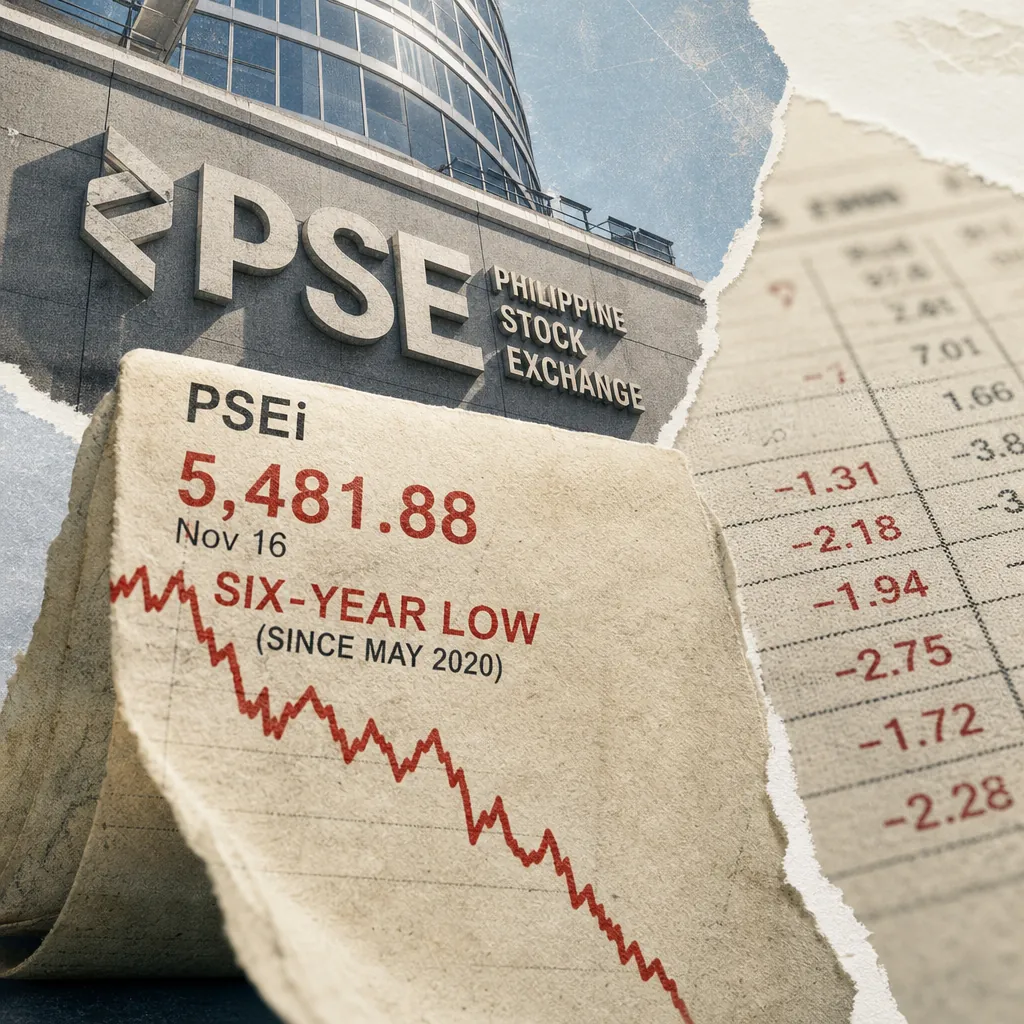
- The stock market snapped a four-day losing streak with a 0.35 percent gain. The Philippine Stock Exchange Index closed at 5,500.88, up 19 points, after Monday's selloff took it to its lowest level in more than six years; value turnover was a thin ₱5.22 billion4248.
- Asean and the United States adopted ten principles on online scams. President Ferdinand Marcos Jr. announced the agreement at the Asean-US Special Summit attended by US President Donald Trump, covering public-private cooperation against online fraud119. Marcos did not lay out the specific provisions19.
How the narratives stack
Dominant. The BSP's proposed capital rules for money service businesses carried the most consequence in the items reviewed here, drawing coverage from both Philstar and Inquirer's business section1547. The two reports agree on the core numbers — ₱50 million for remittance and transfer companies, ₱10 million for money changers and foreign exchange dealers — and both frame the change as a shift from a large-operator-only standard to a sector-wide one. Philstar's account, which ran in the paper's business pages, put the compliance-cost question plainly: smaller operators may struggle to meet the floors47. Inquirer's version emphasized the licensing side, noting that applicants would have to demonstrate viable operations and prudent management15. The story matters beyond the firms themselves because remittances are a pillar of Philippine household income, and the cost of compliance eventually shapes what consumers pay to send and receive money.
Counter-narrative. Mynt's earnings sit against the regulatory tightening as a reminder that the biggest player in the sector is growing, not contracting. The 43.3 percent third-quarter net income jump and the ₱16.5-billion nine-month figure are the kind of numbers that make the case for scale4. The report notes that analysts are watching whether the company can sustain earnings and cash flow as it expands, which is a fair question for any fintech that has just raised $966 million in an IPO and now answers to public shareholders441. The Al-Amanah partnership points the same direction: GCash services are being embedded in a state-owned Islamic bank's network in Mindanao, extending the platform's reach into a region where formal financial access has lagged12.
Emerging. The Insurance Commission's move to a single digital reporting channel is a quiet administrative change with real effects for insurers, who will need to rebuild their quarterly reporting processes around Iris by the first quarter of 202713. The ₱1-billion crypto transfer described in the Inquirer column is the more unsettled item: it describes a regulated e-money issuer losing inbound transfer access after a large sum moved to a virtual asset service provider, but it does not name the firm, confirm an enforcement action, or say whether the money has been recovered16. The BSP's own profit surge — ₱175.8 billion in eight months — is a separate thread that speaks to the central bank's balance-sheet position rather than to any policy shift24.
Under-covered. The Asean-US agreement on online scam principles received attention in the Inquirer and in a Cebuano-language report from Tuguegarao's Bomboradyo, but the substance of the ten principles was not published in either account119. For a region where online fraud has become a daily consumer problem, an agreement announced at a summit without published provisions leaves the public unable to judge what changes. The stock market's bounce, meanwhile, was covered by two outlets with nearly identical numbers and the same caution about thin turnover4248.
Platform insights
The day's material came through news outlets rather than social platforms, so platform-level engagement data is not available for this window. What the coverage does show is how financial news travels: the BSP's draft circular reached readers through two business desks within hours of each other, with Philstar leading on the capital figures and Inquirer on the licensing conditions1547. The Mynt earnings story moved through a business newswire and a Manila Times report on the company's Singapore Fintech Festival appearance, suggesting the company is pushing its growth narrative through international venues as much as domestic press441. The Cebuano-language Bomboradyo item on the Asean scam principles shows regional radio translating a summit announcement for local audiences, a channel that reaches readers the business pages do not19.
Key voices and communities
The Bangko Sentral ng Pilipinas. The central bank is the day's most consequential actor, setting the terms of the money-services debate through a draft circular open for comment1547. Its framing — growth plus consumer protection plus financial stability — is the frame against which remittance firms and money changers will negotiate.
Mynt and GCash. The company's executives, including Fuse Financing president and CEO Tony Isidro and Mynt new-businesses head Winsley Bangit, are carrying the growth story to Singapore41. Their audience is global investors and fintech peers, and the message is that Philippine fintech can scale financial inclusion.
Al-Amanah Islamic Investment Bank of the Philippines. The state-owned bank is positioning itself as the bridge between Islamic banking and digital payments in Mindanao12. Its partnership with GCash is a concrete test of whether e-wallet services can reach communities that banks have not served well.
Insurance industry compliance teams. Insurers have until Nov. 27 to comment on the Iris circular and until the March 2027 quarter to rebuild their reporting around a single digital channel13. Their concerns will shape how the transition is implemented.
Financial-market analysts. Philstocks research manager Japhet Tantiangco and Regina Capital's Luis Limlingan are the quoted voices on the market's cautious mood, pointing to stagflation risk and the possibility of another US rate hike as reasons the bounce was limited4248.
Narrative streams
The BSP proposes ₱50-million capital floors for remittance firms
The draft circular would set a base capital requirement of ₱50 million for remittance and transfer companies and ₱10 million for money changers and foreign exchange dealers47. Under current rules, those benchmarks apply only to large-scale operators — remittance firms processing at least ₱75 million in average monthly transactions47. The change would extend the same floors to smaller operators, many of which run on thin margins and could face a choice between raising capital and exiting the business. The BSP's stated rationale is that as money service businesses expand and their operations become more complex, the risks they carry grow too, and the rules need to keep pace15. Applicants for a license would also have to show that their operations are viable and that they can conduct business in a safe, sound and prudent manner15.
For the sector, the read is that consolidation is likely. Firms that cannot raise ₱50 million will look for buyers or partners, and the surviving operators will be larger and more closely supervised. Consumers may see fewer remittance counters in the short run and more digital channels in the long run, since the same capital pressure favors firms that already have scale. The BSP has taken a similar approach before: it has disqualified unregistered money service businesses, and the draft continues that push toward a licensed, capitalized sector15.
Mynt's earnings growth draws analyst scrutiny
Mynt's third-quarter net income rose 43.3 percent to ₱5.6 billion from ₱3.9 billion, and revenues rose 16.5 percent to ₱24.1 billion from ₱20.7 billion4. The nine-month figures — ₱16.5 billion net income, ₱67.4 billion revenues — show a company that is still growing quickly a year after its IPO4. The report quotes hedge fund manager Eric Jurado of SeA Focus Portfolio saying the results show the company's trajectory, while noting that analysts are now focused on whether the pace can be sustained as Mynt expands its digital financial services ecosystem4.
The read for the sector is that GCash's scale gives it an advantage in the regulatory environment the BSP is building. A company that can fund compliance, absorb capital requirements and invest in new products is better placed than a small remittance counter to meet the new standards. The risk for competitors is that the same scale lets Mynt set prices and terms across a widening set of services, from lending through Fuse Financing to bill payments and disbursements41.
Al-Amanah and GCash take digital payments to Mindanao
Al-Amanah Islamic Investment Bank of the Philippines signed a memorandum of agreement with GCash to offer Bills Pay, Scan to Pay and a Funds Disbursement Service across its network12. Bills Pay lets customers settle bills through the GCash platform without visiting a branch; Scan to Pay automates transactions; and the Funds Disbursement Service transfers money directly into customers' GCash accounts12. The bank is state-owned and describes the partnership as a way to expand financial inclusion in Mindanao12.
The read for the sector is that the partnership tests whether digital services can reach communities that traditional banking has not served well. Mindanao has historically had lower access to formal financial services than Luzon, and a state-owned Islamic bank partnering with the country's largest e-wallet is a direct attempt to close that gap. The BSP has reported rising financial account ownership among women and young people, and this partnership is the kind of arrangement that turns survey gains into actual usage12.
The Insurance Commission moves to a single digital reporting channel
The Insurance Commission's draft circular would make the Iris platform the sole channel for quarterly regulatory submissions by the end of the first quarter of 202713. Insurers must file the Dec. 31 quarter through both Iris and the current EQRSFS Portal, and after the March 31, 2027 quarter, physical copies and emailed electronic copies will no longer be considered valid13. Firms have until Nov. 27 to comment13.
The read for the sector is that smaller insurers with manual reporting processes face a one-time cost of rebuilding their systems, while the regulator gains faster and more comparable data. The Insurance Commission has reported non-life premiums rising 10 percent, and better data will make that kind of reporting more timely13.
A ₱1-billion crypto transfer and the limits of regulation
An Inquirer business column describes a central-bank-regulated electronic money issuer that lost access to inbound transfers after roughly ₱1 billion moved to a virtual asset service provider at high speed16. The column says the fintech community had already felt the tremors as regulators cracked down on various players, and that the transfer put the money into a realm regulators can no longer touch16. The column does not name the issuer or the virtual asset provider, and it does not confirm whether an enforcement case is pending16.
The read for the sector is that the BSP's push for tighter money-service rules is partly a response to exactly this kind of gap. Electronic money issuers that convert crypto assets to pesos sit at the junction between the regulated banking system and the less-regulated virtual asset world, and a large, fast transfer across that junction is hard to reverse once it happens. The draft circular's viability and prudential requirements are aimed at making that junction safer15.
The BSP's own profit more than doubles
The central bank reported net income of ₱175.8 billion for January to August, up from ₱86.9 billion a year earlier24. Revenues dipped 2.3 percent to ₱182.7 billion, but total expenses fell 17.7 percent to ₱113.1 billion, with interest expenses down 41 percent to ₱54.2 billion24. Interest income, the bulk of the top line, rose nearly 3 percent to ₱167.9 billion, while miscellaneous income fell 38 percent to ₱14.8 billion24.
The read for the sector is that the central bank's balance sheet is strong enough to absorb the cost of tighter supervision. A central bank earning more than ₱175 billion in eight months has room to fund the systems and staff that the new money-service rules and digital reporting requirements will demand.
The stock market bounces after a six-year low
The Philippine Stock Exchange Index rose 0.35 percent, or 19 points, to close at 5,500.88, snapping a four-day losing streak that had taken it to its lowest level in more than six years48. The broader All Shares index was essentially flat at 3,102.754248. Value turnover was ₱5.22 billion, which Philstocks' Japhet Tantiangco called a sign of cautious sentiment42. First Metro Securities said the index held midday gains through a choppy afternoon, shrugging off Wall Street's tech rout, while Regina Capital's Luis Limlingan said gains remained limited by caution48.
The read for the sector is that bargain hunting, not confidence, drove the day's gain. Investors are still weighing stagflation risk at home and the possibility of another US rate hike, and a thin turnover day does not change that42.
Asean and the US agree on principles against online scams
President Marcos announced that Asean and the United States adopted ten Public-Private Partnership Principles for Tackling Online Scams and a Comprehensive Work Plan, at the Asean-US Special Summit attended by President Trump1. Marcos called the agreement a concrete result of the summit rather than a statement of diplomatic talk, but he did not lay out the specific provisions19. The Cebuano-language report from Tuguegarao's Bomboradyo carried the same announcement for regional audiences19.
The read for the sector is that the agreement's value depends on what the ten principles actually require. Public-private cooperation against online scams is a priority for banks and e-wallets, which absorb fraud losses and customer complaints, but without published provisions firms cannot tell what will change in their reporting or liability arrangements119.
Conversation trajectory
The BSP comment period on money service rules. The draft circular is open for industry feedback, and the comments will show which firms expect to struggle with the ₱50-million floor. Watch for the BSP's revised circular and any transition period for existing operators. Window: the next four to eight weeks.
Mynt's full-year results. The company's nine-month net income of ₱16.5 billion sets up a full-year report that analysts will compare against the 43.3 percent third-quarter growth rate4. A slowdown in the fourth quarter would sharpen the sustainability question. Window: the first quarter of 2027.
The Insurance Commission's Nov. 27 comment deadline. Insurers' comments on the Iris circular will indicate how ready the industry is for a single digital channel by the March 2027 quarter13. Window: the next two weeks.
The Asean-US work plan's published details. The ten principles and the Comprehensive Work Plan have been adopted but not published in the accounts reviewed here119. Watch for the text and for any Philippine implementing measures. Window: the coming months.
The ₱1-billion crypto transfer. The Inquirer column leaves open whether the BSP has opened a case, whether the funds were recovered, and which firms were involved16. Any formal enforcement announcement would clarify the regulatory posture toward electronic money issuers that handle virtual assets. Window: uncertain.
Trigger events. A BSP announcement on the final money-service circular; Mynt's full-year earnings release; the Insurance Commission's publication of the final Iris circular; and any statement from the BSP on the crypto transfer case.
Response guidance
Remittance and money-changing firms: start the capital conversation now. The ₱50-million and ₱10-million floors are in draft, not final, and the comment period is the moment to tell the BSP how the requirements would affect your operations. Firms that will need to raise capital should begin talks with investors or partners before the final circular lands.
Fintech platforms: make the compliance case publicly. The BSP's rationale for tighter rules is risk management, and platforms that can show strong anti-fraud and anti-money-laundering controls will be better positioned than those that wait to be asked. Publish what you do, not just what you promise.
Insurers: treat the Iris deadline as a systems project. The Nov. 27 comment deadline and the March 2027 full-adoption date are close together. Assign an owner for the transition and test the dual-reporting process for the Dec. 31 quarter before it becomes mandatory13.
Banks and e-wallets: explain the scam principles to customers in plain language. The Asean-US agreement will mean little to the public until its provisions are published119. Until then, keep fraud-prevention messaging specific: what a scam looks like, how to report it, and what the bank will never ask for.
Communicators covering the crypto transfer: avoid naming firms without confirmation. The Inquirer column does not identify the issuer or the virtual asset provider16. Speculation about which company is involved risks unfair damage to firms that may not be the subject of any case.
Market commentators: report the turnover, not just the index. The 0.35 percent gain came on ₱5.22 billion in value turnover, which is thin42. Readers who see only the index number will miss the caution behind it.
See the full picture behind today's signals.
This report draws from Media Meter's MediaWatch, our real-time monitoring engine tracking 2,470+ Philippine sources across print, broadcast, digital, and social. Explore how the platform turns raw coverage into decision-grade intelligence, then see how it's configured for teams like yours — whether you're in PR agencies, corporate comms, government, or marketing.
Want more? Browse our Report Library for sector and crisis intelligence, or request a demo and we'll have your brand set up before the call.
Want this kind of intelligence on your brand?
This brief is built on the same MediaWatch methodology that runs continuously across every brand we monitor. See your competitive landscape, Impact Score, and narrative trajectory in a 30-minute demo.