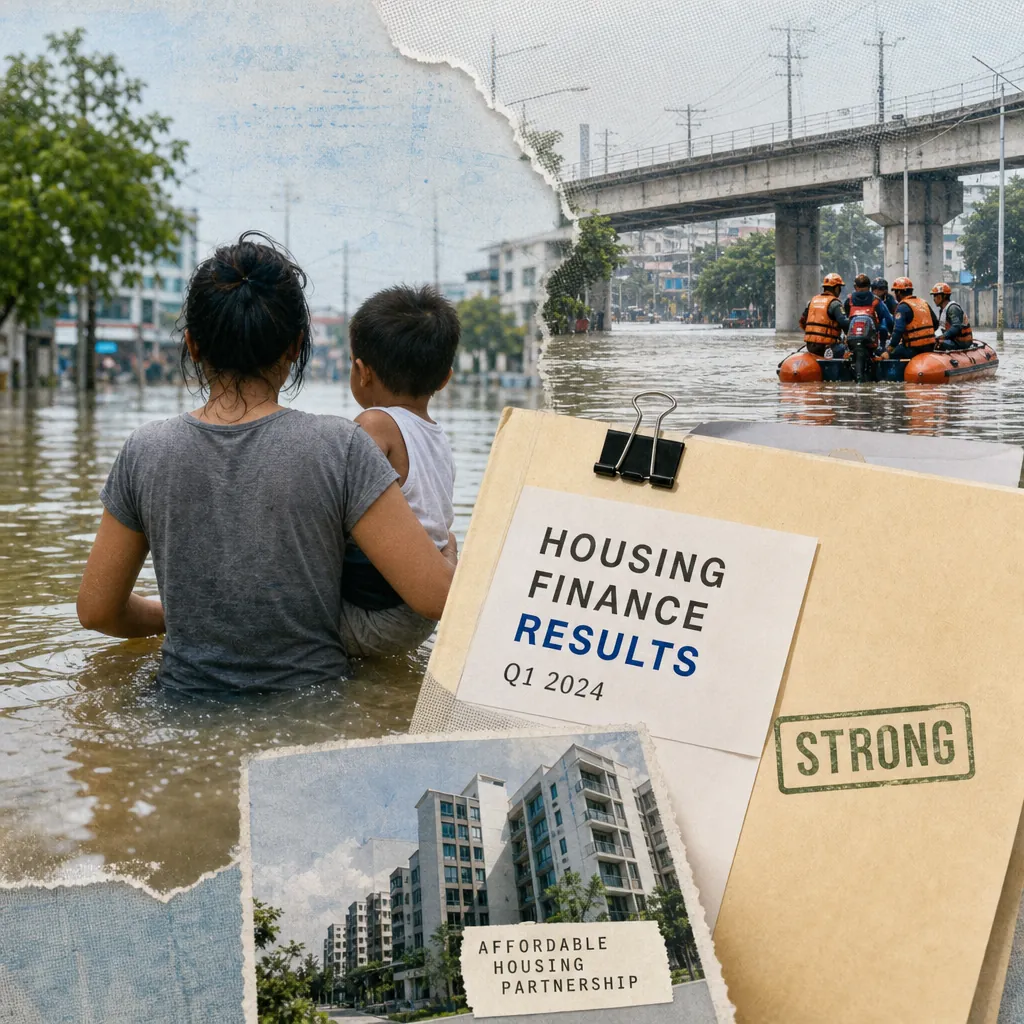
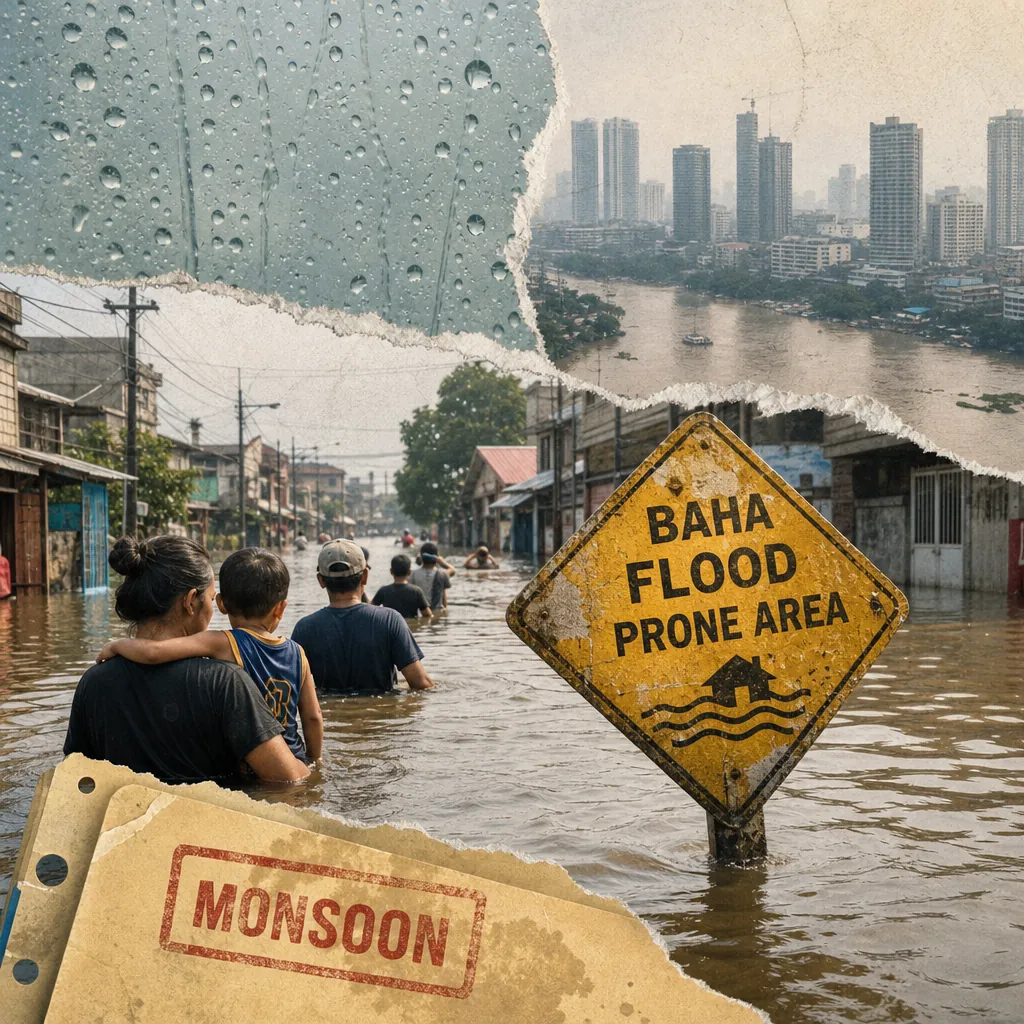
Cavite Calamity, Floods Dominate as Developers Post Mixed Results
A daily snapshot of the Philippine real estate conversation on August 12, 2026, covering the Cavite state of calamity, flooding across Luzon, and mixed corporate earnings from major developers.
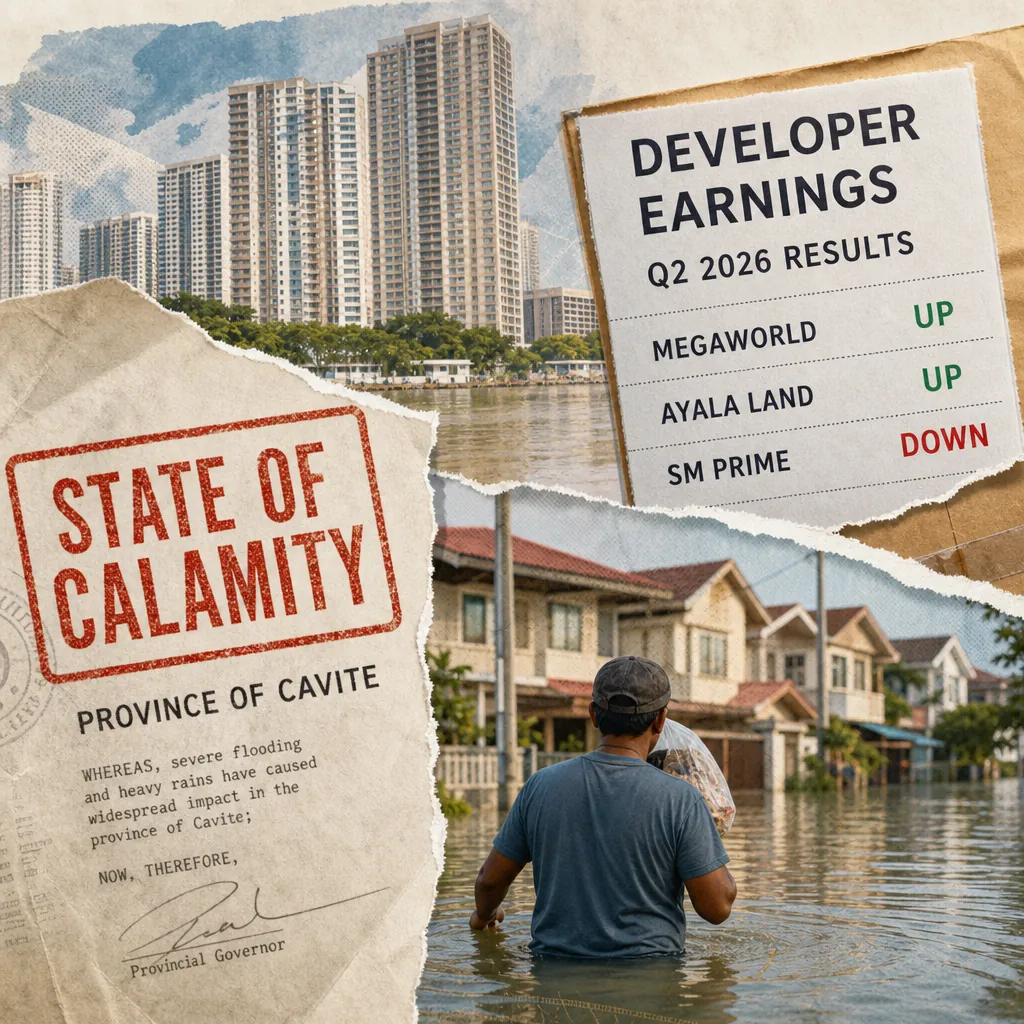
The day's conversation in the Philippine property sector opened with a jarring contrast. Early on August 12, GMA Network's "It's Showtime" aired a lively segment from Kawit, Cavite, celebrating local community spirit and drawing 550 views on YouTube. Within hours, that celebratory tone was swept aside by a far more urgent development: the entire province of Cavite declared a state of calamity due to severe flooding from the southwest monsoon, locally known as "habagat," and the remnants of recent typhoons. The declaration, first reported by UNTV News on Facebook, drew 61 likes, 8 shares, 5 care reactions, and 3 sad reactions—modest numbers, but the emotional mix signaled genuine public concern rather than debate. The whiplash from entertainment to disaster set the stage for a day in which property-related conversations were dominated by water, not sales.
The flooding narrative quickly spread beyond Cavite. Reports emerged of flood-hit families in Bulacan receiving relief in Barangay Malis, Guiguinto, following the southwest monsoon and Typhoons Luis and Maymay. By late afternoon, the Iglesia Ni Cristo's "Lingap sa Mamamayan" relief operations in Laguna confirmed the geographic spread, with the Felix Y. Manalo Foundation mobilizing aid for barangays submerged by relentless rain. These provinces—Cavite, Laguna, and Bulacan—are major growth corridors for residential development, home to projects by Vista Land, DMCI Homes, Ayala Land, and SMDC. The convergence of disaster and development created an immediate reputational pressure point for these companies.
Amid the crisis, a counter-narrative emerged from the corporate world. Rockwell Land announced a 42% jump in first-half profits to P2.71 billion, a post on Twitter that drew 1,374 views but no comments or shares. The muted response underscored how completely the public's attention was fixed on the humanitarian emergency. Similarly, Megaworld reported a 5% rise in first-half net income to P12.7 billion, and JG Summit's profits fell 37% due to fuel costs—all financial news that struggled to gain traction against the flood coverage. The day's conversation thus ran on two tracks: a dominant, emotionally charged disaster narrative and a quieter, financially focused one that hinted at the sector's underlying resilience.
Key themes
- Cavite's State of Calamity and Flooding Crisis: The declaration of a state of calamity in Cavite, followed by similar declarations in Bulacan's Calumpit town, dominated the day's news. Heavy rains from the southwest monsoon and Typhoon Maymay caused widespread flooding, displacing over 154,000 people in Calumpit alone. This created immediate concerns about the resilience of housing developments in these flood-prone areas.
- Developer Earnings: A Mixed Picture: Rockwell Land's 42% profit surge to P2.71 billion contrasted with Megaworld's modest 5% growth and JG Summit's 37% profit decline. These results, released on the same day as the disaster declarations, highlighted the sector's financial strength even as operational challenges mounted.
- Infrastructure Failures Under Scrutiny: The collapse of a P5-million river wall in Marilao, Bulacan, just two months after completion, sparked public outrage and questions about construction quality. This incident, along with President Marcos's admission of a "critical garbage situation," pointed to systemic infrastructure weaknesses that exacerbate flooding.
- Government and Institutional Response: The government, through agencies like the Department of Transportation and the Government Service Insurance System, mobilized relief and emergency loans. Religious and civic organizations, such as the Iglesia Ni Cristo, also stepped in, highlighting the role of non-state actors in disaster response.
- Housing Affordability and Socialized Housing Initiatives: Amid the crisis, positive developments emerged: Davao City broke ground on a 630-unit socialized housing project, and Pag-IBIG Fund partnered with Ayala Land to expand housing options. These initiatives underscored the ongoing need for affordable housing, even as flood risks complicate site selection.
- Economic Headwinds and Structural Weaknesses: A report from GlobalSource flagged that the Philippines' traditional growth engines are losing momentum, with Q2 GDP growth at just 2.3%. This macroeconomic concern, coupled with the flooding, could dampen investor confidence in the property sector.
- Community Resilience and Relief Efforts: The day's conversation was not solely about disaster; it also showcased community solidarity. Relief operations in Bulacan, Laguna, and Maguindanao, along with the "bayanihan" spirit, provided a counterpoint to the devastation, offering a narrative of hope and collective action.
How the narratives stack
Dominant: The flooding crisis and the Cavite state of calamity declaration dominated the captured conversation, both in volume and emotional weight. This narrative was driven by urgent humanitarian concerns, with posts and articles focusing on displacement, relief operations, and infrastructure failures. Within the monitored set, this story drew the most coverage and engagement, reflecting its immediate impact on communities and its direct relevance to property stakeholders.
Counter-narrative: The strong financial performance of developers like Rockwell Land and Megaworld served as a counter-narrative, suggesting that the sector's fundamentals remain intact despite the disaster. However, this narrative received minimal social traction, as the public's attention was fixed on the crisis. The contrast between corporate earnings and community suffering created a tension that communications teams must navigate carefully.
Emerging: The scrutiny of infrastructure quality, exemplified by the Marilao river wall collapse, is an emerging narrative that could grow as damage assessments continue. Questions about construction standards, drainage, and flood mitigation are likely to intensify, potentially leading to regulatory scrutiny and buyer concerns about project safety.
Suppressed: The positive housing initiatives, such as the Davao City socialized housing groundbreaking and the Pag-IBIG-Ayala Land partnership, received relatively little attention in the captured set. These stories, which could bolster the sector's image, were overshadowed by the disaster coverage. Communicators should look for opportunities to amplify these narratives once the immediate crisis subsides.
Platform insights
- Facebook: The primary channel for official disaster declarations and institutional responses. The Cavite state of calamity announcement and the Iglesia Ni Cristo relief broadcast both originated here. Engagement patterns showed emotional resonance (care and sad reactions) rather than combative discussion, indicating that users were processing information with concern. Property stakeholders should monitor Facebook for government and regulatory responses to flooding.
- Twitter/X: Hosted both the Rockwell Land earnings announcement and the Bulacan relief operations update, with view counts of 1,374 and 751 respectively. The absence of comments or shares suggests that conversations were still in the awareness-building phase. This quiet engagement indicates that follow-up coverage over the coming days will be critical for understanding how these narratives develop.
- YouTube: The "It's Showtime" episode featuring Kawit, Cavite was the only YouTube content in the dataset, with 550 views and zero engagement. This entertainment content did not address the flooding crisis, leaving a gap in video-based disaster coverage from mainstream media. This suggests an opportunity for developers to provide video updates on project status and relief efforts.
Key voices and communities
- Provincial Disaster-Impacted Communities: Residents and local government units in flood-affected provinces are generating urgent, location-specific conversation. Their messaging centers on survival and recovery, creating a distinct lane that intersects with property development narratives through location-specific risk awareness. For developers with projects in these areas, this community represents a reputational risk that requires proactive engagement.
- Financial News and Business Media Watchers: A smaller but strategically critical group of investors, analysts, and business journalists active on Twitter. They track corporate earnings and sector health, as evidenced by the attention to Rockwell Land's profit surge. Their focus on fundamentals provides early indicators of market leadership shifts.
- Mainstream Entertainment Content Consumers: The audience engaging with GMA Network's digital platforms, including the "It's Showtime" episode, represents an indirect but significant conversation stream. This group shapes geographic brand perception, and areas featured positively in entertainment gain familiarity, which can support developer marketing efforts.
- Government and Institutional Actors: President Marcos, senators like Bong Go, and agencies like the Department of Transportation and GSIS are key voices in the disaster response narrative. Their statements on flood control, relief, and infrastructure investment shape public expectations and can influence policy.
- Religious and Civic Organizations: The Iglesia Ni Cristo and its Felix Y. Manalo Foundation, along with other groups, are amplifying the visibility of affected areas and creating secondary narratives about institutional responses to housing crises. Their relief efforts draw attention to the long-term needs of displaced communities.
Narrative streams
The Flooding Crisis and Its Impact on Property Markets
The declaration of a state of calamity in Cavite on August 12 was the day's most consequential development for the property sector. The province, a key growth corridor for residential projects, faced severe flooding from the southwest monsoon and Typhoon Maymay. The UNTV News report on Facebook, which broke the story, drew 61 likes and 5 care reactions, signaling public concern. The inclusion of Pangasinan and Benguet in the same report indicated a regional pattern that could affect multiple property markets simultaneously.
In Bulacan, the town of Calumpit declared its own state of calamity, with all 29 barangays flooded. According to the municipal disaster risk reduction office, 154,961 individuals from 46,498 families were displaced or directly impacted. The flooding was aggravated by backflooding from Pampanga waterways and discharges from overflowing dams. This level of displacement has direct implications for housing: residents in flood-prone areas will likely reassess the safety of their homes, and buyers may become more cautious about purchasing properties in low-lying zones.
For developers like Vista Land (with Camella and Lumina Homes in Cavite) and DMCI Homes (with projects in the region), this narrative carries reputational risk. The conversation suggests that "flooding" is no longer a taboo topic in property discussions; it is an expected consideration that developers must address transparently. The absence of any developer-specific response or relief initiative in the sampled content creates a visible opportunity for proactive engagement.
Developer Earnings: Resilience Amidst Adversity
On the same day as the disaster declarations, Rockwell Land reported a 42% increase in first-half net income to P2.71 billion, driven by stronger residential and commercial development revenues. The Lopez-led developer's consolidated revenues surged 41% to P13.57 billion, with residential development accounting for 76% of the total. This financial milestone, posted on Twitter, drew 1,374 views but no comments or shares, indicating that the audience's attention was firmly fixed on the crisis.
Megaworld Corp. also reported a 5% increase in first-half net income to P12.7 billion, with its hotels and resorts segment growing 11% to P3.1 billion. The company's recurring-income businesses helped cushion the impact of a challenging property market. However, its second-quarter profit edged up just 0.9% to P5.65 billion, reflecting higher operating expenses and interest charges.
In contrast, JG Summit Holdings saw its first-half core net income plunge 37% to P13 billion, primarily due to higher fuel costs and foreign exchange pressures on its airline business, Cebu Air. The conglomerate's property, food, and investment segments performed better, but the overall result underscored the vulnerability of conglomerates to external shocks.
These earnings reports, covered extensively in the business press, suggest that the property sector's fundamentals remain strong despite the disaster. However, the muted social response indicates that positive financial news may be overshadowed by crisis narratives during disaster periods. Communications teams should consider timing positive announcements for when disaster coverage recedes.
Infrastructure Failures and the Garbage Crisis
The collapse of a P5-million river wall in Barangay Prenza 2, Marilao, Bulacan, on August 10, just two months after its completion, became a focal point of public anger. The 45-meter-long, 12-meter-high structure failed under heavy rainfall, prompting residents and social media users to question the quality of materials and construction. Contractor JB Construction denied cutting corners, attributing the failure to extreme hydrostatic pressure from water-saturated soil. Mayor Jamina Sy launched an investigation.
This incident, covered by the Daily Tribune, highlights the fragility of flood-control infrastructure in the Philippines. It also raises questions about the oversight of public works projects, a theme echoed in the ongoing Senate testimony of former Public Works Secretary Manuel Bonoan, who invoked his right against self-incrimination in a plunder case related to ghost projects.
President Marcos, during an inspection of the Diokno Pumping Station in Pasay City, admitted that the country faces a "critical garbage situation," exacerbated by the rains. He said, "Does that look critical to you? It does to me," while also noting that the flooding is not as severe as before. These statements, reported by Bandera Inquirer Online, underscore the systemic challenges that contribute to flooding and property damage.
For property developers, these infrastructure failures are a double-edged sword. On one hand, they highlight the need for resilient design and construction. On the other, they may lead to stricter regulations and increased scrutiny of development projects in flood-prone areas.
Government and Institutional Response
The government's response to the flooding was multifaceted. The Department of Transportation reported that transport systems remained functional, with the Philippine Coast Guard rescuing and assisting over 8,000 individuals in Romblon, Batangas, Cavite, Laguna, Rizal, and Pampanga. The Government Service Insurance System offered emergency loans of up to P40,000 to affected members and pensioners, providing immediate financial relief.
Senator Bong Go extended assistance to flood-affected communities in Maguindanao del Sur and Norte, distributing 1,075 food packs. He also advocated for stronger disaster preparedness, citing the Ligtas Pinoy Centers Act, which mandates the establishment of evacuation centers. These efforts, covered by Sunstar Online and Head Topics, demonstrate the government's role in disaster response, but also highlight the ongoing need for more robust infrastructure.
For property stakeholders, the government's response signals that flood-prone areas will face heightened scrutiny from regulators. The declaration of a state of calamity may trigger requests for payment moratoriums or restructuring among affected borrowers, impacting mortgage financing and property-related services.
Housing Affordability and Socialized Housing Initiatives
Amid the crisis, positive developments in housing affordability emerged. Davao City broke ground on the Balai Calinan Housing Project, which will provide 630 socialized housing units under the city's Public Rental Transitory Housing Scheme. The project, a public-private partnership involving the city government, the Department of Human Settlements and Urban Development, BRIA Homes, and Vista Land Lifescapes, sits on a 121,378-square-meter site donated by BRIA Homes. This initiative, reported by Sunstar Online, reflects the broader mission to provide affordable housing for the homeless and residents of hazard-prone areas.
Similarly, Pag-IBIG Fund signed a memorandum of understanding with Avida Land and Amaia Land to expand housing options under the Expanded Pambansang Pabahay para sa Pilipino Program. The partnership will explore special rates for selected homes, with housing loans of up to P10 million. This initiative, covered by the Daily Tribune, supports the Marcos administration's goal of expanding homeownership.
These initiatives, while positive, received relatively little attention in the captured set compared to the disaster coverage. They represent an opportunity for the sector to demonstrate its commitment to addressing housing needs, even as flood risks complicate site selection.
Economic Headwinds and Structural Weaknesses
A report from New York-based think tank GlobalSource flagged that the Philippines' traditional growth engines are losing momentum. The economy grew just 2.3% in the second quarter, its weakest expansion in the post-pandemic era, lagging regional peers. The oil price shock from the Middle East crisis exposed structural weaknesses, including consumer spending, which accounts for about 70% of GDP.
This macroeconomic concern, covered by the Inquirer, has direct implications for the property sector. Slower economic growth could dampen demand for residential and commercial properties, while higher fuel costs could increase construction and operating expenses. The report's authors called for bold structural reforms to reverse the trend.
For property developers, this narrative suggests that the sector's resilience, as evidenced by Rockwell's and Megaworld's earnings, may be tested in the coming quarters. Investors and buyers may become more cautious, and the sector may need to adapt to a slower-growth environment.
Conversation trajectory
- Over the next 2–3 weeks: Flood-related conversations are likely to intensify as damage assessments are completed and relief operations continue. Expect specific references to affected subdivisions and housing projects, particularly in Cavite, Bulacan, and Laguna. Developers with exposure to these areas should prepare rapid-response protocols and pre-position FAQ materials addressing flood mitigation measures.
- Over the next 4–6 weeks: The H1 earnings reporting season will continue, with more developers likely to announce results. These announcements will provide reference points for how the sector is navigating weather disruptions and economic headwinds. Positive earnings could serve as a counter-narrative to disaster coverage, but timing will be critical.
- Trigger events: The completion of damage assessments in calamity-declared areas, which may produce specific references to affected subdivisions. The ongoing relief operations in Bulacan's Guiguinto area may generate sustained coverage of living conditions, extending into broader housing adequacy discussions. Additionally, any regulatory actions or investigations into infrastructure failures, such as the Marilao river wall collapse, could reshape the conversation.
Response guidance
For communicators in the property sector, the immediate priority is to acknowledge the human impact of the flooding and demonstrate empathy. Avoid promotional content during the crisis period; instead, share official emergency hotlines and relief information. If a client property is affected, activate a dedicated comment response protocol for questions about safety and accessibility, providing clear, step-by-step guidance.
For positive financial news, refrain from amplifying it until the immediate crisis narrative subsides. If forced to acknowledge, frame it as a testament to the sector's long-term resilience and capacity to support national recovery. This approach aligns with the public's current focus on humanitarian concerns.
Monitor geotagged mentions of specific development locations to identify potential reputational risks early. Use Twitter for rapid, concise updates on any changes to office hours, site operations, or rescheduled appointments in affected areas. On YouTube, moderate comments to prevent speculation about construction delays or property damage in the absence of official confirmation.
Key messages should emphasize the safety and well-being of residents and personnel, a commitment to resilient and responsible development, and coordination with authorities to assist those affected. Avoid directly addressing or denying flooding near project sites; instead, acknowledge the weather's impact universally while focusing on the structural integrity and safety features of developments.
Sensitive topics to navigate include religious and organizational aid—maintain a neutral stance and focus on the collective spirit of "bayanihan." Also, avoid celebrating profits while communities are in distress; frame positive financial performance as a foundation for future, stable economic contributions. By aligning with the community-first tone emerging from the sources, communicators can build trust and demonstrate corporate responsibility during this critical period.
See the full picture behind today's signals.
This report draws from Media Meter's MediaWatch, our real-time monitoring engine tracking 2,470+ Philippine sources across print, broadcast, digital, and social. Explore how the platform turns raw coverage into decision-grade intelligence, then see how it's configured for teams like yours — whether you're in PR agencies, corporate comms, government, or marketing.
Want more? Browse our Report Library for sector and crisis intelligence, or request a demo and we'll have your brand set up before the call.
Want this kind of intelligence on your brand?
This brief is built on the same MediaWatch methodology that runs continuously across every brand we monitor. See your competitive landscape, Impact Score, and narrative trajectory in a 30-minute demo.