Marcos expands social protection for contract workers
A daily snapshot of Philippine real estate conversation, covering the president's new voluntary SSS, PhilHealth, and Pag-IBIG contributions for contract workers, monsoon flood response, and corporate earnings.

The day's conversation in the Philippine property sector ran on two tracks that rarely touched. On one side, the southwest monsoon — the seasonal rains known locally as the "habagat" — kept flooding provinces around Manila, suspending classes and government work, and drawing emotional, high-engagement responses on social media. On the other, a quieter but potentially more consequential policy story emerged: President Ferdinand Marcos Jr. signed an administrative order allowing government agencies to deduct voluntary contributions to the SSS, PhilHealth, and Pag-IBIG Fund from the pay of contract of service (COS) and job order (JO) workers. The announcement drew almost no public engagement — a single YouTube video from INQToday logged just 270 views with zero comments — yet for property developers and managers who rely heavily on such non-regular labor, the order signals a possible shift in how the sector's workforce is protected and, eventually, financed.
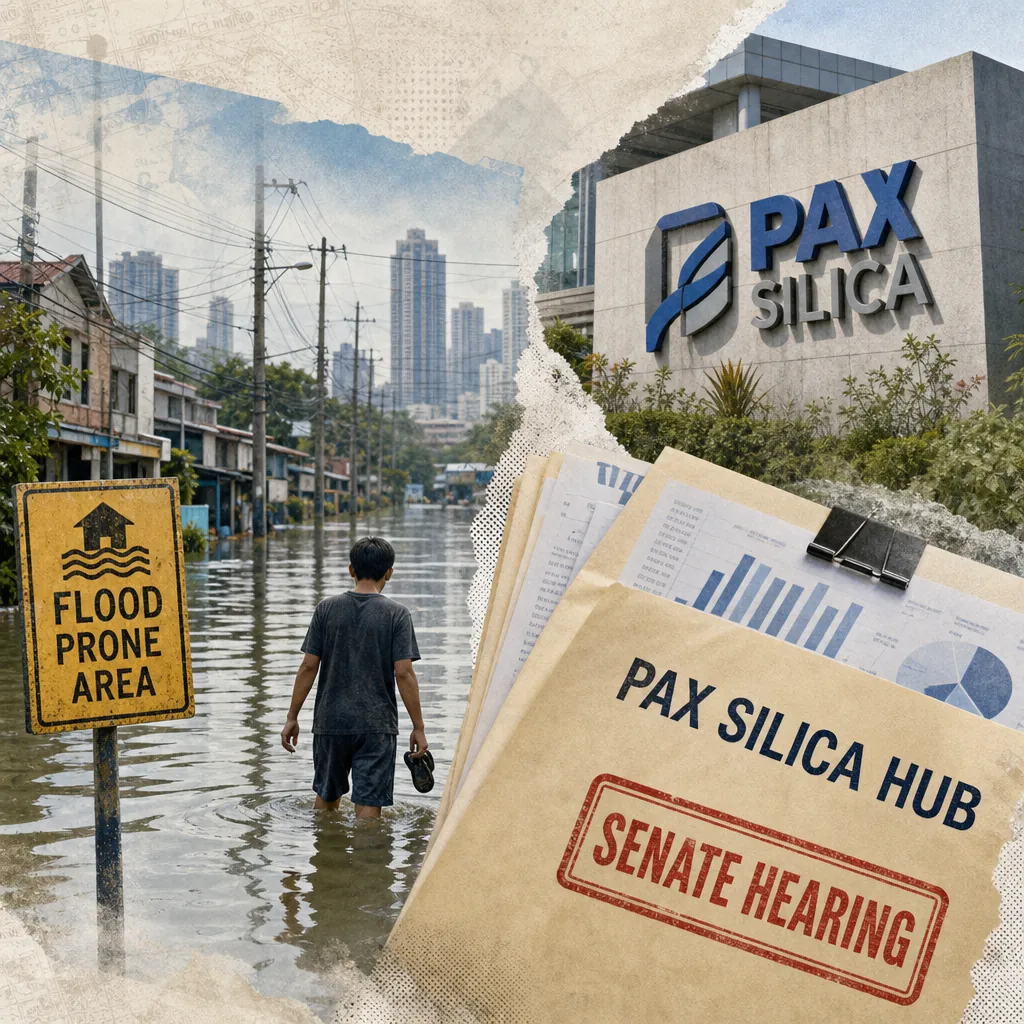
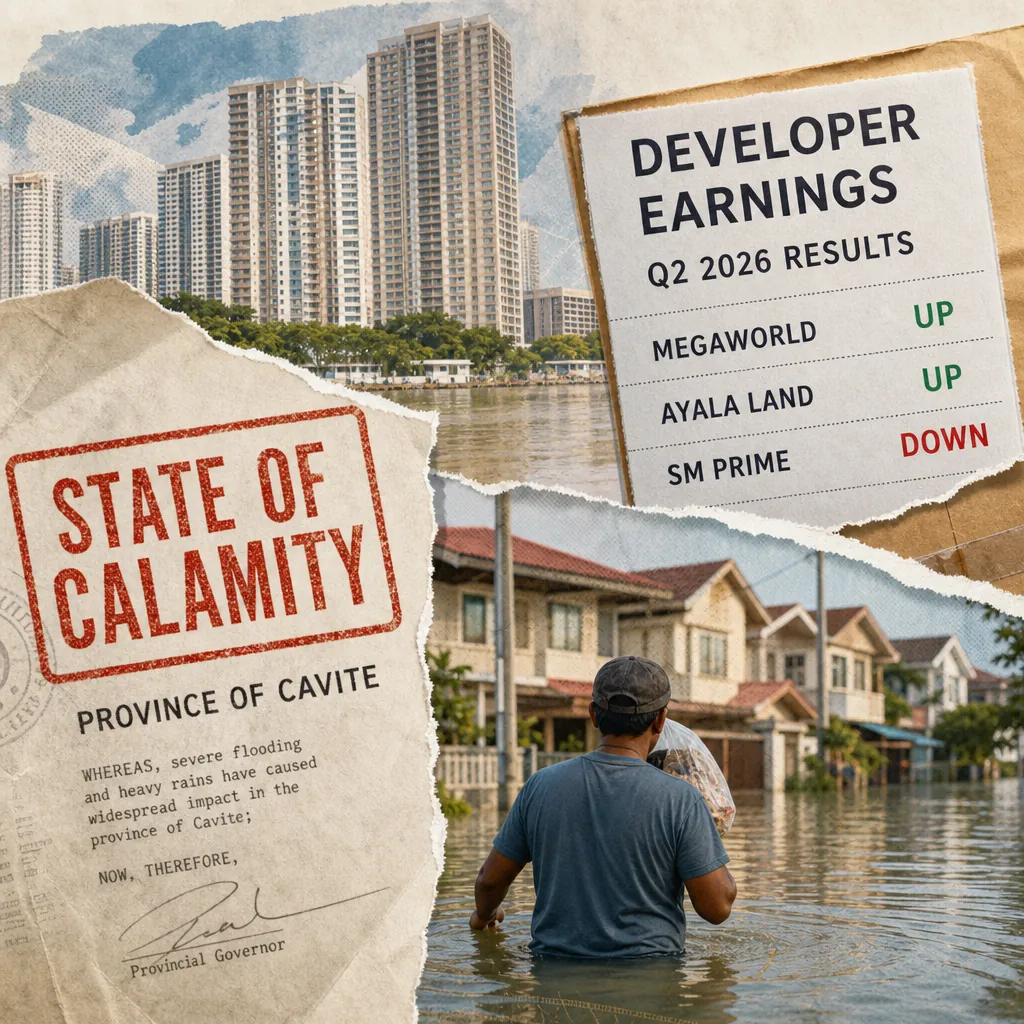
The flood narrative dominated the day's social conversation. Cavite declared a state of calamity, and a Facebook post announcing it drew 61 likes, 8 shares, and 8 reactions (5 care, 3 sad). Relief operations in Bulacan, where food packs were distributed in Barangay Malis, Guiguinto, generated over 750 views on Twitter. A class suspension announcement covering Cavite, Batangas, and Rizal reached 6,558 views — the highest engagement of any safety-related post in the window. The human toll was stark: three teenagers drowned in Bulacan rivers, and a grieving father, Jess Bulatao, publicly denounced fake fundraisers exploiting his family's landslide tragedy. Amid this, a barangay in Noveleta, Cavite, earned praise for a do-it-yourself flood barrier — a steel gate built by a resident programmer named King Nazareth Dayao — with netizens contrasting it with government flood control projects.
Meanwhile, the corporate earnings season delivered a mixed picture for property stakeholders. Rockwell Land reported a 24.7% jump in second-quarter net income to P1.42 billion, with consolidated revenue up 37.2% to P7.12 billion. Filinvest Development Corp. saw first-half profit slip slightly to P7.36 billion, as banking weakness offset strong gains in real estate and hospitality. Ayala Corp.'s core earnings fell 7% to P22.1 billion, dragged down by a 19% drop at Ayala Land Inc. (ALI), which also lost its place in the MSCI Philippines Index — a key benchmark for international investors — and was reclassified to the small-cap index. The Philippine Stock Exchange index fell 1.23% to 6,288.25, with ALI plummeting 5.67% and SM Prime dropping 7.05%. These financial headlines, though less emotionally resonant than the floods, drew steady attention from business media watchers on Twitter, with the Rockwell earnings report alone attracting over 1,370 views.
The policy announcement, though low in engagement, carries the deepest implications for the property sector. Administrative Order No. 43, signed June 3 but reported on August 13, directs national government agencies to facilitate voluntary payroll deductions for SSS, PhilHealth, and Pag-IBIG contributions for COS and JO workers. These workers — security guards, maintenance staff, administrative aides — are the backbone of property management operations in BGC, Makati CBD, and the Bay Area. The order stops short of mandating contributions, but it sets a precedent that could evolve into compulsory coverage, directly affecting operating costs for condominium associations, township management corporations, and commercial property operators. It also expands the pool of potential Pag-IBIG-qualified homebuyers, as workers who build up voluntary contributions become eligible for housing loans — a development that could gradually widen the market for affordable and socialized housing.
Key themes
- Monsoon floods dominate public conversation, with high engagement on relief and safety posts. The southwest monsoon, or "habagat," caused widespread flooding across Luzon, leading to class and work suspensions. Posts about these suspensions and relief operations drew the highest engagement of the day, reflecting public anxiety and the need for actionable information.
- President Marcos expands social protection to contract workers, a policy with long-term property sector implications. Administrative Order No. 43 allows voluntary SSS, PhilHealth, and Pag-IBIG contributions for COS and JO workers. While engagement was minimal, the policy could increase labor costs for property managers and expand the pool of Pag-IBIG-qualified homebuyers.
- Corporate earnings show a mixed picture: Rockwell surges, Ayala and Filinvest face headwinds. Rockwell Land's Q2 profit jumped 24.7%, while Ayala Corp.'s core income fell 7% due to weakness at Ayala Land, and Filinvest's H1 profit slipped slightly. These results signal divergent fortunes among developers.
- Ayala Land's removal from the MSCI Philippines Index rattles investor confidence. ALI was reclassified to the small-cap index, triggering selling pressure and contributing to a broader market decline. This development underscores the challenges facing the property sector amid macroeconomic headwinds.
- Government housing initiatives gain momentum, with Pag-IBIG partnerships and record income. Pag-IBIG Fund reported record H1 net income of P41.35 billion, up 24%, and signed partnerships with Avida and Amaia Land to expand housing loan access. These moves aim to boost affordable housing supply and homeownership.
- Infrastructure projects advance, including the Sangley Point International Airport and Clark development. President Marcos ordered faster development of the Sangley Point airport in Cavite, while Clark Freeport continues to attract investment as a potential economic hub. These projects could reshape regional property markets.
- Community resilience and civic engagement shine amid the crisis. A DIY flood barrier in Noveleta, Cavite, and celebrity relief efforts by Donny Pangilinan drew positive attention, highlighting the public's appreciation for proactive, non-governmental responses to flooding.
- Disaster-related damage and deaths underscore the human cost and infrastructure vulnerabilities. Agricultural damage neared P700 million, and several drownings were reported. The collapse of a flood control structure in Ilocos Sur raised questions about infrastructure resilience.
How the narratives stack
Dominant: The monsoon flood response is the dominant narrative in terms of public engagement and emotional resonance. Posts about class suspensions, relief operations, and community resilience drew the highest interaction across Facebook and Twitter. This narrative reflects immediate, tangible concerns about safety and survival, and it shapes public perception of government and developer responsiveness.
Counter-narrative: The corporate earnings and policy developments form a counter-narrative that is quieter but more structurally significant. Rockwell's profit surge, Ayala's decline, and the administrative order on contract workers all point to longer-term shifts in the property sector's operating environment. These stories are covered extensively in business media but generate little social engagement, suggesting a divide between public attention and industry-relevant news.
Emerging: The expansion of social protection to contract workers is an emerging narrative with potential to grow. As implementing rules are issued and workers begin to navigate voluntary contributions, conversations about Pag-IBIG housing loan eligibility and labor costs could intensify. This policy could also become a benchmark for private sector labor practices, creating reputational opportunities for developers who proactively support worker welfare.
Suppressed: The story of infrastructure vulnerability — exemplified by the collapse of a flood control structure at the Nangueg West Bridge project in Ilocos Sur — received relatively little attention compared to the human-interest flood stories. This is a significant under-covered angle, as it raises questions about the quality and resilience of public infrastructure, which directly affects property values and development viability in flood-prone areas.
Platform insights
- Facebook: The platform was the primary channel for community-level disaster conversation. Posts about the Cavite state of calamity and class suspensions drew the highest engagement, with reactions (care, sad) indicating genuine concern. Facebook also hosted the DIY flood barrier story, which earned praise from netizens. The platform's strength lies in local news propagation and emotional resonance.
- Twitter (X): Twitter served as the hub for real-time updates and business news. Relief operation coverage and class suspension announcements drew thousands of views, while corporate earnings reports like Rockwell's attracted dedicated attention from financial watchers. The platform showed a clear separation between disaster-related and business-related conversations, with little crossover.
- YouTube: YouTube appeared as a broadcast channel for official announcements, such as the INQToday video on the administrative order. Engagement was minimal (270 views, zero comments), indicating that policy news does not yet resonate with the platform's audience. However, entertainment content, like the It's Showtime episode featuring Kawit, Cavite, drew 550 views, suggesting potential for place-based marketing.
- Reddit: No significant Reddit activity was observed in the captured set. The platform's absence suggests that property and disaster conversations are not yet prominent in Philippine Reddit communities, or that monitoring did not capture them.
Key voices and communities
- Government employment and social protection policy watchers: This group includes government personnel, public administration observers, and labor rights advocates. They frame the administrative order as a normalization measure for casual and contractual government employment, with implications for housing access through Pag-IBIG. Their presence is concentrated on national news platforms, and their conversation is early-stage but could expand as implementing guidelines circulate.
- Provincial disaster-impacted communities: Residents and local government units in flood-affected provinces like Cavite, Bulacan, Laguna, and Pangasinan are the most active and emotionally engaged group. They focus on immediate relief needs, infrastructure resilience, and the tangible consequences of flooding. Their conversation is location-specific and carries reputational risk for developers with projects in these areas.
- Financial news and business media watchers: Investors, analysts, and business journalists tracking real estate corporate performance are active on Twitter. They amplify earnings reports and market movements, providing early indicators of sector health. Their attention to Rockwell's profit surge and Ayala's decline shapes investor sentiment.
- Weather and disaster monitoring information seekers: This group actively seeks and circulates official weather advisories, water level reports, and class suspension announcements. Their engagement patterns reveal which areas are most anxious and which concerns are top-of-mind, offering real-time risk perception data for property stakeholders.
- Celebrity and civic engagement amplifiers: A nascent group that amplifies stories of celebrity relief efforts and responsive local governance. Donny Pangilinan's unannounced aid distribution in Cavite drew trending status, and the Noveleta barangay's proactive response earned praise. This group rewards visible, non-performative civic engagement, which developers could emulate.
Narrative streams
The administrative order on voluntary contributions: a quiet policy shift with loud implications
On August 13, 2026, President Ferdinand Marcos Jr.'s Administrative Order No. 43 became a focal point for policy watchers, though it drew minimal public engagement. The order, signed June 3, directs national government agencies to facilitate voluntary payroll deductions for SSS, PhilHealth, and Pag-IBIG Fund contributions for contract of service (COS) and job order (JO) workers. These workers are not regular employees but are engaged on a contractual or project basis, often for security, maintenance, and administrative roles in property management. The order requires agencies to obtain the worker's prior consent before deducting contributions, and it mandates the Department of Budget and Management, Civil Service Commission, Commission on Audit, and the three funds to issue implementing rules.
For the property sector, the implications are twofold. First, it could increase operational costs if voluntary contributions become expected or eventually mandatory. Property developers and management entities that employ large numbers of COS and JO workers — particularly in township developments and mixed-use projects — may face pressure to extend similar benefits to their own contractual staff. Second, the order expands the pool of potential Pag-IBIG-qualified homebuyers. Workers who build up voluntary contributions become eligible for housing loans, potentially widening the market for affordable and socialized housing. The Pag-IBIG Fund's record H1 net income of P41.35 billion, up 24%, and its partnerships with Avida and Amaia Land to offer loans up to P10 million, underscore the government's push to make homeownership more accessible.
The low engagement on this announcement — a single YouTube video with 270 views — suggests the public conversation has not yet caught up with the policy's significance. As implementing rules are published and workers begin to navigate the contribution process, first-person narratives are likely to emerge, shaping public perception. For developers, this is a window to proactively communicate their support for worker welfare and to position their financing programs as complementary to the expanded government benefits.
Monsoon floods: a test of resilience and a reputational risk for developers
The southwest monsoon, or "habagat," brought relentless rain to Luzon, causing widespread flooding and prompting the suspension of classes and government work in Metro Manila and 11 provinces. Cavite declared a state of calamity, and the Department of Agriculture estimated agricultural damage at P689.66 million, nearly double the previous day's figure. The human cost was severe: three teenagers drowned in Bulacan rivers, and a landslide in Baguio claimed seven lives, including a two-year-old.
Social media became a lifeline for affected communities. A Facebook post announcing the Cavite calamity declaration drew 61 likes and 8 shares, with reactions signaling genuine concern. A class suspension announcement for Cavite, Batangas, and Rizal reached 6,558 views, the highest engagement of any safety-related post. Relief operations in Bulacan, showing food packs distributed to flood-hit families, generated over 750 views on Twitter. The public's appetite for actionable information — school schedules, water levels, relief distribution — was clear.
For property developers, this conversation represents both a reputational risk and an opportunity. Communities directly experiencing calamity conditions will associate property safety and flood resilience with developer reputation in those regions. Developers with projects in flood-prone areas like Cavite, Laguna, and Bulacan should proactively engage with stakeholders, issuing statements that acknowledge flooding concerns while highlighting flood mitigation features. The positive reception to the DIY flood barrier in Noveleta — where a resident built steel gates to block floodwater — and to celebrity relief efforts suggests that visible, non-performative civic engagement resonates strongly. Developers could leverage similar dynamics by supporting community relief efforts and communicating their commitment to resilience.
Corporate earnings: divergent fortunes in a challenging market
The day's corporate earnings reports painted a mixed picture for the property sector. Rockwell Land reported a 24.7% increase in second-quarter attributable net income to P1.42 billion, driven by a 30.8% rise in real estate sales and a 54.8% jump in lease income. Consolidated revenue grew 37.2% to P7.12 billion. This strong performance drew attention from financial watchers on Twitter, with over 1,370 views on the earnings report.
In contrast, Ayala Corp.'s core net income fell 7% to P22.1 billion in the first half, as Ayala Land Inc. (ALI) saw its net income drop 19% to P11.5 billion amid persistent macroeconomic headwinds. ALI's weakness also led to its removal from the MSCI Philippines Index, a key benchmark for international investors, and its reclassification to the small-cap index. The news triggered selling pressure, with ALI's stock plummeting 5.67% and the broader PSE index falling 1.23% to 6,288.25. SM Prime Holdings also fell 7.05% amid concerns about weak GDP growth.
Filinvest Development Corp. reported a slight decline in first-half attributable profit to P7.36 billion, as a 23% drop in banking profit offset a 53% surge in real estate and hospitality earnings. The company's total revenues grew 10%, but higher loan loss provisions weighed on the bottom line.
These results suggest a sector in transition. While some developers are thriving, others are struggling with macroeconomic pressures, including high interest rates and weak consumer demand. The divergence in performance could reshape competitive dynamics, with financially stronger players gaining market share. For investors, the earnings reports provide critical signals about which developers are best positioned for growth.
Infrastructure and housing policy: building for the future
Beyond the immediate flood response, the day's news included significant infrastructure and housing policy developments. President Marcos ordered the fast-tracking of the Sangley Point International Airport (SPIA) in Cavite, issuing Administrative Order No. 44 to create a technical working group co-chaired by the Department of Transportation and the Philippine Reclamation Authority. The airport aims to decongest Ninoy Aquino International Airport and could spur development in Cavite, a key growth area for residential and industrial projects.
Clark Freeport also featured prominently, with multiple articles highlighting its potential as an investment hub. A 600-strong delegation of international investors is expected to visit in September for the Luzon Economic Corridor Investment Forum, which will focus on advanced manufacturing, digital connectivity, energy, and transportation. The development of Clark, including the Clark Aviation Capital and New Clark City, could attract significant investment and reshape the property market in Central Luzon.
On the housing front, Pag-IBIG Fund reported record first-half net income of P41.35 billion, up 24%, and signed partnerships with Avida Land and Amaia Land to offer special rates on housing units financed through Pag-IBIG loans of up to P10 million. These initiatives align with the government's Expanded Pambansang Pabahay para sa Pilipino (4PH) Program, which aims to build affordable housing. The Iloilo City government also expanded its PASILONG housing program, offering rental units as low as P1,000 to P2,000 a month, with rent-to-own options.
These developments signal a concerted effort to boost housing supply and affordability, which could benefit developers focused on the economic and affordable segments. However, challenges remain, including oversupply in certain submarkets and regulatory bottlenecks, as noted by Colliers Philippines.
Conversation trajectory
- Observation window: 2–4 weeks. The administrative order on voluntary contributions is likely to gain traction as implementing rules are published and workers begin to share their experiences. Expect first-person narratives from COS and JO workers navigating the contribution process, which could shape public perception and create opportunities for developers to position their financing programs as complementary.
- Observation window: 1–2 weeks. The flood response will continue to dominate public conversation as affected communities recover. Developers with projects in flood-prone areas should monitor sentiment and consider proactive communication about flood resilience and relief efforts. The positive reception to civic engagement suggests that well-publicized corporate relief could generate favorable attention.
- Observation window: 3–6 months. The MSCI reclassification of Ayala Land could have lasting effects on investor sentiment and capital flows. Watch for further declines in property stocks and potential shifts in market leadership. The Luzon Economic Corridor Investment Forum in September could provide a boost to infrastructure and property development narratives.
- Trigger events: Publication of implementing rules for AO 43; announcements from housing agencies on Pag-IBIG coordination; statements from major developer associations on accommodating expanded worker segments; further flooding or weather events; and corporate earnings reports from other developers.
Response guidance
For communicators in the property sector, the day's conversation offers several strategic imperatives:
- Proactively address worker welfare. The administrative order on voluntary contributions sets a precedent that could shift public scrutiny toward private sector labor practices. Developers with significant construction or sales workforces should consider issuing statements affirming their support for worker welfare, whether through voluntary contribution frameworks or existing benefit structures. This positions them ahead of potential criticism and aligns with the government's demonstrated commitment.
- Leverage flood resilience messaging. With flooding affecting key development areas, developers should communicate their projects' flood mitigation features and their commitment to community safety. Publishing clear, accessible guidance on flood preparedness for residential communities can build trust and demonstrate responsiveness. Partnering with credible civic figures or supporting relief efforts could generate positive organic traction.
- Monitor Pag-IBIG policy developments. The expansion of voluntary contributions could widen the pool of potential homebuyers. Developers targeting the affordable and socialized housing segments should prepare communication materials that translate this policy into concrete homeownership pathways, explaining how voluntary contributions enable Pag-IBIG housing loan eligibility.
- Address investor concerns. The MSCI reclassification of Ayala Land and the broader market decline highlight investor sensitivity to macroeconomic conditions. Developers with strong earnings should proactively disseminate their results through business media channels to reinforce sector stability narratives. For those facing headwinds, transparent communication about challenges and mitigation strategies is essential.
- Navigate sensitive topics carefully. When discussing the administrative order, avoid political commentary and focus on functional implications. Acknowledge the policy's intent without overpromising outcomes, and recognize that some audiences may view it as an inadequate substitute for full regularization. For flood-related communications, avoid appearing to exploit the crisis; instead, focus on genuine support and long-term resilience.
- Use the right platforms. Facebook is effective for community-level engagement and emotional resonance, while Twitter is better for reaching financial and business audiences. YouTube can be used for official announcements and explainer content, but engagement may be low. Tailor messages to each platform's strengths and audience expectations.
See the full picture behind today's signals.
This report draws from Media Meter's MediaWatch, our real-time monitoring engine tracking 2,470+ Philippine sources across print, broadcast, digital, and social. Explore how the platform turns raw coverage into decision-grade intelligence, then see how it's configured for teams like yours — whether you're in PR agencies, corporate comms, government, or marketing.
Want more? Browse our Report Library for sector and crisis intelligence, or request a demo and we'll have your brand set up before the call.
Want this kind of intelligence on your brand?
This brief is built on the same MediaWatch methodology that runs continuously across every brand we monitor. See your competitive landscape, Impact Score, and narrative trajectory in a 30-minute demo.