Flood crisis dominates as Bulacan, Bataan declare calamity
The Philippines grapples with widespread flooding as Bulacan and Bataan declare states of calamity, prompting infrastructure pledges and raising questions about flood control spending. Meanwhile, business news covers logistics expansions, corporate earnings, and AI initiatives for small enterprises.
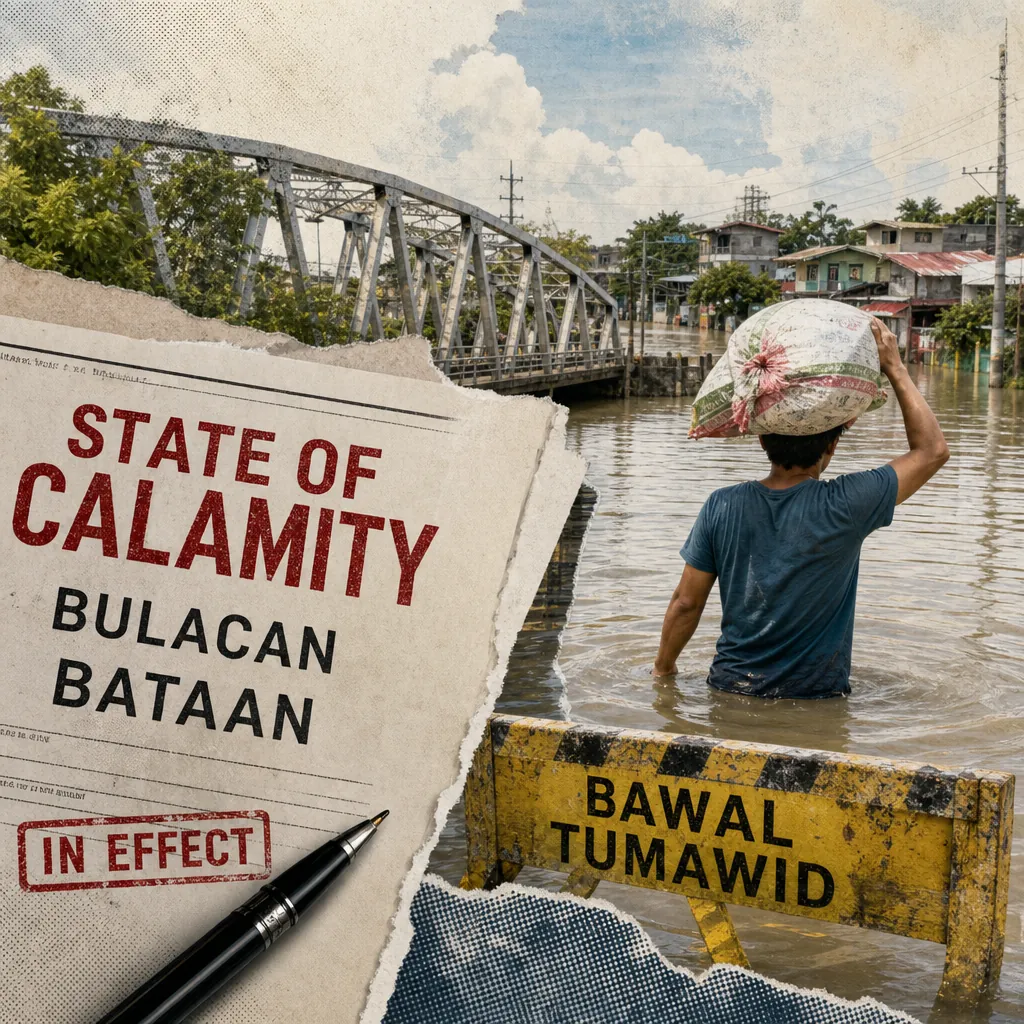
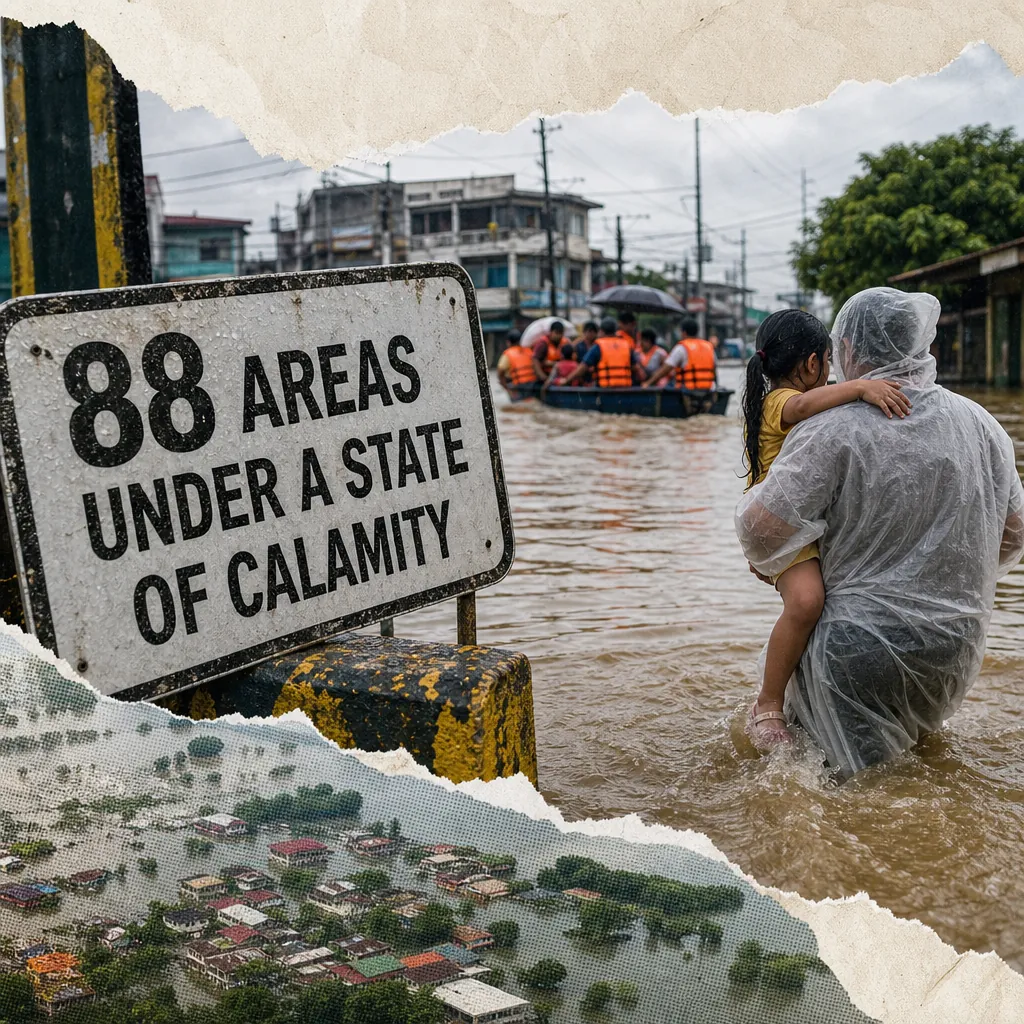
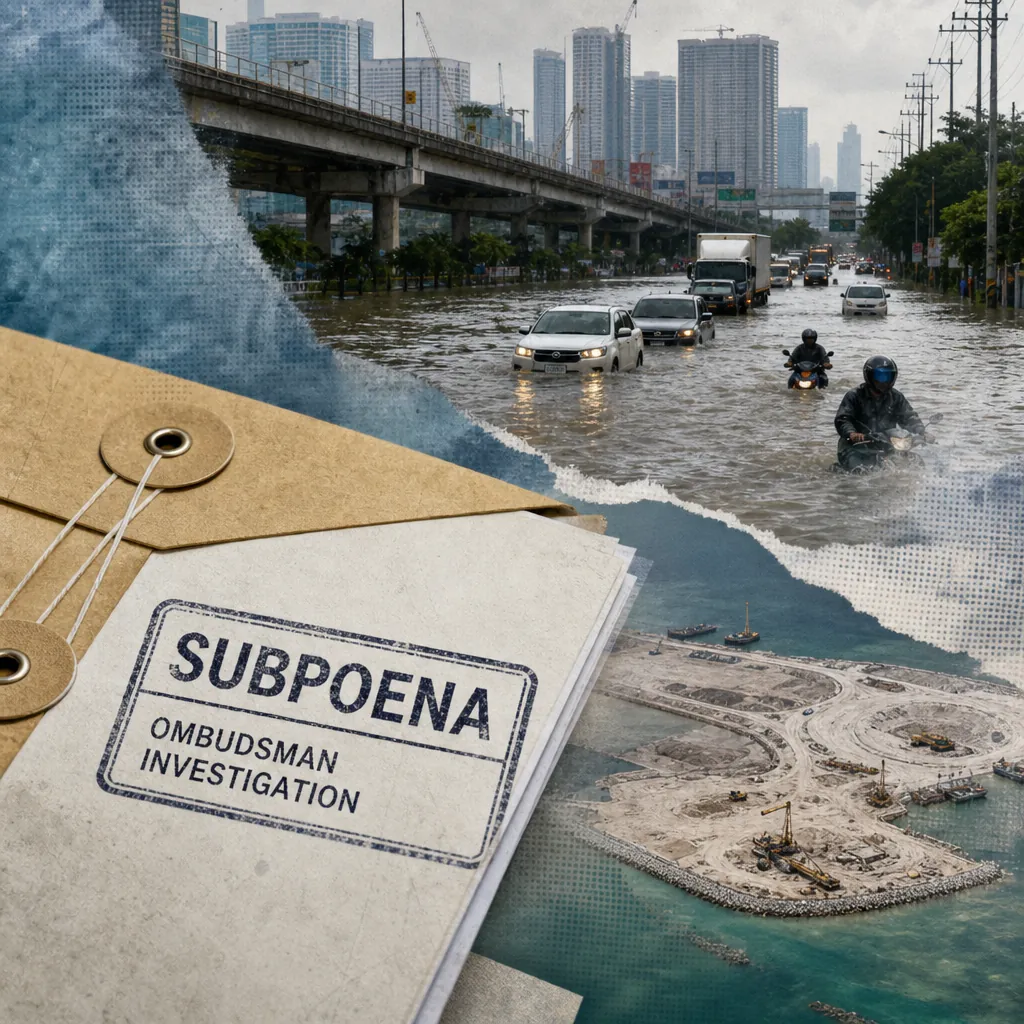
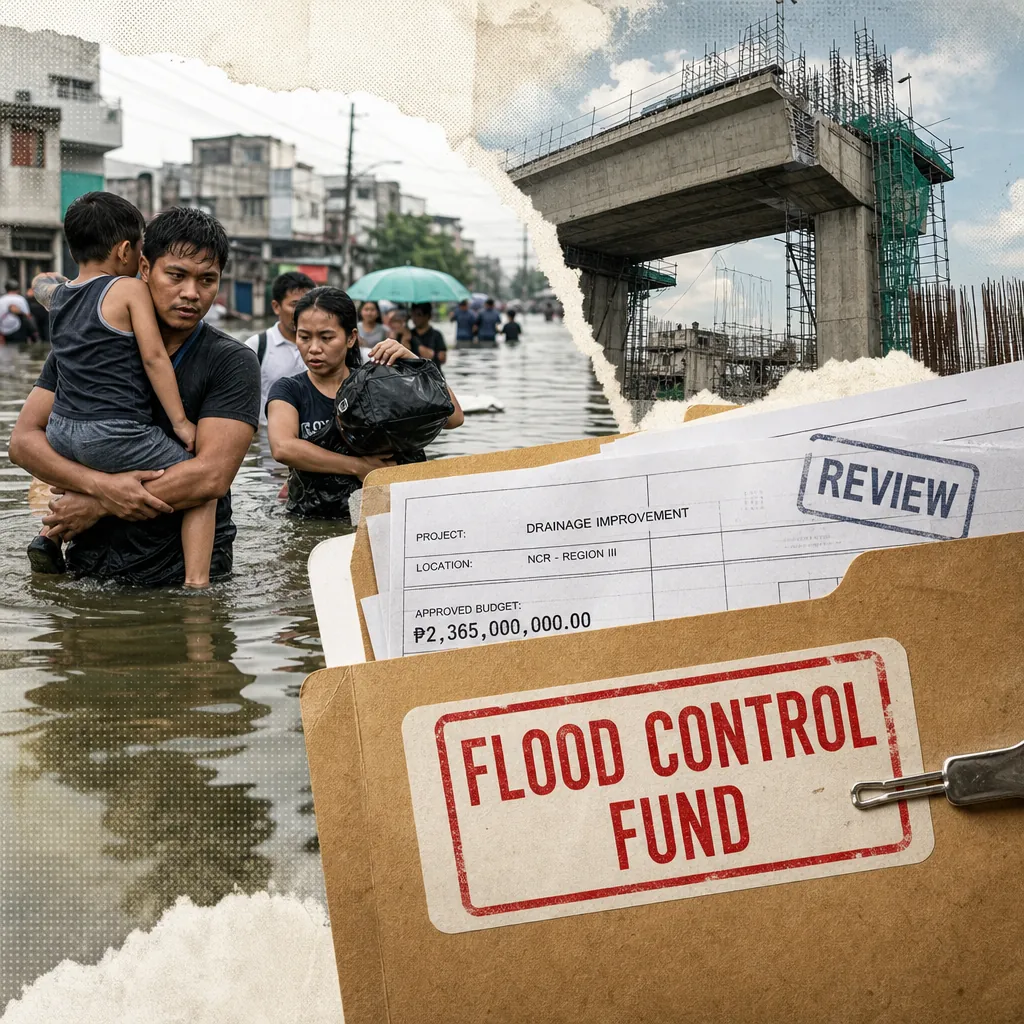
The southwest monsoon, intensified by recent typhoons, has submerged entire provinces, killed at least two people, and forced hundreds of thousands from their homes. On August 20, both Bulacan and Bataan formally declared states of calamity, unlocking emergency funds and response powers as floodwaters reached six feet in some coastal towns. The declarations came as President Ferdinand Marcos Jr. inspected pumping stations in Metro Manila and announced 13 additional facilities, while the Department of Public Works and Highways revealed plans for detention basins along the San Juan River. The human toll is mounting: a 17-year-old girl died from electrocution in flooded Calumpit, and a 17-year-old boy succumbed to leptospirosis in Navotas. The crisis has also revived scrutiny of the government's flood control spending, with the Ombudsman confirming it will continue investigating alleged ghost projects despite recanted testimonies.
Beyond the floods, the day's news carried a steady stream of business developments. SM Prime expanded its logistics footprint for Shopee partners with a new 40,000-square-meter facility in Pasig City. Manila Water reported an 11% revenue increase to ₱22.2 billion in the first half of 2026. The Philippine Stock Exchange index rebounded 1.30% to close at 6,238.46 on bargain hunting. The Department of Trade and Industry opened an AI training hub for micro, small, and medium enterprises. And the Philippine Health Insurance Corporation's new chief argued that a working primary care system is key to expanding benefits sustainably.
Key themes
- Flooding forces states of calamity in Bulacan and Bataan — Both provinces formally declared calamity status on August 20, with Bulacan reporting nearly a million residents affected and Bataan estimating ₱599 million in combined agricultural and infrastructure damage. The declarations allow local governments to tap emergency funds and streamline response efforts.
- Flood deaths highlight public health and safety risks — A 17-year-old girl died from electrocution after touching a live wire in flooded Calumpit, and a 17-year-old boy died from leptospirosis in Navotas. The leptospirosis case underscores the disease risk from floodwater exposure, with San Lazaro Hospital reporting rising patient numbers.
- Government pledges infrastructure fixes amid scrutiny — President Marcos announced 13 additional pumping stations for Metro Manila, and the DPWH revealed plans for detention basins along the San Juan River. These announcements come as the Ombudsman continues investigating alleged ghost flood control projects.
- SM Prime expands logistics for e-commerce boom — SM Warehouses turned over a new 40,000-square-meter facility in Pasig City to Shopee partners SPX Express and Scommerce, bringing total logistics space for the two companies to over 126,000 square meters. The expansion responds to growing e-commerce demand for faster delivery.
- Corporate earnings show resilience — Manila Water reported an 11% revenue increase to ₱22.2 billion in H1 2026, with net income up 6% to ₱8.5 billion. Pag-IBIG Fund posted record net income of ₱41.35 billion, up 24%.
- PSEi rebounds on bargain hunting — The Philippine Stock Exchange index climbed 1.30% to close at 6,238.46, recovering from previous losses as investors bought oversold shares. Mining and oil led gains at 5.04%.
- DTI opens AI hub for small businesses — A new 380-square-meter AI and Scale-Up Center at the DTI office in Makati offers free training and testing space for MSMEs, built through a partnership with Converge ICT.
- PhilHealth chief pushes prevention over costly treatment — New PhilHealth President Dr. Beverly Lorraine Ho argued that a working primary care system would reduce expensive treatments like dialysis, which consumes 15% of benefit payouts.
How the narratives stack
Dominant — The flood crisis dominates the day's coverage, both in the number of items and their prominence. Within the captured set, flood-related stories account for roughly a quarter of the articles, including the calamity declarations, deaths, infrastructure pledges, and the ongoing corruption investigation. The human toll and the scale of displacement make this the most consequential story of the day.
Counter-narrative — Amid the crisis, business news presents a picture of continued economic activity and resilience. SM Prime's logistics expansion, Manila Water's earnings growth, and the PSEi rebound all suggest that the corporate sector is operating normally despite the floods. This counter-narrative is not dismissive of the crisis but shows that economic life continues.
Emerging — The AI hub for MSMEs and the Pax Silica initiative represent an emerging narrative about the Philippines' technological and industrial ambitions. The DTI's AI and Scale-Up Center signals government support for small businesses adopting AI, while Pax Silica — a US-led coalition for critical minerals and semiconductors — has drawn both support from business groups and skepticism from commentators questioning whether it serves Philippine interests.
Under-covered — The environmental violations at Bacolod's sanitary landfill received relatively little attention compared to the flood crisis. The city received two notices of violation for water discharge and operating without an environmental compliance certificate, yet this story drew limited coverage. Similarly, the electrocution death in Bulacan and the leptospirosis case are individual tragedies that point to broader systemic issues but have not yet sparked sustained public debate.
Platform insights
- Facebook — The primary platform for flood-related content, with news outlets and government agencies sharing updates, relief information, and videos of submerged communities. The Abante News video of President Marcos commenting on flood levels drew attention, though specific engagement figures are not available in the captured set.
- X (formerly Twitter) — Used for real-time updates on the flood situation, with users sharing photos, evacuation information, and criticism of government response. The platform also carried discussion of the Ombudsman's investigation into flood control projects, with hashtags and commentary on the recanted testimonies.
- YouTube — News channels posted video coverage of the floods, including President Marcos's inspection of pumping stations and the DPWH's announcement of detention basins. The open water swimming championships in Boracay also received video coverage, though this was less prominent than flood content.
- Reddit — The Grok chatbot glitch dominated Reddit discussions, with users sharing screenshots of gibberish responses and complaining about the issue. This is unrelated to the Philippine flood crisis but represents a significant share of social conversation on the platform.
Key voices and communities
- Government officials — President Marcos, DPWH Secretary Vince Dizon, and local officials in Bulacan and Bataan are central voices, announcing infrastructure plans and declaring calamity status. Their messaging emphasizes response and long-term solutions.
- Disaster response agencies — The Provincial Disaster Risk Reduction and Management Offices in Bulacan and Bataan provide critical data on affected populations and damage estimates, shaping the narrative of the crisis's scale.
- Business leaders — Executives from SM Prime, Manila Water, and other companies communicate corporate developments, from logistics expansions to earnings reports. Their statements frame the business community's response to both the floods and ongoing economic conditions.
- Health officials — PhilHealth's new chief Dr. Beverly Lorraine Ho and hospital administrators in San Lazaro highlight the public health dimensions of the floods, particularly the leptospirosis risk.
- Investigative journalists and commentators — Columnists and news outlets continue to probe the flood control corruption scandal, with the Ombudsman's confirmation of the ongoing investigation providing a focal point for accountability narratives.
Narrative streams
Flood crisis deepens as provinces declare calamity
The scale of the flooding became clearer on August 20 as Bulacan and Bataan formally declared states of calamity. In Bulacan, the provincial board approved the declaration during a special session, with the Provincial Disaster Risk Reduction and Management Office reporting that 960,821 residents from 275,000 families were directly affected. Nineteen of the province's 20 towns and four component cities remained impacted, with coastal towns like Calumpit, Hagonoy, and Bulakan experiencing floodwaters up to 1.82 meters (6 feet) high. Agricultural damage exceeded ₱130 million, covering rice, vegetables, fisheries, livestock, and poultry.
Bataan's declaration came with its own grim statistics: over 8,000 residents evacuated, ₱56.53 million in agricultural damage, ₱542.72 million in infrastructure damage, and at least 20 people injured. More than 500,000 workers in the province could not report to work due to the floods. The declarations unlock emergency funds and allow local governments to streamline procurement and response efforts.
The flooding stems from the enhanced southwest monsoon, or habagat, intensified by Typhoons Luis and Maymay. The rains have persisted for nearly two weeks, saturating the ground and overwhelming drainage systems. In Calumpit, all 29 villages were inundated, and the town had been under a state of calamity since August 10.
The human cost is mounting. A 17-year-old girl, Ojo Rhian Joy Martinez, died on August 19 after slipping on a temporary wooden bridge and touching a live wire floating in floodwater in Barangay San Miguel, Calumpit. In Navotas, a 17-year-old boy died from leptospirosis just four days before his birthday, after being bitten by a rat and later wading in floodwater. San Lazaro Hospital reported increasing leptospirosis cases, including a five-year-old who contracted the disease without directly wading in floodwater.
Read for the sector: The flood crisis is a humanitarian emergency with significant economic consequences. For businesses, the immediate priorities are employee safety, supply chain continuity, and supporting affected communities. The long-term implications include increased infrastructure spending, potential regulatory changes, and heightened scrutiny of government projects. Companies with operations in affected areas should assess their disaster preparedness and response plans.
Government announces infrastructure fixes amid corruption scrutiny
President Marcos announced on August 20 that 13 additional pumping stations would be installed or upgraded in Metro Manila, with operations expected by end of 2026 or early 2027. The announcement came during his inspection of the Tripa de Gallina Pumping Station in Pasay City, the largest flood-control facility in the capital, which continues to be hampered by garbage entering the system.
Separately, DPWH Secretary Vince Dizon revealed plans to build detention basins along the San Juan River to prevent overflow during heavy rains. Dizon noted that water from the Greenhills-Ortigas area was pumped toward the river during recent storms, causing it to overflow. He identified a site in Sitio Kaingin Bukid in Barangay Apolonio Samson, Quezon City, as a possible location for a detention basin.
These infrastructure pledges come against the backdrop of an ongoing investigation into alleged ghost and substandard flood control projects funded under the 2025 national budget. The Ombudsman confirmed on August 20 that its investigation into former House Speaker Martin Romualdez would continue despite four of nine former bodyguards of former Ako Bicol Rep. Zaldy Co recanting their testimonies. The Ombudsman stated that 28 other witnesses with direct knowledge of transactions remain active.
Malacañang also addressed concerns about the proposed ₱3.06-billion allocation for evacuation centers in the 2027 budget, with Press Officer Undersecretary Claire Castro saying President Marcos would not allow funds to be used for ghost projects. Senator Panfilo Lacson had questioned the uniform ₱180-million allocation for each of the 17 regions.
Read for the sector: The flood control corruption scandal continues to cast a shadow over infrastructure spending. For construction and engineering firms, this means heightened scrutiny of government contracts and a greater emphasis on transparency and compliance. The investigation's outcome could reshape how flood control projects are procured and monitored, potentially slowing approvals but improving accountability.
SM Prime expands logistics for e-commerce growth
SM Prime Holdings turned over a new 40,000-square-meter facility in Pasig City to Shopee partners SPX Express and Scommerce Philippines, bringing the total logistics space for the two companies to over 126,000 square meters. The Pasig facility will operate as an urban distribution hub, bringing inventory closer to Metro Manila customers and shortening last-mile delivery times.
The expansion builds on SPX's multi-year lease of about 86,000 square meters at SM Prime's Silangan Warehouse complex in Laguna. Alexis Ortiga, business unit head of SM Prime's Commercial Properties Group, said the strengthening relationship with SPX and Scommerce reflects the company's commitment to supporting businesses and local MSMEs.
The move responds to the rapid growth of e-commerce in the Philippines, which has driven demand for faster, more efficient logistics. By locating inventory closer to consumers, SM Prime aims to reduce delivery times and improve the overall shopping experience for Shopee users.
Read for the sector: The logistics expansion signals continued confidence in e-commerce growth. For property developers, this means increasing demand for warehouse and distribution space, particularly in urban areas. For retailers and MSMEs, improved logistics infrastructure could lower delivery costs and expand market reach. The partnership between SM Prime and Shopee also highlights the growing importance of integrated logistics solutions in the retail ecosystem.
Corporate earnings show resilience amid challenges
Manila Water reported an 11% increase in consolidated revenues to ₱22.2 billion for the first half of 2026, driven by tariff adjustments and stable demand. EBITDA grew 13% to ₱16.4 billion, with margins strengthening to 74%, reflecting cost discipline and operational efficiency. Net income rose 6% to ₱8.5 billion.
Pag-IBIG Fund posted record net income of ₱41.35 billion in the first half of 2026, up 24% from the same period last year. The performance came even as the agency lowered housing loan rates and raised its maximum housing loan amount to ₱10 million under the Expanded Pambansang Pabahay para sa Pilipino (4PH) Program. Department of Human Settlements and Urban Development Secretary Jose Ramon Aliling said the fund's financial strength enables it to support the government's housing objectives.
The Philippine Stock Exchange index rebounded 1.30% to close at 6,238.46 on August 20, recovering from previous losses as investors hunted for bargains. Mining and oil led gains at 5.04%, while services rose 2.61%. Value turnover reached ₱8.77 billion, with local investors providing additional volume as foreign investors remained net sellers.
Read for the sector: Corporate earnings demonstrate resilience despite economic headwinds, including inflation and the flood crisis. For investors, the PSEi rebound suggests renewed risk appetite, though sustainability depends on fresh catalysts. For companies, the results underscore the importance of cost discipline and operational efficiency in maintaining profitability. The Pag-IBIG Fund's record income supports its expanded housing programs, which could stimulate construction and related industries.
DTI opens AI hub for small businesses
The Department of Trade and Industry inaugurated a 380-square-meter AI and Scale-Up Center in Makati, built through a partnership with Converge ICT Solutions. The facility offers collaborative spaces, specialized meeting rooms, and accelerator pods where MSME owners can receive free training on AI tools and test their own AI-powered products. It is the first facility of its kind in the country.
The center aims to help small businesses harness AI to scale up, addressing the digital divide that often leaves MSMEs behind in technological adoption. By providing free training and testing space, the DTI hopes to democratize access to AI tools and foster innovation among smaller enterprises.
Read for the sector: The AI hub represents a significant investment in MSME competitiveness. For small businesses, this is an opportunity to learn and adopt AI tools that could improve efficiency, reduce costs, and open new markets. For technology providers, the center could create new demand for AI solutions among MSMEs. The initiative also signals the government's recognition of AI as a strategic priority for economic growth.
PhilHealth chief advocates prevention-first approach
Newly appointed PhilHealth President and CEO Dr. Beverly Lorraine Ho argued that a working primary care system is essential for the long-term sustainability of the state health insurer's expanding benefit packages. Noting that dialysis consumes 15% or more of benefit payouts, Ho questioned whether such spending is necessary when prevention could reduce the number of patients needing dialysis.
"When you have good prevention, salt reduction, etc., if health promotion and prevention works, then you actually have fewer people who are undergoing dialysis," Ho said. Her comments came during a press conference on August 20, following her appointment alongside new Department of Health Secretary Mercado.
Read for the sector: Ho's emphasis on primary care signals a potential shift in PhilHealth's strategy toward prevention and health promotion. For healthcare providers, this could mean increased investment in primary care facilities and preventive services. For insurers and employers, it underscores the importance of wellness programs that reduce costly treatments. The challenge will be balancing PhilHealth's mandate to expand benefits with the need for sustainable financing.
Conversation trajectory
- Flood response and recovery (next 2–4 weeks) — As floodwaters recede, the focus will shift to recovery and rehabilitation. Expect continued coverage of damage assessments, relief efforts, and the pace of infrastructure repairs. The states of calamity in Bulacan and Bataan will remain in effect, allowing for continued emergency response. Watch for updates on the leptospirosis situation, as cases typically rise in the weeks following flooding.
- Infrastructure announcements (next 1–3 months) — The 13 pumping stations and San Juan River detention basins will likely face feasibility studies, funding approvals, and procurement processes. Coverage may focus on timelines, budgets, and potential delays. The flood control corruption investigation will continue, with the Ombudsman's confirmation of ongoing probes suggesting more developments ahead.
- Corporate earnings season (next 4–6 weeks) — With Manila Water and Pag-IBIG reporting strong H1 results, attention will turn to other companies' earnings. The PSEi's rebound may continue if corporate results meet expectations, but the sustainability of the rally depends on fresh catalysts, including inflation data and global market conditions.
- AI hub impact (next 3–6 months) — The DTI's AI and Scale-Up Center will begin training MSMEs, with early outcomes potentially shaping the program's expansion. Watch for announcements of similar facilities or partnerships, as well as case studies of MSMEs that successfully adopted AI tools.
- PhilHealth policy direction (next 2–4 months) — Dr. Ho's emphasis on primary care may translate into new PhilHealth programs or benefit adjustments. Watch for announcements on preventive care packages, partnerships with primary care providers, and any changes to dialysis coverage.
Trigger events to monitor: The next major weather system that could bring additional flooding; the Ombudsman's next filing or announcement in the flood control investigation; the release of inflation data for August; the first batch of MSME graduates from the AI hub; and any PhilHealth circulars on new benefit packages.
Response guidance
- Flood-affected communities — For companies operating in affected areas, prioritize employee safety and communicate clearly about business continuity plans. Share relief efforts transparently, including what is being done and how affected communities can access support. Avoid making promises that cannot be kept.
- Infrastructure and corruption — For firms in construction and infrastructure, emphasize compliance and transparency in all government dealings. Be prepared to answer questions about project quality and monitoring. Avoid commenting on ongoing investigations unless through official channels.
- E-commerce and logistics — For retailers and logistics providers, highlight investments in faster, more reliable delivery. Use the SM Prime expansion as evidence of the sector's growth and commitment to serving customers. Emphasize how improved logistics benefit MSMEs and consumers.
- AI adoption — For technology companies and MSME support organizations, promote the AI hub as a concrete resource for small businesses. Share success stories and practical applications of AI tools. Avoid overhyping AI's potential; focus on tangible benefits and accessible training.
- Healthcare and prevention — For healthcare providers and insurers, align messaging with the prevention-first approach. Highlight programs that reduce costly treatments and improve health outcomes. Be sensitive to the human impact of diseases like leptospirosis and avoid appearing dismissive of treatment needs.
See the full picture behind today's signals.
This report draws from Media Meter's MediaWatch, our real-time monitoring engine tracking 2,470+ Philippine sources across print, broadcast, digital, and social. Explore how the platform turns raw coverage into decision-grade intelligence, then see how it's configured for teams like yours — whether you're in PR agencies, corporate comms, government, or marketing.
Want more? Browse our Report Library for sector and crisis intelligence, or request a demo and we'll have your brand set up before the call.
Want this kind of intelligence on your brand?
This brief is built on the same MediaWatch methodology that runs continuously across every brand we monitor. See your competitive landscape, Impact Score, and narrative trajectory in a 30-minute demo.