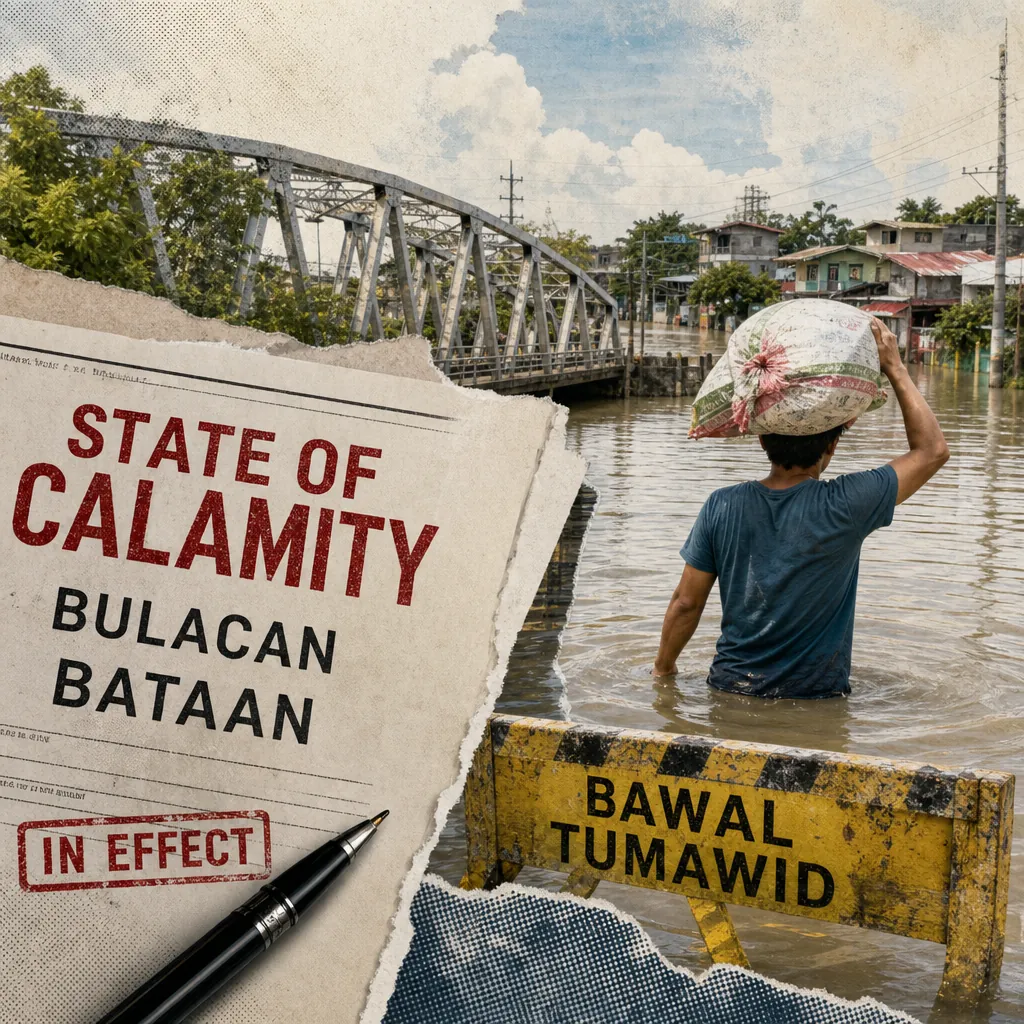
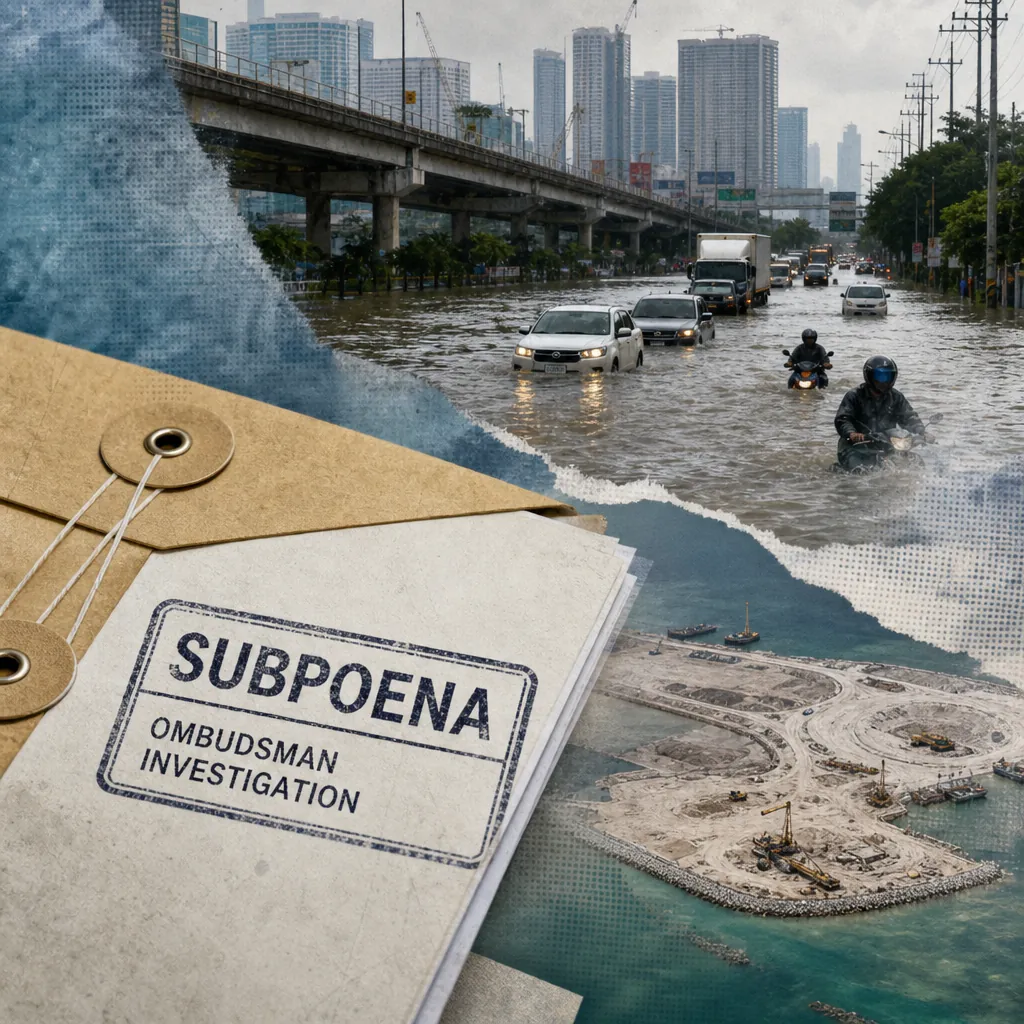
Flooding, transport, and poverty dominate the day's news
The day's coverage centered on severe flooding across Luzon, with 88 areas under a state of calamity, alongside transport developments like the LRT-1 Cavite Extension land donation and a new Mitsubishi hybrid SUV. Poverty statistics and a major Uber fine also drew attention.
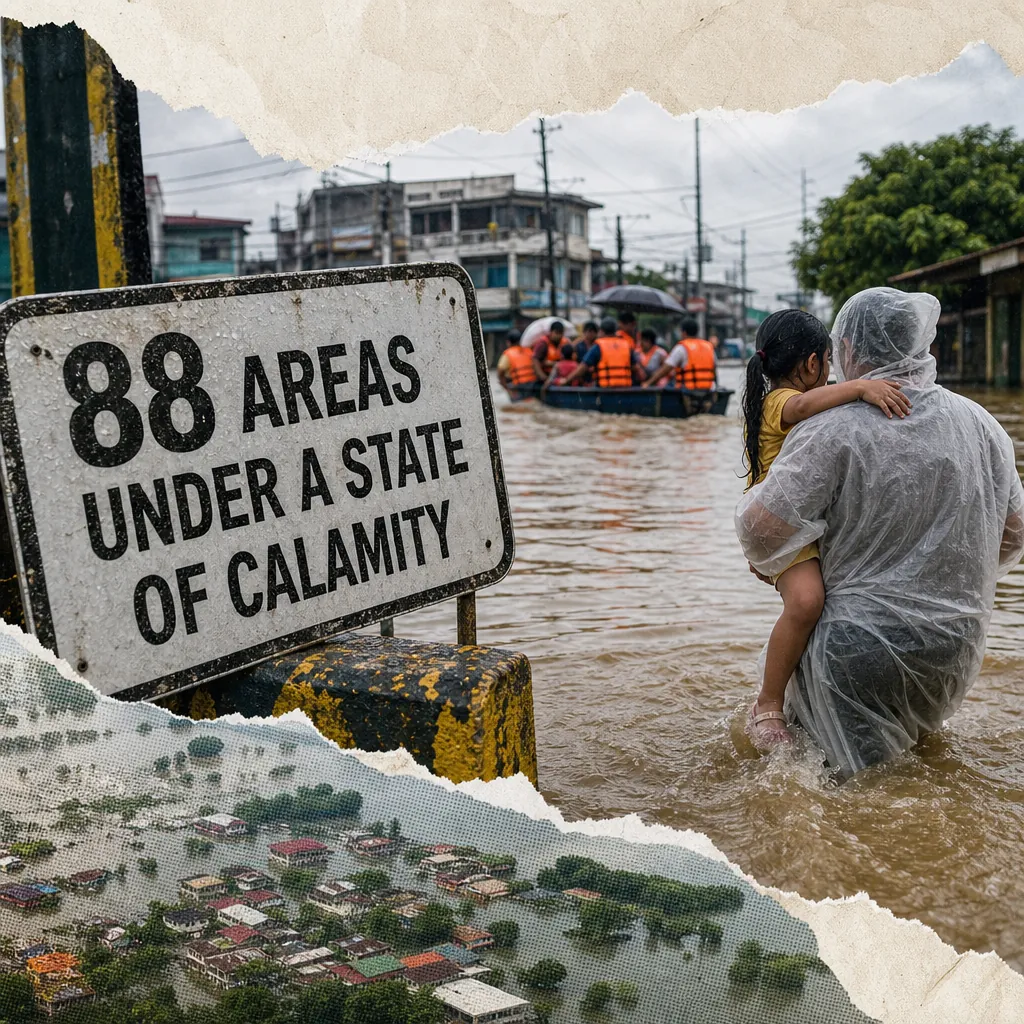
The day's news was dominated by the aftermath of severe weather, with 88 cities and municipalities across Luzon placed under a state of calamity due to the enhanced southwest monsoon and tropical cyclones Luis and Maymay. The flooding disrupted lives and livelihoods, prompting the Department of Labor and Employment to remind workers of their right to compensation for weather-related injuries. Amid this, transport developments offered a contrasting narrative: the Villar family's land donation for the LRT-1 Cavite Extension was seen as a boost for commuters, and Mitsubishi launched its first plug-in hybrid SUV in the Philippines, anticipating higher demand during the rainy season. The government also announced a historic drop in poverty incidence to 9.7 percent, though experts expressed doubts about the figure. Internationally, Uber was fined €825 million by Dutch regulators for automated driver suspensions, and the U.S. Supreme Court allowed construction on a White House ballroom to continue. These stories, captured across online news outlets, blogs, and social media, reflect a day of both crisis and incremental progress.
Key themes
- 88 areas under state of calamity due to flooding — The National Disaster Risk Reduction and Management Council reported that 88 cities and municipalities were placed under a state of calamity as of Aug. 21, following the enhanced southwest monsoon and tropical cyclones Luis and Maymay. This includes the entire province of Bulacan, which declared a state of calamity due to widespread flooding and damage.
- Workers' compensation reminder during bad weather — The Department of Labor and Employment reminded workers that those injured while commuting or working during the bad weather are entitled to compensation under the Employees Compensation Program. This is a practical response to the increased risk of accidents during floods.
- LRT-1 Cavite Extension gets land donation boost — The Villar family's donation of land to the Department of Transportation is expected to enhance the benefits of the LRT-1 Cavite Extension, making public transport more accessible to residents outside Metro Manila. Metro Pacific Investments Corp. Chairman Manuel V. Pangilinan highlighted the potential to bridge the gap between residential areas and employment centers.
- Mitsubishi launches first plug-in hybrid SUV in PH — Mitsubishi Motors Philippines launched the Outlander plug-in hybrid electric vehicle, priced at P2.848 million, with an introductory offer of P2.749 million until Sept. 30. The company expects demand for electric SUVs to outstrip sedans during the rainy season due to higher ground clearance.
- Poverty incidence drops to 9.7%, but experts doubt — The government announced that poverty incidence fell to a historic low of 9.7 percent in 2025, lifting about 6 million people out of poverty. However, former Finance Secretary Gary Teves and others questioned whether the poverty threshold accurately reflects the cost of living, noting that self-rated poverty remains high.
- Uber fined €825 million for automated driver suspensions — The Dutch Data Protection Authority fined Uber €825 million (about $966 million) for deactivating driver accounts through automated systems without human review or adequate notification. This is the second-largest fine under the EU's General Data Protection Regulation.
- Angat Dam water level rises above minimum operating level — As of Aug. 21, Angat Dam's water level reached 189.9 meters, up from 188.75 meters the previous day, surpassing its minimum operating level of 180 meters. This is crucial as Angat supplies over 90 percent of Metro Manila's potable water needs.
- SM Supermalls expands community initiatives — SM Supermalls is broadening its malls' role as venues for community, environmental, cultural, and accessibility programs, with initiatives like the SM Cares Book Nook and Coastal Cleanup. President Steven Tan emphasized that people experience malls through what they do there.
How the narratives stack
- Dominant: The flooding crisis is the dominant narrative, with 88 areas under a state of calamity and widespread damage to agriculture and infrastructure. This story dominates the captured set, reflecting the immediate and visible impact on communities. The coverage includes detailed reports on Bulacan's declaration and the NDRRMC's data, indicating a high level of public concern.
- Counter-narrative: Amid the crisis, there are stories of resilience and progress. The LRT-1 Cavite Extension land donation and Mitsubishi's hybrid SUV launch offer a forward-looking perspective on transport and mobility. These developments suggest that even during difficult times, infrastructure and consumer markets continue to advance.
- Emerging: The poverty statistics story is emerging as a point of contention. The government's claim of a historic low in poverty incidence is being met with skepticism from experts, who question the methodology and the true cost of living. This could develop into a larger debate about economic policy and data credibility.
- Under-covered: The Uber fine, while international, has implications for the gig economy and data privacy that are not fully explored in the local context. The story of the mother and two children found dead in Bulacan, while tragic, is a crime story that may overshadow broader issues of safety and mental health.
Platform insights
- Facebook: Facebook likely saw significant sharing of flood-related news and government advisories, as users sought real-time information and safety tips. Posts from official pages like the NDRRMC and DOLE would have high engagement as people look for official guidance.
- X (formerly Twitter): X was probably a hub for real-time updates on flooding, with users posting photos and videos of affected areas, and engaging in discussions about government response. The hashtag for the flooding may have trended, amplifying the crisis narrative.
- YouTube: YouTube likely featured news clips and live coverage of the flooding, as well as explainer videos on the LRT-1 extension and the Mitsubishi Outlander launch. The platform's visual nature suits both crisis coverage and product launches.
- TikTok: TikTok may have seen creative content around the flooding, such as videos of commuters wading through floodwaters, but also lighter content like the Ever Bilena coquette collection launch, which used TikTok Live for promotion. This shows a mix of serious and lifestyle content.
Key voices and communities
- Government agencies: The NDRRMC, DOLE, and PAGASA are key voices providing official information on the flooding, worker compensation, and dam levels. Their statements are crucial for public safety and policy communication.
- Business leaders: Manuel V. Pangilinan of MPIC and Steven Tan of SM Supermalls represent the corporate sector's perspective on infrastructure and community initiatives. Their comments highlight the private sector's role in addressing public needs.
- Economists and experts: Figures like former Finance Secretary Gary Teves question the government's poverty data, providing a critical counterpoint. Their analysis is important for understanding the true economic situation.
- Consumers and commuters: The public, particularly those affected by flooding and those interested in new vehicles, are key voices. Their experiences and preferences shape the demand for better transport and the adoption of electric vehicles.
- International regulators: The Dutch Data Protection Authority's action against Uber represents a global voice on data privacy and algorithmic accountability. This community influences how companies handle automated decision-making.
Narrative streams
Flooding crisis: 88 areas under state of calamity
As of Aug. 21, the National Disaster Risk Reduction and Management Council reported that 88 cities and municipalities were under a state of calamity due to the enhanced southwest monsoon and tropical cyclones Luis and Maymay. This includes the entire province of Bulacan, which declared a state of calamity on Aug. 17 after assessing flooding, agricultural damage, and infrastructure losses. The declaration allows local governments to access emergency funds and expedite relief efforts. The flooding has also affected Angat Dam, which supplies over 90 percent of Metro Manila's water; its level rose to 189.9 meters, above the minimum operating level of 180 meters, providing some relief. The read for the sector is that disaster preparedness and response remain critical, and businesses and government must prioritize resilience in infrastructure and supply chains.
Workers' compensation during bad weather
In response to the increased risk of accidents during the flooding, the Department of Labor and Employment reminded workers that they are entitled to compensation for work-related injuries under the Employees Compensation Program. This includes accidents while commuting to or from work, such as slipping on wet roads or falling into open manholes. The program provides income replacement and medical reimbursement up to 60 percent of expenses. This is a timely reminder for employers and workers to be aware of their rights and responsibilities. The read for the sector is that employers should ensure workplace safety and communicate these benefits to employees, especially during natural disasters.
LRT-1 Cavite Extension: land donation and connectivity
Metro Pacific Investments Corp. Chairman Manuel V. Pangilinan said the Villar family's land donation to the Department of Transportation will boost the benefits of the LRT-1 Cavite Extension by improving public transport access for residents outside Metro Manila. Pangilinan noted that better connectivity could help address the gap between residential communities and employment centers in the capital. The LRT-1 Cavite Extension is a rail project that will extend the existing light rail line from Baclaran to Bacoor, Cavite, reducing travel time and easing congestion. The read for the sector is that public-private partnerships and land donations can accelerate infrastructure projects, benefiting commuters and stimulating economic activity in the outskirts.
Mitsubishi launches first plug-in hybrid SUV in PH
Mitsubishi Motors Philippines launched the Outlander plug-in hybrid electric vehicle, its first PHEV model in the country, priced at P2.848 million with an introductory offer of P2.749 million until Sept. 30. The company expects demand for electric SUVs to outstrip sedans during the rainy season due to higher ground clearance. The Outlander has a 2.4-liter gasoline engine and dual electric motors, with a pure EV range of up to 100 km and a combined range of nearly 1,000 km. This launch reflects the growing interest in electrified vehicles in the Philippines, driven by fuel costs and environmental concerns. The read for the sector is that automakers are responding to consumer preferences for versatile, higher-clearance vehicles, and the market for hybrids is likely to expand.
Poverty incidence drops to 9.7%, but experts doubt
On Aug. 21, the government announced that poverty incidence fell to a historic low of 9.7 percent in 2025, lifting about 6 million people out of poverty. However, former Finance Secretary Gary Teves and others expressed doubts, noting that self-rated poverty remains high and questioning whether the poverty threshold captures the true cost of living. The announcement came amid weak economic growth, with GDP expanding only 2.3 percent in the second quarter of 2026, the slowest since the pandemic. The read for the sector is that while headline poverty figures are encouraging, the underlying economic reality for many Filipinos may be less rosy, and policymakers should focus on inclusive growth.
Uber fined €825 million for automated driver suspensions
The Dutch Data Protection Authority fined Uber €825 million (about $966 million) for deactivating driver accounts through automated systems without human review or adequate notification. This is the second-largest fine under the EU's General Data Protection Regulation, which requires that algorithmic decisions with significant impact involve human oversight and provide a path for contestation. The fine highlights the growing scrutiny of automated decision-making in the gig economy. The read for the sector is that companies using algorithms to manage workers must ensure compliance with data protection laws, including human review and transparency, to avoid hefty penalties.
SM Supermalls expands community initiatives
SM Supermalls is expanding its malls' role as venues for community, environmental, cultural, and accessibility programs, going beyond their traditional retail function. Initiatives include the SM Cares Book Nook, which provides reading spaces, and the SM Green Movement, which promotes sustainability. President Steven Tan said people experience malls through what they do there, not through what the company says. This approach reflects a broader trend of malls becoming community hubs. The read for the sector is that retail spaces can differentiate themselves by offering value beyond shopping, fostering customer loyalty and social impact.
Conversation trajectory
- Over the next 1–2 weeks: The flooding situation is likely to remain in the news as relief and recovery efforts continue. The NDRRMC may update the number of areas under state of calamity, and the government may announce additional aid. Watch for reports on the extent of agricultural and infrastructure damage, which could affect food prices and public spending.
- Over the next 1–3 months: The LRT-1 Cavite Extension project may see further developments, such as construction milestones or announcements of additional funding. The land donation could expedite the project, and stakeholders may provide updates on timelines. Similarly, Mitsubishi's Outlander launch may influence the EV market, with competitors possibly announcing similar models.
- Over the next 6 months: The poverty statistics debate may intensify as more data becomes available, such as the next round of the Family Income and Expenditure Survey. Economists and policymakers may revisit the poverty threshold methodology. The Uber fine could prompt other regulators to scrutinize algorithmic decision-making, potentially affecting global tech companies operating in the Philippines.
- Trigger events: Key triggers include the next NDRRMC update on calamity areas, the release of the third-quarter GDP data, and any announcements from the Department of Transportation on the LRT-1 extension. Also, the European Data Protection Board's response to the Uber fine could set a precedent for other cases.
Response guidance
- For government agencies: Communicate clearly and frequently about disaster response and recovery efforts. Use multiple platforms to reach affected communities, and provide actionable information on compensation and assistance programs. Be transparent about data and methodologies, especially regarding poverty statistics, to maintain public trust.
- For businesses: Assess the impact of flooding on operations and supply chains, and communicate any disruptions to customers and stakeholders. Highlight any community support initiatives, as seen with SM Supermalls, to reinforce corporate social responsibility. For automakers, emphasize the benefits of hybrid and electric vehicles in the context of weather resilience and environmental sustainability.
- For communicators in the transport sector: Leverage positive developments like the LRT-1 extension to showcase progress in connectivity. Address commuter concerns about safety and reliability, and provide updates on project timelines. Use storytelling to humanize the benefits of improved transport.
- For those addressing poverty and economic issues: Acknowledge the skepticism around poverty data and engage in constructive dialogue with experts. Focus on policies that promote inclusive growth and address the cost of living. Avoid overstating achievements without acknowledging the challenges.
- For handling sensitive topics: When covering tragedies like the Bulacan deaths, maintain sensitivity and avoid speculation. Focus on factual reporting and the broader issues of safety and mental health. For international stories like the Uber fine, contextualize the implications for local workers and consumers.
See the full picture behind today's signals.
This report draws from Media Meter's MediaWatch, our real-time monitoring engine tracking 2,470+ Philippine sources across print, broadcast, digital, and social. Explore how the platform turns raw coverage into decision-grade intelligence, then see how it's configured for teams like yours — whether you're in PR agencies, corporate comms, government, or marketing.
Want more? Browse our Report Library for sector and crisis intelligence, or request a demo and we'll have your brand set up before the call.
Want this kind of intelligence on your brand?
This brief is built on the same MediaWatch methodology that runs continuously across every brand we monitor. See your competitive landscape, Impact Score, and narrative trajectory in a 30-minute demo.