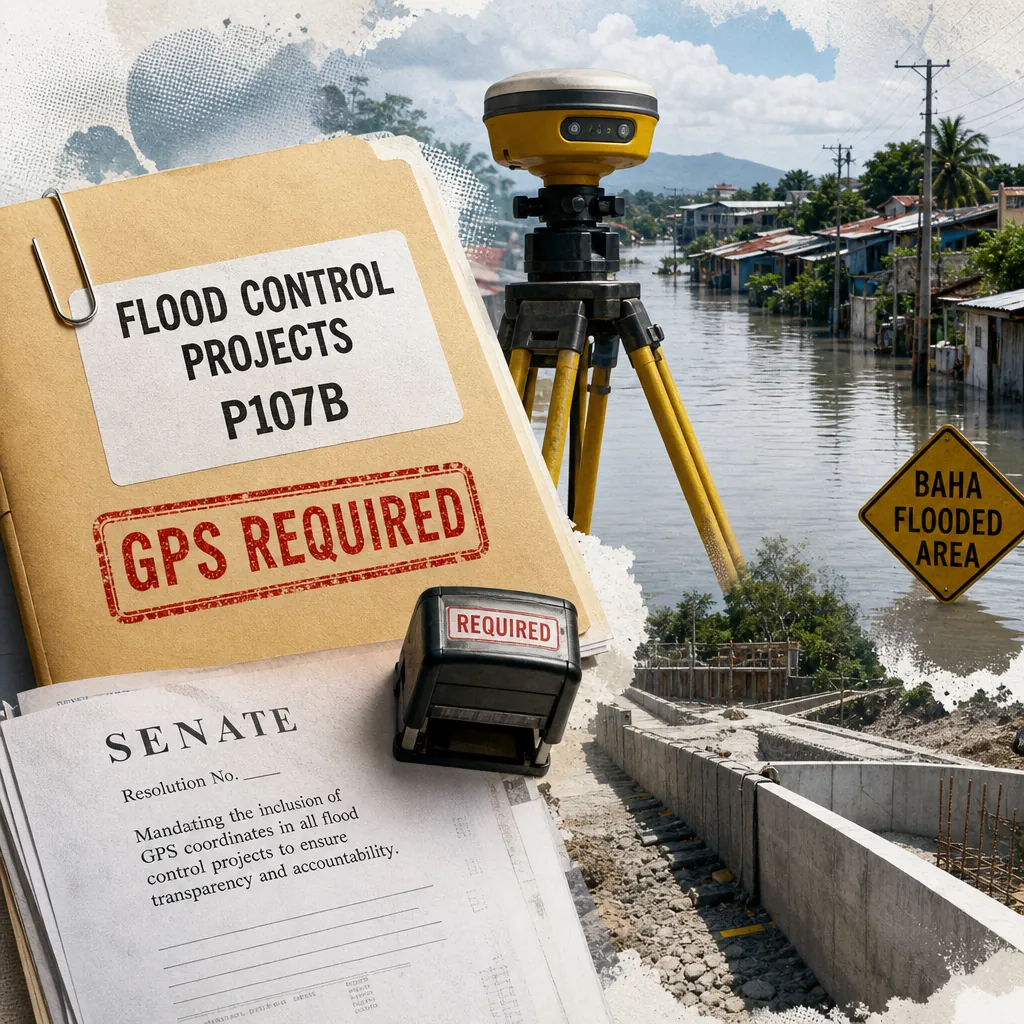
Flood Control and Housing: Bulacan's Infrastructure Promise
A daily snapshot of Philippine property and infrastructure conversation, focusing on flood control in Bulacan, government housing programs, and developer implications.
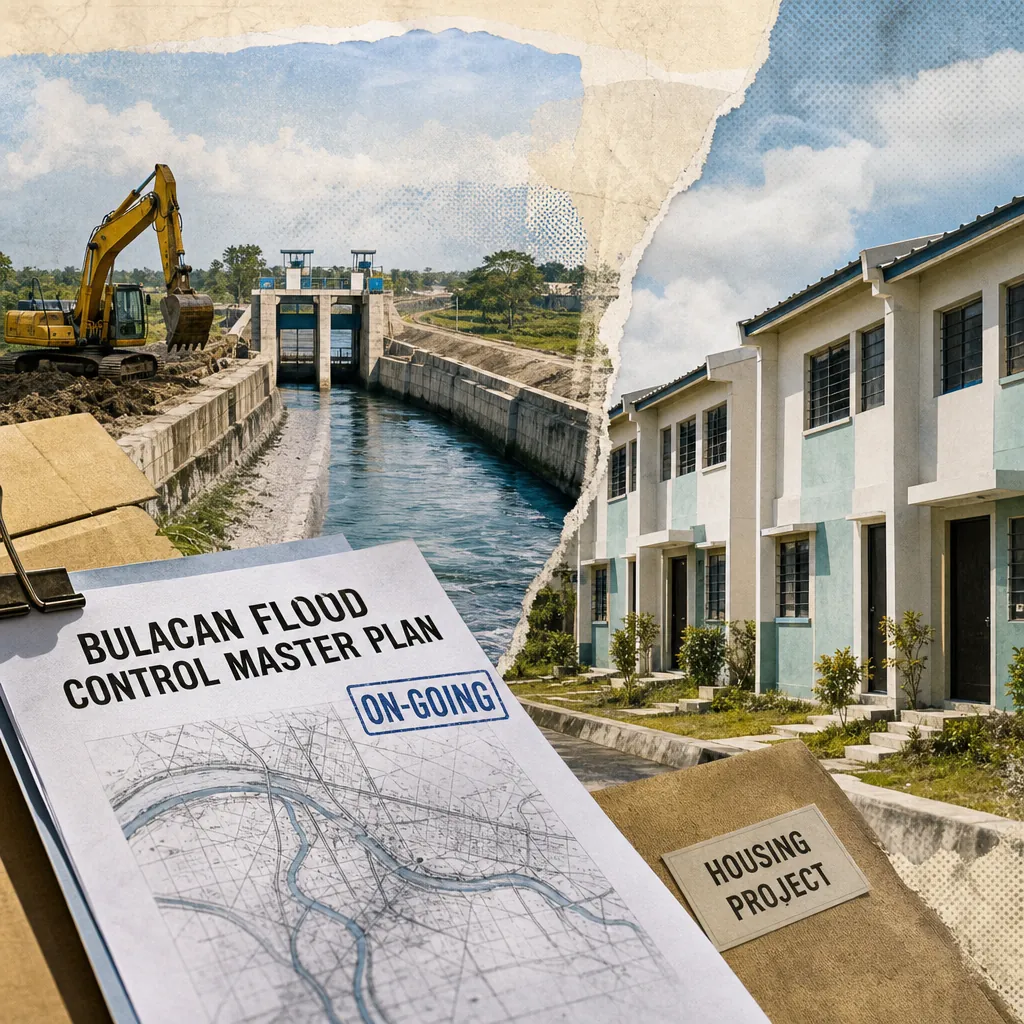
The day's conversation in the Philippine property and infrastructure space was anchored by a single, high-level government gesture: a personal inspection by Public Works Secretary Vince Dizon and Calumpit Mayor Lem Faustino of a flood control structure along the Bagbag River in Barangay Calizon, Calumpit, Bulacan. The Facebook post documenting the visit, captioned in Filipino with a tone of triumphant progress—"NAAALALA N'YO DATI WALANG PLANO RITO, NGAYON MERON NA" (Do you remember before there was no plan here, now there is one)—drew 46 comments but virtually no likes or shares. That engagement pattern is telling: residents are talking, questioning, and scrutinizing, but they are not ready to celebrate. For anyone tracking property development in Central Luzon, this is a signal that flood risk remains a live, emotionally charged issue, and that government promises are being met with cautious, wait-and-see skepticism rather than applause.
The inspection post did not exist in a vacuum. It landed on the same day as a series of flood-related stories across the news media: a call from farmers' groups in Ilocos for government aid after monsoon floods damaged crops, a weather bureau advisory warning of more heavy rain in Luzon, and a separate report on a flood control project in Pandi, Bulacan, that is now at the center of a corruption trial involving former Senator Bong Revilla. Together, these items paint a picture of a region bracing for more rain, with infrastructure promises colliding against a backdrop of past failures and ongoing vulnerabilities. The property angle is direct: Bulacan is home to numerous residential developments, from socialized housing to township projects, and any perception of inadequate flood control directly affects buyer confidence and developer reputation.
Meanwhile, a quieter but significant thread ran through the day's coverage: the government's housing program for the poor, the Expanded Pambansang Pabahay para sa Pilipino (4PH) Program, posted a net satisfaction rating of +48 in the latest Social Weather Stations survey, up three points from the first quarter. This positive governance signal, reported by the Daily Tribune, suggests that the administration's flagship housing initiative is resonating with the public, even as the broader conversation about flood-prone areas complicates the picture. For developers, this is a reminder that housing policy is a political asset, and that aligning with government programs can be a reputational win—provided the underlying issues of location safety and infrastructure are addressed head-on.
Key themes
- Government flood control inspections signal accountability, but public trust is conditional. The Bagbag River inspection post, featuring both a cabinet secretary and a local mayor, was designed to project proactive governance. The 46 comments versus zero reactions indicate that the audience is engaged but not convinced. Residents are asking questions, demanding timelines, and waiting for proof that the infrastructure will hold during the ongoing rainy season. For developers, this means that any marketing that leans on government flood control promises must be paired with concrete, project-level mitigation details.
- Flood risk remains a top-of-mind concern for Central Luzon property buyers. The day's news cycle was saturated with flood-related stories: the Ilocos farmers' plea for aid, the Pagasa advisory on more heavy rain, and the ongoing submergence in Candaba, Pampanga. This constant drumbeat of flood imagery reinforces risk perception among potential homebuyers, particularly in affordable housing segments where buyers are more sensitive to location risks. Developers with inventory in flood-prone areas need to proactively communicate their own drainage, elevation, and mitigation investments.
- Government housing program approval is a counterweight to flood anxiety. The SWS survey showing a +48 net satisfaction rating for the 4PH Program—the administration's flagship effort to address the housing backlog—indicates that the public sees the government as making progress on housing access. This positive sentiment can be leveraged by developers who align their projects with the program's goals, but it also raises expectations: buyers may assume that government-backed housing is safe and well-built, which puts the onus on developers to meet those standards.
- Corruption narratives around flood control projects threaten to undermine trust. The Inquirer Plus piece on the "leadership fund"—a euphemism for pork barrel—and the ongoing trial of former Senator Bong Revilla over a P92.8-million flood control project in Pandi, Bulacan, is a stark reminder that infrastructure promises can be tainted by scandal. This story, which drew significant coverage value, could resurface in public discourse and cast doubt on the sincerity of new flood control initiatives. Developers should be aware that any association with government infrastructure projects carries reputational risk if corruption allegations emerge.
- The property conversation is fragmented across platforms and narratives. On Facebook, the flood control inspection drew discussion-heavy engagement, while relief posts from the same day drew emotional reactions (likes, loves, shares). On Twitter, a lottery win story drew over 2,500 views but minimal engagement. This fragmentation means that public opinion is context-dependent, and developers cannot rely on a single narrative to shape perceptions. Instead, they must engage across multiple channels with tailored messages that acknowledge concerns and highlight specific mitigation efforts.
- No direct brand mentions for developers in this cycle—a low-noise opportunity. None of the named developers, projects, or regulatory topics in the monitoring keyword portfolio generated measurable conversation during this period. This absence of negative coverage is a window for proactive brand building, but it is also a caution: the flood-related backdrop could easily turn negative if a developer is perceived as building in an unsafe area. The low-noise environment is an opportunity to seed positive narratives before the next weather event.
- International property and infrastructure stories provide context but little local traction. The day's media set included several international items—a Harlem real estate acquisition push, a Louisiana train derailment, a Pennsylvania water contamination case, and a Zambian election—that are unlikely to influence Philippine property sentiment directly. However, they do reflect broader global themes of infrastructure risk and development finance that could inform how local stakeholders think about resilience and investment.
How the narratives stack
Dominant: The flood control inspection in Calumpit, Bulacan, is the dominant narrative of the day, both in terms of social engagement and its direct relevance to property risk assessment. The post's 46 comments, while modest in absolute terms, represent the highest comment count of any flood-related post that day, and the involvement of national and local officials elevates the story beyond routine maintenance updates. Within the captured media set, this story also resonates with the Inquirer Plus piece on the Pandi flood control corruption trial, which drew an estimated ₱370,736 in advertising-equivalent value—a significant figure that underscores the media's attention to flood infrastructure governance. The dominance of this narrative within the set is partly a function of the monitoring scope, which was weighted toward Philippine property and infrastructure topics, but the substance of the story—a high-level government promise in a flood-prone area—is genuinely consequential for developers and residents alike.
Counter-narrative: The counter-narrative comes from the farmers' groups in Ilocos, who are calling for government aid after monsoon floods damaged crops. The Solidarity of Peasants Against Exploitation (STOP Exploitation)-Kilusang Magbubukid ng Pilipinas (KMP) Ilocos issued a statement urging comprehensive aid, compensation, and rehabilitation, noting that farmers were already struggling with rising production costs and low farmgate prices before the disasters. This narrative challenges the government's infrastructure-first framing by highlighting the human and economic toll of flooding that infrastructure alone cannot solve. It also shifts the conversation from property risk to livelihood risk, reminding stakeholders that flood resilience is not just about buildings but about the economic fabric of rural communities.
Emerging: The positive approval rating for the 4PH housing program is an emerging narrative that could shape the property market in the coming months. The SWS survey, reported by the Daily Tribune, shows that the public views the administration's housing efforts favorably, which could translate into increased demand for affordable housing—especially if the program's projects are perceived as safe and well-located. For developers, this is a signal to align with government housing initiatives and to emphasize the quality and resilience of their own projects. The challenge is to ensure that the program's positive halo extends to private developments without being tarnished by flood risk concerns.
Suppressed: The story that is under-covered in the day's conversation is the specific vulnerability of informal settlements and low-income communities to flooding. While the farmers' groups and the flood control inspection touch on this, there is little direct discussion of how flooding disproportionately affects the urban poor, who often live in the most flood-prone areas with the least protection. This is a significant gap, because the 4PH program's goal of providing safe, decent, and affordable homes is directly relevant to this population. Developers and policymakers should be aware that this suppressed narrative could surface if a major flood event displaces informal settlers, leading to criticism that housing programs are not reaching the most vulnerable.
Platform insights
- Facebook: The platform was the primary venue for government infrastructure communication, with the Bagbag River inspection post drawing 46 comments—the highest comment count of any flood-related post that day—but virtually no reactions. This pattern suggests that Facebook audiences in this context engage with governance claims through questions and discussion rather than emotional affirmations. In contrast, companion relief posts from the same day drew emotional engagement: the Candaba flooding documentation earned 110 likes and 16 shares, while the Calumpit relief post received 16 love reactions. This split reveals that Facebook users respond emotionally to crisis visuals but critically to governance claims. For developers, this means that Facebook is a channel where reputational risks and policy scrutiny emerge first, and where authentic, detailed responses to community concerns are more effective than generic corporate statements.
- Twitter/X: No Twitter activity relevant to the Bulacan flood control story emerged in the day's data, suggesting that this narrative remained localized to Facebook. However, a separate story—the ₱31.9-million Lotto 6/42 jackpot win by a lone bettor from Laguna—drew over 2,500 views on Twitter, though with minimal engagement (only one comment). This indicates that Twitter is a platform for ambient news consumption rather than deep engagement on property or infrastructure topics. For developers, Twitter may be useful for amplifying positive announcements and reaching a broader audience, but it is not where the critical flood-related conversations are happening.
- YouTube: No relevant YouTube activity was captured in the monitoring data for this period. However, given the visual nature of flood coverage and infrastructure inspections, YouTube could become a significant platform for video content, such as drone footage of flood-prone areas or official inspection videos. Developers should consider creating video content that showcases their flood mitigation features, as this could resonate with audiences who prefer visual proof over written claims.
- Instagram: No relevant posts were identified on Instagram during the monitoring period. The platform's visual focus could be leveraged for geotagged posts from flood-prone areas, providing additional community sentiment context. Developers with projects in Bulacan should monitor Instagram for user-generated content that might reveal real-time flood conditions or public perceptions.
Key voices and communities
- Government infrastructure and development communicators: This cluster includes official channels that disseminate infrastructure updates, such as the DPWH and local government pages. They operate through documentation of on-site inspections, framing the administration as responsive to long-standing community concerns. Their primary narrative emphasizes progress and government presence, implicitly contrasting current planning with past inaction. For developers, this group's messaging directly shapes perceptions of flood risk mitigation in Bulacan, and aligning with their narrative can position developers as responsible partners in community safety.
- Local government and community relations observers: Residents and local stakeholders in flood-affected municipalities form a monitoring network that scrutinizes government announcements through comment sections. The mismatch between 46 comments and near-zero reactions on the flood control post suggests an engaged audience that prefers discussion over endorsement, reflecting mixed sentiment about the government's flood management approach. This group's influence derives from their local knowledge and ability to validate or challenge official claims. For developers, this group represents the local sentiment that can influence project reception and long-term reputation.
- Farmers' and rural advocacy groups: The Solidarity of Peasants Against Exploitation (STOP Exploitation)-Kilusang Magbubukid ng Pilipinas (KMP) Ilocos is a key voice in the flood narrative, calling for government aid for farmers and fishermen. Their framing emphasizes the economic toll of flooding on rural livelihoods, which is often overlooked in property-focused discussions. This group's advocacy can shape public perception of government responsiveness and may influence policy decisions on disaster relief and infrastructure investment.
- Policy commentators and journalists: The Inquirer Plus piece on the "leadership fund" and the Pandi flood control corruption trial represents a critical voice that connects infrastructure projects to governance failures. This narrative, which drew significant coverage value, could undermine public trust in new flood control initiatives. For developers, this group's reporting is a reminder that infrastructure promises are subject to scrutiny, and any association with government projects carries reputational risk.
- Sports and lifestyle communities: While not directly related to property, the day's coverage of Alex Eala's tennis matches and the Gentry Open—a tennis tournament with a ₱3-million prize pool held in San Jose del Monte, Bulacan—draws attention to the region as a venue for sports and events. This positive association could indirectly benefit property developers by highlighting the area's amenities and quality of life, but it is a minor thread compared to the flood narrative.
Narrative streams
Flood Control Infrastructure: A Political and Market Signal
The Bagbag River flood control inspection in Calumpit is more than a routine government update; it is a carefully staged political communication. The presence of Public Works Secretary Vince Dizon and Mayor Lem Faustino in the same frame signals that responsibility for flood control is shared between national and local governments, and that accountability is established. The caption's explicit acknowledgment that "walang plano rito dati" (there was no plan here before) publicly admits historical neglect, which resets the baseline for any future criticism. For developers with projects in Calumpit or nearby areas like Hagonoy, this post is a double-edged sword. On one hand, it supports a narrative of improved flood resilience, which can boost buyer confidence. On the other hand, if the structure fails during the current rainy season, the promise will be cited as a failure, amplifying negative sentiment far more intensely than if no such promise had been made.
The engagement pattern on the post—46 comments, zero likes, zero shares—is a critical signal. It suggests that the audience is engaging through questions and commentary rather than passive approval. This is typical of communities that have endured repeated inundation and are waiting for proof of effectiveness before committing to either praise or criticism. For property analysts, this means the market for flood-related sentiment in Calumpit is currently in a waiting pattern. Promotional campaigns for nearby residential developments are operating in a relatively neutral information environment that could shift dramatically either direction depending on weather events in the coming weeks.
The broader August 15 conversation—spanning the infrastructure announcement, relief distribution documentation, and the lottery win—creates a mixed information environment for property decisions in the region. The flood narratives reinforce risk perception, while the lottery story introduces a wealth signal, and the infrastructure post offers a governance response. These narratives are running in parallel rather than converging, which means public opinion in these markets is currently fragmented and context-dependent. This fragmentation presents opportunities for developers to shape narratives through targeted communications that acknowledge flood concerns while emphasizing specific mitigation measures, rather than attempting to deny or minimize the risk that regional audiences are witnessing firsthand on their social media feeds.
The Corruption Shadow: Flood Control Projects Under Scrutiny
The Inquirer Plus piece on the "leadership fund" and the Pandi flood control project trial is a stark reminder that infrastructure promises can be tainted by scandal. The article explains that the P92.8-million flood control project in Pandi, Bulacan, for which former Senator Bong Revilla is now on trial, was inserted into the national budget through an errata—a method President Marcos himself named in his 2025 State of the Nation Address as a vehicle for kickbacks. The piece traces the history of such practices, from "pork barrel" to "leadership fund," and quotes Senator Panfilo Lacson calling it "improper but not illegal." This story, which drew an estimated ₱370,736 in advertising-equivalent value, is significant because it directly connects flood control infrastructure to corruption, potentially undermining public trust in new initiatives like the Bagbag River project.
For developers, this narrative is a cautionary tale. Any association with government infrastructure projects, even indirectly, carries reputational risk. If a developer is perceived as benefiting from or colluding in corrupt practices, the fallout could be severe. Conversely, developers who can demonstrate transparent, compliant practices in their own flood mitigation efforts may be able to differentiate themselves in a market where trust is fragile. The key is to communicate clearly about the specific measures being taken—drainage systems, elevation strategies, flood-resistant materials—and to avoid over-reliance on government promises that may be viewed with skepticism.
The corruption narrative also intersects with the flood control inspection story. The public's cautious engagement with the Bagbag River post may be partly a reflection of this broader skepticism. Residents have seen infrastructure projects announced before, only to be delayed, underfunded, or mismanaged. The 46 comments on the inspection post may include questions about funding sources, timelines, and accountability—questions that developers should be prepared to address in their own communications.
Housing for the Poor: A Governance Win with Caveats
The Social Weather Stations survey showing a +48 net satisfaction rating for the Expanded Pambansang Pabahay para sa Pilipino (4PH) Program is a notable governance win for the administration. The 4PH Program is the flagship response to the country's housing backlog, aimed at expanding access to safe, decent, and affordable homes. The survey, conducted from June 20 to 29, placed housing alongside education, assistance to the poor, jobs generation, science and technology, and food security as areas where the public rated the administration positively. The Department of Human Settlements and Urban Development (DHSUD) has led the implementation of the program.
This positive rating is a counterweight to the flood anxiety that dominates the day's conversation. It suggests that the public sees the government as making progress on housing access, which could translate into increased demand for affordable housing—especially if the program's projects are perceived as safe and well-located. For developers, this is a signal to align with government housing initiatives and to emphasize the quality and resilience of their own projects. The challenge is to ensure that the program's positive halo extends to private developments without being tarnished by flood risk concerns.
However, the positive rating also raises expectations. Buyers may assume that government-backed housing is safe and well-built, which puts the onus on developers to meet those standards. If a 4PH project is located in a flood-prone area and lacks adequate mitigation, the backlash could be severe, not just for the developer but for the program as a whole. Developers should therefore be proactive in communicating their own flood resilience measures, even when they are not directly part of the 4PH program, to avoid being lumped into a negative narrative.
The Weather Forecast: A Looming Test
The Pagasa advisory on August 15 warned that heavy rains were expected again in parts of Luzon on Sunday afternoon, driven by the southwest monsoon or "habagat." The weather bureau noted that the monsoon's effects had weakened on Saturday but would intensify again, bringing heavy rains to Northern and Central Luzon, as well as parts of Calabarzon and Mimaropa. This forecast is a direct test for the flood control infrastructure in Bulacan and other flood-prone areas. If the Bagbag River structure performs as promised, it could validate the government's narrative and boost confidence. If it fails, the consequences for public trust and property values could be severe.
For developers, this forecast underscores the urgency of having flood mitigation plans in place and communicating them clearly. The next few weeks, as the typhoon season peaks, will be a critical window for demonstrating resilience. Developers with projects in flood-prone areas should consider issuing proactive statements about their drainage systems, elevation strategies, and compliance with building codes, positioning themselves as responsible partners in community safety rather than passive beneficiaries of government action.
International Context: Infrastructure Risk and Development Finance
The day's media set included several international stories that, while not directly related to Philippine property, provide useful context. The announcement by Michael Caridi and MAJIC Development Group of an active acquisition push in Harlem, New York, amid distressed market conditions, highlights how high interest rates can create opportunities for well-capitalized developers. This is a reminder that market cycles are global, and that Philippine developers may face similar dynamics as interest rates fluctuate. The story drew an estimated ₱415,892 in advertising-equivalent value, indicating moderate coverage.
Similarly, the story about a Pennsylvania neighborhood still waiting for safe water after a pipeline leak taints wells is a cautionary tale about infrastructure failures and corporate responsibility. The residents of Mount Eyre Manor have been without safe water for months, and the company responsible has been allowed to handle much of the aftermath. This narrative resonates with the flood control issues in Bulacan, where residents are also waiting for infrastructure to be delivered. For developers, it underscores the importance of not just building homes but also ensuring that the surrounding infrastructure—water, drainage, flood control—is adequate and maintained.
The Indonesia earthquake story, which killed 20 people and sent thousands fleeing, is a reminder of the region's vulnerability to natural disasters. While the Philippines is not directly affected, the proximity of such events can influence risk perception among property buyers and investors. Developers should be aware that natural disasters in neighboring countries can have a psychological impact on local markets, even if there is no direct physical impact.
Conversation trajectory
Over the next 2–4 weeks, the flood control narrative in Bulacan is likely to shift from documenting damage to evaluating the adequacy of infrastructure investments. The visible official presence in Calumpit has placed the area on a national radar, and residents will be watching closely as the rainy season continues. If the Bagbag River structure holds, the government's narrative of progress will be validated, and developers may benefit from improved buyer confidence. If it fails, the backlash could be intense, and developers with projects in the area will need to respond quickly with transparent communication about their own mitigation measures.
A key trigger event will be the next major weather system. The Pagasa forecast of heavy rains on Sunday afternoon is an immediate test, and any flooding in Calumpit or nearby areas will generate immediate social media coverage. Developers should be prepared to monitor these conversations and respond if their projects are mentioned. Another trigger is the potential completion announcements or inspection reports from the DPWH regarding ongoing flood control projects, which could spark comparative discussions about other at-risk areas. Finally, local government reporting cycles may surface budget allocations for additional flood mitigation, inviting scrutiny of whether commitments translate into concrete action.
In the broader housing sector, the positive approval rating for the 4PH program could lead to increased policy momentum and public investment in affordable housing. This could create opportunities for developers who align with the program's goals, but it also raises the stakes for delivering safe, resilient homes. The conversation around housing is likely to remain positive in the near term, but any high-profile failure—such as a flood-damaged 4PH project—could quickly turn the tide.
Response guidance
For communicators in the property and development sector, the key priority is to prepare infrastructure-conscious messaging for any client with Central Luzon exposure, particularly Bulacan, within the next 5–7 days. The visible official presence in Calumpit will likely catalyze broader community discussions about whether sufficient action is being taken. Content that acknowledges the infrastructure improvements while reinforcing property-level resilience features—drainage systems, elevated entries, flood-resistant materials—will position developments as complementary to public investments rather than vulnerable to ongoing risks.
On Facebook, monitor the comment sections of official infrastructure posts for emerging concerns about flood control effectiveness, particularly any mentions linking infrastructure gaps to residential developments. Use the positive framing of the inspection post—contrasting the past absence of flood control plans with the present infrastructure—as a template for developer communications that emphasize progress and improvement in community resilience. Avoid direct engagement on government posts, but use the information to inform standby messaging.
On Twitter/X, monitor for amplification of the Bagbag River story, particularly any discussions connecting infrastructure projects to nearby residential developments or property values. Prepare pre-approved response messages that highlight developer compliance with drainage standards without making project-specific commitments. Use the platform to share developer-led initiatives on flood mitigation and drainage improvements, positioning client organizations as proactive contributors to infrastructure resilience.
Sensitive topics to navigate include flood-prone housing areas, government accountability expectations, and infrastructure dependency risks. Responses should acknowledge the progress being made while avoiding overpromising about specific project locations, instead emphasizing alignment with government-led flood control efforts and compliance with building codes. Avoid engaging in political commentary about the administration's performance, while reinforcing developer support for infrastructure improvements that benefit communities.
Finally, leverage the low-noise environment for proactive brand building. With no negative developer-specific narratives currently circulating, this is a favorable window for clients to amplify positive content around project milestones, sustainability initiatives, or community investments. Consider prioritizing this period for announcing township developments, preselling launches, or placemaking updates that might otherwise compete with more pressing news cycles.
See the full picture behind today's signals.
This report draws from Media Meter's MediaWatch, our real-time monitoring engine tracking 2,470+ Philippine sources across print, broadcast, digital, and social. Explore how the platform turns raw coverage into decision-grade intelligence, then see how it's configured for teams like yours — whether you're in PR agencies, corporate comms, government, or marketing.
Want more? Browse our Report Library for sector and crisis intelligence, or request a demo and we'll have your brand set up before the call.
Want this kind of intelligence on your brand?
This brief is built on the same MediaWatch methodology that runs continuously across every brand we monitor. See your competitive landscape, Impact Score, and narrative trajectory in a 30-minute demo.