Flood politics, property risks dominate Aug. 26 discourse
On August 26, Philippine online conversation and news coverage centered on flood control failures, political accountability, and their implications for real estate. The Palace ordered a review of 13,970 flood projects, a governor challenged P41 billion in spending, and developers announced expansions amid infrastructure and safety concerns.
The day's conversation opened on a security scare and quickly widened into a political storm over flood control that carries direct consequences for property developers and buyers. On the morning of August 26, a reported shooting threat at San Beda College Alabang in Muntinlupa prompted the school to suspend face-to-face classes and deploy explosive ordnance disposal units for precautionary sweeps. A Reddit post about the incident drew 24 upvotes and 4 downvotes, reflecting moderate but engaged concern among parents and residents in a dense residential corridor where several condominium projects rely on the area's family-oriented appeal. The threat was later declared unverified, and the campus was cleared by police, but the episode fed a broader anxiety following the Ateneo de Zamboanga shooting on August 18, in which a 14-year-old student opened fire, killing one and himself. For property stakeholders, the message was immediate: perceived safety shapes preselling momentum and move-in acceptance in nearby developments.
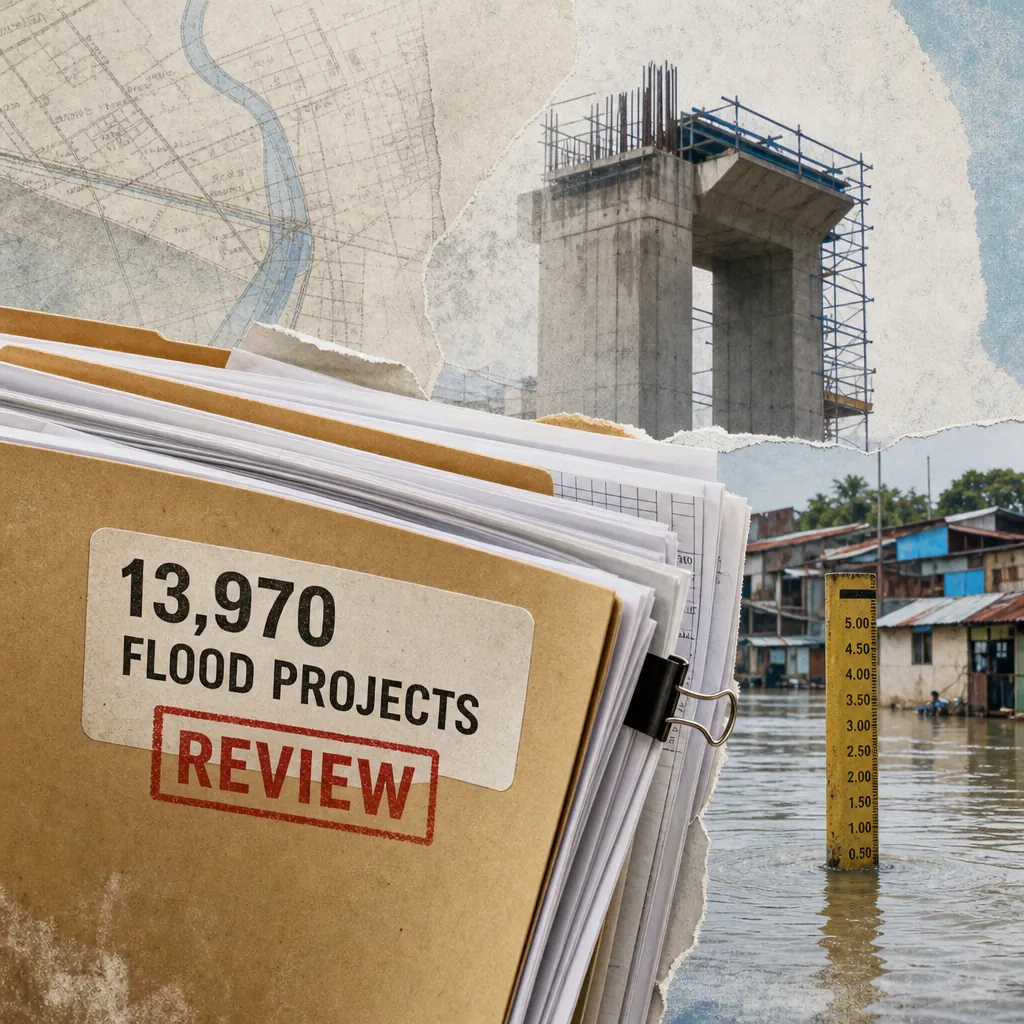
By midday, the narrative shifted to infrastructure accountability. Palace Press Officer Claire Castro announced a review of 13,970 flood control projects completed under the previous administration, explicitly citing the unfinished Davao City flood control project started in 2019 and a decade of zero dredging. "Doon po sa lubog na ang bansa sa baha, totoo naman po, kitang-kita natin ito sa Davao City," she said on Facebook, a post that drew only 2 likes but 4 "haha" reactions—a sign of public skepticism toward government claims. The review, ordered by President Ferdinand Marcos Jr., directs the Department of Public Works and Highways (DPWH) to verify whether reported projects physically exist, a move that introduces regulatory and reputational risk for developers whose township projects depend on public infrastructure completion.
In the afternoon, the flood narrative became explicitly tied to real estate accountability. Bulacan Governor Daniel R. Fernando challenged national authorities to account for P41 billion in flood-control funds, asking why the province remains underwater despite massive allocations. His Twitter post drew 717 views and one comment, but the strategic weight lay in the precedent: local governments are now publicly holding national agencies accountable, which could delay permitting and increase due diligence for developers in flood-prone areas like Bulacan, Cavite, and Laguna. The convergence of the Palace review and the governor's challenge created a dual narrative: national government admitting past failures while provincial leaders demand immediate accountability.
Key themes
- Flood control failures become a political weapon: The Palace's review of 13,970 flood control projects and Bulacan Governor Fernando's challenge over P41 billion in funds signal that infrastructure completion claims are now aggressively contested. This directly affects property valuations in flood-prone zones and could lead to heightened scrutiny of development permits.
- Campus security incidents ripple into property perception: The San Beda Alabang threat and the Ateneo de Zamboanga shooting create compounding anxiety about safety in residential and mixed-use areas. Developers near educational institutions must address security concerns proactively to protect preselling and rental demand.
- Banks cut property exposure to 7-year low: Philippine banks reduced real estate loans to 18.72% of total lending as of June, the lowest since December 2018, reflecting higher borrowing costs and economic uncertainty. This tightens credit for developers and buyers, potentially slowing project launches.
- Developers push ahead with expansions despite risks: SM Prime announced over P4 billion in mall expansions, Megaworld targets nearly 12,000 hotel rooms by 2032, and Cebu Landmasters launched a P2.88-billion tower. These moves signal confidence in regional growth, but they also expose developers to infrastructure and flooding vulnerabilities.
- Pag-IBIG housing assets hit P1.01 trillion: The state fund's gross housing-related assets climbed to P1.01 trillion as of July 31, driven by expanded home financing. This milestone supports affordable homeownership but also concentrates risk in the housing sector if economic conditions worsen.
- Government property sales offer opportunities: PSALM is selling a portion of its Diliman property in Quezon City for at least P11.09 billion, and Cebu City is auctioning nearly 250 tax-delinquent properties. These sales could attract developers but also signal fiscal pressures.
- Monsoon rains and new weather threats loom: Pagasa warned of severe monsoon rains in Luzon starting August 27, with a low-pressure area expected to enter the Philippine area of responsibility by the weekend. This could exacerbate flooding and test new infrastructure, keeping flood narratives alive.
- Public skepticism toward government infrastructure claims: The "haha" reactions to the Palace's flood statement and the viral story of a senior citizen manually cleaning Manila's clogged canals reflect deep public distrust. Developers must navigate this skepticism by demonstrating their own flood resilience investments.
How the narratives stack
Dominant: The flood control accountability narrative dominated the day's conversation, driven by the Palace's review of 13,970 projects and Bulacan Governor Fernando's challenge over P41 billion. This story carried the most significant consequence for the real estate sector, as it directly ties government infrastructure failures to property risk in flood-prone areas. The coverage spanned Facebook, Twitter, and multiple news outlets, with the Palace's statement drawing satirical reactions and the governor's challenge gaining moderate traction. Within the captured set, this narrative appeared in at least three distinct posts and several news articles, making it the clear lead.
Counter-narrative: Despite the flood crisis, developers are pushing ahead with major expansions. SM Prime is spending over P4 billion to expand three regional malls, Megaworld is reorganizing its hospitality arm to target 12,000 hotel rooms, and Cebu Landmasters launched a new residential tower. This counter-narrative suggests that the industry sees long-term growth opportunities in regional hubs, even as flood risks persist.
Emerging: The intersection of school safety and property perception is an emerging narrative. The San Beda Alabang threat and the Ateneo de Zamboanga shooting have created a climate of anxiety that could influence buyer sentiment for developments near educational institutions. This is not yet a major story, but it has the potential to grow if more incidents occur.
Under-covered: The story of Tatay Vicente Banuelos, a 62-year-old senior citizen who manually cleans clogged canals in Manila during heavy rains, received some coverage but deserves more attention. It highlights the gap between government infrastructure failures and grassroots resilience, and it offers a positive counterpoint to the political blame game.
Platform insights
- Reddit: The platform carried the initial security narrative, with the San Beda post receiving 24 upvotes and 4 downvotes. The discussion likely focused on procedural transparency and parental anxiety, setting the tone for how property-related security concerns might be framed in community forums.
- Facebook: The Palace statement post gained minimal engagement (2 likes) but carried 4 "haha" reactions, suggesting public skepticism toward government claims about flood projects. Facebook is a primary platform for Filipino property buyers and HOA communications, so infrastructure failure narratives will circulate in the same feed where developers advertise preselling opportunities.
- Twitter: Bulacan Governor Fernando's challenge accumulated 717 views and notable traction for a provincial statement, indicating that real estate affordability and flood safety are rising political issues on the platform most used by journalists, analysts, and opinion leaders.
Key voices and communities
- Local Government Officials and Provincial Authorities: Provincial and city-level government figures are emerging as vocal participants in the flood-related discourse. Bulacan Governor Daniel R. Fernando's challenge over P41 billion in flood-control funds is a prime example. Their platform presence spans Twitter and Facebook, with engagement primarily concentrated among local constituents and media outlets.
- National Government Communications Apparatus: Palace spokespersons and official government channels represent a coordinated voice in the flood conversation, actively managing the administration's messaging around infrastructure accountability. Their influence stems from institutional authority rather than raw engagement metrics.
- Educational Institutions and Campus Communities: Schools and their surrounding communities represent a distinct stakeholder cluster, though their relevance to real estate is indirect but meaningful for residential developments near campuses. The San Beda College Alabang incident demonstrates how safety concerns within educational settings can rapidly affect surrounding property values and rental demand.
- Property Developers and Industry Executives: Executives from SM Prime, Megaworld, Cebu Landmasters, and DMCI Resorts are driving the counter-narrative of expansion and confidence. Their statements, covered by business media, signal that the industry is betting on regional growth despite infrastructure challenges.
- Influencer Philanthropy Networks: Content creators and social media personalities engaged in disaster relief activities constitute a smaller but symbolically significant voice. A notable example involves a major Filipino content creator being preempted by ordinary citizens in posting vlogs about distributing aid to flood victims, signaling a trust shift toward individual actors rather than institutional responses.
Narrative streams
Flood control review and the ghost projects admission
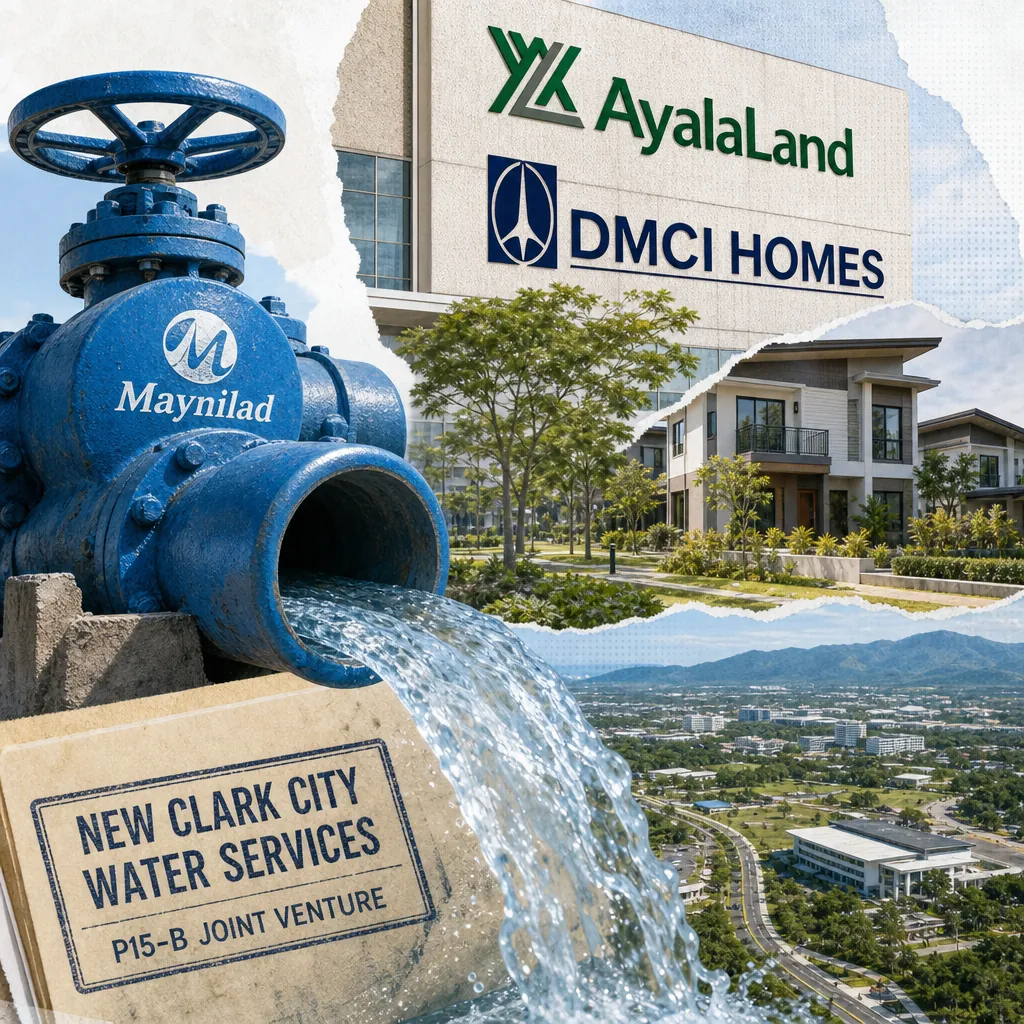
The Palace's directive to review 13,970 flood control projects completed under the previous administration is the day's most consequential development for the real estate sector. Press Officer Claire Castro explicitly referenced the unfinished Davao City flood control project started in 2019 and zero dredging over a decade, stating, "Doon po sa lubog na ang bansa sa baha, totoo naman po, kitang-kita natin ito sa Davao City." The review, ordered by President Marcos Jr., directs DPWH Secretary Vince Dizon to verify if reported projects physically exist. This introduces direct reputational and regulatory risk for developers whose township projects depend on public infrastructure completion, especially in areas like New Clark City and Bulacan's planned developments. The admission that ghost projects may exist—referencing former President Duterte's own acknowledgment—introduces valuation risk for properties in flood-prone zones and could spur increased scrutiny of development permits in areas with incomplete public works. For the sector, the read is that developers must conduct independent infrastructure verification rather than relying on government completion claims, and they should prepare for potential delays in flood mitigation that could elevate flooding complaints and affect property valuations.
Bulacan governor's challenge and provincial pushback
Bulacan Governor Daniel R. Fernando's challenge to national authorities to account for P41 billion in flood-control funds marked a turning point, moving the conversation from national acknowledgment to provincial-level confrontation. His Twitter post, which drew 717 views and one comment, directly asked why the province remains underwater despite massive allocations. This is a critical development for developers with exposure to Bulacan—including those involved in socialized housing, house-and-lot projects, and the proposed New Manila International Airport corridor—because it signals that public infrastructure failures will increasingly become a political weapon. The convergence of the Palace review and the Governor's challenge created a dual narrative: national government admitting past project failures while provincial leaders demand immediate accountability, which historically leads to delayed permitting and increased due diligence requirements for developers. The read for the sector is that local governments will increasingly hold national agencies accountable, and developers must engage proactively with local government units to demonstrate compliance and community investment rather than waiting for regulatory action.
Campus security and property perception
The San Beda College Alabang threat on August 26 emerged as the initial trigger of the day's conversation. The Reddit post accumulated 24 likes and 4 dislikes within hours, and the school suspended face-to-face classes and deployed EOD units for precautionary sweeping. The timeline mattered: the incident occurred against the backdrop of the Ateneo de Zamboanga shooting on August 18, creating a compounding anxiety that property developers and HOA managers cannot afford to ignore. The school later declared the campus safe and resumed classes, but the episode underscored how security incidents directly impact the perceived desirability of nearby residential projects, particularly for preselling condo units where families are making long-term commitments. For developers with projects near educational institutions, monitoring campus security discourse provides early warning signals about neighborhood safety perceptions that could influence buyer sentiment and rental yields. The read for the sector is that transparent security communications and visible safety measures are essential to maintaining confidence in residential developments, especially in areas like Alabang where several high-profile projects are located.
Banks cut property exposure to 7-year low
Philippine banks reduced their exposure to the property sector to the lowest level in more than seven years, as higher borrowing costs and economic uncertainty weighed on demand for real estate. Real estate loans accounted for 18.72 percent of banks' total lending portfolio as of June, the lowest share since December 2018, according to the Bangko Sentral ng Pilipinas (BSP). In peso terms, banks and their trust units lent P3.2 trillion to the property sector, nearly 7 percent more than a year earlier. Residential loans rose 3 percent to P1.2 trillion, while commercial real estate loans grew 5 percent to nearly P2 trillion. The latest figure remained well below the BSP's 25-percent limit on real estate exposure, which the central bank raised from 20 percent in 2020 to give banks more room to lend. This tightening of credit is a significant headwind for developers, as it could slow project launches and dampen buyer demand. The read for the sector is that developers must adapt to a more constrained lending environment by focusing on pre-selling and securing financing early, while buyers may face higher borrowing costs.
Developer expansions signal confidence despite risks
Despite the flood crisis and economic uncertainty, major developers announced significant expansion plans on August 26. SM Prime Holdings is spending over P4 billion to expand three regional malls in Western Visayas, Calabarzon, and Bicol, adding approximately 70,000 square meters of gross floor area. Megaworld Corp. is accelerating its hospitality expansion, targeting nearly 12,000 hotel rooms by 2032, and has created a new hospitality group, Megaworld Global Hotels and Resorts, to oversee its growing portfolio. Cebu Landmasters started its P25-billion second-half launch pipeline with the P2.88-billion Alto Ranudo residential tower in Cebu City. These moves signal confidence in regional growth, but they also expose developers to infrastructure and flooding vulnerabilities. The read for the sector is that developers are betting on long-term growth in regional hubs, but they must balance this optimism with proactive flood resilience investments and independent infrastructure verification to mitigate reputational risks.
Pag-IBIG housing assets hit P1.01 trillion
Pag-IBIG Fund's gross housing-related assets climbed to P1.01 trillion as of July 31, 2026, driven by the continued expansion of its housing portfolio and increased financing extended to members purchasing, building, or improving their homes. Department of Human Settlements and Urban Development Secretary Jose Ramon Aliling, chairman of the Pag-IBIG Fund Board of Trustees, said the milestone underscores the fund's role in expanding homeownership opportunities while supporting the housing industry and the wider economy. This milestone reflects the government's commitment under the Expanded Pambansang Pabahay para sa Pilipino Program to make affordable homeownership accessible to more Filipinos. For the sector, the read is that state-backed financing remains a critical pillar for housing demand, but the concentration of assets in housing also means that any economic downturn could strain the fund's portfolio.
Government property sales and tax delinquencies
State-run Power Sector Assets and Liabilities Management Corp. (PSALM) is planning to sell a portion of its Diliman property in Quezon City for at least P11.09 billion. The property, which houses the offices of National Power Corp. and National Transmission Corp., is one of PSALM's most valuable assets, located in Quezon City's central business district. The bidding process is set for September, with a prebid conference on September 3 and bid submission deadline on September 24. Meanwhile, Cebu City is auctioning nearly 250 tax-delinquent properties, with total collectibles from delinquent real property tax accounts amounting to P18.3 million as of August 2026. These sales offer opportunities for developers to acquire prime assets, but they also signal fiscal pressures on government entities. The read for the sector is that government property sales could provide attractive investment opportunities, but developers must conduct thorough due diligence on the properties' condition and legal status.
Conversation trajectory
- Flood control verification report (2-3 weeks): The DPWH verification of the 13,970 flood control projects is expected within weeks. The findings could trigger significant political fallout and affect public trust in infrastructure announcements. Developers should monitor this closely and prepare to respond to any mentions of their projects in connection with flooding narratives.
- Impeachment proceedings against Vice President Sara Duterte (ongoing): The impeachment complaints against Vice President Sara Duterte, who is also the former mayor of Davao City, will likely sustain the political accountability angle. Her challenge to prosecutors to "prove it with evidence" adds to the charged atmosphere.
- Typhoon season peak (September-October): The approaching peak of the typhoon season will test whether any new flood infrastructure investments translate into visible improvements. Pagasa has already warned of severe monsoon rains in Luzon starting August 27, with a low-pressure area expected to enter the Philippine area of responsibility by the weekend. This could exacerbate flooding and keep the flood narrative alive.
- BSP policy meeting (August 27): The Bangko Sentral ng Pilipinas is widely expected to raise interest rates by 25 basis points for a third straight meeting. This could further tighten credit for property buyers and developers, affecting demand and project viability.
- PSALM property bidding (September 3-24): The bidding for the Diliman property will attract developer interest. The outcome could signal investor confidence in the property market.
Trigger events to watch: The release of the DPWH verification report, the BSP rate decision, the next major typhoon, and any new school safety incidents. Each could reshape the conversation and create both risks and opportunities for real estate stakeholders.
Response guidance
Flood resilience communication: Developers with projects in flood-prone areas should proactively audit and communicate their flood-resilience credentials. Prepare documentation of drainage systems, flood mitigation investments, and coordination with local government flood control efforts. This positions them to respond quickly if their projects are mentioned in connection with flooding narratives.
Monitor provincial and local government statements: The Bulacan governor's challenge represents a template that other local leaders may follow. Establish alerts for similar statements from local officials in Cavite, Laguna, Bulacan, and Davao, and prepare rapid response protocols if any of these mentions connect to client projects.
Leverage community engagement narratives: The viral response to the celebrity ayuda distribution indicates strong audience appetite for genuine flood relief and community support content. Encourage clients to document and amplify their own flood response efforts, whether through employee volunteer programs, donation drives, or temporary shelter provisions for affected residents.
Address school safety concerns: For developers with projects near educational institutions, monitor campus security discourse and prepare messaging about community safety and preparedness. Avoid sensationalism and emphasize factual reporting, while reminding audiences of existing security measures in planned communities.
Navigate political sensitivity: The flood control verification discussions are politically charged. Maintain strictly neutral positioning, focusing on industry compliance rather than endorsing or criticizing specific administrative actions. Avoid engaging in partisan exchanges about project verification; instead, redirect to general statements about industry commitment to quality construction and compliance with government standards.
See the full picture behind today's signals.
This report draws from Media Meter's MediaWatch, our real-time monitoring engine tracking 2,470+ Philippine sources across print, broadcast, digital, and social. Explore how the platform turns raw coverage into decision-grade intelligence, then see how it's configured for teams like yours — whether you're in PR agencies, corporate comms, government, or marketing.
Want more? Browse our Report Library for sector and crisis intelligence, or request a demo and we'll have your brand set up before the call.
Want this kind of intelligence on your brand?
This brief is built on the same MediaWatch methodology that runs continuously across every brand we monitor. See your competitive landscape, Impact Score, and narrative trajectory in a 30-minute demo.