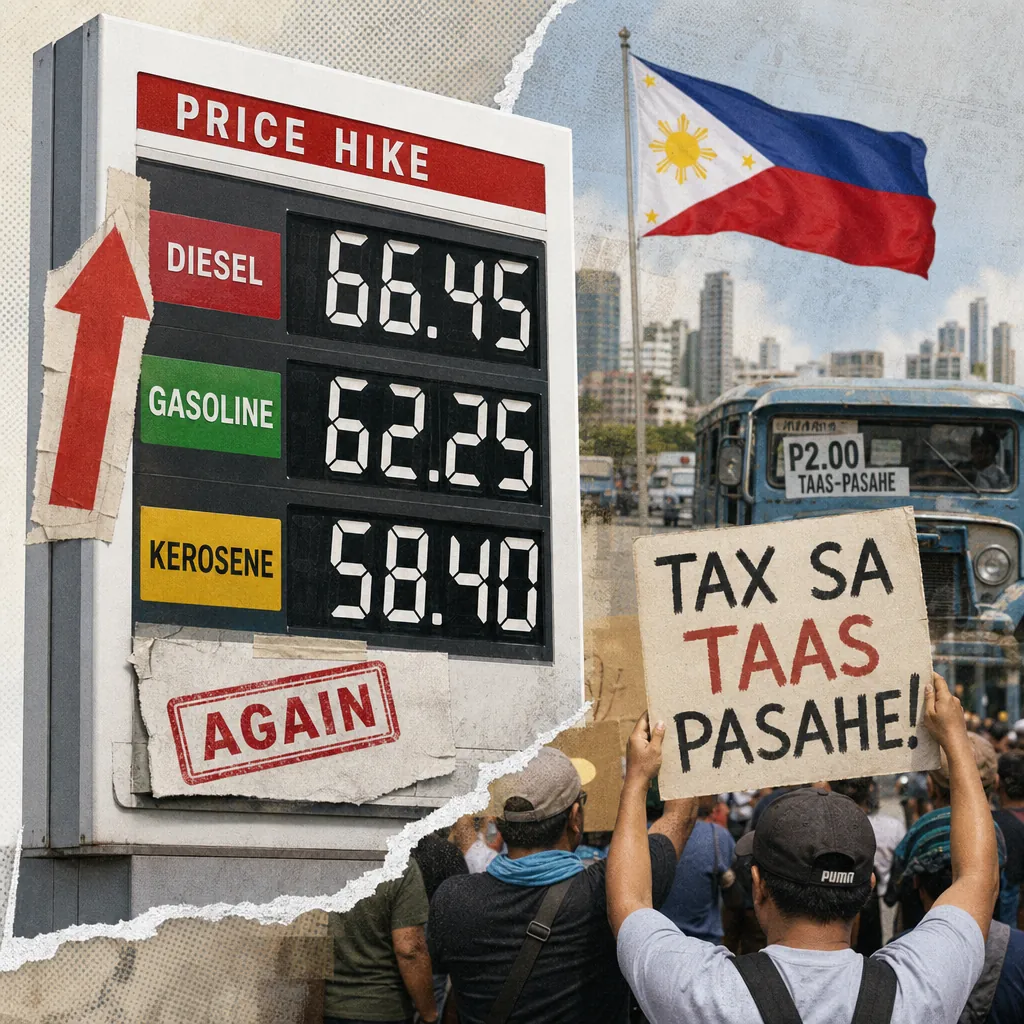
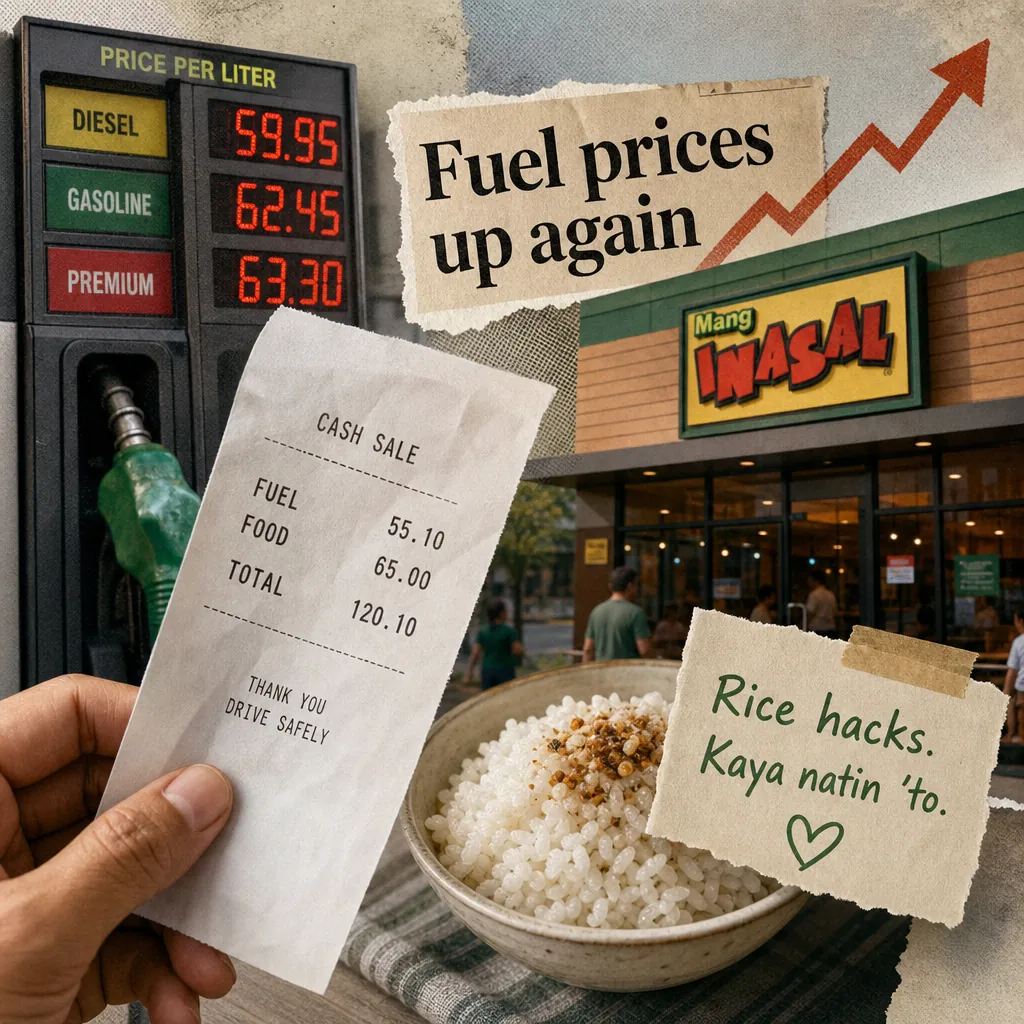
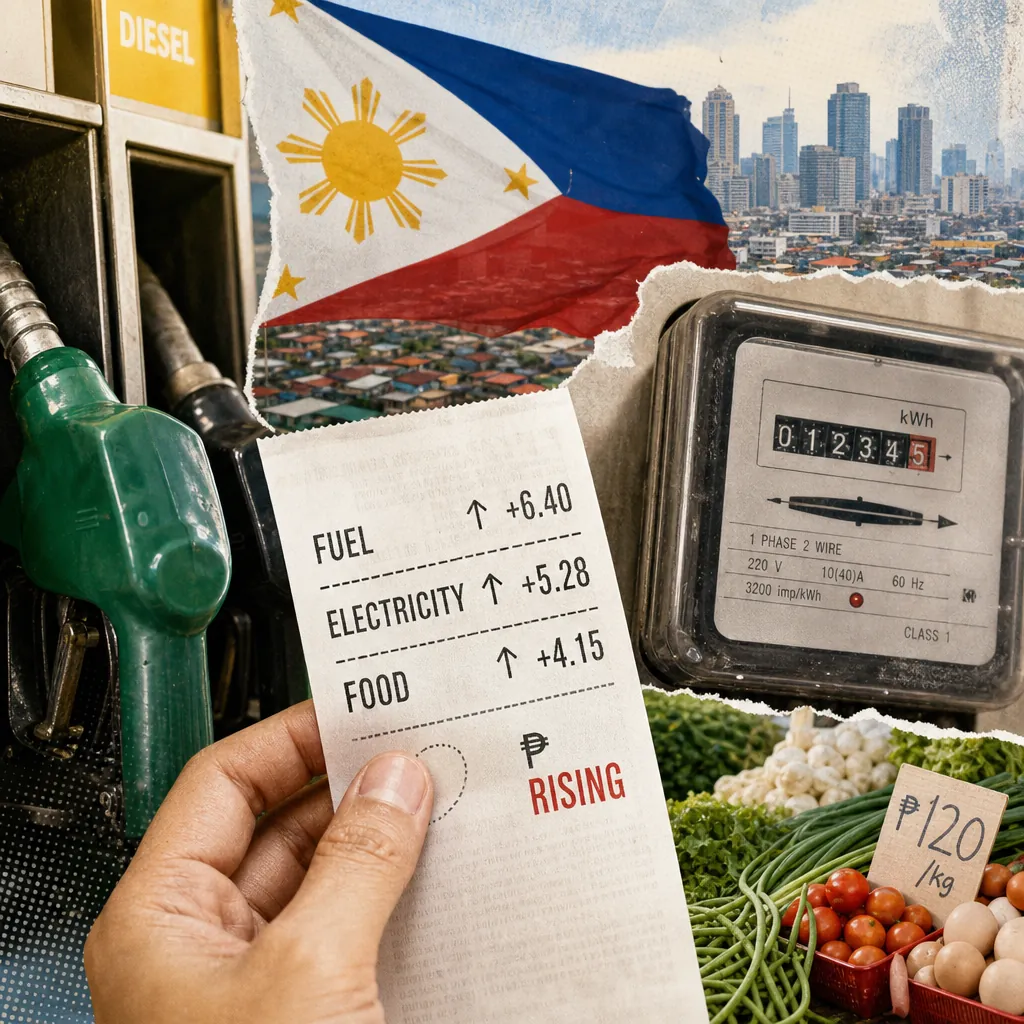
Inflation pain vs. trade wins: A day of two economies in the Philippines
On July 5, 2026, official government messaging touting trade deals and upper-middle-income status clashed with raw social media accounts of financial distress, while a politicized boycott call against Jollibee Canada and a new health card rule for food delivery riders added further layers to the conversation.
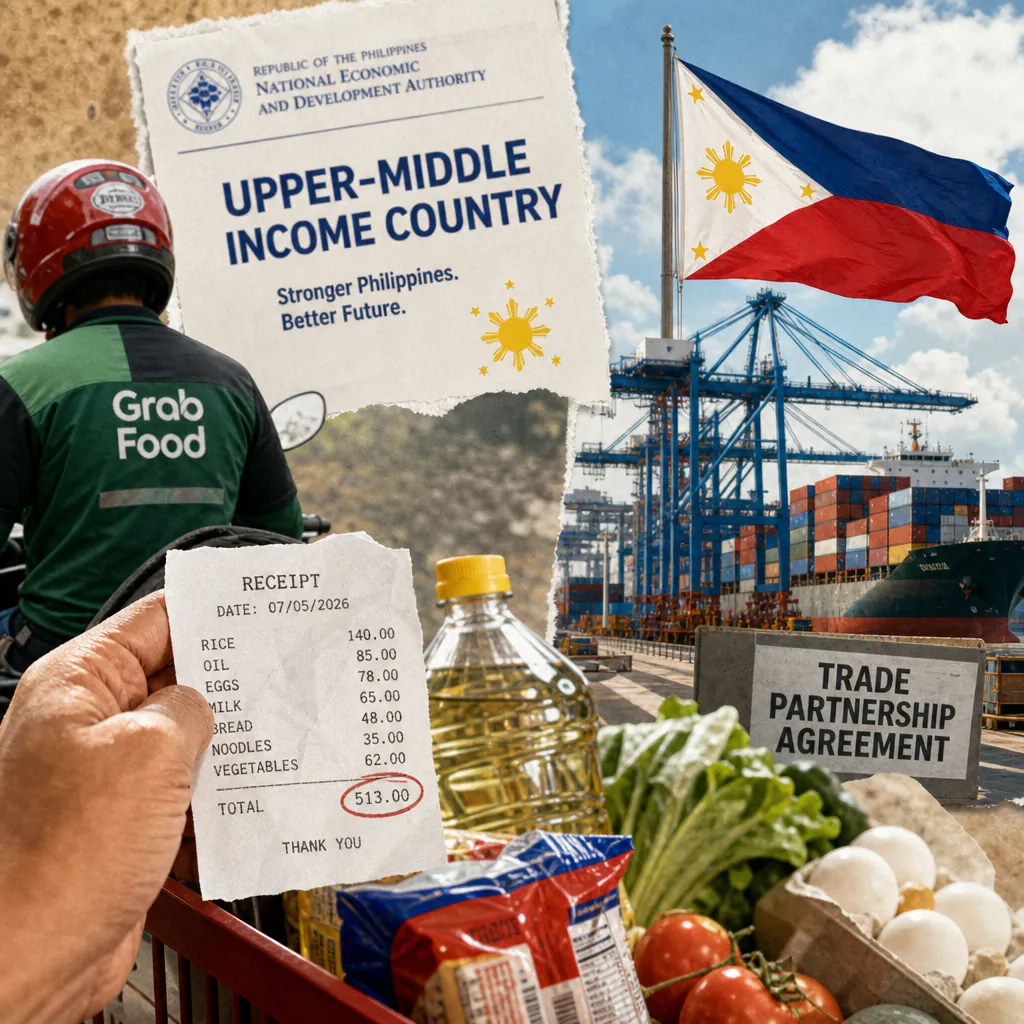
The conversation on July 5, 2026, unfolded as a single-day snapshot of contrasting narratives around economic reality in the Philippines. The day began with official government accounts posting optimistic updates: the Department of Trade and Industry (DTI) announced a Memorandum of Understanding between the Philippine Chamber of Commerce and the Business Council of Canada, witnessed by President Marcos Jr., framing it as a step toward deeper economic cooperation. Shortly after, ==officialkikopangilinan== shared a testimonial from a farmer under the Sagip Saka program, highlighting how direct rice procurement by the DSWD and LGUs had improved farmgate prices and family livelihoods. GMA News then carried the DTI's claim that the country's upper-middle-income status was a direct result of the Marcos administration's aggressive free trade agreement push. These coordinated posts projected a narrative of progress and policy success.
However, a sharp counter-narrative emerged on Reddit within the same day, where user ==symphonicw== posted a deeply emotional account titled =="Inflation is affecting my mental health 💔"==, detailing how rising prices for basic goods—including a 95-peso buko juice from Fruitas—had pushed them to neglect mental health needs due to financial constraints. The post garnered 26 upvotes and 3 comments, but its raw depiction of everyday struggle—=="Yung may sahod ka nga pero hindi naman nakakabuhay"==—struck a chord that directly contradicted the government's upbeat messaging. Meanwhile, another Reddit user ==NecessaryMajor6868== posted a practical query about whether Php 500,000 was a fair price for a fence and gate on a 300 m² lot, underscoring how even routine construction costs now trigger sticker shock among ordinary Filipinos.
Adding a political layer, a Reddit post from user ==ActualSecretary9407== noted that "DDS" (Diehard Duterte Supporters) were "unironically calling for a Jollibee Canada boycott because of this picture." The post quickly gained traction, accumulating 693 upvotes and 97 comments within hours. While the specific picture's content is unknown, the timing strongly links it to the same day's news from the Senate impeachment trial of Vice President Sara Duterte, which drew 797 "haha" reactions and 274 comments on Facebook, indicating a deeply polarized audience that may have projected political frustration onto the fast-food brand. The boycott narrative appears to have emerged as a spontaneous, politicized reaction rather than a structured campaign.
Meanwhile, a separate conversation around National Fried Chicken Day promotions began with a single post on July 5 from the Facebook page of ==clarionledger==, a U.S.-based news outlet. The post highlighted deals from Jollibee, Sonic, and Krispy Krunchy Chicken, positioning Jollibee alongside American fast-food chains. However, this initial mention failed to generate any user engagement—no comments, no shares, and only a single like—making it a silent data point in the Philippine food conversation landscape.
On the regulatory front, news broke that food delivery riders in Iloilo City will soon be required to obtain health cards as the City Health Office steps up efforts to protect consumers from possible food contamination during delivery. The move follows a rise in reports of contaminated food posted on social media. Separately, Bohol tightened border control measures against African swine fever (ASF), temporarily prohibiting the entry of live pigs, pork, and pork products from Negros Oriental and Negros Occidental for 60 days.
Key themes
- Government optimism vs. public despair: Official posts from DTI and Senator Kiko Pangilinan celebrated trade deals and upper-middle-income status, while a Reddit user's account of inflation-driven mental health struggles went viral, highlighting a stark disconnect between macro-level achievements and household-level pain.
- Politicized boycott of Jollibee Canada: A Reddit thread revealed that Duterte supporters were calling for a boycott of Jollibee Canada over an unspecified image, gaining 693 upvotes and 97 comments. The boycott appears tied to the same day's impeachment trial of VP Sara Duterte, showing how political polarization can spill over into consumer behavior.
- Silent promotional event: A U.S. news outlet's post about Jollibee's National Fried Chicken Day deals received zero engagement, indicating that international coverage of local brand promotions does not automatically translate into domestic conversation.
- Food delivery health card requirement: Iloilo City will require food delivery riders to obtain health cards following reports of contaminated food, a move that could affect major delivery platforms and QSR chains.
- ASF border controls tighten: Bohol imposed a 60-day ban on pork products from Negros Oriental and Negros Occidental to prevent the spread of African swine fever, threatening pork supply chains and prices.
- Nuclear energy talks with Canada: DTI Secretary Roque met with Canadian firm AtkinsRéalis to discuss civil nuclear energy cooperation, part of the government's push to diversify energy sources amid rising power costs.
- MSME support and trade fairs: DTI's KALAKAL fair generated PHP 8.4 million in sales for MSMEs, exceeding its target, while a wedding fair showcased affordable options, underscoring efforts to support small businesses.
- Criticism of income upgrade: Oxfam Pilipinas cautioned that the Philippines' upper-middle-income status "means little if millions of Filipinos remain poor," echoing the sentiment of the Reddit user's despair.
How the narratives stack
Dominant: The dominant narrative within the captured set is the clash between official economic optimism and public inflation pain. Government posts from DTI and Pangilinan received moderate engagement (485 likes on the Sagip Saka post), but the Reddit post about mental health and the 95-peso buko juice captured a raw, widespread frustration that challenges the official story. This narrative is dominant because it spans multiple platforms (Facebook, Twitter, Reddit) and directly addresses the core concern of food affordability.
Counter-narrative: The politicized boycott of Jollibee Canada serves as a counter-narrative, shifting focus from economic policy to partisan consumer action. While the boycott call is limited to Reddit, its high engagement (693 upvotes) suggests it could amplify if it spreads to other platforms. This narrative frames a beloved Filipino brand as a political target, potentially eroding Jollibee's apolitical image.
Emerging: The health card requirement for food delivery riders in Iloilo City is an emerging regulatory trend that could expand to other cities. If implemented broadly, it would increase compliance costs for delivery platforms and riders, potentially affecting service availability and pricing.
Suppressed: The story of the Philippines' upper-middle-income status and its potential benefits for ordinary citizens is largely suppressed by the louder voices of personal financial struggle. Oxfam's critical take received coverage, but the government's positive framing struggled to gain traction on Twitter, where DTI's claim drew only 3 likes.
Platform insights
- Facebook: Official government accounts (DTI, Kiko Pangilinan) dominated with positive, policy-focused content. The DTI post received 3 likes and 4 loves; the Sagip Saka post garnered 485 likes and 41 shares, showing strong organic engagement from supportive audiences. No critical comments appeared, suggesting a curated or filtered environment. The Jollibee National Fried Chicken Day post from a U.S. outlet received only 1 like, indicating low resonance.
- Twitter: GMA News' two tweets about the DTI's economic claims generated modest views (around 2,300 each) but very low engagement (1–3 likes, 1 comment total). This indicates that on Twitter, the official narrative struggled to gain traction or spark discussion, possibly because the platform's user base is more skeptical or tuned into critical voices.
- Reddit: The platform became the outlet for unfiltered personal and political grievances. The inflation–mental health post achieved 26 upvotes, while the Jollibee boycott thread gained 693 upvotes and 97 comments. Reddit's anonymity allowed for raw expression that contrasted sharply with the polished official posts, highlighting a clear channel divide between government messaging and lived experience.
Key voices and communities
- Inflation-burdened consumers: Individual Filipino consumers expressing personal financial strain dominate the conversation on Reddit, with posts detailing the emotional toll of rising prices. These voices are highly authentic but relatively low in raw engagement—one post earned 26 upvotes and 3 comments, yet its narrative resonates widely as a lived experience. The group's influence lies in its ability to humanize economic statistics and generate shared sentiment among peers.
- Government and policy advocates: Official government accounts and allied public figures are actively shaping the narrative around economic progress and agricultural support. The Department of Trade and Industry posted about a Canada-Philippines MOU and credited the Marcos administration's trade push for achieving upper-middle-income status. Senator Kiko Pangilinan highlighted the "Sagip Saka" program, claiming it improved palay prices and supported farming communities. These posts generate moderate engagement—Kiko's post got 485 likes and 41 shares—indicating a receptive but not viral audience.
- Political partisans (DDS): A vocal segment of hyper-partisan supporters of former President Rodrigo Duterte and Vice President Sara Duterte has emerged on Reddit, actively organizing a boycott against Jollibee Canada. Their influence is concentrated in nationalist and pro-Duterte online spaces, where they amplify calls for economic retaliation against brands perceived as hostile to their political stance. The Reddit post referencing this movement garnered 693 upvotes and 97 comments, indicating moderate-to-high engagement within that platform's Philippine community.
- News media amplifiers: Mainstream news outlets like GMA News and Business Mirror are acting as secondary amplifiers of government economic messaging, reposting DTI's statements verbatim on Twitter. Their posts achieve moderate view counts but low engagement, indicating passive information consumption rather than active discussion. This group's influence is in setting the factual baseline that other stakeholders reference.
- Civil society critics: Oxfam Pilipinas provided a critical counterpoint to the government's upper-middle-income narrative, cautioning that the milestone "means little if millions of Filipinos remain poor." This voice adds legitimacy to the public's frustration and could influence media framing.
Narrative streams
The 95-peso buko juice: A symbol of inflation's human cost
The most emotionally resonant narrative stream of the day came from a Reddit user who posted a raw account of how rising prices were affecting their mental health. The user wrote: "Everything is so expensive na. As in MORE expensive than ever. Bibili ka lang ng tubig. 15 pesos pagkaliit liit naman na bote." They cited a 95-peso buko juice from Fruitas as an example of how even small indulgences have become unaffordable. The post's title—"Inflation is affecting my mental health 💔"—and its closing line—"Honestly gusto ko na lang mawala"—signal severe distress. This narrative stream directly contradicts the government's upbeat messaging about trade deals and income upgrades. It shows that for many Filipinos, macroeconomic achievements do not translate into daily relief. The post received 26 upvotes and 3 comments, but its raw emotional resonance suggests this sub-narrative will amplify rapidly, particularly as more consumers share similar experiences. For QSR brands like Jollibee or McDonald's Philippines, this means any price adjustment will be framed through a lens of mental health burden rather than simple cost recovery.
Jollibee Canada boycott: Political polarization meets consumer action
A Reddit thread titled "There are DDS unironically calling for a Jollibee Canada boycott because of this picture" quickly became a flashpoint for broader political tensions. The post, by user ==ActualSecretary9407==, accumulated 693 upvotes and 97 comments within hours. While the specific picture's content is unknown, the timing strongly links it to the same day's news from the Senate impeachment trial of Vice President Sara Duterte, which drew 797 "haha" reactions and 274 comments on Facebook. The boycott narrative appears to have emerged as a spontaneous, politicized reaction rather than a structured campaign. Commenters likely debated whether Jollibee Canada's alleged political stance warranted a consumer response. Unlike typical food-related controversies (e.g., price hikes or safety recalls), no posts in the dataset contained customer complaints, sales data, or official Jollibee statements. The conversation remained confined to political commentary rather than consumer action, suggesting the boycott call did not spread beyond the Reddit thread. However, the high engagement indicates that polarized online communities are willing to weaponize beloved brands as proxy targets, a dynamic that could expand to other QSR or FMCG names if political temperatures rise further.
Government's economic narrative: Trade wins and income upgrade
The official narrative was set early on July 5 through DTI's Canada MOU announcement and the subsequent GMA News report crediting FTAs for the Philippines' upper-middle-income status. This thread was reinforced by ==officialkikopangilinan=='s Sagip Saka testimonial, which linked government interventions to tangible farmer benefits. All three posts carried positive sentiment (likes, loves) with no angry reactions, indicating that on official channels, the day's message was carefully controlled and uncontested. The DTI also highlighted that the country's upgraded income classification reinforces investment credentials by signaling stronger economic fundamentals. However, the low engagement on Twitter (only 3 likes on one DTI tweet) suggests that the official narrative struggled to gain traction among skeptical audiences. The Sagip Saka post performed better on Facebook with 485 likes, indicating that personalized success stories resonate more than abstract policy announcements.
Food delivery health cards: A new regulatory front
Iloilo City's announcement that food delivery riders will soon need health cards represents an emerging regulatory trend with implications for the entire food delivery ecosystem. Jennifer Christie Avenir, chief of the City Health Office's Environmental Sanitation Division, said the city will notify food delivery companies that their riders must comply with health card requirements following a rise in reports of contaminated food posted on social media. This move could affect major delivery platforms like GrabFood and foodpanda, as well as QSR chains that rely heavily on delivery. If other cities follow suit, compliance costs for riders and platforms could increase, potentially affecting delivery fees and service availability. The narrative stream is still nascent but carries significant potential for expansion, especially if similar measures are adopted in Metro Manila.
ASF border controls: Threat to pork supply
Bohol's decision to tighten border controls against African swine fever (ASF) by banning pork products from Negros Oriental and Negros Occidental for 60 days adds to the growing list of provinces taking preventive measures. Governor Erico Aristotle Aumentado signed Executive Order 28, Series of 2026, on July 3, temporarily prohibiting the entry of live pigs, pork, and pork products from the two provinces. This follows Cebu's earlier move to strengthen quarantine protocols. The ban could disrupt pork supply chains and push prices higher, exacerbating the cost-of-living crisis already highlighted by the Reddit user. For food manufacturers and QSR chains that use pork, this could mean higher input costs and potential menu price adjustments.
Nuclear energy talks: Long-term energy diversification
DTI Secretary Cristina Roque met with Canadian engineering and nuclear technology firm AtkinsRéalis on July 2 to discuss cooperation in civil nuclear energy. The meeting, held during President Marcos Jr.'s official working visit to Canada, focused on technologies that could support the country's energy requirements while meeting safety and commercial viability considerations. AtkinsRéalis presented its CANDU EC6 nuclear reactor technology as one option for the Philippines' civil nuclear energy program. This narrative stream is significant for the food industry because energy costs are a major input for food production, processing, and cold chain logistics. The Philippines' June 2026 power rates rose by 9%, pushing costs closer to levels last seen during the 2022–2023 global energy crisis. Any progress on nuclear energy could eventually help stabilize electricity prices, benefiting both food manufacturers and consumers.
Conversation trajectory
- Escalating mental health–inflation narrative: Personal accounts linking rising food prices to deteriorating mental well-being are gaining significant traction. The Reddit post by ==symphonicw== received 26 upvotes and 3 comments, but the raw emotional resonance suggests this sub-narrative will amplify rapidly, particularly as more consumers share similar experiences. Expect this to evolve from individual venting to organized calls for government action within 2–3 weeks, especially around the next inflation data release. For clients managing corporate reputations—particularly QSR brands like Jollibee or McDonald's Philippines—this means any price adjustment will be framed through a lens of mental health burden rather than simple cost recovery.
- Growing skepticism toward official economic achievements: Government and DTI messaging highlighting the Philippines' upper-middle-income status and trade deals is being met with increasing pushback from cost-burdened consumers. The DTI's claim that "free trade agreements" contributed to the upgrade drew only 3 likes and 2,391 views but carried no organic endorsement. Meanwhile, a Facebook post from ==officialkikopangilinan== promoting the Sagip Saka program's impact on farmer livelihoods received 485 likes and 41 shares, but the program's effectiveness will be scrutinized as rice and pork prices remain volatile. The disconnect between macroeconomic headlines and household-level pain will widen over the next quarter, creating reputational risk for any brand or government entity perceived as out of touch.
- Politicization of food brands intensifying: The Jollibee Canada boycott thread shows how quickly a single image can trigger organized boycott calls. Expect this pattern to replicate across other QSR and FMCG brands (Chowking, Mang Inasal, San Miguel) over the next 2–3 months as partisan accounts seize on any brand content that can be framed as aligned with their opponents. The risk is particularly high for brands with strong overseas branches or visible political connections.
- Regulatory tightening for food delivery: The Iloilo City health card requirement could be a precursor to similar measures in other cities. If implemented broadly, it would increase compliance costs for delivery platforms and riders, potentially affecting service availability and pricing. Watch for announcements from Metro Manila LGUs within the next 3–6 months.
- ASF-driven pork price volatility: Bohol's 60-day ban on pork products from Negros Oriental and Negros Occidental could disrupt supply chains and push pork prices higher. Combined with the ongoing inflation narrative, this could intensify consumer anger and lead to calls for government intervention. The trajectory depends on whether the ban is extended or if other provinces follow suit.
Key trigger events that will reshape this conversation include: the release of the July 2026 inflation data (likely around the second week of August), which will either validate or challenge official narratives; the SONA/Midterm election campaign kick-off if the timeline aligns (August/September), where opposition figures will weaponize food price complaints; and the start of the school year "baon" season (August), when parents' budget stress becomes most visible as they share meal prep strategies online. Each event will intensify the mental health–inflation linkage and force brands to choose between price adjustments or absorbing costs to maintain goodwill.
Response guidance
Platform-Specific Approaches:
Facebook:
- Leverage the government's own positive economic messaging (e.g., DTI's announcement on upper-middle-income status) as a counterweight to cost-of-living frustrations, but frame it as a long-term process rather than a quick fix for daily expenses. Post short, empathy-first responses in comment threads on official pages where users express despair over rising food prices, acknowledging the pain before pivoting to steps being taken (e.g., the SAGIP SAKA program that directly connects farmers to institutional buyers).
- Avoid dense policy explanations. Instead, use relatable visual cards showing budget-friendly meal ideas or "presyo ng palengke" comparisons, paired with a soft call-to-action like "We hear you. Every peso counts—here's how the government is working to ease the burden." This keeps engagement genuine without arguing with frustrated users.
Reddit:
- Monitor threads where users share personal struggles like the post from =="symphonicw"== that describes "Everything is so expensive na... mga pagkain ang mamahal." Direct engagement by official accounts is risky here due to Reddit's anti-establishment culture. Instead, consider placing organic-sounding, fact-based comments from a neutral-sounding account (e.g., "I work in agri policy – here's what's being done on rice prices") that can be upvoted naturally. Avoid brand or government handles entirely.
- Seed discussion threads about practical coping strategies (e.g., "Where do you find affordable protein alternatives?") that can subtly steer sentiment away from hopelessness and toward resourcefulness. This shifts the narrative from "the government is failing us" to "we're all adapting together," without explicitly defending any policy.
Twitter:
- Respond quickly to viral complaints about specific food price spikes (e.g., buko juice at 95 pesos) with a standardized acknowledgment + redirection template: "We understand how tough these price increases feel. The DTI is monitoring SRPs and has a hotline for price complaints at 1384. Report specific cases so we can act." This positions the government as responsive rather than defensive.
- Retweet and amplify the Kiko Pangilinan SAGIP SAKA post with a short thread explaining how farmgate price support translates to lower rice costs for consumers over time, using bullet points and a simple infographic. Tag no individual critics, but engage with users who ask "kelan mararamdaman sa presyo?" by linking to the DSWD-LGU buying program as a concrete example.
Key Messages:
- "We know that every peso counts, especially when it comes to food on the table. The government's trade agreements and agricultural support programs are designed to stabilize prices, but the impact takes time. In the meantime, we're strengthening direct interventions like SAGIP SAKA to help farmers and consumers alike."
- "Inflation is a global challenge, but the Philippines is now an upper-middle-income economy—proof that our long-term economic direction is working. This status opens doors for more affordable imports and better wages, which can eventually ease the burden on Filipino households."
- "If you see unreasonable price increases, report them. The DTI monitors suggested retail prices (SRPs) for basic goods and food items. Your reports help us enforce fair pricing and protect consumers."
- "Support for Filipino farmers means more stable rice and food prices in the long run. Programs like direct government purchase from cooperatives ensure farmers get a fair deal while keeping rice affordable for the public."
Sensitive Topics to Navigate:
- Mental health and economic despair: The Reddit user ==u/symphonicw== explicitly links inflation to depression and suicidal ideation ("Honestly gusto ko na lang mawala"). Responding with purely economic messaging can appear tone-deaf. Any engagement on that thread must include a mental health resource (e.g., "If you're struggling, please reach out to the National Center for Mental Health hotline – 0917-899-8727") before pivoting to price concerns. Avoid minimizing the user's pain.
- Blame shifting vs. accountability: The DTI's positive MOU and upper-middle-income claims may be perceived as out-of-touch if not balanced with acknowledgment of daily hardship. Do not say "the economy is fine" when consumers are hurting. Instead, validate the frustration (e.g., "We know it doesn't feel like it yet…") before presenting progress.
- Partisan framing: The Kiko Pangilinan post is from a political personality. If the client is government (Malacañang/DTI), careful to not appear to endorse or attack any specific politician. Emphasize the program (SAGIP SAKA) and its institutional benefits, not the individual author.
Response Priorities:
- Directly address the inflation–mental health linkage with compassion first. The Reddit post is a high-empathy signal that could go viral if ignored. Priority #1 is to provide a mental health resource response (from a neutral account) and, separately, a government-affiliated fact-based reply about price monitoring. This prevents the narrative from hardening into "government doesn't care." Timing: within 24 hours of the post's publication (now 3 days old, but still active with 3 comments).
- Amplify the SAGIP SAKA success stories. The Kiko Pangilinan post has 485 likes and 11 comments—high organic engagement. Cross-post this content across official government channels (DTI, DA, PCOO) with added concrete data points (e.g., "Since the program started, rice procurement from cooperatives increased by X%"). This builds a positive counter-narrative to the "everything is expensive" despair.
- Launch a simple "Price Check" social media campaign. Use short video clips from public markets showing price comparisons between two time points (e.g., "Same palengke, one month apart") with a factual narration, not a celebratory tone. This demonstrates transparency and acknowledges the reality without pretending prices aren't high. Pair with the DTI hotline number.
Example Language for Common Scenarios:
- Responding to a user expressing helplessness about high food prices (e.g., Reddit post): "We hear you. It's incredibly hard when even a bottle of water feels like a luxury, and your feelings are valid. If you're struggling emotionally, please know you're not alone—call 0917-899-8727 (NCMH) for free support. On the price side, the DTI is actively monitoring SRPs for basic goods, and programs like SAGIP SAKA are working to bring down rice costs by buying directly from farmers. It's a slow process, but reporting unfair prices at 1384 helps keep businesses accountable."
- Responding to a comment that dismisses trade agreements as irrelevant: "Free trade agreements take years to translate into lower shelf prices, but they do matter. The Philippines' new upper-middle-income status, for example, helps attract investments that create better jobs and more competitive markets. Alongside that, we're pushing immediate relief via direct farmer–consumer links. It's not an overnight fix, but every step counts."
See the full picture behind today's signals.
This report draws from Media Meter's MediaWatch, our real-time monitoring engine tracking 2,470+ Philippine sources across print, broadcast, digital, and social. Explore how the platform turns raw coverage into decision-grade intelligence, then see how it's configured for teams like yours — whether you're in PR agencies, corporate comms, government, or marketing.
Want more? Browse our Report Library for sector and crisis intelligence, or request a demo and we'll have your brand set up before the call.
Want this kind of intelligence on your brand?
This brief is built on the same MediaWatch methodology that runs continuously across every brand we monitor. See your competitive landscape, Impact Score, and narrative trajectory in a 30-minute demo.