Haze from Indonesia fires blankets Metro Manila
A thick haze from forest fires in Indonesia blanketed Metro Manila and nearby regions, prompting health warnings and raising air quality to 'very unhealthy' levels. The day's coverage also included major business developments in telecom, energy, and finance.
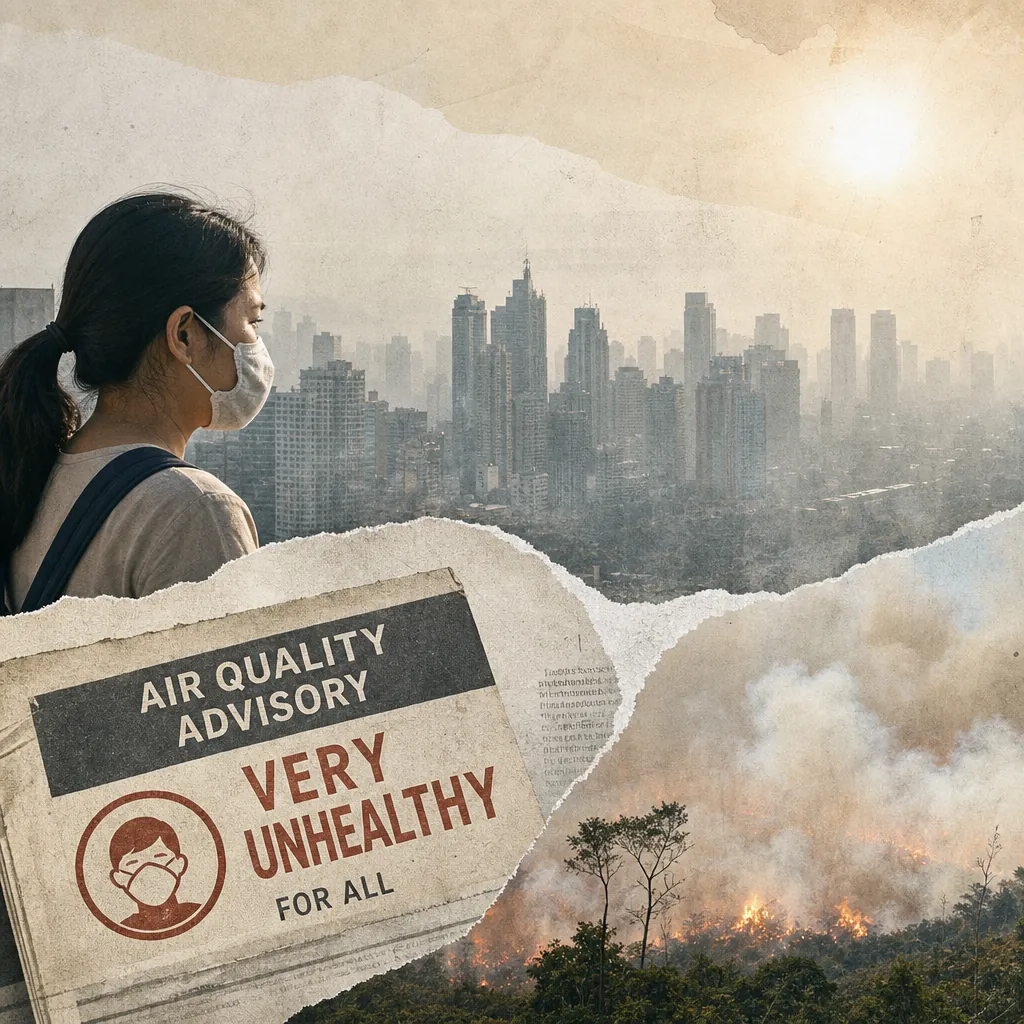
A thick, gray haze settled over Metro Manila on the evening of September 1, 2026, as smoke from forest fires in Kalimantan, Indonesia, was carried across the South China Sea by the southwest monsoon, or "habagat." The state weather bureau, Pagasa, said the haze could spread to the western parts of Visayas, Mindanao, and the Mimaropa region over the coming days 1. By Monday night, air quality in parts of the capital had reached "very unhealthy" levels, according to the Office of Civil Defense, and the Department of Health urged children, the elderly, pregnant women, and those with existing health conditions to wear N95 masks and limit outdoor activity [42]. The haze was the most visible and widely felt story of the day, drawing heavy coverage across online news outlets and prompting public concern about health and safety.
While the haze dominated the news cycle, the day's business pages carried several significant developments. The Department of Information and Communications Technology (DICT) announced that capital spending by major telecommunications companies could reach $2.45 billion (about ₱152.88 billion) this year, a signal of confidence in the country's digital future [16][29]. In the energy sector, Meralco moved closer to awarding a 15-year power supply agreement for 600 megawatts of baseload capacity, with bids starting at ₱5.3573 per kilowatt-hour [7]. And in a notable corporate move, Solar Philippines, the company of Batangas Rep. Leandro Leviste, sold ₱3 billion worth of shares in SP New Energy Corp., further reducing its stake amid ongoing legal troubles [14][15].
On the social and sports front, the Premier Volleyball League (PVL) Invitational Conference continued to draw attention, with Creamline dominating Ho Chi Minh City and Nxled stunning defending champion PLDT [3][19]. The day also saw the launch of new smartphones from POCO and OPPO, and a feature on tennis star Alex Eala's growing earnings, which Forbes estimates could make her the world's second-highest-paid female athlete by 2027 [2][4][12].
Key themes
- Haze from Indonesian fires blankets Metro Manila, air quality hits 'very unhealthy' — A thick haze from forest fires in Kalimantan, Indonesia, drifted over the capital and nearby regions, pushing air quality to "very unhealthy" levels and prompting health warnings from the Department of Health [42].
- Telco spending to reach ₱152.88 billion in 2026, DICT says — The Department of Information and Communications Technology expects capital spending by PLDT, Globe, Converge, and DITO to reach $2.45 billion this year, a sign of industry confidence in the Philippines [16][29].
- Meralco evaluates bids for 600-MW baseload supply — Manila Electric Co. is reviewing three lowest bids for a 15-year power supply agreement, with offers starting at ₱5.3573 per kilowatt-hour, pending regulatory approval [7].
- Solar Philippines sells ₱3 billion in SPNEC shares — The company of Rep. Leandro Leviste cut its stake in SP New Energy Corp. to 11.51%, raising ₱3 billion, as Leviste faces plunder and graft complaints [14][15].
- SIM card registration law ineffective, PNP says — The Philippine National Police's Anti-Cybercrime Group said the SIM Card Registration Act has not curbed cybercrime and called for stronger identity authentication, including using the national ID [36][38].
- Marina cyber intrusion exposes aging IT infrastructure — A cyber attack targeting the Maritime Industry Authority forced an emergency shutdown of online services, highlighting the need for a ₱150-million system overhaul [37].
- PVL Invitational: Creamline and Nxled shine — Creamline stayed unbeaten with a dominant win over Ho Chi Minh City, while Nxled swept defending champion PLDT, showing depth without star Brooke Van Sickle [3][19][41].
- Data center boom faces power grid constraints — Moody's Ratings said the Philippines' unstable electricity grid is preventing data centers from scaling, while the World Trade Center Association sees opportunities for ecozones [27][28].
How the narratives stack
Dominant — The haze from Indonesian forest fires was the dominant story of the day, both in terms of public impact and media coverage. It directly affected millions of people in Metro Manila and nearby regions, with air quality reaching "very unhealthy" levels. The story drew extensive coverage across online news outlets, including Inquirer, Philstar, and ABS-CBN, and prompted official health advisories [1][42]. The sheer scale of the affected population and the tangible health risks made it the most consequential development of the day.
Counter-narrative — Amid the haze, the business community projected confidence. The DICT's announcement of record telco spending and Meralco's power supply bidding signaled that the private sector is investing heavily in the country's digital and energy infrastructure [16][7]. This narrative countered the gloom of the environmental crisis, suggesting that long-term economic fundamentals remain strong.
Emerging — The PNP's call to strengthen the SIM card registration law and the Marina cyber intrusion both point to a growing concern over digital security. These stories, while not as prominent as the haze, indicate a rising awareness of cyber threats and the need for better safeguards [36][37].
Under-covered — The Moody's report on the Philippines' power grid instability as a bottleneck for data centers received relatively little attention compared to its significance. The report highlights a structural weakness that could hinder the country's ambition to become a regional data center hub, yet it was only covered in a few business outlets [28].
Platform insights
- Facebook — The haze story dominated Facebook feeds, with users sharing photos of the gray skyline and expressing concern for their families' health. Posts from news outlets like Inquirer and ABS-CBN garnered thousands of reactions and shares, as people sought information on air quality and safety measures.
- X (formerly Twitter) — On X, the conversation was more analytical, with users discussing the causes of the haze and the government's response. Hashtags like #HazePH trended, and netizens debated the effectiveness of the SIM card registration law, with many sharing personal experiences of scam calls.
- YouTube — Sports content performed well on YouTube, with PVL match highlights and analysis videos drawing significant views. The Creamline vs. Ho Chi Minh City match, in particular, attracted attention due to the team's dominant performance and the presence of international player Jaja Santiago-Minowa.
- TikTok — Short-form videos of the haze, including time-lapses of the sky turning gray, circulated widely on TikTok. Some creators also posted educational content about the health effects of haze and how to protect oneself, which received high engagement.
Key voices and communities
- Government agencies — Pagasa, the Department of Health, and the Office of Civil Defense were the primary sources of information on the haze, issuing advisories and safety guidelines. Their statements were widely quoted and shared.
- Business and financial community — Figures like DICT Secretary Henry Rhoel Aguda and Meralco executives shaped the narrative on telecom and energy investments. Their announcements were covered by business publications and discussed on financial forums.
- Sports fans and athletes — The PVL community, including players like Jaja Santiago-Minowa and MJ Phillips, drove engagement on social media with their performances and post-match interviews. Fans celebrated victories and debated team strategies.
- Tech enthusiasts — The launch of POCO F9 series and OPPO's 9.9 sale attracted tech bloggers and reviewers, who shared their hands-on impressions and deal recommendations on platforms like YouTube and TikTok.
- Legal and political observers — The Leviste share sale and the PNP's call for stricter SIM card laws drew commentary from legal experts and political analysts, who discussed the implications for corporate governance and cybersecurity.
Narrative streams
Haze from Indonesian fires triggers health warnings and air quality crisis
A thick haze from forest fires in Kalimantan, Indonesia, blanketed Metro Manila and nearby regions on September 1, 2026, pushing air quality to "very unhealthy" levels. The state weather bureau Pagasa said the haze, carried by the southwest monsoon, could spread to western Visayas, Mindanao, and Mimaropa [1]. The Office of Civil Defense confirmed that the haze was affecting CALABARZON and MIMAROPA, with the sky appearing dark and air quality deteriorating [42]. The Department of Health advised the public, especially vulnerable groups, to wear N95 masks and limit outdoor activities [42]. The haze was a stark reminder of the region's vulnerability to transboundary pollution, and it drew widespread concern on social media as residents shared photos and sought advice. The read for the sector: this event underscores the need for better air quality monitoring and public health communication, as well as regional cooperation on environmental issues.
Telco spending to hit ₱152.88 billion, signaling digital confidence
The Department of Information and Communications Technology (DICT) announced that capital spending by major Philippine telecommunications companies could reach $2.45 billion (about ₱152.88 billion) in 2026. This figure includes investments by PLDT, Globe, Converge, and DITO, and represents a significant bet on the country's digital future [16][29]. DICT Secretary Henry Rhoel Aguda said, "Crossing the $2-billion mark sends a clear message: the telecommunications industry believes in the Philippines." The investments are expected to translate into more infrastructure, better connectivity, and new jobs [29]. This news came amid growing demand for data centers and digital services, and it suggests that the private sector is confident in the country's economic trajectory. The read for the sector: telecom companies are doubling down on network expansion, which could improve internet access and support the growth of digital industries, but the actual impact will depend on how quickly these investments are deployed.
Meralco evaluates bids for 600-MW baseload supply
Manila Electric Co. (Meralco) is evaluating the three lowest bids for its 600-megawatt baseload supply requirement, with offers from San Miguel Global Power and AboitizPower subsidiaries starting at ₱5.3573 per kilowatt-hour. The distribution utility is moving toward awarding 15-year power supply agreements, pending approval from the Energy Regulatory Commission (ERC) [7]. This competitive selection process is part of Meralco's efforts to secure reliable and cost-effective power for its customers. The bids reflect the ongoing competition in the power generation sector, and the outcome will affect electricity rates for millions of consumers. The read for the sector: the awarding of these contracts will shape the energy mix and pricing for years to come, and stakeholders should watch for the ERC's decision and its impact on consumer bills.
Solar Philippines sells ₱3 billion in SPNEC shares amid legal woes
Solar Philippines Power Project Holdings Inc. (SPPHI), the company of Batangas Rep. Leandro Leviste, sold 2.4 billion shares in SP New Energy Corp. (SPNEC) at ₱1.25 each, raising ₱3 billion and reducing its stake to 11.51% from 16.3% [14][15]. The sale comes as Leviste faces plunder and graft complaints before the Office of the Ombudsman over unfinished solar projects and unpaid government obligations [14]. The buyer was not disclosed, but the transaction further cements the control of Manuel V. Pangilinan's group, which holds a 57.33% stake in SPNEC [15]. This development is significant for the renewable energy sector, as it signals a shift in ownership and control of key solar assets. The read for the sector: the divestment may ease governance concerns but also raises questions about the future direction of SPNEC's projects and the resolution of Leviste's legal issues.
PNP calls SIM card registration law ineffective
The Philippine National Police's Anti-Cybercrime Group (ACG) said the SIM Card Registration Act has not been effective in curbing cybercrime, as almost all cybercrimes are rooted in SIM cards and loopholes allow criminals to bypass registration [36][38]. ACG director MGen. Wilson Asueta urged Congress to strengthen the law, suggesting that only the national ID should be used for registration to intensify identity authentication [36]. This call comes amid rising concerns over online scams and fraud, which have become a major public issue. The read for the sector: stricter SIM registration could reduce cybercrime but may also raise privacy concerns; telecom companies and regulators will need to balance security with user convenience.
Marina cyber intrusion exposes aging IT infrastructure
A cyber intrusion targeting the Maritime Industry Authority (Marina) forced an emergency shutdown of its online operations, halting the processing of Seafarers' Identification Documents and other services. The attack, which involved foreign IP addresses attempting to steal biometric data, exposed the vulnerabilities of Marina's aging digital infrastructure [37]. Marina Administrator Sonia Malaluan confirmed that no data was lost, but the incident underscored the urgent need for a ₱150-million system overhaul that has been planned since 2024 [37]. The read for the sector: government agencies must prioritize cybersecurity investments to protect sensitive data and maintain public trust, especially as digital services become more widespread.
PVL Invitational: Creamline and Nxled dominate
The Premier Volleyball League (PVL) Invitational Conference continued with exciting matches on September 1. Creamline, boosted by international player Jaja Santiago-Minowa, swept Ho Chi Minh City in just 78 minutes, 25-18, 25-16, 25-6, to stay unbeaten [3][32]. Nxled, missing star Brooke Van Sickle, stunned defending champion PLDT with a 25-19, 25-22, 25-20 sweep, with MJ Phillips leading the way with 13 points and four service aces [19][41]. The tournament, which features six teams including international clubs from Thailand and Vietnam, has drawn significant attention from volleyball fans. The read for the sector: the PVL's growth and the participation of international teams highlight the increasing popularity of volleyball in the Philippines, creating opportunities for sponsors and broadcasters.
Data center boom faces power grid constraints
Moody's Ratings identified the Philippines as an "early-stage" data center market, but said that the instability of the country's electricity grid is preventing data centers from achieving scale [28]. The report noted that the Philippines faces the most acute power availability and energy security constraints among the markets covered, and that delivery will depend heavily on new-generation capacity and financing [28]. Meanwhile, the World Trade Center Association (WTCA) said that Philippine economic zones could capture data center investment if they provide the right combination of infrastructure, incentives, and investment support [27]. The read for the sector: the data center industry has significant growth potential, but it is constrained by power reliability; addressing this bottleneck is crucial for attracting investment and competing with regional hubs like Malaysia and Singapore.
Conversation trajectory
- Haze impact and air quality monitoring — The haze is expected to persist over the next few days as the southwest monsoon continues to bring smoke from Indonesia. The Department of Health's advisory on mask-wearing and limiting outdoor activities is likely to remain in effect. Observation window: 3–5 days. Trigger events: any further deterioration in air quality, or the dissipation of the haze.
- Telco spending and network rollout — The DICT's projection of ₱152.88 billion in telco spending will be validated as companies report their capital expenditures in the coming quarters. The actual deployment of new infrastructure, such as 5G towers and fiber optic cables, will be a key indicator. Observation window: 6–12 months. Trigger events: quarterly earnings reports, announcements of new network rollouts.
- Meralco power supply award — The evaluation of bids for the 600-MW baseload supply is expected to conclude soon, with the ERC's approval to follow. The final awarded price will affect electricity rates. Observation window: 1–3 months. Trigger events: announcement of the winning bid, ERC decision.
- Leviste legal and corporate developments — The sale of SPNEC shares may be followed by further divestments or legal rulings in the plunder and graft cases. The outcome will affect the renewable energy sector's stability. Observation window: 3–6 months. Trigger events: court decisions, new regulatory filings.
- SIM card registration law amendments — The PNP's call for stricter provisions may lead to legislative action. The debate over privacy vs. security will intensify. Observation window: 6–12 months. Trigger events: congressional hearings, proposed amendments.
- Marina IT overhaul — The ₱150-million system upgrade is slated to proceed, but its implementation timeline and success will be watched. Observation window: 6–12 months. Trigger events: procurement announcements, system launch.
- PVL Invitational — The tournament runs for nine days, with the finals expected later this week. The performance of teams like Creamline and Nxled will be closely followed. Observation window: 1 week. Trigger events: match results, injuries, standout performances.
- Data center investments — The Moody's report and WTCA's comments may spur policy discussions on power reliability and ecozone incentives. Observation window: 6–12 months. Trigger events: new data center announcements, energy policy reforms.
Response guidance
- Health and safety communication — For government agencies and health organizations, prioritize clear, actionable guidance on haze protection. Use multiple platforms, including social media, to reach vulnerable populations. Emphasize the use of N95 masks and limiting outdoor activities, and provide regular updates on air quality.
- Corporate transparency — For companies involved in the power and telecom sectors, proactively communicate investment plans and their benefits to the public. Highlight how these investments will improve services and create jobs, and address any concerns about costs or environmental impact.
- Cybersecurity messaging — For organizations like Marina and telecom companies, reinforce the importance of cybersecurity measures. Communicate steps taken to protect data and maintain service continuity, and reassure stakeholders that systems are being strengthened.
- Sports engagement — For sports leagues and teams, leverage the excitement of the PVL Invitational to engage fans on social media. Share behind-the-scenes content, player interviews, and highlights to sustain interest and grow the fan base.
- Sensitive topics — When discussing the haze, avoid downplaying health risks. When covering Leviste's legal issues, stick to facts and avoid speculation. For SIM card registration, balance security concerns with privacy considerations.
See the full picture behind today's signals.
This report draws from Media Meter's MediaWatch, our real-time monitoring engine tracking 2,470+ Philippine sources across print, broadcast, digital, and social. Explore how the platform turns raw coverage into decision-grade intelligence, then see how it's configured for teams like yours — whether you're in PR agencies, corporate comms, government, or marketing.
Want more? Browse our Report Library for sector and crisis intelligence, or request a demo and we'll have your brand set up before the call.
Want this kind of intelligence on your brand?
This brief is built on the same MediaWatch methodology that runs continuously across every brand we monitor. See your competitive landscape, Impact Score, and narrative trajectory in a 30-minute demo.