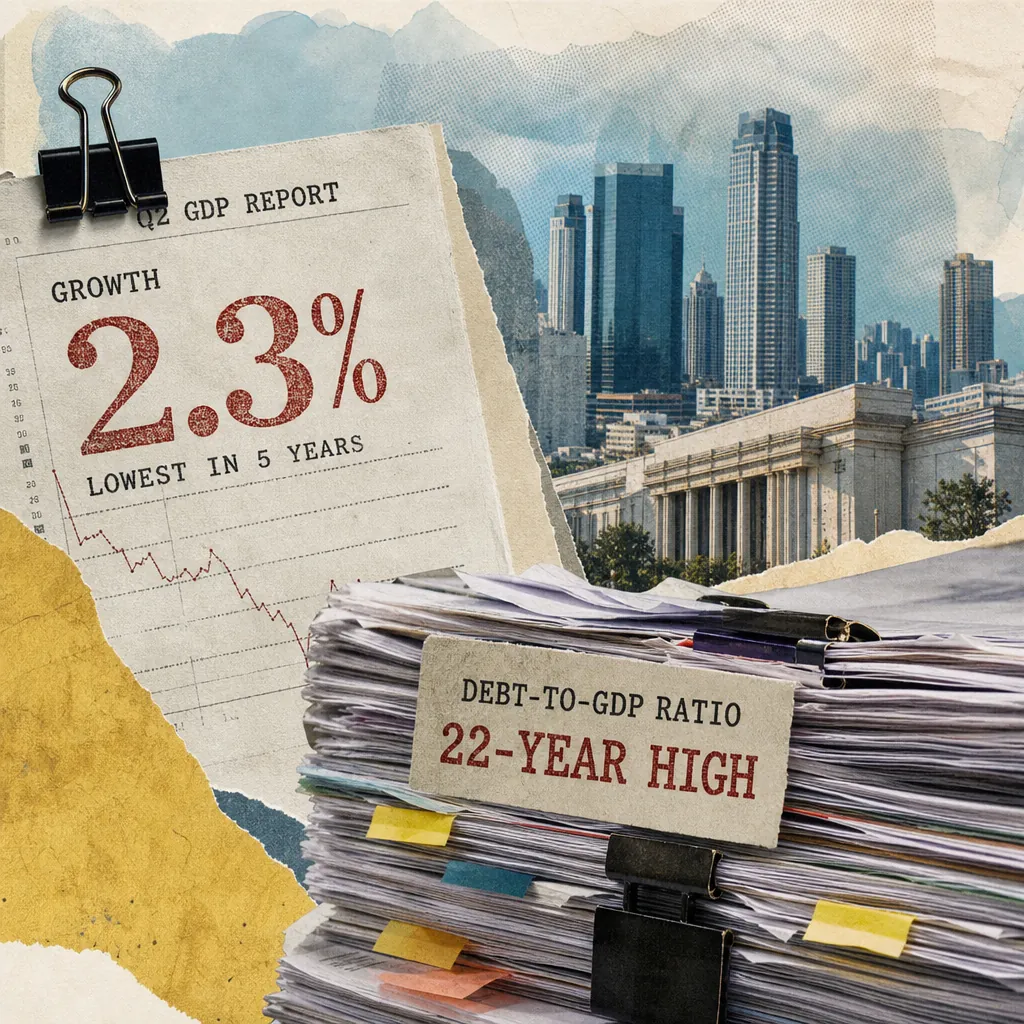
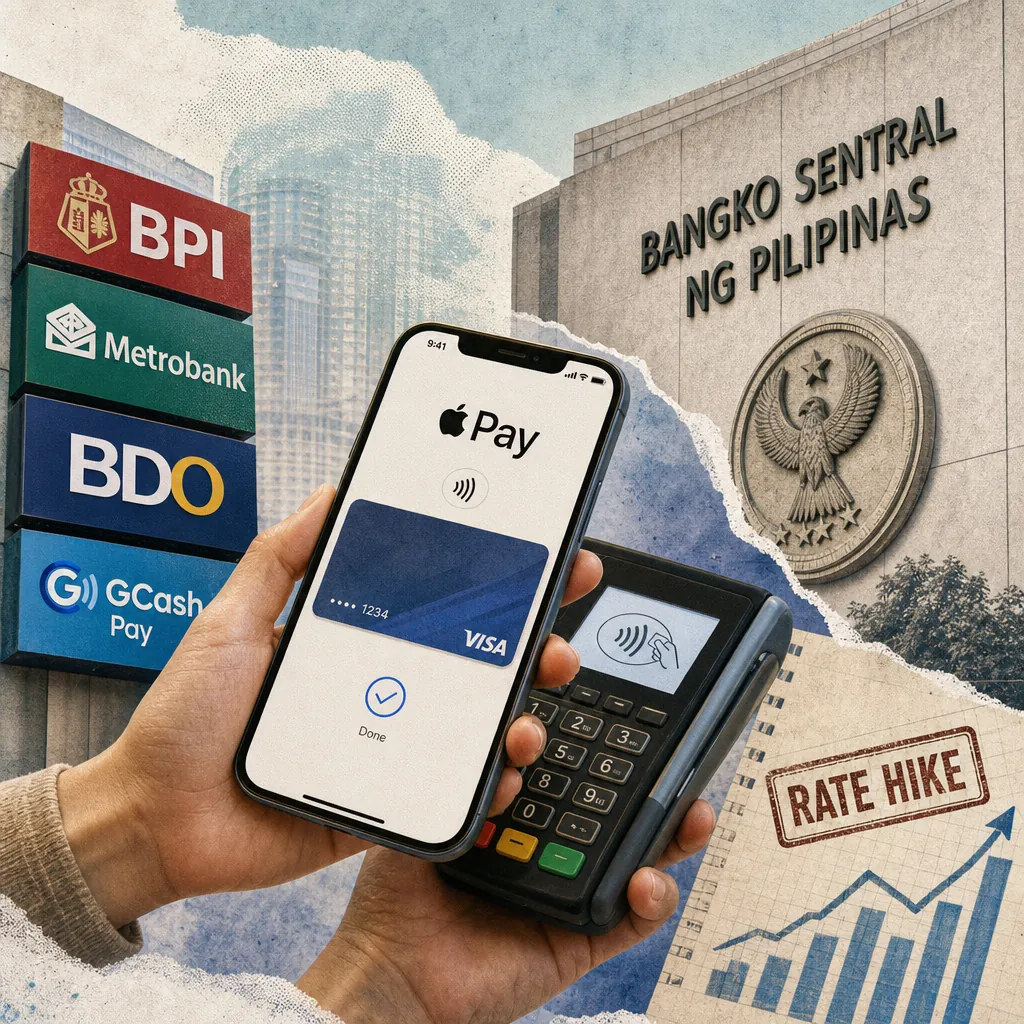
BSP pushes National ID for banks; inflation stays sticky
The Bangko Sentral ng Pilipinas proposes requiring banks to use National ID authentication, while analysts see more rate hikes as core inflation remains sticky. Bank earnings and other sector developments also feature.
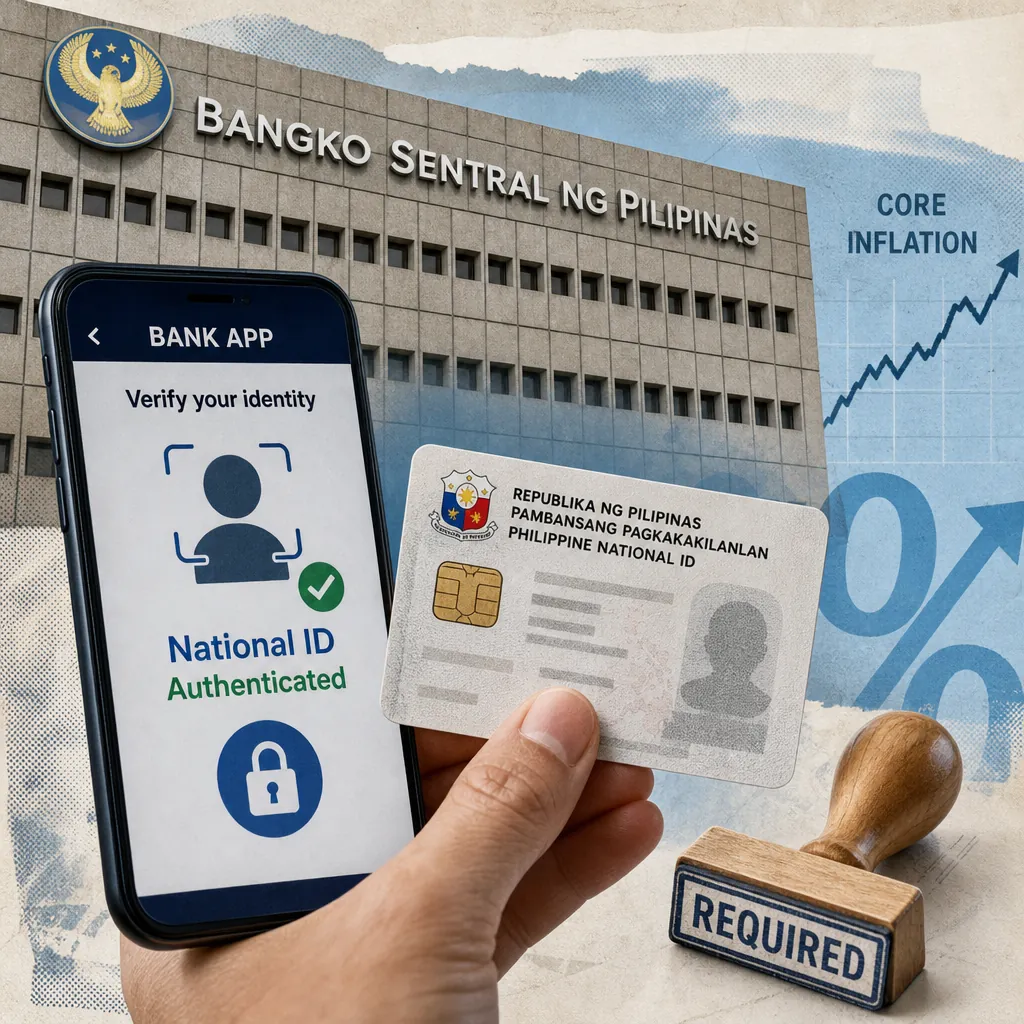
The day's financial conversation in the Philippines was anchored by two intertwined stories: the central bank's push to make the National ID a cornerstone of bank customer verification, and the persistence of inflation that keeps the door open to further interest rate hikes. Both developments signal a banking sector navigating between digital modernization and macroeconomic pressure.
On the regulatory front, the Bangko Sentral ng Pilipinas (BSP) — the country's central bank — released a draft memorandum for industry consultation that would require banks, e-wallets, and other supervised financial institutions to integrate the National ID Authentication Services (NIDAS) into their customer identification and verification processes. NIDAS, developed by the Philippine Statistics Authority (PSA) with the Department of Information and Communications Technology, uses facial recognition, fingerprint scans, and other credentials to verify identities. The proposal aims to strengthen security, reduce fraud, and expand the use of the National ID as the country's foundational identity system. The story drew wide coverage across the captured set, appearing in the Philippine Daily Inquirer, BusinessWorld, Philstar, and Head Topics, with combined advertising-equivalent value of roughly ₱1.3 million — a measure of the space and airtime the coverage would have cost as paid ads, not a count of readers.
On the inflation front, analysts at Nomura said the softer core inflation print in July was likely temporary, driven by one-off declines in education fees, while energy-sensitive items like food services and recreation continued to rise. They reiterated a forecast for the BSP to hike rates by another 50 basis points this year, in 25-basis-point increments at the August and October meetings. Headline inflation cooled to 6.2% in July from 6.4% in June, but core inflation — which strips out volatile food and energy items — remains sticky. This story also drew heavy coverage, with BusinessWorld, Philstar, and Head Topics all carrying it, worth an estimated ₱1.5 million in advertising-equivalent value across the captured items.
Meanwhile, the banking sector showed resilience. China Banking Corp. (Chinabank) reported an 11% rise in first-half net income to ₱14.5 billion, driven by strong loan growth and higher interest income. Its thrift banking arm, China Bank Savings, kept earnings steady at ₱1.19 billion. EastWest Bank partnered with two securities firms to expand access to its retirement savings product, the Personal Equity and Retirement Account (PERA). The Philippine Deposit Insurance Corp. (PDIC) said it is working to recover ₱107.23 billion it remitted to the government under a budget provision later struck down by the Supreme Court, to bolster its deposit insurance fund.
On the consumer side, OPPO launched its Reno16 Series 5G smartphones in the Philippines, with prices starting at ₱44,999, and Home Credit Philippines teamed up with SM Appliance Center for a zero-down-payment appliance promo. These stories, while not banking-specific, reflect the broader consumer finance environment that banks and fintechs operate in.
Key themes
- National ID integration becomes a regulatory priority — The BSP's draft memorandum would require banks and e-wallets to use the government's National ID authentication system for customer verification, aiming to cut fraud and boost financial inclusion.
- Inflation stays sticky, rate hikes likely — Despite headline inflation easing to 6.2% in July, core inflation remains elevated, leading analysts to expect two more 25-basis-point rate hikes from the BSP this year.
- Bank earnings show resilience — Chinabank's 11% profit growth and China Bank Savings' steady earnings highlight the sector's ability to grow lending despite economic headwinds.
- Deposit insurance fund recovery — The PDIC is seeking to recover ₱107 billion transferred to the government, which would strengthen its ability to protect depositors in case of bank failures.
- Retirement savings access expands — EastWest Bank's partnership with DragonFi and Luna Securities makes its PERA products available through digital channels, lowering barriers for Filipinos to save for retirement.
- Consumer finance promos target appliance upgrades — Home Credit and SM Appliance Center's zero-down payment promo reflects efforts to make big-ticket purchases more accessible amid high inflation.
- Wealth concentration and economic inequality — Forbes' Philippines Rich List shows Enrique Razon Jr. as the richest Filipino with a net worth of $21.8 billion, while the combined wealth of the top 50 fell 8%, and inflation among low-income households remains higher than the national average.
- Geopolitical and domestic uncertainties weigh on markets — The PSEi slipped as investors awaited GDP data and monitored US-Iran tensions, reflecting broader risk aversion.
How the narratives stack
Dominant — Within the captured set, the BSP's National ID proposal and the inflation/rate hike story dominate, each drawing multiple articles from major outlets. The National ID story is a regulatory development with direct implications for every bank and e-wallet user, while the inflation story affects borrowing costs and household budgets. Both are consequential and received substantial coverage, making them the day's leading narratives.
Counter-narrative — Bank earnings reports, particularly Chinabank's strong first-half performance, offer a counterpoint to the gloom of inflation and geopolitical tension. They show that the banking sector can still grow profits and expand lending even in a challenging environment, suggesting resilience that might be underappreciated.
Emerging — The PDIC's effort to recover ₱107 billion from the government is an emerging story. It involves a Supreme Court ruling and could have significant implications for the deposit insurance fund's size and the government's fiscal position. The story is still developing, with the PDIC coordinating with agencies on recovery.
Suppressed — The story of low-income households facing 8.2% inflation, higher than the national average, received relatively little attention in the captured set. This is a significant social issue that deserves more coverage, as it highlights the uneven impact of inflation on the most vulnerable Filipinos.
Platform insights
- Facebook — Facebook likely saw sharing of news articles from outlets like Inquirer and Philstar, with users commenting on the National ID proposal and inflation. The platform's large user base in the Philippines makes it a primary space for public discourse on these issues.
- X (formerly Twitter) — X was the platform where the "burritogate" debate unfolded, with politicians and pundits arguing over affordability. This shows X's role in amplifying political and economic debates, often with high engagement and rapid spread.
- YouTube — YouTube's relevance is highlighted by the YouTube Works Awards Philippines 2026, which celebrated campaigns that drive business ROI. The platform is a key channel for brands to reach Filipino consumers, and its influence on purchasing decisions is growing.
- Reddit — Reddit communities, such as r/Philippines, likely discussed the National ID proposal and inflation, with users sharing personal experiences and opinions. Reddit's format allows for deeper discussions and community-driven insights.
Key voices and communities
- Bangko Sentral ng Pilipinas (BSP) — The central bank is the primary regulator and its statements on National ID integration and rate hikes are closely watched. Its draft memorandum signals a clear direction for the financial industry.
- Analysts and economists — Nomura's Euben Paracuelles and Nabila Amani are influential voices on inflation and monetary policy. Their forecasts shape market expectations and are widely cited in financial media.
- Bank executives — Leaders like Chinabank's Romeo Uyan Jr. and China Bank Savings' James Christian Dee provide insights into the banking sector's performance and strategy, reinforcing confidence in the industry.
- Consumer advocates and everyday Filipinos — The public's reaction to inflation and the National ID proposal is crucial. Social media platforms host discussions where consumers share their struggles with rising prices and their views on government initiatives.
- Tech and lifestyle bloggers — Bloggers like Technobaboy and Unbox Ph cover product launches like the OPPO Reno16, influencing consumer tech purchasing decisions and contributing to the broader consumer finance conversation.
Narrative streams
BSP's National ID mandate: A digital identity revolution for banking
The BSP's draft memorandum requiring banks and e-wallets to integrate NIDAS into their customer verification processes is a significant step toward a unified digital identity system. NIDAS, developed by the PSA, allows for biometric verification using the National ID, which is a government-issued identification for all Filipino citizens. The proposal aims to enhance security, reduce fraud, and promote financial inclusion by making it easier for unbanked individuals to open accounts. The BSP's statement emphasizes that NIDAS integration is "a necessary regulatory measure to support the broader use and adoption of the National ID as the country's foundational identity system." This move could streamline account opening, reduce paperwork, and potentially lower costs for banks. However, it also raises concerns about data privacy and the readiness of smaller financial institutions to comply. The coverage in the captured set, including articles from Inquirer, BusinessWorld, and Philstar, indicates strong interest from the media and the public. The estimated advertising-equivalent value of this coverage is over ₱1 million, reflecting its prominence in the day's news cycle.
Inflation and the BSP's tightening path
The inflation narrative is central to the Philippine economic outlook. Headline inflation eased to 6.2% in July, but core inflation — which excludes volatile food and energy prices — remains sticky. Nomura analysts argue that the decline in core inflation was due to one-off factors like lower education fees, and that energy-sensitive items are still rising. They forecast two more 25-basis-point rate hikes from the BSP, bringing the total increase this year to 50 basis points. This would raise borrowing costs for consumers and businesses, potentially slowing economic growth. The BSP's monetary policy is a delicate balancing act between controlling inflation and supporting growth. The coverage of this story, including detailed reports from BusinessWorld and Philstar, underscores its importance to investors and the public. The advertising-equivalent value of this coverage is estimated at ₱1.5 million, making it one of the most covered stories of the day.
Bank earnings: Resilience amid headwinds
Chinabank's first-half net income rose 11% to ₱14.5 billion, driven by a 17% surge in gross loans to ₱1.1 trillion. The bank's return on equity stood at 15.1%, and its net interest margin improved to 4.67%. CEO Romeo Uyan Jr. attributed the performance to "the sustained strength of our core banking business and disciplined execution of our growth strategy." China Bank Savings, the thrift bank arm, also reported steady earnings of ₱1.19 billion, with net interest income up 16%. These results demonstrate that banks can grow lending and profits even in a high-inflation environment, though they also face rising operating expenses. The coverage of these earnings, including articles from BusinessWorld and Daily Tribune, provides a positive counterpoint to the broader economic challenges.
PDIC's fund recovery: Protecting depositors
The Philippine Deposit Insurance Corp. (PDIC) is working to recover ₱107.23 billion it remitted to the government in 2025 under a budget provision that the Supreme Court later struck down. The PDIC's mandate is to protect depositors by insuring their deposits up to a certain amount in case of bank failure. The recovery of these funds would strengthen the deposit insurance fund, ensuring it can cover potential bank failures. PDIC President Roberto Tan said the agency is coordinating with relevant agencies to recover the amount. This story is significant because it involves a Supreme Court ruling and has implications for the government's fiscal position and the stability of the banking system. The coverage in the captured set, including articles from BusinessWorld and Head Topics, highlights the ongoing efforts to bolster the deposit insurance fund.
Consumer finance: Promos and retirement savings
On the consumer side, Home Credit Philippines and SM Appliance Center launched the "Grand Pay Hulugan Promo," offering 0% down payment and flexible installment plans for appliances. This promo aims to make big-ticket purchases more accessible to Filipino families, especially amid high inflation. Meanwhile, EastWest Bank partnered with DragonFi and Luna Securities to expand access to its PERA products, which are retirement savings accounts with tax incentives. The partnership allows customers of these securities firms to open PERA accounts through digital channels, with a minimum initial investment of ₱2,000. These developments reflect the financial industry's efforts to promote financial inclusion and help Filipinos manage their finances better.
OPPO Reno16 launch: A tech and consumer finance intersection
OPPO launched its Reno16 Series 5G smartphones in the Philippines, with prices ranging from ₱44,999 to ₱74,999. The series is positioned as a "Pocket Studio" for content creators, featuring advanced camera systems and AI-powered editing tools. The launch was covered extensively by tech blogs like Technobaboy, Unbox Ph, and Gadget Pilipinas, with pre-order promotions running from August 7 to 20. While not directly a banking story, the launch reflects consumer spending patterns and the intersection of technology and finance, as buyers may use installment plans or credit to purchase these devices.
Conversation trajectory
- Over the next 1-2 weeks — The BSP's draft memorandum on NIDAS will be open for industry consultation, and stakeholders may raise concerns about implementation costs and data privacy. Expect more coverage as the consultation period progresses.
- Over the next 1-2 months — The BSP's August and October policy meetings will be closely watched. If inflation remains sticky, rate hikes are likely, which could affect loan demand and bank profitability. The PDIC's fund recovery efforts may also progress, with potential legislative reforms.
- Over the next 6-12 months — The National ID integration could become mandatory, transforming customer onboarding processes. Banks will need to invest in technology and training, which could impact their operational costs. The success of these initiatives will depend on the government's ability to ensure data security and public trust.
Trigger events to watch:
- BSP policy meeting announcements (August and October)
- Release of Q2 GDP data (expected soon)
- Supreme Court ruling on the PDIC fund remittance
- Progress of the NIDAS consultation and final memorandum
- Any major data breach or privacy concern related to the National ID system
Response guidance
For communicators in the banking and financial sector, the key is to stay ahead of regulatory changes and communicate their impact clearly to customers. On the National ID front, banks should proactively explain how the integration will enhance security and convenience, while addressing privacy concerns. On inflation and rate hikes, financial institutions should provide guidance to customers on managing borrowing costs and savings. Emphasize the resilience of the banking sector, as shown by strong earnings, to build confidence. For consumer finance promos, highlight the value and accessibility they offer, especially in a high-inflation environment. Avoid downplaying the challenges of inflation; instead, offer practical solutions. Use a mix of traditional media and social platforms to reach different audiences, and ensure messaging is transparent and empathetic to the financial pressures many Filipinos face.
See the full picture behind today's signals.
This report draws from Media Meter's MediaWatch, our real-time monitoring engine tracking 2,470+ Philippine sources across print, broadcast, digital, and social. Explore how the platform turns raw coverage into decision-grade intelligence, then see how it's configured for teams like yours — whether you're in PR agencies, corporate comms, government, or marketing.
Want more? Browse our Report Library for sector and crisis intelligence, or request a demo and we'll have your brand set up before the call.
Want this kind of intelligence on your brand?
This brief is built on the same MediaWatch methodology that runs continuously across every brand we monitor. See your competitive landscape, Impact Score, and narrative trajectory in a 30-minute demo.