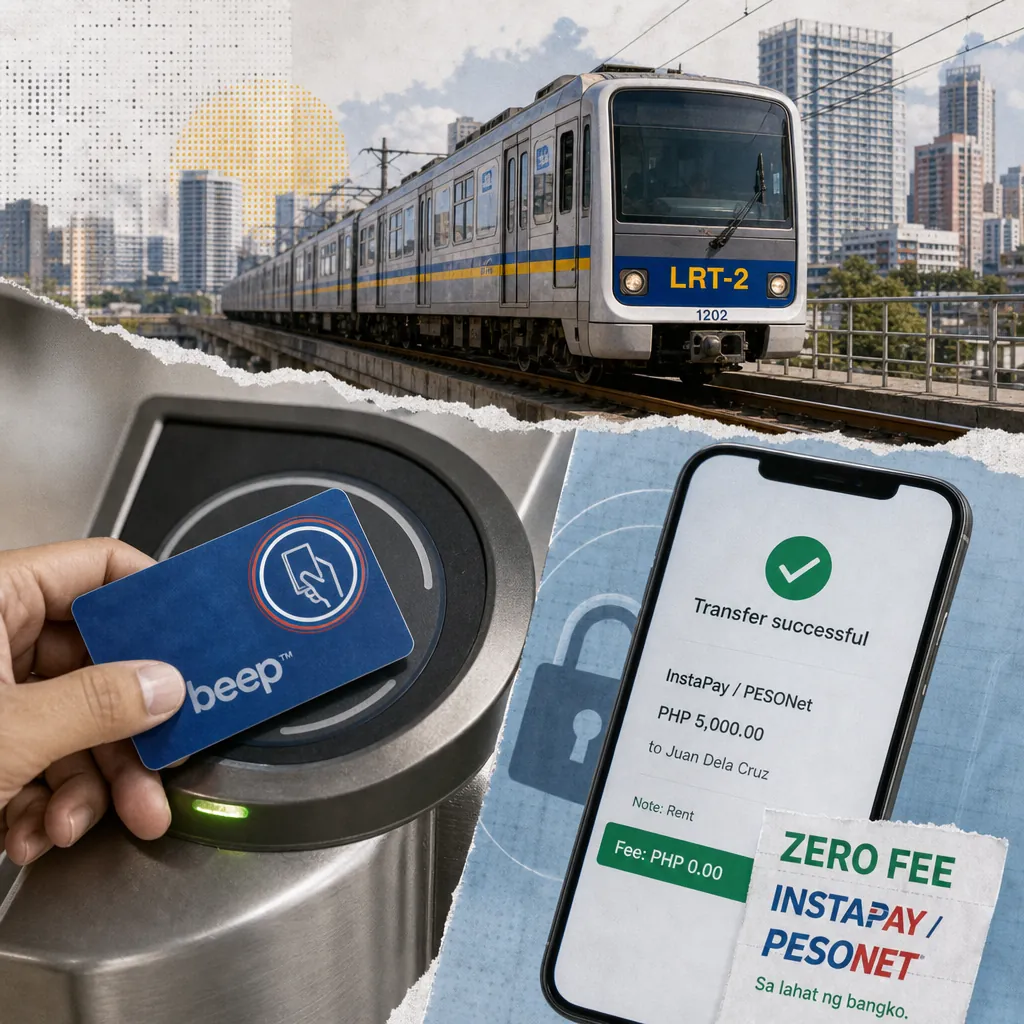
InstaPay fee war heats up as BSP pushes alignment, but fraud fears shadow the gains
A cascade of InstaPay fee reductions by RCBC, GCash, and Maya, driven by BSP pressure, has sparked consumer celebration and sarcasm—but a detailed social engineering attack on RCBC has refocused attention on digital banking security, creating a dual narrative of cost wins and trust risks.
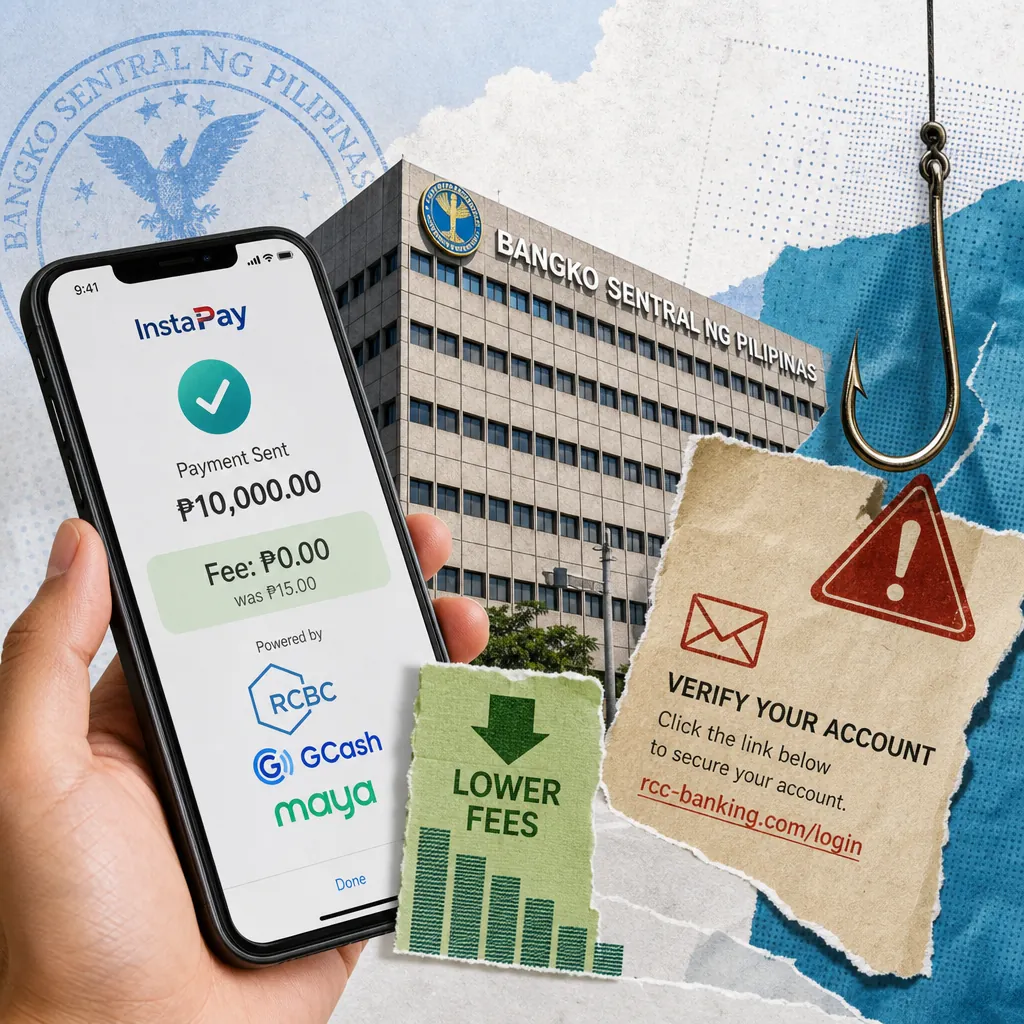
The conversation on July 3–4 was dominated by a rapid-fire series of InstaPay fee cuts, triggered by the Bangko Sentral ng Pilipinas (BSP) circular that gave banks until July 4 to align interbank and intrabank transfer charges. RCBC kicked things off on July 3 by waiving InstaPay fees for the first 30 transactions per month (minimum ₱100), a move quickly shared by tech influencers like @technobaboy and @proudbisayabai. The next day, GCash slashed its fee from ₱15 to ₱10, effective immediately—a post by @phdigitalbanks on Facebook drew 897 likes, 954 shares, and an eye-catching 8,335 "haha" reactions, suggesting public amusement that the cut still wasn't free. Hours later, Maya matched the ₱10 fee, starting July 6. On Reddit, user u/digitalbanksph quoted BSP Governor Eli Remolona Jr. expecting more banks to follow over the weekend, underscoring the regulatory pressure behind the moves.
But the fee euphoria was quickly tempered by a chilling security incident. On July 3, Reddit user u/urckkkkrrraaayyzzyy posted a detailed account of a sophisticated social engineering attack that nearly took over their RCBC account. The scammers used legitimate RCBC emails, one-time passwords (OTPs), and even a real statement of account to gain trust. The post received 98 upvotes and 66 comments, with many users sharing similar near-misses. This dual narrative—celebrating lower costs while worrying about rising fraud—defined the day's conversation.
Key themes
- Race to zero: fee reductions cascade under BSP pressure. RCBC's free InstaPay (with limits) set a new benchmark on July 3, followed by GCash and Maya cutting to ₱10. The BSP's Circular 1238, which capped the gap between interbank and intrabank fees, created a hard deadline that forced action. Consumer sentiment, captured in sarcastic comments like "Nahiya pa gawing libre like BPI" on Maya's announcement, shows that only zero-fee transfers are now seen as satisfactory.
- Consumer expectations shift: free is the new baseline. BPI's earlier move to eliminate InstaPay fees entirely (announced before this window) became the yardstick. Reddit and Facebook users consistently compared new offers to BPI's free model, with one commenter calling Maya's ₱10 fee "better than ₱15, but FREE like BPI". The market is moving from ₱15 as the norm toward free, with half-steps receiving mocking reactions.
- Security anxieties resurface amid fee euphoria. The RCBC account-takeover story on Reddit detailed how scammers used legitimate bank channels—real OTPs, official emails, and a statement of account—to trick the victim. The post's high engagement (98 upvotes, 66 comments) signals deep user concern. This incident extended a pattern of digital banking security worries, including past Maya "money hacking" complaints referenced in a separate thread.
- Fraud awareness campaigns struggle to compete. Maya ran a fraud awareness campaign during Pilipinas Fraud Awareness Week (July 3–10), but its post on Facebook received only 12 likes and 1 share. Security messaging appears to generate far less engagement than fee news, even as underlying trust issues simmer.
- Proactive security measures earn praise. A separate Reddit post praised RCBC for proactively calling to verify a large ₱50,000 transaction, calling it a "kudos" initiative. This shows that banks can counterbalance fraud narratives with visible, customer-friendly security practices.
- Neobank trust spills into competitor evaluation. A resurfaced Reddit thread asking "Thoughts on Tonik?" cited Maya's unresolved security issues as a reason to switch, with 38 upvotes and 36 comments debating interest rates versus trust. This linkage means fee reductions may inadvertently increase scrutiny on digital banks' security posture.
- BSP-backed digital inclusion narrative strengthens. Governor Remolona's statement that "the goal is to get more people using digital payments" was widely cited, providing a policy umbrella for consumer-focused messaging. The regulator's expectation of additional banks waiving fees creates a bandwagon effect.
How the narratives stack
Dominant: The InstaPay fee reduction race, driven by BSP Circular 1238 and competitive pressure, is the clear lead story. Within the captured set, this narrative generated the highest volume of posts and engagement—particularly the GCash announcement with over 8,000 "haha" reactions. The cascade of RCBC, GCash, and Maya announcements created a clear competitive dynamic, with BPI's earlier free-transfer policy serving as the benchmark. Consumer sentiment is overwhelmingly positive but laced with sarcasm toward partial cuts.
Counter-narrative: The sophisticated RCBC social engineering attack introduces a cautionary note. While fee cuts dominate headlines, the detailed Reddit account (98 upvotes, 66 comments) shows that security concerns remain top-of-mind for a vocal, engaged subset of users. This narrative challenges the assumption that lower fees alone will drive digital adoption—trust is equally critical.
Emerging: The linkage between fee reductions and security scrutiny is an emerging pattern. As fees become less of a differentiator, users are increasingly evaluating digital banks on security features. The resurfaced Tonik thread, which explicitly cites Maya's security issues, suggests that fraud incidents can drive customer churn even when fees are competitive.
Suppressed: The broader financial inclusion narrative—how fee reductions help unbanked Filipinos—is present in BSP statements but largely absent from user-generated content. Most consumer posts focus on personal cost savings rather than systemic benefits. This gap represents an opportunity for banks and regulators to frame fee cuts as part of a larger societal good.
Platform insights
- Facebook: The primary channel for breaking fee announcements, with high raw engagement but relatively shallow discussion. The @phdigitalbanks post on GCash garnered over 8,000 "haha" reactions, indicating viral amusement rather than serious debate. Security posts by @makeyourmoneymaya received minimal reaction (12 likes, 1 share), showing security messaging struggles to compete with fee news on this platform.
- Reddit: Became the venue for deeper analysis and personal narratives. The RCBC fraud story and the comparison thread about BPI's free transfers each drew 60+ comments, with users dissecting scam techniques and debating digital bank trade-offs. The platform also hosted the BSP's regulatory signal, amplifying its reach among informed audiences.
- Twitter: Used for quick headlines and link sharing. Posts by @technobaboy and @philippinestar on RCBC's waiver received modest engagement (143 likes on the latter), serving as news distribution rather than conversation drivers.
Key voices and communities
- Cost-conscious digital banking users: This group dominates conversation volume across Reddit and Facebook, reacting to the cascade of InstaPay fee reductions. Their engagement skews toward humorous and positive reactions—the GCash announcement alone drew over 8,000 "haha" reactions—while fraud-related posts generate more urgent, high-comment threads. They demonstrate sophisticated price sensitivity, comparing offers across platforms and celebrating moves toward free transfers.
- Security-anxious account holders: A vocal subset focusing on fraud and account safety, generating some of the highest-comment threads. The detailed RCBC social engineering attack post earned 98 upvotes and 66 comments. These users express heightened vigilance and a transactional view of security features—they reward institutions that proactively verify large transactions and punish those perceived as unresponsive to hacking incidents.
- Media and fintech influencers: Technology news pages and niche finance bloggers serve as amplification nodes, breaking the fee-reduction stories and contextualizing them within the broader BSP push. Accounts like @gizguideph, @bitpinas, and @philippinestar produced concise, shareable summaries of each announcement.
- Official bank and regulator voices: Institutional accounts (Tonik, Maya, Fintech Philippines) post promotional content, fraud advisories, and partnership news with low organic engagement but high authority value. The BSP's position, quoted via @moneygoals_ph, sets the regulatory frame that all other stakeholders react to.
Narrative streams
The InstaPay fee war: a race to zero
The sequence of announcements created a clear competitive dynamic. RCBC's free InstaPay (first 30 transactions, minimum ₱100) set a new standard on July 3–4. GCash and Maya's cuts to ₱10 were then widely framed as incremental but insufficient. On Reddit, u/Downtown_Owl_2420 commented sarcastically under Maya's announcement: "Nahiya pa gawing libre like BPI", reflecting a consumer sentiment that only zero-fee transfers are truly satisfactory. By July 4, the conversation had evolved into comparisons: Facebook page @gizguideph posted Maya's ₱10 fee with a caption "But FREE like BPI, but better than PHP 15," gathering 27 "haha" reactions. The overarching pattern is a market moving from ₱15 as the norm toward free, but with half-steps receiving mixed, often mocking reception.
The BSP's role is central. Circular 1138 (as reported) gave financial institutions until July 4 to adjust fees, and Governor Remolona publicly stated he expected more banks to follow over the weekend. This regulatory pressure created a bandwagon effect, with each announcement framed as a response to the BSP's push. The Philstar article "More banks to cut, waive online transfer fees - BSP" (₱448,507 in advertising-equivalent value) and GMA News Online's coverage of GCash's cut (₱91,140) both emphasized the BSP deadline.
For the sector, the read is clear: fee differentiation is collapsing. BPI's first-mover advantage in offering free transfers is being eroded as competitors follow. The challenge for banks is to maintain customer loyalty beyond price—through superior digital experience, security, or bundled services.
Security anxieties resurface: the RCBC social engineering attack
As fee reductions dominated headlines, underlying trust issues erupted. On July 3–4, Maya ran a fraud awareness campaign during Pilipinas Fraud Awareness Week. But the real jolt came from the detailed RCBC account-takeover story posted on Reddit on July 3. The victim described receiving calls from scammers who used real RCBC emails, OTPs, and even a legitimate statement of account to convince them to enter codes. The post included scammers' phone numbers and garnered 66 comments, many sharing similar near-misses.
This prompted another Redditor, u/theminimalistgemini, to post on July 4 that RCBC actually calls to verify large transactions—a contrasting positive experience, but one that could blur lines for users trying to distinguish genuine verification from fraud. The duality of RCBC as both proactive (fraud calls) and vulnerable (social engineering) created a nuanced risk narrative for the bank's digital push.
The security scare directly fed a parallel thread: which digital bank to trust? On the same thread as the RCBC fraud story, a separate post from January 2024 resurfaced where u/expensive-bend-9062 asked about Tonik as a replacement for Maya, citing a "Maya Money Hacking issues" incident involving a ₱233K loss. Although this post is dated, its reappearance in the July 4 feed indicates renewed concern. Tonik itself was active on Facebook that day, promoting its Credit Builder Loan. The conversation suggests that as fees become less of a differentiator, security is emerging as the decisive factor for user loyalty, especially among digitally active Filipinos.
The broader digital payments ecosystem: Pine Labs and BPI sustainable finance
Beyond the fee war, two other developments signal the maturing of the Philippine digital payments landscape. Global fintech Pine Labs announced a partnership with GCash for Business, integrating its payment infrastructure into GCash's merchant acquiring platform. The Manila Times article (₱516,320 in AVE) highlighted that Pine Labs sees the Philippines as a key market due to its young population and growing digital payment acceptance. This partnership aims to help micro, small, and medium enterprises (MSMEs) adopt advanced digital payment capabilities, including installment plans and loyalty programs.
Separately, BPI announced that its sustainable development finance (SDF) disbursements reached ₱54 billion in 2025, bringing total releases to ₱376 billion across 532 projects. The Philstar article (₱429,467 in AVE) noted this is the highest cumulative sustainable finance total in the Philippine banking industry, with supported projects expected to reduce greenhouse gas emissions by 41 million tons annually. This positions BPI as a leader in green financing, a differentiator that complements its fee leadership.
Consumer overconfidence in digital hygiene
A survey commissioned by insurance technology firm bolttech, reported by Philstar (₱291,953 in AVE), found that 96% of Filipinos believe their digital hygiene is good enough to protect them against cybercrime, yet fewer than half actually practice basic measures like not reusing passwords. This perception gap reveals a lack of discipline that makes users vulnerable to the kind of social engineering attack detailed in the RCBC story. The survey underscores the need for continuous consumer education—a message that aligns with the fraud awareness campaigns running during Pilipinas Fraud Awareness Week.
Conversation trajectory
Accelerating fee competition creating a race to zero (next 7–10 days): The cascade of fee reductions—BPI eliminating InstaPay and PESONet fees on July 1, RCBC waiving InstaPay transfers for up to 30 monthly transactions starting July 4, and both GCash and Maya dropping their fees from ₱15 to ₱10—signals an intensifying price war. The BSP's circular compelling alignment between interbank and intrabank fees has set a hard deadline, and public sentiment—evidenced by widespread "haha" reactions and comments like "Nahiya pa gawing libre like BPI"—is now conditioning users to expect free transfers as the new baseline rather than a perk. This trajectory will force remaining players (e.g., Metrobank, Security Bank, UnionBank) to announce their own fee reductions within the next 7–10 days, or face backlash during the coming weeks.
Fraud conversation divergence: growing sophistication of social engineering attacks (next 2–4 weeks): A detailed account of an RCBC account takeover posted on Reddit reveals a new, highly convincing method where scammers exploit legitimate bank emails, OTPs, and even device model detection to gain trust. The post's high engagement (98 upvotes, 66 comments) and the user's explicit callout of sharing phone numbers indicate that victims are now actively warning others, which may shift conversation from general phishing awareness to specific "insider knowledge" about attack patterns. However, a separate post praising RCBC's proactive fraud verification call for a large transaction (₱50k) shows that banks can counterbalance this narrative with visible security measures. Expect a bifurcation in coming days: negative sentiment about fraud risk will intensify alongside positive sentiment about responsive bank actions, requiring banking clients to amplify their own fraud prevention success stories.
Neobank security concerns spilling into competitor evaluation (next 2–3 weeks): A Reddit thread titled "Thoughts on Tonik?" explicitly cites a Maya "money hacking" incident and a user's fear of losing ₱233,000 as the reason for seeking alternatives. While this post is dated early 2024, its resurgence in the current dataset (likely due to new engagement) suggests that existing fraud narratives are resurfacing whenever a new incident or fee change grabs attention. This linkage means that fee reductions may inadvertently increase scrutiny on digital banks' security posture, as consumers weigh cost savings against perceived risk. Banks should prepare to either highlight their own security certifications or capitalize on competitor weakness by promoting differentiated safety features within the next 2–3 weeks.
BSP-backed digital inclusion narrative strengthening (next 1–2 weeks): The BSP Governor's explicit statement that "the goal is to get more people using digital payments" is being widely cited, and the regulator's expectation of additional banks waiving fees over the weekend creates an official policy umbrella for consumer-focused messaging. Posts from financial literacy communities and the BSP's mention of "financial inclusion" as a driving rationale provide a ready-made positive framing that banks can adopt. This narrative is likely to grow as the July 4 compliance deadline passes and more banks announce their moves, offering an opportunity to align with BSP's inclusive vision rather than merely reacting to competitive pressure.
Key trigger events: The BSP's July 4 compliance deadline for fee alignment—already passed—will be followed by a wave of formal announcements from remaining banks, probably within the next business days. The "Pilipinas Fraud Awareness Week" (July 3–10) is providing a natural hook for fraud-related content, with posts like Maya's "pause and think" campaign already appearing; this window will amplify any fraud incident or positive security messaging. Additionally, the RCBC 24-hour security hold and proactive fraud call are being highlighted as best practices, potentially prompting media coverage and industry benchmarking discussions in the following week.
Response guidance
Platform-specific approaches:
- Facebook: Leverage posts from general consumer pages (like @phdigitalbanks) that announce fee reductions to position your client as a market leader in affordability. Use shareable graphics highlighting cost savings compared to the previous ₱15 fee. Engage in comment sections of high-engagement posts (e.g., the GCash announcement with 8,335 haha reactions) by having the client's official account acknowledge the trend, reaffirm their own competitive offers, and answer user questions about transaction limits or terms, without directly naming competitors. For security-related posts, proactively post educational content on spotting social engineering attacks, linking to the client's security resources.
- Reddit: Monitor and respond in threads comparing transfer fees, such as r/DigitalBanksPH discussions that compare BPI, RCBC, GCash, and Maya. Provide concise, factual updates about your client's fees and conditions, avoiding promotional language but adding value with clarity (e.g., "BPI's free InstaPay has no monthly cap" vs "RCBC's free first 30 transactions"). In security-focused threads like the RCBC account takeover story, avoid direct engagement unless the client is RCBC. For other clients, use general safety reminders and link to official fraud reporting channels. Do not name the affected bank; instead, reinforce best practices universally.
- Twitter: Use short, update-style tweets when new fee reductions or security features are announced, with relevant hashtags like #InstaPay #DigitalPaymentsPH. Share official statements or help center links to drive traffic to controlled channels. Retweet and quote-tweet the BSP's positive statements about fee transparency to show regulatory support and reinforce the client's compliance efforts.
Key messages:
- "We are committed to making digital payments more accessible by reducing or eliminating transfer fees, aligning with BSP's vision for broader financial inclusion." This message positions the client as proactive and regulator-aligned, countering any perception that fee cuts are purely reactive.
- "Security remains our top priority. We continuously invest in fraud detection and customer education to protect your accounts from social engineering attacks." Addresses the growing concern around sophisticated scams that use legitimate bank channels.
- "Transparency in fees and terms helps you make informed financial decisions. Our fee structures are straightforward, with no hidden charges or complicated conditions." Responds to the sarcastic comparison sentiment by emphasizing honesty over half-measures.
- "Every peso saved on transfer fees is a step toward a cash-lite Philippines. We are proud to be part of this industry-wide movement that benefits all Filipinos." Frames the fee reduction as a collective win rather than a competitive concession.
Sensitive topics to navigate:
- Competitive one-upmanship: Avoid directly criticizing competitors' fee structures (e.g., "free but limited to 30 transactions" vs "free unlimited"). Instead, focus on your client's unique value propositions, such as broader features or stronger security, without naming rivals.
- Security incidents at other banks: When discussing fraud prevention, never reference specific allegations against other institutions (like the RCBC takeover story). Keep advice generic and applicable across the ecosystem to maintain credibility and avoid appearing opportunistic.
- Regulatory pressure vs voluntary action: The BSP's July 4 deadline could imply that fee reductions are not entirely voluntary. Frame the client's move as a proactive customer benefit rather than a forced compliance measure. Emphasize that the fee changes were already in planning prior to the circular.
Response priorities:
- Reinforce your client's fee position within 48 hours of any major competitor announcement. For example, after GCash and Maya dropped to ₱10, clients not yet at that level should explain their current fee rationale or accelerate a planned reduction, while those already free (like BPI) should highlight their superior terms (no minimum, no cap). This prevents being perceived as lagging.
- Publish a dedicated security advisory or microsite addressing the rise in social engineering scams, referencing the specific techniques used in the RCBC case (real OTPs, spoofed caller IDs). This demonstrates vigilance without directly naming the incident.
- Coordinate with the BSP's communications team to share the same timeline and messaging around fee transparency. A unified regulator–client narrative reduces confusion and strengthens public trust in the entire digital payments ecosystem.
See the full picture behind today's signals.
This report draws from Media Meter's MediaWatch, our real-time monitoring engine tracking 2,470+ Philippine sources across print, broadcast, digital, and social. Explore how the platform turns raw coverage into decision-grade intelligence, then see how it's configured for teams like yours — whether you're in PR agencies, corporate comms, government, or marketing.
Want more? Browse our Report Library for sector and crisis intelligence, or request a demo and we'll have your brand set up before the call.
Want this kind of intelligence on your brand?
This brief is built on the same MediaWatch methodology that runs continuously across every brand we monitor. See your competitive landscape, Impact Score, and narrative trajectory in a 30-minute demo.