LTFRB Summons 19 Ride-Hailing Firms Over Unpaid Fare Hike
The Land Transportation Franchising and Regulatory Board ordered 19 transport network companies to explain why they have not passed on an approved fare increase to drivers, with a hearing set for October 7. The same day, Congress added P2.349 billion to the Department of Transportation's 2027 budget for fuel subsidies and service contracting.

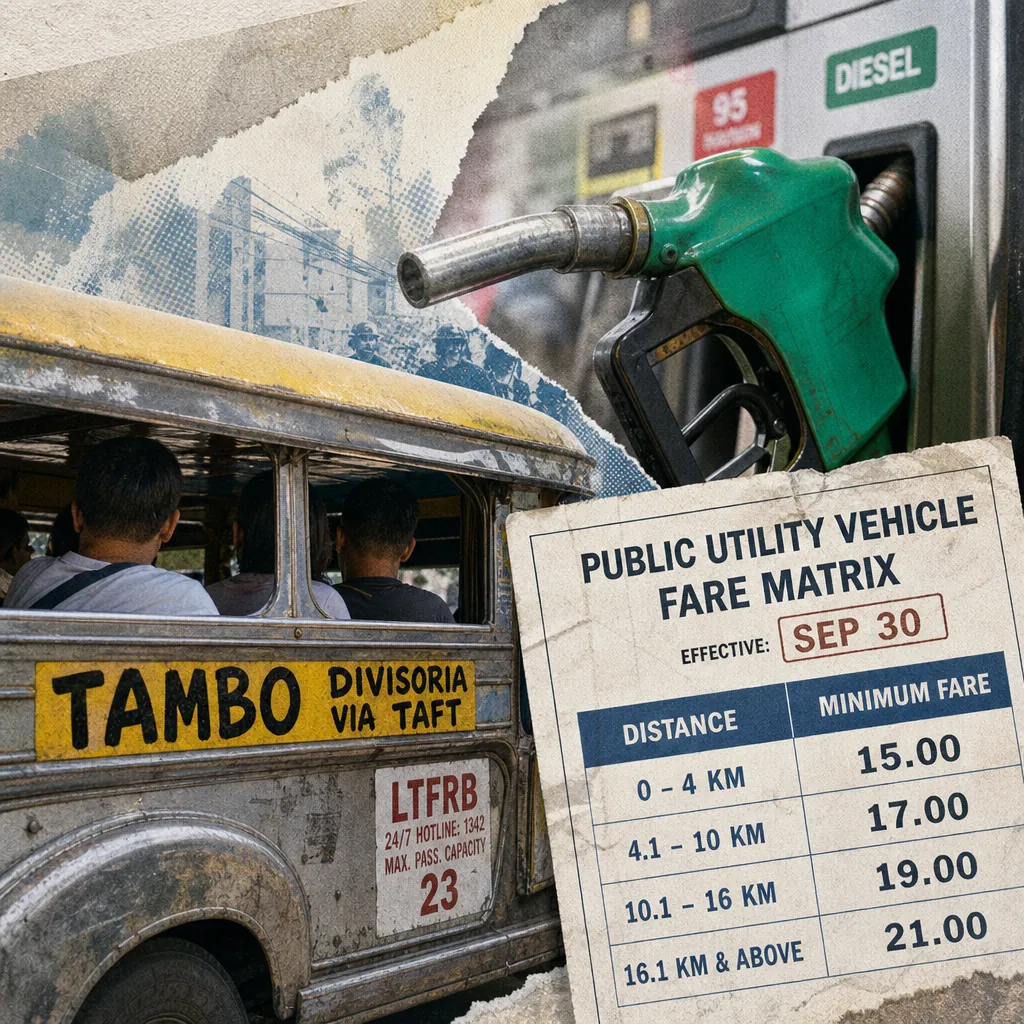
The Land Transportation Franchising and Regulatory Board (LTFRB), the agency that issues franchises and sets fares for public transport, summoned 19 transport network companies (TNCs) — the ride-hailing platforms that operate apps such as Grab and similar services — to a hearing on October 7 to explain why they have not passed on an approved fare increase to their drivers.102 The increase took effect September 28 and raised the base fare for a sedan on a transport network vehicle service (TNVS) trip from ₱45 to ₱65, the base fare for an Asian utility vehicle from ₱35 to ₱55, the hatchback base fare to ₱65, and the premium TNVS base fare from ₱145 to ₱165.102102 Acting LTFRB Chairman Greg Pua Jr. said the agency had received complaints from ride-hailing drivers that some platforms were still charging the old rates, and that the accreditation of non-compliant companies could be revoked.102102 The LTFRB's position is that the TNVS partners — the drivers who own or lease the cars — pay for their own gasoline and diesel, so when a platform fails to implement the approved fare, it is the driver who absorbs the loss, not the company.102
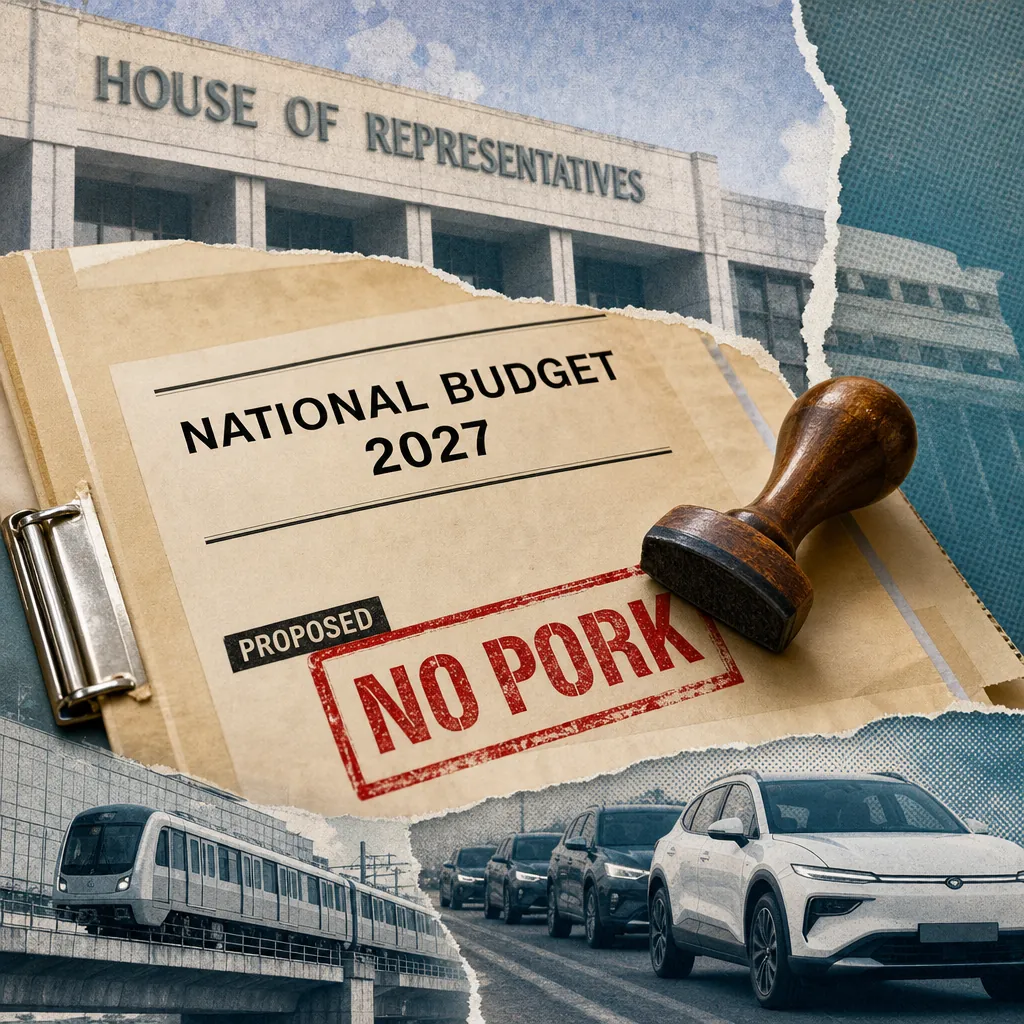
The fare dispute is the sharpest edge of a broader transport-cost story that ran across broadcast, print, and online coverage on October 2. Congress's Budget Amendments Review Subcommittee (BARC), a House panel that reviews and adjusts spending proposals, added ₱2.349 billion to the Department of Transportation's (DOTr) proposed 2027 budget for programs that had no allocation in the National Expenditure Program, the government's draft spending plan.8282 The additions include ₱500 million for the Service Contracting Program, which pays drivers and operators to keep running routes amid volatile global oil prices, ₱1 billion for a transport-sector fuel subsidy after the previous allocation ran out, and ₱75 million for the NCR Busway Project, which had a zero allocation in the draft budget.8282 The same day, the First Lady, Louise Araneta-Marcos, led the distribution of rice to about 1,000 traditional jeepney and tricycle drivers at the Land Transportation Office (LTO), the agency that registers vehicles and licenses drivers, as part of the government's Rice Distribution Program.118 Transportation Secretary Banoy Lopez said the President "feels the hardship of drivers" and has directed that all possible assistance be given.118
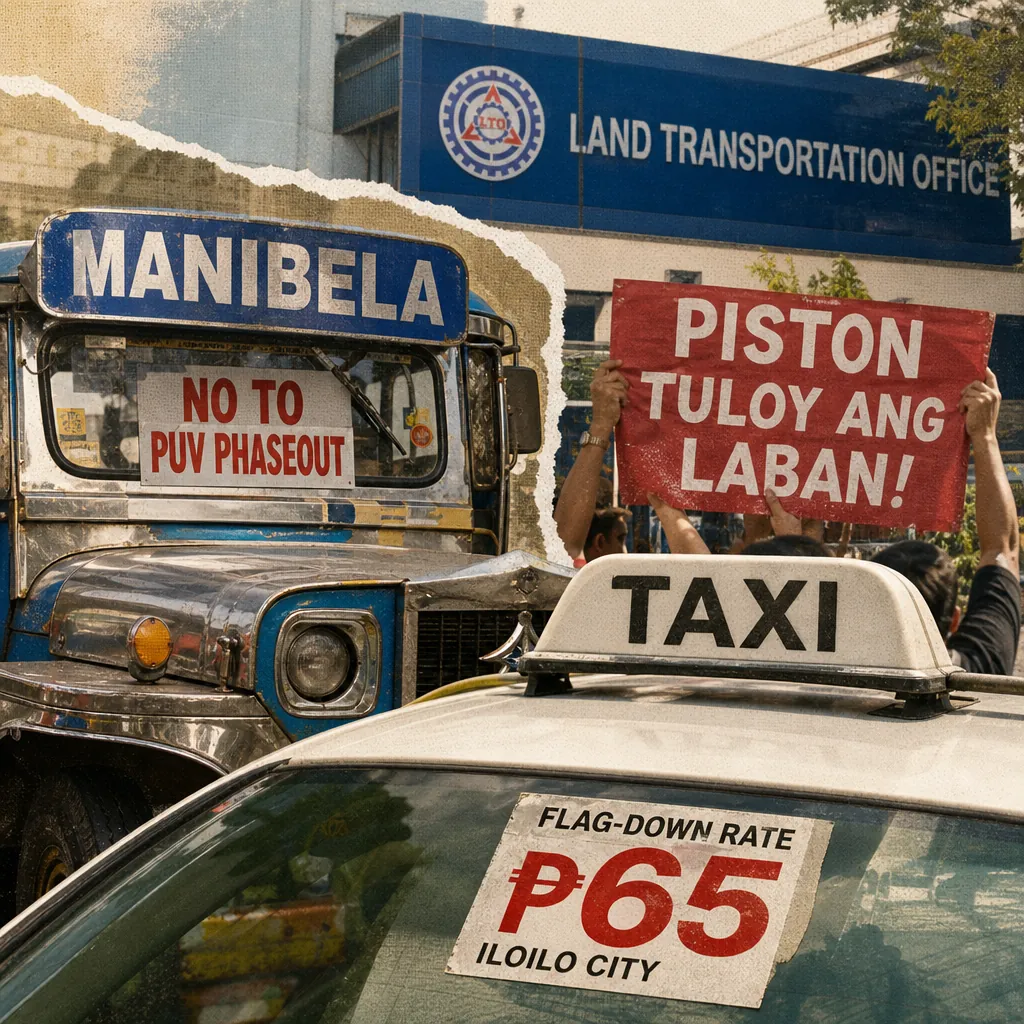
On the social side, the loudest and most specific complaint came from drivers and operators outside the government's modernization program. Rudy Agsam Catedral, president of the Bacolod Alliance for Commuters, Operators and Drivers (BACODNI), said government assistance favors modernized jeepney operators who receive a ₱20,000 monthly subsidy and a ₱12-per-liter fuel discount, while traditional operators receive neither, asking: "How about us? What will happen to us?"7 TNVS drivers and operators have asked to be included in the same fuel subsidy and discount programs, with Lisza Redulla, president of the United Transport Operators and Drivers Association-TNC Philippines Inc., stating they depend only on ₱4 to ₱5 per liter in discounts from private transport network company promos.8 A separate transport group, the One Pangasinan Transport Federation, called on the LTFRB to tighten monitoring of fuel subsidy implementation and speed up the release of pending aid, saying some gasoline stations still were not honoring the subsidy and some members had not received assistance from earlier programs.123
Key themes
- LTFRB summons 19 ride-hailing firms over unpassed fare increase. The board issued show-cause orders to 19 TNCs after drivers complained that the September 28 fare adjustment was not being applied, and set an October 7 hearing where the companies must explain why their accreditation should not be suspended or cancelled.102102 The new base fares are ₱65 for sedans, ₱55 for AUVs, ₱65 for hatchbacks, and ₱165 for premium TNVS.102
- Congress adds ₱2.349 billion to the DOTr's 2027 budget. The BARC inserted funding for the Service Contracting Program (₱500 million), a transport fuel subsidy (₱1 billion), and the NCR Busway Project (₱75 million), all of which had zero allocation in the draft National Expenditure Program.8282
- Traditional jeepney and tricycle drivers receive rice aid as fuel prices stay high. The First Lady distributed rice to about 1,000 drivers at the LTO, part of a government program to ease the burden on public utility vehicle drivers.118 The gesture sits alongside the LTFRB's ₱20,000 monthly subsidy for modernized operators, which traditional drivers say excludes them.7
- The No Contact Apprehension Policy returns to six Metro Manila cities on October 5. Manila, Quezon City, Valenzuela, Parañaque, Muntinlupa, and San Juan will resume the camera-based traffic enforcement system months after the Supreme Court lifted a temporary restraining order against it and dismissed the petitions questioning its implementation on July 9.68 Under the policy, digital cameras and closed-circuit television record violations, and a citation ticket is mailed to the vehicle owner; unpaid fines within seven days can block vehicle registration.68
- The Automobile Association of the Philippines calls NCAP a divisive issue. AAP President Augustus Ferreria said on DZMM Teleradyo that the policy has legitimate concerns and needs clearer communication, noting that some issues raised against it are valid while others are not.102
- Nissan discontinues the Leaf in the Philippines. Nissan Philippines confirmed that orders for the all-electric Leaf have closed after a five-year run, citing its high price, limited charging infrastructure, and competition from affordable Chinese electric vehicle makers.115 The company may bring in the Primera EV and a plug-in hybrid Navara Pro as successors.115
- Hyundai unveils a more powerful Tucson plug-in hybrid. The new Tucson PHEV produces 288 horsepower, up from 284, and has an electric-only range of 81 kilometers, up from 70, with a 17.1-kilowatt-hour battery and four-wheel drive.97 Hyundai has not announced which markets will receive it.97
- Lite Shipping allows electric vehicles on its ferries with safety measures. The Cebu-based carrier said EVs are not prohibited aboard its vessels and set precautions including proper ventilation, firefighting equipment suitable for lithium-ion battery fires, keeping EVs switched off during transit, and barring drivers and passengers from remaining inside vehicles.110 The policy supports the Electric Vehicle Industry Development Act (EVIDA), a law that promotes EV use to reduce dependence on imported fuel.110
How the narratives stack
Dominant: The LTFRB's show-cause orders against 19 ride-hailing companies dominated the day's transport coverage, carried by Bombo Radyo, DZRH, DZRB, PTV4, UN TV, and DWIZ.102102102102102 The story has a clear regulatory consequence — the possible suspension or cancellation of operating accreditation — and a scheduled hearing on October 7 that gives it a defined next step. It also connects directly to the September 28 fare increase, which raised sedan base fares by ₱20, and to the complaints from drivers who say they are absorbing fuel costs while platforms keep the old rates.102 Within the items captured here, this was the most-covered single development, appearing across AM radio, television, and online news.
Counter-narrative: The government's assistance programs — the ₱20,000 monthly subsidy for modernized operators, the rice distribution, and the congressional budget insertions — are presented as relief for a sector under pressure, but drivers outside the modernization program say the support is uneven. Catedral's question, "How about us? What will happen to us?", and Redulla's statement that TNVS drivers get only ₱4 to ₱5 per liter in private discounts versus the ₱12 per liter given to jeepney operators, frame the assistance as partial.78 The One Pangasinan Transport Federation's call for faster and more complete subsidy implementation adds to that framing.123 The counter-narrative does not dispute that aid exists; it disputes who receives it.
Emerging: The return of the No Contact Apprehension Policy on October 5 is the most consequential upcoming change for ordinary motorists, and it drew explanatory coverage from GMA News Online and broadcast segments on DZRB and One PH.686868 The policy's return follows the Supreme Court's July 9 decision lifting the temporary restraining order and dismissing the petitions against it, and at least six local government units have announced resumption.68 The AAP's characterization of the policy as divisive signals that public debate is likely to intensify as enforcement begins.102 Separately, Nissan's discontinuation of the Leaf and Hyundai's new Tucson PHEV point to a market where affordable Chinese EVs are pressuring established brands and plug-in hybrids are being positioned as a practical middle path.11597
Under-covered: The congressional budget insertions for the DOTr received less attention than the fare dispute, appearing mainly in a House subpanel report carried by SMNI News Channel and a DWIZ broadcast, plus a DZRB radio segment.828282 The ₱1 billion fuel subsidy and ₱500 million service contracting allocation are significant because they determine how much aid reaches drivers in 2027, but they were not the focus of the day's loudest conversation. Similarly, Lite Shipping's decision to allow EVs on its ferries was covered by PortCalls and Insider PH but did not generate broad discussion, even though it addresses a practical barrier to EV adoption outside Metro Manila.110110
Platform insights
- Facebook: The most engaged transport posts came from driver and operator groups. The Ambo Delilan post quoting Catedral's "How about us?" and reporting diesel at ₱98 to ₱100 per liter drew the kind of raw, specific complaint that travels in driver networks.7 A separate post from a TNVS operators' group laid out the ₱4 to ₱5 per liter private discount versus the ₱12 per liter for jeepneys, a comparison that is easy to share and hard to dispute.8 MANIBELA's allegation of ₱50,000 weekly payola at LTO-LTFRB Baguio City circulated on Facebook, though the post itself noted no evidence had been released and the DOTr-CAR regional director had not responded.9
- X (formerly Twitter): The platform carried the LTFRB's fare guidelines and the fare-hike recommendation timeline, with a Remate post quoting the guidelines and a GMA News post noting the expected October fare recommendation.2838 These were informational posts rather than debate drivers, consistent with X's role as a rapid relay for agency announcements.
- Reddit: Rider and car-buyer communities focused on purchase decisions and ownership questions. A thread in r/PHMotorcycles asked whether to buy a motorcycle to save on fuel because of "the constant substantial increase in diesel price," comparing the RE Hunter 350, Yamaha XSR 155, and GN 160.41 Another sought aftermarket exhaust recommendations for a Rusi Classic 250i.42 In car communities, a user with solar at home framed the choice between a Corolla Cross hybrid and a BYD Atto 2 EV as pure economics, citing a ₱150,000 discount on the Corolla Cross.12 A detailed post argued the Philippines lags Vietnam, Malaysia, and China on direct-to-consumer EV sales because conglomerate distributors and the LTO registration process block it.13
- YouTube: No transport-related YouTube content appeared in the captured set. The platform's absence from this window's material is notable given the volume of broadcast segments that were transcribed from television and radio.
Key voices and communities
Ride-hailing drivers and TNVS operators. This group is the direct beneficiary of the September 28 fare increase and the complainant in the LTFRB case. Their framing is that platforms are pocketing the difference while drivers pay for fuel. Lisza Redulla's statement that TNVS drivers depend on ₱4 to ₱5 per liter in private discounts, far below the ₱12 per liter given to jeepney operators, is the clearest articulation of their grievance.8 They matter because the LTFRB's October 7 hearing will determine whether their complaint translates into accreditation penalties.
Traditional jeepney and tricycle drivers. Represented by Catedral of BACODNI and the One Pangasinan Transport Federation, this group says the government's modernization-linked subsidies exclude them. Catedral's "How about us?" captures the sentiment.7 The First Lady's rice distribution to about 1,000 traditional drivers is a direct response to this constituency, though it does not address the structural gap in fuel subsidies.118
The Automobile Association of the Philippines (AAP). As the country's largest motoring organization, the AAP's position on the No Contact Apprehension Policy carries weight with car owners. President Augustus Ferreria called the policy "divisive" and said communication needs to improve, acknowledging that some concerns are legitimate.102 His intervention signals that the AAP will be a voice in the debate as enforcement resumes.
Rider and car-buyer communities on Reddit and Facebook. These are not organized groups but they produce the rawest signal of how fuel prices and EV economics are landing with consumers. The r/PHMotorcycles thread linking a motorcycle purchase to diesel prices, the Corolla Cross versus BYD Atto 2 comparison, and the post arguing that Philippine auto financing and LTO processes block direct-to-consumer EV sales all show buyers actively weighing fuel costs against purchase prices.411213 They matter because their decisions shape demand for the brands and lenders that serve them.
Transport network companies. The 19 TNCs summoned by the LTFRB are the target of the day's regulatory action. Their position — that they have not raised fares because of system or contractual reasons — has not been publicly detailed in the captured material, but the LTFRB's show-cause orders force them to explain by October 7.102
Narrative streams
LTFRB orders 19 ride-hailing firms to explain unpassed fare increase
The LTFRB's show-cause orders against 19 TNCs are the day's most consequential regulatory action. The board acted after drivers complained that the September 28 fare adjustment — which raised sedan base fares from ₱45 to ₱65, AUV base fares from ₱35 to ₱55, hatchback base fares to ₱65, and premium TNVS base fares from ₱145 to ₱165 — was not being applied by some platforms.102 Acting Chairman Pua said the agency could revoke the accreditation of companies that fail to comply, and the hearing is set for October 7.102 The LTFRB's rationale is that TNVS partners, not the TNCs, pay for gasoline and diesel, so a platform that keeps the old fare shifts the cost of fuel onto the driver.102 The board also said passengers might wonder why TNCs were summoned when they did not raise fares, and the answer is that the increase was approved for the drivers' benefit.102
For the ride-hailing sector, the hearing is a test of whether the LTFRB will enforce fare orders against platforms, not just against drivers. If the board suspends or cancels accreditations, it would be the strongest action it has taken against TNCs in recent memory. If it accepts the companies' explanations, drivers who complained may conclude that the fare increase exists on paper only. The outcome will also affect how quickly the new fares reach passengers, since platforms control the apps that display and charge fares.
Congress inserts ₱2.349 billion for transport subsidies and the EDSA busway
The BARC's addition of ₱2.349 billion to the DOTr's 2027 budget is the day's most significant funding development, even though it drew less public discussion than the fare dispute. The insertions include ₱500 million for the Service Contracting Program, which pays drivers and operators to keep routes running; ₱1 billion for a transport-sector fuel subsidy after the previous allocation was exhausted; and ₱75 million for the NCR Busway Project, which had a zero allocation in the draft National Expenditure Program.82 The BARC is a House subcommittee that reviews budget proposals and can add or redirect funds before the full budget is approved. The fact that these programs had no allocation in the draft means the executive branch did not propose funding them for 2027, and Congress added them back.82
The ₱1 billion fuel subsidy is particularly relevant because the previous allocation ran out amid the Middle East crisis and rising petroleum prices.82 Without a new allocation, the subsidy program would have no funding beyond the current year. The ₱500 million for service contracting is similarly time-sensitive: the program provides aid to drivers and operators, and its continuation depends on congressional action. For transport operators, the budget insertions are a signal that Congress intends to keep the subsidy pipeline open through 2027, but the amounts are modest relative to the scale of the fuel price increase. Diesel at ₱98 to ₱100 per liter means a jeepney driver consuming 30 liters a day spends roughly ₱3,000 on fuel, so a ₱1 billion subsidy spread across the sector covers a fraction of the total cost.7
No Contact Apprehension Policy returns to six Metro Manila cities on October 5
The No Contact Apprehension Policy (NCAP) will resume in Manila, Quezon City, Valenzuela, Parañaque, Muntinlupa, and San Juan on October 5, months after the Supreme Court lifted a temporary restraining order against it and dismissed the consolidated petitions questioning its implementation on July 9.68 NCAP uses closed-circuit television cameras, digital cameras, and other technology to detect and record traffic violations without stopping motorists on the ground. The recorded images are reviewed, and a notice is sent to the vehicle owner; unpaid fines within seven days can block vehicle registration.68 The policy is divisive because it shifts enforcement from human enforcers to cameras, raising questions about due process, the accuracy of readings, and the fairness of fines. The AAP's president, Augustus Ferreria, said on DZMM Teleradyo that the policy has legitimate issues and needs better communication, and that some concerns raised against it are valid while others are not.102
For motorists, the return of NCAP means that violations captured on camera will result in fines even if no enforcer is present. The seven-day payment window and the link to vehicle registration give the policy teeth. For local government units, the resumption is a revenue and enforcement tool, but it also exposes them to complaints about camera accuracy and the appeals process. The AAP's intervention suggests that motorist groups will monitor implementation closely, and any high-profile error could reignite the legal challenges that were dismissed in July.
Nissan discontinues the Leaf as affordable Chinese EVs pressure the market
Nissan Philippines confirmed that orders for the all-electric Leaf have closed, ending the model's five-year run in the local market.115 The company cited the Leaf's high price, limited charging infrastructure, and intensifying competition from affordable Chinese EV makers as reasons for the exit.115 Nissan may introduce the Primera EV and a plug-in hybrid Navara Pro as successors, with more accessible pricing expected.115 The Leaf's discontinuation is a marker of how quickly the Philippine EV market has changed: when the Leaf launched, it was one of the few EVs available, but Chinese brands have since introduced models at lower price points, and the Leaf's price remained high.115
The same day, Hyundai unveiled its new Tucson with a plug-in hybrid option producing 288 horsepower and 81 kilometers of electric-only range, up from 284 horsepower and 70 kilometers on the outgoing model.97 Hyundai has not announced which markets will receive the PHEV, but the improvement in range and power suggests the company sees plug-in hybrids as a bridge technology for markets where charging infrastructure is still limited.97 For the Philippine market, the question is whether Hyundai Philippines will bring the Tucson PHEV, and at what price. The combination of Nissan's exit from the affordable EV segment and Hyundai's push into plug-in hybrids suggests that the local market may bifurcate: affordable Chinese EVs at the low end, and Japanese and Korean hybrids and plug-in hybrids at the mid-to-high end.
Lite Shipping allows EVs on ferries, setting safety rules while government regulations lag
Lite Shipping Corp., a Cebu-based domestic carrier, announced that electric vehicles are allowed aboard its vessels, subject to safety measures including proper ventilation, firefighting equipment suitable for electrical and lithium-ion battery fires, keeping EVs switched off during transit, and prohibiting drivers and passengers from remaining inside vehicles while onboard.110 The company said the policy supports the Electric Vehicle Industry Development Act (EVIDA), a law that promotes EV use to reduce the Philippines' dependence on imported fuel and support cleaner transportation.110 Lite Shipping's advisory noted that government rules on EV carriage have yet to be finalized, so the company is setting its own precautions aligned with international maritime safety practices.110
For EV owners outside Metro Manila, the ability to bring a vehicle on a ferry is a practical necessity, since inter-island travel often requires sea transport. Lite Shipping's decision removes a barrier that could have discouraged EV adoption in the Visayas and Mindanao. The company's emphasis on firefighting equipment for lithium-ion battery fires reflects a real concern: EV fires are harder to extinguish than gasoline fires, and ferries operate in enclosed spaces where a fire could be catastrophic. The fact that government rules are not yet final means other shipping companies may follow Lite Shipping's lead or wait for regulation. For the EV sector, the advisory is a signal that at least one major carrier is willing to accommodate EVs, which could influence purchase decisions for buyers in island provinces.
Fuel prices and the uneven reach of government assistance
Diesel prices reached ₱98 to ₱100 per liter and gasoline rose by ₱5.68 per liter effective September 15, according to Department of Energy figures cited in social media posts and news reports.7 The increases were attributed to Middle East tensions and, separately, to China's decision to withhold permission for its major refiners to ship gasoline, diesel, and jet fuel to overseas buyers during its weeklong National Day holiday, cutting off a key Asian supply source.105 The LTFRB has proposed a ₱20-per-liter fuel subsidy for public utility vehicles, and the board is expected to make a recommendation on commuter fare increases by October.438 Malacañang said it will not automatically allocate additional funds for the expanded Uplift program despite projections of higher oil prices, with Palace Press Officer Claire Castro stating any increase depends on the actual needs and requests of implementing agencies.26
The gap between the assistance available to modernized operators and the lack of support for traditional drivers is the central tension. Modernized jeepney operators receive a ₱20,000 monthly subsidy and a ₱12-per-liter fuel discount, while traditional operators receive neither, according to Catedral.7 TNVS drivers receive only ₱4 to ₱5 per liter in private discounts, according to Redulla.8 The One Pangasinan Transport Federation said some gasoline stations still were not honoring the fuel subsidy and some members had not received aid from earlier programs.123 For the transport sector, the read is that the government's assistance programs are real but unevenly implemented, and the drivers who need help most — those outside the modernization program and those on ride-hailing platforms — are the least likely to receive it. The October fare recommendation and the LTFRB's hearing on the fare increase will determine whether the gap narrows or widens.
Conversation trajectory
October 5 — NCAP enforcement resumes in six Metro Manila cities. The policy's return will generate immediate feedback from motorists, particularly if camera readings are disputed or if the citation process proves slow. Watch for complaints about fines arriving weeks after the alleged violation, and for statements from the AAP and local government units on how appeals will be handled. The first week of enforcement will set the tone for public acceptance.68
October 7 — LTFRB hearing on the 19 TNCs. The hearing will determine whether the board suspends or cancels the accreditation of companies that failed to implement the fare increase. If the LTFRB imposes penalties, it will establish that fare orders are enforceable against platforms, not just drivers. If it accepts the companies' explanations, drivers who complained may escalate their protests or seek other remedies. The hearing is also a test of Acting Chairman Pua's willingness to confront the ride-hailing industry.102
October 2026 — LTFRB recommendation on commuter fare increases. The board has said it expects to make a recommendation on fare hikes by October, amid volatile global fuel prices.38 A fare increase would affect millions of commuters and could trigger opposition from passenger groups. The recommendation will also interact with the fuel subsidy proposals: if fares rise while subsidies remain uneven, the pressure on drivers and commuters will increase.
Ongoing — Implementation of the ₱20-per-liter fuel subsidy for PUVs. The LTFRB has proposed the subsidy, but it requires approval and funding. Watch for the Department of Transportation and Malacañang's response, and for whether the subsidy covers TNVS and traditional jeepney operators or only modernized units. The One Pangasinan Transport Federation's complaint that some stations are not honoring existing subsidies suggests that implementation, not just approval, will be the challenge.4123
2027 budget deliberations — Congressional insertions for the DOTr. The ₱2.349 billion added by the BARC must survive the full budget process. Watch for whether the Senate retains the insertions and whether the executive branch supports them. The ₱1 billion fuel subsidy and ₱500 million service contracting allocation are the key items for drivers and operators.82
Trigger events: The LTFRB hearing on October 7, the start of NCAP enforcement on October 5, the LTFRB's October fare recommendation, and the next round of oil price adjustments. Any of these could shift the conversation from complaints to action, or from action to backlash.
Response guidance
For ride-hailing platforms: Prepare for the October 7 hearing by documenting how fares are set and displayed in your app, and be ready to explain any delay in implementing the September 28 adjustment. The LTFRB's position is that drivers bear the cost of fuel, so a platform that has not passed on the increase will be asked to justify why its accreditation should not be suspended. A clear statement of when the new fares will take effect, and what caused the delay, will be more useful than a legal defense.102
For transport operators and driver groups: The congressional budget insertions and the LTFRB's proposed fuel subsidy are the two tracks where advocacy can still influence outcomes. The ₱1 billion fuel subsidy and ₱500 million service contracting allocation are in the budget process, and the LTFRB's subsidy proposal is not yet funded. Groups representing traditional jeepney and TNVS drivers should direct their requests to the DOTr and Congress, and document cases where existing subsidies are not being honored at gasoline stations.82123
For motorists and car owners: The return of NCAP on October 5 means that violations captured on camera will result in fines, and unpaid fines within seven days can block vehicle registration. Check your vehicle registration status before the policy takes effect, and be aware that the appeals process may vary by city. The AAP has said the policy is divisive and that communication needs to improve, so motorist groups may be a channel for raising concerns.68102
For EV manufacturers and dealers: Nissan's discontinuation of the Leaf and Hyundai's new Tucson PHEV show that the Philippine market is splitting between affordable Chinese EVs and mid-to-high-end hybrids and plug-in hybrids. Lite Shipping's decision to allow EVs on ferries removes a barrier for island provinces, but government rules on EV carriage are not yet final. Dealers should be prepared to explain charging options and after-sales support, since these are the concerns that appear most often in buyer discussions.11597110
For government agencies: The First Lady's rice distribution and the congressional budget insertions are visible assistance, but the complaints from traditional jeepney and TNVS drivers show that the programs are not reaching everyone. The LTFRB's October fare recommendation and the proposed ₱20-per-liter fuel subsidy are opportunities to address the gap, but implementation will determine whether the assistance is felt. The One Pangasinan Transport Federation's complaint that some stations are not honoring the subsidy is a warning that monitoring needs to be part of the program design.11882123
For communicators in the transport sector: The day's coverage was dominated by regulatory action and driver complaints, not by brand messaging. The most effective communication will be specific: which fares are changing, when, and for whom; which subsidies are available and how to claim them; and what the NCAP rules are and how to appeal a citation. General statements about supporting drivers will be less useful than clear, actionable information.10268
See the full picture behind today's signals.
This report draws from Media Meter's MediaWatch, our real-time monitoring engine tracking 2,470+ Philippine sources across print, broadcast, digital, and social. Explore how the platform turns raw coverage into decision-grade intelligence, then see how it's configured for teams like yours — whether you're in PR agencies, corporate comms, government, or marketing.
Want more? Browse our Report Library for sector and crisis intelligence, or request a demo and we'll have your brand set up before the call.
Want this kind of intelligence on your brand?
This brief is built on the same MediaWatch methodology that runs continuously across every brand we monitor. See your competitive landscape, Impact Score, and narrative trajectory in a 30-minute demo.