Marcos Turns Over 333 Valenzuela Housing Units
President Marcos led the turnover of 333 completed housing units to informal settler families in Valenzuela City and a parallel shelter event in Caloocan, while a Reddit thread alleging misconduct by a Laguna official circulated separately. Coverage also tracked a P387-billion hotel construction pipeline, a P27-billion REIT asset infusion, and a peso-driven stock market decline.

President Ferdinand Marcos Jr. handed housing unit certificates to beneficiaries of Disiplina Village Arkong Bato in Valenzuela City on Tuesday, September 15, 2026, marking the completion of 333 units across nine buildings under the government's Expanded Pambansang Pabahay para sa Pilipino (4PH) program, the flagship national shelter initiative that consolidates several housing agencies under a single delivery target.18 The same day, a Facebook post by Abante News covering the turnover drew 26 likes, 12 love reactions, 7 haha reactions, 3 shares, and a single comment — a reaction-heavy, discussion-light pattern that suggests the audience consumed the announcement rather than debated it.2 A separate Reddit thread posted earlier that day, calling for an investigation into a Laguna vice governor and a business figure named Rosmar Tan over unproven money laundering and narcotics allegations, accumulated 51 upvotes and 18 comments, a comment-to-like ratio roughly nine times higher than the Facebook post's.1
The two conversations ran on different platforms, in different emotional registers, and barely overlapped. The Reddit thread treated governance as a subject of suspicion; the Facebook post treated it as a delivery mechanism. Neither referenced the other. For anyone tracking how the Philippine public talks about housing, land, and public money, the day's most useful signal is not the volume of either conversation — both were modest — but the fact that they occupied the same news cycle without touching.
The housing story itself carried more institutional weight than its social media footprint suggested. The Disiplina Village project is designed to provide 960 units in total for informal settler families living in dangerous areas of Valenzuela City and for households affected by the Supreme Court's directive to rehabilitate Manila Bay, a long-running environmental cleanup order that has required the relocation of communities along the bay's waterways.18 Nine buildings comprising the first 333 units have been completed under the project's first three phases, with relocation operations underway since April 2026. The National Housing Authority, a key shelter agency under the Department of Human Settlements and Urban Development (DHSUD), developed the project.18 After the Valenzuela ceremony, Marcos traveled to Caloocan City for a second event under the same 4PH program, accompanied by DHSUD Secretary Jose Ramon Aliling.18
Key themes
- 333 completed units turned over in Valenzuela under the 4PH shelter program. The Disiplina Village Arkong Bato development is designed for 960 units in total, with the first three phases now complete and relocation operations running since April 2026.18 The turnover was led personally by President Marcos alongside DHSUD Secretary Jose Ramon Aliling.
- A second shelter event in Caloocan City extended the day's housing push. Marcos traveled directly from Valenzuela to Caloocan for another 4PH event, making September 15 a two-city shelter delivery day rather than a single ceremonial stop.18
- 913 families received land titles nationwide through the Community Mortgage Program. The Social Housing Finance Corp. and DHSUD awarded Transfer Certificates of Title to beneficiaries across Luzon, Visayas, and Mindanao on September 14, the culminating event of Marcos's "Handog ng Pangulo" service program, timed to the president's birthday.52
- A Reddit thread alleging misconduct by a Laguna official drew disproportionate discussion. The post linking a Laguna vice governor to Rosmar Tan and calling for an investigation generated 51 upvotes and 18 comments, with the comment volume indicating active argument in the replies rather than passive approval.1
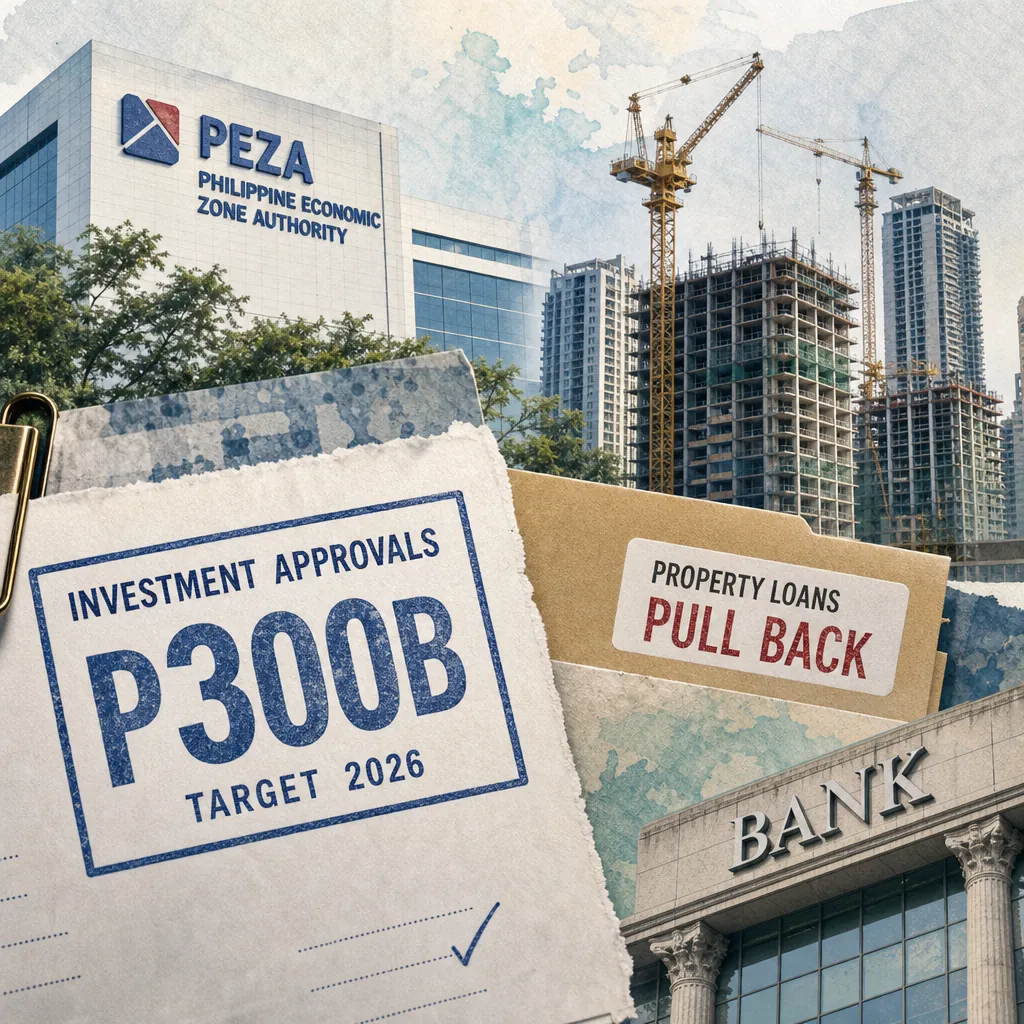
- Hotel developers committed ₱387 billion to new construction through 2032. The Philippine Accommodation Pipeline 2026 Report, published by the Philippine Hotel Owners Association with Leechiu Property Consultants, counts about 45,884 rooms in the pipeline and projects 64,000 direct hotel jobs, even as construction costs rose roughly 30 percent over two years.47
- MREIT secured SEC approval for a ₱27-billion asset infusion, its largest to date. The real estate investment trust of Megaworld Corp. will add about 303,900 square meters of gross leasable area, bringing assets under management to approximately ₱122 billion.26
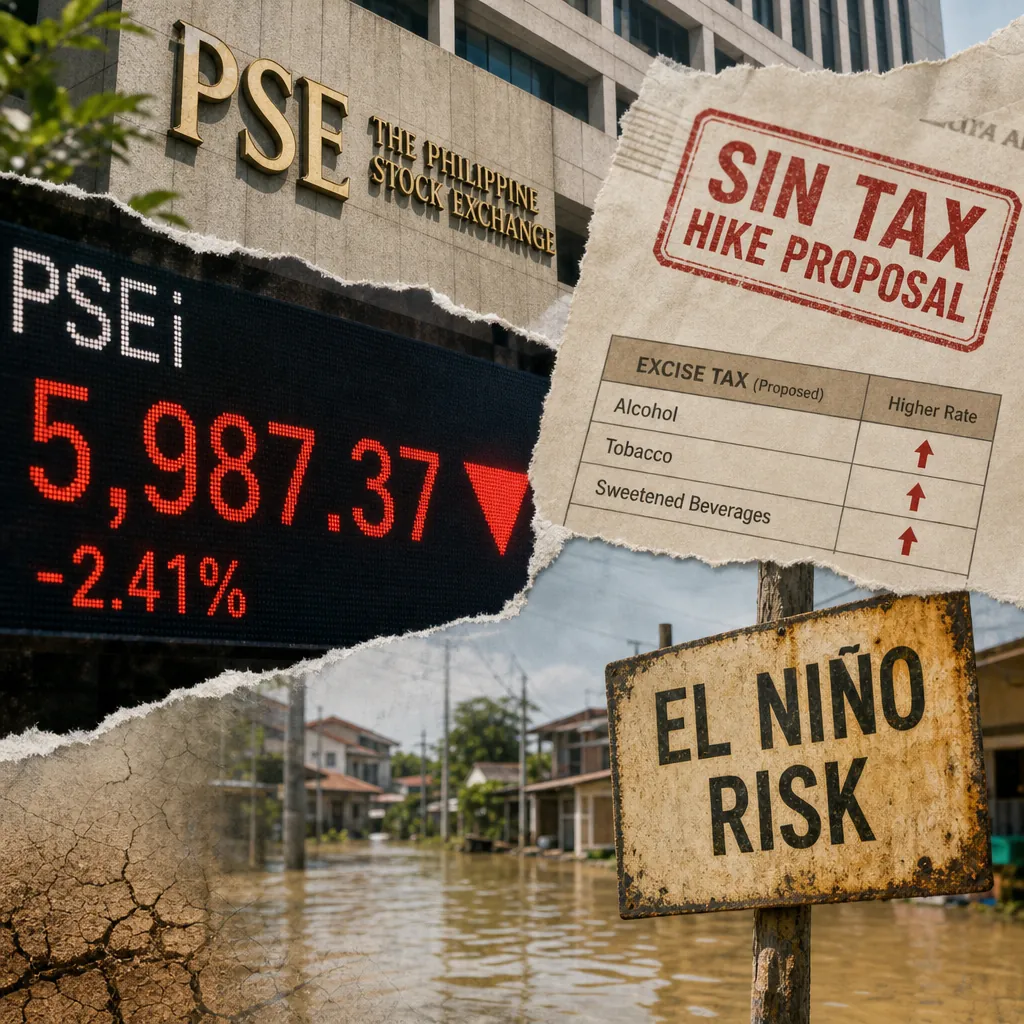
- The peso hit a new intraday low of ₱62.925 to the dollar, dragging the stock index down 1.11 percent. The Philippine Stock Exchange Index closed at 6,007.78 as rising global oil prices and currency weakness raised inflation concerns.48
- The Department of Public Works and Highways announced three underground detention basins at Luneta. The basins, each about 4,000 square meters and together holding the equivalent of 18 Olympic-size swimming pools, are intended to store stormwater runoff from flood-prone Manila streets before pumping it into Manila Bay.57
How the narratives stack
Dominant. The Valenzuela and Caloocan housing turnovers dominated the day's real estate coverage in the items reviewed here, appearing in both the social monitoring writeup and in a Daily Tribune broadsheet report that carried the full program detail — the 960-unit target, the nine completed buildings, the April 2026 relocation start, and the Manila Bay rehabilitation link.18 The story's dominance within this set rests on its institutional weight: a sitting president, a cabinet secretary, two cities, and a named national program. Its social media footprint was small — 26 likes and 3 shares on the Abante News post — which means the coverage value and the public response moved on different scales.2 The Facebook post's reaction mix, including 7 haha reactions alongside 12 love reactions, is worth noting because laugh reactions on a government housing announcement can signal either amusement at the ceremony's staging or skepticism about delivery, and the monitoring writeup does not resolve which.2
Counter-narrative. The Reddit thread on the Laguna vice governor and Rosmar Tan ran as an accountability story on the same day, with 18 comments against 51 upvotes.1 The allegations — money laundering and drug links — are unverified and no government body has confirmed a probe. The thread's significance is structural rather than evidentiary: it shows how quickly localized corruption claims attach to named officials and their associates on platforms where anonymous accounts set the agenda, and how that framing can migrate into comment sections under unrelated housing and land posts in the same province. The monitoring writeup flags this as a jurisdiction-level contamination risk for developers and government programs operating in Laguna and adjacent provinces.1
Emerging. Two commercial storylines gathered momentum in the same window. Hotel developers committed ₱387 billion to build about 45,884 rooms from 2026 to 2032, with the National Capital Region taking 11,130 of those rooms and significant investment flowing to countryside destinations.47 Separately, MREIT obtained Securities and Exchange Commission approval for a ₱27-billion property-for-share swap that adds 303,900 square meters of leasable space and lifts its portfolio past 950,000 square meters.26 Both signal that institutional capital is still moving into Philippine property despite higher construction costs and elevated interest rates, though the hotel figure is a pipeline commitment rather than completed construction.
Under-covered. The DPWH's plan for three underground detention basins at Rizal Park received a single report in the items reviewed, despite addressing the same flood risk that drives the relocation of informal settler families in Valenzuela.57 The connection between flood-control infrastructure and housing relocation policy is direct — families are moved out of high-risk zones because the drainage systems cannot protect them — but the two stories ran separately, and the detention basin announcement drew no visible social media response in the monitored set.
Platform insights
- Facebook. The housing turnover post accumulated 26 likes, 12 love reactions, 7 haha reactions, 3 shares, and 1 comment, a pattern the monitoring writeup describes as passive but broadly positive reception.2 The platform's reaction-based engagement model lets users express approval without entering the comment section, which means the low discussion volume does not necessarily indicate low interest. The 3 shares matter more than the reaction count for distribution purposes: sharing moves content into personal networks where, as the writeup notes, critical evaluation of relocation quality and site conditions often happens privately rather than in public comments.2
- Reddit. The thread on the Laguna official and Rosmar Tan generated 51 upvotes and 18 comments, a ratio that indicates users were more inclined to argue and deliberate than to simply register approval.1 Reddit functioned as the day's venue for adversarial political discourse, with the thread's framing centered on demands for state investigation. The monitoring writeup notes that comment-level discussion, rather than upvote counts, drives reach in property-skepticism communities, meaning sentiment can build beneath high-engagement headline posts without surfacing in aggregate metrics.1
Key voices and communities
Political accountability communities on Reddit. These users frame housing and development issues through a governance lens, connecting land use, relocation, and public funds to questions about political trustworthiness.1 Their influence is narrative-driven: they shape how corruption themes circulate across platforms, and the monitoring writeup identifies them as a leading indicator of how localized allegations can attach to legitimate development narratives.1
Government housing beneficiary networks on Facebook. Composed largely of beneficiary communities, local government communications teams, and civic watchers, this group tracks relocation progress and service access.2 Their messaging centers on safety, dignity, and proximity to basic services, framing relocation as a protective measure for families in flood-prone zones. The mixed reaction set on the Valenzuela post — positive and laughing reactions alongside minimal comments — suggests passive reception as much as active approval.2
Property skepticism and consumer complaint threads. A quieter group of would-be buyers and homeowners trades warnings about delayed turnover, title issues, and developer practices.1 Currently a small share of the sampled conversation, this segment carries outsized influence during disputes because its content is highly searchable and repeatedly surfaced to prospective buyers. Comment-level discussion, not upvote counts, drives its reach.1
Institutional developers and their communications teams. Federal Land inaugurated the Aki Tower of The Seasons Residences in Bonifacio Global City and signaled interest in a Cebu project, with Chairman Alfred V. Ty saying the company spends "a lot of hours these days planning for future developments."61 Century Properties Group opened the show village of Cerulean Residences, a 25-hectare house-and-lot development in General Trias, Cavite, with 1,100 homes designed by Singapore-based Pomeroy Studio.73 These launches represent the commercial side of the same housing market the government is trying to serve at the affordable end.
Industry associations. The Subdivision and Housing Developers Association (SHDA), which represents more than 350 developer members across eight regional chapters, held its 34th National Developers Convention under the theme "Elevate: Sustaining Progress through Collaboration and Strategic Housing Innovations."78 DHSUD's message to the convention emphasized that buying a home is one of the biggest financial decisions most Filipinos will ever make, particularly for overseas workers supporting families from abroad.79
Narrative streams
Government shelter delivery reaches 333 completed units in Valenzuela and a second site in Caloocan
The Disiplina Village Arkong Bato turnover is the most concrete housing delivery event in the monitored set. The project's full design covers 960 units for informal settler families living in dangerous areas of Valenzuela City and for households affected by the Supreme Court's Manila Bay rehabilitation directive, a ruling that has required the cleanup of the bay and the relocation of communities whose waste and structures contributed to its pollution.18 Nine buildings with 333 units are complete under the first three phases, and relocation operations have been running since April 2026. The National Housing Authority developed the project under the Expanded 4PH program, which consolidates the government's shelter efforts under DHSUD.18
The messaging around the turnover emphasized proximity to schools, hospitals, and basic services rather than unit counts alone — a framing choice that the monitoring writeup identifies as the most portable narrative asset in the batch because it preempts the "relocation site is far and barren" critique that typically follows resettlement announcements.2 The Facebook post's 3 shares indicate the message reached beyond the already-engaged base only modestly, which limits its reputational lift.2
For developers and lenders with exposure to socialized housing, right-of-way agreements, or township displacement, the Valenzuela model is the reference case for how the government wants relocation framed: as risk reduction, not displacement. The read for the sector is that shelter delivery announcements will continue through the fourth quarter as agencies accelerate pre-election turnovers, creating a favorable sentiment window for private-sector partners to associate their own community investment messaging with the same themes.2
A Reddit thread on a Laguna official tests how far unverified allegations travel
The thread calling for an investigation into a Laguna vice governor and Rosmar Tan over alleged money laundering and drug links drew 51 upvotes and 18 comments — modest numbers in absolute terms, but the comment volume relative to likes indicates active argument in the replies.1 The allegations are unverified and no government body has confirmed a probe. The thread's framing, linking an elected official to alleged illicit finance and demanding state investigation, mirrors patterns the monitoring writeup says have preceded Philippine Senate and Ombudsman inquiries into local land dealings by two to four weeks.1
The geographic concentration matters for anyone with property interests in Laguna, Cavite, or Batangas. The monitoring writeup identifies the Laguna thread as a jurisdiction-level contamination risk: if a developer or government agency has a turnover, groundbreaking, or informal settler family engagement scheduled in that province, local political commentary is likely to surface in the same digital space.1 The low share count tells you the story is not yet a mass narrative, which means the window to shape framing is still open — but the writeup estimates that window at roughly seven to ten days before any potential mainstream pickup shifts the story from anonymous forum discussion to named investigative reporting.1
For communications teams at banks, developers, and infrastructure firms operating in the affected corridor, the practical implication is procedural: prepare holding statements that keep delivery messaging separate from unverified political claims, and set listening rules that flag comment-section spillover into housing posts within the same day.1
Hotel developers commit ₱387 billion despite a 30-percent rise in construction costs
The Philippine Accommodation Pipeline 2026 Report, published by the Philippine Hotel Owners Association in partnership with Leechiu Property Consultants, counts ₱387 billion in committed hotel investment from 2026 to 2032, representing about 45,884 rooms and a projected 64,000 direct jobs.47 Leechiu Director for Hotels, Tourism, and Leisure Alfred Lay noted that developers committed to these projects even as construction costs rose roughly 30 percent over two years and interest rates increased funding costs significantly.47 The National Capital Region will receive the largest share at 11,130 rooms, but the report identifies sizeable investment flowing to countryside destinations.47
The commitment figure is a pipeline number, not completed construction, and the gap between announcement and delivery is where most Philippine property projections historically narrow. The read for the sector is that hotel capital is betting on a tourism recovery that outlasts the current cost environment, and that the countryside destinations receiving new rooms will need supporting infrastructure — roads, airports, utilities — that government and private developers have not yet fully funded. For lenders, the pipeline represents a multi-year credit demand; for local governments in receiving areas, it represents a zoning and services planning deadline.
MREIT's ₱27-billion infusion and the office market's uneven recovery
MREIT Inc., the real estate investment trust sponsored by Megaworld Corp., received Securities and Exchange Commission approval for its largest asset infusion to date: a ₱27-billion property-for-share swap that adds about 303,900 square meters of gross leasable area.26 The newly infused assets will contribute income retroactively from July 1, and the transaction lifts MREIT's assets under management to approximately ₱122 billion and its total portfolio past 950,000 square meters.26 A real estate investment trust is a publicly listed company that owns income-producing property and distributes most of its taxable income to shareholders as dividends; the asset infusion model lets a developer parent inject completed buildings into the trust in exchange for shares, recycling capital into new construction.
The office segment showed a parallel signal: Robinsons Offices recorded 38,000 square meters of transactions in the second quarter, the highest among developers, driven by a 33,400-square-meter pre-leasing commitment at Asscher, one of four office towers planned for The Jewel mixed-use development in Mandaluyong City.53 CBRE Philippines identified the Asscher commitment as the country's largest individual office transaction during the quarter.53 The read for the sector is that demand for well-located, well-equipped office space remains concentrated among a small number of large tenants, and developers who cannot offer scale and amenities will struggle to fill space as the market absorbs new supply.
The peso's slide to ₱62.925 reshapes the cost of building and buying
The Philippine peso touched a new intraday low of ₱62.925 to the dollar on Tuesday before closing at ₱62.835, just shy of Monday's record low of ₱62.86.48 The benchmark Philippine Stock Exchange Index fell 1.11 percent, or 67.29 points, to close at 6,007.78, as rising global oil prices and currency weakness raised inflation concerns and higher bond yields drew investors toward fixed income.48 Philstocks Financial research manager Japhet Tantiangco attributed the decline to the peso's depreciation and oil price increases, both of which present upside risks to consumer prices and interest rates.48
For the property sector, a weaker peso cuts two ways. It raises the cost of imported construction materials, equipment, and finishes — the same cost pressure the hotel developers cited — and it makes peso-denominated property cheaper for foreign buyers and overseas Filipino workers remitting dollars. The read for the sector is that developers with significant foreign-currency debt or imported material exposure will face margin pressure, while those selling to overseas Filipino buyers may see demand hold up better than the domestic market as the currency gap widens.
Flood control and climate resilience move from advocacy to engineering
The Department of Public Works and Highways plans to build three underground detention basins at Rizal Park, each covering about 4,000 square meters and together holding the equivalent of 18 Olympic-size swimming pools of stormwater.57 The basins would temporarily store runoff from flood-prone areas along Taft Avenue, Kalaw Avenue, Burgos Street, Roxas Boulevard, and parts of Remedios and Malate, then gradually pump the water into Manila Bay instead of overwhelming the city's drainage system.57 Public Works Secretary Vince Dizon said the project would also explore reusing stored rainwater for watering plants and other maintenance needs at Luneta.57
The private sector is moving on the same logic. Avida Land's ClimAdapt framework integrates climate considerations into site selection, master planning, and structural design, using detention ponds in horizontal developments to capture peak stormwater runoff while doubling as landscaping features.15 Ayala Land Premier's Park Villas in Makati, a 51-storey tower built with the Tagle Group, used a Double Bottom-Up Construction Method to build in a congested central business district.16 SM Development Corporation's ICE Tower is designed around a Residential-Office concept that integrates business-grade infrastructure and approved commercial uses into residential units, with SMDC vice president Jessica Bianca T. Sy saying that "entrepreneurs and independent professionals do not always need more space. They need space that can do more."17
The read for the sector is that climate resilience is shifting from a marketing claim to a design requirement, and developers who can document specific engineering responses — detention capacity, construction methods, mixed-use flexibility — will differentiate their projects from competitors still selling on location and price alone. A Manila Times column argued that blaming climate change for disasters shifts responsibility away from government agencies that should be addressing hazards before they become disasters, drawing a distinction between a hazard, which is a potentially harmful event, and a disaster, which occurs when that hazard meets exposure and vulnerability.6
Housing finance and land titling extend the shelter push beyond new construction
Some 913 families nationwide received land titles through the Community Mortgage Program during the culminating event of Marcos's "Handog ng Pangulo: Serbisyong Sapat para sa Lahat" on September 14.52 The Social Housing Finance Corp. and DHSUD led the simultaneous awarding of Transfer Certificates of Title to beneficiaries in Luzon, Visayas, and Mindanao, with DHSUD Secretary Aliling and SHFC president Federico Laxa presiding at the Makabagong San Juan Theater in San Juan City.52 The Community Mortgage Program helps informal settler families buy the land they already occupy by extending long-term loans through a community mortgage structure; the land title is the final step that converts occupancy into legal ownership.
Aliling said the administration aims to bring government services closer to Filipino families, and described the titles as symbols of hope for beneficiaries.52 The read for the sector is that land titling creates a new class of property owners with documented assets, which expands the collateral base for housing loans and formalizes transactions that previously sat outside the banking system. For developers, titled communities represent both a future market for upgrade housing and a potential source of right-of-way disputes if titling overlaps with planned infrastructure corridors.
Conversation trajectory
Over the next 7 to 10 days. The Laguna thread's trajectory depends on whether any government body confirms a probe. The monitoring writeup estimates this window as the period before anonymous forum discussion could shift to named investigative reporting, and recommends that clients with exposure in Laguna, Cavite, and Batangas prepare holding statements and monitoring protocols now.1 Watch for the thread's terms and the named personalities appearing in comment sections under unrelated housing posts in the same provinces.
Through the fourth quarter of 2026. Government housing turnovers are expected to continue as agencies accelerate deliveries, sustaining positive baseline sentiment for socialized and economic housing programs while inviting scrutiny of beneficiary selection and unit quality.2 The monitoring writeup recommends scheduling amplification of turnover content within 48 to 72 hours of each ceremony, when initial sentiment skews positive, and preparing escalation protocols if beneficiary complaints about unit defects or service access begin to dominate within the first week after a turnover.2
Over the next 10 to 14 days. The monitoring writeup flags the Laguna thread as a pattern that tends to precede broader scrutiny of land transactions, permits, and developer relationships in affected provinces, and recommends tracking it closely over this period.1 A formal investigation announcement would be the trigger that moves the story from Reddit-level chatter to mainstream coverage.
Through 2026 and into 2027. The hotel pipeline's ₱387-billion commitment will be tested against construction cost inflation and interest rates. Watch for project delays or scope reductions in the countryside destinations that received the largest new-room allocations, and for whether the 64,000 projected jobs materialize on the announced timeline.47 The MREIT asset infusion's income contribution from July 1 will show up in the trust's next dividend declaration, which is the first checkable data point on whether the transaction delivers the per-share accretion management promised.26
Trigger events to watch. The scheduled housing turnover ceremonies continuing through the remainder of the year; any formal investigation into the Laguna official and associated business figure; the year-end surge in real estate preselling campaigns and bank housing loan promotions, which will create a competing positive narrative stream; and the next inflation data release, which will show whether the peso's slide and oil prices are feeding through to consumer prices and interest rate expectations.1248
Response guidance
Monitor the Laguna thread without engaging it. Treat the unverified allegations linking public officials and personalities to illegal activity as a monitoring-only item. Do not participate in partisan or personality-driven disputes, and keep any client-facing guidance strictly procedural and factual.1
Prepare holding statements for housing events in Laguna, Cavite, and Batangas. Any turnover, groundbreaking, or informal settler family engagement scheduled in these provinces should have pre-cleared language that separates delivery messaging from unverified political claims without engaging them directly.1
Amplify shelter delivery content within 48 to 72 hours of each ceremony. Initial sentiment on government housing posts skews positive, and the window before beneficiary complaints surface is short. Repackage the services-proximity and flood-safety angles into locally targeted content for community channels, since organic sharing is currently the weak link.2
Track comment sections on government housing posts for skepticism about relocation quality. Watch for emerging complaints about unit defects, site safety, and distance from services, and package these as early trend notes. Mixed reactions, including laugh and shock responses, can indicate underlying public doubt that may require preparedness messaging.2
Use official corporate pages for any engagement with housing program posts. Pre-cleared language that aligns with broader community investment messaging avoids the appearance of opportunistic positioning.2
Flag real estate stories connecting political figures to alleged illegal activity for legal review. Do not include unverified claims in client-facing sentiment summaries without legal clearance, to avoid amplifying allegations that have not been confirmed by any government body.1
Expand keyword coverage on shelter, relocation, and housing finance terms. The next wave of housing policy announcements — including Pag-IBIG Fund updates, 4PH program milestones, and Community Mortgage Program titling events — will surface through these terms before they trend.2
Prepare for peso-driven cost and demand shifts. Developers with foreign-currency debt or imported material exposure should model margin pressure from the currency's slide, while those selling to overseas Filipino buyers should assess whether the weaker peso supports demand in their target segments.48
Watch the hotel pipeline for delivery risk. The ₱387-billion commitment is a pipeline figure, and the gap between announcement and construction start is where Philippine property projections historically narrow. Track project groundbreakings in the countryside destinations that received the largest room allocations.47
See the full picture behind today's signals.
This report draws from Media Meter's MediaWatch, our real-time monitoring engine tracking 2,470+ Philippine sources across print, broadcast, digital, and social. Explore how the platform turns raw coverage into decision-grade intelligence, then see how it's configured for teams like yours — whether you're in PR agencies, corporate comms, government, or marketing.
Want more? Browse our Report Library for sector and crisis intelligence, or request a demo and we'll have your brand set up before the call.
Want this kind of intelligence on your brand?
This brief is built on the same MediaWatch methodology that runs continuously across every brand we monitor. See your competitive landscape, Impact Score, and narrative trajectory in a 30-minute demo.