Philippine Digital Finance Reshapes as UnionBank Absorbs Units
UnionBank moves to fold its digital bank and fintech arm into the parent lender, Visa says stablecoin adoption in the Philippines has no fixed timeline, and Globe Business pitches fraud defenses as the new anti-scamming law takes effect. A Supreme Court ruling against recent national budgets and a Quezon City fire-response plan round out the day's coverage.

Union Bank of the Philippines will fold its digital banking and financial technology subsidiaries into the parent lender, the Aboitiz-led bank told the Philippine Stock Exchange, a consolidation that lands alongside Visa's admission that it has no fixed date for bringing stablecoin transfers to the country and a Globe Business push to sell fraud defenses to institutions now bound by a new anti-scamming law25228. The three items describe the same pressure from different seats in the room: Philippine finance is digitizing faster than the rules, the rails, and the institutions' own security can settle, and the firms that built separate digital arms are now deciding whether those arms are worth keeping apart.
UnionBank's board approved integrating UnionDigital Bank and UBX into the parent, subject to approval by the Bangko Sentral ng Pilipinas (BSP), the country's central bank, and other regulators25. UnionDigital is the group's standalone digital bank; UBX is its fintech unit, built to reach customers beyond traditional branches. President and chief executive Ana Delgado framed the move as a way to focus on core businesses, improve efficiency, and consolidate digital capabilities on a single platform25. The disclosure did not put a peso figure on the integration or a completion date.
Visa's regional Southeast Asia head for Visa Direct, Qinwen Xiao, told a media briefing on Thursday that the payments company has no timeline for when consumers, businesses, or financial institutions in the Philippines will adopt stablecoins, the digital tokens pegged to a conventional currency such as the dollar and designed to hold a steady value22. Visa is already deploying stablecoin-based transfers commercially in other markets to speed cross-border payments; in the Philippines it is waiting on local readiness22. Globe Business, the corporate arm of the telco, used the same week to market application-programming-interface intelligence, cybersecurity frameworks, and frictionless authentication to banks and cooperatives working toward compliance with Republic Act No. 12010, the Anti-Financial Account Scamming Act (AFASA)8. AFASA requires BSP-supervised financial institutions to tighten fraud detection, account verification, and security controls8.
Key themes
- UnionBank folds UnionDigital and UBX back into the parent bank. The board approved absorbing both subsidiaries, pending BSP and other regulatory approvals, with management citing efficiency and a single digital platform25. The disclosure gave no cost, no timetable, and no statement on what happens to UnionDigital's separate banking license.
- Visa has no date for stablecoin transfers in the Philippines. Its Southeast Asia Visa Direct head said adoption depends on the readiness of local banks, regulators, and consumers, and that Visa could not say when that would happen22. The company is running the technology commercially elsewhere while it waits here.
- AFASA turns fraud prevention into a compliance obligation. Republic Act No. 12010 requires BSP-supervised institutions to strengthen fraud detection, account verification, and security controls, and Globe Business is selling the tooling to meet it8. The law shifts the cost of security onto institutions rather than account holders.
- The Supreme Court voided the 2024 and 2025 budgets and parts of the 2026 budget. The Manila Times column reports that the court, in four consolidated petitions, found the General Appropriations Acts violated the 1987 Constitution's rule that Congress cannot increase the budget the Executive requested in the National Expenditure Program11. The decision puts the Palace press office, the Solicitor General, and the Interior Secretary in the position of explaining what happens to spending already authorized.
- Quezon City plans overhead water tanks for narrow streets. Mayor Joy Belmonte said tanks with standpipe systems will be installed next year so firefighters can reach blazes in alleys, part of a disaster-response package that includes stronger barangay capabilities and a centralized network of more than 3,000 CCTV cameras under Project Aurora7.
- The President's week ran from nursing posts to the GCash listing to a Sulu courthouse. Marcos Jr. told the Philippine Nurses Association convention he would fill vacant nursing positions and reduce patient loads per nurse, attended Mynt Inc.'s stock market debut, spoke by phone with Japan's prime minister ahead of the November ASEAN summit, and inaugurated the Sulu Hall of Justice19.
- Gold demand is being pulled by central banks and AI hardware. Central banks bought 288.9 metric tons of gold in the second quarter of 2026, up 62 percent from a year earlier, while gold's use in electronic connectors and semiconductors ties it to computing infrastructure for artificial intelligence20. The BSP holds gold as part of the country's reserves.
- Two scam-hub raids in three weeks. The National Bureau of Investigation detained 200 Vietnamese nationals in Olongapo City days after a Zamboanga Sibugay raid netted 244 foreigners, mostly Chinese, at an offshore gaming and online scam operation23. The Philippine Star editorial read the pattern as evidence foreigners treat the country as a haven for illegal activity.
How the narratives stack
Dominant. UnionBank's absorption of UnionDigital and UBX is the day's most consequential corporate development in the captured set, and it drew the heaviest coverage value of the banking items reviewed: the Philippine Star business story carried an estimated ₱363,109 in advertising-equivalent value, the notional cost of buying the same space as paid advertising25. The logic is straightforward. UnionDigital was launched as a separate digital bank under the BSP's framework for branchless banks, a category created to let new entrants serve customers who never walk into a branch. Folding it back into the parent suggests the group sees more value in one balance sheet and one technology stack than in a separately branded digital bank. For depositors and borrowers, the practical questions are whether account terms, app features, and interest rates change, and whether the BSP's review slows the integration. The disclosure answers none of these.
Counter-narrative. Visa's briefing is the counterweight to the assumption that Philippine payments are racing toward crypto rails. Xiao said plainly that Visa has no timeline for stablecoin adoption here and that the pace depends on local institutions, regulators, and consumers22. That is a global payments company with the technology already running elsewhere choosing to wait. The Philippine Star business item carried an estimated ₱447,088 in advertising-equivalent value22. Read together with UnionBank's consolidation, it suggests the near-term story in Philippine digital finance is domestic consolidation and compliance, not the arrival of tokenized money.
Emerging. AFASA compliance is becoming a product category. Globe Business is positioning API intelligence, cybersecurity frameworks, and frictionless authentication as the way for banks and cooperatives to move from reactive security to automated defense8. The law matters because fraud losses in digital banking and e-wallets fall hardest on customers who cannot easily absorb them, and because compliance costs favor institutions that can buy sophisticated tooling. Smaller cooperatives and rural banks, which AFASA also covers, will be the ones deciding whether to build, buy, or fall behind. The LionhearTV item carried an estimated ₱149,022 in advertising-equivalent value8.
Under-covered. The Supreme Court's ruling against the 2024 and 2025 General Appropriations Acts and parts of the 2026 budget appeared in the captured set only as an opinion column, not as a news report11. The column explains the constitutional rule at stake: Congress may not increase the budget the Executive proposes in the National Expenditure Program, and the court found the appropriations laws did so. It also traces the Budget of Expenditures and Sources of Financing, the document the Department of Budget and Management introduced in 1989 under Corazon Aquino's administration to account for unexpected spending needs11. A ruling that unsettles two years of appropriations and part of a third has direct consequences for every agency and program funded through those laws, and it received less space in this set than a hospital partnership or a soap brand. The column carried an estimated ₱757,740 in advertising-equivalent value, the highest of the Philippine items reviewed11.
Platform insights
- Facebook. The day's most-shared personal update came from Ric Flair, the retired professional wrestler, who told followers he was recovering after a fall in Florida on October 23 and posted a selfie from Tampa General Hospital wearing an eyepatch3. He thanked the hospital staff and said he was focused on healing, and he used the same post to clarify that someone else had been posting throwback clips from his WWE days to his Facebook account3. The Yahoo item, syndicated from E! Online, carried an estimated ₱1,682,700 in advertising-equivalent value, the largest single figure in the captured set3. The engagement pattern is the familiar one for celebrity health scares: a first-person post does the work, and outlets amplify it.
- X. No post-level engagement data appears in the writeups for this window, so the platform's role cannot be measured here. The topics most likely to travel there are the budget ruling and the scam-hub raids, both of which carry the political charge that drives reposting1123.
- Reddit. No post-level engagement data appears in the writeups for this window. The UnionBank consolidation and the Visa stablecoin comments are the kind of items that draw thread-level discussion in Philippine personal-finance communities, but the captured material does not show whether that happened2522.
- YouTube. No post-level engagement data appears in the writeups for this window. The President's week, including the Sulu Hall of Justice inauguration and the GCash listing, is the likeliest video subject in the set19.
Key voices and communities
Bank executives and regulators. Ana Delgado of UnionBank is the named executive on the consolidation, and the BSP is the gatekeeper whose approval determines the timetable25. Their framing is operational efficiency and a single platform. What they have not said is what happens to UnionDigital's license and customer base.
Global payments companies. Qinwen Xiao of Visa Direct speaks for the international players watching Philippine readiness before committing to stablecoin rails22. His framing is caution dressed as deference to local conditions, and it sets a benchmark other payments firms will be measured against.
Cybersecurity and telecom vendors. Globe Business is arguing that AFASA compliance requires a shift from reactive to proactive defense8. The framing matters because it defines the law as a technology purchase rather than a customer-protection mandate, and it will shape how banks budget for compliance.
Fiscal and legal commentators. The Manila Times column on the Supreme Court's budget ruling is the only item in the set that walks through the constitutional principle and the history of the Budget of Expenditures and Sources of Financing11. Its author is doing the explanatory work the news pages did not do in this set.
Local government and disaster-response officials. Mayor Joy Belmonte of Quezon City is the named official on the fire-response water tanks and the CCTV network, and she is also the source for the city's claim to contribute ₱1.4 trillion, or about 6 percent, of the country's gross domestic product in 20257. Her framing ties physical safety infrastructure to economic standing.
Narrative streams
UnionBank absorbs its digital bank and fintech arm
Union Bank of the Philippines will take UnionDigital Bank and UBX into the parent company, the bank disclosed to the Philippine Stock Exchange, with the integration subject to BSP and other regulatory approvals25. UnionDigital operates under the BSP's digital bank framework, a licensing category created to allow banks with no branches to serve customers through apps; UBX was the group's vehicle for fintech partnerships and platforms aimed at customers outside traditional branch reach. Delgado said the integration supports a focus on core businesses, better operational efficiency, and consolidated digital capabilities on one platform25.
The disclosure leaves the hard questions open. It does not say whether UnionDigital's separate digital bank license will be surrendered, what happens to UBX's external clients and partnerships, how many employees are affected, or what the integration costs. It also does not say whether customers will see any change in products, fees, or app experience. For a depositor, the relevant fact is that the brand they signed up with may become a product line inside a larger bank; for a fintech partner, the relevant fact is that a counterparty is being absorbed.
The read for the sector is that the separate digital bank, launched as a distinct business with its own license and brand, is proving harder to run profitably at arm's length than inside a parent with an existing deposit base and capital. Other groups that stood up digital banks under the same framework will be watching whether the BSP approves this consolidation and on what conditions, because approval would establish a template for folding a digital bank back in. The Philippine Star business item carried an estimated ₱363,109 in advertising-equivalent value25.
Visa waits on Philippine readiness for stablecoins
Visa has no firm timeline for adopting stablecoin-based money transfers in the Philippines, according to Qinwen Xiao, its head for Visa Direct in regional Southeast Asia, who spoke at a media briefing on Thursday22. Stablecoins are digital tokens designed to hold a steady value by being pegged to a conventional currency such as the dollar; they are used in cross-border payments because they can move value between countries faster and at lower cost than correspondent banking. Visa is already deploying the technology commercially overseas22.
Xiao's stated condition is readiness across three groups: local financial institutions, regulators, and consumers22. That is a polite way of saying the company will not build the rails until the demand and the rules exist. The Philippine context matters here. The BSP has been cautious about crypto assets, and the country's payments modernization has so far run through instapay-style real-time transfers and e-wallets rather than tokenized money. Visa's caution suggests the near-term competitive ground is domestic real-time payments and wallet interoperability, not stablecoins.
The read for the sector is that Philippine banks and e-wallet operators have more time than the global stablecoin narrative implies, and that the first mover on cross-border stablecoin transfers here will likely be a local institution partnering with a global network rather than the network acting alone. The Philippine Star business item carried an estimated ₱447,088 in advertising-equivalent value22.
AFASA compliance becomes a vendor market
Republic Act No. 12010, the Anti-Financial Account Scamming Act, requires financial institutions supervised by the BSP to strengthen fraud detection, account verification, and security controls8. The law responds to a specific Philippine problem: scammers who take over bank and e-wallet accounts, often through social engineering or SIM swaps, and drain them. AFASA puts the obligation on institutions to prevent that, rather than leaving customers to absorb the loss and prove they were defrauded.
Globe Business is selling the compliance path: application-programming-interface intelligence, cybersecurity frameworks, and frictionless authentication, which it says lets institutions block sophisticated fraud without disrupting the customer experience8. The pitch is aimed at everyone from large commercial banks to local cooperatives8. That range is the interesting part. Large banks can build or buy sophisticated systems; cooperatives and rural banks, which AFASA also covers, operate on thin margins and small technology teams.
The read for the sector is that AFASA will widen the gap between institutions that can afford automated fraud detection and those that cannot, unless the BSP or industry associations provide shared tooling or subsidized compliance. Customers of smaller institutions are the ones exposed if that gap opens. The LionhearTV item carried an estimated ₱149,022 in advertising-equivalent value8.
The Supreme Court voids two budgets and part of a third
The Supreme Court has declared unconstitutional the 2024 and 2025 General Appropriations Acts and portions of the 2026 GAA, according to a Manila Times opinion column, in a decision on four consolidated petitions11. The constitutional rule at issue is that Congress cannot increase the budget the Executive requests in the National Expenditure Program; the court found the appropriations laws did so11. The column names Palace Press Officer Claire Castro, Solicitor General Darlene Berberabe, and Interior Secretary Jonvic Remulla as the officials now fielding the consequences11.
The column also supplies the history. In 1989, during Corazon Aquino's administration, the Department of Budget and Management introduced the Budget of Expenditures and Sources of Financing, a document meant to account for unexpected spending needs the way a family keeps an emergency fund11. The point of the piece is that the mechanism meant to give government flexibility has become a way around the constitutional limit on Congress's power to add to the budget.
For an ordinary reader, the practical question is what happens to programs funded under laws the court has voided. The column does not answer it, and no news report in the captured set does either. The read for the sector is that agencies and local governments relying on 2024 and 2025 appropriations face uncertainty about the legal basis for spending already authorized, and that the 2026 budget will be rewritten under tighter rules. The column carried an estimated ₱757,740 in advertising-equivalent value11.
Quezon City plans water tanks for alleys and a bigger camera network
Quezon City will install overhead water tanks with standpipe systems next year to help firefighters respond to blazes in alleys and narrow streets, Mayor Joy Belmonte said7. The tanks are part of a disaster-preparedness package that also includes strengthening barangay capabilities and centralizing surveillance cameras for faster incident response7. In her State of the City Address, Belmonte said more than 3,000 closed-circuit television cameras have been installed under Project Aurora, a centralized monitoring network for public safety and traffic management7.
She also said the city contributed ₱1.4 trillion, or about 6 percent, of the country's gross domestic product in 2025, and cited a Commission on Audit report identifying Quezon City as the country's top local government unit7. The Commission on Audit is the state's external auditor; its reports grade how local governments handle public funds.
The read for the sector is that fire response in dense urban barangays depends on infrastructure that fits the streets, not just on more fire trucks, and that cities able to fund standpipes and camera networks will pull ahead of those that cannot. For residents of narrow alleys, the tanks are the item that changes response time. The Manila Times item carried an estimated ₱397,208 in advertising-equivalent value7.
The President's week: nursing posts, a GCash listing, and a Sulu courthouse
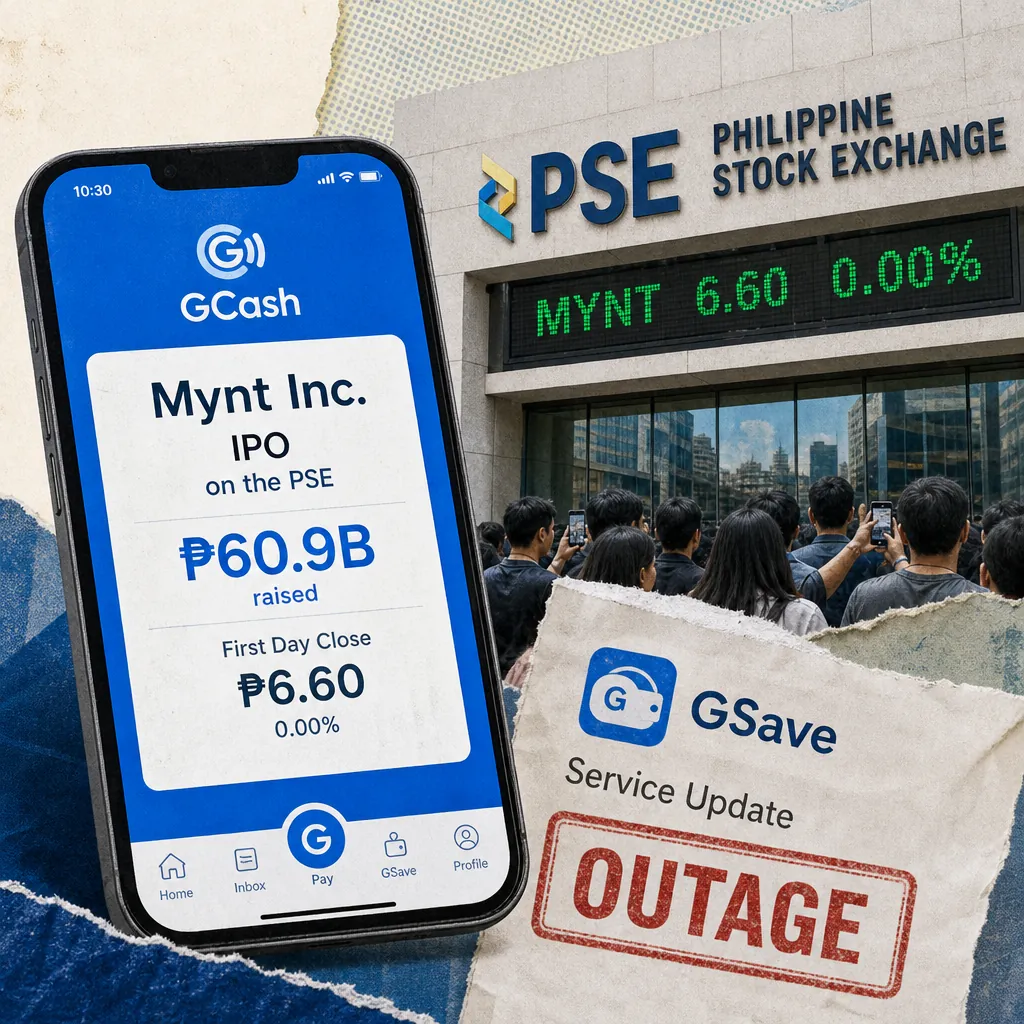
President Ferdinand Marcos Jr. spent the week moving between labor commitments, capital markets, and the courts. He opened at the Philippine Nurses Association national convention in Pasay City, promising to fill vacant nursing posts and lighten patient loads per nurse19. He then attended the stock market debut of Mynt Inc., the company behind the GCash e-wallet, calling it a landmark for the digital economy and a chance for ordinary Filipinos to build wealth through investing19.
He spoke by telephone with Japanese Prime Minister Sanae Takaichi to prepare for the 49th Association of Southeast Asian Nations (ASEAN) Summit and Related Summits in November, and flew to Sulu to inaugurate the Sulu Hall of Justice, which he said would bring judicial services closer to residents in a province long short of court facilities19. He also led the 2026 Galing Pook awards, a program that recognizes exemplary local government projects19.
The read for the sector is that the GCash listing gives the administration a concrete digital-economy achievement to point to ahead of the ASEAN summit, while the nursing pledge and the Sulu courthouse address two long-standing service gaps that voters measure locally. The Daily Tribune item carried an estimated ₱337,239 in advertising-equivalent value19.
Gold demand from central banks and AI hardware
Central banks bought 288.9 metric tons of gold in the second quarter of 2026, up 62 percent from the same quarter a year earlier, according to a Business Mirror feature20. Gold is used in electronic connectors and semiconductors because it conducts electricity well and resists corrosion, qualities that matter to the computing infrastructure behind artificial intelligence20. The BSP holds gold as part of the country's reserves, which help the economy absorb external shocks and meet international obligations20.
The read for the sector is that gold's price is being supported by two buyers with different motives, central banks hedging against inflation and currency swings, and electronics manufacturers building AI infrastructure. For Philippine households, gold jewelry retains its role as a store of value, and the BSP's reserve holdings benefit from the same price strength. The Business Mirror item carried an estimated ₱673,308 in advertising-equivalent value20.
Scam-hub raids put the Philippines in the enforcement spotlight
The National Bureau of Investigation detained 200 Vietnamese nationals in a raid on an online scam facility in Olongapo City, acting on a search warrant from the Olongapo Regional Trial Court, and seized computers and mobile phones23. Officials said the hub operated around the clock, with teams targeting victims in the Philippines, Bangladesh, and the United Arab Emirates, and payments made through e-wallets23. The raid came weeks after a joint Bureau of Immigration and police operation arrested 244 foreigners, mostly Chinese, at an offshore gaming and online scam hub in Zamboanga Sibugay23.
The Philippine Star editorial read the pattern as evidence that foreigners consider the Philippines a haven for illegal activities23. The enforcement details matter for the financial sector because the hubs used e-wallets to collect payments, which puts wallet operators and their fraud controls on the front line of a problem that is usually described as a law-enforcement issue.
The read for the sector is that e-wallet and bank compliance teams should expect scrutiny of how scam proceeds move through their platforms, and that AFASA's account-verification requirements will be judged partly on whether they make this kind of operation harder to run. The editorial carried an estimated ₱311,122 in advertising-equivalent value23.
Health, education, and household finance items round out the set
Manila Doctors Hospital and De La Salle-College of Saint Benilde signed a memorandum of agreement to provide accessible psychological health care services to students, faculty, and the wider school community, led by Benilde vice president Maria Veronica Perez and Well-Being Center director El Anelio Barnachea24. The hospital, founded in 1956, is the health care affiliate of Metrobank Foundation24. The Philippine Star business item carried an estimated ₱322,319 in advertising-equivalent value24.
Cebuana Lhuillier's ProtectMax micro-insurance product covers specified death, accidental disability or dismemberment, residential fire damage, qualifying fatal assault, and accident or sickness emergencies for ₱50 over four months, for ages 7 to 70, with no medical examination and up to five active policies10. The Manila Republic item carried an estimated ₱267,246 in advertising-equivalent value10. A blog post on Your Own Property noted that Retail Treasury Bonds, the government's retail debt securities, remain available in the secondary market through GCash's GBonds after the primary offer period for the 32nd tranche closed, with a 6.875 percent annual gross yield and standard transaction fees now applying4. That item carried an estimated ₱148,720 in advertising-equivalent value4.
Sabon de Oro, a Gingoog-based maker of beauty bars and cleaning solutions founded in 2024, was profiled by Mindanao Daily News as an expanding local brand selling through resellers and laundromats5. The item carried an estimated ₱127,281 in advertising-equivalent value5.
Conversation trajectory
BSP action on the UnionBank integration, next 4–8 weeks. The central bank's approval process will determine whether the consolidation proceeds as disclosed and on what conditions. Watch for a BSP announcement or a follow-up disclosure naming the treatment of UnionDigital's license and UBX's client contracts25.
AFASA implementing rules, next 1–3 months. The law's requirements on fraud detection and account verification will be operationalized through BSP issuances. Watch for circulars specifying deadlines and whether smaller institutions get phased compliance or shared tooling8.
Stablecoin pilots, next two quarters. Visa's position is that it will move when local institutions and regulators are ready22. Watch for any BSP pilot or a Philippine bank announcing a cross-border stablecoin partnership; either would change the timeline Xiao declined to give.
Budget ruling fallout, through the 2027 budget cycle. The Supreme Court's decision voiding the 2024 and 2025 appropriations laws and parts of the 2026 law will shape how the next budget is drafted11. Watch for the Executive's response, any motion for reconsideration, and whether agencies issue guidance on spending already authorized.
Scam-hub enforcement, ongoing. Two raids in three weeks suggest a sustained campaign23. Watch for charges, deportations, and whether the e-wallet payments described by the NBI lead to enforcement against payment providers.
Trigger events. The November ASEAN Summit will put the administration's digital-economy messaging on an international stage19. The BSP's next policy meeting and any AFASA circular are the scheduled moments when the compliance story becomes concrete.
Response guidance
Bank communicators preparing for consolidation announcements. Publish a plain-language customer FAQ on the same day as any integration disclosure: what changes for accounts, apps, fees, and branches, and what does not. The UnionBank disclosure left these questions open, and customers will fill the gap with speculation25.
Payments and fintech communicators asked about stablecoins. Answer with the conditions, not the technology. Visa's Xiao named institutions, regulators, and consumers as the three readiness gates22; local firms should be able to say which gate they are working on and what would have to be true for a pilot.
Compliance and security teams at BSP-supervised institutions. Treat AFASA as a customer-protection deadline, not a procurement project8. Map the account-verification and fraud-detection requirements to specific customer journeys, and publish what customers should expect when a suspicious transaction is flagged.
Communicators at smaller banks and cooperatives. Say publicly what support you need to meet AFASA, whether shared tooling, BSP guidance, or industry-association resources8. Silence will be read as readiness.
E-wallet and payments operators responding to scam-hub coverage. Explain in specific terms how scam proceeds are detected and blocked on your platform, and cooperate visibly with the NBI and the Bureau of Immigration23. The Olongapo operation used e-wallets to collect payments, and that detail will attach to the industry until operators show otherwise.
Local government communicators in dense cities. Pair infrastructure announcements with response-time numbers: how many minutes a standpipe saves in an alley fire, how many incidents the camera network has shortened7. Belmonte's announcement named the equipment; residents will want the outcome.
Communicators at agencies funded by the voided appropriations laws. Prepare a short public explanation of which programs are affected and which continue, and coordinate it with the Department of Budget and Management11. The legal uncertainty is real; the communication vacuum does not have to be.
Financial-literacy and consumer communicators. Use the RTB and micro-insurance items as teaching moments about yield, fees, and coverage limits410. The RTB post noted that secondary-market purchases now carry transaction and convenience fees, and the ProtectMax item noted that benefits are subject to limits and exclusions; both are the details retail investors most often miss.
See the full picture behind today's signals.
This report draws from Media Meter's MediaWatch, our real-time monitoring engine tracking 2,470+ Philippine sources across print, broadcast, digital, and social. Explore how the platform turns raw coverage into decision-grade intelligence, then see how it's configured for teams like yours — whether you're in PR agencies, corporate comms, government, or marketing.
Want more? Browse our Report Library for sector and crisis intelligence, or request a demo and we'll have your brand set up before the call.
Want this kind of intelligence on your brand?
This brief is built on the same MediaWatch methodology that runs continuously across every brand we monitor. See your competitive landscape, Impact Score, and narrative trajectory in a 30-minute demo.