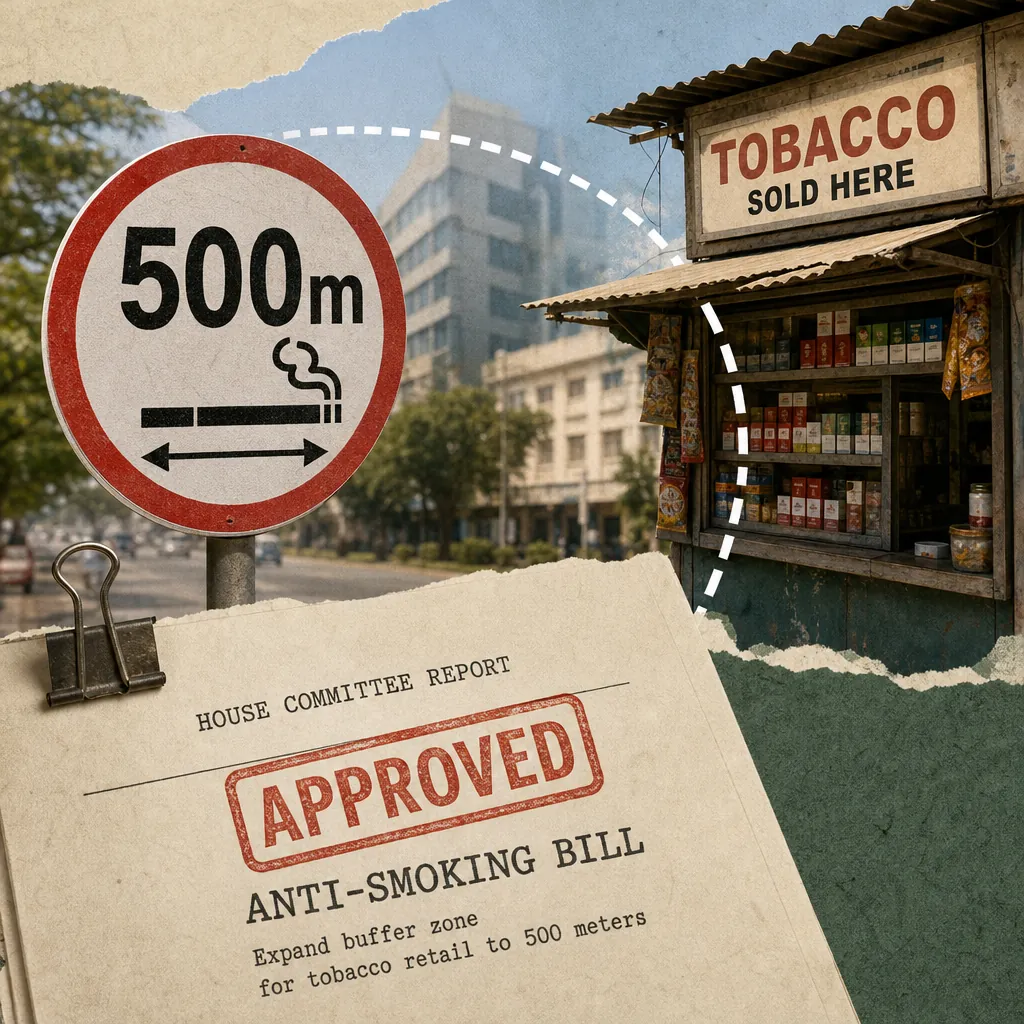
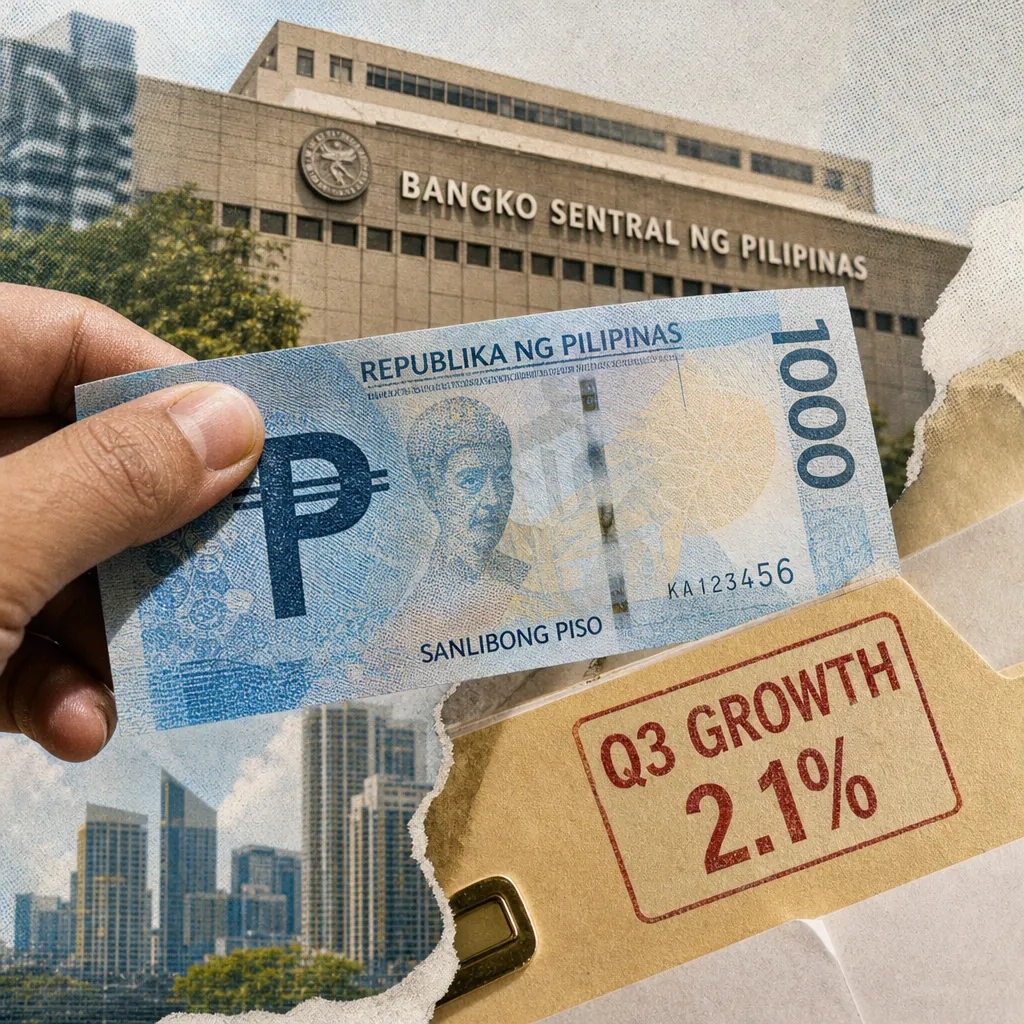
PLDT Profit Falls 8% as Pangilinan Revives Telco Merger Call
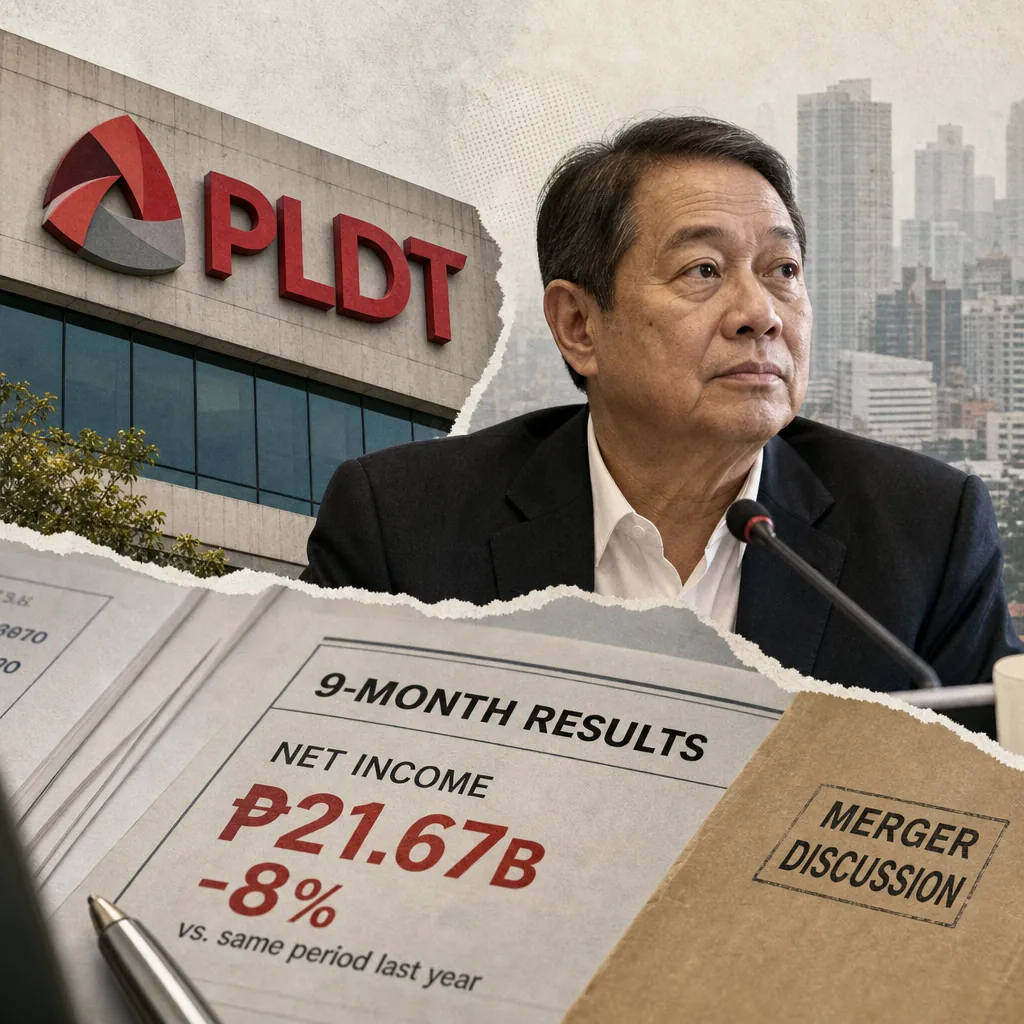
PLDT's nine-month net income dropped 8% to P21.67 billion, and chairman Manuel V. Pangilinan used the earnings briefing to argue the Philippines' four telcos cannot all survive a small market. Conglomerates Ayala, GT Capital and Alliance Global also reported softer or mixed results as inflation and slower growth weighed on the economy.
The Conversation
Manuel V. Pangilinan told PLDT Inc.'s third-quarter briefing on Thursday that the Philippines has "four telcos serving a very small market," and that with both corporate and household budgets under strain, "This is untenable for each of us, right? We have to consolidate."5 The remark came attached to numbers that explain why he said it: PLDT's attributable net income fell 8 percent to P21.67 billion in the first nine months of 2026 from P23.65 billion in the same period of 2025, even as gross service revenues rose 2 percent to P161.2 billion13. Globe Telecom Inc.'s net income for the same nine months dropped 7 percent to P16.5 billion, and Converge ICT Solutions Inc. fell 9.1 percent to P8.1 billion5.
The telco results landed in a broader run of Philippine corporate earnings that mostly pointed the same direction. Ayala Corp.'s core net income slipped 6 percent to P34.5 billion, pulled down by weaker banking and property earnings32. GT Capital Holdings Inc. fell 10 percent to P23.3 billion, and its disclosure noted that third-quarter gross domestic product growth was 2.1 percent while inflation had accelerated to 7.8 percent in October, putting the year-to-date average at 5.6 percent6. Alliance Global Group Inc. was the exception in the set, posting a 5 percent rise to P22.3 billion on stronger brandy sales and higher leasing and hotel revenues91. The stock market reflected the mood: the Philippine Stock Exchange Index closed down 32.65 points, or 0.57 percent, at 5,660.55, with analysts citing a downgrade to the country's growth outlook53, and the peso weakened 45 centavos to P63.70 against the dollar15.
No social-media monitoring writeup accompanied this window, so the day's conversation is read entirely from published coverage. Within the items gathered here, the telco story carried the most consequence for a single sector: it concerns the ownership structure of the infrastructure that carries the country's calls, texts and internet, and it was raised by the chairman of the largest player at a public briefing. The coverage value attached to the Inquirer's report on Pangilinan's remarks was an estimated P376,488 in advertising-equivalent terms — the notional cost of buying the same space as paid advertising, not a count of readers5.
Key themes
- PLDT's nine-month profit fell 8 percent to P21.67 billion. Higher depreciation and a 5 percent rise in operating expenses — repairs, maintenance, network costs and electricity — outweighed revenue growth, and the decline was steeper in the third quarter13.
- Pangilinan called four telcos in one small market "untenable" and said consolidation is needed. He made the remark at PLDT's own earnings briefing, framing it around pressure on consumer and business wallets rather than around any specific transaction5.
- Globe and Converge also posted lower profits for the nine months. Globe fell 7 percent to P16.5 billion despite record revenues, and Converge dropped 9.1 percent to P8.1 billion5.
- Inflation at 7.8 percent in October and GDP growth of 2.1 percent in the third quarter framed the conglomerate results. GT Capital cited both figures in explaining its 10 percent profit decline6.
- Ayala Corp. core income fell 6 percent to P34.5 billion. Weaker bank and property earnings and lower non-operating income drove the drop, partly offset by steady Globe contributions and narrower losses in emerging businesses32.
- Alliance Global grew net income 5 percent to P22.3 billion. Spirits sales and leasing and hotel revenues lifted the third quarter, when net income rose 11 percent to P6.3 billion91.
- The peso closed at P63.70 and the PSEi at 5,660.55. Both moves were attributed to a weaker growth outlook and a stronger dollar1553.
- A separate government shakeup put the Pax Silica investment hub back in question. The Bases Conversion and Development Authority's president was reassigned, raising unanswered questions about the planned hub, while a US defense firm separately disclosed a $20-million drone facility plan in Aurora4243.
How the narratives stack
Dominant: The telco earnings and Pangilinan's consolidation remark. Within the items captured here, this was the story with the clearest consequence for one industry and the widest pickup across business pages — PLDT's own results ran in the Manila Times13, the consolidation quote in the Inquirer5, and the sector's profit picture was echoed in the broader market coverage53. The dominance is a property of this captured set, which skews toward Philippine business and corporate news; it is not a claim about where the day's coverage sat overall.
Counter-narrative: The conglomerate results told a more mixed story than the telco numbers alone. Alliance Global grew91 while Ayala32 and GT Capital6 fell, and the market's own read — a 0.57 percent index decline on a growth downgrade53 — was about the macro picture rather than any single company. The peso's slide to P63.7015 cut across all of it, raising costs for any business with foreign-currency exposure.
Emerging: The Pax Silica thread. The Bases Conversion and Development Authority (BCDA), the state agency that converts former military bases into economic zones, saw its president reassigned, and reporters at a news conference meant to celebrate an P8.4-billion remittance instead pressed officials on what happens to the planned Pax Silica hub42. Pax Silica is a US-led coalition launched in December 2025 to secure supply chains for artificial intelligence, semiconductors and critical minerals; the Philippines joined in April as its 13th member and designated 1,620 hectares in New Clark City, Tarlac, with government projections of $40 billion to $70 billion in investment and up to 190,000 jobs63. On the same day, Virginia-based Anglicotech disclosed it is eyeing a $20-million drone manufacturing facility on five hectares inside the Aurora Pacific Economic Zone43.
Under-covered: The consumer-side cost story. Cebu Pacific posted a P12.8-billion net loss for the nine months, reversing a P9.46-billion profit a year earlier, after fuel expenses surged 65 percent year-on-year in the third quarter and the weaker peso produced foreign-exchange losses22. That is a direct read on what travellers and shippers pay, and it drew a single item in this set against the several given to conglomerate earnings.
Platform insights
- Facebook: No social monitoring data was captured for this window, so engagement on the platform cannot be characterized here.
- X: No posts or engagement figures were captured for this window.
- Reddit: No discussion threads or engagement figures were captured for this window.
- YouTube: No video items or view counts were captured for this window.
Key voices and communities
Telco executives and their earnings briefings. Pangilinan, PLDT's chairman, used the quarterly briefing to make a structural argument rather than a results announcement, which is why the consolidation line travelled further than the profit figure5. PLDT chief financial adviser Stanley Yang supplied the cost detail — depreciation and a 5 percent rise in operating expenses — that explains the margin squeeze13.
Conglomerate management teams. GT Capital president Carmelo Maria Luza Bautista said the group's operating companies "performed in line with expectations" while managing costs and adjusting to volatile conditions6. Ayala's disclosure pointed to specific drags: lower Manila Water dividends after a preferred-share transfer, and a smaller stake in Mynt after Mitsubishi Corp.'s 2025 investment32.
Market analysts. Luis Limlingan of Regina Capital Development Corp. attributed the index decline to BMI's lower growth forecasts weighing on sentiment during earnings season53. Rizal Commercial Banking Corp. chief economist Michael Ricafort tied the peso's slide to a stronger dollar and the effect that has on expectations for US Federal Reserve rates15.
Government economic managers. Finance Secretary Frederick Go and Trade Secretary Cristina Roque appeared alongside the outgoing BCDA president at a news conference where the investment-hub question dominated42.
Investors and homebuyers as an audience. The Pag-IBIG Fund's Mindanao Housing Fair, offering more than 20,000 units from over 45 developers in Davao City on November 12 and 13, is the consumer-facing counterpart to the corporate earnings: subsidized 3 percent rates for socialized housing under the Expanded 4PH program and promotional loan rates of 4.5 and 5.75 percent8189.
Narrative streams
PLDT's profit falls 8 percent and its chairman calls four telcos untenable
PLDT's attributable net income for January to September came in at P21.67 billion, down from P23.65 billion a year earlier, while consolidated core income slid 4 percent to P24.43 billion and telco core income fell 6 percent to P23.5 billion13. Gross service revenues climbed 2 percent to P161.2 billion and net service revenues inched up 1 percent to P146.9 billion. Data and broadband generated P126.5 billion, or 86 percent of net service revenues, up from 85 percent a year earlier — meaning the growth engine is still growing, just not fast enough to cover costs. Capital spending dropped 15 percent to P36.6 billion from P43 billion, a signal that the company is pulling back on network buildout even as it argues the market cannot support four operators13.
Pangilinan's consolidation remark is not a proposal and no transaction was announced. It is a public argument, made at his own company's briefing, that the arithmetic of four national carriers serving a small market no longer works when consumers and businesses are watching their wallets5. For the sector, the read is that the pressure is now being voiced from the top of the largest player: if consolidation becomes the industry's stated direction, the questions that follow are regulatory — whether the Philippine Competition Commission would allow a merger among the four, and what it would mean for prices in a market where data and broadband already account for 86 percent of the biggest carrier's service revenue. Comparable history is thin: the last major structural change in the sector was the entry of a third major player via the DITO Telecommunity consortium, which was itself framed as a competition remedy. A move in the opposite direction would test the same regulator from the other side.
Globe and Converge profits fall as costs outrun record revenues
Globe Telecom's net income declined 7 percent to P16.5 billion in the first nine months even as revenues reached a record, with higher costs cited as the drag5. Converge ICT Solutions fell 9.1 percent to P8.1 billion5. The pattern across the three listed carriers is the same shape: top-line growth of a few percent, cost growth of more, and a bottom line that shrinks. For subscribers, the read is that the price of connectivity is likely to be defended rather than cut; for investors, it is that the sector's earnings growth has stalled even as data demand keeps rising. The consolidation argument Pangilinan made is built directly on this arithmetic — four operators splitting a market whose revenue is growing at low single digits while electricity, maintenance and network costs rise faster513.
Inflation at 7.8 percent pulls conglomerate earnings down
GT Capital's consolidated net income fell 10 percent to P23.3 billion in the first nine months, and its disclosure put the macro numbers on the record: third-quarter GDP growth of 2.1 percent and October inflation of 7.8 percent, bringing the year-to-date average to 5.6 percent6. Inflation at that level matters to a conglomerate because it raises operating costs and squeezes the disposable income its businesses depend on. Bautista said the group's operating companies performed in line with expectations and pointed to a "solid balance sheet, diversified portfolio and prudent financial management" as the capacity to manage what he called headwinds6.
Ayala Corp.'s core net income fell 6 percent to P34.5 billion, with weaker banking and property earnings and lower non-operating income as the drags; steady core earnings from Globe, a higher contribution from AC Energy and Infrastructure Corp. and narrower losses in emerging businesses cushioned the decline32. Reported net income fell 22 percent to P36.3 billion, a steeper drop that reflects a one-off remeasurement gain in the year-earlier figure. Alliance Global went the other way, growing net income 5 percent to P22.3 billion on stronger brandy sales and higher leasing and hotel revenues, with third-quarter net income up 11 percent to P6.3 billion91. For the sector, the read is that consumer-facing businesses with pricing power in discretionary categories — spirits, hotels, malls — are holding up better than those exposed to interest rates and property cycles. The banks and developers inside these conglomerates are where the slowdown is landing.
The peso at P63.70 and the index at 5,660.55
The peso closed at P63.70 to the dollar on Thursday, 45 centavos weaker than Wednesday's P63.25, after opening at P63.25 and trading in a range up to P63.7015. Ricafort attributed the move to a stronger dollar against major currencies, which he said increased the odds of a future US Federal Reserve rate increase — a higher US rate pulls capital toward dollar assets and away from emerging-market currencies like the peso. The PSEi shed 32.65 points, or 0.57 percent, to 5,660.55, and the all-shares index lost 24.86 points, or 0.78 percent, to 3,175.7653. Limlingan said BMI's lower growth forecasts for the Philippines added to caution during earnings season, and that participants were waiting on the sidelines for fresh catalysts53.
For ordinary Filipinos, a weaker peso raises the local cost of anything priced in dollars — fuel, imported food, electronics, and the jet fuel that Cebu Pacific burns. That carrier's P12.8-billion net loss for the nine months, against a P9.46-billion profit a year earlier, came despite passenger traffic rising 4 percent to nearly 21 million and revenue growing 10 percent to P96.2 billion; fuel expenses jumped 65 percent year-on-year in the third quarter and foreign-exchange translation losses added to the damage22. The read for the travel sector is that ticket prices face upward pressure into the peak Christmas season, and that carriers with unhedged dollar exposure carry the most risk if the peso stays near P63.70.
Pax Silica's future is questioned as a US drone hub is announced in Aurora
A government reshuffle put the BCDA's president and CEO, Joshua Bingcang, in line for reassignment, and a hastily arranged news conference meant to celebrate the agency's P8.4-billion remittance to the government instead fielded questions about the planned Pax Silica hub his agency oversees42. Officials offered guarded words. Pax Silica is a US-led multinational coalition launched in December 2025 to secure global supply chains for artificial intelligence, semiconductors and critical minerals; the Philippines became its 13th member on April 17 and designated 1,620 hectares in New Clark City, Tarlac, for its projects, with government projections of $40 billion to $70 billion in investment and up to 190,000 jobs63.
The same day, Anglicotech, a Virginia-based defense logistics company that supports both the US Department of War and the Armed Forces of the Philippines, said it is eyeing a $20-million drone manufacturing facility on five hectares inside the Aurora Pacific Economic Zone, starting with testing and evaluation of aerial and maritime drones and pilot training, with later phases covering mixed manned and unmanned operations and applications in logistics, disaster response and maritime surveillance43. For the investment-promotion sector, the read is that individual locator commitments are proceeding while the flagship hub's leadership and timeline carry new uncertainty — and that uncertainty is now public, which matters to the foreign investors the hub is meant to attract.
A housing fair in Davao offers 20,000 units at subsidized rates
The Pag-IBIG Fund, formally the Home Development Mutual Fund, opened the Mindanao Housing Fair 2026 at the SMX Convention Center in Davao City on November 12 and 13, with more than 20,000 units from over 45 developers8189. Qualified buyers of socialized housing under the Expanded Pambansang Pabahay para sa Pilipino (Expanded 4PH) Program — the government's flagship mass-housing scheme — can avail of a subsidized 3 percent interest rate, and Pag-IBIG members can access promotional loan rates of 4.5 percent and 5.75 percent per annum for loans up to P10 million, available until the end of the year81. Housing Secretary and Pag-IBIG Fund Board Chairman Jose Ramon Aliling said the fair follows successful runs in Metro Manila and the Visayas in October89.
Set against the corporate earnings, the fair is the demand side of the same economy: a government lending program pushing subsidized credit into housing while private developers and conglomerates report weaker property earnings32. For the housing sector, the read is that the state is using below-market rates to keep sales moving where private financing has tightened — and that the take-up at fairs like this one will show whether price or credit is the binding constraint for Filipino families.
Conversation trajectory
Watch the Philippine Competition Commission's posture over the next quarter. Pangilinan's consolidation remark is an argument, not a filing, but if any of the four carriers moves toward a deal, the commission — the agency that reviews mergers for their effect on competition — becomes the decisive institution. A merger review would be the first public test of whether the sector's stated arithmetic changes anything in practice.
Watch the peso against P63.70 through the fourth quarter. The currency's level feeds directly into fuel costs, imported goods and the foreign-exchange losses that turned Cebu Pacific's profitable nine months into a P12.8-billion loss22. A sustained move past P63.70 would raise the cost base for every importer and carrier before the Christmas travel peak.
Watch the BCDA leadership transition and any Pax Silica announcements in the next four to six weeks. The agency's president was being reassigned as of Thursday's news conference, and officials declined to give clear answers about the hub's timeline42. A named successor and any signed locator agreements would resolve the uncertainty; continued silence would not.
Watch the November inflation print and the BIR's collection target. October inflation at 7.8 percent set the frame for the conglomerate results6. Separately, the Bureau of Internal Revenue reported P2.8 trillion collected in the first 10 months, up 5.63 percent year-on-year, and said it aims to breach P3 trillion before the end of November against a P3.431-trillion full-year target24. A soft November collection would sharpen the fiscal picture the market is already pricing.
Trigger events: PLDT's and Globe's next quarterly disclosures; any Philippine Competition Commission statement on telco consolidation; the December inflation release; the BCDA's announcement of a new president; and the closing of Pag-IBIG's promotional loan rates at year-end81.
Response guidance
Telco communicators: prepare for the consolidation question at every briefing. Pangilinan has put a structural argument on the record, and reporters will now ask every carrier whether it agrees. Have a position on market structure ready, and separate it clearly from any transaction, because no deal has been announced and speculation about one moves share prices.
Consumer-facing brands in fuel-exposed categories: plan messaging around price, not promotions. With the peso at P63.70 and fuel costs up 65 percent year-on-year in the third quarter for at least one carrier22, audiences will be sensitive to any price increase. Explain cost drivers in plain terms before announcing changes rather than after.
Conglomerates reporting this season: lead with the segment that grew. Alliance Global's spirits and hotel businesses carried its quarter91 while Ayala's banks and property arm dragged32. Reporters will compare groups, so name the specific business lines behind a decline rather than attributing it to "market conditions."
Investment-promotion agencies: answer the leadership question directly. The BCDA news conference drew attention precisely because officials offered guarded words about the hub's future42. A named successor and a stated timeline for Pax Silica would end the story; continued ambiguity keeps it running alongside every new locator announcement, including Anglicotech's Aurora plan43.
Housing and finance communicators: make the subsidy mechanics legible. The 3 percent socialized rate and the 4.5 and 5.75 percent promotional rates are meaningful only if borrowers understand who qualifies and until when81. State the deadline — year-end — in every mention, because the offer expires and the audience needs to act before it does.
All sectors: treat the peso and inflation as the shared frame. The 7.8 percent October inflation figure and 2.1 percent third-quarter GDP growth6 will be the backdrop to every earnings story this season. Any message that ignores household budgets will read as disconnected from what the audience is experiencing.
See the full picture behind today's signals.
This report draws from Media Meter's MediaWatch, our real-time monitoring engine tracking 2,470+ Philippine sources across print, broadcast, digital, and social. Explore how the platform turns raw coverage into decision-grade intelligence, then see how it's configured for teams like yours — whether you're in PR agencies, corporate comms, government, or marketing.
Want more? Browse our Report Library for sector and crisis intelligence, or request a demo and we'll have your brand set up before the call.
Want this kind of intelligence on your brand?
This brief is built on the same MediaWatch methodology that runs continuously across every brand we monitor. See your competitive landscape, Impact Score, and narrative trajectory in a 30-minute demo.