QR Ph overtakes cards, BPI fee waiver reshapes loyalty as BSP tightens consumer protection oversight
A snapshot of the Philippine banking and fintech conversation on July 2, 2026, covering QR Ph's dominance in payments, BPI's permanent fee waiver and its impact on premium banking value, the BSP's new risk-based consumer protection framework, and emerging security and operational friction points.
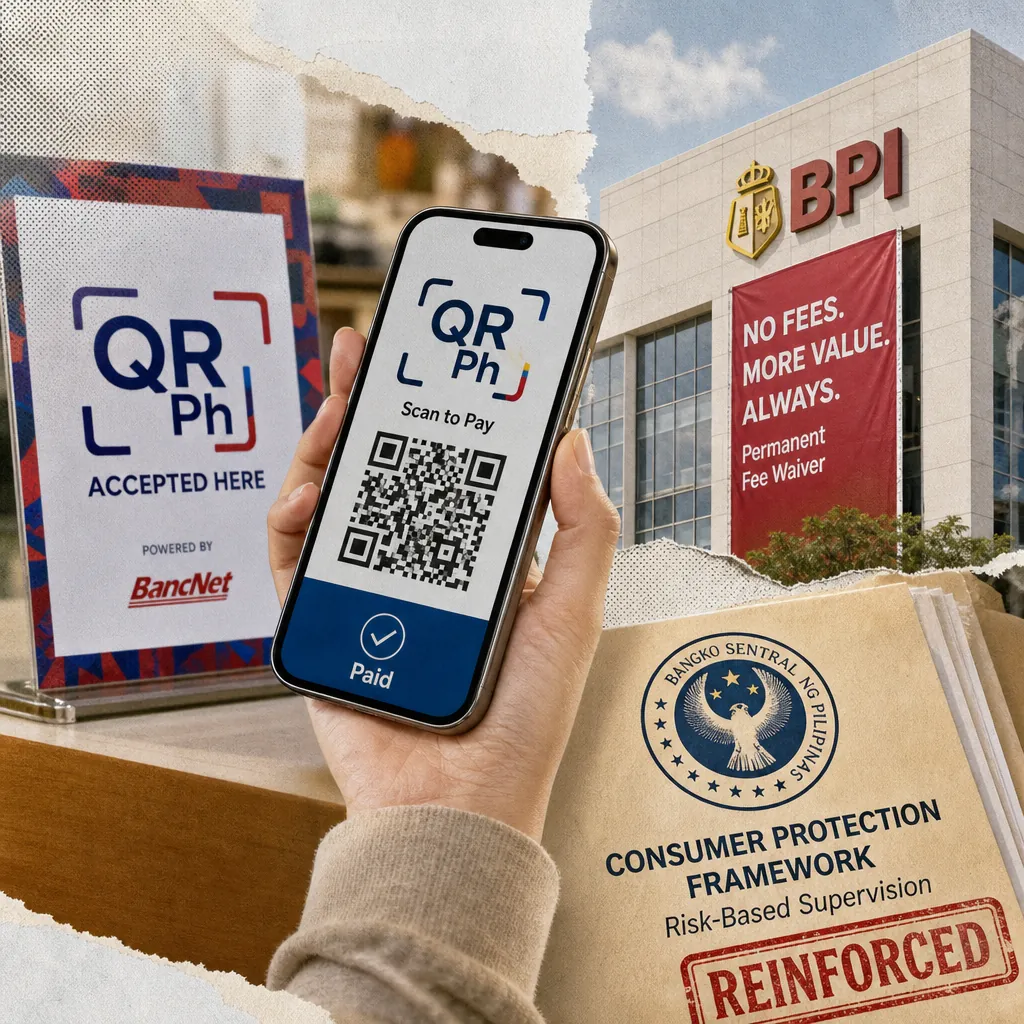
The conversation on July 2, 2026, was defined by a single data point that crystallized a long-anticipated shift: QR Ph, the national QR code standard, now accounts for 55 percent of payment volume on fintech platform PayMongo, up from 16 percent a year ago, overtaking both cards and e-wallets. The milestone, reported by multiple outlets and amplified on social media, validated the Bangko Sentral ng Pilipinas (BSP) digital payments roadmap and set the stage for a day of competing narratives around consumer value, security, and regulatory tightening.
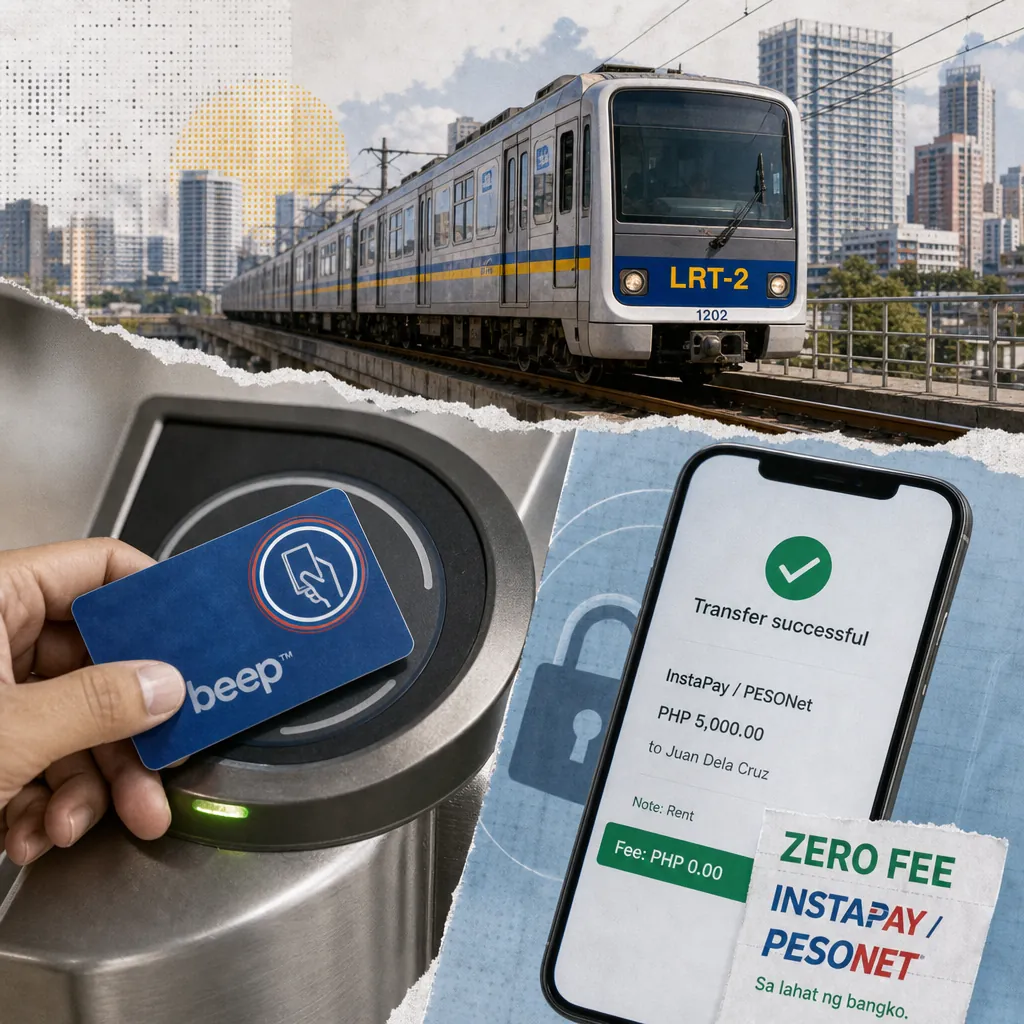
Alongside the QR Ph story, BPI's permanent waiver of InstaPay and PESONet transfer fees, which took full effect on July 1, continued to generate strong positive sentiment on Facebook, with posts receiving hundreds of reactions. But a counter-narrative emerged on Reddit, where users began questioning whether the fee waiver had eroded the value of BPI's Preferred status, which requires a ₱1 million deposit. The thread drew 41 comments in one day, signaling that the move, while popular, had disrupted the bank's premium-tier value proposition.
The BSP itself dominated the news cycle with two major regulatory announcements. It released a draft circular proposing the Financial Consumer Protection Risk-and-Impact Supervisory Model (FCPRISM), a framework that would rate banks and e-money issuers on their potential to harm consumers and subject higher-risk institutions to closer scrutiny. Separately, it issued reporting rules for banks seeking temporary capital relief tied to unrealized losses on government securities, a measure introduced in response to market volatility from the Middle East conflict.
Security concerns layered into the timeline as GCash announced the transition from SMS-based one-time passwords (OTPs) to in-app authentication, following a BSP mandate. Yet Reddit users reported that GCash and Maya still requested SMS OTPs, pointing to implementation gaps. A video interview with cybercrime director Atty. Aboy Ramos, aired by Peanut Gallery Media, described how scammers now use AI and personal data to profile victims, drawing 45 reactions and 6 shares.
The macroeconomic context was reinforced when BSP Governor Eli Remolona Jr. cited the Philippines' elevation to upper-middle-income status as a validation of prudent policymaking. But labor group TUCP challenged the upgrade, arguing that minimum wage earners have little reason to celebrate while struggling with low wages and rising costs.
Key themes
- QR Ph reaches a tipping point – PayMongo data showed QR Ph's share of payment volume jumping from 16% to 55% year-on-year, with cards falling from 38% to 19% and declining in absolute volume. The milestone was covered by BusinessWorld, Philstar, and Inquirer, and shared widely on Facebook by accounts like @phdigitalbanks. The shift validates the BSP's digital payments agenda and signals that QR codes, not cards, are becoming the default payment method for Filipino merchants.
- BPI's fee waiver creates a loyalty dilemma – The permanent zero-fee transfers generated overwhelmingly positive sentiment on Facebook, with posts receiving hundreds of reactions. However, a Reddit thread questioning whether BPI Preferred status was still worth maintaining drew 41 comments, with users weighing the ₱1 million deposit requirement against the now-universal free transfers. This tension between mass-market goodwill and premium customer retention is the most significant reputational risk for BPI in the immediate term.
- BSP proposes risk-based consumer protection ratings – The central bank released a draft circular on the Financial Consumer Protection Risk-and-Impact Supervisory Model (FCPRISM), which would rate institutions on their potential to harm consumers and subject higher-risk entities to closer oversight. The framework, effective January 1, 2027, is issued under the Financial Products and Services Consumer Protection Act and marks a shift toward proactive, risk-based supervision.
- BSP issues capital relief reporting rules – Under Memorandum No. M-2026-032, banks seeking temporary capital relief on unrealized losses from government securities must notify the BSP and submit monthly capital adequacy reports. The relief was introduced to cushion paper losses from the Middle East war-induced surge in bond yields. A BusinessWorld op-ed questioned whether such regulatory flexibility could itself become a source of risk.
- SMS OTP phase-out meets implementation gaps – GCash announced the transition to in-app OTPs, following a BSP mandate to ditch SMS-based authentication. But Reddit users reported that GCash and Maya still requested SMS OTPs, indicating inconsistent rollout. The CTBC Bank page issued a phishing advisory warning customers to never click links in unsolicited emails.
- Competitive banking moves under macro pressure – PNB announced a 20% hike in ATM withdrawal fees for non-cardholders starting September 1, drawing 9 angry reactions on Facebook. RCBC's outlook was cut to 'negative' by Moody's due to asset quality risks from retail exposure. Security Bank celebrated its 75th anniversary with customer rewards, but faced Reddit criticism over aggressive collection calls. EastWest launched Horizons Club for emerging affluent customers.
- Upper-middle-income status sparks debate – President Marcos called the World Bank upgrade a "vote of confidence" in the economy. The stock market rose 0.93% on the news. But labor group TUCP challenged the narrative, saying minimum wage earners see little benefit. BSP Governor Remolona tied the upgrade to prudent policymaking.
- Financial inclusion gains continue – BSP data showed account ownership among Filipinos aged 15-19 rose to 34% in 2025 from 27% in 2021, and 85% of households now have access to a financial account. BPI expanded its branchless banking network to 1,369 partner stores for cash transactions. LANDBANK held an Agrisenso Plus caravan in Albay, reaching over 1,000 farmers and 300 MSMEs.
How the narratives stack
Dominant – Within the captured set, the QR Ph tipping point and BPI's fee waiver dominated both news coverage and social conversation. The PayMongo data was covered by at least three major outlets (BusinessWorld, Philstar, Inquirer) and generated significant social engagement, with @phdigitalbanks' post receiving 111 likes. BPI's fee waiver drew the highest emotional reactions on Facebook, with 272 "love" reactions on one post. These two stories together reinforce the narrative that digital payments are no longer an experiment but the default infrastructure.
Counter-narrative – The BSP's proposed consumer protection ratings introduce a regulatory dimension that could reshape competitive dynamics. Banks with weaker consumer protection practices may face higher supervisory costs, potentially offsetting the goodwill from fee waivers and digital expansion. The Moody's downgrade of RCBC's outlook adds a credit-risk counterpoint to the otherwise positive adoption story.
Emerging – The tension between premium banking value and mass-market inclusion is crystallizing. BPI's fee waiver has made premium status less distinctive, and Reddit users are openly questioning whether the ₱1 million deposit is worth it. Other banks may face similar pressure to either match zero-fee transfers or offer differentiated value to retain high-deposit customers. The BSP's consumer protection framework could accelerate this by making customer outcomes a regulatory metric.
Suppressed – The operational friction stories – failed transactions, application errors, aggressive collection calls – are present in the conversation but receive far less attention than the positive narratives. A Reddit user reported a failed BPI InstaPay transaction where ₱10,000 was deducted but not received by Shopee, with no clear refund timeline. Another described a PESONet failure with no reply from BPI support. These isolated incidents accumulate into a narrative that digital convenience comes with operational friction, which can erode confidence if not addressed.
Platform insights
- Facebook – The primary broadcast channel for announcements and positive sentiment. @phdigitalbanks and @annaofficialph drove volume with fee-waiver and QR Ph stories, while @phbankero acted as the sector's breaking-news feed. Emotional reactions were strongest on feel-good posts: BPI's fee waiver earned 272 "love" reactions, and BanKo's savings interest post got 89 "wow" reactions. The platform amplified positive narratives but also hosted critical comments, as @bilyonaryo_ph's tweet about the upper-middle-income milestone was retweeted only once – suggesting limited engagement on macro news relative to consumer-facing product updates.
- Reddit – Emerged as the forum for nuanced consumer experience and skepticism. Threads like "BPI Preferred Status: Will You Still Keep It?" and "Spaylater payment not reflecting" dissected BPI's operational gaps under the shine of the fee waiver. The financial literacy subreddit saw detailed credit card comparison posts – a pre-approved BPI card query and a Metrobank rejection story each drew 49+ comments, revealing how consumers parse bank criteria and loyalty perks in real time.
- Twitter/X and YouTube – Lower overall volume but high signal. @ancalerts' YouTube segment "Digital Pinoys: QR Ph has officially overtaken cards" packaged the macro-to-micro link, while @colfinancial's post on the Mynt IPO unlocking value for Globe underscored how fintech valuations remain a key investor narrative. These platforms catered more to institutional and market-watcher audiences, contrasting with Facebook's mass-consumer tone.
Key voices and communities
- Digital banking and fintech community pages – Accounts like @phdigitalbanks and @digitalbanksph serve as central hubs for news, promos, and product updates. Their posts frequently receive hundreds of reactions, and they effectively amplify both consumer benefits and institutional initiatives. They consistently frame digital banking innovations as consumer wins aligned with financial inclusion.
- Consumer sentiment drivers (Reddit banking subcommunities) – Reddit users on r/PHCreditCards and r/DigitalBanksPh surface detailed user experiences that shape peer trust. Posts about BPI's preferred status losing its main perk after fee waivers received 15 upvotes and 41 comments, indicating active deliberation. Complaint threads about failed transfers, SIM-swap scams, and aggressive collection calls generate high engagement and signal reputational risk.
- Mainstream business and financial media – Outlets like BusinessWorld, Philstar, Inquirer, and Manila Times set the macroeconomic and regulatory context. Their coverage of the QR Ph dominance, BSP's consumer protection framework, and the upper-middle-income milestone frames the sector's trajectory. These accounts are low-volume but high-trust; a single article can set the narrative for days.
- Official bank and promotional accounts – Institution-run pages (e.g., @rcbcgroup, @securitybank, @metrobankcardph, @wearegcash) drive direct-to-consumer marketing and crisis communication. Their posts often highlight NAFFL promotions, co-branded perks, and security upgrades. Engagement is moderate, but these accounts are authoritative for official updates.
- Scam awareness and cybersecurity voices – Accounts like @peanutgallerymedia and official bank security posts are gaining traction as scam incidents rise. A video interview with the Cybercrime Investigation and Coordinating Center director garnered 45 reactions and 6 shares, indicating strong public appetite for authoritative fraud education.
Narrative streams
QR Ph's tipping point: from 16% to 55% in one year
The most consequential data point of the day came from PayMongo, which reported that QR Ph now accounts for 55% of payment volume on its platform, up from 16% in the first half of 2025 – a more than 510% year-on-year increase. Cards, which led with a 38% share in 2025, fell to 19% and declined 8% in absolute volume. E-wallets held at 21%, while online banking dropped to 4%. The data was based on nearly 10 million completed transactions in the first half of 2026, nearly double the volume from a year earlier, with PayMongo's merchant base expanding 93%.
The milestone was covered by BusinessWorld, Philstar, and Inquirer, with the Inquirer's "BIZ BUZZ" column framing it as a sign that "if you're still reaching for your credit card at checkout, you may already be behind the curve". On Facebook, @phdigitalbanks shared the data with the caption "QR Ph now commands more than half of the payment volume," generating 111 likes and widespread sharing. The Manila Bulletin's business page also highlighted the milestone.
The shift directly tracks with the BSP's digital payments targets, which aim for 60-70% of retail payments to be digital by 2028. The data suggests that QR codes, not cards, are becoming the default payment method for Filipino merchants, driven by low-cost acceptance and the ubiquity of smartphones. For banks and fintechs, the implication is clear: the battle for payment dominance will be fought over QR Ph integration, not card issuance.
BPI's fee waiver: a double-edged sword for loyalty
BPI's permanent waiver of InstaPay and PESONet transfer fees, effective July 1, generated the strongest positive sentiment of the day on Facebook. @annaofficialph declared "PROVEN AND TESTED! TOTOO ANG CHISMIS!" and credited BPI President TG Limcaoco with the move, calling it a prelude to BPI's 175th anniversary. @cagayandeoroinsider posted confirmation with a thumbs-up: "Tried and tested – BPI transfers to other banks and e-wallets are now permanently FREE starting today, July 1". The posts received hundreds of reactions, including 272 "love" reactions on one post.
But by July 2, a counter-narrative emerged on Reddit. User alternative_tea_6910 asked: "Now that BPI InstaPay and PESONet fees are waived for all customers, will you still maintain your Preferred Status with BPI?" The post received 15 upvotes and 41 comments, with users weighing whether the ₱1 million deposit requirement for Preferred status still made sense when the primary perk – free transfers – was now universal. One user wrote: "Honestly, the main perk of BPI Preferred for me is the free Instapay. But now that it's free for everybody, I am contemplating if it's still worth it to park 1M in BPI." Another noted that without the transfer fee benefit, they question the remaining value of the program.
This tension between mass-market goodwill and premium customer retention is the most significant reputational risk for BPI in the immediate term. The fee waiver positions BPI as a customer-centric leader, but it also erodes the exclusivity of its premium tier. BPI's communications team must now reframe the Preferred program's value beyond transfers – emphasizing wealth management, priority service, and exclusive experiences – to prevent high-value customers from churning.
BSP's consumer protection framework: a new regulatory era
The BSP released a draft circular proposing the Financial Consumer Protection Risk-and-Impact Supervisory Model (FCPRISM), a framework that would rate banks and e-money issuers on their potential to harm consumers and subject higher-risk institutions to closer scrutiny. The framework, effective January 1, 2027, is issued under the Financial Products and Services Consumer Protection Act (Republic Act 11765).
Under the proposal, the BSP would first rate institutions by consumer impact – low, moderate, above average, or high – based on the scale, reach, and severity of potential harm from misconduct, operational failures, or weak consumer protection practices. Institutions with greater potential to cause consumer harm would be supervised more intensively. The framework defines consumer harm as any actual or potential financial or nonfinancial harm, including financial loss, unfair treatment, unjustifiable exclusion, and poor value for money.
The draft circular was covered by BusinessWorld, Philstar, Manila Times, and Inquirer, with the Manila Times noting that the model would support a "holistic and forward-looking supervisory assessment" of an institution's ability to safeguard consumer rights. The Philstar article emphasized that the framework would tighten oversight of both banks and non-bank electronic money issuers.
The framework signals a shift toward proactive, risk-based supervision and could reshape competitive dynamics. Banks with weaker consumer protection practices may face higher supervisory costs, potentially offsetting the goodwill from fee waivers and digital expansion. For fintechs like GCash and Maya, which have faced scrutiny over lending practices and scam incidents, the framework adds regulatory pressure to improve consumer outcomes.
Capital relief rules and the risk of regulatory flexibility
The BSP issued Memorandum No. M-2026-032, setting reporting rules for banks seeking temporary capital relief on unrealized losses from peso government securities. The relief, approved under Monetary Board Resolution No. 296, allows banks and quasi-banks to temporarily exclude certain unrealized losses measured at fair value through other comprehensive income (FVOCI) from the computation of regulatory capital. The measure was introduced to cushion paper losses from the Middle East war-induced surge in bond yields.
Under the memorandum, banks seeking the relief must notify their BSP supervising department by email and submit their February 2026 capital adequacy ratio (CAR) report and a breakdown of unrealized gains and losses on government securities. Only banks that use the relief must file monthly CAR reports, starting with the April 30, 2026 reporting period.
A BusinessWorld op-ed questioned whether such regulatory flexibility could itself become a source of risk. The article argued that while the relief is intended to prevent temporary market swings from unduly weakening banks' capital positions, it also reduces transparency and could mask underlying vulnerabilities. The op-ed noted that every major financial crisis reshapes central banking, and the Iran conflict may become another milestone – not because of immediate consequences for the Philippine economy, but because it raises a fundamental question: how far should a central bank go in protecting the financial system from external shocks before regulatory flexibility itself becomes a source of financial risk?
Security upgrades meet implementation gaps
GCash announced the transition from SMS-based one-time passwords (OTPs) to in-app authentication, following a BSP mandate to phase out SMS OTPs. The announcement read: "Simula ngayon, in-app na ang iyong OTP!" (Starting now, your OTP is in-app!). The post received 18 likes. The BSP's mandate requires financial institutions to ditch traditional text-message passwords for more secure authentication methods, as SMS OTPs are vulnerable to SIM-swap attacks.
But Reddit users reported that GCash and Maya still requested SMS OTPs, indicating inconsistent rollout. User emergency_peak8013 posted: "bakit until now nag aask padin ng otp ang gcash and maya ko?" (why until now are GCash and Maya still asking for OTP?). Another user, one-introduction8278, raised doubts about GCash's scam protection: "If i proceeded with this transaction will it cover me?".
The CTBC Bank page issued a phishing advisory warning customers to never click links in unsolicited emails. A video interview with cybercrime director Atty. Aboy Ramos, aired by Peanut Gallery Media, described how scammers now use AI and personal data to profile victims: "They're fighting actually themselves. Not the system, not the scammers". The video drew 45 reactions and 6 shares.
The transition to in-app OTPs is a positive step for security, but the implementation gaps and persistent fraud anxiety create a trust bottleneck. The BSP's mandate provides regulatory cover under which institutions can lead the narrative on security upgrades, but they must ensure consistent rollout to avoid user confusion and backlash.
Competitive banking moves under macro pressure
Several banks announced competitive moves on July 2, painting a picture of institutions jockeying for customer loyalty amid high inflation and BSP rate watchfulness.
PNB announced a 20% hike in ATM withdrawal fees for non-PNB cardholders starting September 1, a move that attracted 9 angry reactions on Facebook. The fee increase is likely to draw regulatory or consumer backlash, especially as BPI moves in the opposite direction with zero-fee transfers.
RCBC's outlook was cut to 'negative' by Moody's Ratings, which affirmed the bank's Baa3 ratings but cited heightened asset quality risks from its large exposure to the retail segment. The debt watcher said there is a moderate likelihood that the government would support the bank if needed. The downgrade adds a credit-risk counterpoint to the otherwise positive adoption story.
Security Bank celebrated its 75th anniversary with customer rewards and priority banking expansion, but faced Reddit criticism over aggressive collection calls. One user wrote: "they don't even have a real-time list or status! There was one time that I already paid around 8am yet I still receive hourly calls from them." This highlights that even positive anniversary messaging can be undermined by poor customer experience touchpoints.
EastWest launched Horizons Club, a new banking program for emerging affluent Filipinos that combines personalized financial support with lifestyle perks. The program reflects a push to deliver more targeted banking experiences for distinct customer segments, moving beyond one-size-fits-all offerings.
The SM Group bagged 24 corporate governance awards from Corporate Governance Asia, with BDO Unibank receiving nine awards. The recognition reinforces the group's reputation for governance and sustainability.
Upper-middle-income status: celebration and skepticism
President Marcos, speaking from Vancouver, called the Philippines' elevation to upper-middle-income status a "vote of confidence" in the country's potential and a validation of the administration's economic policies. The World Bank reported that the Philippines achieved the status fueled by broad-based economic expansion, with the economy posting an average annual GDP of 5.8% over the past five years.
The local stock market advanced for a second consecutive session, with the PSE index jumping 0.93% to 6,125.72. RCBC chief economist Michael Ricafort attributed the rise to the stronger-than-expected June PMI reading, improving geopolitical sentiment, and a more stable macro backdrop.
But labor group TUCP challenged the narrative, saying millions of minimum wage earners have little reason to celebrate while they continue to struggle with low wages, rising living costs, heavy taxes, and inadequate public services. The group said there can be no genuine economic growth if only the wealthiest benefit while the poor and middle class continue to fall behind.
BSP Governor Remolona tied the upgrade to prudent policymaking, noting that the central bank's careful adjustment of monetary policy – including reducing the target reverse repurchase rate to 4.50% – helped keep inflation in check and supported economic growth.
Conversation trajectory
- BPI's zero-fee transfer move triggers a revaluation of loyalty and premium banking value – The permanent waiver of InstaPay and PESONet fees has immediately sparked discussions about the worth of maintaining a ₱1 million balance for BPI Preferred status. Engagement on this topic is high (the Reddit thread alone has 41 comments in one day), indicating that within 2-4 weeks, other banks will likely face pressure to either match the zero-fee model or offer differentiated value to retain high-deposit customers. BPI itself is using the narrative to foreground its 175th anniversary positioning, but the emerging risk is that customers may begin treating all banks as interchangeable for daily transactions, compressing loyalty metrics across the sector.
- QR Ph's leap from 16% to 55% business adoption signals an irreversible cashless shift – PayMongo's midyear data shows QR Ph has overtaken both cards and e-wallets combined as the most accepted payment method among businesses. Within the next 3-6 months, expect intensified competition between banks and fintechs over who controls the QR Ph experience, especially as the BSP's 2028 target of 60-70% digital retail payments draws closer, and as merchant acquisition strategies pivot from acceptance to loyalty integration.
- The SMS-OTP phase-out creates a short-term trust bottleneck but long-term security win – GCash's rollout of in-app OTPs, following the BSP mandate, is generating a wave of user confusion and support queries. This transition will likely cause a 4-6 week period of elevated customer service contacts and social media complaints, but it also presents a communication window for banks and e-wallets to position themselves as proactive protectors.
- Customer friction points are eroding brand trust in pockets – Posts detailing failed transfers, application errors, and card declines are accumulating across Reddit, indicating that operational excellence is becoming a competitive differentiator. Over the next 2-3 months, banks that proactively acknowledge and publish transparency on resolution times will fare better than those that go silent.
Key trigger events that will reshape this conversation include:
- BPI's 175th anniversary on August 1, 2026 – This will likely be used to wrap the zero-fee move, store expansion, and Apple Pay readiness into a single grand narrative, forcing competitors to announce their own strategic responses within weeks.
- Mynt (GCash) IPO news flow – COL Financial's note on unlocking Globe's stake value signals that institutional discussions are intensifying. Expect heightened media coverage and social chatter around GCash's profitability, regulatory compliance, and competitive positioning.
- BSP's next monetary board meeting (likely late July/early August) – With the Philippines now classified as an upper-middle-income economy, Governor Remolona's statements on inflation and macro stability will directly impact consumer sentiment on borrowing and saving.
Response guidance
Platform-specific approaches:
- Facebook – Leverage high-engagement posts about BPI's fee waiver to amplify customer testimonials and showcase real savings stories. Share infographics that compare old fees versus new ₱0 cost. Proactively respond to negative feedback threads around transaction failures with a visible customer support presence that acknowledges the problem and provides a clear resolution timeline.
- Reddit – Address the emerging "Preferred status" dilemma head-on with a dedicated thread or AMA-style response that details remaining benefits beyond free transfers. Provide clear, empathetic guidance for frustrated applicants and cardholders. Engage in discussions about QR Ph dominance, scam protection, and in-app OTP migration by sharing educational content that strengthens the brand's credibility as a security-first institution.
- Twitter – Use the upper-middle-income milestone and BSP governor's statement as a news hook to connect bank innovations to national economic progress. Amplify security upgrades like GCash's in-app OTP to reinforce the industry's collective effort against scams. Respond to individual complaints about app outages or failed transfers with a rapid service escalation message.
Key messages:
- "We are making banking more affordable and accessible for every Filipino – permanent free transfers and expanded partner store networks are just the beginning."
- "Your security is our priority: we are leading the shift to in-app authentication and continuously upgrading our systems to protect you from phishing and SIM-swap attacks."
- "Financial inclusion is not just about technology – it is about meeting customers where they are, whether through microfinance, wellness programs, or lending partnerships."
- "We listen and act: from fee waivers to faster refund processing, every update is driven by customer feedback and a commitment to a better banking experience."
Sensitive topics to navigate:
- Preferred status devaluation after free transfers – Customers questioning whether maintaining ₱1 million in BPI is still worthwhile. Balanced approach: acknowledge the concern, then highlight remaining benefits (priority service, exclusive investment offers, relationship managers) without dismissing the emotion.
- Transaction failure and refund delays – Posts about failed PESONet/InstaPay payments and delayed refunds create immediate reputational risk. Approach: provide transparent timelines (1-2 business days), explain the investigation process, and offer direct escalation paths to restore trust.
- Scam and phishing anxiety – Heightened sensitivity around SMS-based OTP vulnerabilities and SIM-swap attacks. Approach: avoid defensive language; instead, proactively educate customers on exactly what steps the bank is taking and what behaviors customers should adopt.
Response priorities:
- Reinforce the value of the free transfer policy across all platforms while addressing concerns about Preferred status. Create a dedicated "Benefits of Banking with Us" checklist that includes fee-free transfers, expanded store network, and security upgrades.
- Implement a fast-track resolution process for transaction failure reports. Publish a clear escalation workflow on the website and share it in comment threads so affected users know exactly whom to contact and what timeline to expect.
- Proactively educate on security upgrades through simple, scannable explainers on Facebook and short video clips on Twitter. Tie these to the BSP mandate for stronger authentication to build credibility.
See the full picture behind today's signals.
This report draws from Media Meter's MediaWatch, our real-time monitoring engine tracking 2,470+ Philippine sources across print, broadcast, digital, and social. Explore how the platform turns raw coverage into decision-grade intelligence, then see how it's configured for teams like yours — whether you're in PR agencies, corporate comms, government, or marketing.
Want more? Browse our Report Library for sector and crisis intelligence, or request a demo and we'll have your brand set up before the call.
Want this kind of intelligence on your brand?
This brief is built on the same MediaWatch methodology that runs continuously across every brand we monitor. See your competitive landscape, Impact Score, and narrative trajectory in a 30-minute demo.