Telco rivals unite against illegal networks as digital transaction costs draw fire
Philippine telco leaders Converge, PLDT, and Globe set aside competition to jointly combat cable theft and unauthorized internet sales, while Finance Secretary Frederick Go pushes to slash high digital transaction fees. The day's conversation also features Globe At Home's personalized fiber prepaid offers and BPI's expanded branchless banking.
The Philippine telecommunications conversation on July 1, 2026, was dominated by two distinct but interconnected narratives: industry leaders uniting against infrastructure theft and a high-level push to reduce digital transaction costs. The day's most significant development came from a rare show of solidarity among rival telco executives, who met to discuss protecting network assets from illegal operators. Meanwhile, Finance Secretary Frederick Go publicly declared his "obsession" with lowering the country's high digital payment fees, aligning with an International Monetary Fund report that flagged the Philippines' fragmented financial infrastructure as a key driver of costs. The conversation also featured product launches from Globe At Home and ASUS, and a notable expansion of BPI's branchless banking network, underscoring the broader push for financial inclusion.
On the social media front, the day's conversation was overwhelmingly dominated by sports and entertainment content, with no direct discussions of telco service quality, outages, or customer complaints captured in the monitoring sample. The only telco brand mentions appeared incidentally through PBA team names—"TNT Tropang 5G" and "Converge FiberXers"—in roster announcements that generated moderate engagement (hundreds of likes) but no substantive discussion of network performance or pricing. This absence of negative sentiment is a temporary blind spot rather than a strategic advantage, as it does not reflect actual customer satisfaction. The high engagement on unrelated sports content (e.g., WNBA Commissioner's Cup posts drawing over 2,000 total reactions) suggests that sports audiences are highly responsive, presenting an opportunity for telco brands to leverage their team sponsorships for active storytelling rather than passive naming.
Key themes
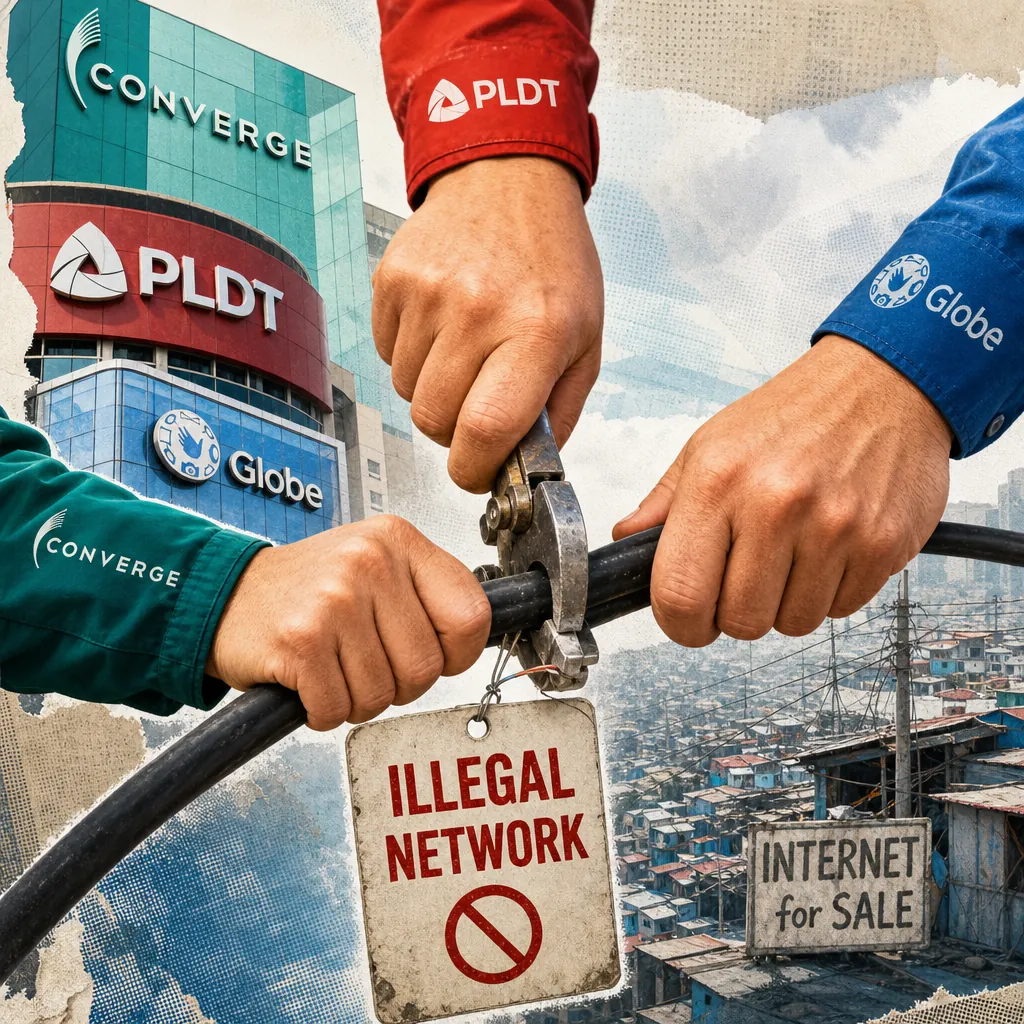
- Telco rivals unite against illegal networks. Converge CEO Dennis Anthony Uy revealed on Facebook that he had met with fellow industry leaders to discuss protecting telco assets from cable theft and unauthorized internet sales. Uy called for treating these acts as economic sabotage and urged regulators to find and prosecute perpetrators. The meeting signals a rare collaborative front among competitors—Converge, PLDT, and Globe—to address a common threat that undermines infrastructure investment. [1]
- Finance Secretary targets high digital transaction costs. Frederick Go described high digital transaction fees as his "obsession," citing local charges as high as P50 compared to near-zero fees in neighboring Asian countries. He attributed the problem to the Philippines' fragmented financial infrastructure, echoing an International Monetary Fund report. Go's push for reforms aims to align fees across public and private payment channels and make digital payments "fast, secure, convenient, and affordable." [2]
- Globe At Home launches personalized fiber prepaid offers. Globe Telecom introduced "GFiber Prepaid Just For You," a tailored fiber connectivity plan that analyzes customer loading patterns and preferences to offer personalized promos. The initiative targets Filipino families with varying internet needs and budgets, offering more affordable options for budget-conscious households and faster speeds for expanding digital demands. [3]
- BPI expands branchless banking network. Bank of the Philippine Islands announced that its "May BPI Dito" network now covers over 7,000 retail partner stores, including groceries, pharmacies, and gas stations. Of these, 1,369 outlets offer cash deposit and withdrawal services. BPI President TG Limcaoco emphasized that the expansion consolidates account opening, deposits, and withdrawals under a single platform, widening financial access. [4]
- AI data center boom requires renewable energy. IBM Consulting's Asia-Pacific leader for strategic engagements, Arun Biswas, stressed that renewable energy and battery storage are critical to meeting the Philippines' rising electricity demand from AI-driven data centers. He urged that most data center power come from renewables, with storage systems to address intermittency and maintain grid reliability. [5]
- ASUS launches AI-powered business laptop in the Philippines. ASUS unveiled the ExpertBook Ultra, a sub-1kg AI business flagship, at a launch event attended by over 1,200 industry leaders. The laptop delivers 50W of power and is positioned as a mission-critical productivity hub for modern professionals. ASUS Co-CEO Samson Hu made his inaugural visit to the Philippines to lead the launch. [6]
- GoreBox banned in the Philippines after school violence link. The mobile and PC game GoreBox was removed from Google Play Store and Steam in the Philippines following government pressure. The Cybercrime Investigation and Coordinating Center linked the game to a school shooting incident in Tacloban City. The Department of Information and Communications Technology welcomed the swift action, citing a safer online environment for youth. [7]
- Fuel marker safety questioned after Kenya findings. Consumer groups raised concerns about the safety of fuel markers supplied by SICPA, the same company contracted for the Philippines' fuel-marking program. Tests in Kenya found "dangerous compounds" in fuel samples, prompting calls for independent testing in the Philippines. The consortium of SGS Philippines and SICPA SA holds a five-year contract for the program. [8]
How the narratives stack
Dominant: The dominant narrative within the captured news set is the telco industry's united front against illegal networks, as reported by Philstar Online. This story carries significant weight because it represents a rare instance of competitors—Converge, PLDT, and Globe—collaborating on a shared problem. The coverage value of the article is estimated at ₱190,404 in advertising-equivalent value, reflecting its prominence in the day's business news. The narrative positions infrastructure theft and unauthorized internet sales as acts of economic sabotage, framing the issue as a threat to the entire industry's investment in network expansion. [1]
Counter-narrative: A counter-narrative emerges from Finance Secretary Frederick Go's push to lower digital transaction costs, which implicitly criticizes the banking and financial services sector for high fees. While not directly targeting telcos, the narrative highlights the Philippines' fragmented financial infrastructure—a system in which telco-led mobile money services (e.g., GCash, PayMaya) operate alongside traditional banks. Go's framing of high fees as "robbery on the highway done by our greedy banks" [2] shifts blame away from telcos and onto the banking sector, potentially deflecting scrutiny from mobile money transaction costs that also affect consumers.
Emerging: An emerging narrative is the intersection of AI data center growth and renewable energy requirements. IBM Consulting's call for renewables to power data centers [5] signals a future policy and investment challenge for the Philippines, which currently relies heavily on fossil fuels. This narrative could gain traction as more hyperscale data centers enter the market, increasing electricity demand and putting pressure on the grid. Telcos and data center operators may face growing expectations to source clean energy.
Suppressed: A suppressed story within the captured set is the absence of any consumer-facing discussion about telco service quality, outages, or pricing. Despite the industry's collaborative announcement and product launches, no articles or social posts addressed common pain points such as internet speed, reliability, or customer service. This silence may reflect a monitoring gap or a genuinely quiet period, but it also suggests that the industry's public narrative is currently controlled by corporate announcements rather than consumer experiences. The lack of negative sentiment is not necessarily positive—it may indicate that dissatisfied customers are not being heard in this sample.
Platform insights
- Facebook: The dominant platform for telco-related brand mentions, driven by Converge CEO Dennis Anthony Uy's personal post about the industry meeting. Facebook also hosted the highest engagement on unrelated sports content (e.g., WNBA posts with hundreds of likes and shares). The platform's strength lies in its ability to amplify executive voices and foster community discussion around team sponsorships. However, no direct telco service complaints or customer interactions were captured, suggesting that Facebook is currently a one-way broadcast channel for corporate messaging rather than a customer service hub.
- YouTube: Limited telco-specific activity, but sports content featuring team names (e.g., Converge FiberXers) attracted modest viewership (15–374 views per video). The platform offers potential for short-form content that ties brand values to sports performance, such as behind-the-scenes clips or network reliability demonstrations during live games. No telco-related comment threads were observed.
- Reddit and other forums: No telco-specific discussions were captured in the monitoring sample. The absence of activity on platforms like r/InternetPH suggests that the day's conversation did not include the usual outage reports or technical queries. This could indicate a quiet period or a data gap; proactive monitoring of these forums remains important for early detection of service issues.
Key voices and communities
- Telco executives and industry leaders. Converge CEO Dennis Anthony Uy emerged as the primary voice, using his personal Facebook account to share details of the industry meeting. His framing of cable theft as "economic sabotage" sets a confrontational tone toward illegal operators. Other executives from PLDT and Globe are implied participants but did not make public statements in the captured set. This group drives the dominant narrative of industry unity.
- Government officials and regulators. Finance Secretary Frederick Go is a key voice advocating for lower digital transaction costs, aligning with the IMF's findings. His public "obsession" signals potential regulatory action. The Cybercrime Investigation and Coordinating Center (CICC) and the Department of Information and Communications Technology (DICT) are also active, particularly in the GoreBox ban, positioning themselves as protectors of online safety.
- Consumer groups and advocates. The Consumers Federation of Kenya (COFEK) indirectly influences the Philippine conversation by raising concerns about fuel marker safety. While not a domestic voice, their findings prompt questions about the SICPA contract in the Philippines. Local consumer groups may amplify these concerns in the coming days.
- Technology media and bloggers. Outlets like LionhearTV, BusinessWorld, and Enjoying Wonderful World cover product launches (Globe At Home, ASUS, vivo, Samsung) and industry analysis (IBM Consulting). These voices shape the narrative around innovation and digital transformation, often with a positive, promotional tone.
- Sports fans and PBA enthusiasts. Although not directly discussing telco topics, this community generates the highest engagement on posts mentioning TNT Tropang 5G and Converge FiberXers. Their passive brand association could become active if service issues affect game streaming or if team performance is linked to network quality.
Narrative streams
Telco industry unites against infrastructure theft
On July 1, Converge ICT Solutions Inc. CEO and co-founder Dennis Anthony Uy posted on Facebook that he had sat down with fellow industry leaders to discuss protecting telco assets from illegal networks and infrastructure theft. The meeting focused on how the public and private sectors can collaborate to dismantle illegal networks that disadvantage legitimate investors. Uy specifically called for cable theft and the sale of unauthorized internet connections to be treated as acts of economic sabotage, and urged regulators to find and prosecute perpetrators. [1]
The Philstar Online article reporting the meeting carried an estimated advertising-equivalent value of ₱190,404, indicating significant editorial placement. The story positions the collaboration as a response to news that new players are entering the market, suggesting that incumbent telcos are proactively defending their infrastructure investments against both illegal operators and potential competitors.
This narrative stream is significant because it marks a departure from the usual competitive dynamics among the three major telcos—PLDT, Globe, and Converge. By uniting against a common enemy, they signal that infrastructure theft has reached a level that threatens the entire industry's viability. The framing of unauthorized internet sales as "economic sabotage" elevates the issue from a regulatory nuisance to a national economic concern, potentially paving the way for stricter penalties and enforcement.
For the sector, this collaboration could lead to joint advocacy for stronger anti-theft laws, shared intelligence on illegal networks, and coordinated reporting mechanisms. However, it also raises questions about how the telcos will balance cooperation with competition in other areas, such as pricing and service quality. The absence of consumer voices in this narrative—no articles or posts address how illegal networks affect end-users—suggests that the industry's messaging is currently focused on protecting its own investments rather than customer interests.
Finance Secretary's crusade against high digital transaction costs
Finance Secretary Frederick Go declared that lowering the Philippines' high digital transaction costs is his "obsession," citing local fees as high as P50 compared to near-zero charges in neighboring Asian countries. In an article published by the Manila Times Online (estimated AVE: ₱495,040), Go said, "Our objective is simple: digital payments should be fast, secure, convenient, and affordable." He attributed the high costs to the country's fragmented financial infrastructure, echoing an International Monetary Fund report that flagged the issue. [2]
Go's comments directly challenge the banking sector, which he accused of charging excessive fees. The article's headline—"Secretary Go's latest 'obsession'"—and its characterization of fees as "robbery on the highway done by our greedy banks" signal a confrontational stance. This narrative stream is important because it aligns with broader government efforts to promote digital payments and financial inclusion, as seen in the BPI branchless banking expansion and Globe At Home's personalized fiber offers.
For telcos, the push to lower digital transaction costs has mixed implications. On one hand, lower fees could accelerate adoption of mobile money services like GCash and PayMaya, which are often tied to telco networks. On the other hand, if the government targets all digital payment fees—including those charged by mobile money platforms—telco-affiliated services may face margin pressure. The narrative also highlights the need for interoperability and infrastructure sharing, which could benefit consumers but require investment from industry players.
The IMF's involvement adds weight to Go's argument, suggesting that international financial institutions view the Philippines' high costs as a barrier to economic growth. This could lead to regulatory reforms, such as mandating fee caps or promoting open banking standards. The sector should prepare for potential policy changes that could reshape the digital payments landscape.
Globe At Home launches personalized fiber prepaid plans
Globe Telecom introduced "GFiber Prepaid Just For You," a tailored fiber connectivity plan that uses customer loading patterns and preferences to offer personalized promos. The initiative, covered by LionhearTV (estimated AVE: ₱106,800), aims to provide reliable fiber connectivity suited to each household's unique needs and budget. New customers receive special onboarding offers, while existing customers are encouraged to explore faster speeds through tailored promos. [3]
This product launch is part of Globe's strategy to differentiate in the prepaid fiber market, which has become increasingly competitive with Converge and PLDT also offering prepaid options. By emphasizing personalization, Globe is attempting to move beyond one-size-fits-all pricing and address the diverse needs of Filipino families—from budget-conscious households to heavy data users.
The narrative stream is notable for its focus on flexibility and affordability, key concerns for consumers in a price-sensitive market. However, the article does not disclose specific pricing or speed tiers, making it difficult to assess how the offers compare to competitors. The launch also comes amid the broader conversation about high digital costs, positioning Globe as a provider that listens to customer needs—a subtle counterpoint to the Finance Secretary's criticism of the financial sector.
BPI expands branchless banking to over 7,000 partner stores
Bank of the Philippine Islands announced that its "May BPI Dito" branchless banking network now covers more than 7,000 retail partner stores, including groceries, pharmacies, and gas stations. Of these, 1,369 outlets offer cash deposit and withdrawal services. BPI President TG Limcaoco said the expansion consolidates account opening, deposits, and withdrawals under a single platform, widening financial access. The story was covered by both the Manila Times Online (AVE: ₱183,680) and BusinessWorld Online (AVE: ₱261,440). [4]
This development is significant for the telco sector because it demonstrates the growing convergence of financial services and retail networks—a trend that telcos are also pursuing through mobile money agents. BPI's partnership with 34 businesses to create mini-branch hubs mirrors the agent banking model used by GCash and PayMaya, blurring the lines between traditional banking and fintech.
For telcos, BPI's expansion represents both competition and opportunity. As banks extend their reach into retail, they may reduce the need for telco-led mobile money services. However, telcos could also partner with banks to offer bundled services, such as data plans that include banking features. The narrative stream reinforces the importance of last-mile connectivity—both digital and physical—in driving financial inclusion.
AI data center boom requires renewable energy
IBM Consulting's Asia-Pacific leader for strategic engagements, Arun Biswas, told BusinessWorld that renewable energy and battery storage are critical to meeting the Philippines' rising electricity demand from AI-driven data centers. He urged that most data center power come from renewables, with storage systems to address intermittency. The article (estimated AVE: ₱176,128) highlights the tension between the country's growing digital infrastructure needs and its reliance on fossil fuels. [5]
This narrative stream is emerging as a key policy and investment issue. As telcos and cloud providers build more data centers to support AI workloads, they will face pressure to source clean energy. The Philippines currently has limited renewable energy capacity, and grid reliability remains a concern. Biswas's comments suggest that data center operators may need to invest in their own renewable generation or storage solutions, adding to capital costs.
For the telco sector, this narrative intersects with the broader push for digital transformation. Telcos that can demonstrate a commitment to sustainability—through renewable energy procurement or carbon offset programs—may gain a competitive advantage in attracting environmentally conscious enterprise customers. However, the high cost of renewables could also increase operational expenses, potentially leading to higher prices for consumers.
GoreBox banned after school violence link
The mobile and PC game GoreBox was removed from Google Play Store and Steam in the Philippines following government pressure. The Cybercrime Investigation and Coordinating Center (CICC) linked the game to a school shooting incident in Tacloban City on June 22. The Department of Information and Communications Technology (DICT) welcomed the swift action, citing a safer online environment for youth. The story was covered by Philstar Online (estimated AVE: ₱118,473.6) and Manila Bulletin Online (AVE: ₱108,976). [7]
While not directly a telco story, the GoreBox ban has implications for internet governance and content regulation. The government's ability to pressure platforms like Google and Steam to remove content raises questions about censorship and the role of telcos as gatekeepers. Telcos may face increased pressure to block or filter content deemed harmful, potentially expanding their responsibilities beyond connectivity.
The narrative also intersects with the broader conversation about online safety and cybercrime, which includes phishing scams (as highlighted by actress Kyline Alcantara's experience) and school violence. Telcos could be called upon to implement technical measures to prevent access to harmful content, adding to their regulatory compliance burden.
Conversation trajectory
Over the next 4–6 weeks, the telco conversation is likely to be shaped by several factors. First, the industry's united front against illegal networks may lead to concrete policy proposals or joint enforcement actions. If the telcos succeed in pushing for stricter penalties, the narrative could shift from collaboration to implementation, with measurable outcomes such as arrests or network recoveries. Conversely, if no visible action follows, the story may fade, and the collaboration could be seen as symbolic.
Second, Finance Secretary Go's push to lower digital transaction costs could gain momentum, especially if the IMF or other international bodies amplify the issue. The Bangko Sentral ng Pilipinas (BSP) may be prompted to issue new regulations on digital payment fees, which would directly affect mobile money services. Telcos with fintech arms should prepare for potential margin compression and consider diversifying revenue streams.
Third, the product launches from Globe At Home and ASUS, along with BPI's branchless banking expansion, suggest that the market is moving toward personalized, accessible digital services. This trend is likely to continue, with more tailored offerings from telcos and banks. The key trigger event would be a major outage or service disruption that shifts the conversation from innovation to reliability.
Finally, the GoreBox ban and the broader discussion about online safety could lead to new content regulation policies. Telcos may be required to implement blocking mechanisms or cooperate with authorities in takedown requests. The next trigger event would be another high-profile incident of school violence linked to online content, which could accelerate regulatory action.
Trigger events to watch:
- A major telco outage or service disruption that draws consumer complaints.
- A regulatory announcement from the BSP or Department of Finance on digital transaction fees.
- A new partnership or joint venture among telcos to combat infrastructure theft.
- A second school violence incident linked to online games, prompting broader content restrictions.
Response guidance
For communicators in the Philippine telecommunications sector, the day's conversation offers several strategic takeaways. First, the industry's collaborative stance against illegal networks provides a strong narrative of unity and responsibility. Companies should amplify this message through executive social media posts and media statements, emphasizing the shared commitment to protecting infrastructure and ensuring fair competition. However, they should avoid framing the issue solely as a business concern; connecting it to consumer benefits—such as improved service quality and network reliability—will resonate more broadly.
Second, the Finance Secretary's criticism of high digital transaction costs presents both a risk and an opportunity. Telcos with mobile money services should proactively communicate their efforts to reduce fees or offer value-added services that justify costs. Highlighting investments in security, fraud prevention, and customer support can help differentiate their offerings from cheaper but less secure alternatives. Engaging with policymakers to shape any potential fee regulations will be crucial.
Third, the product launches and branchless banking expansion underscore the importance of personalization and accessibility. Telcos should continue to develop tailored plans and partnerships that address specific customer segments, such as students, families, and small businesses. Messaging should focus on flexibility, affordability, and the tangible benefits of connectivity—such as access to education, healthcare, and financial services.
Fourth, the GoreBox ban and online safety concerns highlight the need for telcos to position themselves as responsible stewards of the internet. Companies should support government efforts to combat cybercrime and harmful content, while also advocating for balanced regulations that do not stifle innovation or infringe on privacy. Public statements should emphasize collaboration with authorities and a commitment to protecting users, especially minors.
Finally, the absence of consumer complaints in the captured sample should not be mistaken for satisfaction. Telcos should maintain robust social listening and customer feedback channels to detect emerging issues early. Proactive communication about network improvements, outage resolutions, and customer service enhancements will help build trust and prevent negative sentiment from going viral.
Sensitive topics to navigate:
- Avoid directly criticizing the Finance Secretary's push for lower fees; instead, acknowledge the goal and highlight industry efforts to reduce costs.
- Do not use the industry collaboration as a platform to attack competitors; focus on the shared threat of illegal networks.
- When discussing the GoreBox ban, emphasize child safety and cooperation with authorities, not censorship.
- Be cautious about making promises on renewable energy adoption without concrete plans, as this could invite scrutiny.
See the full picture behind today's signals.
This report draws from Media Meter's MediaWatch, our real-time monitoring engine tracking 2,470+ Philippine sources across print, broadcast, digital, and social. Explore how the platform turns raw coverage into decision-grade intelligence, then see how it's configured for teams like yours — whether you're in PR agencies, corporate comms, government, or marketing.
Want more? Browse our Report Library for sector and crisis intelligence, or request a demo and we'll have your brand set up before the call.
Want this kind of intelligence on your brand?
This brief is built on the same MediaWatch methodology that runs continuously across every brand we monitor. See your competitive landscape, Impact Score, and narrative trajectory in a 30-minute demo.