Undas 2026: Transport Crackdowns and Free Rides
Philippine transport agencies tighten anti-colorum and drunk-driving enforcement ahead of Undas 2026, deploy 14,000 personnel in the Ilocos region, and offer free MRT-3 rides to children, while a bus operator vows uninterrupted service after a terminal reprimand.
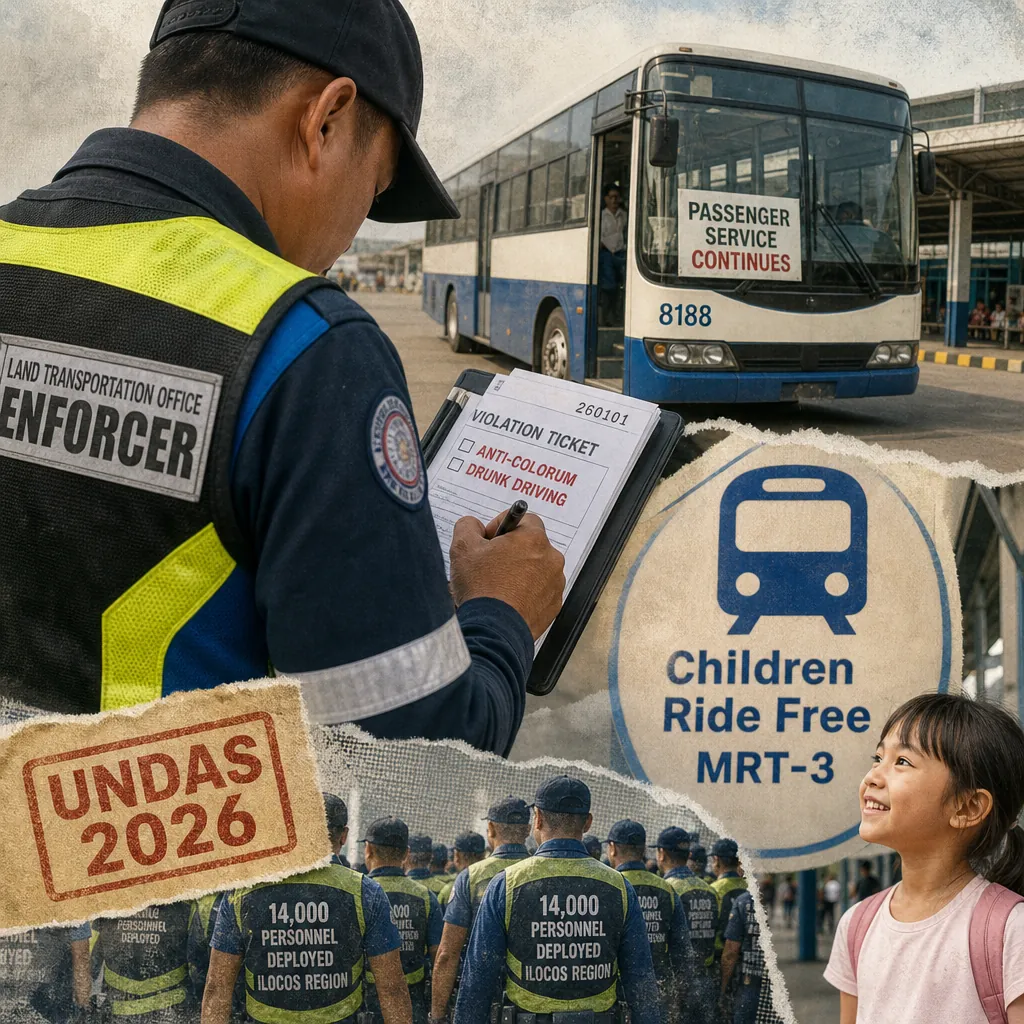
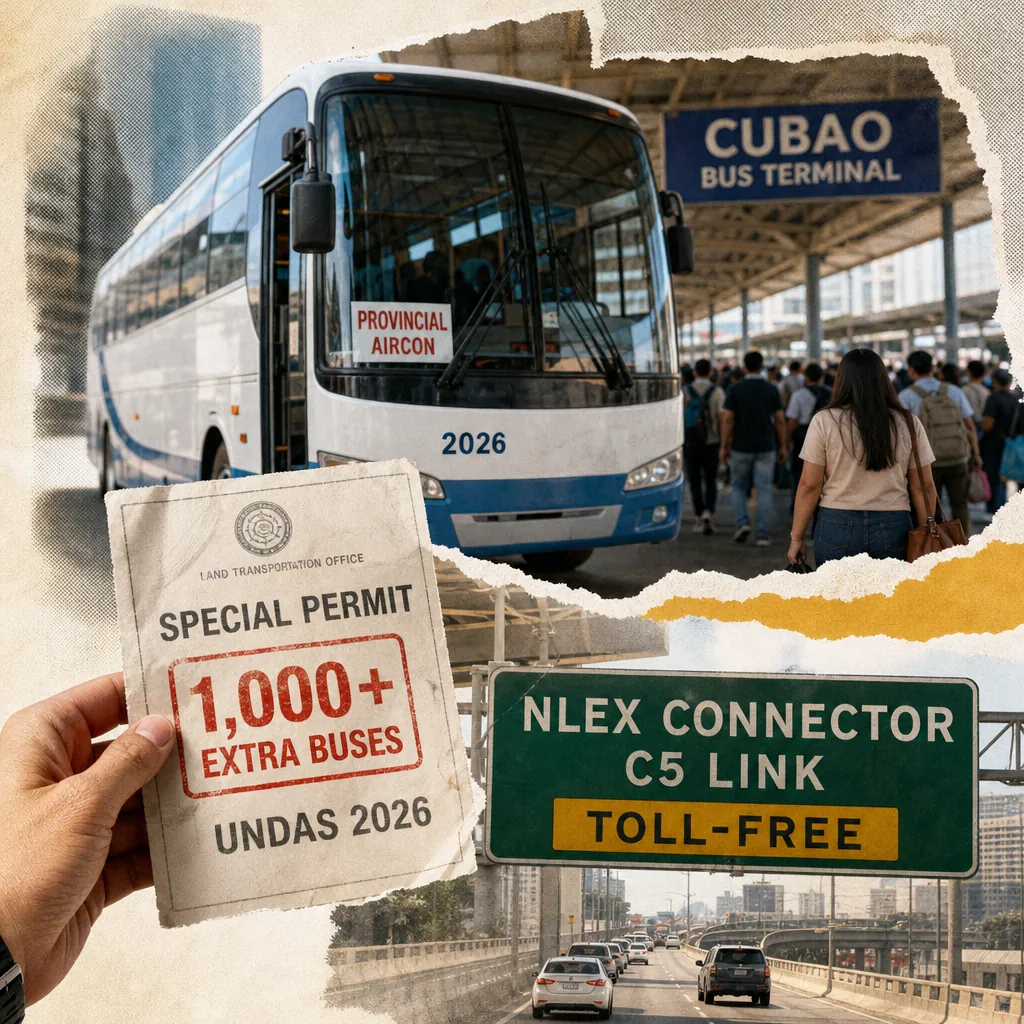
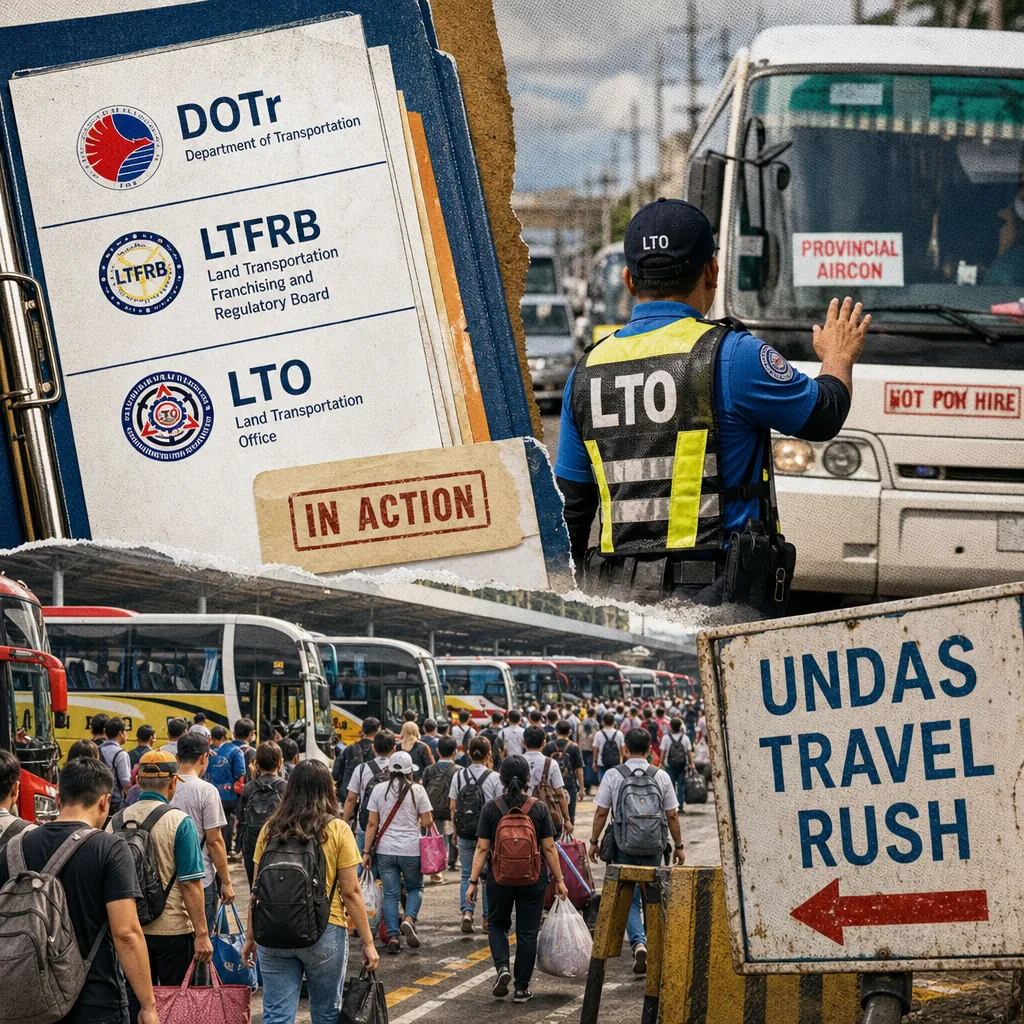
The Philippines' transport sector entered the Undas 2026 travel period with enforcement, not expansion, as its main theme. All Saints' Day and All Souls' Day fall on November 1 and 2, and the days before them are among the busiest for intercity road travel in the country. In the items captured for this snapshot, the Department of Transportation (DOTr) and its attached agencies spent the eve of the holiday tightening rules on who may carry passengers and under what conditions. The Manila Times reported that the DOTr, the Land Transportation Office (LTO), the Land Transportation Franchising and Regulatory Board (LTFRB), and the Highway Patrol Group had stepped up flagging of suspected colorum vehicles — private cars or vans used for hire without a franchise, or with an expired one 20. The Philippine Star's Freeman edition carried an editorial backing the LTO's plan to make license revocation automatic for motorists who exceed legal alcohol limits starting November 15, a step up from the previous penalty of suspension 39. In the Ilocos region, the Inquirer reported that around 14,000 security and emergency personnel would be deployed across cemeteries, major thoroughfares, and tourist destinations for the holiday 24.
The enforcement push has a counterpart in service news. The DOTr-MRT-3 announced free rides for children 17 and under on Wednesday, November 4, from 7:00 to 9:00 a.m. and 5:00 to 7:00 p.m., as part of National Children's Month 41. Ohayami Trans, a bus operator serving northern routes, said its schedules would run without interruption despite a public reprimand from DOTr Secretary Vince Dizon over the condition of its Manila terminal, which he inspected ahead of the Undas travel period and found cramped, with a men's restroom lacking functional toilet bowls 5. A Philippine Star column welcomed Dizon's return to the DOTr, announced by Malacañang on October 26, and listed his priorities as easing daily commutes, shortening LTO queues, eliminating fixers, and accelerating mass transport projects 40.
Two stories sit underneath the holiday logistics. In Zamboanga, 22 public utility vehicle drivers tested positive for illegal drug use during a surprise operation at transport terminals, out of 1,213 drivers and conductors tested 33. And in Quezon province, a pedestrian and a motorcyclist died in separate road accidents on Friday 3. Both stories point at the same underlying question the enforcement measures are meant to answer: how much of road safety depends on the conduct of drivers, and how much on the condition of the vehicles and terminals they operate from.
Key themes
- Anti-colorum enforcement tightens as private vehicles are flagged during Undas. The DOTr, LTO, LTFRB, and Highway Patrol Group stepped up checks on suspected colorum vehicles, and a transport lawyer reminded private owners of the line between lending a car and operating it for hire 20.
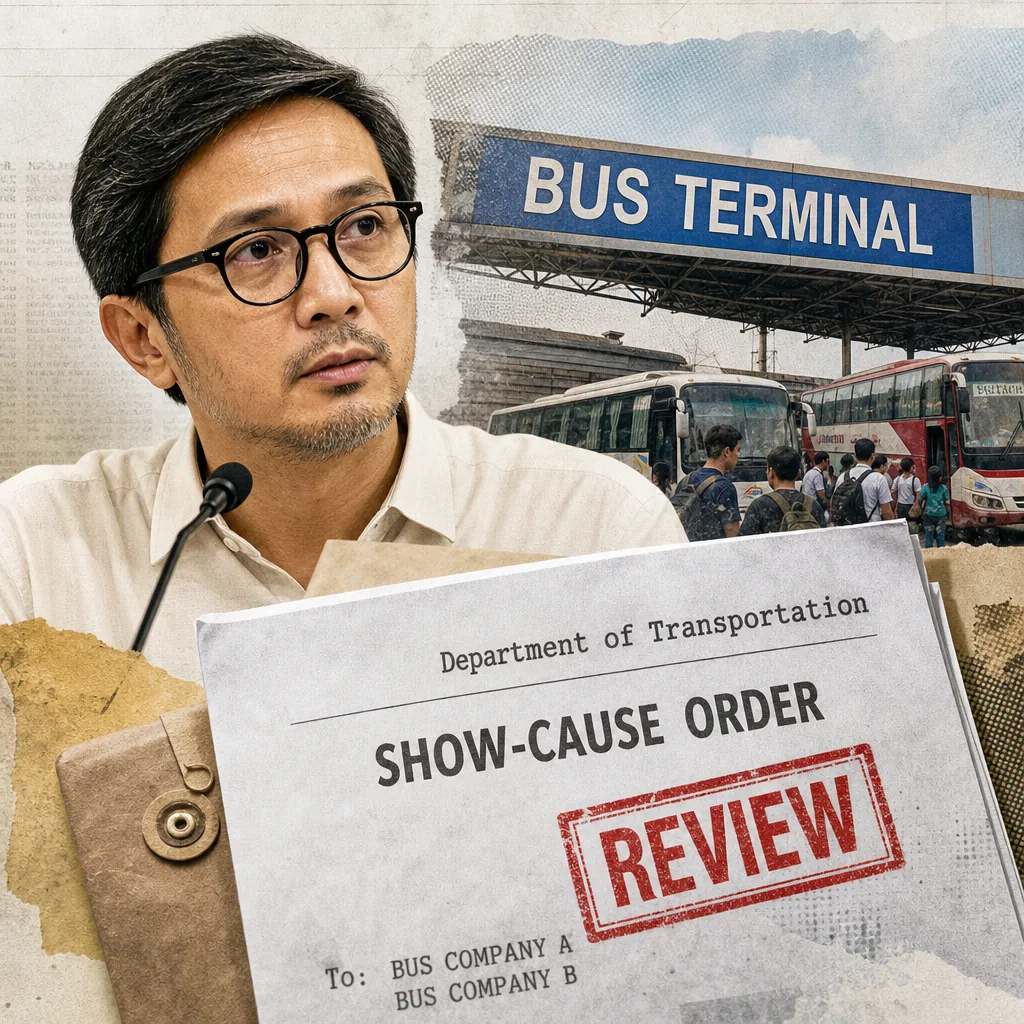
- The LTO will revoke licenses automatically for drunk driving from November 15. LTO Chief Markus Lacanilao said a positive breath-analyzer result will trigger a show-cause process and, after due process, revocation rather than suspension 39.
- Around 14,000 security and emergency personnel are deployed across the Ilocos region. The force includes 6,181 police officers, 1,603 personnel from partner agencies, and 6,532 force multipliers, assigned to cemeteries, highways, and tourist sites 24.
- Twenty-two PUV drivers in Zamboanga tested positive for drugs in a surprise operation. The inter-agency "Oplan Harabas" tested 1,213 drivers and conductors at terminals across the Zamboanga Peninsula ahead of Undas 33.
- MRT-3 will carry children free on November 4. The free rides run during the morning and evening peak windows as part of National Children's Month 41.
- Ohayami Trans says its schedules will not be interrupted despite a DOTr reprimand. The operator said it would address facility upgrades and regulatory requirements while keeping routes running 5.
- Dizon's return to the DOTr is framed around commuter experience. A Philippine Star column listed his priorities as shorter LTO queues, fewer fixers, and faster mass transport projects 40.
- Road deaths continued into the holiday window. Two people died and one was injured in separate accidents in Quezon province on Friday, and Taguig police are still hunting a motorcycle rider who fled after hitting an 8-year-old boy on October 13 342.
How the narratives stack
Dominant. The enforcement story dominates the captured set. Of the items reviewed here, the largest share concerns government agencies tightening rules or deploying personnel for the Undas travel period: the anti-colorum campaign 20, the drunk-driving revocation policy 39, the Ilocos deployment 24, and the Zamboanga drug testing operation 33. This is dominance within the items gathered for this snapshot, and the monitoring scope — which drew heavily on Philippine online news — shapes that mix. The common thread is that the state is using the holiday as a deadline to demonstrate enforcement capacity. The Manila Times piece is the most detailed on the legal boundary: lawyer Ariel Inton of Lawyers for Commuters Safety and Protection explained that a vehicle is colorum if it is a private unit used for hire without a franchise or with an expired one, or if a franchised vehicle operates under a different denomination than the one it holds 20. That definition matters because the anti-colorum campaign depends on roadside judgment, and private owners lending cars to relatives for the holiday need to know where the line sits.
Counter-narrative. The counter-narrative is service continuity and public accommodation. Ohayami Trans's statement that its schedules would proceed without interruption 5 and the MRT-3's free-ride announcement 41 both push against the impression that enforcement and reprimands translate into disruption for passengers. The Ohayami case is the more instructive: Dizon flagged structural deficiencies at the Manila terminal during a pre-holiday inspection, including a cramped waiting area and a men's restroom without functional toilet bowls, but said the government would not immediately suspend operations to avoid severe disruptions for commuters 5. That is a deliberate choice to prioritize passenger flow over immediate penalty, and the operator's response — thanking passengers for patience while promising upgrades — follows the same logic.
Emerging. The emerging story is the shift in how the LTO handles drunk driving. The move from suspension to automatic revocation starting November 15 is a change in penalty structure, not just enforcement intensity 39. The LTO chief described the process: a motorist is stopped, tested with a breath analyzer, and if positive, issued a show-cause order; after due process, the judgment is revocation 39. The Philippine Star's Freeman editorial endorsed the change, noting that drunk-driving cases have become more prevalent and that some have ended in injuries or deaths 39. What is not yet clear from the captured items is how the LTO will handle the volume of cases the new rule could generate, or whether breath analyzers are available at enough checkpoints to make the automatic penalty real rather than aspirational.
Under-covered. Two stories placed low in the set but carry real weight. The first is the Zamboanga drug-testing result: 22 of 1,213 drivers and conductors tested positive, roughly 1.8 percent of those screened 33. The operation, dubbed "Oplan Harabas," was run by the Philippine Drug Enforcement Agency Regional Office IX with the LTO, LTFRB, Department of Labor and Employment, Philippine National Police, local anti-drug councils, terminal managements, and bus company Rural Transit Mindanao 33. The second is the Quezon road deaths: a male minor was dragged about 15 meters after being struck by a Bicol-bound truck in Tagkawayan, and a 53-year-old motorcyclist died after a head-on collision with a tricycle in Infanta 3. Neither story drew the same attention in the captured set as the policy announcements, but both describe the outcomes the policies are meant to prevent.
Platform insights
The monitoring writeup for this window did not include social-platform engagement data, so this section is limited to what the news items themselves show about where the conversation lived. The items captured are overwhelmingly from online news publishers — Philippine outlets such as the Manila Times, the Philippine Star, the Inquirer, and the Daily Tribune, plus international wires. No Facebook, X, Reddit, or YouTube post-level data was available in the inputs for this snapshot.
Key voices and communities
Government transport agencies. The DOTr, LTO, LTFRB, and Highway Patrol Group are the most active voices in the captured set, and their framing is enforcement-first: colorum vehicles, drunk drivers, and unroadworthy terminals are the targets 20395. The LTO's Lacanilao provided the most specific operational detail, describing the breath-analyzer-to-revocation sequence 39.
Commuters' advocates and lawyers. Ariel Inton of Lawyers for Commuters Safety and Protection supplied the legal definition of colorum that private vehicle owners need 20. His framing is rights-and-responsibilities: private owners have legitimate uses for their cars, and the campaign should not sweep those up.
Local government and police in the regions. Police Maj. Cherry Tolentino of the Police Regional Office I public information office detailed the Ilocos deployment 24, and Taguig City Police Chief P/Col. Julius Anonuevo appealed for witnesses in the hit-and-run of an 8-year-old 42. These voices carry the ground-level view of how national policy lands in specific places.
Transport operators. Ohayami Trans is the operator voice in the set, promising uninterrupted service while acknowledging the need for facility upgrades 5. Its statement is a template for how bus companies are managing the reputational risk of a public reprimand during peak season.
Editorial pages. The Philippine Star's Freeman edition and its opinion section weighed in on both the drunk-driving penalty 39 and Dizon's return to the DOTr 40, framing transport as a daily dignity issue rather than an abstract policy debate.
Narrative streams
Anti-colorum checks put private car owners on notice during Undas
The anti-colorum campaign is the most operationally detailed story in the captured set. The DOTr, LTO, LTFRB, and Highway Patrol Group tightened flagging of suspected colorum vehicles as the holiday travel period began 20. The Manila Times reported that a transport group reminded private vehicle owners of their rights and responsibilities when lending out their cars, and the article's central question — "what exactly constitutes colorum and when is a private vehicle simply on a legitimate private trip?" — captures the ambiguity that roadside enforcement has to resolve 20. Inton's definition gives the practical test: a private unit used for hire without a franchise or with an expired one is colorum, and so is a franchised vehicle operating under a different denomination than the one it holds, such as a school bus franchise running as a UV Express 20.
For the sector, the read is that the anti-colorum campaign will be judged by how precisely it separates legitimate private trips from unlicensed commercial ones. Private owners who lend cars to relatives for holiday travel are the group most exposed to misflagging, and the transport group's reminder is aimed at them. Operators of legitimate franchises have an interest in the campaign succeeding, because colorum vehicles compete for the same passengers without paying franchise costs. The enforcement push also carries a coverage value: the Manila Times item alone accounted for an estimated ₱370,912 in advertising-equivalent value within the captured set, the highest of the Philippine transport items reviewed here. That figure measures the estimated cost of buying the same newspaper space as advertising, not readership.
The LTO moves to automatic license revocation for drunk driving
Starting November 15, the LTO will make license revocation the automatic penalty for motorists who exceed legal alcohol limits 39. Lacanilao described the sequence in Filipino: a motorist is stopped, tested with a breath analyzer, and if positive, issued a show-cause order; the motorist is given due process to explain why the result was positive; the judgment is then revocation 39. The previous penalty was suspension, or revocation as one of several options. The Philippine Star's Freeman editorial endorsed the change, writing that drunk-driving cases have become more prevalent and that some have ended in road rage incidents where only pride was hurt, while others ended with people injured or dead 39.
The read for the sector is that the LTO is shifting the cost of drunk driving from a temporary inconvenience to a permanent loss of driving privilege, which changes the calculus for drivers who currently treat suspension as a manageable risk. The policy's effectiveness depends on breath-analyzer availability and on the due-process step being real rather than perfunctory. The editorial's endorsement suggests editorial pages will be watching the rollout closely. The item carried an estimated ₱299,925 in advertising-equivalent value in the captured set.
Fourteen thousand personnel deployed across the Ilocos region for Undas
The Ilocos deployment is the largest single manpower figure in the captured set. Around 14,000 security and emergency personnel will be assigned across the region for All Saints' Day and All Souls' Day on November 1 and 2 24. The breakdown: 6,181 police officers, 1,603 personnel from partner agencies, and 6,532 force multipliers 24. Tolentino said the personnel would secure cemeteries, major thoroughfares, and tourist destinations, maintain peace and order, address public safety concerns, and assist residents and travelers 24. The Land Transportation Office also features in the Inquirer's report, though the excerpt does not detail its specific role.
For the sector, the read is that the holiday period is being treated as a public-safety operation as much as a transport one. The force-multiplier component — 6,532 people who are not full-time police — is nearly as large as the police contingent, which suggests the deployment relies heavily on community volunteers and auxiliary personnel. Whether that mix is adequate for cemetery crowds and highway traffic is the question the holiday itself will answer. The item carried an estimated ₱263,844 in advertising-equivalent value in the captured set.
Twenty-two Zamboanga PUV drivers test positive for drugs ahead of Undas
The Zamboanga drug-testing operation is the most concrete safety finding in the set. The Philippine Drug Enforcement Agency Regional Office IX, working with the LTO, LTFRB, Department of Labor and Employment, Philippine National Police, local anti-drug abuse councils, terminal managements, and bus company Rural Transit Mindanao, ran simultaneous surprise testing at transport terminals across the Zamboanga Peninsula on Thursday, October 29 33. Of 1,213 drivers and conductors tested, 22 tested positive for illegal drug use 33. The operation was dubbed "Oplan Harabas," a name that plays on the Filipino word for a rush or melee, fitting for a surprise sweep during the holiday rush.
The read for the sector is that roughly one in 55 of the drivers and conductors screened tested positive, which is a small share but a meaningful number of people entrusted with passengers during the year's busiest travel period. The inter-agency composition of the operation matters: drug testing of transport workers is not a single agency's job, and the involvement of the labor department and terminal managements suggests the results may feed into employment consequences as well as enforcement. The item carried an estimated ₱311,472 in advertising-equivalent value in the captured set.
MRT-3 offers free rides to children on November 4
The MRT-3 free-ride announcement is the clearest service-side item in the set. Children 17 and under will ride free on Wednesday, November 4, from 7:00 to 9:00 a.m. and 5:00 to 7:00 p.m., as part of National Children's Month 41. The MRT-3 runs along EDSA from Taft Avenue in Pasay City to North Avenue in Quezon City 41. The two windows are the morning and evening peak periods, which means the free rides are aimed at children traveling to school or with families during the hours when the train is most crowded.
For the sector, the read is that the free-ride program is a small, time-bound gesture that tests the rail line's capacity to absorb additional passengers during peak hours. National Children's Month is observed in November under Philippine law, and the MRT-3's participation is part of a broader pattern of government agencies offering holiday-themed services. The item carried an estimated ₱103,174 in advertising-equivalent value in the captured set.
Ohayami Trans promises uninterrupted service after terminal reprimand
The Ohayami Trans story is the clearest operator-side item in the set. Dizon flagged structural deficiencies at the company's Manila terminal during a pre-holiday inspection ahead of Undas, noting that the passenger waiting area was cramped and that the men's restroom lacked functional toilet bowls 5. Despite the violations, Dizon said the government would not immediately suspend the company's operations to avoid severe disruptions for commuters traveling to northern destinations 5. The operator responded with a statement saying all scheduled routes would proceed without interruption while it addresses facility upgrades and regulatory requirements, and thanked passengers for their patience, understanding, and continued patronage 5.
The read for the sector is that the government is calibrating enforcement to passenger volume: a terminal can be cited for deficiencies without being shut down during the holiday rush, and the operator gets a window to fix the problems. That calibration carries a risk — if the upgrades slip past the holiday, the same deficiencies will be there for the next peak period. For other operators, the Ohayami case is a reminder that terminal conditions are now part of the inspection agenda, not just vehicle roadworthiness. The item carried an estimated ₱57,570 in advertising-equivalent value in the captured set.
Dizon's return to the DOTr puts commuter experience at the center
The Philippine Star column on Dizon's return is the most explicitly political item in the set. Malacañang announced on October 26, 2026, that Dizon would return to the DOTr, while Secretary Giovanni "Banoy" Lopez would lead the Department of Public Works and Highways 40. The column listed Dizon's priorities as easing daily commutes, shortening queues at the LTO, eliminating fixers, and accelerating critical mass transportation projects 40. It framed transportation as "the alarm that rings before sunrise, the crowded platform, the long queue for a bus and the hours lost between home and work," and argued that every delay has a cost in time with children, rest after a shift, and hours for school or livelihood 40.
For the sector, the read is that the DOTr's leadership change is being sold on commuter experience rather than on infrastructure metrics, which raises the bar for visible improvements in LTO queue times and fixer activity. The column's endorsement is notable because it comes from an editorial page that has been critical of drunk driving and road safety failures. The item carried an estimated ₱735,016 in advertising-equivalent value in the captured set, the highest of any item reviewed here.
Road deaths continue into the holiday window
The road-death stories are the grim counterpoint to the enforcement news. In Quezon province, a pedestrian and a motorcyclist died in separate accidents on Friday 3. In Tagkawayan town, two pedestrians walking along Quirino Highway in Barangay Sta. Cecilia were struck by a passing Bicol-bound truck at 9:50 a.m.; one victim, a male minor, was dragged about 15 meters from the point of impact and died at the scene, while his companion, a 30-year-old woman, was brought to a hospital 3. The truck driver was placed under police custody 3. In a separate incident in Infanta town, a speeding motorcycle traveling in the opposite lane collided head-on with a tricycle in Barangay Batican at 6:15 p.m., and the 53-year-old motorcycle rider was declared dead on arrival 3. Separately, Taguig City Police appealed for witnesses to a hit-and-run on October 13 in which an 8-year-old boy was struck by a female motorcycle rider on Magsaysay Street, South Signal Village; the boy suffered severe head and body injuries and is still being treated 42.
The read for the sector is that the enforcement measures announced this week — anti-colorum checks, drunk-driving revocation, drug testing — address driver conduct, but the Quezon and Taguig cases involve pedestrians, a truck, a tricycle, and a motorcycle, which are the most exposed road users. The Quezon item carried an estimated ₱123,984 in advertising-equivalent value in the captured set, and the Taguig item ₱151,962.
Conversation trajectory
November 1–2 (Undas holiday): The immediate test of the enforcement push. Watch for reports of colorum apprehensions, drunk-driving arrests, and road incidents during the peak travel days. The Ilocos deployment and the Zamboanga drug-testing results will be measured against actual holiday outcomes. Reasoning: the holiday is the deadline the agencies set for themselves, and the captured items show they have pre-positioned personnel and messaging around it.
November 4 (MRT-3 free rides): The free-ride windows will show whether the rail line can absorb additional passengers during peak hours without crowding problems. Watch for passenger complaints or praise on social media, which the captured set does not yet include. Reasoning: the program is time-bound and capacity-constrained, and its reception will shape whether similar holiday programs are repeated.
November 15 (LTO drunk-driving revocation takes effect): The first weeks of the new penalty will show whether breath analyzers are available at enough checkpoints and whether the due-process step produces revocations or delays. Watch for LTO statements on the number of licenses revoked and for legal challenges from motorists who contest the process. Reasoning: the policy changes the penalty structure, and its credibility depends on implementation details the captured items do not yet describe.
Ongoing (Ohayami Trans terminal upgrades): The operator has promised facility upgrades, and the next inspection will show whether the cramped waiting area and restroom deficiencies have been addressed. Watch for a follow-up DOTr inspection or a statement from the company on completion. Reasoning: the government chose not to suspend operations to protect holiday travelers, which puts the burden on the operator to fix the problems before the next peak period.
Trigger events to watch: A serious road accident involving a colorum vehicle or a drunk driver would intensify pressure for stricter enforcement and could accelerate the LTO's revocation rollout. A legal challenge to the automatic revocation rule would test the due-process language Lacanilao described. A drug-testing result involving a bus company with a fatal accident would raise questions about the scope of Oplan Harabas beyond the Zamboanga Peninsula.
Response guidance
Private vehicle owners lending cars for Undas: Know the colorum definition before lending a car to relatives or friends. A private unit used for hire without a franchise, or with an expired one, is colorum, and so is a franchised vehicle operating under a different denomination than the one it holds 20. Carry proof of private ownership and the purpose of the trip, and avoid accepting payment for rides that could be read as for-hire operation.
Bus and UV Express operators: Treat terminal conditions as part of the inspection agenda. The Ohayami Trans case shows that the DOTr will cite cramped waiting areas and non-functional restrooms during pre-holiday inspections, and that the government may choose not to suspend operations to protect passengers 5. Operators should document facility upgrades and communicate them publicly before the next peak period.
Drivers who drink: The LTO's automatic revocation rule takes effect November 15, and the process includes a breath-analyzer test, a show-cause order, and due process before revocation 39. The practical message is that a positive test now carries a permanent consequence, not a temporary one.
Transport companies with driver pools: The Zamboanga operation tested 1,213 drivers and conductors and found 22 positive 33. Companies should consider voluntary testing and employee assistance programs ahead of the next holiday period, and should coordinate with the Philippine Drug Enforcement Agency and local anti-drug councils if they want to participate in similar operations.
Communicators covering transport policy: The Dizon column shows that commuter experience — queue times, fixers, daily commute hours — is the frame the DOTr's leadership wants to be judged on 40. Messaging that focuses on infrastructure metrics without connecting them to daily commute times will miss the frame the government has set.
Road safety advocates: The Quezon and Taguig cases involve pedestrians, a truck, a tricycle, and a motorcycle 342. Enforcement campaigns that focus only on driver conduct will not address the exposure of pedestrians and small vehicles. Advocates should press for road design and speed management measures alongside the anti-colorum and drunk-driving campaigns.
See the full picture behind today's signals.
This report draws from Media Meter's MediaWatch, our real-time monitoring engine tracking 2,470+ Philippine sources across print, broadcast, digital, and social. Explore how the platform turns raw coverage into decision-grade intelligence, then see how it's configured for teams like yours — whether you're in PR agencies, corporate comms, government, or marketing.
Want more? Browse our Report Library for sector and crisis intelligence, or request a demo and we'll have your brand set up before the call.
Want this kind of intelligence on your brand?
This brief is built on the same MediaWatch methodology that runs continuously across every brand we monitor. See your competitive landscape, Impact Score, and narrative trajectory in a 30-minute demo.