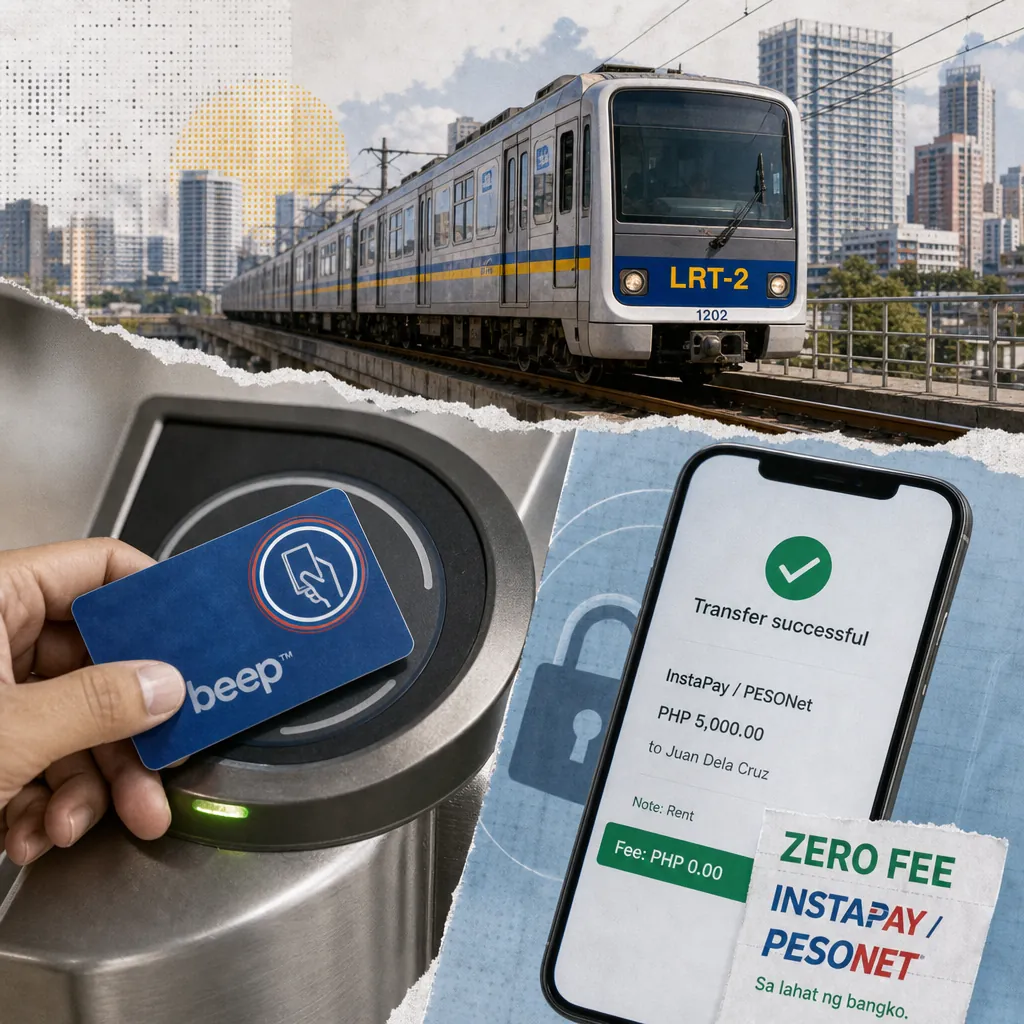
Zero-fee digital transfers become new normal as banks race to waive InstaPay, PESONet charges
A cascade of fee waivers by major Philippine banks, led by BPI, RCBC, UnionBank, and LandBank, has shifted consumer expectations toward free digital transfers, with Malacañang urging all banks to follow. The conversation is overwhelmingly positive but a counter-narrative on fraud risks is emerging.

The conversation on July 5 and 6 was dominated by a rapid, industry-wide shift toward zero-fee InstaPay and PESONet transfers, triggered by the Bangko Sentral ng Pilipinas (BSP) lifting its fee moratorium and President Ferdinand Marcos Jr.'s directive to lower digital transaction costs. The narrative began with BPI's permanent waiver on July 1, followed by RCBC on July 4, and then a cascade of announcements on July 6: UnionBank declared zero fees starting July 7, and state-run LandBank followed suit with the same effective date. The volume of positive reactions—especially "love" reactions on Facebook—indicated that consumers saw this as meaningful financial relief, not just a marketing gimmick. A Manila Bulletin post on LandBank's waiver alone garnered over 2,300 likes and 3,200 love reactions. The Reddit community on r/Philippines amplified the news, with posts about UnionBank and LandBank earning hundreds of upvotes. By the end of July 6, the conversation had moved from individual "good news" posts to a collective realization that the BSP's pressure was yielding a domino effect across both private and state-owned banks.
However, a counter-narrative emerged late in the day. RCBC Executive Vice President Lito Villanueva publicly cautioned that unlimited free transfers could be exploited by fraudsters, a warning that reached nearly 500 views on social platforms. This theme was less dominant—only 12 likes and 6 "haha" reactions on a Bankero post—but it provided necessary nuance, preventing the conversation from becoming purely utopian. The Reddit community did not heavily engage with this risk angle, focusing instead on the savings benefits.
Meanwhile, Malacañang urged all banks and e-wallets to waive or reduce transfer fees, with Presidential Communications Office Undersecretary Claire Castro stating that the call aligned with President Marcos's goal of making financial transactions more affordable. The Department of Finance (DOF) explicitly claimed that "the rest of the market is following LANDBANK's example," inserting a political narrative around the administration's digital inclusion agenda. This institutional thread added credibility to the fee reductions.
Key themes
- Competitive momentum toward zero fees: The narrative began with BPI's permanent waiver on July 1, followed by RCBC on July 4, creating a sense of inevitability. User @phdigitalbanks reinforced this on July 5 by highlighting the few banks still offering unlimited free transfers, effectively pressuring laggards. On July 6, UnionBank and LandBank both announced July 7 start dates, with LandBank chairman Frederick Go stating, "Every peso saved on transfer fees is a peso that Filipino families can spend on their daily needs"—a quote rapidly circulated by @jekkipascual and @ancalerts, cementing the fee waiver as a populist policy win. The sentiment was overwhelmingly positive, with "love" reactions (3,249 on the Manila Bulletin post alone) far outnumbering negative emojis.
- Cautionary voices on fraud and unlimited transfers: While most posts cheered the fee elimination, a counter-thread emerged from RCBC leadership. On July 6, @cathyyang quoted RCBC EVP Lito Villanueva warning that "removing limits altogether could create new risks" and that safeguards against scammers remain necessary. The page @phbankero amplified this concern, noting that unlimited free transfers might be exploited by fraudsters. This theme began late in the day and was less dominant—only 12 likes and 6 "haha" reactions on the Bankero post—but it provided a necessary nuance that prevented the conversation from becoming purely utopian.
- Government leadership and BSP's role: The coordination between the Department of Finance and the BSP was a distinct thread. LandBank's waiver was explicitly tied to "President Ferdinand Marcos Jr.'s directive" and "BSP new rules," as noted by @phbankero and @inquirerdotnet. The YouTube video "BSP LIFTS INSTAPAY AND PESONET FEE HIKE MORATORIUM" from June 23 provided the regulatory backdrop, and by July 6, the conversation recognized that the BSP's policy shift was the catalyst. A Facebook post from the DOF account explicitly claimed "the rest of the market is following LANDBANK's example," inserting a political narrative around the administration's digital inclusion agenda. This thread was less consumer-driven and more institutional, but it added a layer of credibility to the fee reductions.
- Consumer adoption and usage spikes: RCBC's early waiver provided a preview of consumer behavior. On July 6, @cathyyang reported that RCBC EVP Lito Villanueva stated InstaPay transactions jumped 10% in just one day after fees were removed, a data point that quickly became a benchmark for the expected impact of the broader industry shift. This demonstrated that fee removal creates immediate, measurable goodwill and usage spikes, making it a high-ROI strategy for banks still holding out.
- Comparison and personal finance content: The conversation is rapidly moving beyond fee waiver announcements toward user-generated content that compares which banks offer the best free-transfer conditions. Posts from community pages like @phdigitalbanks and @kaskasanbuddies are creating "list" formats ranking banks with unlimited free InstaPay vs. those with monthly caps (e.g., RCBC's 30-free-transactions-per-month limit). This comparison-driven content is receiving high engagement and will intensify over the next two weeks, creating opportunities for clients to proactively position their specific fee structures.
- BSP policy momentum as the driving force: Central bank directives are consistently cited as the catalyst—BSP lifted the moratorium on fee caps and is actively encouraging lower transfer costs. The conversation includes explicit references to President Marcos Jr.'s directive for affordable digital transactions, with LandBank's chairman framing the move as "leading by example" for all financial institutions. This top-down regulatory narrative will sustain pressure on remaining banks and e-wallets (GCash, Maya) to follow suit, likely within 30–60 days.
- Broader economic context: The fee waiver conversation unfolded against a backdrop of elevated inflation (6.8% in May) and BSP Governor Eli Remolona Jr.'s statement that the economy can absorb another rate hike. Goldman Sachs forecast inflation dropping faster than BSP expects, while Nomura warned that elevated oil prices could keep core inflation sticky. The PSEi climbed above 6,200 on bargain hunting, reflecting optimism about inflation easing. This macro environment makes the fee waivers particularly welcome for consumers facing higher costs of living.
How the narratives stack
Dominant: The dominant narrative within the captured set is the rapid, industry-wide shift toward zero-fee InstaPay and PESONet transfers, driven by BSP policy and consumer pressure. This narrative accounts for the majority of social media engagement and news coverage, with high volumes of positive reactions and shares. The story is framed as a win for Filipino consumers and a validation of the Marcos administration's digital finance agenda.
Counter-narrative: A secondary narrative, led by RCBC's Lito Villanueva, warns that unlimited free transfers could increase fraud risk. This counter-narrative is less prominent in terms of engagement but is gaining traction among financial commentators and news outlets. It introduces a tension between consumer benefit and risk management that could become more significant if any security incidents occur.
Emerging: An emerging narrative is the comparison of bank-specific terms—unlimited vs. capped free transfers, permanent vs. promotional waivers. Community pages are creating ranking tables, and this content is receiving high engagement. This narrative will likely intensify as more banks announce their own fee structures, shifting the conversation from "who is free" to "whose free is best."
Suppressed: There is a notable lack of critical discussion about potential operational impacts, such as system strain or increased fraud incidents. While RCBC's warning touches on this, the broader conversation does not yet address the capacity of banks' digital infrastructure to handle surging transaction volumes. This could become a vulnerability if any outage or scam wave follows.
Platform insights
- Facebook: The platform dominated volume and emotional engagement. Posts from @manilabulletin, @gmanews, and @phdigitalbanks generated the highest shares and love reactions, indicating that users were both celebrating and spreading the news to less digitally savvy circles. The "care" reactions (63 on Manila Bulletin) suggest real concern for families relying on remittances, showing the narrative tapped into everyday financial stress.
- Twitter (X): Twitter provided the fastest breaking news and executive quotes. @cathyyang's series of tweets on RCBC's transaction data and risk warnings gave the conversation depth, while @unionbankph's direct corporate announcement garnered 900 views. Twitter also hosted the only notable skepticism, with the RCBC fraud concerns spreading mostly via this channel.
- Reddit: Reddit offered the most focused consumer perspective. Threads like u/Lemoneyd_'s "Starting July 7, UnionBank will remove its transaction fees" and u/moneygoals_ph's "Landbank InstaPay and PESONet transfers go FREE" became repositories for user questions about limits, compatibility, and payroll accounts, showing that practical, how-to concerns emerged more slowly but steadily on this platform.
Key voices and communities
- Digital banking enthusiast communities: Highly engaged Facebook pages and Reddit communities focused on Philippine digital banking dominate conversation volume. A single announcement from @phdigitalbanks generated over 1,000 likes and 1,600 "love" reactions alongside hundreds of shares and comments. These accounts function as aggregators, tracking which banks offer zero-fee transfers, comparing limits, and celebrating each new waiver. Their narrative is positive and consumer-empowerment focused, explicitly encouraging followers to pressure remaining banks to follow suit.
- Mainstream news outlets and business press: Legacy media accounts (Inquirer, GMA News, Manila Bulletin, ANC, PTV) and specialized financial blogs (Bankero, TechPilipinas) amplified the announcements with broad reach. A single Manila Bulletin post on LandBank's waiver accumulated over 2,300 likes and 800 shares. These outlets frame the news as a policy-driven industry shift, often quoting Finance Secretary Frederick Go and BSP guidelines. Their coverage validates the administration's digital finance agenda with high-credibility reporting.
- Bank official and executive accounts: UnionBank's official Twitter account and RCBC's chief innovation officer (@cathyyang's coverage of Lito Villanueva) directly contribute to the conversation with authoritative updates. UnionBank's own posts explaining zero-fee services reached high view counts (e.g., 900 views on one tweet). RCBC's EVP provided data-driven quotes, such as a 10% increase in InstaPay transactions just one day after the fee waiver. Each bank frames its move as customer-centric and aligned with BSP goals, while cautiously noting safeguards.
- Consumer and personal finance influencers: Smaller financial literacy pages, YouTube channels, and Reddit communities like r/phinvest and r/digitalbanksph focus on practical tips: "how to save on transfer fees" and "which bank to use for free transfers." One YouTube short detailing free transfer options received over 130 views with a clear call to action. Reddit posts on LandBank's waiver earned hundreds of upvotes, with comments emphasizing benefits for government employees. These influencers shape everyday consumer behavior and can drive app usage.
- Government and regulatory voices: The Department of Finance (DOF) account and official government media (PNA, PTV) issued statements celebrating LandBank's move as a fulfillment of the President's directive. Posts from DOF explicitly claim LandBank "led the push" and that "the rest of the market is following." Engagement is lower compared to consumer pages, but the messaging carries authoritative weight. Finance Secretary Go is quoted in multiple posts: "Every peso saved on transfer fees is a peso that Filipino families can spend on their daily needs".
Narrative streams
The domino effect of fee waivers
The conversation's central story is the accelerating cascade of fee waivers across the banking sector. BPI permanently waived fees on July 1, RCBC followed on July 4, and then UnionBank and LandBank both announced July 7 start dates. Multiple authoritative sources (major news outlets and finance-focused pages) covered these announcements with very high public engagement—Manila Bulletin's LandBank post alone received over 2,300 likes and 3,200 love reactions. The trajectory indicates that remaining banks (Metrobank, PNB, Security Bank, etc.) will face mounting pressure to match, likely within 2–4 weeks, as consumer expectations shift decisively toward free transactions as the new baseline.
Fraud risk counter-narrative
RCBC's EVP Lito Villanueva publicly cautioned that "unlimited free transfers could be exploited by fraudsters," and post data shows this risk frame is gaining traction among financial commentators and news outlets. While widespread consumer sentiment is overwhelmingly positive (the "wow" and "love" reactions dominate), expect a secondary conversation wave within 7–14 days where security concerns and proposed safeguards (daily caps, authentication layers) become more prominent. This will be particularly relevant for banks like BPI and LandBank who need to balance consumer goodwill with risk communication.
Government and BSP policy leadership
The coordination between the Department of Finance and the BSP is a distinct thread. LandBank's waiver was explicitly tied to "President Ferdinand Marcos Jr.'s directive" and "BSP new rules," as noted by @phbankero and @inquirerdotnet. The YouTube video "BSP LIFTS INSTAPAY AND PESONET FEE HIKE MORATORIUM" from June 23 provided the regulatory backdrop, and by July 6, the conversation recognized that the BSP's policy shift was the catalyst. A Facebook post from the DOF account explicitly claimed "the rest of the market is following LANDBANK's example," inserting a political narrative around the administration's digital inclusion agenda. This thread was less consumer-driven and more institutional, but it added a layer of credibility to the fee reductions.
Consumer adoption and usage spikes
RCBC's early waiver provided a preview of consumer behavior. On July 6, @cathyyang reported that RCBC EVP Lito Villanueva stated InstaPay transactions jumped 10% in just one day after fees were removed, a data point that quickly became a benchmark for the expected impact of the broader industry shift. This demonstrated that fee removal creates immediate, measurable goodwill and usage spikes, making it a high-ROI strategy for banks still holding out.
Comparison and personal finance content
The conversation is rapidly moving beyond fee waiver announcements toward user-generated content that compares which banks offer the best free-transfer conditions. Posts from community pages like @phdigitalbanks and @kaskasanbuddies are creating "list" formats ranking banks with unlimited free InstaPay vs. those with monthly caps (e.g., RCBC's 30-free-transactions-per-month limit). This comparison-driven content is receiving high engagement and will intensify over the next two weeks, creating opportunities for clients to proactively position their specific fee structures.
Broader economic context
The fee waiver conversation unfolded against a backdrop of elevated inflation (6.8% in May) and BSP Governor Eli Remolona Jr.'s statement that the economy can absorb another rate hike. Goldman Sachs forecast inflation dropping faster than BSP expects, while Nomura warned that elevated oil prices could keep core inflation sticky. The PSEi climbed above 6,200 on bargain hunting, reflecting optimism about inflation easing. This macro environment makes the fee waivers particularly welcome for consumers facing higher costs of living.
Conversation trajectory
- Accelerating cascade of fee waivers across the banking sector: A rapid domino effect is unfolding—BPI permanently waived fees on July 1, RCBC followed on July 4, and now both UnionBank and LandBank are zeroing out InstaPay/PESONet charges effective July 7. Multiple authoritative sources (major news outlets and finance-focused pages) are covering these announcements with very high public engagement—Manila Bulletin's LandBank post alone received over 2,300 likes and 3,200 love reactions. The trajectory indicates that remaining banks (Metrobank, PNB, Security Bank, etc.) will face mounting pressure to match, likely within 2–4 weeks, as consumer expectations shift decisively toward free transactions as the new baseline.
- Emerging counter-narrative around fraud risks and transaction limits: RCBC's EVP Lito Villanueva has publicly cautioned that "unlimited free transfers could be exploited by fraudsters," and post data shows this risk frame is gaining traction among financial commentators and news outlets. While widespread consumer sentiment is overwhelmingly positive (the "wow" and "love" reactions dominate), expect a secondary conversation wave within 7–14 days where security concerns and proposed safeguards (daily caps, authentication layers) become more prominent. This will be particularly relevant for clients like BPI and LandBank who need to balance consumer goodwill with risk communication.
- Shift from "news announcement" to "comparison and personal finance" content: The conversation is rapidly moving beyond fee waiver announcements toward user-generated content that compares which banks offer the best free-transfer conditions. Posts from community pages like @phdigitalbanks and @kaskasanbuddies are creating "list" formats ranking banks with unlimited free InstaPay vs. those with monthly caps (e.g., RCBC's 30-free-transactions-per-month limit). This comparison-driven content is receiving high engagement and will intensify over the next two weeks, creating opportunities for clients to proactively position their specific fee structures.
- BSP policy momentum as the driving force: Central bank directives are consistently cited as the catalyst—BSP lifted the moratorium on fee caps and is actively encouraging lower transfer costs. The conversation includes explicit references to President Marcos Jr.'s directive for affordable digital transactions, with LandBank's chairman framing the move as "leading by example" for all financial institutions. This top-down regulatory narrative will sustain pressure on remaining banks and e-wallets (GCash, Maya) to follow suit, likely within 30–60 days.
Key trigger events that will reshape this conversation include: Phase 2 of BSP's digital payment fee guidelines (expected within 60 days, based on regulatory signals in recent circulars) which could mandate specific fee structures. The Philippine Senate or House hearing on digital transaction costs (if called, likely within 3–6 months, following the public interest surge). Quarterly earnings calls for top banks (August–September 2026) where CEOs may announce additional fee waivers, with early indicators from RCBC's reported 10% transaction increase in a single day after waiving fees.
Response guidance
Platform-specific approaches:
- Facebook: Share infographics comparing the new zero-fee policies across banks, highlighting BPI's permanent waiver as an industry-first move that benefits over 9 million customers. This reinforces leadership while educating users on savings. Respond to positive community posts from pages like @kaskasanbuddies and @phdigitalbanks with friendly, informative replies that thank users and link to official announcement pages. Monitor and gently correct any confusion about which transfers are free—some users may misinterpret "unlimited" as applying to business accounts when the waiver applies to retail clients. Prepare a pinned comment on official announcement posts that addresses the most common follow-up questions (e.g., limits, foreign currency transfers, business accounts) to reduce repetitive queries.
- Twitter/X: Engage with journalists and industry commentators who are covering the fee waiver wave, such as those from @cathyyang and @inquirerdotnet. Retweet their coverage with a brief note like "Proud to be part of this shift toward more affordable digital banking for every Filipino." This amplifies positive third-party validation. Use a dedicated hashtag such as #ZeroFeeBPI or #FreeTransfersPH consistently to create a searchable stream. Combine with trending terms like #InstaPayFree and #FinancialInclusion. Proactively address the fraud-risk concern raised by RCBC's EVP by issuing own statement: "BPI's zero-fee policy is designed with robust fraud monitoring in place. We balance accessibility with security—every transaction is protected by our anti-fraud systems." This positions BPI as both consumer-friendly and safety-conscious.
- YouTube: Produce a short, FAQ-style video titled "BPI Zero Fees: Everything You Need to Know" that explains the permanent waiver, how to use InstaPay/PESONet for free, and security tips. Optimize keywords like "free InstaPay 2026," "BPI zero transfer fee" to capture search traffic. Pin a comment on popular third-party videos with a helpful summary: "Great summary! To add: BPI's waiver is permanent and covers all digital channels. Learn more at our official site." This drives traffic without appearing overly promotional.
Key messages:
- Permanent savings, not a promo. BPI's waiver of InstaPay and PESONet fees is permanent—not a limited-time offer—giving customers reliable, ongoing savings on every transfer.
- Leading the industry shift. By being among the first major banks to eliminate fees permanently, BPI is helping fulfill the BSP's vision of more affordable digital payments and greater financial inclusion.
- Security is not compromised. Zero fees do not mean zero security. BPI continues to invest in fraud detection and customer protection, so customers can transact with confidence.
- Every peso counts. For families, students, and micro-entrepreneurs, eliminating transfer fees means real savings—money that stays in their pockets for other needs, echoing the sentiment of Finance Secretary Frederick Go.
Sensitive topics to navigate:
- Fraud risk from unlimited free transfers. RCBC's warning that unlimited free InstaPay could be exploited by scammers is a legitimate concern that could create hesitation among some users. BPI should acknowledge the risk directly without dismissing it, then explain the bank's layered security measures (e.g., transaction limits, real-time alerts, two-factor authentication) rather than claiming the risk does not exist.
- Comparison of limits and conditions. Some banks (like RCBC) offer free transfers only for the first 30 transactions per month, while BPI offers unlimited free transfers. This could spark criticism if users perceive BPI's "unlimited" as a marketing gimmick with hidden caps. BPI must be transparent about any terms—currently no caps mentioned—and avoid disparaging competitors directly.
- Government vs. private sector leadership. LandBank's announcement framed the fee waiver as following a presidential directive, with Secretary Go saying the bank is "leading by example". BPI's private-sector move could be seen as reactive rather than proactive. BPI should frame its decision as complementary and voluntary, emphasizing that it acted ahead of regulatory pressure to serve customers better.
Response priorities:
- Capitalize on the positive wave immediately. The conversation is overwhelmingly positive, with high engagement (e.g., a LandBank post garnered 2,320 likes and 3,249 loves). BPI should publish or amplify its own announcement across all channels within 24 hours, using the same celebratory tone. Timing is critical—the story is breaking now and will fade quickly.
- Reinforce the "first mover" narrative. BPI announced its permanent waiver on July 1, before other banks. Use this early-mover advantage in all communications to differentiate from banks that are only now following suit. Emphasize "permanent" and "unlimited" to stand out from RCBC's 30-free-transfer limit.
- Address fraud concerns proactively. Rather than waiting for users or journalists to raise security questions, include a brief security assurance in every major announcement. This preempts negative stories and positions BPI as responsible, not reckless.
Example language for common scenarios:
- [When celebrating fee waiver in social posts]: "We heard you. Starting July 1, sending money to any bank or e-wallet is permanently free with BPI and VYBE. No limits, no conditions—just savings that add up. Thank you for trusting us with your hard-earned money."
- [When responding to fraud concerns from commenters]: "Great question. Security is our top priority. Every free transaction is still protected by BPI's real-time fraud monitoring, encryption, and our 24/7 customer support. Zero fees doesn't mean zero safety—we've designed both to work together."
- [When users ask about limits or conditions]: "Our zero-fee InstaPay and PESONet transfers have no cap on the number of transactions and no minimum balance requirement. It's truly free, forever. Check our official page for full details."
See the full picture behind today's signals.
This report draws from Media Meter's MediaWatch, our real-time monitoring engine tracking 2,470+ Philippine sources across print, broadcast, digital, and social. Explore how the platform turns raw coverage into decision-grade intelligence, then see how it's configured for teams like yours — whether you're in PR agencies, corporate comms, government, or marketing.
Want more? Browse our Report Library for sector and crisis intelligence, or request a demo and we'll have your brand set up before the call.
Want this kind of intelligence on your brand?
This brief is built on the same MediaWatch methodology that runs continuously across every brand we monitor. See your competitive landscape, Impact Score, and narrative trajectory in a 30-minute demo.