BSP Rate Hike Expected as Inflation, Peso Pressure Persist
The Bangko Sentral ng Pilipinas is widely expected to raise interest rates for a third straight meeting on August 27, with inflation and peso weakness outweighing growth concerns. Digital payments surged past P19 trillion, while financial education and renewable energy deals also drew attention.
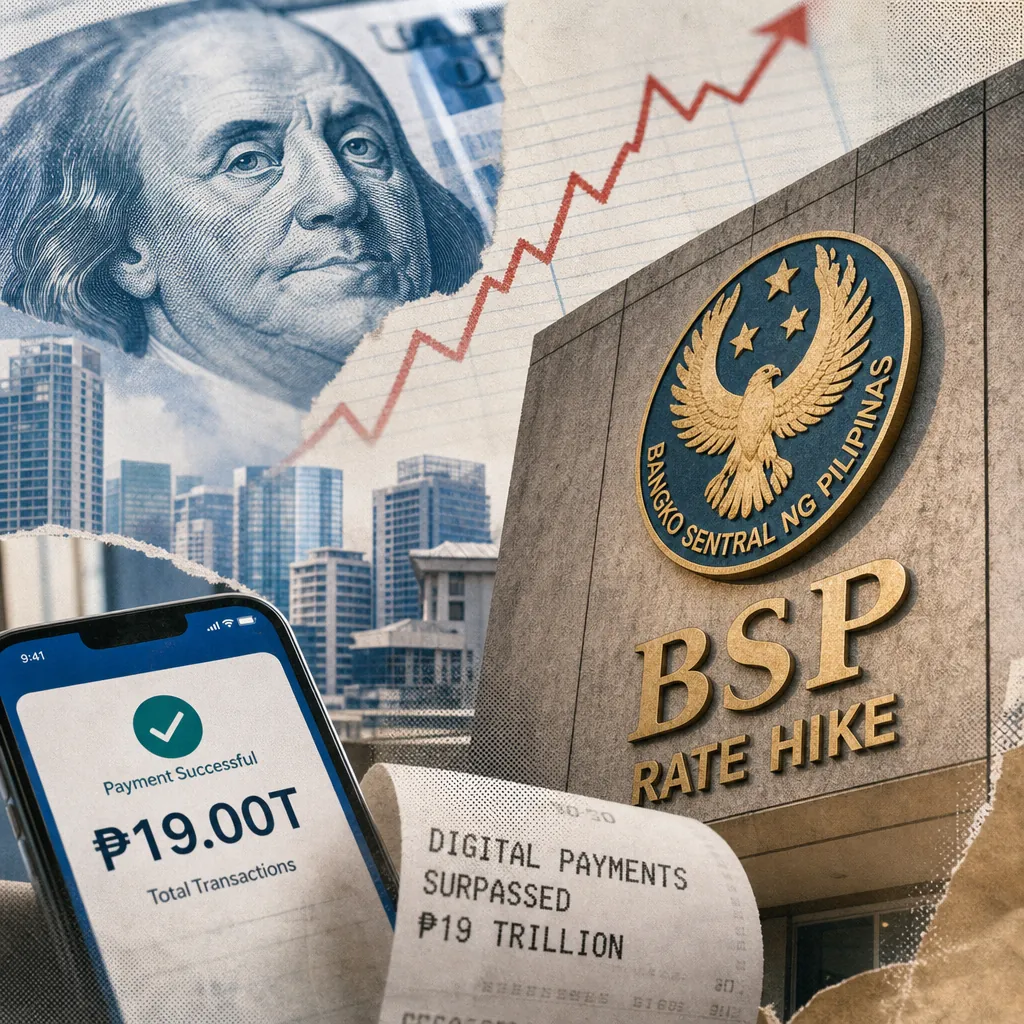
The Bangko Sentral ng Pilipinas (BSP) is widely expected to raise its benchmark interest rate by another quarter of a percentage point on Thursday, August 27, as persistent inflation and a weakening peso outweigh concerns about sluggish economic growth. Across three separate polls of economists — by the Philippine Daily Inquirer, BusinessWorld, and The Philippine STAR — a clear majority expect the Monetary Board to deliver a third consecutive 25-basis-point hike, bringing the policy rate to 5 percent from the current 4.75 percent. The decision comes as the peso hovers near record lows, government debt yields climb, and the stock market remains volatile, all against a backdrop of elevated oil prices and renewed geopolitical tensions in the Middle East.
At the same time, the central bank's own data shows a dramatic acceleration in digital payments, with InstaPay and PESONet transactions breaching P19 trillion in the first seven months of the year, driven by banks and e-wallets waiving transfer fees. The BSP also continued its push for financial inclusion, launching a collaboration with KasKasan Buddies to bring its financial education platform PisoLit to over two million users, and holding a two-day learning program for micro, small and medium enterprises (MSMEs) in Nueva Ecija.
Beyond the central bank, the day's coverage included First Gen's new geothermal power supply deal with PNB Holdings, a rise in insurance penetration, and a warning from a former BSP official that the country's external position needs closer monitoring. The conversation was dominated by the rate decision and its implications for borrowers, savers, and the broader economy, but also touched on the growing role of digital finance and the push for sustainable energy.
Key themes
- BSP rate hike widely expected on August 27 — Most economists polled by three major news outlets expect the central bank to raise its benchmark rate by 25 basis points to 5 percent, citing above-target inflation and peso weakness. This would be the third consecutive hike since April, bringing cumulative increases to 75 basis points.
- Peso near record low, but not a crisis, says former official — The peso touched P61.995 to the dollar last Wednesday, a new intraday low, before closing at P61.815. Former BSP deputy governor Diwa Guinigundo called the level "not a crisis," but warned that persistent balance-of-payments deficits and declining reserves could increase external vulnerability.
- Digital payments surge past P19 trillion — InstaPay and PESONet transactions reached P19.16 trillion in value in the first seven months of 2026, up 44.8 percent year-on-year, while volume more than doubled to 4.98 billion, driven by banks and e-wallets waiving transfer fees.
- BSP expands financial education efforts — The central bank launched a collaboration with KasKasan Buddies to bring its PisoLit platform to over two million users, and held a two-day learning program for MSMEs in Nueva Ecija, covering cash flow management, responsible borrowing, and digital financial services.
- First Gen to supply geothermal power to PNB properties — The Lopez-led company signed a deal to provide over 5 megawatts of renewable energy to two PNB Holdings properties, part of a broader shift by Lucio Tan-backed companies to clean electricity.
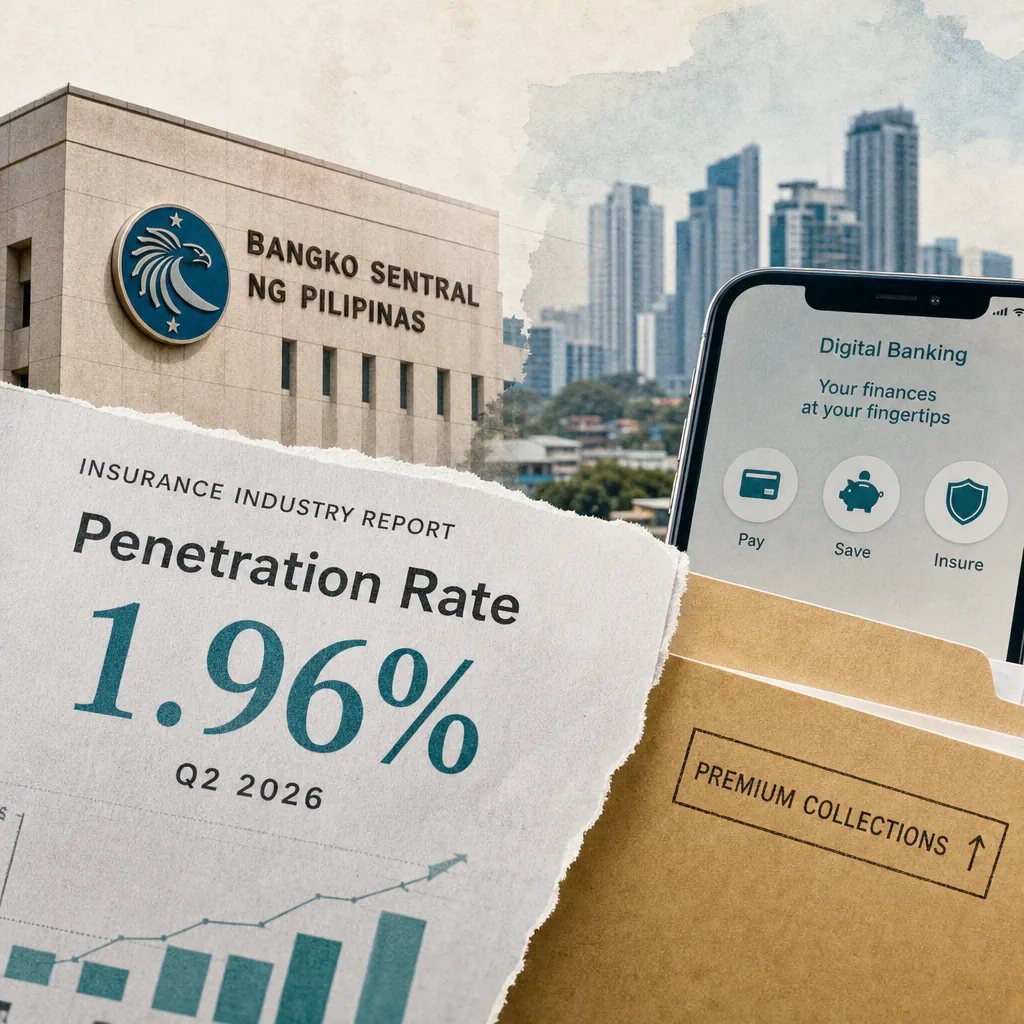
- Insurance penetration rises to 1.96% in Q2 — The Insurance Commission reported that insurance penetration rose from 1.79 percent a year ago, and insurance density increased 15.24 percent to P2,468.63 per person, reflecting greater public awareness and adoption of financial protection.
- Stock market volatility expected amid rate decision — The Philippine Stock Exchange index fell 0.93 percent last week, with trading subdued and foreign selling persisting, as investors await the BSP decision and weigh Middle East tensions.
- Government debt yields mixed on inflation concerns — Yields on government securities ended mixed last week, with short-term bills rising and longer-term bonds relatively stable, as traders positioned ahead of the BSP meeting and US Federal Reserve policy.
How the narratives stack
Dominant — The dominant narrative is the BSP's upcoming rate decision, with a clear consensus among economists that a hike is coming. This story drew the most coverage across the captured set, with multiple articles from the Inquirer, BusinessWorld, Business Mirror, Philstar, and Manila Times all focusing on the expected move. The narrative is driven by the tension between above-target inflation (6.2 percent in July) and weak economic growth (2.3 percent in Q2), with most analysts arguing that inflation risks outweigh growth concerns. The peso's slide toward P62 to the dollar adds urgency, as a weaker currency can feed inflation through higher import costs.
Counter-narrative — A minority of economists expect the BSP to hold rates steady, citing easing inflation, weak domestic demand, and the disappointing second-quarter GDP print. This counter-narrative is present in all three polls, with roughly a quarter to a third of respondents expecting no change. The argument is that the economy cannot absorb further tightening, and that inflation may have peaked. This view is also reflected in the stock market's subdued performance, as investors worry about the impact of higher rates on corporate earnings and consumer spending.
Emerging — The surge in digital payments is an emerging narrative that could reshape the financial landscape. The 44.8 percent jump in transaction value and 155 percent surge in volume, driven by fee waivers, suggests a structural shift toward cashless transactions. This is supported by the BSP's financial education initiatives, which aim to bring more Filipinos into the formal financial system. The story is still developing, but it points to a future where digital finance plays a larger role in everyday transactions.
Under-covered — The First Gen-PNB Holdings geothermal deal received relatively modest coverage compared to the rate decision, but it is significant for the renewable energy sector. The deal is part of a broader trend of companies shifting to clean energy, with several Lucio Tan-backed firms already making the switch. This story deserves more attention as it highlights the growing demand for renewable energy from the corporate sector, which could drive further investment in geothermal and other clean sources.
Platform insights
- Facebook — Facebook is likely the primary platform for sharing news articles and opinion pieces, given its widespread use in the Philippines. Posts about the BSP rate decision and the peso's slide would generate significant engagement, with users sharing their views on inflation, interest rates, and the economy. The BSP's financial education initiatives, such as the PisoLit collaboration, would also resonate on Facebook, where the central bank has an active presence.
- X (formerly Twitter) — X is a hub for real-time commentary from economists, analysts, and financial journalists. The rate decision would be a major topic, with hashtags like #BSP and #RateHike trending. The peso's movement would also be closely watched, with traders and analysts posting updates and analysis. The digital payments surge would likely be discussed in the context of fintech and financial inclusion.
- YouTube — YouTube would feature video content from news outlets and financial commentators analyzing the BSP decision and its implications. The BSP's own educational videos, such as those from PisoLit, would also be relevant. The First Gen-PNB deal might be covered in business news segments, though it would likely receive less attention than the rate decision.
- Reddit — Reddit's Philippine subreddits would have discussions on the rate hike, with users sharing personal experiences of rising borrowing costs and the impact on their finances. The digital payments surge might be discussed in the context of the shift away from cash, with users sharing tips on using InstaPay and PESONet. The peso's weakness would also be a topic, with users debating whether it signals a crisis.
Key voices and communities
- Economists and analysts — This group includes Diwa Guinigundo, former BSP deputy governor and GlobalSource country analyst, who provided extensive commentary on the peso and external position. Also prominent are economists from ANZ Research, HSBC, Bank of the Philippine Islands, and local brokerage firms like Philstocks and 2TradeAsia. They shape the narrative through their forecasts and analysis, and their views are widely quoted in the media.
- Business and financial media — Outlets like BusinessWorld, Business Mirror, Inquirer, Philstar, and Manila Times are the primary sources of news on the BSP and the economy. Their polls of economists and their coverage of market movements set the agenda for the day's conversation. They also provide a platform for expert opinions and editorials.
- The Bangko Sentral ng Pilipinas — The central bank itself is a key voice, through its official statements, data releases, and educational initiatives. Deputy Governor Bernadette Romulo-Puyat is a prominent figure, particularly in the financial education space. The BSP's communications shape public understanding of monetary policy and financial inclusion.
- Business groups and chambers — The Management Association of the Philippines (MAP) and the British Chamber of Commerce Philippines are active voices, representing the business community's concerns about economic growth and investment. MAP President Donald Patrick Lim's comments on a cautious 2027 outlook reflect the sentiment of many businesses.
- Consumer and MSME advocates — The KasKasan Buddies community, with over two million members, represents a grassroots voice in financial education. The BSP's programs targeting MSMEs also highlight the needs of small businesses, which are particularly sensitive to interest rate changes and inflation.
Narrative streams
BSP rate hike: Inflation and peso pressure trump growth concerns
The Bangko Sentral ng Pilipinas is set to announce its monetary policy decision on Thursday, August 27, and the overwhelming expectation is a 25-basis-point hike. This would bring the benchmark rate to 5 percent, the highest since June 2025. The decision is driven by inflation that, while easing to 6.2 percent in July from 6.4 percent in June, remains well above the central bank's 2-4 percent target band. Food and energy prices, exacerbated by the weak peso and geopolitical tensions, keep inflation risks tilted to the upside.
Economists are divided on the exact move, but the majority lean toward a hike. In the Inquirer's poll, 11 of 15 expect a hike; BusinessWorld's poll shows 19 of 24; and Philstar's poll has 9 of 13. The dissenting voices argue that the economy, which grew only 2.3 percent in the second quarter, cannot withstand further tightening. However, the prevailing view is that the BSP must prioritize price stability, even at the cost of growth.
The peso's slide to near P62 to the dollar adds another layer of pressure. A weaker currency makes imports more expensive, feeding inflation, and can undermine investor confidence. Former BSP deputy governor Diwa Guinigundo, now at GlobalSource Partners, said the peso's level is "not a crisis," but warned that if balance-of-payments deficits persist and reserves continue to fall, external vulnerability could increase. He emphasized the need to strengthen sustainable foreign exchange earnings through exports, services, tourism, and remittances.
The read for the sector: Borrowers, particularly those with variable-rate loans, will face higher interest costs if the hike is delivered. Businesses, especially MSMEs, may see reduced demand as consumers tighten spending. On the other hand, savers could benefit from higher deposit rates. The BSP's decision will also influence the stock market and the peso's trajectory in the coming weeks.
Digital payments surge: Fee waivers drive record transaction volumes
Data from the BSP shows that InstaPay and PESONet transactions reached P19.16 trillion in value in the first seven months of 2026, up 44.8 percent from P13.23 trillion in the same period last year. The volume of transactions more than doubled to 4.98 billion, a 155 percent increase. This surge is largely attributed to banks and e-wallets waiving or reducing transfer fees, starting with BPI's permanent waiver on July 1.
InstaPay, which handles smaller, real-time transfers, saw its value jump 60.4 percent to P9.51 trillion, while PESONet, which handles larger, batch transfers, rose 32.2 percent to P9.65 trillion. The volume growth was even more dramatic, with InstaPay transactions up 160 percent and PESONet up 132 percent.
This growth reflects a broader shift toward digital payments in the Philippines, supported by the BSP's financial inclusion efforts. The central bank's collaboration with KasKasan Buddies, which brings the PisoLit financial education platform to over two million users, is part of this push. The BSP also held a two-day learning program for MSMEs in Nueva Ecija, covering cash flow management, responsible borrowing, and digital financial services.
The read for the sector: The surge in digital payments signals a structural change in how Filipinos transact. For banks and fintech companies, this means greater opportunities to offer digital products and services. For regulators, it underscores the importance of consumer protection and financial literacy. The trend also has implications for financial inclusion, as more people gain access to formal financial services.
Peso weakness: Not a crisis, but a warning sign
The Philippine peso's slide toward P62 to the dollar has raised concerns about the country's external position. Last Wednesday, the peso hit an intraday record low of P61.995 to the dollar before closing at P61.815. Former BSP deputy governor Diwa Guinigundo, now an economist at GlobalSource Partners, said it would be "an overstatement to call P62 a crisis level," but he warned that the direction of the balance of payments and gross international reserves warrants close monitoring.
Guinigundo noted that the peso's movement should be viewed in the context of renewed geopolitical tensions, elevated oil prices, and a shift in global investor risk appetite. He said the more meaningful question is whether the peso can stabilize without a sustained deterioration in inflation, the external position, reserves, and investor confidence.
The balance of payments deficit and declining reserves are red flags, according to Guinigundo. He called for strengthening sustainable foreign exchange earnings through exports, services, tourism, and remittances. The peso's weakness also feeds into inflation, as import costs rise, complicating the BSP's task of managing price pressures.
The read for the sector: A weaker peso increases the cost of imported goods and services, affecting businesses that rely on imports. It also makes foreign debt more expensive to service. For investors, currency weakness can erode returns and dampen sentiment. The BSP's rate hike, if delivered, could help support the peso by attracting capital inflows, but the underlying external vulnerabilities remain.
Financial education: BSP expands reach to MSMEs and consumers
The BSP is intensifying its financial education efforts, with two notable initiatives this week. On August 4, the central bank and KasKasan Buddies (KKB) launched a collaboration to bring PisoLit, the BSP's official financial education platform, to KKB's community of over two million members. The partnership aims to develop and distribute plain-language educational content covering how financial products work, which ones fit specific needs, and how to guard against risk.
BSP Deputy Governor Bernadette Romulo-Puyat said the goal is to help Filipinos understand financial products and manage risks through platforms where they are already having these conversations. This follows a string of 2026 partnerships for KKB, including collaborations with the Credit Card Association of the Philippines (CCAP), FinTech Alliance PH, and the Cybercrime Investigation and Coordinating Center (CICC).
In addition, the BSP conducted the third leg of its 2026 Economic and Financial Learning Program (EFLP) in Cabanatuan City, Nueva Ecija, on August 18-19. The two-day session, themed "Planong Panalo Para sa Negosyo," drew nearly 200 participants onsite and another 1,100 online. It focused on MSMEs, covering recent economic developments, cash flow management, responsible borrowing, and the safe use of digital financial services.
The read for the sector: Financial education is critical to the success of digital finance and financial inclusion. As more Filipinos gain access to financial products, they need the knowledge to use them responsibly. For banks and fintech companies, this means investing in consumer education to build trust and reduce risks. For the BSP, it is a key pillar of its mandate to promote financial stability and inclusion.
Renewable energy: First Gen powers PNB properties with geothermal
First Gen Corp., the Lopez-led energy company, has secured a deal to supply over 5 megawatts of geothermal power to two properties of PNB Holdings Corp. (PHC), the real estate arm of Philippine National Bank. The properties are the PNB Financial Center in Pasay City and the PNB Makati Center in the Makati Central Business District. The power will come from First Gen's Tongonan geothermal facility in Leyte.
This deal is part of a broader trend of companies shifting to clean energy. Several Lucio Tan-backed companies, including Philippine Airlines, Lufthansa Technik Philippines, and Macroasia, have already made the switch. PHC CFO Ponciano Carreon Jr. said the partnership will help reduce the company's environmental impact and support its goal of building more resilient and future-ready properties.
The read for the sector: The demand for renewable energy from the corporate sector is growing, driven by sustainability goals and cost considerations. For energy companies like First Gen, this represents a significant market opportunity. For businesses, switching to renewable energy can reduce carbon footprints and potentially lower energy costs in the long run. The deal also highlights the role of geothermal power in the Philippines' energy mix.
Insurance penetration rises, but remains low
The Insurance Commission reported that insurance penetration rose to 1.96 percent in the second quarter of 2026, up from 1.79 percent a year ago. Insurance density, or the average spending per person on insurance, increased 15.24 percent to P2,468.63. The IC attributed the rise to a substantial increase in premium collections by insurance companies.
Insurance penetration is the ratio of total premiums to GDP, and at 1.96 percent, it remains low compared to regional peers. The IC views the increase as an encouraging indicator of rising public awareness of financial protection and greater confidence in the industry.
The read for the sector: The rise in insurance penetration suggests that more Filipinos are recognizing the importance of financial protection. However, the low penetration rate indicates significant room for growth. Insurers can capitalize on this by developing products that cater to underserved segments, such as MSMEs and low-income households. The BSP's financial education efforts may also help drive demand for insurance.
Conversation trajectory
- BSP rate decision (August 27) — The immediate trigger is the Monetary Board's meeting on Thursday. If the BSP hikes by 25 basis points as expected, the peso may strengthen slightly, but the impact on the stock market could be negative in the short term. If the BSP holds rates, the peso could weaken further, and inflation expectations may rise. The decision will set the tone for the next few weeks.
- Inflation data (early September) — The next inflation print for August will be released in early September. If inflation continues to ease, it could reduce pressure for further hikes. However, if food and energy prices remain elevated, the BSP may need to tighten further. The trajectory of inflation will be a key determinant of the policy path.
- Peso movement (ongoing) — The peso's direction will depend on global factors, such as oil prices and geopolitical tensions, as well as domestic factors, such as the BSP's policy stance and the balance of payments. A sustained depreciation could force the BSP to act more aggressively, while stabilization could ease pressure.
- Digital payments growth (ongoing) — The surge in digital payments is likely to continue as more banks and e-wallets waive fees and as financial education improves. The BSP's target of digitalizing 50 percent of retail transactions by 2026 may be within reach, given the current trajectory. This could lead to further regulatory developments and increased competition in the fintech space.
- Renewable energy deals (ongoing) — The First Gen-PNB deal is part of a broader trend of corporate renewable energy procurement. As more companies commit to sustainability, demand for renewable energy is expected to grow. This could lead to more deals and investments in geothermal, solar, and wind projects.
- Trigger events — Key triggers to watch include the BSP's policy statement on August 27, the release of August inflation data, the peso's movement relative to the P62 level, and any major geopolitical developments. Also monitor the BSP's next moves on financial education and digital payments regulation.
Response guidance
- For banks and fintech companies — Prepare for the BSP's rate decision by communicating clearly with customers about the impact on loan rates and deposit yields. Emphasize the benefits of digital payments and financial education, and highlight any fee waivers or promotions. Be transparent about the risks of inflation and currency weakness.
- For businesses and MSMEs — Monitor the BSP's decision and its impact on borrowing costs. Consider locking in fixed-rate loans if rates are expected to rise. Focus on cash flow management and explore digital financial tools to improve efficiency. Take advantage of BSP's financial education programs to enhance financial literacy.
- For insurers — Leverage the rising insurance penetration by promoting products that address the needs of underserved segments. Highlight the importance of financial protection in times of economic uncertainty. Use digital channels to reach new customers and educate them about insurance.
- For renewable energy companies — Capitalize on the growing corporate demand for clean energy by offering tailored solutions. Emphasize the long-term cost savings and environmental benefits of renewable energy. Build partnerships with businesses looking to reduce their carbon footprint.
- For communicators — When discussing the BSP's rate decision, avoid alarmist language. Present the facts clearly and explain the implications for different stakeholders. Highlight the BSP's efforts to promote financial inclusion and stability. Use plain language to explain complex economic concepts to the public.
See the full picture behind today's signals.
This report draws from Media Meter's MediaWatch, our real-time monitoring engine tracking 2,470+ Philippine sources across print, broadcast, digital, and social. Explore how the platform turns raw coverage into decision-grade intelligence, then see how it's configured for teams like yours — whether you're in PR agencies, corporate comms, government, or marketing.
Want more? Browse our Report Library for sector and crisis intelligence, or request a demo and we'll have your brand set up before the call.
Want this kind of intelligence on your brand?
This brief is built on the same MediaWatch methodology that runs continuously across every brand we monitor. See your competitive landscape, Impact Score, and narrative trajectory in a 30-minute demo.