PH Economy Slows, Rate Hikes Loom; KKR Eyes First Gen
The Philippine economy's slowest growth since the pandemic and expectations of further rate hikes dominate the day's conversation, alongside KKR's proposal to take First Gen private and a push for digital financial inclusion.
The day's conversation in the Philippine financial and business sector was dominated by a sobering economic report and its ripple effects. The economy grew at its slowest pace since the pandemic in the second quarter, prompting analysts to forecast further interest rate hikes even as growth falters. This macro story played out against a backdrop of corporate developments, including a proposed buyout of a major power company, a push for digital financial inclusion, and a continued focus on fighting financial scams. The conversation spanned traditional business pages and online news, with social media amplifying consumer concerns about rising costs and financial security.
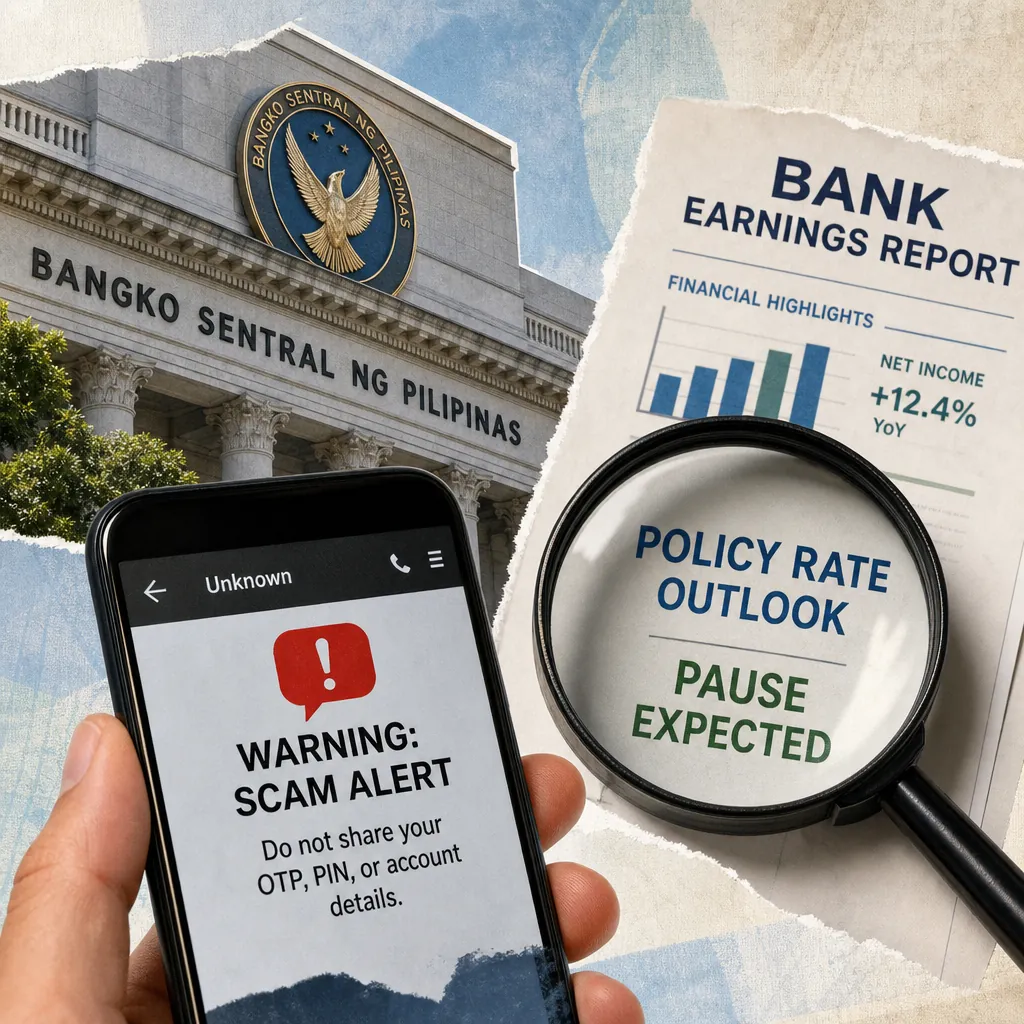
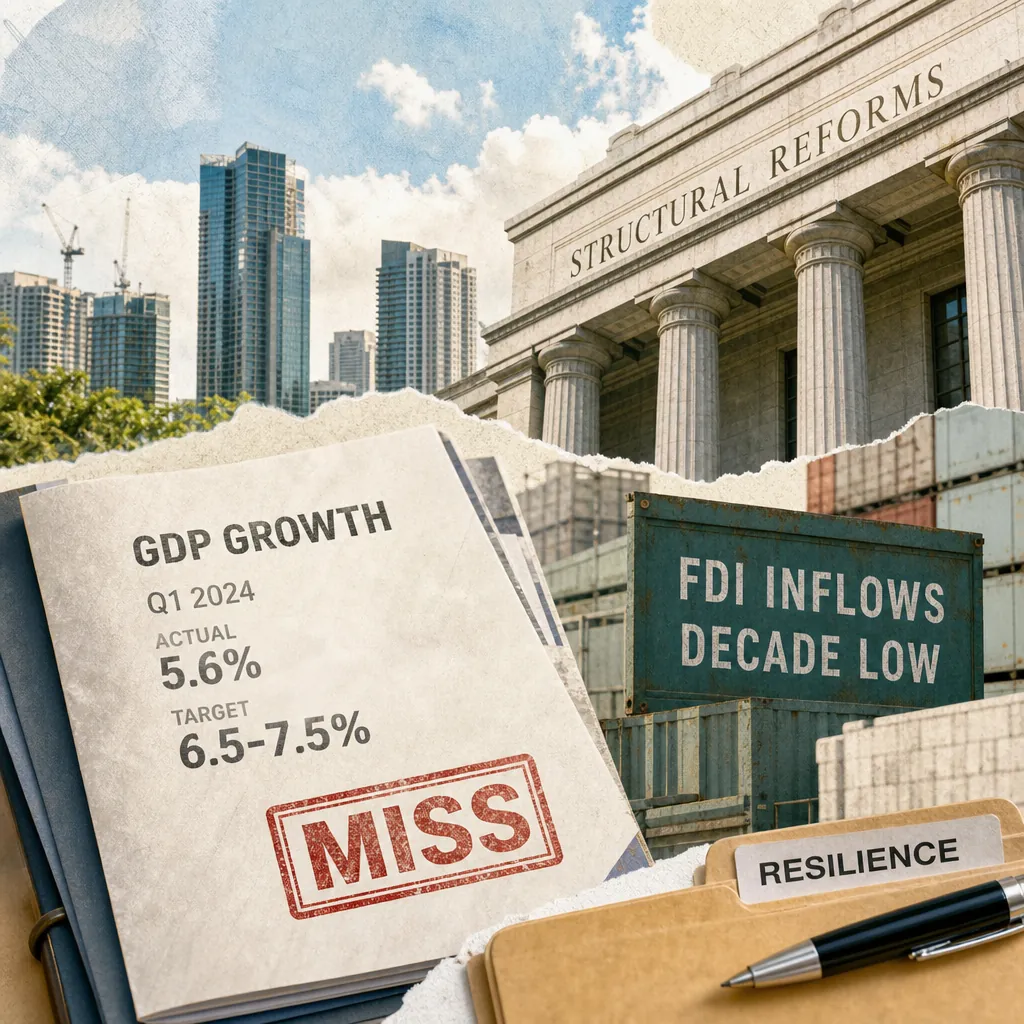
Leading the news cycle was the release of second-quarter gross domestic product (GDP) data showing the economy grew by only 2.3% year-on-year, the weakest performance outside the pandemic years since 2009. This figure, reported by the Philippine Statistics Authority, immediately triggered a wave of analysis from financial institutions. The UK-based think tank Oxford Economics and Citi both projected that the Bangko Sentral ng Pilipinas (BSP), the country's central bank, would raise its benchmark interest rate by another 50 basis points to 5.25% by year-end, despite the weak growth. Their reasoning: the Philippines remains highly exposed to inflation risks, particularly from global food and energy prices, which outweigh concerns about a slowing economy. This narrative was picked up across multiple outlets, including BusinessWorld, The Manila Times, and Head Topics, with each providing slightly different angles but converging on the same core message: the central bank is likely to prioritize fighting inflation over supporting growth.
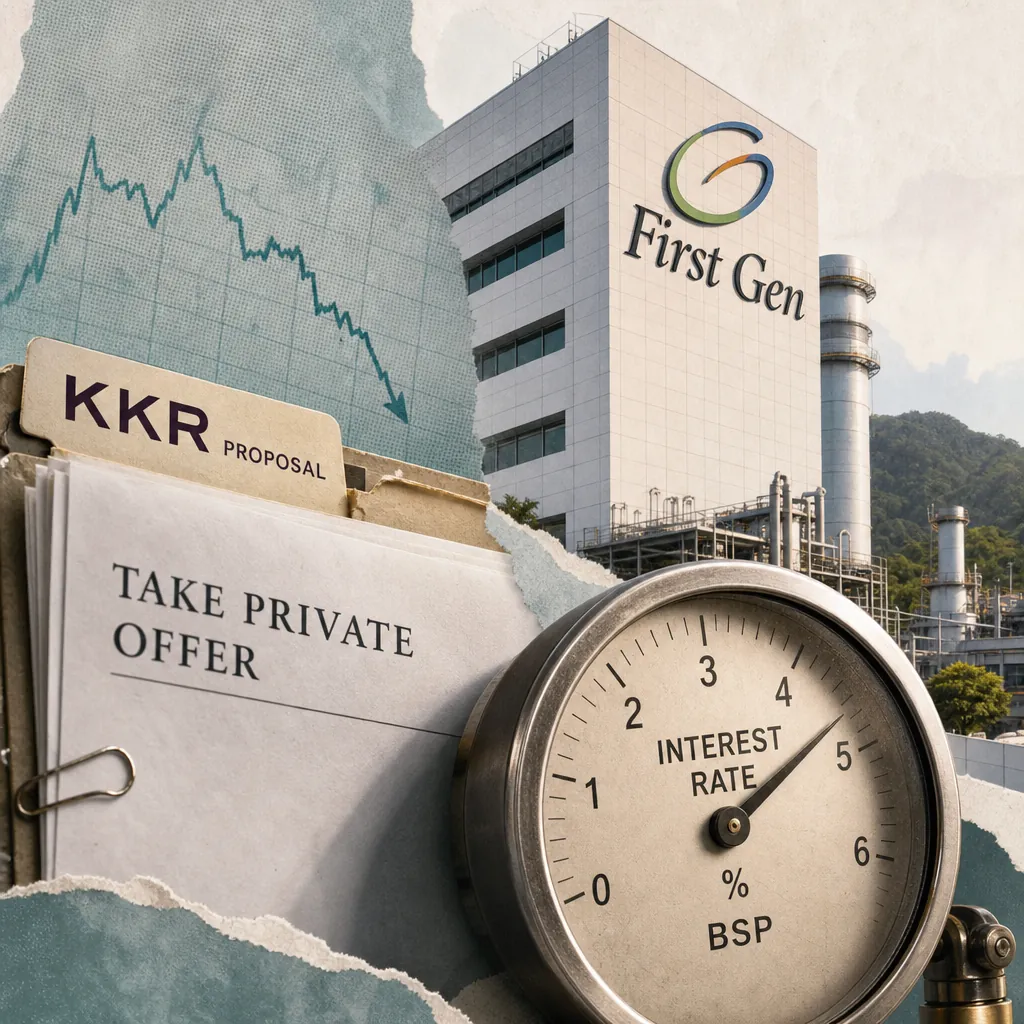
Alongside the macro story, a significant corporate development emerged: US-based private equity firm Kohlberg Kravis Roberts & Co. (KKR) proposed increasing its stake in First Gen Corp., a major Philippine power producer, and launching a tender offer for the remaining public shares, potentially leading to the company's voluntary delisting from the Philippine Stock Exchange (PSE). The proposal, first reported by BusinessWorld and Inquirer, was described as preliminary and non-binding, but analysts like Juan Paolo Colet of China Bank Capital said it should be "seriously considered," noting that First Gen was "ripe for delisting." The story drew heavy coverage, with multiple outlets running the wire report, and it raised questions about the treatment of minority shareholders and the future of one of the country's largest energy companies.
On the consumer and digital finance front, several stories highlighted the ongoing push for financial inclusion and security. Mindanao traders at the 35th Mindanao Business Conference advocated for mobile banking innovations to bring the region's informal sector—estimated to generate between ₱150 billion and ₱200 billion annually—into the formal financial system. Meanwhile, banks like Metrobank and BDO stepped up their anti-scam efforts, rolling out new security features and conducting awareness sessions for senior citizens, in compliance with the Anti-Financial Account Scamming Act (AFASA). The FinTech Alliance PH also voiced support for using the national ID system for account verification to reduce cyber fraud. These stories, while less prominent than the macro news, reflect a sustained industry focus on expanding access while protecting consumers.
The day's conversation also included lighter but notable items: the Philippine Stock Exchange index tumbled 1.23% on Thursday, partly attributed to the traditional "Ghost Month" phenomenon and the removal of Ayala Land from the MSCI Philippines Index. Ayala Corp. reported a 7% drop in core net income for the first half, while Filinvest Development Corp. saw a slight decline in profit. These corporate results, along with the KKR-First Gen news, painted a picture of a business environment facing headwinds but still active with deal-making and strategic moves.
Key themes
- Economic slowdown and rate hike expectations: The 2.3% Q2 GDP growth, the slowest since the pandemic, dominated headlines. Analysts from Oxford Economics and Citi forecast additional BSP rate hikes to 5.25% by year-end, citing inflation risks. This theme underscores the central bank's dilemma: balancing growth against price stability.
- KKR's proposal to take First Gen private: The US private equity firm's non-binding offer to increase its stake and delist First Gen from the PSE drew significant coverage. Analysts called for transparency and fair treatment of minority shareholders, highlighting the tension between corporate consolidation and public market participation.
- Digital financial inclusion for the informal sector: Mindanao traders pushed for mobile banking to bring the region's informal economy into the formal financial system. This theme reflects a broader industry effort to expand access to financial services for underserved populations.
- Anti-scam and security measures in banking: Metrobank introduced new security features on its app, BDO conducted scam awareness sessions for seniors, and the FinTech Alliance backed national ID verification. These efforts align with the Anti-Financial Account Scamming Act (AFASA) and reflect growing consumer concern about fraud.
- Corporate earnings and market movements: Ayala Corp.'s core income fell 7%, Filinvest's profit slipped, and the PSE index dropped, partly due to Ayala Land's removal from the MSCI index. These developments signal a challenging operating environment for conglomerates.
- Remittances and the yen's strength: A stronger Japanese yen could boost remittances from Filipinos in Japan but raise travel costs. This theme connects global currency movements to the welfare of overseas Filipino workers and the domestic economy.
- Wise Philippines' push for low-cost transfers: The fintech company highlighted that Filipinos lost ₱50 billion to foreign exchange markups in 2024, and only 21% are aware of hidden fees. This theme underscores the need for consumer education in cross-border payments.
- Sustainability and waste management at the BSP: The central bank partnered with social enterprise Berdeng Kalabaw to improve waste management, part of its Toward Zero Waste Program. This theme shows institutional commitment to environmental sustainability.
How the narratives stack
Dominant: The economic slowdown and the prospect of further rate hikes is the dominant narrative of the day. This story is anchored by hard data (2.3% GDP growth) and authoritative forecasts from Oxford Economics and Citi, which were widely reported across multiple outlets. The narrative's consequence is high: it affects borrowing costs for businesses and consumers, the peso's value, and the overall investment climate. Within the captured set, this story drew the most coverage in terms of article count and advertising-equivalent value, with BusinessWorld's piece alone valued at over ₱600,000. The narrative is not just about a number; it's about the central bank's difficult choice between fighting inflation and supporting a slowing economy, a choice that will shape the Philippines' economic trajectory for the rest of the year.
Counter-narrative: While the dominant narrative focuses on the need for rate hikes, a counter-narrative emerges from the weak growth data itself: that the central bank should pause or even cut rates to support the economy. This view is implicit in the reporting on the GDP slowdown and is articulated by some analysts who argue that the BSP's inflation outlook may be too pessimistic. The counter-narrative is not as loud, but it is present in the discussion of the "policy rate at 4.75% seems at a too-thin margin" over the BSP's 2027 inflation forecast, suggesting that some see the current rate as already restrictive. This tension between fighting inflation and supporting growth is the crux of the day's macro debate.
Emerging: The KKR-First Gen proposal is an emerging narrative that could have significant implications for the Philippine stock market. If the deal proceeds, it would remove one of the country's largest listed power companies from the exchange, reducing the market's diversity and potentially affecting index funds. The story is still in its early stages—the offer is non-binding—but it has already sparked discussion about minority shareholder rights and the attractiveness of the PSE as a listing venue. This narrative is likely to develop further as more details emerge.
Suppressed: A story that received relatively little attention but deserves more is the push for digital financial inclusion for Mindanao's informal sector. While the Mindanao Business Conference story was covered by Inquirer, it did not generate the same level of discussion as the macro or corporate stories. Yet, the informal sector's size (₱150-200 billion annually) and its lack of access to banking represent a significant opportunity for economic growth and poverty reduction. The story is suppressed in the sense that it is overshadowed by the day's more dramatic headlines, but it is a critical long-term issue for the Philippine economy.
Platform insights
- Facebook: Facebook is likely the primary platform for sharing news articles and opinion pieces related to the economy and corporate developments. Posts from business news pages like BusinessWorld and Inquirer would generate shares and comments, with users expressing concerns about rising prices and the impact of rate hikes on their loans. The KKR-First Gen story might also spark discussions among investors, with some questioning the fairness of the offer to minority shareholders.
- X (formerly Twitter): X is a hub for real-time commentary from economists, financial analysts, and journalists. The GDP data release would have triggered a flurry of tweets, with hashtags like #PHGDP and #BSP trending. Analysts would share their rate hike forecasts, and market participants would react to the PSE index drop. The platform's fast-paced nature makes it ideal for breaking news and expert opinions.
- YouTube: YouTube would feature video content from financial news channels and vloggers discussing the economic slowdown and its implications. Channels like ANC and Bloomberg Philippines might post interviews with economists, while independent vloggers could offer more accessible explanations of what the GDP number means for ordinary Filipinos. The KKR-First Gen story might also be covered in stock market analysis videos.
- Reddit: Reddit's r/Philippines and r/phinvest communities would have threads discussing the GDP growth and rate hike expectations. Users might share personal experiences with rising interest rates on loans or ask for advice on whether to invest in the stock market given the uncertainty. The KKR-First Gen proposal could also be a topic, with users debating the merits of delisting and the impact on minority shareholders.
Key voices and communities
- Economic analysts and think tanks: Oxford Economics and Citi are key voices, providing authoritative forecasts that shape market expectations. Their reports are widely cited in the media and influence investor sentiment. Their framing is data-driven and cautious, emphasizing inflation risks over growth concerns.
- Business journalists and media outlets: BusinessWorld, The Manila Times, and Inquirer are the primary sources of business news in the Philippines. Their reporting sets the agenda and provides the detailed analysis that other platforms amplify. Their framing is factual and balanced, but they also highlight the human impact of economic policies.
- Banking and fintech executives: Leaders like Areson I. Cuevas of Wise Philippines and Angelito Villanueva of FinTech Alliance PH are vocal advocates for digital financial inclusion and consumer protection. Their framing emphasizes the benefits of technology and the need for regulatory support to expand access and reduce costs.
- Investors and market participants: The investment community, including analysts like Juan Paolo Colet, is a key voice in the KKR-First Gen story. Their framing focuses on shareholder value, transparency, and the health of the stock market. They are concerned about the treatment of minority shareholders and the long-term attractiveness of the PSE.
- Consumer advocates and the public: While not directly quoted in the articles, the public's concerns about rising prices and financial scams are reflected in the coverage of anti-scam initiatives and the impact of rate hikes on borrowing costs. Their framing is practical and concerned with day-to-day financial well-being.
Narrative streams
The Macroeconomic Crossroads: Slow Growth Meets Inflation Fears
The Philippine economy's second-quarter growth of 2.3%—the slowest since the pandemic—has put the central bank in a tight spot. The data, released by the Philippine Statistics Authority, shows that the economy is struggling to regain momentum, with growth well below the government's target of 6-7% for the year. This slowdown is attributed to a combination of factors, including high interest rates, global uncertainty, and the lingering effects of the pandemic on certain sectors.
In response, Oxford Economics, a UK-based think tank, issued a report on August 11 forecasting that the Bangko Sentral ng Pilipinas (BSP) would raise its policy rate by another 50 basis points to 5.25% by the end of the year. The think tank's lead economist, Maya Senussi, noted that the Philippines is "the most exposed to inflation risks" among emerging markets, making it necessary to keep rates higher for longer. Citi echoed this view, expecting two more 25-basis-point hikes in August and October, despite the weak growth. Citi's commentary pointed out that the current policy rate of 4.75% is "at a too-thin margin" over the BSP's 2027 inflation forecast of 4.5%, suggesting that the central bank needs to act to keep inflation expectations anchored.
The BSP's dilemma is a classic one: raise rates to fight inflation, which could further slow the economy, or hold rates to support growth, which could allow inflation to become entrenched. The central bank's mandate is to maintain price stability, but it also has a responsibility to support the government's economic goals. The decision will have real consequences for Filipino consumers, who are already feeling the pinch of higher prices for food and fuel, and for businesses, which face higher borrowing costs.
This narrative stream is the day's most consequential, as it sets the stage for the BSP's next policy meeting in August. The coverage in the captured set was extensive, with BusinessWorld's article on Oxford Economics' forecast carrying an estimated advertising-equivalent value of over ₱600,000, reflecting the story's prominence in the business press. The read for the sector is that interest rates are likely to remain elevated for the foreseeable future, which will continue to weigh on investment and consumption.
KKR's Bold Move: The Potential Delisting of First Gen
In a development that could reshape the Philippine energy sector, US private equity firm Kohlberg Kravis Roberts & Co. (KKR) has proposed increasing its stake in First Gen Corp., a major power producer controlled by the Lopez family. The proposal, which was e-mailed to First Gen and its parent company First Philippine Holdings (FPH) on July 10, involves KKR acquiring an additional 8.43% stake from FPH and then launching a voluntary tender offer for the entire 11.67% public float of First Gen's shares. If successful, this would allow KKR and FPH to petition for First Gen's voluntary delisting from the Philippine Stock Exchange (PSE).
The proposal is non-binding, but it has already generated significant discussion. Juan Paolo Colet, managing director at China Bank Capital, said that FPH should "seriously look into" the offer, noting that First Gen is "ripe for delisting." However, he also stressed the importance of transparency, saying that "an offer to take [First Gen] private, even if phrased as nonbinding, is material information that should be timely disclosed to the investing public." The concern is that minority shareholders might be left out of the deal or receive an unfair price.
First Gen is a key player in the Philippine power sector, with interests in natural gas, geothermal, and other renewable energy sources. Its delisting would remove a significant stock from the PSE, potentially affecting index funds and reducing the market's diversity. The story drew heavy coverage across multiple outlets, including BusinessWorld, Inquirer, and The Manila Times, with the BusinessWorld article carrying an estimated advertising-equivalent value of over ₱267,000.
The read for the sector is that private equity interest in Philippine infrastructure and energy assets remains strong, but the process must be handled carefully to protect minority shareholders. The PSE and the Securities and Exchange Commission (SEC) will likely scrutinize any tender offer to ensure compliance with regulations. This narrative stream is still developing, and the outcome will depend on whether KKR and FPH can agree on terms and whether minority shareholders accept the offer.
Digital Financial Inclusion: Bringing the Informal Sector into the Fold
At the 35th Mindanao Business Conference in Cagayan de Oro, traders and business leaders made a strong case for mobile banking innovations to boost the region's agricultural economy, particularly its informal sector. Maricel Casiño-Rivera, a director of the Cagayan de Oro Chamber of Commerce and Industry, noted that the informal sector generates between ₱150 billion and ₱200 billion annually but is "largely undeveloped" and "not connected to the banking financial system." The Philippine Statistics Authority's 2023 report highlighted that Mindanao's food basket is dominated by small, family-operated farms, which are often outside the formal financial system.
The push for mobile banking is part of a broader national effort to promote financial inclusion. The BSP has been encouraging banks and fintech companies to develop products that cater to underserved segments, such as small farmers, sari-sari store owners, and other informal workers. Mobile banking offers a low-cost way to provide these individuals with access to savings, credit, and insurance, which can help them grow their businesses and improve their livelihoods.
The story was covered by Inquirer Online, with an estimated advertising-equivalent value of over ₱221,000. While it did not dominate the day's headlines, it represents a critical long-term opportunity for the Philippine economy. The read for the sector is that digital financial inclusion is not just a social good but also a commercial opportunity. Fintech companies and banks that can successfully serve the informal sector stand to gain a large and loyal customer base.
The Fight Against Financial Scams: Banks and Regulators Step Up
Financial scams continue to be a major concern for Filipino consumers, and the banking industry is responding with new security measures and awareness campaigns. Metrobank announced that it has rolled out four new security features on its digital banking app: a 24-hour cooling-off period after a major account update, money lock, real-time device location tracking, and pre-transfer payee verification. These features are designed to protect customers from unauthorized transactions and are in compliance with the Anti-Financial Account Scamming Act (AFASA), a law that criminalizes financial account scamming and requires banks to implement safeguards.
Similarly, BDO Unibank, in partnership with Barangay Bel-Air in Makati City, conducted a scam awareness session for senior citizens. The session provided practical tips on identifying scam tactics, safeguarding personal information, and responding to suspicious requests. BDO Foundation and the bank's Fraud Management Unit led the initiative, emphasizing that "fraud prevention is a shared responsibility."
The FinTech Alliance PH also voiced support for using the national ID system for account verification to reduce cyber fraud. The BSP has proposed requiring banks to integrate National ID Authentication Services (NIDAS) into their customer due diligence protocols. This would make it harder for scammers to open accounts using fake identities.
These efforts are timely, as recent news reports have highlighted the prevalence of scams, including a case where eight South Koreans were arrested for allegedly running online scam operations using AI-generated videos to impersonate law enforcement. The read for the sector is that consumer trust is paramount, and banks must continue to invest in security and education to protect their customers and their reputations.
Remittances and the Yen: A Double-Edged Sword
The potential strengthening of the Japanese yen could have mixed effects on the Philippine economy. On one hand, a stronger yen would increase the value of remittances sent home by Filipinos working in Japan. According to data from the Bangko Sentral ng Pilipinas, cash remittances from Japan rose from $1.68 billion in 2023 to $1.71 billion in 2024 and about $1.79 billion in the first half of 2026. A stronger yen would boost the peso value of these remittances, providing a welcome income boost for recipient families.
On the other hand, a stronger yen would make travel to Japan more expensive for Filipino tourists and business travelers. This could dampen the growing tourism flow between the two countries. The Bank of Japan is reportedly considering raising interest rates to combat inflation and support the yen, with markets pricing in a 76% probability of a hike at its September meeting.
The story, covered by Daily Tribune Online, highlights the interconnectedness of global financial markets and the Philippine economy. The read for the sector is that currency movements can have significant and sometimes contradictory effects on different segments of the economy. For remittance-dependent families, a stronger yen is good news; for the travel industry, it is a potential headwind.
Corporate Earnings: A Mixed Bag
Several major Philippine conglomerates reported their first-half earnings on Thursday, painting a mixed picture of the corporate sector. Ayala Corp. reported a 7% drop in core net income to ₱22.1 billion, weighed down by weaker contributions from its property arm, Ayala Land, and lower non-operating income. However, gains from banking, telecommunications, and power businesses helped cushion the decline. On a reported basis, net income fell 2% to ₱22.9 billion.
Filinvest Development Corp. also saw a slight decline in attributable profit to ₱7.36 billion, as weaker banking earnings offset strong gains from real estate and hospitality. The banking segment's profit fell 23% due to higher loan loss provisions.
These results reflect the challenging operating environment, with high interest rates and slow economic growth putting pressure on consumer spending and property sales. However, the diversified nature of these conglomerates helped them weather the storm, with some segments performing well.
The read for the sector is that conglomerates are resilient but not immune to the economic slowdown. Investors will be watching for signs of recovery in the second half, particularly in the property and banking sectors.
Conversation trajectory
- BSP rate decision (next 2-4 weeks): The BSP's next policy meeting is scheduled for August 15, and the market will be watching closely. Given the weak GDP data and the forecasts from Oxford Economics and Citi, a 25-basis-point hike is widely expected. The BSP's accompanying statement will be scrutinized for signals about future moves. If the BSP hikes and signals more to come, expect continued pressure on the peso and bond yields.
- KKR-First Gen deal (next 1-3 months): The non-binding proposal will likely be followed by more concrete negotiations. Watch for announcements from First Gen and FPH regarding their response. If a tender offer is launched, minority shareholders will need to decide whether to accept. The PSE and SEC will also review the process. A successful delisting could set a precedent for other companies, potentially reducing the PSE's attractiveness.
- Inflation data (next 1-2 months): The BSP's rate decisions will be heavily influenced by inflation data. The August inflation report, due in early September, will be a key indicator. If inflation remains elevated, the case for further hikes strengthens. If it moderates, the BSP may pause. The trajectory of global oil and food prices will be critical.
- Digital financial inclusion initiatives (next 6-12 months): The push for mobile banking and national ID verification is likely to gain momentum. The BSP's draft memorandum on NIDAS is expected to be finalized, and more banks will integrate the system. Fintech companies like Wise will continue to expand their presence, potentially driving down remittance costs. Watch for partnerships between banks and fintechs to serve the informal sector.
- Trigger events: Key triggers to watch include: the BSP's August 15 policy decision; the release of July inflation data; any formal announcement from KKR or First Gen regarding the tender offer; and the MSCI index rebalancing effective August 31, which will remove Ayala Land from the main index. These events could shift the narrative and market sentiment.
Response guidance
For communicators in the financial sector, the day's conversation underscores several key priorities:
- Address consumer concerns about inflation and rates: With the economy slowing and rates expected to rise, consumers are worried about their finances. Financial institutions should communicate clearly about how they are helping customers manage higher borrowing costs, such as offering flexible repayment options or financial education resources. Avoid jargon and focus on practical advice.
- Highlight security measures: Given the prevalence of scams, banks should proactively communicate the security features they have in place, such as Metrobank's new app features. Use plain language to explain how these features protect customers. Partner with community organizations to conduct awareness sessions, as BDO did with Barangay Bel-Air.
- Emphasize transparency in corporate actions: For companies involved in major transactions like the KKR-First Gen proposal, transparency is critical. Communicate clearly with all stakeholders, including minority shareholders, about the process and the terms. Timely disclosure of material information is not just a legal requirement but also a way to build trust.
- Promote financial inclusion: The push for digital financial inclusion is a positive story that resonates with the public. Highlight initiatives that bring underserved communities into the financial system, such as mobile banking for the informal sector. This can enhance brand reputation and align with national development goals.
- Be mindful of the Ghost Month effect: The PSE index's decline was partly attributed to the traditional Ghost Month, when some investors avoid making major financial decisions. Communicators should be aware of this cultural factor and avoid overreacting to short-term market movements. Focus on long-term fundamentals.
- Use multiple platforms: Given the diverse platforms where financial news is discussed, tailor messages for each. Use X for real-time updates and expert commentary, Facebook for sharing articles and engaging with the public, and YouTube for in-depth explainers. Consider partnering with financial influencers to reach younger audiences.
- Prepare for rate hike communications: If the BSP hikes rates, be ready to explain the impact on loans and savings. Provide clear, concise information on how customers can manage their finances in a higher-rate environment. Avoid alarmist language; instead, offer practical solutions.
- Monitor the KKR-First Gen story: For those in the energy sector, the potential delisting of First Gen is a significant development. Monitor the story closely and be prepared to respond to questions about the impact on the sector and the stock market. If your organization is involved, ensure all communications are consistent and transparent.
By following these guidelines, communicators can navigate the day's complex narrative and maintain trust with their stakeholders.
See the full picture behind today's signals.
This report draws from Media Meter's MediaWatch, our real-time monitoring engine tracking 2,470+ Philippine sources across print, broadcast, digital, and social. Explore how the platform turns raw coverage into decision-grade intelligence, then see how it's configured for teams like yours — whether you're in PR agencies, corporate comms, government, or marketing.
Want more? Browse our Report Library for sector and crisis intelligence, or request a demo and we'll have your brand set up before the call.
Want this kind of intelligence on your brand?
This brief is built on the same MediaWatch methodology that runs continuously across every brand we monitor. See your competitive landscape, Impact Score, and narrative trajectory in a 30-minute demo.