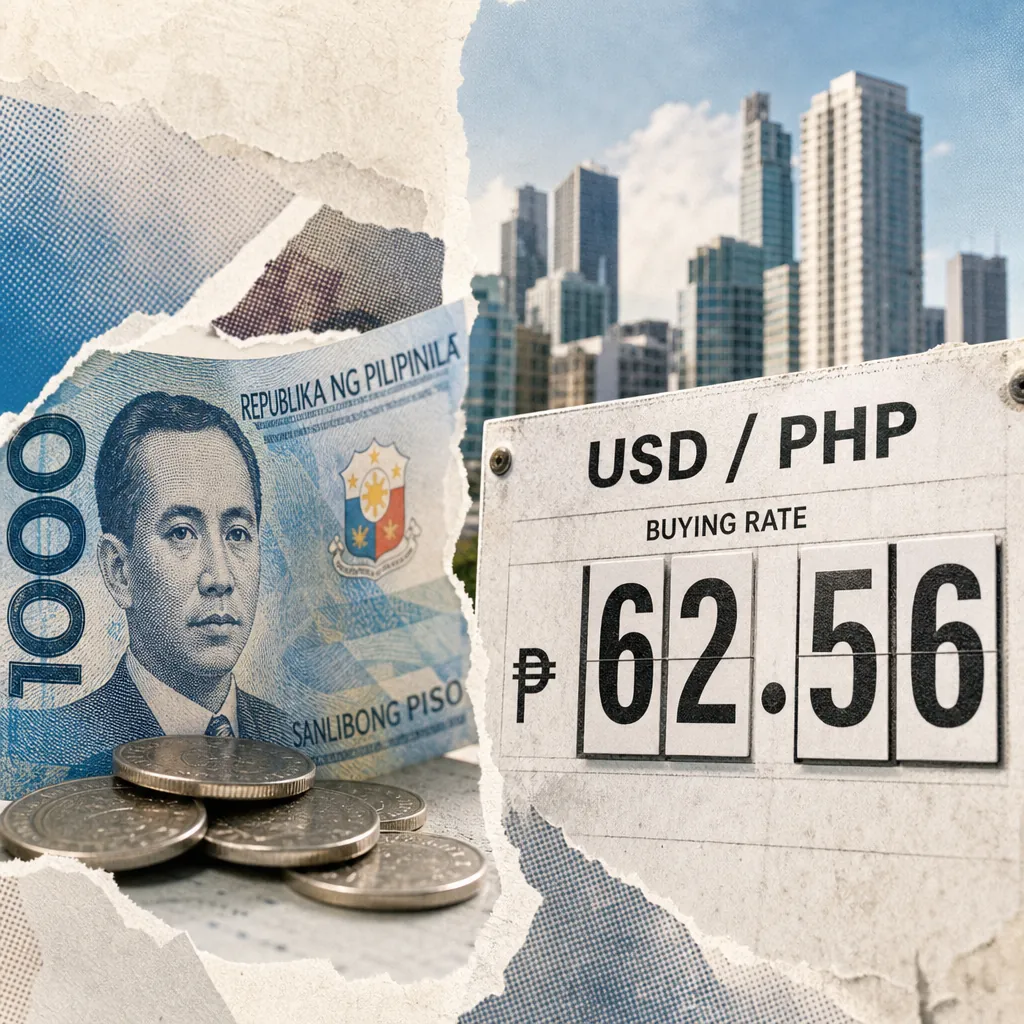
Oil hits P100/liter as peso weakens, Middle East tensions rise
Fuel prices cross P100 per liter in the Philippines as Middle East tensions and a weak peso drive costs up. Separately, pork prices fall as farmers rush to sell ahead of a feared African swine fever outbreak, while the impeachment trial of Vice President Sara Duterte reveals confidential fund recipients who were minors or dead.
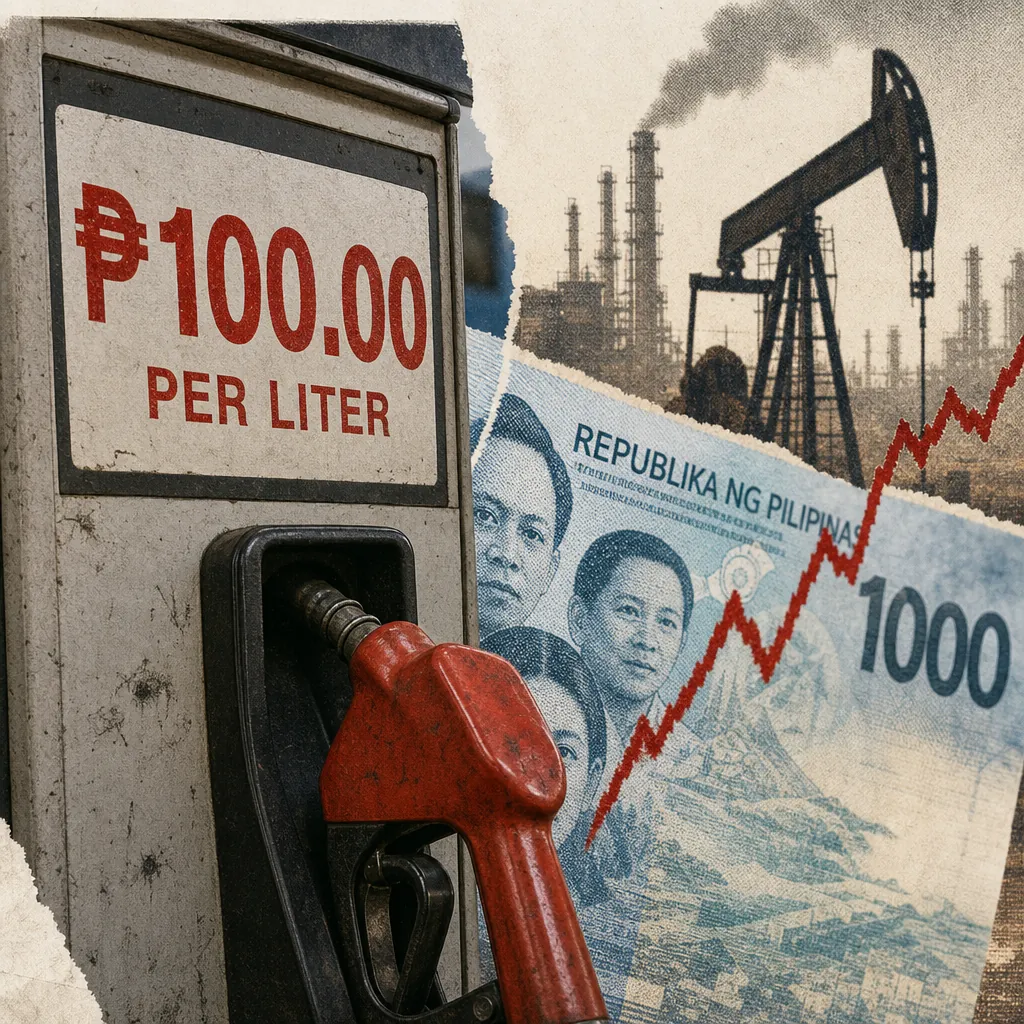
Fuel prices in the Philippines crossed the P100-per-liter mark on September 8, 2026, as oil companies implemented hefty increases driven by renewed Middle East tensions and a weakening peso. Gasoline rose by as much as P4.69 per liter, diesel by P5.18, and kerosene by P5.58, pushing prices in Metro Manila to as high as P102.04 for gasoline and P102.68 for premium diesel 16. Energy Secretary Sharon Garin attributed the hike to "higher international oil prices following renewed tensions affecting energy flows through the Middle East," compounded by the peso's depreciation against the dollar 19. The increases follow a week of rollbacks and mark the latest in a series of adjustments since fighting began in March, with diesel prices up nearly P50 per liter and gasoline up about P52 over that period 27. The development dominated news coverage across broadcast, online, and print outlets, with radio and television stations reporting the changes throughout the day 111423.
Meanwhile, the impeachment trial of Vice President Sara Duterte took a dramatic turn as a Philippine Statistics Authority (PSA) official testified that many supposed recipients of Duterte's confidential funds were minors, dead people, or had no records at all. PSA Assistant National Statistician Marizza Grande told the Senate impeachment court that among 2,669 supposed recipients from the Office of the Vice President (OVP) and Department of Education (DepEd), 1,685—or 63 percent—had no birth, marriage, or death records in the PSA's Civil Registry System 20. The list included a two-month-old baby who died in 1965, 37 people whose names matched death records, and 25 minors 5. The revelation drew extensive coverage, with multiple outlets reporting on the testimony 764.
In agriculture, pork prices fell as hog raisers rushed to sell their animals ahead of the rainy season, fearing another outbreak of African swine fever (ASF). Agriculture Secretary Francisco Tiu Laurel Jr. said the "fast break" move, rather than rising imports, was behind declining farm-gate prices 18. The Department of Agriculture reported that pork production rose 5.6% to 412,280 metric tons in the second quarter, while average farm-gate prices dropped nearly 19% year-on-year to about P172 per kilo from P211.91 19. The development comes as the government prepares to roll out the first ASF vaccine approved for commercial use, with preparations underway in Cagayan Valley 1.
Key themes
- Fuel prices breach P100 per liter as Middle East conflict and weak peso bite — Gasoline, diesel, and kerosene prices rose by P4.69, P5.18, and P5.58 per liter respectively on September 8, pushing pump prices above P100 in Metro Manila. Energy Secretary Sharon Garin cited renewed US-Iran hostilities and the peso's record-low performance against the dollar as the main drivers 1619.
- Peso hits record low, becoming Asia's worst-performing currency — The Philippine peso closed at P62.586 per dollar on September 7, near its record low of P62.59 set the previous Friday. Bloomberg reported the peso has fallen 6.2% this year, making it the worst-performing currency in the region 27. The weakness is attributed to the Philippines' heavy dependence on oil imports and service industries.
- Impeachment trial reveals confidential fund recipients were minors, dead, or nonexistent — PSA records presented at Vice President Sara Duterte's impeachment trial showed that among 2,669 supposed recipients of confidential funds from her office and DepEd, 63% had no birth, marriage, or death records. The list included a two-month-old baby who died in 1965 and 37 people matching death records 2064.
- Pork prices fall as farmers rush to sell ahead of feared ASF outbreak — Hog raisers accelerated sales before the rainy season, worried that changing weather could trigger another African swine fever outbreak. Agriculture Secretary Francisco Tiu Laurel Jr. said this "fast break" move, not imports, drove down farm-gate prices 18. Pork production rose 5.6% to 412,280 metric tons in Q2, while average farm-gate prices fell nearly 19% year-on-year 19.
- First ASF vaccine approved for commercial use, rollout preparations begin — The Department of Agriculture began orienting over 125 agricultural extension workers in Cagayan Valley on the proper handling of the AVAC live vaccine from Vietnam, the first ASF vaccine approved for commercialization in the Philippines. The Bureau of Animal Industry is finalizing guidelines to ensure biosecurity 1.
- ASEAN weighs regional oil stockpile to guard against supply disruptions — Five ASEAN member states—Indonesia, Singapore, Malaysia, Thailand, and Vietnam—expressed interest in a proposed regional oil stockpiling mechanism. Trade Secretary Ma. Cristina Roque said the initiative, pushed by President Ferdinand Marcos Jr., aims to build reserves that countries can tap during future supply crises 27.
- Philippines pushes for zero tariffs on banana exports to Japan — Trade Secretary Cristina Roque said the government is pressing for zero tariffs on Philippine bananas under the revised Japan-Philippines Economic Partnership Agreement (JPEPA). Manila is open to reciprocating by lowering duties on Japanese vehicle imports, which currently face a 20% tariff 27.
- DSWD flags bogus social media posts on UPLIFT aid for students — The Department of Social Welfare and Development warned against posts claiming the government is giving cash assistance to students under the Unified Package for Livelihood, Industry, Food, and Transport (UPLIFT) Assistance. Spokesperson Irene Dumlao clarified that educational assistance is not part of the program, which is meant to ease the impact of rising prices 27.
How the narratives stack
Dominant — The fuel price hike and its economic implications dominated the day's coverage across all mediums. The story of gasoline and diesel crossing P100 per liter was reported by broadcast outlets including DZMM, DZRB, and Net 25, as well as online news sites like Philstar, Inquirer, and Remate 111619. The narrative tied together multiple threads: Middle East tensions, the weakening peso, and the impact on Filipino consumers and transport groups. Within the captured set, this story drew the most extensive coverage, with radio and television stations providing detailed breakdowns of the new prices 1423.
Counter-narrative — The Department of Agriculture's explanation that pork prices fell due to farmers' fears of ASF, not imports, offered a counterpoint to narratives blaming cheap imports for hurting local hog raisers. Agriculture Secretary Francisco Tiu Laurel Jr. emphasized that in Mindanao, hog prices fell despite minimal imported pork entering the region 18. This narrative sought to reassure both consumers and producers that the price decline was a temporary, precautionary response rather than a structural problem.
Emerging — The rollout of the first ASF vaccine represents an emerging story with significant implications for the hog industry. The Department of Agriculture began preparations in Cagayan Valley, orienting over 125 agricultural extension workers on proper vaccine handling 1. Abra Representative JB Bernos called for subsidies to help small farmers afford the vaccine 1. This narrative could shift from preparation to implementation in the coming weeks, potentially affecting pork supply and prices.
Under-covered — The ASEAN regional oil stockpile initiative received relatively limited coverage despite its strategic importance. Five member states—Indonesia, Singapore, Malaysia, Thailand, and Vietnam—expressed interest in the proposed mechanism, which could protect Southeast Asia from future fuel supply disruptions 27. The story appeared in business sections but did not receive the same attention as the immediate fuel price hike, possibly because its effects would only materialize in a future crisis.
Platform insights
- Facebook — The impeachment trial testimony dominated Facebook discussions, with users sharing and commenting on the revelation that confidential fund recipients included dead people and minors. Posts from news outlets like Inquirer and Philstar generated significant engagement as users expressed outrage and disbelief. The PSA official's testimony, particularly the mention of names like "Mary Grace Piattos" and "Xiaomi 8," became a focal point for viral sharing and memes.
- X (formerly Twitter) — Fuel price updates and the peso's record low trended on X, with users sharing photos of pump prices and commenting on the economic impact. Energy Secretary Sharon Garin's explanation of the price hike was widely quoted and debated. Political commentators and opposition figures used the platform to criticize the administration's economic management, while government supporters defended the response.
- YouTube — News channels posted video coverage of the fuel price hike and the impeachment trial testimony. GMA News and other broadcasters uploaded segments explaining the new pump prices and the PSA findings 14. The trial testimony, with its dramatic revelations about dead and minor recipients, drew significant viewership as users sought detailed coverage beyond headlines.
- Reddit — Discussions on Philippine subreddits focused on the economic impact of rising fuel prices and the weakening peso. Users shared personal experiences of increased transportation and food costs, while others debated the political implications of the impeachment trial. The ASF vaccine rollout also generated interest, with users discussing its potential to stabilize pork prices.
Key voices and communities
- Government officials and agencies — Energy Secretary Sharon Garin, Agriculture Secretary Francisco Tiu Laurel Jr., and Trade Secretary Ma. Cristina Roque were the primary official voices, explaining price movements and policy responses. The Department of Energy, Department of Agriculture, and Department of Trade and Industry issued statements and advisories that shaped the day's narratives 161827.
- Transport groups — The Alliance of Concerned Transport Organization (ACTO) Nationwide voiced concerns about the combined impact of flooding and fuel price hikes on their livelihoods. President Liberty De Luna said some members could not operate in Metro Manila and other regions due to flooded roads, while also facing higher fuel costs 9. The group is awaiting official notice from the Department of Transportation regarding a promised P20,000 amortization assistance per unit.
- Hog raisers and agricultural stakeholders — Farmers rushed to sell their hogs ahead of the rainy season, fearing another ASF outbreak. Their behavior drove down pork prices and became a central story in agricultural news. The Department of Agriculture's explanation sought to reassure the public that the price decline was not due to imports but to precautionary selling 18.
- Impeachment trial participants — PSA Assistant National Statistician Marizza Grande, private prosecutor Mae Divinagracia, and Vice President Sara Duterte's legal team were central figures in the day's political coverage. Grande's testimony about confidential fund recipients who were minors, dead, or had no records dominated news coverage 2064.
- Consumer and business groups — The Philippine Amalgamated Supermarkets Association (PASA) noted that the "Ber months" do not yet translate into big supermarket sales, as households tighten budgets amid economic pressures. Executive Director Steven Cua said September through November remain "dry months" for grocery operators, with demand picking up only as December approaches 55.
Narrative streams
Fuel prices cross P100 per liter as Middle East conflict and weak peso converge
Gasoline, diesel, and kerosene prices rose by as much as P4.69, P5.18, and P5.58 per liter respectively on September 8, pushing pump prices in Metro Manila to as high as P102.04 for gasoline and P102.68 for premium diesel 16. Energy Secretary Sharon Garin explained that the hike was "driven largely by higher international oil prices following renewed tensions affecting energy flows through the Middle East," with the peso's depreciation adding further pressure 19.
The increases follow a week of rollbacks and mark the latest in a series of adjustments since fighting began in March. Diesel prices have risen nearly P50 per liter and gasoline about P52 per liter over that period, with prices now ranging from P85 to P105 per liter depending on the station 27. The conflict between the US and Iran, including US airstrikes on Iranian oil tankers and the Kharg Island export center, has disrupted flows through the Strait of Hormuz, a critical chokepoint for global oil shipments 27.
The peso's weakness compounded the impact. The currency closed at P62.586 per dollar on September 7, near its record low of P62.59 set the previous Friday 27. Bloomberg reported the peso has fallen 6.2% this year, making it the worst-performing currency in Asia. The Philippines is particularly vulnerable because it depends heavily on imported oil and has a service-oriented economy, unlike neighbors that can rely on manufacturing or commodity exports to earn dollars 27.
Transport groups felt the impact immediately. The Alliance of Concerned Transport Organization (ACTO) Nationwide reported that some members could not operate in Metro Manila and other regions due to flooded roads from heavy rains, while also facing higher fuel costs 9. President Liberty De Luna said operators and drivers also feared engine damage from driving through deep floodwaters. The group is awaiting official notice from the Department of Transportation regarding a promised P20,000 amortization assistance per unit 9.
Read for the sector: The sustained rise in fuel prices, now exceeding P100 per liter, will continue to pressure transportation costs, food prices, and household budgets. Businesses that depend on logistics and delivery will face higher operating costs, which may be passed on to consumers. The peso's weakness and Middle East tensions show no immediate signs of abating, suggesting further price adjustments are possible in the coming weeks.
Impeachment trial reveals confidential fund recipients were minors, dead, or nonexistent
The impeachment trial of Vice President Sara Duterte took a dramatic turn as PSA Assistant National Statistician Marizza Grande testified that many supposed recipients of Duterte's confidential funds were minors, dead people, or had no records at all 20. Among 2,669 supposed recipients from the Office of the Vice President (OVP) and Department of Education (DepEd), 1,685—or 63 percent—had no birth, marriage, or death records in the PSA's Civil Registry System 20.
The list included a two-month-old baby who died in 1965, 37 people whose names matched death records, and 25 minors 5. One recipient, "Mary Grace Piattos," had no PSA records at all, leading lawmakers to suggest the name could be a combination of a restaurant and a potato chip brand 7. Other names without records included "Arthur Baon," "Ralph Josh Bacon," "Xiaomi 8," "Danric 8," "Thomas Panda," and "Timon Angelo Pusa" 7.
Grande called the discovery "unusual and unique" during direct examination by private prosecutor Mae Divinagracia 5. The testimony covered P612.5 million in confidential funds spent between 2022 and 2023, with acknowledgment receipts submitted to justify the liquidation 64. The PSA official confirmed that the database yielded a "single-match entry" for Marlin Sunga, who died at two months old on November 2, 1965—about 57 years before an acknowledgment receipt in her name appeared in 2023 64.
The revelations drew extensive coverage across multiple outlets, with the story appearing in broadsheets, tabloids, and online news sites 72064. The trial resumed on September 7, with Duterte's lawyers reportedly arguing that some of the names were "actual aliases" used by informants 7.
Read for the sector: The testimony strengthens the case against Duterte and could influence public opinion on the impeachment proceedings. For government agencies and officials, the revelations underscore the importance of proper documentation and verification in the use of confidential funds. The trial's outcome could have significant political implications, potentially affecting the stability of the current administration.
Pork prices fall as farmers rush to sell ahead of feared ASF outbreak
Pork prices fell as hog raisers rushed to sell their animals before the rainy season, worried that changing weather conditions could trigger another African swine fever outbreak 18. Agriculture Secretary Francisco Tiu Laurel Jr. said this "fast break" move, rather than rising imports, was the reason behind declining farm-gate prices 18.
The Department of Agriculture reported that pork production rose 5.6% to 412,280 metric tons in the second quarter, while average farm-gate prices dropped nearly 19% year-on-year to about P172 per kilo from P211.91 19. Tiu Laurel noted that in Mindanao, hog prices fell despite minimal imported pork entering the region, supporting the explanation that farmers' precautionary selling drove the decline 18.
Last year, ASF outbreaks caused pork prices to spike, with liempo (pork belly) reaching P450 to P490 per kilo and kasim (pork shoulder) around P400 per kilo 18. The high prices encouraged producers to expand their herds, but as the rainy season approached, many farms rushed to sell rather than risk another outbreak 18.
The development comes as the government prepares to roll out the first ASF vaccine approved for commercial use. The AVAC live vaccine from Vietnam is the first ASF vaccine approved for commercialization in the Philippines, seven years after the disease first hit the country 1. The Department of Agriculture began orienting over 125 agricultural extension workers in Cagayan Valley on proper vaccine handling, ensuring pigs are healthy before vaccination and monitoring animals afterward to prevent reactions 1.
The Bureau of Animal Industry is finalizing guidelines to ensure biosecurity, with Officer-in-Charge Director Dr. Christian Daquigan saying the agency is strictly monitoring which hog raisers received the vaccine 1. The sale of the vaccine online is prohibited 1. Abra Representative JB Bernos called on lawmakers to provide funds for subsidizing the vaccine to help small farmers ensure their livelihoods' viability 1.
Since ASF hit the Philippines in 2019, the hog population has fallen from 13 million to around 8 million, with outbreaks reported in 76 of 82 provinces 1. The vaccine rollout represents a significant step toward recovery, though its effectiveness and adoption remain to be seen.
Read for the sector: The pork price decline offers temporary relief to consumers but reflects underlying anxiety among hog raisers about ASF. The vaccine rollout could help stabilize the industry by reducing the risk of future outbreaks, potentially encouraging farmers to rebuild their herds. For food retailers and consumers, pork prices may remain volatile until the vaccine is widely adopted and ASF risks subside.
ASEAN weighs regional oil stockpile to guard against supply disruptions
Five ASEAN member states—Indonesia, Singapore, Malaysia, Thailand, and Vietnam—expressed interest in a proposed regional oil stockpiling mechanism designed to protect Southeast Asia from future fuel supply disruptions 27. Trade Secretary Ma. Cristina Roque said the initiative, pushed by President Ferdinand Marcos Jr., aims to build reserves that countries can tap during a future supply crisis 27.
The proposal emerged after an oil supply crisis exposed the region's vulnerability to disruptions in global energy markets. Roque said the five countries could move ahead with the initiative even if the rest of ASEAN does not immediately participate, although the specific arrangements for storing, financing, and releasing the oil are still being studied 27.
The United Arab Emirates has offered to supply oil for storage in an ASEAN country with the facilities to hold strategic stocks 27. The arrangement would let participating countries draw on the reserves during emergencies, providing a buffer against supply disruptions like those currently affecting the Middle East.
The initiative is being developed with the Economic Research Institute for ASEAN and East Asia (ERIA), a think tank that supports regional economic integration 27. Roque did not initially name the five supporting countries, saying she would provide the list separately to avoid misidentifying participants, but later identified them as Indonesia, Singapore, Malaysia, Thailand, and Vietnam 27.
Read for the sector: A regional oil stockpile could provide a safety net for ASEAN countries, including the Philippines, during future supply crises. For businesses and consumers, such a mechanism could help stabilize fuel prices and reduce the impact of global energy shocks. However, the initiative is still in its early stages, with significant details on storage, financing, and release mechanisms yet to be worked out.
Philippines pushes for zero tariffs on banana exports to Japan
The Philippines is pressing for zero tariffs on its banana exports to Japan as it finalizes a bilateral trade agreement, the Department of Trade and Industry (DTI) said 27. Trade Secretary Cristina Roque said among the key topics of the revised Japan-Philippines Economic Partnership Agreement (JPEPA) negotiations are cutting the tariffs imposed on locally grown bananas 27.
"This will open the Japan market for our bananas, because they have a tariff of eight to 18 percent. It is higher compared to our ASEAN neighbors," Roque said 27. The Philippines may offer to slash tariffs on Japanese car imports in exchange for zero duties on its banana shipments to Tokyo, a strategy Manila expects could pave the way for the country to become the world's top exporter of the fruit 27.
Japanese cars with engine displacements of three liters or below currently face a 20 percent tariff entering the Philippines 27. Roque said the government is aggressively pushing to eliminate tariffs on Philippine bananas, though the final rate remains under negotiation 27.
Bananas imported from the Philippines are imposed an 18 percent tariff from October 1 to March 31, while shipments from April 1 to September 30 are slapped with an eight percent tariff 27. The Philippines exported nearly three million metric tons of bananas, making it one of the world's largest exporters of the fruit 27.
The Philippines has also completed negotiations for a free trade agreement with Chile, expected to be signed in October, which would provide greater access to the South American market 27. Trade Secretary Roque said agricultural exports continue to be led by bananas, pineapples, and coconuts, while new products with strong export potential include ube (purple yam) and calamansi (Philippine lime) 27.
In 2025, Philippine exports grew by a record 15.4%, and the DTI said growth continues in 2026 27.
Read for the sector: Zero tariffs on banana exports to Japan would significantly boost the Philippine banana industry, potentially making the country the world's top exporter. For agricultural exporters, the trade negotiations represent an opportunity to expand market access and increase revenues. The reciprocal reduction of tariffs on Japanese car imports could also benefit Filipino consumers by lowering vehicle prices.
DSWD flags bogus social media posts on UPLIFT aid for students
The Department of Social Welfare and Development (DSWD) on September 7 flagged social media posts offering supposed educational assistance to students under the Unified Package for Livelihood, Industry, Food, and Transport (UPLIFT) Assistance 27. The posts claim that the government is giving P2,000 to elementary students, P3,000 to junior high school students, P5,000 to senior high school students, and P8,000 to college students under the program 27.
DSWD Assistant Secretary and spokesperson Irene Dumlao clarified that educational assistance was not part of the program. "Paalala po natin sa ating mga kababayan na walang educational assistance sa ilalim po ng ating UPLIFT Assistance. Ito pong assistance na ito ay tulong maibsan ang epekto ng pagtaas ng presyo ng mga bilihin (We remind our fellow Filipinos that there is no educational assistance under UPLIFT Assistance. This assistance is intended to help ease the impact of rising prices of goods)," Dumlao said 27.
The posts also directed users to registration links, which the DSWD warned could be phishing attempts or scams designed to collect personal information 27. The agency urged the public to verify information through official channels and report suspicious posts.
The UPLIFT Assistance program is a government initiative to help Filipinos cope with rising prices of goods. The program provides financial assistance to eligible beneficiaries, but educational assistance is not among its components 27.
Read for the sector: The spread of false information about government assistance programs poses risks to both beneficiaries and the agencies administering them. For communicators, the incident highlights the importance of proactive messaging to counter misinformation and the need for clear, accessible channels for the public to verify official information.
Conversation trajectory
Fuel prices and economic impact (observation window: 1–2 weeks) — The current fuel price hike is expected to persist as long as Middle East tensions continue and the peso remains weak. Energy Secretary Sharon Garin warned that prices could rise further if the conflict intensifies 19. The Department of Energy will announce next week's price adjustments, which will indicate whether the current trend continues. Transport groups have called for government assistance, and their response to rising costs could escalate if prices continue to climb.
Impeachment trial developments (observation window: 1–2 weeks) — The trial is expected to continue with more witnesses and evidence presentations. The PSA testimony has strengthened the prosecution's case, but Duterte's defense team has signaled it will challenge the findings. The trial's outcome could have significant political implications, potentially affecting the stability of the current administration. Key events to watch include further testimony from PSA officials and any response from Duterte's legal team.
ASF vaccine rollout (observation window: 4–8 weeks) — The Department of Agriculture's preparations for the ASF vaccine rollout in Cagayan Valley mark the beginning of a broader national campaign. The vaccine's effectiveness and adoption will determine whether the hog industry can recover from the losses caused by ASF since 2019. Abra Representative JB Bernos's call for subsidies suggests that cost could be a barrier for small farmers. The rollout's progress will be visible in pork supply and price data over the coming months.
ASEAN oil stockpile initiative (observation window: 3–6 months) — The proposed regional oil stockpile is still in its early stages, with details on storage, financing, and release mechanisms yet to be worked out. The involvement of the United Arab Emirates as a potential oil supplier adds a geopolitical dimension to the initiative. Progress will depend on the willingness of the five interested countries to move forward and the resolution of technical and financial questions.
Trade negotiations with Japan (observation window: 3–6 months) — The Philippines' push for zero tariffs on banana exports to Japan is part of ongoing JPEPA negotiations. The reciprocal offer to reduce tariffs on Japanese car imports suggests both sides are willing to make concessions. The outcome will depend on the progress of negotiations and the willingness of both governments to reach an agreement. A successful deal could significantly boost the Philippine banana industry and provide a template for future trade agreements.
Trigger events to watch: The Department of Energy's weekly fuel price announcement; the next session of the impeachment trial; the first batch of ASF vaccine deliveries and administration; any escalation or de-escalation in Middle East tensions; the peso's movement against the dollar; and the next round of JPEPA negotiations.
Response guidance
Fuel price communications — For companies in transportation, logistics, and food retail, communicate clearly about how fuel price increases affect your operations and pricing. Provide transparent explanations of cost drivers and any adjustments to product or service prices. Acknowledge the burden on consumers and highlight any efforts to absorb costs or improve efficiency. Avoid defensive messaging; instead, focus on what you are doing to mitigate the impact.
ASF vaccine messaging — For agricultural companies and government agencies involved in the ASF vaccine rollout, emphasize the safety and proper handling of the vaccine. Provide clear guidance to hog raisers on how to access the vaccine and what to expect. Address concerns about cost and effectiveness directly. Highlight the potential for the vaccine to stabilize pork supply and prices, benefiting both producers and consumers.
Impeachment trial sensitivity — For organizations and individuals commenting on the impeachment trial, maintain a factual, non-partisan tone. Avoid speculation and unverified claims. Focus on the evidence presented and the legal process. Be mindful of the political sensitivity of the topic and the potential for misinformation to spread. If your organization has no direct stake in the trial, consider whether commenting adds value or simply adds noise.
Economic messaging — For businesses and government agencies responding to the weakening peso and rising fuel prices, provide context and reassurance where possible. Explain the global factors driving these trends and what is being done to address them. Avoid making promises that cannot be kept. Focus on practical steps that consumers and businesses can take to manage costs.
Countering misinformation — The DSWD's experience with bogus social media posts about UPLIFT assistance highlights the need for proactive misinformation response. Monitor social media for false claims about your programs or services. Establish clear, accessible channels for the public to verify information. Respond quickly and clearly to correct false claims, and encourage the public to report suspicious posts.
See the full picture behind today's signals.
This report draws from Media Meter's MediaWatch, our real-time monitoring engine tracking 2,470+ Philippine sources across print, broadcast, digital, and social. Explore how the platform turns raw coverage into decision-grade intelligence, then see how it's configured for teams like yours — whether you're in PR agencies, corporate comms, government, or marketing.
Want more? Browse our Report Library for sector and crisis intelligence, or request a demo and we'll have your brand set up before the call.
Want this kind of intelligence on your brand?
This brief is built on the same MediaWatch methodology that runs continuously across every brand we monitor. See your competitive landscape, Impact Score, and narrative trajectory in a 30-minute demo.