Hotel101 Signs P6.44-B Egypt Deal as Housing Costs Bite
DoubleDragon's Hotel101 signed a P6.44-billion, 750-room hotel deal in Cairo, its first project in Africa. The same day, housing developers pressed for buyer interest subsidies and building permits fell to a six-year low.
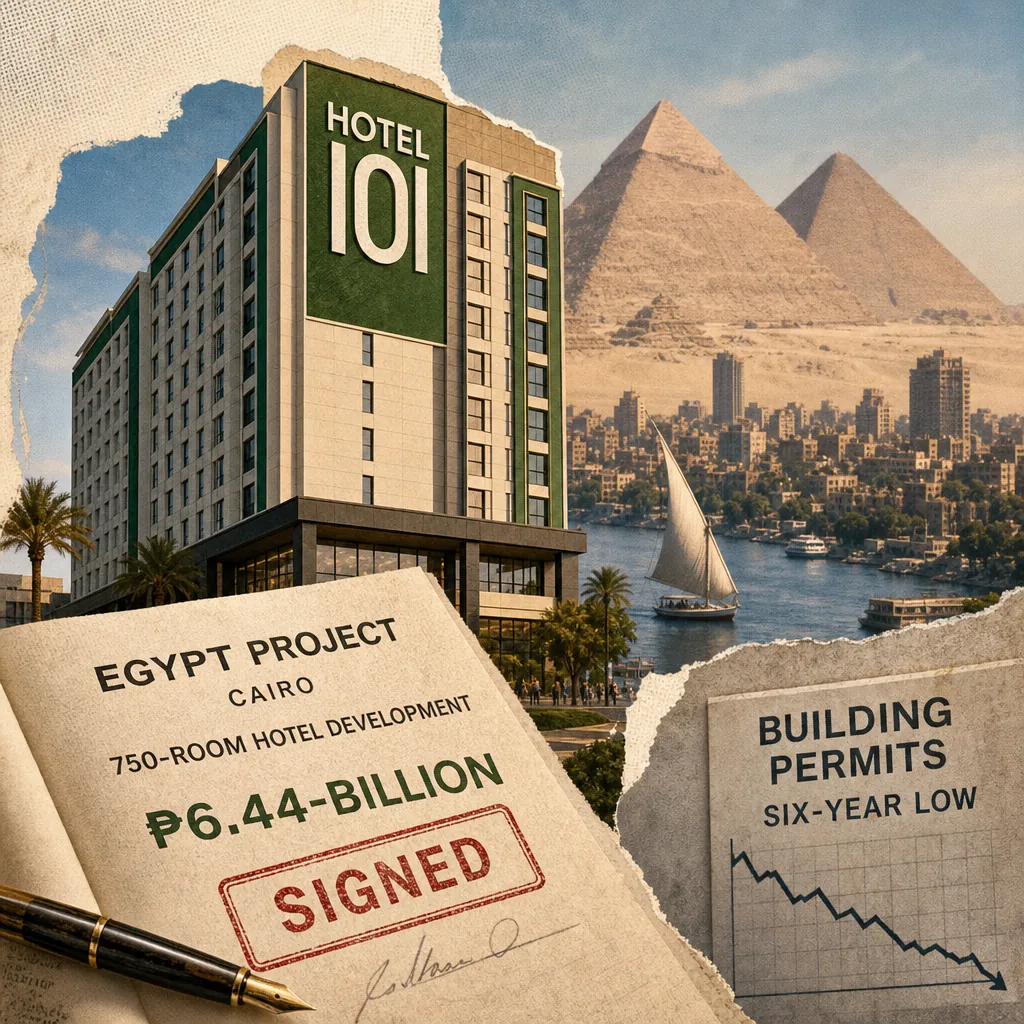
Hotel101 Global Holdings Corp., the Nasdaq-listed hospitality arm of Philippine developer DoubleDragon Corp., signed binding agreements on Wednesday to build a 750-room hotel in Greater Cairo, its first project in Africa and one of the largest hotels by room count in Egypt's capital. The project carries a total value of 5.465 billion Egyptian pounds, or about US$102.09 million, roughly ₱6.44 billion at current rates 2253. The deal, with WNTR Property & Hospitality, an affiliate of Egyptian conglomerate IGI Holding, covers a countrywide development partnership across Egypt, starting with Hotel101-Cairo West on a 1.59-hectare site in Hay Al Ashgar, 6th of October City, Giza, about 10 minutes from the Giza Pyramids and the Grand Egyptian Museum 2292. Completion is targeted for 2029 53.
The announcement drew coverage across at least five outlets in the items reviewed here, from broadsheet business pages to regional and online business desks, and it was the single most consequential corporate story for the sector on the day 225392. The same Wednesday brought a less cheerful set of numbers for the domestic market. The Philippine Statistics Authority reported that approved building permits fell to 10,968 in August 2026, down 31 percent from 15,888 in the same month last year and the lowest monthly count since May 2020, when pandemic lockdowns cut approvals to 4,725 71. Economists quoted by BusinessMirror said the drop points to weaker construction demand under elevated costs and tighter financing 71.
On the social side, the day's property conversation was almost entirely agent-driven: individual brokers and sellers posted house-and-lot and condominium listings on Facebook and YouTube, pitching payment terms rather than prices, and drew almost no engagement. A Quezon City townhouse listing collected one like and two love reactions and no comments 2; a Mandaluyong rent-to-own post and a Pasig lease-to-own video drew no comments, likes or shares at all 78. The contrast between the corporate headline and the quiet listing feeds is the day's real shape: capital is moving abroad and into policy advocacy, while the retail end of the market competes on monthly amortization.
Key themes
- Hotel101's Egypt deal puts ₱6.44 billion of project value into Africa. The 750-room Cairo West hotel is DoubleDragon's first expansion outside Asia and its largest single project by room count, targeted for completion in 2029 2253.
- Approved building permits fell 31 percent year on year in August to a six-year low. The PSA counted 10,968 approved construction activities, the fewest since May 2020, which economists read as weaker demand under high costs and tight credit 71.
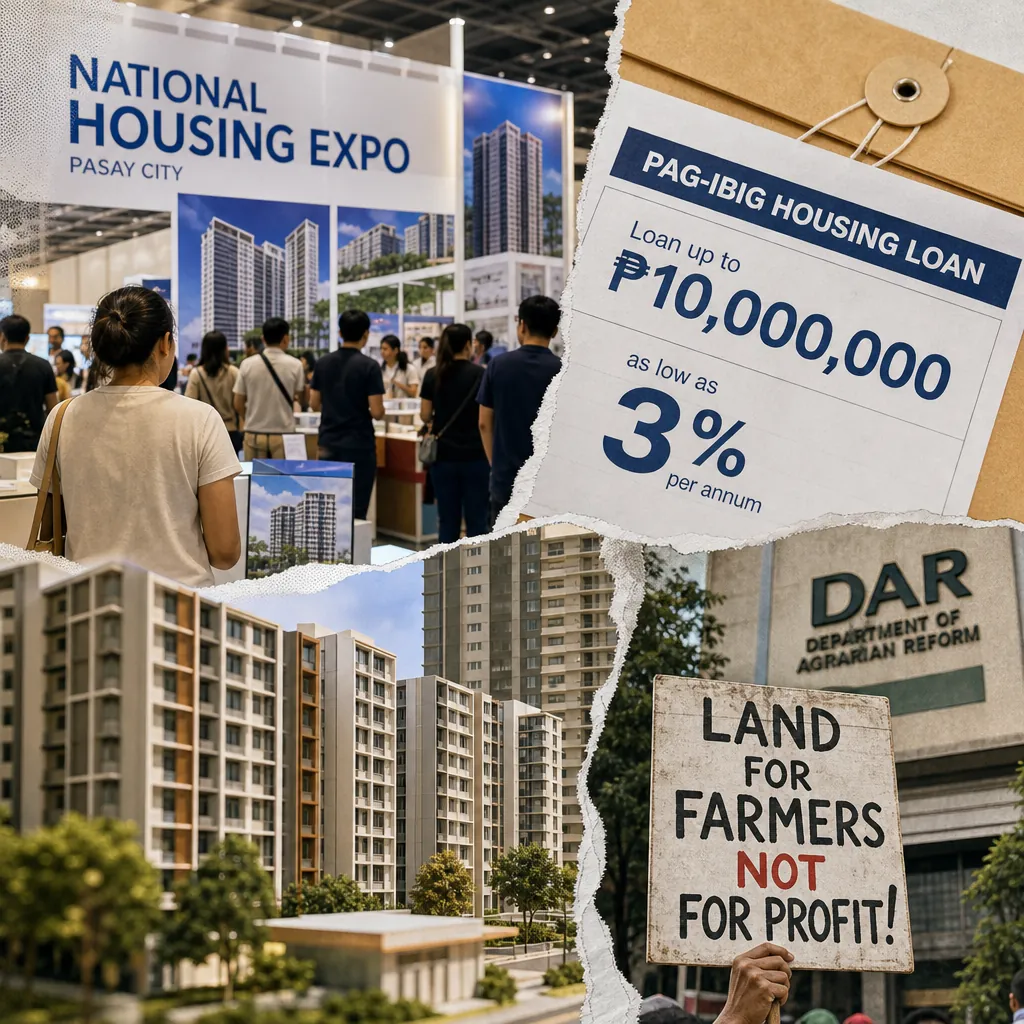
- Housing developers asked government to subsidize buyers' interest, not just build units. The Chamber of Real Estate and Builders Associations (CREBA) proposed a Pag-IBIG-administered interest subsidy funded by developers, arguing affordability, not production, is now the binding constraint 74.
- CREBA opened its 53rd national convention in Cebu with a push against two regulatory measures. The group asked the Department of Human Settlements and Urban Development (DHSUD) to reconsider retroactive escrow reassessments and restrictions on pre-selling proceeds, and opposed House Bill 9697's changes to socialized housing compliance 919390.
- DHSUD expects 2026 to post the most housing units issued licenses to sell since 2022. Secretary Jose Ramon Aliling credited expanded options under the Pambansang Pabahay para sa Pilipino (4PH) program 28.
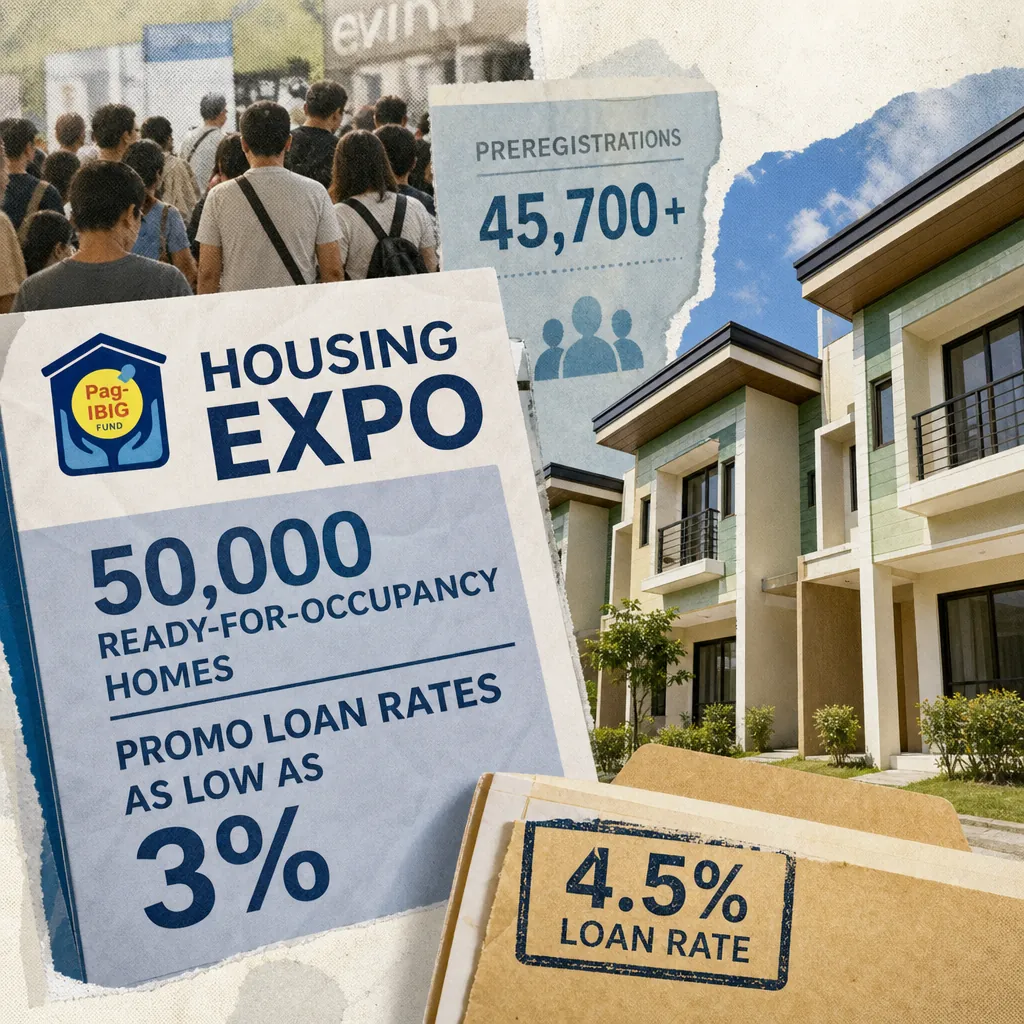
- Sellers are competing on financing terms rather than headline prices. Listings offered 0% down, 120-month lease-to-own, Pag-IBIG rates of 4.5% fixed for three years against bank rates of 7–8%, and no-bank 10-year plans 478.
- The peso closed at a record low of ₱63.361 to the dollar ahead of the central bank's policy meeting. A weaker peso raises the local cost of imported construction materials and makes dollar-denominated project values translate into more pesos 1777.
- Government housing partnerships advanced in Clark and Puerto Princesa. The Bases Conversion and Development Authority (BCDA) and Pag-IBIG identified a 14-hectare site in New Clark City, while Puerto Princesa courted investors with a 500-hectare ecotourism estate carrying up to ₱200 billion in stated investment potential 6685.
How the narratives stack
Dominant: Hotel101's Egypt entry. Across the items captured here, it was the most widely reported corporate property story of the day, appearing in Inquirer's business desk, Manila Standard's business pages, Panay News, and Daily Guardian, each carrying the same core figures: 750 rooms, US$102.09 million, 2029 completion 225392. The breadth reflects a genuine milestone — a Philippine hotel brand taking its standardized condotel model, in which rooms are sold to individual investors and then rented out, into a new continent — and the coverage value attached to the Manila Standard business item alone was an estimated ₱119,477 in advertising-equivalent terms, the notional cost of buying that column space 53.
Counter-narrative: The building-permit collapse. The 31-percent year-on-year drop in August approvals, reported by BusinessMirror with confirmation from National Statistician Claire Dennis Mapa that it was the lowest since May 2020, sits directly against DHSUD's forecast of a four-year high in licenses to sell 7128. Both can be true: licenses to sell measure developer intent to market projects, while building permits measure actual construction activity, and the gap between them is where financing stress shows up. The Philippine Institute for Development Studies' John Paolo Rivera said a sustained decline could dampen growth, investment and employment 71.
Emerging: The affordability agenda. CREBA's convention in Cebu produced three distinct policy asks in a single day — an interest subsidy for buyers, relief from escrow and pre-selling rules, and rejection of House Bill 9697's socialized housing amendments 749193. The group's president, Noel "Toti" Cariño, framed the shift plainly: "This way, we are addressing the issue of affordability, not just the issue of production of homes" 74. The proposals are not yet policy, but they set the terms for the sector's lobbying through the rest of the year.
Under-covered: The retail listing market. The agent posts that make up the social writeup — a ₱10.59-million house in General Trias, Cavite; ₱46–51-million townhouses near New Manila; a ₱2.199-million loft studio in Mandaluyong — drew engagement in the single digits or none at all 127. They carry no news value on their own, but together they show how sellers are pricing and financing units at the ground level, and that information is not appearing in the business pages.
Platform insights
- Facebook: The dominant venue for agent listings. Posts in buy-and-sell and affordable-condominium groups advertised rent-to-own and lease-to-own terms, discounted prices and monthly amortization figures, and drew no comments, likes or shares 78. The Quezon City townhouse post collected one like and two love reactions 2. The platform is functioning as a classifieds board for pre-selling and ready-for-occupancy inventory, with engagement too low to signal demand.
- YouTube: Property agents used video walkthroughs and listing explainers. A General Trias house-and-lot listing directed buyers to ask the agent for updated pricing and financing terms 1, and an Acacia Escalades video pitched ready-for-occupancy units with Pag-IBIG accreditation and a 4.5% fixed rate for three years against bank rates of 7–8% 4. The videos carry more detail than the Facebook posts but no measurable audience response in the material reviewed.
- X and Reddit: No property-related activity from these platforms appeared in the material reviewed.
Key voices and communities
DoubleDragon and Hotel101 management. The company's disclosure to the stock exchange supplied the hard numbers — project value, room count, site area, completion date — that every outlet repeated 53. Its framing is expansion and recurring overseas revenue, and it is the only voice in the day's coverage speaking from a position of completed transactions rather than proposals.
CREBA and its president, Noel "Toti" Cariño. The 53-year-old umbrella group for developers used its Cebu convention to argue that housing policy should target what buyers can afford rather than how many units get built 7490. Its positions on escrow rules, pre-selling proceeds and House Bill 9697 will shape how developers respond to DHSUD through 2027 9193.
DHSUD and Secretary Jose Ramon Aliling. The housing department is projecting a four-year high in licenses to sell and credits the expanded 4PH program, the government's flagship mass-housing scheme that offers units at different price points to households with varying incomes 28. Its data is the counterweight to the permit decline.
Economists and the Philippine Institute for Development Studies. Rivera's warning that a sustained permit decline could hit growth, investment and employment gives the construction data a macro dimension that developer statements do not 71.
Individual agents and brokers. The sellers behind the Facebook and YouTube listings are the retail face of the market, competing on down payments and amortization schedules 478. Their posts are the clearest available signal of what buyers are being offered at the low end.
Narrative streams
Hotel101 takes its condotel model to Cairo with a 750-room project
Hotel101 Global signed definitive agreements with WNTR Property & Hospitality, an affiliate of IGI Holding, to develop hotels across Egypt, beginning with Hotel101-Cairo West 22. The project will occupy 15,984 square meters in 6th of October City, Giza, and will offer four-star facilities including a ballroom, meeting rooms, a conference center, restaurants, pools, a gym and a business center 53. The company expects it to rank among Cairo's three largest hotels by room count once completed in 2029 53. Egypt recorded more than 19 million tourists in 2025 and has an estimated population of 118 million, which the company cites as the demand case 53.
The condotel model matters to the read: Hotel101 sells individual rooms to investors and operates the building as a hotel, so the project's economics depend on pre-selling units rather than on DoubleDragon's balance sheet alone. Taking that model to Egypt tests whether foreign retail investors will buy Philippine-branded hotel rooms the way domestic buyers have. For Philippine developers watching from Manila, a successful Cairo launch would validate cross-border pre-selling as a growth route at a time when the domestic market is showing financing strain 71.
The coverage itself was substantial. The Manila Standard business item carried an estimated ₱119,477 in advertising-equivalent value, the notional cost of the same space bought as advertising, and the Inquirer business story carried an estimated ₱307,692 2253. Those figures measure the cost of the coverage, not how many people read it.
Building permits fall to a six-year low as financing tightens
The PSA's Construction Statistics from Approved Building Permits counted 10,968 approved construction activities in August 2026, down 31 percent from 15,888 a year earlier 71. Mapa confirmed it was the lowest since May 2020's 4,725 71. Rivera of PIDS attributed the decline to elevated costs, financing constraints and cautious investor sentiment, and warned that a sustained drop could dampen economic growth, investment and employment given construction's strong links to other sectors 71.
The read for developers is that the pipeline of new projects is thinning at the same moment the central bank is expected to raise its benchmark rate to 5.25 percent, which raises the cost of the loans that fund construction and mortgages alike 17. A weaker peso, which closed at a record ₱63.361 to the dollar on Wednesday, adds to the cost of imported steel, cement and equipment 1777. Builders who locked in project costs earlier are better placed than those still assembling financing.
Developers ask government to subsidize buyers' interest
Speaking at a press conference ahead of CREBA's 53rd National Convention in Cebu, Cariño proposed an interest subsidy program administered by the Home Development Mutual Fund, known as Pag-IBIG, and funded directly by participating developers through non-recoverable contributions that would lower monthly loan interest for eligible buyers 74. He argued national housing policy must shift from building units to ensuring beneficiaries can afford and occupy them 74.
The proposal responds to a specific gap. Government housing programs can produce units, but if buyers cannot carry the monthly payments at prevailing rates, the units sit unsold or get abandoned. A developer-funded subsidy shifts part of the financing cost onto builders in exchange for faster absorption of inventory. For buyers, the difference between a subsidized rate and a commercial one can be several thousand pesos a month on a multi-million-peso loan. For developers, the question is whether the subsidy is cheaper than carrying unsold stock.
CREBA pushes back on escrow, pre-selling and socialized housing rules
CREBA asked DHSUD to reconsider two measures: a potential retroactive reassessment of compliance deficiencies under the incentivized escrow framework, and restrictions on the use of pre-selling proceeds under the Temporary License to Sell system 91. It also opposed House Bill 9697, which would amend the Urban Development and Housing Act's Balanced Housing Development Program, under which developers must produce socialized housing equivalent to 15 percent of their project total 93. CREBA called the bill "legislative duress" and warned it would reduce socialized housing production rather than increase it 93.
The read for the sector is that developers are willing to accept DHSUD's expansion of affordable housing options but not rules that tie up cash from pre-selling, which is the working capital that funds construction. If the escrow reassessment proceeds retroactively, developers with existing projects face unexpected liabilities. If House Bill 9697 passes in its current form, the compliance cost of market-rate projects rises. Both outcomes would slow launches at a time when permits are already falling 71.
DHSUD projects a four-year high in licenses to sell
Aliling told the second National Housing Expo that 2026 is expected to record the highest number of housing units issued licenses to sell since 2022, based on the monthly average of applications and licenses issued 28. He credited expanded housing options under the 4PH program, the government's mass-housing initiative that offers units at different price points to households with varying financial capacities 28.
Licenses to sell are the permits developers need before they can market and pre-sell units, so the count measures intended supply rather than completed construction. The gap between a four-year high in licenses and a six-year low in building permits is the sector's central tension: developers are lining up projects to sell while actual groundbreaking slows 2871. For buyers, more licensed projects mean more choices and more competition on payment terms, which is already visible in the agent listings offering 0% down and lease-to-own plans 48.
Sellers compete on monthly payments as bank financing gets harder
A Pasig listing for Acacia Escalades, a project by RLC Residences, the residential arm of Robinsons Land, marketed ready-for-occupancy units with Pag-IBIG accreditation and a 4.5% fixed rate for three years until December 2026, pitched against bank rates of 7–8% 4. A Mandaluyong post offered a loft studio at CityLOFTS Plainview at a discounted ₱2.199 million from ₱2.495 million, with monthly amortization starting at ₱14,318.36 over up to 15 years through the National Home Mortgage Finance Corporation (NHMFC), the state agency that buys and funds housing loans, and through RCBC 7. A separate post advertised a 20-square-meter studio at Gateway Regency Studios on a 10-year lease-to-own plan with no bank financing 8.
The read for developers is that buyer resistance to bank financing is now visible in how units are sold. When sellers advertise no-bank terms and developer-funded subsidies, the constraint is the monthly payment, not the sticker price. The December 2026 expiry of the Pag-IBIG fixed-rate offer is a date to watch: a rate reset would change payments for buyers already quoted it 4.
Government and private partnerships advance housing and investment outside Metro Manila
The BCDA and Pag-IBIG identified a 14-hectare site in New Clark City for their first joint housing project under a memorandum of agreement signed October 8, covering housing and institutional projects across BCDA properties including Camp John Hay, Morong Discovery Park and the Poro Point Freeport Zone. BCDA president Joshua Bingcang said the partnership is meant to keep development pace with the Clark Freeport Zone's roughly 145,000 workers across more than 1,200 locators. In Puerto Princesa, the city government is holding its third investment forum on October 23 at Conrad Manila, with about 150 investors expected, against a backdrop that includes Megaworld's six-hectare Baytown Palawan and Sta. Lucia's approximately 500-hectare Environmental Estate, designated a Tourism Enterprise Zone by the Tourism Infrastructure and Enterprise Zone Authority and carrying stated investment potential of up to ₱200 billion 6685.
The read for developers is that the growth map is shifting outward. Metro Manila's permit slowdown and financing costs make provincial and special economic zone projects more attractive, and government land partnerships reduce the cost of land acquisition. For local governments, the competition for private capital is now explicit, with investment forums and estate designations used as marketing tools.
Conversation trajectory
The Bangko Sentral ng Pilipinas policy meeting on Thursday, October 22. The Monetary Board is expected to raise its benchmark rate by a quarter point to 5.25 percent 17. A hike raises mortgage and construction loan costs and would reinforce the financing pressure visible in the permit data. Watch the statement language for signals on how far the tightening cycle will run. Window: 1–2 days.
The December 2026 expiry of the Pag-IBIG 4.5% fixed-rate offer. Buyers quoted that rate on ready-for-occupancy units face a reset at expiry 4. If the rate rises, monthly payments increase and some buyers may not qualify. Watch whether developers extend or replace the offer. Window: through December 2026.
CREBA's convention outcomes and DHSUD's response. The convention runs October 21–23 in Cebu 90. Watch whether DHSUD publicly responds to the escrow and pre-selling requests, and whether House Bill 9697 moves in the House. Window: 2–6 weeks.
The next PSA building permit release. The August figure was the lowest since May 2020 71. The September data will show whether the decline is a one-month dip or a trend. Window: next monthly release.
Hotel101-Cairo West's pre-selling launch. The project is targeted for 2029 completion 53. Watch for the start of unit sales and pricing, which will test whether the condotel model travels. Window: 3–6 months.
Trigger events: a BSP rate decision above 5.25 percent; a September permit count below August's 10,968; a DHSUD ruling on retroactive escrow reassessment; and the first reported pre-selling figures for Cairo West.
Response guidance
Developers with active pre-selling projects: prepare buyer communications around rate-reset scenarios, including the December Pag-IBIG expiry, and state clearly whether quoted rates are fixed or subject to change. Buyers who feel misled about payment terms generate the kind of complaints that draw regulatory attention.
Developers weighing new launches: factor the permit decline and the expected rate hike into launch timing. A project that depends on bank financing for buyers is more exposed than one with developer-funded subsidies or lease-to-own terms.
Communicators responding to the permit data: separate licenses to sell from building permits in any public statement. The two measure different things, and conflating them will read as spin against a 31-percent decline.
Companies with overseas expansion plans: Hotel101's Egypt coverage shows that cross-border deals draw broad pickup when they carry hard numbers — project value, room count, completion date. Supply those figures in the disclosure and the coverage writes itself.
Developers engaging on House Bill 9697: frame opposition around housing supply and buyer affordability rather than compliance cost alone. CREBA's "legacy of duress" framing is already in the record; a narrower argument about unit counts will travel further with legislators.
Agents and brokers using social platforms: listings that disclose whether prices are final and what financing terms apply draw less regulatory risk than posts that leave terms open. The General Trias listing's instruction to ask the agent for updated pricing is the kind of gap that generates disputes.
Companies with exposure to imported materials: the peso's record low raises input costs. Procurement teams should revisit hedging and pricing assumptions before the next round of project budgets.
See the full picture behind today's signals.
This report draws from Media Meter's MediaWatch, our real-time monitoring engine tracking 2,470+ Philippine sources across print, broadcast, digital, and social. Explore how the platform turns raw coverage into decision-grade intelligence, then see how it's configured for teams like yours — whether you're in PR agencies, corporate comms, government, or marketing.
Want more? Browse our Report Library for sector and crisis intelligence, or request a demo and we'll have your brand set up before the call.
Want this kind of intelligence on your brand?
This brief is built on the same MediaWatch methodology that runs continuously across every brand we monitor. See your competitive landscape, Impact Score, and narrative trajectory in a 30-minute demo.