Philippine Economy, BSP, and Housing Relief Dominate
A daily snapshot of Philippine business and economic conversation, covering weak Q2 GDP, BSP policy expectations, housing loan moratoriums, and corporate earnings.
The day's conversation in Philippine business and economic circles was dominated by the aftermath of weaker-than-expected second-quarter growth, the central bank's likely response, and the government's efforts to provide relief to communities battered by recent storms. On the corporate side, conglomerates reported strong earnings, while the financial sector saw leadership changes and new initiatives. The narrative was shaped by a mix of cautious optimism and concern, with the public and analysts alike parsing every signal from the Bangko Sentral ng Pilipinas (BSP) and the broader economy.
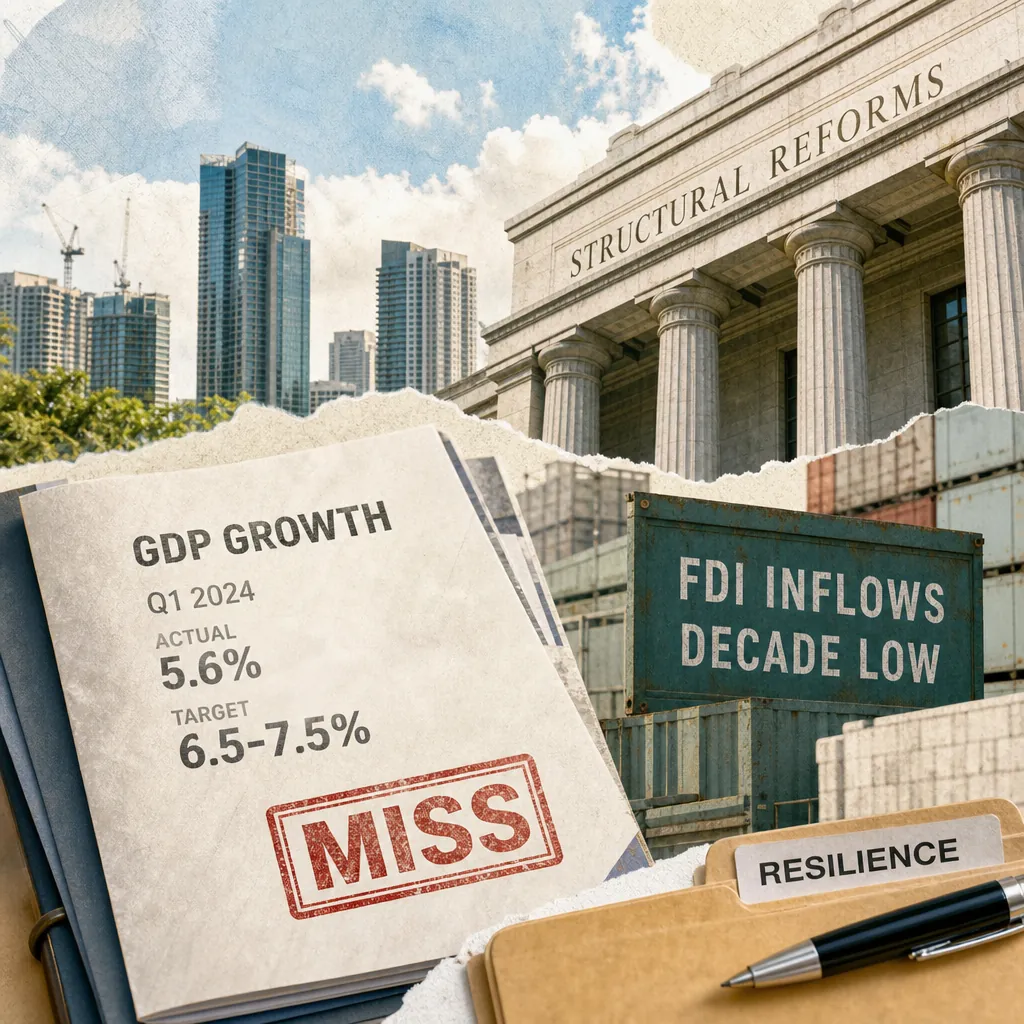
Leading the news cycle was the release of second-quarter gross domestic product (GDP) data, which showed the economy grew by only 2.3 percent, the slowest pace since the pandemic-induced contraction. This figure, well below the government's revised target of 3.5 to 4.5 percent for the year, triggered a wave of analysis and forecast downgrades. Deutsche Bank cut its 2026 growth forecast to 3.5 percent, while Bank of America maintained a more cautious 2.5 percent. The slowdown was attributed to a contraction in public construction and weaker household spending amid elevated inflation. This economic weakness has led investors to bet that the BSP will temper its monetary tightening, with Bank of America predicting a final 50-basis-point rate hike at the August 27 policy meeting before pausing. The stock market responded positively to these hopes, with the PSEi climbing 0.6 percent to close at 6,326.89.
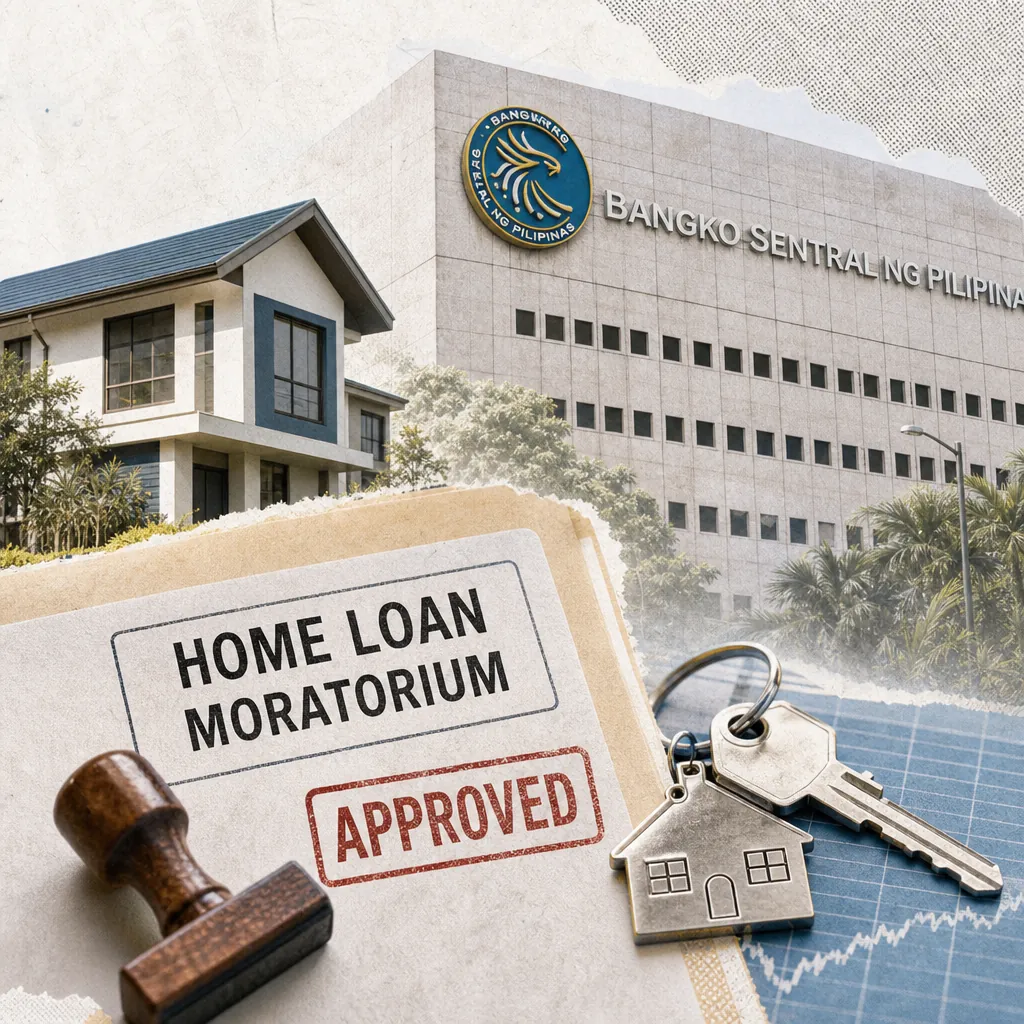
In parallel, the government moved to address the immediate needs of communities affected by the southwest monsoon and recent typhoons. The Department of Human Settlements and Urban Development (DHSUD) ordered a moratorium on housing loan amortizations for borrowers in affected areas, with the National Home Mortgage Finance Corporation (NHMFC) and the National Housing Authority (NHA) implementing one-month payment suspensions. President Marcos also ordered the revival of a long-delayed flood control project in Metro Manila, while the Department of Public Works and Highways (DPWH) faced scrutiny over a contractor linked to a controversial construction group. These stories highlighted the intersection of economic policy, disaster response, and infrastructure governance.
Corporate news was also prominent, with LT Group Inc. reporting a record first-half net income of P17.03 billion, driven by its banking, tobacco, and liquor businesses. Philippine Business Bank posted a strong second-quarter recovery, while BPI AIA announced a new CEO. The Social Security System (SSS) outlined plans to increase benefit payouts and explore overseas investments. These developments painted a picture of a private sector navigating a challenging economic environment with resilience.
Key themes
- Weak Q2 GDP fuels growth concerns: The economy's 2.3 percent expansion in the second quarter, the slowest since the pandemic, has led to forecast downgrades and raised questions about the government's ability to meet its full-year target.
- BSP policy expectations shift: Investors and analysts now expect the central bank to pause its rate-hiking cycle after a possible final hike in August, as weak growth tempers inflation concerns.
- Housing loan moratoriums provide relief: Government agencies have suspended loan payments for borrowers in storm-affected areas, offering temporary financial breathing room.
- Flood control and infrastructure under scrutiny: The government's response to recent flooding, including a revived spillway project and a low flood control budget, has drawn attention to infrastructure priorities and contractor accountability.
- Corporate earnings show resilience: LT Group and other companies reported strong first-half results, indicating that some sectors are weathering the economic slowdown.
- Financial sector leadership changes: BPI AIA's new CEO and other appointments signal a focus on growth and customer-centric strategies.
- SSS plans benefit increases and overseas investments: The state pension fund aims to expand benefits and diversify its investment portfolio.
- Consumer protection and cybersecurity awareness: A rise in financial consumer complaints and a guide to reporting cybercrime highlight growing concerns about digital financial safety.
How the narratives stack
Dominant: The dominant narrative is the economic slowdown and its implications for monetary policy. The weak Q2 GDP figure is the single most consequential development, driving market movements, analyst commentary, and government responses. Within the captured set, this story drew the most coverage, with multiple articles from major outlets like BusinessWorld, Inquirer, and Philstar, and it anchors the day's conversation.
Counter-narrative: A counter-narrative emphasizes resilience and recovery. Economists like Alvin Arogo of PNB argue that the second quarter was the bottom, and that growth will improve in the second half as base effects fade and government spending picks up. This view is supported by corporate earnings reports showing strong performance, suggesting that the private sector is not as weak as the headline GDP number implies.
Emerging: An emerging narrative is the government's disaster response and infrastructure governance. The housing loan moratoriums, the revived spillway project, and the scrutiny of the EDSA contractor point to a growing public and media focus on how the government handles calamities and public works. This could become a larger issue as the typhoon season continues.
Suppressed: A story that received relatively little attention in the captured set is the rise in financial consumer complaints, up 72.6 percent in 2025. While the BSP highlighted this as a sign of increased awareness, it also signals potential vulnerabilities in the digital financial system. This issue, along with cybersecurity concerns, may be under-covered compared to its importance for ordinary Filipinos.
Platform insights
- Facebook: Facebook is likely the primary platform for sharing news articles and government announcements, given its widespread use in the Philippines. Posts about the housing loan moratorium and flood control likely generated significant engagement, with users sharing personal experiences and seeking information.
- X (formerly Twitter): X is a hub for real-time commentary from economists, analysts, and journalists. The release of Q2 GDP data and BSP statements would have sparked immediate reactions, with hashtags like #GDP and #BSP trending. The platform is also used for corporate announcements and investor discussions.
- YouTube: YouTube serves as a platform for longer-form content, such as press conferences and explainer videos. The BSP's policy meetings and economic forums may be streamed here, attracting viewers seeking in-depth analysis.
- Reddit: Reddit communities like r/Philippines may have discussions on the economic slowdown, with users sharing opinions on government policies and personal financial impacts. The platform allows for more nuanced, community-driven conversations.
Key voices and communities
- Economists and analysts: Figures like Junjie Huang of Deutsche Bank, Jojo Gonzales of Bank of America, and Alvin Arogo of PNB are key voices shaping the narrative on growth and monetary policy. Their forecasts and comments are widely cited in the media.
- Government officials: Budget Secretary Kim Robert de Leon, Economy Secretary Arsenio Balisacan, and BSP officials are central to the conversation, providing official data and policy signals. Their statements are closely watched for clues on future actions.
- Business leaders: Executives like LT Group's Lucio Tan and BPI AIA's new CEO Melissa Henson represent the corporate sector's perspective, highlighting resilience and growth strategies.
- Consumer advocates and the public: The rise in financial complaints and the need for cybersecurity awareness are driven by consumer experiences. Online communities and social media amplify these voices, pushing for better protection and clearer information.
Narrative streams
Economic slowdown and monetary policy
The release of Q2 GDP data showing 2.3 percent growth has set the tone for the day. This figure, the slowest since the pandemic, has led to a flurry of analysis. Deutsche Bank cut its 2026 growth forecast to 3.5 percent, while Bank of America maintained a more cautious 2.5 percent. The slowdown is attributed to a contraction in public construction and weaker household spending amid elevated inflation. This has led investors to expect the BSP to pause its rate-hiking cycle after a possible final hike in August. Bank of America's Jojo Gonzales noted that the central bank could raise rates by another 50 basis points at its August 27 meeting, but that this might be the last move in the cycle. The stock market responded positively, with the PSEi climbing 0.6 percent to 6,326.89, as investors bet on a less aggressive BSP. However, concerns about the US-Iran situation and the economic outlook linger, keeping sentiment cautious. The government's revised target of 3.5 to 4.5 percent growth for the year now appears challenging, with the economy needing to grow by at least 4.4 percent in the second half to reach the lower end. This stream is dominated by news media coverage, with articles from BusinessWorld, Inquirer, and Philstar, and it is the primary driver of market movements.
Housing relief and disaster response
In response to the severe flooding caused by the southwest monsoon and recent typhoons, the government has implemented a moratorium on housing loan payments for affected borrowers. The Department of Human Settlements and Urban Development (DHSUD) ordered its key shelter agencies—the National Housing Authority (NHA), Social Housing Finance Corp. (SHFC), and National Home Mortgage Finance Corp. (NHMFC)—to suspend loan amortizations for one month. NHMFC's moratorium covers over 20,000 borrowers in provinces like Benguet, La Union, Pangasinan, and others, effective August 5 to September 4. NHA's moratorium applies to residential account holders in Metro Manila and several Luzon provinces. These measures are automatic and do not require application, providing immediate relief. President Marcos also ordered the revival of the long-delayed Spillway Project, a 10.5-kilometer underground tunnel linking Laguna Lake to Manila Bay, estimated to cost P90 billion, to provide a permanent flood control solution. This comes amid criticism that the proposed P107.4 billion flood control budget for 2027 is the lowest since 2019. The narrative also includes scrutiny of the EDSA contractor, Readycon Trading & Construction Corp., which has links to the Gardiola group, raising questions about accountability in public works. This stream is covered across multiple outlets, including Manila Times, Philstar, and Daily Tribune, and reflects the public's concern about disaster preparedness and infrastructure governance.
Corporate earnings and financial sector developments
Despite the economic slowdown, several companies reported strong earnings. LT Group Inc., the holding company of tycoon Lucio Tan, posted a record attributable net income of P17.03 billion in the first half, up 14 percent from a year earlier, driven by its banking, tobacco, and liquor businesses. Philippine National Bank remained the biggest contributor, accounting for 48 percent of earnings. Philippine Business Bank reported a net income of P412.8 million in the second quarter, an 86.3 percent increase quarter-on-quarter, despite a challenging environment. BPI AIA Life Assurance Corp. appointed Melissa Henson as its new CEO, bringing nearly two decades of experience in banking and insurance. The Social Security System (SSS) announced plans to pay out over P250 billion in benefits this year and is formulating a policy to invest up to 7.5 percent of its reserve fund overseas. These developments highlight the resilience of the private sector and the financial industry's efforts to adapt to changing conditions. This stream is covered by BusinessWorld, Inquirer, and Manila Standard, and provides a counterpoint to the gloomy GDP figures.
Consumer protection and cybersecurity
The BSP reported a 72.6 percent surge in financial consumer complaints in 2025, with over 120,000 complaints processed through its Consumer Assistance Mechanism. This increase is attributed to greater awareness of the BSP's channels, wider adoption of digital platforms, and media attention on the Financial Products and Services Consumer Protection Act (FCPA) and the Anti-Financial Account Scamming Act (Afasa). The BSP has been implementing rules under Afasa to require banks to strengthen consumer protection. In a related vein, a Manila Times article clarified the difference between cybersecurity and cybercrime, offering guidance on which agencies to contact. This stream is important for ordinary Filipinos who are increasingly using digital financial services and may be vulnerable to scams. It is covered by Maharlika News and Manila Times, and while it may not dominate the headlines, it addresses a growing concern.
Conversation trajectory
- Observation window: 1-2 weeks – The BSP's policy meeting on August 27 will be a key event. If the central bank delivers a final rate hike and signals a pause, the market may rally further. Conversely, if it hints at more tightening, sentiment could sour. The release of July inflation data will also be closely watched.
- Observation window: 1-3 months – The government's ability to accelerate infrastructure spending will be critical for the second-half growth recovery. The revival of the Spillway Project and other flood control measures could provide a boost, but implementation risks remain. The El Niño weather pattern, expected in the fourth quarter, could reignite inflationary pressures, potentially forcing the BSP to resume rate hikes.
- Observation window: 6-12 months – The full-year growth outcome will determine whether the government meets its revised target. If growth remains below 3.5 percent, it could have political implications and affect investor confidence. The SSS's overseas investment policy and the BSP's payment system upgrades are longer-term developments that could shape the financial sector.
Trigger events: The BSP's August 27 policy decision; the release of July inflation data; the passage of the 2027 national budget; any major infrastructure project announcements; and the onset of El Niño.
Response guidance
For communicators in the financial and corporate sectors, the key is to acknowledge the economic headwinds while emphasizing resilience and long-term strategies. When discussing growth, frame it in the context of the government's recovery plans and the private sector's adaptability. For companies reporting earnings, highlight operational efficiency and customer-centric innovations. For government agencies, focus on transparency and the tangible benefits of relief measures. Avoid overly optimistic language that contradicts the GDP data, but also avoid doom-and-gloom narratives. Instead, provide balanced, data-driven insights that help stakeholders navigate uncertainty. On social media, use plain language to explain complex economic concepts, and engage with public concerns about inflation and job security. For consumer protection, emphasize the availability of complaint channels and the importance of cybersecurity. Tailor messages to different platforms: use X for real-time updates and expert commentary, Facebook for community engagement and relief information, and LinkedIn for corporate announcements and thought leadership.
See the full picture behind today's signals.
This report draws from Media Meter's MediaWatch, our real-time monitoring engine tracking 2,470+ Philippine sources across print, broadcast, digital, and social. Explore how the platform turns raw coverage into decision-grade intelligence, then see how it's configured for teams like yours — whether you're in PR agencies, corporate comms, government, or marketing.
Want more? Browse our Report Library for sector and crisis intelligence, or request a demo and we'll have your brand set up before the call.
Want this kind of intelligence on your brand?
This brief is built on the same MediaWatch methodology that runs continuously across every brand we monitor. See your competitive landscape, Impact Score, and narrative trajectory in a 30-minute demo.