Philippine connectivity surges: satellite-to-mobile, cross-carrier sharing, and cybersecurity hub mark a transformative week
The Philippine telecom sector saw three major developments between July 1-2, 2026: Globe's Starlink Direct-to-Cell approval, a PLDT-Smart-DITO infrastructure-sharing agreement, and the groundbreaking of the National Cybersecurity Center. Social engagement was high, with public excitement tempered by skepticism about real-world impact.
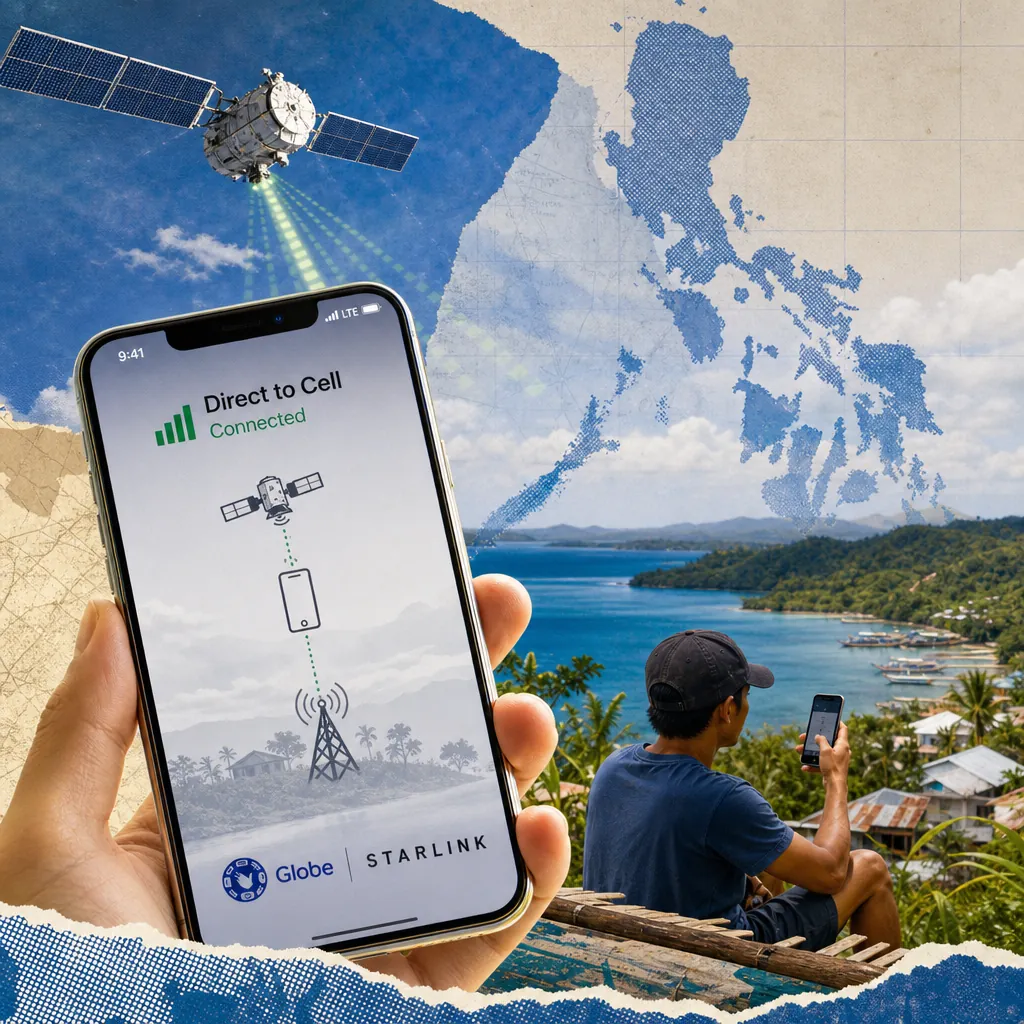
The Philippine telecommunications conversation between July 1 and July 2, 2026, was defined by three major announcements that together signal a sector in motion: Globe Telecom received regulatory approval to commercially launch Starlink Direct-to-Cell satellite service, making the Philippines the first country in Southeast Asia to offer satellite-to-mobile connectivity through a carrier; PLDT, Smart, and DITO Telecommunity signed a memorandum of agreement to share tower sites, indoor infrastructure, and international connectivity without monetary exchange; and the Department of Information and Communications Technology (DICT) broke ground on the National Cybersecurity Center (NCSC) in partnership with the Korea International Cooperation Agency (KOICA). These developments unfolded against a backdrop of intense public conversation about online child safety following the Tacloban school shooting, which dominated political and media attention but also intersected with telecom themes around platform regulation and digital responsibility.
Social media engagement was concentrated on Facebook, where posts about the Globe-Starlink launch and the infrastructure-sharing agreement drew thousands of reactions and hundreds of comments. A single post from the page ==ilocandiaglobal== detailing the Starlink service garnered 1,869 likes, 448 love reactions, and 147 shares. The PLDT-Smart-DITO sharing announcement, reported by ==gizguideph==, earned 197 likes, 92 loves, and 49 wow reactions, alongside 69 comments that revealed a mix of optimism and skepticism. Meanwhile, the NCSC groundbreaking received modest but uniformly positive engagement, with no angry reactions across any of the posts covering it. The contrast in engagement levels—high for consumer-facing product news, lower for institutional cybersecurity initiatives—reflects the public's greater appetite for tangible connectivity improvements over policy infrastructure.
However, the week also saw a persistent undercurrent of customer frustration. A Reddit user posted a detailed complaint about a paid PLDT installation fee that did not result in a technician visit or any communication, seeking guidance on how to report or request a refund. The post received 8 comments but zero upvotes, indicating a small but engaged community of users sharing similar grievances. This isolated incident, while not viral, underscores a recurring pain point in the last-mile customer experience that could accumulate into reputational risk if left unaddressed.
Key themes
- Satellite-to-mobile as a disaster-resilience tool: Globe's Starlink Direct-to-Cell service was framed primarily as a backup for remote and disaster-hit areas, with posts highlighting its use after a magnitude 7.8 earthquake in South Cotabato, Sultan Kudarat, and Sarangani. The service starts at ₱199 for prepaid users and is designed for SMS and light data, not streaming or gaming. Public excitement was high, but comments on the posts quickly raised questions about device compatibility and data limitations, suggesting that communications teams need to manage expectations carefully.
- Cross-carrier infrastructure sharing met with cautious optimism: The PLDT-Smart-DITO agreement to share tower sites, indoor infrastructure, and international connectivity without monetary exchange was the second most-engaged story of the week. While the 92 love reactions and 49 wow reactions indicate approval of cooperative approaches, the 14 haha reactions and 1 sad reaction on the main post, along with 10 haha reactions on a follow-up post, reveal deep public skepticism about whether this will actually improve service. Comment threads questioned the long history of rivalry between the MVP-led PLDT/Smart and DITO, demanding proof of better coverage.
- Government digital infrastructure push gains steady traction: The DICT's NCSC groundbreaking and the Subic Bay GovNet project—which connected 47 government agencies via a fiber-optic network—received modest but uniformly positive engagement. The NCSC, a partnership with KOICA, is designed to bolster the country's cybersecurity defenses, while GovNet aims to improve inter-agency coordination. These initiatives align with President Marcos' "Digital Pilipinas" vision and offer a clean, technology-driven narrative that avoids the divisive politics of spectrum auctions or franchise renewals.
- Consumer promo competition intensifies with back-to-school timing: Both Smart and DITO launched aggressive promotional campaigns targeting students and families. Smart's Power All promos bundle app-specific data for TikTok, YouTube, and Mobile Legends with unlimited messaging, while DITO's Home WoWFi Pro offers unlimited data at ₱1,490 for 15 days. Comment threads on these posts show active price comparisons and feature requests, indicating that users are increasingly evaluating value-for-money rather than brand loyalty.
- Online child safety and platform regulation intersect with telecom: The Tacloban school shooting investigation has pivoted public and legislative attention toward gaming and messaging platforms, with the Cybercrime Investigation and Coordinating Center (CICC) calling for stricter regulation of platforms like Roblox and Gorebox. While no posts directly blamed telecom providers, the CICC's emphasis on "collaboration—not just whole government but private sector" puts telcos on notice as potential partners in digital safety. The PhilStar special report on how extremist group 764 groomed minors through Roblox and other platforms drew the highest advertising-equivalent value in the captured set at ₱2.2 million, indicating the story's significant media weight.
- Customer service breakdowns remain a silent reputational risk: The lone Reddit complaint about PLDT's installation process—a paid fee with no technician visit or communication—highlights a persistent gap between sales and service fulfillment. While this single post did not go viral, it mirrors a broader pattern of frustration that could escalate if similar cases accumulate. The absence of any positive or neutral PLDT content in the same timeframe means this negative instance stands unchallenged in the limited telco conversation.
- Converge partners with IBPAP to upskill BPO workers in AI: Converge ICT Solutions announced a partnership with the IT and Business Process Association of the Philippines (IBPAP) to help equip the country's nearly 2 million BPO workers with artificial intelligence skills. CEO Dennis Uy said the company wants to help prepare the workforce for AI and "level up" workers' capabilities to capture opportunities created by the rise of AI. This story received moderate coverage but positions Converge as a forward-looking player focused on workforce development.
How the narratives stack
Dominant: The Globe-Starlink satellite-to-mobile launch dominated the captured conversation in terms of both volume and engagement. Across the items reviewed, posts about this development accumulated over 2,700 likes, 622 loves, and 270 shares, making it the most resonant story of the two-day window. The narrative was overwhelmingly positive, with public excitement centered on the potential for "walang signal" areas to finally get coverage. However, the service's limitations—no video streaming, heavy downloads, or gaming—were noted in the most detailed post, suggesting that early adopters will soon test these boundaries and could shift sentiment if expectations are not met.
Counter-narrative: The PLDT-Smart-DITO infrastructure-sharing agreement, while broadly welcomed, carried an undercurrent of skepticism. The 14 haha reactions and 1 sad reaction on the main post, along with 10 haha reactions on a follow-up, indicate that a segment of the public views this as a cost-cutting move rather than a genuine effort to improve service. Comment threads on the ==gizguideph== post included questions about whether the agreement would actually lead to better coverage or simply reduce costs for the companies. This counter-narrative is significant because it could undermine the goodwill generated by the announcement if not followed by visible network improvements.
Emerging: The intersection of online child safety and platform regulation is an emerging narrative that could directly affect telecom providers. The CICC's call for "jurisdiction over all platforms" and its threat to permanently block Gorebox unless the developer appears in the Philippines to demonstrate age-verification measures signal a regulatory trajectory that may soon include ISPs. The PhilStar special report on extremist grooming through Roblox, which carried the highest advertising-equivalent value in the captured set at ₱2.2 million, indicates that media outlets are investing significant resources in this story. For telcos, the risk lies in being perceived as passive enablers of harmful content if they do not proactively partner with authorities.
Suppressed: The DICT's National Cybersecurity Center and GovNet projects received very low social engagement—single-digit likes on most posts—despite their strategic importance. This under-coverage within the captured set may reflect the monitoring scope rather than actual public disinterest, but it suggests that these initiatives need amplification through more engaging formats, such as infographics or short videos, to build public awareness. The government's digital transformation narrative is a positive story that could benefit from greater visibility.
Platform insights
- Facebook: The dominant platform for telco conversation, with the highest engagement on posts from consumer-focused pages like ==ilocandiaglobal== (1,869 likes) and ==gizguideph== (197 likes, 69 comments). Official brand pages like ==smartcommunications== and ==ditophofficial== saw lower engagement, with Smart's Infinity Plus post drawing 6 angry reactions out of 55 total, suggesting that consumers engage with brand pages primarily to air grievances rather than celebrate. The platform's community-driven environment amplified both excitement and skepticism, with comment threads on the infrastructure-sharing post revealing deep public cynicism.
- Twitter: Minimal activity, with posts from ==contextdotph== and ==tribunephl== drawing zero likes or comments. The platform's low volume suggests that breaking telco news still resonates far more strongly on Facebook's community-driven environment. However, Twitter remains a critical channel for real-time service disruption complaints, which were absent during this window.
- Reddit: The only platform where a direct customer complaint about PLDT appeared, with a user detailing a missed installation appointment after payment. The post received 8 comments but zero upvotes, indicating a small but engaged support community rather than a viral complaint. Reddit serves as a space for detailed, self-help-oriented discussions that can provide early warning of service issues before they reach mainstream platforms.
- YouTube: Formal news coverage drove the narrative, with ANC's Headstart interview with CICC Executive Director Renato Paraiso garnering 5,576 views and 56 likes. In contrast, a BusinessMirror YouTube video on the Tacloban shooting received only 2 views, suggesting that niche investigative content struggled to break into the mainstream algorithm.
Key voices and communities
- Major telecom service providers: Globe Telecom, PLDT/Smart, and DITO Telecommunity are the central commercial actors, each driving distinct but interconnected narratives. Globe's Starlink announcement generated the highest engagement, positioning the company as a first mover in satellite-to-mobile. PLDT, Smart, and DITO's infrastructure-sharing agreement drew strong engagement but also skepticism. These players shape the market landscape and their strategic moves directly affect the narratives that competitors and regulators must navigate.
- Government and regulatory authorities: The DICT and the National Telecommunications Commission (NTC) serve as the primary policy drivers, with the NTC's approval of Globe's Starlink service providing the regulatory foundation for that launch. The DICT's NCSC and GovNet projects received modest but uniformly positive engagement. These agencies represent both sources of policy direction and potential partners for telcos seeking to align with the government's digital inclusion agenda.
- Technology and business media: Specialized outlets like ==gizguideph==, ==businessmirror==, and ==tribunephl== serve as amplification channels, translating corporate announcements into accessible narratives. Their framing choices influence how industry developments are perceived by consumers and investors. ==gizguideph== attracted 69 comments on the PLDT/Smart/DITO sharing story alone, indicating its role as a trusted source for detailed analysis.
- Consumer affinity and lifestyle pages: Pages like ==thephdestination== and ==balastech== drive community-level engagement by translating technical announcements into everyday relevance. ==thephdestination== framed the Globe-Starlink launch through a disaster response lens, while ==balastech== provided promotional details on Smart's Power All promos. These pages serve as barometers of grassroots consumer sentiment.
- Affected consumers (individual subscribers): A small but vocal group of individual subscribers has emerged around service delivery failures, particularly on Reddit. Their content is characterized by specific, personal complaints about installation delays, billing disputes, and unmet service level commitments. While overall volume is low, these posts generate focused engagement from other users sharing similar grievances, making them an early warning system for reputational risk.
Narrative streams
Globe-Starlink: satellite-to-mobile as a regional first
The most prominent narrative stream of the two-day window was Globe's commercial launch of Starlink Direct-to-Cell service, following NTC approval. The story broke on July 1 via ==theglobalfilipinomagazine==, which framed it as a regional first—the Philippines becoming the first Southeast Asian country to offer satellite-to-mobile connectivity through a carrier. By July 2, ==ilocandiaglobal== added crucial context: the service starts at ₱199 for prepaid users and is designed for SMS and light data, not streaming, making it a backup connection for remote and disaster-hit areas. ==thephdestination== strengthened this narrative by noting its use after a magnitude 7.8 earthquake in South Cotabato, Sultan Kudarat, and Sarangani, directly linking the launch to emergency response.
Sentiment was overwhelmingly positive—the three posts accumulated over 2,700 likes, 622 loves, and 270 shares—with public excitement focused on the potential for "walang signal" areas to finally get coverage. However, the detailed post by ==ilocandiaglobal== also noted the service's limitations, and comments on the post quickly raised questions about device compatibility and data caps. This suggests that while the initial reaction is celebratory, the narrative could shift toward practical scrutiny as early adopters begin testing the service in real-world conditions. For competitors like PLDT and Smart, the challenge is to avoid being perceived as lagging in innovation while also managing expectations about what satellite-to-mobile can actually deliver.
PLDT-Smart-DITO infrastructure sharing: collaboration meets skepticism
On July 2, ==news5ph== and ==gizguideph== reported that PLDT, Smart, and DITO signed a memorandum of agreement for tower site, indoor infrastructure, and international connectivity sharing without monetary exchange. The reaction was more mixed than the Starlink story: while the ==gizguideph== post earned 92 loves and 49 wows, it also received 14 haha reactions and one sad, and the follow-up post had 10 haha reactions out of just 30 total engagement. Comment threads (69 comments on the main post) showed skepticism about whether this would actually improve service, with users questioning the long history of rivalry between MVP-led PLDT/Smart and DITO.
This narrative stream is significant because it represents a departure from the usual competitive framing. The public is receptive to collaboration as a solution to connectivity issues, but they demand proof. For PLDT and Smart, this agreement is a strategic opportunity to demonstrate cost-effective network expansion, but they must ensure the narrative remains positive amid occasional cynicism. The lack of a competing satellite offering may leave them vulnerable to claims of innovation lag, but the infrastructure-sharing deal mitigates spending concerns and shows collaborative leadership.
Government digital infrastructure: NCSC and GovNet
Running parallel to commercial announcements, the DICT's initiatives gained steady traction. The NCSC groundbreaking, reported by ==contextdotph== and ==newsbytesph== on July 1-2, was framed as a boost against cyber threats, while the Subic Bay GovNet launch (reported by ==olongapotimes== on July 1) connected 47 agencies via a fiber-optic network. Engagement was lower but uniformly positive (no angry reactions), suggesting supportive but niche interest. The DICT's courtesy visit from the Swedish ambassador and Globe/Ericsson representatives on July 2 reinforced the theme of international collaboration for digital transformation.
This stream provides a policy layer to the week's story: the government is actively building the backbone for the connectivity that telcos are promising. For clients like Malacañang, the NCSC and GovNet stories offer a positive digital transformation angle that aligns with the "Digital Pilipinas" vision. However, the low social engagement suggests that these initiatives need amplification through more engaging formats to build public awareness.
Online child safety and platform regulation: a telecom intersection
The Tacloban school shooting investigation has pivoted public and legislative attention toward gaming and messaging platforms, with the CICC calling for stricter regulation. The CICC's Executive Director Renato Paraiso stated in an ANC interview that Gorebox might be permanently blocked unless the developer appears in the Philippines to demonstrate age-verification measures. The PhilStar special report on how extremist group 764 groomed minors through Roblox and other platforms drew the highest advertising-equivalent value in the captured set at ₱2.2 million, indicating the story's significant media weight.
While no posts directly blamed telecom providers, the CICC's emphasis on "collaboration—not just whole government but private sector" puts telcos on notice. For PLDT and Smart, the risk lies in being perceived as passive enablers of harmful content if they do not proactively partner with authorities. The CICC's call for "jurisdiction over all platforms" and its threat to permanently block Gorebox signal a regulatory trajectory that may soon include ISPs. This narrative stream is still emerging, but it has the potential to reshape the telecom conversation in the coming weeks.
Customer service breakdown: the Reddit complaint
The only direct customer complaint about a telecom provider in the captured set was a Reddit post by ==u/posangmalangis== detailing a paid PLDT installation fee that did not result in a technician visit or any communication. The post received 8 comments but zero upvotes, indicating a small but engaged community of users sharing similar grievances. This isolated incident, while not viral, underscores a recurring pain point in the last-mile customer experience that could accumulate into reputational risk if left unaddressed.
For PLDT and Smart, this complaint signals that despite paid fees and scheduled dates, technicians are failing to show up, and the user is unaware of proper escalation channels. The absence of any positive or neutral PLDT content in the same timeframe means this negative instance stands unchallenged in the limited telco conversation. Proactive engagement with this complaint—by having PLDT's social media team respond directly to the thread with a clear escalation path—could convert a negative experience into a positive reputational signal.
Conversation trajectory
- Satellite-to-mobile moves from novelty to practical scrutiny (next 2-4 weeks): Globe's Starlink launch has generated significant initial enthusiasm, but the service's limitations will likely trigger a conversation pivot toward real-world performance. Early adopters will begin sharing field tests, and negative experiences with data speeds or device compatibility could shift sentiment from pride to frustration. Competitors like PLDT and Smart should prepare proactive myth-busting content that addresses likely pain points before negative sentiment crystallizes.
- Infrastructure-sharing implementation details will test public trust (next 4-8 weeks): The PLDT-Smart-DITO agreement will face its first test as implementation details emerge. If the companies can demonstrate tangible improvements in coverage—such as fewer outages or faster speeds in specific areas—the skeptical narrative could shift to approval. However, if the agreement is perceived as a cost-cutting measure with no consumer benefit, the 14 haha reactions could multiply into a more damaging narrative.
- Regulatory pressure shifts from SIM registration to platform accountability (next 2-3 months): The Tacloban school shooting investigation has pivoted public and legislative attention toward gaming and messaging platforms rather than traditional telco compliance. The CICC's call for "jurisdiction over all platforms" and its threat to permanently block Gorebox signal a broader regulatory scope that may soon include ISPs. Telcos should prepare for potential legislation that could require enhanced cooperation with CICC in tracking online extremist activity, possibly through metadata retention or SIM registration refinement.
- Consumer promo competition intensifies with back-to-school timing (next 2-4 weeks): Both Smart and DITO have launched aggressive promotional campaigns targeting students and families. The comment threads on these posts show active price comparisons and feature requests, indicating that users are increasingly evaluating value-for-money rather than brand loyalty. This trend will peak as school opening drives last-minute connectivity purchases, and a price war narrative could emerge if competition escalates.
Key trigger events that will reshape this conversation include: the first independent field tests of Globe-Starlink by content creators and journalists, likely within 1-2 weeks; the Senate committee deliberation on the School Safety Act scheduled for July 9, which will directly address digital literacy and mobile device use in schools; and any major network outage or slowdown report, which historically trends under hashtags like #PLDTDown or #GlobeDown.
Response guidance
Platform-specific approaches
Facebook: Leverage high-engagement posts on infrastructure sharing to amplify the narrative of collaboration for better connectivity. Share behind-the-scenes content or infographics explaining the no-monetary-exchange resource-sharing model, which resonates with audiences tired of service disruptions. Respond to comment threads on Smart's own posts—especially where users express frustration about pricing or service quality—with personalized, helpful replies that redirect to customer support. Co-create educational content with credible pages like ==balastech== or ==gizguideph== that explain how new promos benefit Gen Z users, using clear data comparisons rather than generic marketing language.
Twitter: Proactively engage with posts from reputable news accounts like ==tribunephl== and ==news5ph== that cover PLDT/Smart network expansion and infrastructure sharing. Retweet with brief commentary that reinforces the company's commitment to closing the digital divide, and pin a thread with FAQs on how the partnership with DITO improves coverage. Monitor for hashtags like #NasaanAngSignal or #PLDTDown and craft pre-approved response templates that acknowledge issues while detailing steps for resolution.
Reddit: Directly engage with the user's complaint by acknowledging the issue and providing a clear escalation path—either a dedicated support hotline or account-specific help channel. Craft a reply that validates the frustration before offering practical next steps, such as a private message to get account details. Monitor the subreddit for similar unresolved threads and proactively offer the same assistance.
Key messages
- "Collaboration over competition—PLDT, Smart, and DITO are actively sharing infrastructure to expand coverage and reduce network congestion, without passing costs to consumers."
- "Our new Power All promos are built for the way Gen Z actually uses data—app bundles, unlimited messaging, and no hidden caps—so you can stay connected to what matters most."
- "Reliable connectivity isn't a luxury—it's a necessity. We're investing in digital inclusion through partnerships like the National Cybersecurity Center (NCSC) and GovNet to secure and empower Filipinos."
- "From remote education to emergency response, our network expansion targets the hardest-to-reach areas—because every Filipino deserves a seat in the digital economy."
Sensitive topics to navigate
- Globe-Starlink competitive advantage: PLDT/Smart should avoid directly criticizing the service; instead, emphasize their own complementary solutions (e.g., tower sharing, fiber expansion) and note that satellite is a backup, not a full replacement for terrestrial networks.
- Negative reactions to Smart Infinity Plus pricing: The 6 angry reactions and 39 comments on the Smart Infinity Plus post suggest that premium-tier offerings can be perceived as exclusionary. Acknowledge that customers have diverse needs and highlight budget-friendly alternatives like Power All promos, while avoiding defensive language about "value."
- Public skepticism about resource sharing without monetary exchange: Frame the collaboration as "maximizing resources to deliver more reliable services," backed by concrete metrics when available.
- Game-specific bans like Gorebox: Avoid taking a stance on any specific game. Instead, emphasize the telco's role as a neutral conduit that follows lawful orders and supports age-verification standards set by regulators.
Response priorities
- Amplify the infrastructure sharing narrative immediately: The posts about PLDT-Smart-DITO collaboration are getting strong engagement and present a clear opportunity to shape public perception. Publish a press release or social media series explaining how tower and fiber sharing directly benefits consumers in underserved areas.
- Address negative sentiment on Smart's own posts within 24 hours: The Smart Infinity Plus post has active complaints; deploy a community manager to respond to top comments with empathy and actionable next steps.
- Proactively promote digital inclusion partnerships: The DICT's National Cybersecurity Center and GovNet projects align with PLDT/Smart's corporate social responsibility messaging. Share content that ties the company's network investments to national cybersecurity and e-governance goals.
- Resolve the Reddit complaint: Directly engage with the user's post by acknowledging the issue and providing a clear escalation path. This demonstrates responsiveness and can convert a negative experience into a positive reputational signal.
See the full picture behind today's signals.
This report draws from Media Meter's MediaWatch, our real-time monitoring engine tracking 2,470+ Philippine sources across print, broadcast, digital, and social. Explore how the platform turns raw coverage into decision-grade intelligence, then see how it's configured for teams like yours — whether you're in PR agencies, corporate comms, government, or marketing.
Want more? Browse our Report Library for sector and crisis intelligence, or request a demo and we'll have your brand set up before the call.
Want this kind of intelligence on your brand?
This brief is built on the same MediaWatch methodology that runs continuously across every brand we monitor. See your competitive landscape, Impact Score, and narrative trajectory in a 30-minute demo.