Pork Tariff Fight and Fuel Protests Dominate
Meat importers warn that higher pork duties would raise food prices, while transport and farm groups press the government over fuel costs and El Niño. A Jollibee stake sale and new small-business financing round out the day.
The Conversation
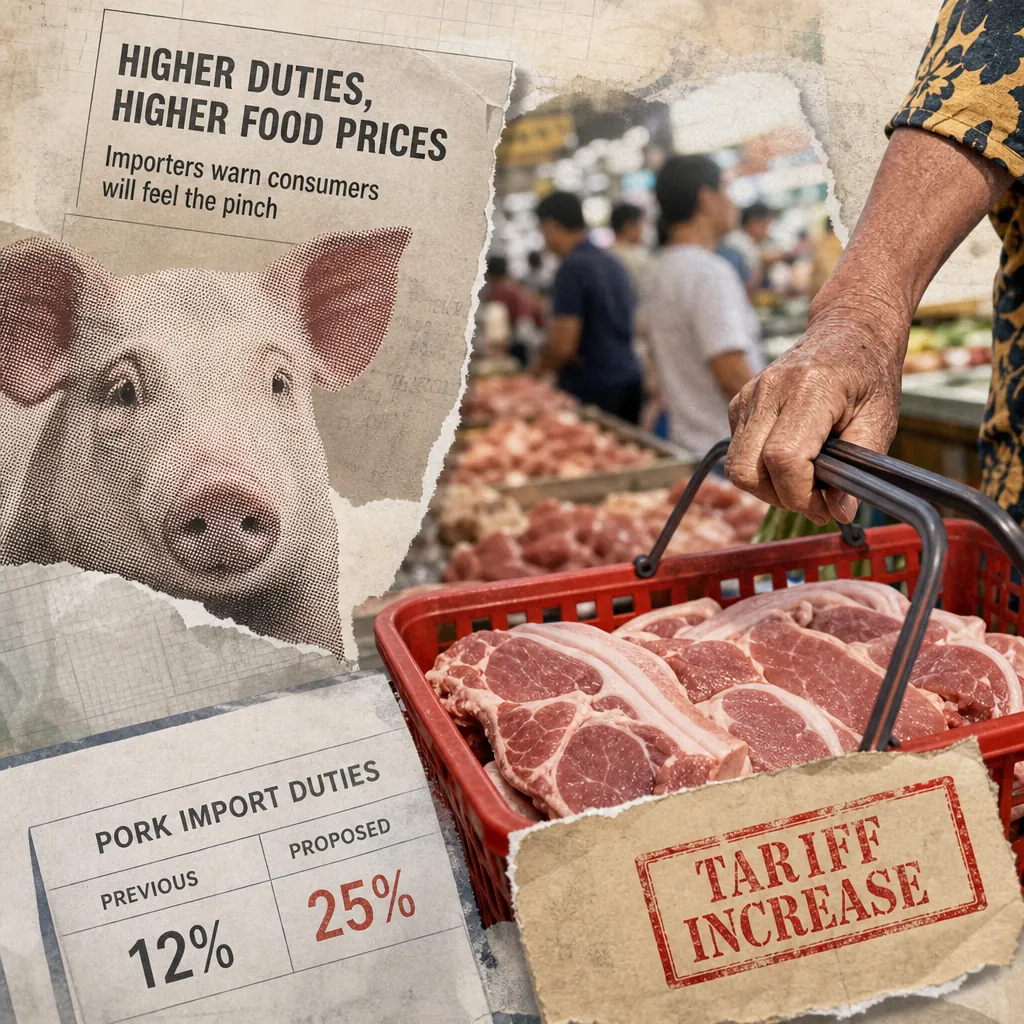
A proposal to raise the tariff on imported pork drew the sharpest pushback of the day, with the Meat Importers and Traders Association (MITA) filing a position paper against the Department of Agriculture's plan to lift import duties to 25 percent for shipments within the quota and 35 percent for those above it [^5](https://business.inquirer.net/613556/mita-flags-price-risks-from-higher-pork-tariffs). The group's president emeritus, Jesus Cham, argued that the increase would "further stoke food inflation" and compromise raw material security, and noted that tariffs would climb again in 2028 to 30 percent in-quota and 40 percent out-quota, from the current 15 percent and 25 percent 5. The same tariff question ran through a separate opinion piece in the Inquirer, which argued that the Philippines has repeatedly misjudged agricultural duties — on rice and on pork — and proposed a "price gap" method, in which a tariff is set so that the landed import price matches the domestic price, as a way to avoid both job losses from duties set too low and consumer harm from duties set too high 13.
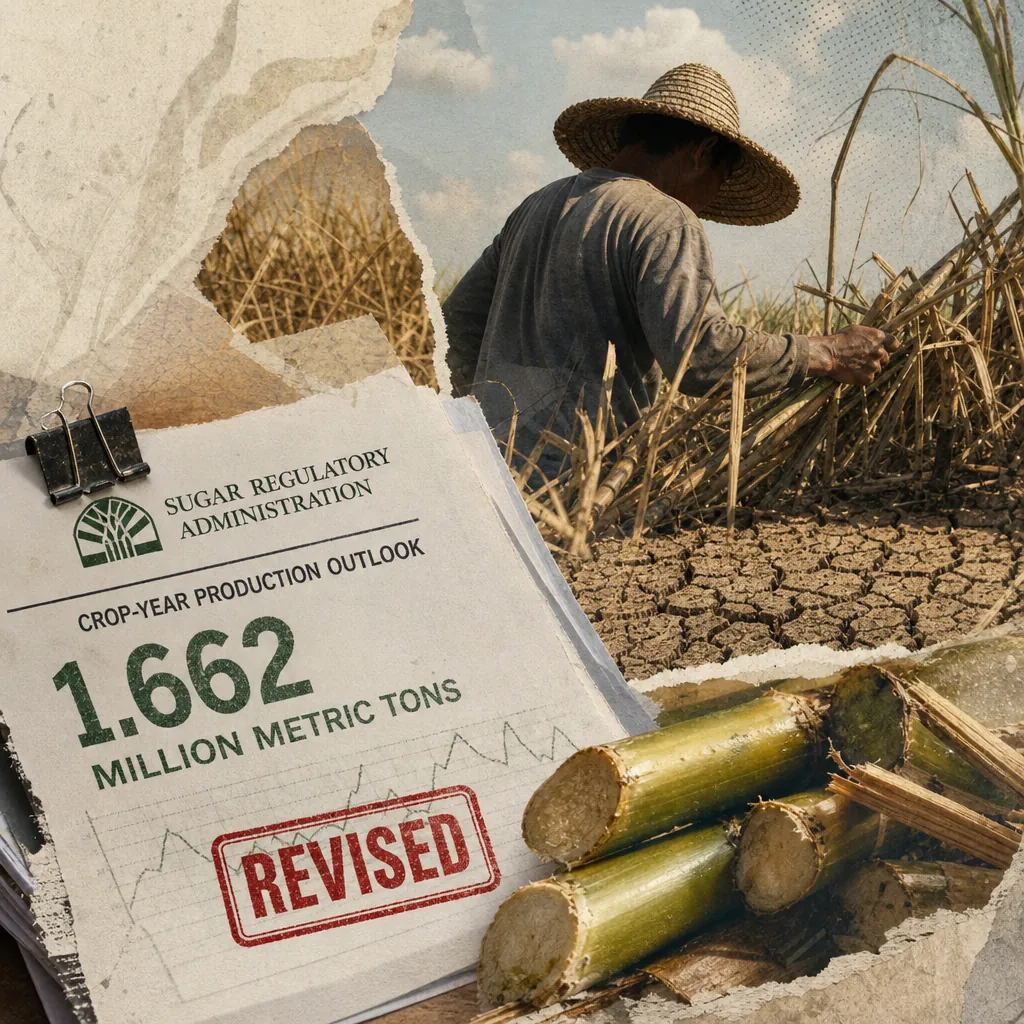
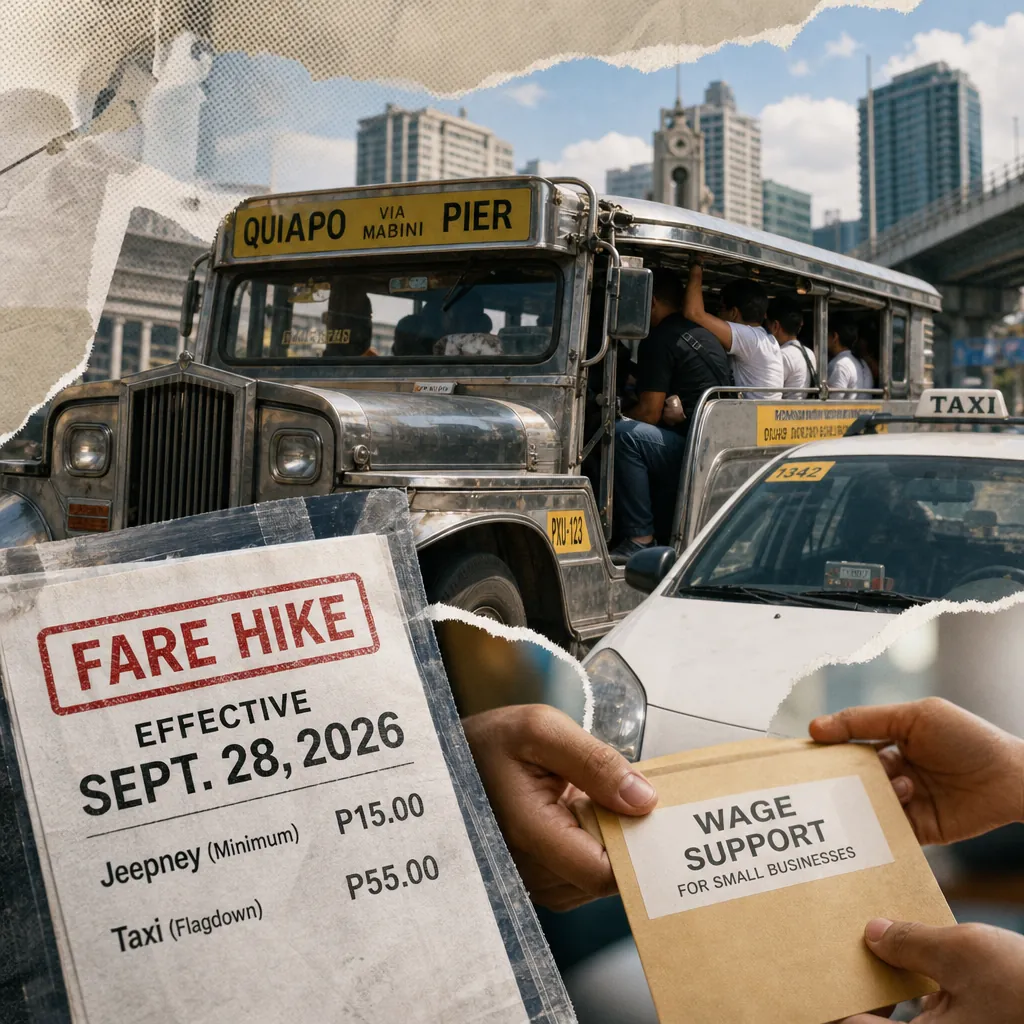
On the street, the day's loudest organized activity was about fuel. Progressive and sectoral groups gathered at Freedom Park along Roxas Avenue in Davao City on Wednesday, September 30, to demand higher wages and lower prices for basic goods and fuel, calling for the removal of value-added tax on petroleum products and the repeal of the Oil Deregulation Law 37. The rally, led by Bagong Alyansang Makabayan-Southern Mindanao, coincided with the second day of a nationwide two-day transport strike called by Pagkakaisa ng mga Samahan ng Tsuper at Operator Nationwide (PISTON), which has pressed the government on fuel prices and the planned phaseout of traditional jeepneys 37. In Tuguegarao, farmers told Bombo Radyo they were squeezed by the rising cost of gasoline and diesel for farm machinery while bracing for El Niño, the periodic warming of the Pacific that brings drought to the Philippines; the Department of Agriculture (DA) projects rice output could fall by 700,000 metric tons because of dry conditions, with fish kills and vegetable shortages also possible 3.
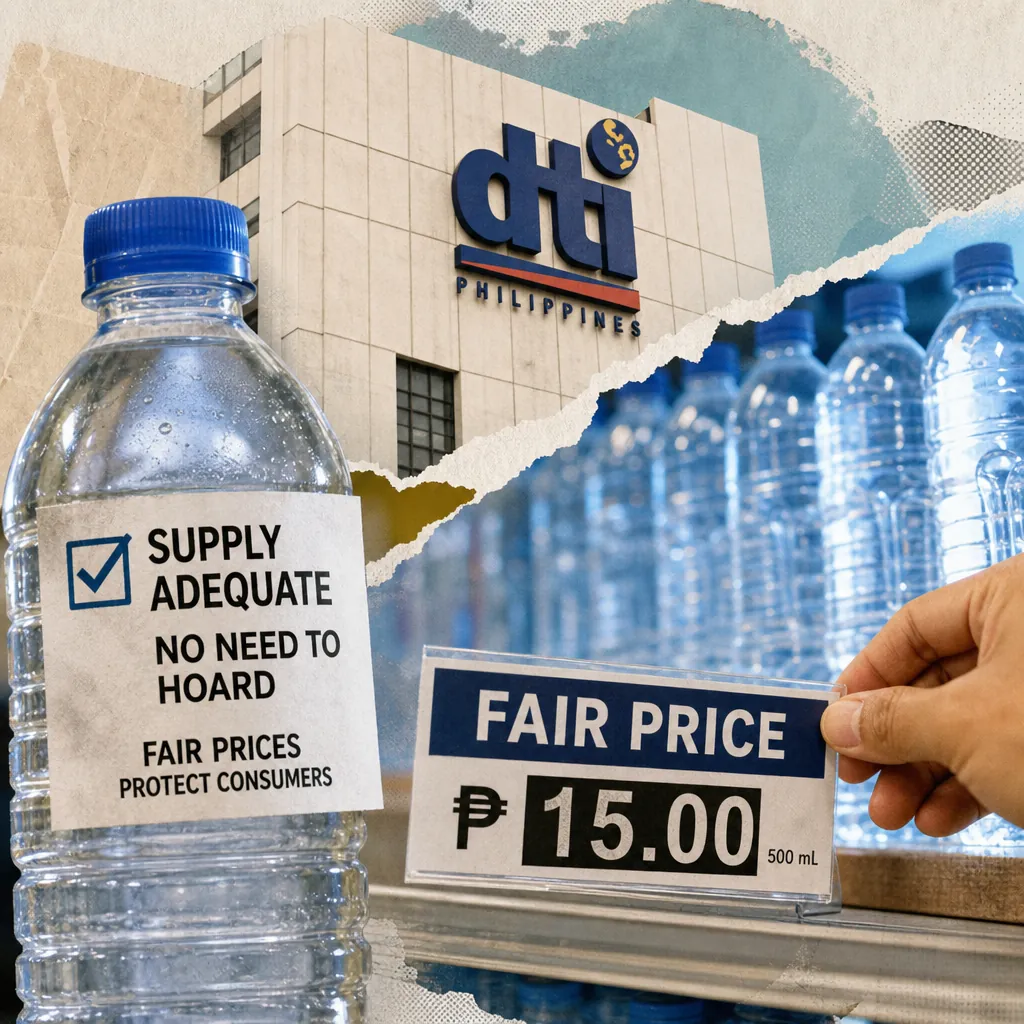
Corporate and small-business news filled out the rest of the day. Jollibee Foods Corp.'s partial exit from Vietnam's Highlands Coffee was read as a valuation marker ahead of its planned Hong Kong listing 30; the Department of Trade and Industry (DTI) launched an upgraded online portal for micro, small and medium enterprises 7 and signed a financing partnership with Philippine Veterans Bank covering electric vehicles and MSME capital 28; and a BusinessWorld column made the case that edible insects, long part of Kapampangan cooking, could carry real economic weight 33.
Key themes
- Pork importers oppose tariff hike to 25% in-quota, 35% out-quota. MITA told the Tariff Commission that raising duties would push food prices higher and would not fix the underlying problems in local hog production, which has been damaged by African swine fever (ASF), a viral disease that is lethal to pigs and has thinned herds across the country 5.
- A price-gap method is proposed as the fix for agricultural tariffs. An Inquirer column argued that tariffs should be set so import and domestic prices match, citing past missteps on rice and pork, where duties either protected inefficient producers or exposed consumers to high prices and poor quality 13.
- Transport groups strike over fuel, taxes and the jeepney phaseout. PISTON's two-day nationwide strike and the Davao City rally pressed for the removal of VAT on petroleum and the repeal of the Oil Deregulation Law, the 1998 statute that removed government control over fuel pricing and allowed oil companies to set pump prices 37.
- Farmers face higher input costs and a projected 700,000-metric-ton rice shortfall. The DA expects El Niño-driven drought to cut palay production, with the National Food Authority (NFA) preparing buffer stocks and the agency reporting 276,000 metric tons, or about 5.5 million sacks, of seven-day buffer stock 3.
- Jollibee's Highlands Coffee stake sale values the chain at about $800 million. The sale of an 11-percent stake to joint venture partner Viet Thai International will bring in roughly $88 million and gives investors a benchmark ahead of the planned listing of JFC International 30.
- DTI opens a one-stop online portal for small businesses. The Negosyo Center Online Portal 2.0, launched September 28, centralizes business development services so MSMEs can access assistance without visiting a physical office 7.
- DTI and Philippine Veterans Bank partner on EV and MSME financing. The memorandum of understanding, signed September 28, targets the upfront cost of replacing combustion-engine vehicles and widens capital access for MSMEs in renewable energy and electric mobility 28.
- Edible insects get an economic argument. A BusinessWorld column noted that Kapampangan cuisine has long included crickets and grasshoppers, and that Thailand's expanding edible-insect industry shows the tradition could have commercial value beyond novelty 33.
How the narratives stack
Dominant. The pork tariff dispute carried the most consequence for the widest number of people, because it sits directly on food prices. MITA's position paper to the Tariff Commission is the clearest single action of the day: a formal objection from the importers who would pay the duty, arguing that a jump from 15 percent to 25 percent in-quota and from 25 percent to 35 percent out-quota would raise costs across the supply chain 5. The Inquirer column on the same subject, which drew the heaviest coverage value in the captured set at an estimated ₱635,040 in advertising-equivalent terms, shows the tariff question was being debated at the level of policy design, not just industry complaint 13. Within the items reviewed here, this was the story with the most institutional weight.
Counter-narrative. The transport strike and the Davao rally offered a competing frame: that the cost problem is not tariffs but fuel. PISTON's nationwide strike and the Freedom Park gathering put the demand for VAT removal and Oil Deregulation Law repeal at the center, arguing that government policy, not import duties, is what drives pump prices 37. This frame has a longer history and a more organized base than the tariff fight, and it connects directly to the farmers' complaints in Tuguegarao about diesel costs for machinery 3. The two frames are not contradictory — both describe cost pressure on ordinary Filipinos — but they point to different remedies, and the government is being pressed from both directions at once.
Emerging. Two stories point to where the sector may be heading rather than where it is. The first is the DTI's financing partnership with Philippine Veterans Bank, which treats the upfront cost of electric vehicles as the main barrier to adoption among transport operators and pairs that with capital for MSMEs in renewable energy 28. The second is the edible-insect argument in BusinessWorld, which reframes a regional food tradition as a potential export industry, citing Thailand's expansion 33. Neither has produced a measurable market shift yet, but both are attempts to build new supply chains around cost and sustainability pressures that the dominant stories describe.
Under-covered. The NFA's buffer-stocking operation received only a passing mention in the Tuguegarao report, despite being the government's main defense against a projected 700,000-metric-ton rice shortfall 3. The agency is targeting 60 warehouses nationwide and buying palay from farmers, but the mechanics of how that stock would be released, and at what price, were not detailed in the items captured here. Similarly, the DTI's Negosyo Center Online Portal 2.0 launch on September 28 drew a single item 7, even though it is the kind of infrastructure that determines whether small businesses can actually reach government support. Both stories sit low in the day's coverage relative to their potential impact.
Platform insights
- Facebook. The DTI livestreamed the launch of the Negosyo Center Online Portal 2.0 on its official page, making the platform the primary distribution channel for the agency's small-business messaging 7. The choice reflects how government agencies now reach MSME owners directly, bypassing traditional media for announcements that require demonstration rather than explanation.
- X. The transport strike and the Davao rally generated the kind of real-time, location-tagged posting that the platform handles well, with progressive groups using it to coordinate and publicize the Freedom Park gathering 37. The strike's second day fell on September 30, and the platform carried the call-and-response between organizers and participants that a two-day action requires.
- Reddit and YouTube. Neither platform produced a distinct thread in the items captured here. The day's conversation was carried mainly by news outlets and organizational pages rather than by organic community discussion, which is consistent with a news cycle driven by policy filings and scheduled events rather than by viral content.
Key voices and communities
Meat importers and traders. MITA, through president emeritus Jesus Cham, is the most directly affected party in the tariff dispute and the one whose position paper set the terms of the day's debate 5. The group's argument is that tariff increases are premature and would not address the production problems caused by African swine fever, which has reduced local hog supply and made imports necessary in the first place.
Transport operators and progressive groups. PISTON and Bagong Alyansang Makabayan-Southern Mindanao organized the strike and the Davao rally, framing the issue as one of government policy on fuel taxes and jeepney modernization 37. Their demands — VAT removal on petroleum and repeal of the Oil Deregulation Law — are long-standing and have a defined constituency among drivers and operators.
Farmers and the Department of Agriculture. Farmers in Tuguegarao described the squeeze between fuel costs and drought risk, while Agriculture Secretary Francisco Tiu Laurel Jr. said dams are nearly full and could be used for the next planting season 3. The DA and NFA are preparing buffer stocks, and the agency continues fuel subsidies and fertilizer assistance.
Corporate and financial analysts. COL Financial chief equity strategist April Lynn Tan provided the read on Jollibee's Highlands Coffee transaction, noting that the $88 million proceeds could reduce debt, fund expansion or improve shareholder returns, and that the $800 million valuation gives investors a benchmark ahead of the JFC International listing 30.
Small-business advocates and government agencies. The DTI, through the Negosyo Center portal and the Veterans Bank partnership, is positioning itself as the main institutional support for MSMEs navigating cost pressures and the transition to electric vehicles 728.
Narrative streams
Pork tariff proposal draws formal opposition from importers
The Meat Importers and Traders Association filed a position paper with the Tariff Commission opposing the Department of Agriculture's plan to raise duties on imported pork to 25 percent in-quota and 35 percent out-quota, with a further increase to 30 percent and 40 percent scheduled for 2028 5. The current rates are 15 percent and 25 percent. MITA president emeritus Jesus Cham acknowledged the difficulties of local hog raisers hit by African swine fever but argued that higher tariffs would not solve the underlying production problems and would instead "further stoke food inflation" and compromise raw material security 5. The Tariff Commission is the government body that sets import duty rates, and its decisions determine the landed cost of imported meat, which in turn affects retail prices. The read for the sector is that importers and local producers are on a collision course over a policy that will be decided by the Commission, and that whichever way it goes, one side will absorb a cost increase — importers through duties, or consumers through prices. The Inquirer column on the same day added a policy-design argument, proposing that tariffs be set using a price gap method so that import and domestic prices match, and citing rice and pork as cases where duties have hindered rather than helped 13. That column carried an estimated ₱635,040 in advertising-equivalent value, the highest in the captured set, indicating the tariff debate was treated as a major business story.
Transport strike and Davao rally press government on fuel and jeepney phaseout
PISTON's nationwide two-day transport strike entered its second day on September 30, with progressive and sectoral groups gathering at Freedom Park in Davao City to call for higher wages, lower prices and action on fuel 37. The rally, led by Bagong Alyansang Makabayan-Southern Mindanao, demanded the removal of value-added tax on petroleum products and the repeal of the Oil Deregulation Law, the 1998 law that ended government control over fuel pricing and allowed oil companies to set pump prices based on market forces 37. The groups also opposed the planned phaseout of traditional jeepneys, a program that requires operators to consolidate into cooperatives and replace older vehicles with newer, lower-emission models. The read for the sector is that transport operators are treating fuel policy and the modernization program as a single cost problem, and that the strike's timing — two days, nationwide — signals the issue has enough organizational backing to disrupt service. The Davao rally's location at Freedom Park, a traditional protest site, and its coalition of progressive groups suggest the transport issue is being folded into a broader cost-of-living campaign.
Farmers face fuel costs and a projected rice shortfall from El Niño
Farmers in Tuguegarao told Bombo Radyo that the rising price of gasoline and diesel for farm machinery is making production more expensive, even as they prepare for the possibility that El Niño will damage the next planting season 3. The Department of Agriculture projects rice production could fall by 700,000 metric tons because of drought, with fish kills and vegetable shortages also possible. Agriculture Secretary Francisco Tiu Laurel Jr. said dams are nearly full and could be used for the next planting, and the DA and National Food Authority are preparing buffer stocks, targeting 60 warehouses nationwide 3. The NFA currently holds 276,000 metric tons, or about 5.5 million sacks, of seven-day buffer stock, and has begun buying palay from farmers. The agency also continues fuel subsidies and fertilizer assistance. The read for the sector is that the government is building a supply cushion ahead of a drought that could reduce the country's main staple crop, and that the effectiveness of that cushion depends on how quickly the NFA can fill its warehouses and how the stock is released. El Niño is a recurring climate pattern that warms Pacific waters and typically brings below-normal rainfall to the Philippines, and its effects on agriculture are felt most acutely by small farmers without irrigation.
Jollibee's Highlands Coffee stake sale sets a valuation benchmark
Jollibee Foods Corp. agreed to sell an 11-percent stake in Vietnam's Highlands Coffee to joint venture partner Viet Thai International for about $88 million, reducing its holding to 49 percent and giving Viet Thai 51 percent and control 30. COL Financial chief equity strategist April Lynn Tan said the transaction values Highlands at around $800 million, providing an arms-length benchmark ahead of the planned listing of JFC International, the entity that will hold the group's international businesses 30. The proceeds could be used to reduce debt, fund expansion or improve shareholder returns. The read for the sector is that Jollibee is trading a controlling stake in a Vietnamese coffee chain for cash and a clearer valuation story as it prepares to list its international operations in Hong Kong, and that investors now have a concrete number — $800 million — against which to judge the listing. The transaction also means Jollibee retains exposure to nearly half of a business it once controlled, a structure that gives it upside without the consolidation burden.
DTI opens online portal and partners with Veterans Bank on EV and MSME financing
The Department of Trade and Industry launched the Negosyo Center Online Portal 2.0 on September 28, centralizing business development services so micro, small and medium enterprises can access assistance remotely without visiting a physical office 7. The launch took place at the Model Negosyo Center of the DTI National Capital Region Office in Makati City and was livestreamed on the DTI's Facebook page. The portal includes updated educational content and a network of qualified business advisors. Separately, the DTI and Philippine Veterans Bank signed a memorandum of understanding on September 28 to expand financing for electric vehicle adoption and provide more capital options for MSMEs 28. The partnership targets the upfront financing needed to replace combustion-engine vehicles, a main barrier for transport operators, and covers MSMEs in renewable energy and EV-related businesses. The read for the sector is that the DTI is building two channels of support — digital access to services and loan financing — for small businesses that are being squeezed by fuel costs and the transition to electric vehicles, and that the effectiveness of both will depend on whether MSMEs actually use them. The Negosyo Center program is the government's main one-stop shop for small-business assistance, and moving it online is intended to reach enterprises that cannot travel to a physical office.
Edible insects framed as an economic opportunity
A BusinessWorld column recalled that Kapampangan cuisine has long included crickets, grasshoppers and other regional specialties, and argued that Thailand's expanding edible-insect industry shows the tradition could have commercial value beyond novelty 33. The column noted that the Philippines is "not starting from zero" because local communities have incorporated insects into their food for generations, and that the economic benefits could be larger than the cultural ones. The read for the sector is that insect protein is being positioned as a potential export and food-security industry, and that the barrier is not tradition but scale and processing capacity. The column did not provide production figures or market projections, so the size of the opportunity remains unquantified in the items captured here.
Conversation trajectory
Tariff Commission decision on pork duties (next 4–8 weeks). The Commission will weigh MITA's position paper against the Department of Agriculture's proposal, and its ruling will determine whether importers absorb higher costs or pass them to consumers. Watch for the Commission's schedule of hearings and any counter-filings from local hog raisers, who have been the main advocates for higher duties.
El Niño impact on rice production (next 3–6 months). The DA's projection of a 700,000-metric-ton shortfall will be tested as the dry season progresses. Watch for NFA warehouse fill rates and any adjustment to the buffer-stock target, as well as the release price of buffer stock if shortages materialize.
Transport strike follow-through (next 2–4 weeks). PISTON's two-day strike has ended, but the demands — VAT removal on petroleum and repeal of the Oil Deregulation Law — require legislative action. Watch for whether the strike produces any government response, such as a fuel subsidy expansion or a review of the jeepney modernization timeline.
Jollibee's Hong Kong listing (next 3–6 months). The Highlands Coffee transaction gives investors a valuation benchmark, and the next signal will be the formal filing for JFC International's listing. Watch for the disclosed valuation of the international business and how it compares to the $800 million Highlands figure.
DTI portal and financing uptake (next 1–3 months). The Negosyo Center Online Portal 2.0 and the Veterans Bank partnership are new, and their impact will depend on usage. Watch for DTI disclosures on portal registrations and loan applications, which would indicate whether the digital and financing channels are reaching MSMEs.
Trigger events. The Tariff Commission's ruling on pork duties, the NFA's buffer-stock reports, any legislative action on fuel taxes, and Jollibee's listing filing are the concrete events that will move these stories from debate to decision.
Response guidance
For meat importers and traders: Prepare for the Tariff Commission's hearings with specific cost data showing how the proposed rates would translate into retail price increases, and coordinate with consumer groups to make the food-inflation argument concrete rather than abstract. The price-gap method proposed in the Inquirer column offers a technical alternative that could be presented as a compromise.
For transport operators and progressive groups: The two-day strike has ended, and the next phase is legislative. Focus messaging on the specific cost per liter that VAT removal would save, and connect the jeepney modernization program to the financing gap that the DTI-Veterans Bank partnership is trying to address.
For farmers and agricultural cooperatives: The NFA's buffer-stocking operation is the main government response to the projected shortfall. Engage with the agency on palay procurement prices and warehouse locations, and document fuel and fertilizer costs for any subsidy negotiations.
For MSMEs and small-business owners: The Negosyo Center Online Portal 2.0 and the Veterans Bank financing partnership are new channels for support. Test the portal's services and document any gaps, and inquire about EV financing terms if the business involves transport or logistics.
For corporate communicators in food and retail: The Jollibee transaction shows that partial exits can be framed as valuation events rather than retreats. If your company is preparing a listing or a stake sale, the lesson is to provide investors with a clear benchmark and a stated use of proceeds.
For government agencies: The day's stories show cost pressure coming from multiple directions — tariffs, fuel, drought — and the public is connecting them. Coordinate messaging across the DA, DTI, NFA and Tariff Commission so that each agency's response is understood as part of a single effort rather than as separate announcements.
See the full picture behind today's signals.
This report draws from Media Meter's MediaWatch, our real-time monitoring engine tracking 2,470+ Philippine sources across print, broadcast, digital, and social. Explore how the platform turns raw coverage into decision-grade intelligence, then see how it's configured for teams like yours — whether you're in PR agencies, corporate comms, government, or marketing.
Want more? Browse our Report Library for sector and crisis intelligence, or request a demo and we'll have your brand set up before the call.
Want this kind of intelligence on your brand?
This brief is built on the same MediaWatch methodology that runs continuously across every brand we monitor. See your competitive landscape, Impact Score, and narrative trajectory in a 30-minute demo.