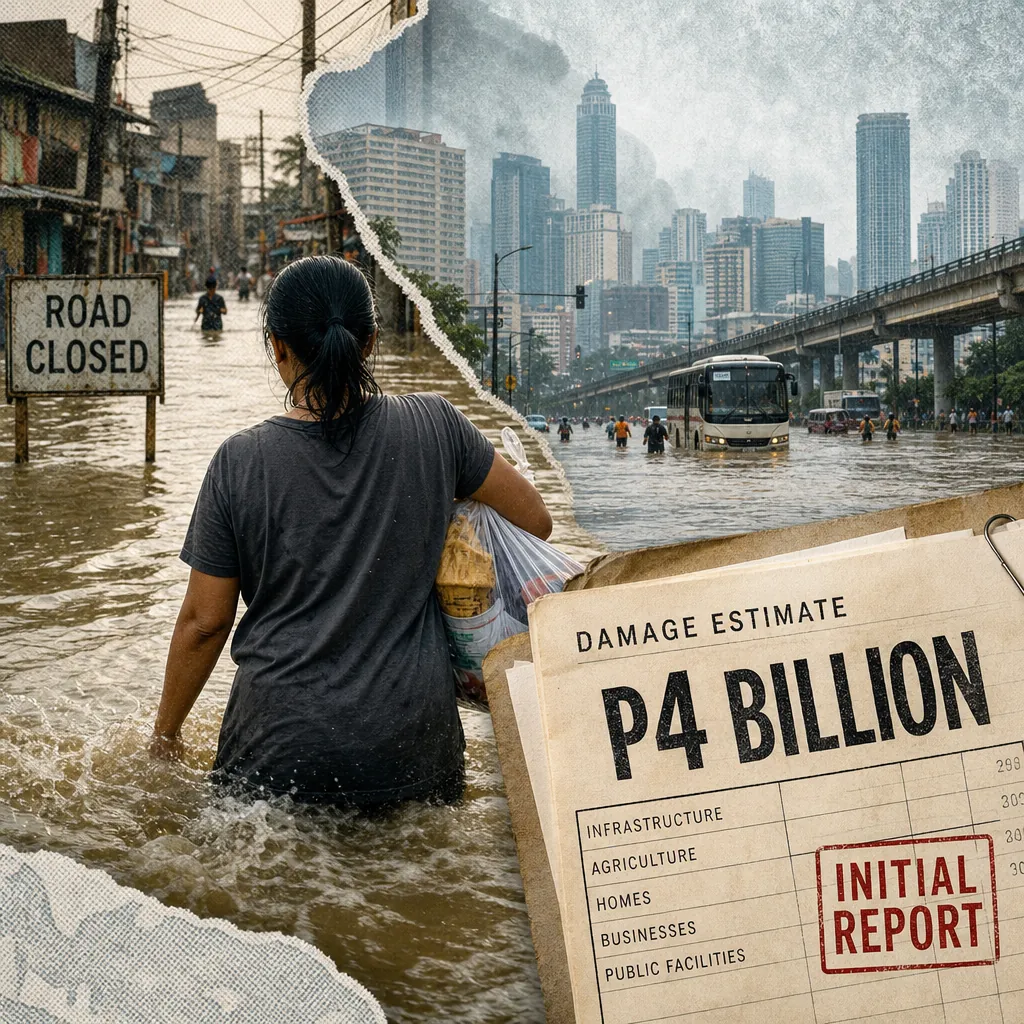
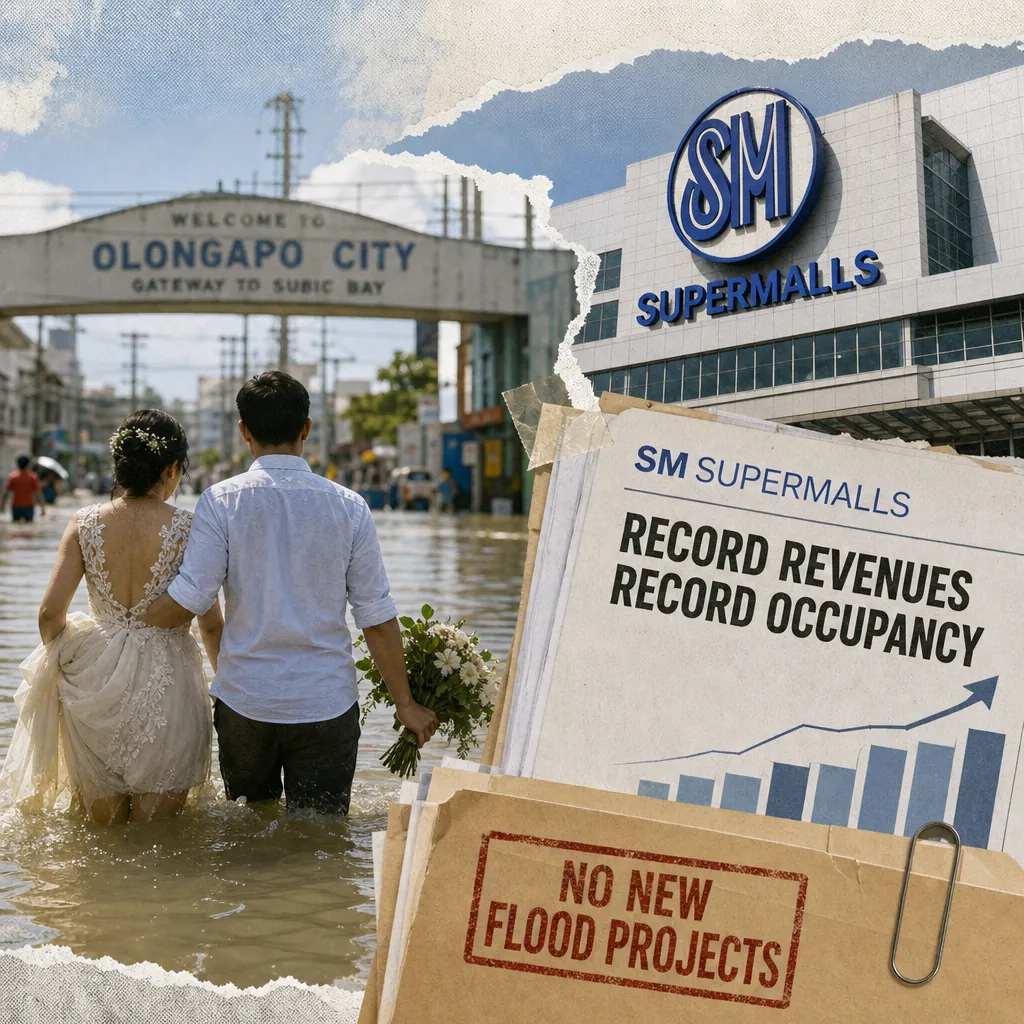
Bulacan Flood Dispute Pits SMC Airport vs Local Groups
San Miguel Corp. defends its Bulacan airport project against flood blame, while COA submits 50 fraud audit reports on flood control projects to the Ombudsman. DepEd leads nationwide school safety drills, and South Cotabato prepares for a possible El Niño.
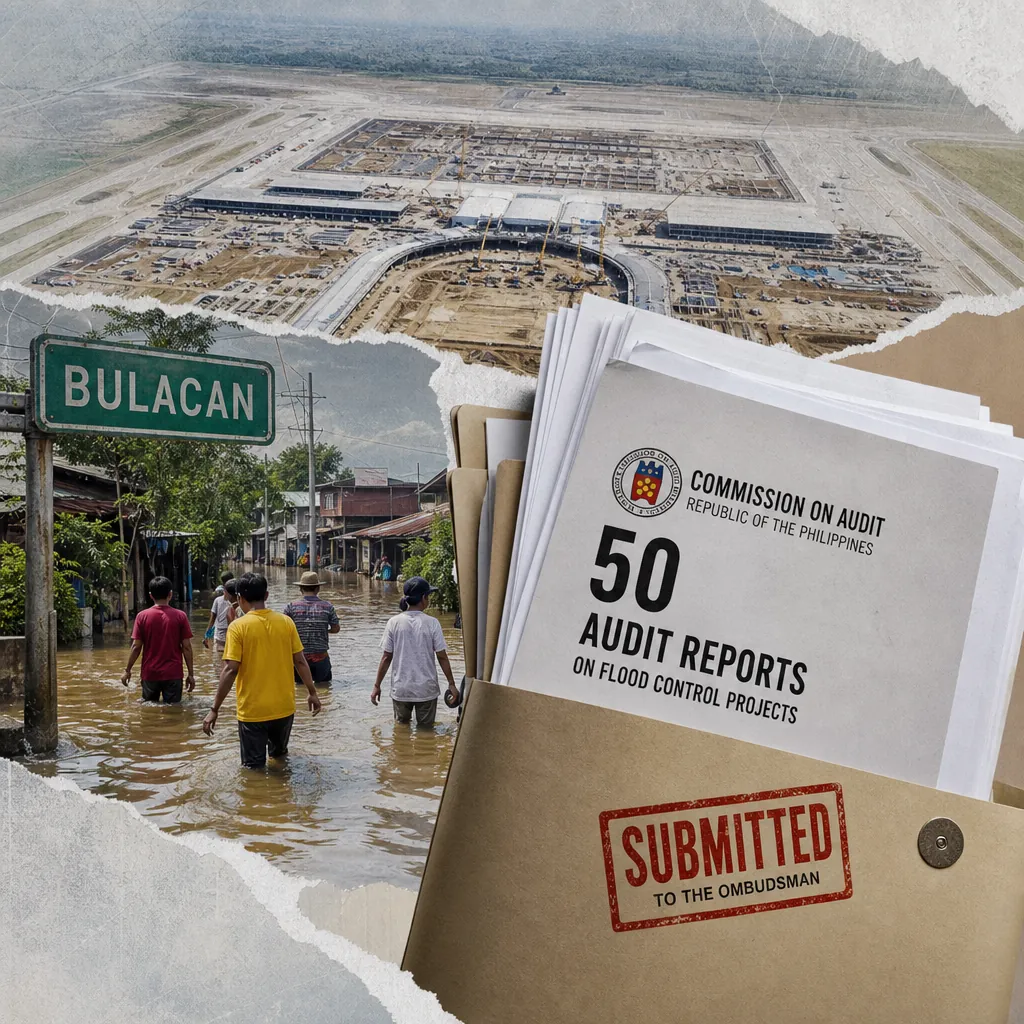
The day's conversation in the infrastructure and public-works space was dominated by a direct confrontation over flooding in Bulacan, where San Miguel Corporation (SMC) President Ramon Ang publicly pushed back against claims that the company's New Manila International Airport (NMIA) project is causing floods in the host town of Bulakan. Ang's September 1 press conference, covered in the day's monitored items, was a response to the "Kilos Bulacan" rally organized by 34 people's organizations that demanded government action on annual flooding affecting 23 towns and cities, including a call to stop reclamation projects and specifically SMC's airport and aeropolis development 3. The dispute highlights a growing tension between large-scale infrastructure development and local communities' concerns about environmental impact, a theme that resonates across the sector.
Running parallel to this corporate-versus-community clash was a significant development in the government's anti-corruption drive on public works. Commission on Audit (COA) Chairperson Gamaliel Cordoba confirmed that the agency has completed and submitted 50 fraud audit reports on flood control projects to the Office of the Ombudsman for preliminary investigation and case filing 11. This follows earlier disclosures that the Ombudsman has already filed 31 flood control cases in courts, signaling a sustained crackdown on alleged irregularities in one of the government's most critical infrastructure programs.
The day also saw the Department of Education (DepEd) lead a National Simultaneous School Safety Drill on September 3, aimed at strengthening emergency preparedness in public and private schools, with a focus on multi-agency coordination during active threat scenarios 1. Meanwhile, South Cotabato province stepped up preparations for a possible strong El Niño event, with disaster officials keeping funds, water facilities, and relief supplies ready as prolonged heat and dry conditions threaten farms, livestock, and public health 2. These stories, while not strictly infrastructure, reflect the broader context of disaster resilience and public safety that infrastructure projects are meant to address.
Key themes
- SMC defends Bulacan airport against flood blame: Ramon Ang attributes flooding in Bulakan to low elevation, narrow rivers, and low bridges, not the New Manila International Airport project, directly countering community groups' demands to halt the development 3.
- COA submits 50 fraud audit reports on flood control projects: The Commission on Audit has turned over 50 fraud audit reports to the Ombudsman, adding to the 31 flood control cases already filed in courts, intensifying the government's anti-corruption push on public works 11.
- DepEd leads nationwide school safety drill: The Department of Education spearheaded a National Simultaneous School Safety Drill on September 3 to enhance emergency preparedness and multi-agency coordination in schools 1.
- South Cotabato braces for possible El Niño: The province is preparing for a potential strong El Niño event, keeping funds, water facilities, and relief supplies ready as dry conditions threaten agriculture and public health 2.
- DAR targets 2027 completion of land distribution: The Department of Agrarian Reform is on track to distribute remaining farmlots, with about 20,000 hectares left from the 5.4 million targeted under the Comprehensive Agrarian Reform law 5.
- Peso respite lifts PSEi ahead of inflation data: Philippine stocks edged higher as the peso paused its record slide, with investors awaiting August inflation data, though US-Iran tensions capped gains 6.
- Cavite police captain accused of manipulating assault case: A police captain allegedly pressured an investigator to water down charges against his brother, who assaulted a college student, prompting Napolcom scrutiny 7.
- Vietnam's agro-forestry-fishery exports reach $49.31 billion: Vietnam's agricultural exports grew 7% in the first eight months of 2026, driven by strong performance in fruits, vegetables, livestock, and seafood 10.
How the narratives stack
Dominant: The dominant narrative in the captured set is the Bulacan flooding dispute, with SMC's Ramon Ang directly addressing accusations that the New Manila International Airport project causes floods. This story drew the highest advertising-equivalent value among the items reviewed, estimated at ₱650,160 in ad space, reflecting its prominence in the day's coverage 3. The confrontation between a major corporate developer and organized community groups over environmental impact is a consequential development for the infrastructure sector, as it touches on the social license to operate and the growing scrutiny of large projects.
Counter-narrative: Running against the corporate defense is the government's anti-corruption narrative on flood control projects. COA's submission of 50 fraud audit reports to the Ombudsman 11 and the earlier filing of 31 cases in courts signal a systemic effort to hold accountable those involved in alleged irregularities. This counter-narrative suggests that while SMC defends its project, the broader context of flood control infrastructure is one of suspected malfeasance, which could undermine public trust in both government and private sector projects.
Emerging: An emerging narrative is the focus on disaster preparedness and resilience, as seen in DepEd's nationwide school safety drill 1 and South Cotabato's El Niño preparations 2. These stories indicate a growing institutional emphasis on proactive emergency management, which could shape future infrastructure planning and investment priorities, particularly in climate-vulnerable areas.
Under-covered: A story that placed low in the captured set but carries significant weight is the Department of Agrarian Reform's progress toward completing its decades-long land distribution program by 2027 5. While not infrastructure in the traditional sense, land distribution is a form of rural infrastructure that affects agricultural productivity and social equity. The story's low placement in the day's coverage, despite its long-term significance, suggests it deserves more attention than it received.
Platform insights
- Facebook: The Bulacan flooding dispute likely generated significant discussion on Facebook, where community groups like those in the "Kilos Bulacan" rally organize and share information. The platform's group features and local community pages make it a primary space for residents to voice concerns about flooding and development projects. Engagement on such posts typically includes shares of news articles, comments expressing frustration or support, and event pages for rallies.
- X (formerly Twitter): The COA fraud audit reports and the Ombudsman's cases likely trended on X, where government accountability and corruption issues attract active discussion among journalists, political commentators, and concerned citizens. The platform's real-time nature allows for rapid dissemination of news updates and reactions, with hashtags like #COA or #FloodControl potentially gaining traction.
- YouTube: The DepEd school safety drill may have drawn video coverage, with news outlets and government channels posting footage of the drill exercises. YouTube serves as a platform for longer-form content, including press conferences like Ramon Ang's, which could be uploaded in full or in segments, allowing viewers to see the complete context of his statements.
- Reddit: While less prominent in the Philippine context, Reddit's r/Philippines community might have threads discussing the Bulacan flooding dispute or the broader issue of infrastructure projects and environmental impact. These discussions often feature more detailed analysis and diverse opinions, though engagement levels are typically lower than on Facebook or X.
Key voices and communities
- San Miguel Corporation and Ramon Ang: As the president and CEO of SMC, Ang is a central figure in the Bulacan flooding dispute. His press conference defending the NMIA project positions him as a key voice representing corporate interests, and his statements carry significant weight in business and political circles.
- Kilos Bulacan and local community organizations: The coalition of 34 people's organizations that organized the rally represents the affected communities. Their demands to halt reclamation projects and the airport development highlight the grassroots opposition to large-scale infrastructure, making them a critical voice in the conversation.
- Commission on Audit and the Ombudsman: COA Chairperson Gamaliel Cordoba and Ombudsman Jesus Crispin Remulla are key figures in the anti-corruption narrative. Their offices' actions on flood control projects signal a government commitment to accountability, and their statements are closely watched by the public and media.
- Department of Education and DepEd officials: Education Secretary Sonny Angara and Undersecretary Malcolm Garma lead the school safety drill initiative, representing the government's focus on disaster preparedness in educational institutions. Their actions reflect a broader institutional response to emergency threats.
- Provincial disaster officials: Rolly Doane Aquino of South Cotabato's PDRRMO represents local government units preparing for climate-related emergencies. Their proactive stance on El Niño preparedness highlights the frontline role of provincial authorities in disaster risk reduction.
Narrative streams
SMC's Bulacan Airport Defense: A Corporate Response to Community Concerns
San Miguel Corporation President Ramon Ang held a press conference on September 1 to directly address accusations that the New Manila International Airport (NMIA) project is causing floods in Bulakan, Bulacan. Ang attributed the flooding to the area's low elevation, narrow and winding rivers, and low bridges, rather than the airport construction 3. This defense came in response to the "Kilos Bulacan" rally, organized by 34 people's organizations, which demanded government action on annual flooding affecting 23 towns and cities and called for an end to reclamation projects, including SMC's airport and aeropolis development 3.
The NMIA project, also known as the Bulacan Airport, is a massive infrastructure undertaking by SMC that aims to build a new international gateway north of Manila. The project involves significant land reclamation and development, which community groups argue exacerbates flooding in the coastal municipality. Ang's press conference, which drew coverage worth an estimated ₱650,160 in advertising-equivalent value, was an attempt to dispel these fears by showing the exact location of the project and explaining the geographical factors behind the flooding 3.
The read for the sector is that large-scale infrastructure projects face increasing community scrutiny and organized opposition, particularly when they intersect with environmental concerns like flooding. Developers must engage proactively with local communities, provide transparent information about project impacts, and address grievances through dialogue rather than confrontation. The outcome of this dispute could set a precedent for how other major projects navigate community relations and environmental compliance.
COA's Fraud Audit Reports: Intensifying Scrutiny on Flood Control Projects
The Commission on Audit (COA) has completed and submitted 50 fraud audit reports on flood control projects to the Office of the Ombudsman for preliminary investigation and case filing, as confirmed by COA Chairperson Gamaliel Cordoba during a Senate budget hearing 11. This development follows the Ombudsman's earlier disclosure that 31 flood control cases have already been filed in courts, indicating a sustained and expanding anti-corruption effort targeting one of the government's most vulnerable infrastructure programs 11.
The fraud audits are part of COA's mandate to examine government expenditures and ensure public funds are used properly. Flood control projects have been a particular focus due to the large budgets allocated and the recurring nature of flooding in many parts of the country, which raises questions about the effectiveness and integrity of these projects. The submission of these reports to the Ombudsman, the agency responsible for investigating and prosecuting government officials, signals that the findings are serious enough to warrant potential criminal charges.
The read for the sector is that accountability in public infrastructure is being enforced with increasing rigor. Contractors, engineers, and government officials involved in flood control projects must ensure strict compliance with procurement rules and project specifications, as the risk of fraud audits and subsequent legal action is now substantial. This scrutiny could lead to more careful project implementation but may also slow down project delivery as stakeholders become more cautious.
DepEd's Nationwide School Safety Drill: Building Resilience in Education
The Department of Education (DepEd) spearheaded the National Simultaneous School Safety Drill on September 3, aiming to strengthen the emergency preparedness of public and private schools across the country 1. The drill focused on enhancing multi-agency coordination during active threat scenarios, with localized school contingency plans designed to ensure the safety and psychosocial well-being of students, teachers, and other school personnel 1.
The drill was held at Carlos F. Gonzales High School in Bulacan, attended by Interior Secretary Jonvic Remulla and DepEd officials led by Undersecretary for Governance and Operations Malcolm Garma 1. Education Secretary Sonny Angara, in a message read on his behalf, emphasized the importance of schools being places where learners' biggest concerns are their studies, not their safety 1. This initiative reflects a broader government effort to institutionalize disaster preparedness in educational settings, recognizing that schools are both vulnerable to emergencies and critical hubs for community response.
The read for the sector is that disaster resilience is becoming a core component of public infrastructure and services, extending beyond physical structures to include institutional preparedness. Schools, as public facilities, must be designed and operated with emergency protocols in mind, and this requires coordination between education authorities, local governments, and emergency services. The drill's nationwide scope suggests a standardized approach to school safety that could be replicated in other public institutions.
South Cotabato's El Niño Preparations: Proactive Climate Adaptation
South Cotabato province has stepped up preparations for a possible strong El Niño event, with disaster officials keeping funds, water facilities, and relief supplies ready as prolonged heat and dry conditions threaten farms, livestock, and public health 2. Rolly Doane Aquino, chief of the Provincial Disaster Risk Reduction and Management Office (PDRRMO), said the province remains under an El Niño Alert based on information from the Philippine Atmospheric, Geophysical and Astronomical Services Administration (Pagasa), though it "has not yet reached El Niño conditions" 2.
The preparations involve ensuring that resources are available to respond to the impacts of drought, which can include crop failures, water shortages, and increased health risks. The province's proactive stance reflects a growing awareness of climate variability and the need for local governments to anticipate and mitigate the effects of extreme weather events. Pagasa's El Niño Alert system provides early warning, allowing provinces like South Cotabato to mobilize resources before conditions worsen.
The read for the sector is that climate adaptation is no longer a future concern but a present operational reality for local governments. Infrastructure planning must incorporate climate resilience, including water management systems, agricultural support, and public health measures. The El Niño preparations in South Cotabato serve as a model for other provinces facing similar climate risks, highlighting the importance of early action and inter-agency coordination.
DAR's Land Distribution Program: Nearing Completion After Decades
The Department of Agrarian Reform (DAR) is on track to distribute remaining farmlots to landless tillers, with officials saying the program may be completed by 2027 5. Agrarian Reform Secretary Conrado Estrella III told the Inquirer that about 20,000 hectares remain from the 5.4 million hectares targeted for distribution under the Comprehensive Agrarian Reform law, a nearly four-decade-old program 5. The budget department has allotted funding for 20,000 hectares of lots for distribution next year, according to DAR Undersecretary Kazel Celeste, with DAR receiving ₱4.1 billion for its land tenure security program in the 2027 National Expenditure Program 5.
The Comprehensive Agrarian Reform law, enacted in 1988, aims to redistribute agricultural land to landless farmers to promote social justice and rural development. The program has faced numerous challenges over the decades, including funding shortfalls, legal disputes, and implementation delays. Celeste warned that the amount allotted for land distribution next year may fall short of funding needs, though Estrella offered an optimistic outlook, saying "We are not worrying about those" 5.
The read for the sector is that the completion of land distribution would mark a significant milestone in Philippine agrarian reform, potentially unlocking agricultural productivity and improving the livelihoods of landless farmers. However, funding uncertainties and the complexity of remaining cases could still delay the timeline. For infrastructure and rural development, land distribution is a foundational step that enables farmers to invest in their land and contribute to food security.
Peso Respite and PSEi Rise: Market Awaits Inflation Data
Philippine stocks edged higher on Thursday as the peso paused from its record slide, with investors awaiting August inflation data 6. The benchmark Philippine Stock Exchange Index (PSEi) rose 0.27 percent, or 16.19 points, to close at 6,069.42 6. Luis Limlingan, head of sales at Regina Capital Development Corp., said the market drew support from the slight respite in the peso and optimism ahead of Friday's consumer price index (CPI) report, though uncertainty surrounding developments between the United States and Iran capped the gains 6.
The peso's recent slide has been a concern for the Philippine economy, affecting import prices and potentially fueling inflation. The market's cautious optimism reflects hopes that August inflation data, expected to cool to 6.1 percent, might ease pressure on the central bank to raise interest rates further. However, geopolitical tensions, particularly the US-Iran situation, continue to create uncertainty in global markets.
The read for the sector is that infrastructure and construction companies, which rely heavily on imported materials and equipment, are sensitive to currency fluctuations and inflation. A weaker peso increases the cost of imported inputs, potentially squeezing profit margins and delaying project timelines. The market's focus on inflation data underscores the interconnectedness of macroeconomic conditions and infrastructure development.
Cavite Police Captain Accused of Manipulating Assault Case
A police captain from Cavite, who is the brother of another police officer who supposedly assaulted and threatened to kill a college student, allegedly intimidated and pressured the investigator to manipulate the filing of the case against his brother, the National Police Commission (Napolcom) said 7. Napolcom Commissioner Rafael Vicente Calinisan revealed this after noting that the cases lodged against Police Senior Master Sergeant Don Carlos Almonidovar from the General Trias Component City Police Station were "watered down" 7. The case investigator only filed grave threats and physical injuries against Almonidovar after the 20-year-old college student, identified only as alias "Ace," reported the assault to the Napolcom 7.
This incident highlights issues of police accountability and the potential for abuse of power within law enforcement. The Napolcom, which oversees police conduct, is investigating the matter, and the case raises questions about the integrity of the justice system when police officers are involved in wrongdoing. The manipulation of charges, if proven, would represent a serious breach of professional conduct and public trust.
The read for the sector is that accountability mechanisms within public institutions, including the police, are essential for maintaining public confidence. While not directly related to infrastructure, this case underscores the broader need for transparent and fair processes in all government functions. For infrastructure projects, which often involve security and law enforcement coordination, ensuring that police conduct is above reproach is critical for community cooperation.
Vietnam's Agricultural Exports: Regional Context for Infrastructure
Vietnam's agro-forestry-fishery export turnover reached nearly $49.31 billion in the first eight months of 2026, a 7 percent increase compared to the same period in 2025, according to the Ministry of Agriculture and Environment 10. August exports were estimated at $6.47 billion, down 3.5 percent month-on-month but up 3.6 percent year-on-year 10. Strong breakthroughs in fruits and vegetables, livestock, and seafood helped maintain positive momentum, even as key commodity prices declined 10.
By sector, agricultural products generated $25.66 billion, up 2.7 percent year-on-year, while forest products reached $12.57 billion, up 5.4 percent 10. Seafood hit $7.94 billion, rising 10.9 percent, and production inputs totaled $2.61 billion, surging 64.8 percent 10. Livestock products reached $511.9 million, up 30 percent, while salt exports reached $10.4 million, climbing 44.4 percent 10. Asia remained Vietnam's largest regional market 10.
This regional data provides context for infrastructure development in Southeast Asia, as agricultural exports drive demand for logistics, transportation, and processing facilities. Vietnam's strong export performance suggests a growing need for rural infrastructure to support agricultural value chains, from farm-to-market roads to cold storage and processing plants. For the Philippines, this serves as a benchmark for how agricultural infrastructure can support export growth and rural development.
Conversation trajectory
- Over the next 1-2 weeks: The Bulacan flooding dispute is likely to continue generating coverage as community groups and SMC respond to each other. Watch for any formal statements from government agencies, such as the Department of Environment and Natural Resources or the Department of Public Works and Highways, on the flooding issue and the airport project's environmental compliance. The outcome of the "Kilos Bulacan" rally's demands may also surface in local government actions.
- Over the next 1-3 months: The COA fraud audit reports submitted to the Ombudsman will undergo preliminary investigation, which could lead to the filing of new cases in courts. Monitor the Ombudsman's office for announcements of charges against individuals or companies involved in flood control projects. This period may also see increased scrutiny of ongoing flood control projects, potentially affecting their implementation timelines.
- Over the next 6-12 months: The DepEd school safety drill initiative may lead to the development of standardized emergency protocols for schools nationwide, with potential infrastructure investments in school safety features. South Cotabato's El Niño preparations will be tested if dry conditions worsen, and the province's response could serve as a model for other regions. The DAR's land distribution program faces a critical funding test in the next budget cycle, which could determine whether the 2027 completion target is achievable.
- Trigger events: Key events to watch include the release of August inflation data, which could influence interest rates and infrastructure financing costs; any new developments in the US-Iran situation that could affect global markets; and the Ombudsman's decisions on the flood control fraud audit reports. Additionally, any escalation of the Bulacan flooding dispute, such as new protests or legal actions, would be a significant trigger for further coverage.
Response guidance
- For infrastructure developers: Engage proactively with local communities and address environmental concerns transparently. Provide clear, data-driven explanations of project impacts and mitigation measures. Establish regular dialogue channels with community leaders and be responsive to grievances. Avoid confrontational stances that can escalate disputes and damage public trust.
- For government agencies: Emphasize accountability and transparency in public works projects. Communicate the results of fraud audits and the actions taken to address irregularities. Highlight the importance of disaster preparedness and climate resilience in infrastructure planning. Coordinate with local governments and communities to ensure projects meet both development and safety goals.
- For communicators in the sector: Monitor the Bulacan flooding dispute closely, as it could set precedents for community relations in infrastructure projects. Prepare messaging that addresses environmental concerns with factual information and demonstrates commitment to sustainable development. Be ready to respond to questions about project impacts and government oversight.
- For companies involved in flood control projects: Ensure strict compliance with procurement rules and project specifications. Maintain thorough documentation of all project activities to withstand potential audits. Cooperate fully with any investigations and demonstrate a commitment to integrity and quality in project delivery.
- For local government units: Highlight proactive disaster preparedness measures, such as El Niño alerts and school safety drills. Communicate the importance of community involvement in emergency planning. Showcase successful coordination between provincial and national agencies in addressing climate risks.
See the full picture behind today's signals.
This report draws from Media Meter's MediaWatch, our real-time monitoring engine tracking 2,470+ Philippine sources across print, broadcast, digital, and social. Explore how the platform turns raw coverage into decision-grade intelligence, then see how it's configured for teams like yours — whether you're in PR agencies, corporate comms, government, or marketing.
Want more? Browse our Report Library for sector and crisis intelligence, or request a demo and we'll have your brand set up before the call.
Want this kind of intelligence on your brand?
This brief is built on the same MediaWatch methodology that runs continuously across every brand we monitor. See your competitive landscape, Impact Score, and narrative trajectory in a 30-minute demo.