Flood control gaps dominate as peso hits record low
The September 2 conversation centered on flooding across Central Luzon, with President Marcos admitting a decades-old flood control master plan is only now being implemented. Meanwhile, the peso fell to a record low of P62.565 against the dollar, and several property and infrastructure developments advanced.

Flooding in Central Luzon dominated the day's conversation, as President Ferdinand Marcos Jr. acknowledged that a national flood control master plan has existed for decades but is only now being implemented. The admission came as the peso slid to a record low against the dollar, and as property developers pushed forward with major projects—from Megawide's affordable housing venture to Ayala Land's estate reorganization and MREIT's asset swap with Megaworld.
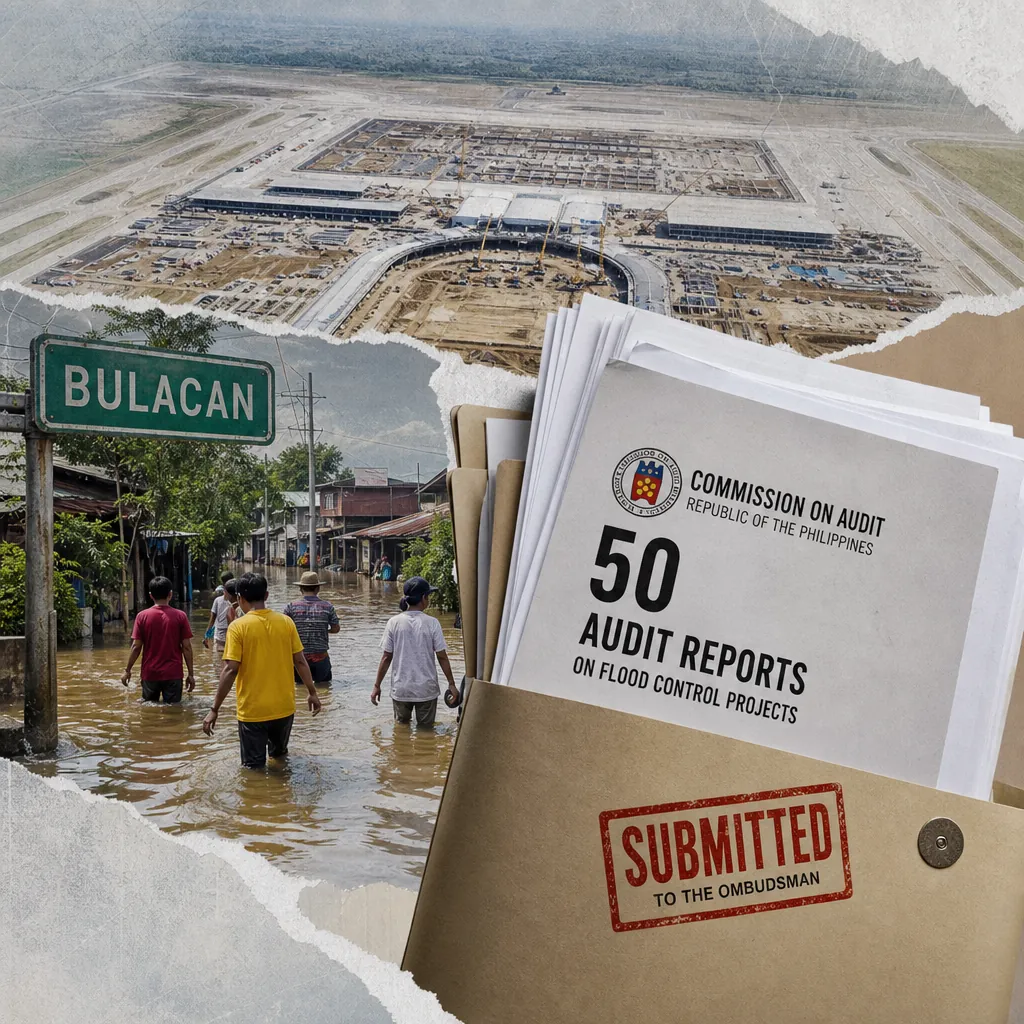
The day's news cycle was shaped by the aftermath of heavy monsoon rains that submerged parts of Bulacan, Pampanga, and other provinces. President Marcos, inspecting flood-damaged bridges in Tarlac, told reporters: "We have had a master plan for decades but walang ginawa. Hanggang ngayon lang. Ngayon lang natin sinisimulan" — roughly, "nothing was done; we are only beginning to act on it now." 87 The statement drew modest attention on social media, with one post capturing just 79 views and no engagement, but it carried weight for property stakeholders in flood-prone growth corridors where major township developments are rising. 1
Government response was swift and multi-pronged. Tolls on the North Luzon Expressway (NLEX) were waived for vehicles traveling between Pulilan, Bulacan, and San Fernando, Pampanga, to ease traffic caused by flooding at the Tulaok Bridge in San Simon, Pampanga. 40 The Social Housing Finance Corporation (SHFC) suspended monthly payments for more than 54,000 families across 400 community associations in Metro Manila, Bulacan, Nueva Ecija, Pampanga, Bataan, and Tarlac—relief worth over P23.4 million. 52 In Cavite, Public Works officials turned over a P2.4-billion flood-control facility, the Imus Retarding Basin, designed to capture and hold heavy surface runoff during intense rainfall. 27
Meanwhile, the Philippine peso fell to a new all-time low of P62.565 to the dollar on Wednesday, its fourth straight trading day of record lows, driven by inflation worries, heightened US-Iran tensions, and a stronger greenback. 59 The Philippine Stock Exchange Index (PSEi) declined by 0.67 percent, or 40.66 points, to close at 6,053.23. 55 The currency's slide and market jitters formed a backdrop to the day's property news, which included several significant corporate developments.
Key themes
- Flood control master plan finally begins after decades of inaction: President Marcos admitted the national flood control blueprint has existed for years but was never carried out, and implementation is only now starting. 87 This acknowledgment carries particular weight for real estate stakeholders in Bulacan and Pampanga, where ongoing flood narratives intersect with long-term infrastructure promises tied to airport and township projects. 1
- Government rolls out flood relief measures across affected regions: Tolls on the North Luzon Expressway were waived for vehicles traveling between Pulilan, Bulacan, and San Fernando, Pampanga. 40 The Social Housing Finance Corporation suspended monthly payments for over 54,000 families, providing more than P23.4 million in housing assistance. 52 These measures signal active government response but also underscore the severity of the flooding.
- Peso hits record low of P62.565 to the dollar: The currency weakened for a fourth straight trading day, falling 16.5 centavos from the previous record set a day earlier. 59 The decline reflects continued inflation worries, heightened geopolitical tensions, and a stronger greenback, and it weighed on the stock market, with the PSEi falling 0.67 percent. 55
- Megawide's affordable housing venture could generate P28.3 billion in revenues: The infrastructure firm's entry into the government's flagship housing program, the Expanded Pambansang Pabahay para sa Pilipino (4PH) Program, is expected to account for 36 percent of Megawide's revenues by 2028. 17 The program aims to address the country's housing backlog by building affordable units across the country.
- Ayala Land to merge Urban and Regional Estates groups by 2027: The listed property developer will consolidate its nationwide estate operations under the AyalaLand Estates Group, led by Jaime Z. Urquijo, effective January 1, 2027. 22 The reorganization is intended to strengthen long-term growth strategy and improve organizational effectiveness.
- MREIT and Megaworld seal P27.01-billion property-for-share swap: The real estate investment trust added 12 income-generating properties with a combined gross leasable area of 303,936 square meters to its portfolio. 53 The shares were priced at P16.50 each, an 18.6-percent premium over MREIT's 30-trading-day volume-weighted average price.
- Senate approves bill allowing condominium redevelopment: Senate Bill 2420, or the proposed Condominium Redevelopment Act, passed on third and final reading with 18 affirmative votes. 38 The measure amends the nearly 60-year-old Condominium Act to ease the unanimous-vote requirement that currently makes redevelopment nearly impossible.
- Environmental incidents raise water quality concerns near development zones: A fish kill in Laguna de Bay—where thousands of kilograms of tilapia and bighead carp died, with fisherfolk suspecting chemical waste or wastewater—garnered attention and reinforces environmental vulnerability narratives in the Laguna lake region. 3
How the narratives stack
Dominant: The flood control narrative dominated the day's conversation, spanning both social media and news coverage. President Marcos's admission that the master plan is only now being implemented—after decades of inaction—was the single most consequential development for property stakeholders. 87 Within the captured set, flood-related items drew substantial coverage across multiple outlets, including the free toll announcement, the SHFC payment suspension, and the Imus Retarding Basin turnover. 405227 The social media conversation, while modest in engagement, reinforced the same theme, with posts about the presidential announcement, NLEX coordination, and the Laguna fish kill collectively forming a narrative about infrastructure adequacy in Central Luzon. 123
Counter-narrative: Government officials and private infrastructure operators pushed back against the notion that nothing is being done. Interior Secretary Jonvic Remulla, speaking at the Imus Retarding Basin turnover, called for "unity and zero politics" in implementing infrastructure projects, saying "you won't find any nonsense here. This is the result of doing politics the right way." 67 The NLEX coordination between provincial governments and the tollway operator similarly demonstrated active problem-solving. 2 These counterpoints suggest that while the master plan may be late, current efforts are visible and coordinated.
Emerging: The peso's slide to record lows is emerging as a significant economic narrative with implications for property markets. A weaker currency can make Philippine real estate more affordable for foreign buyers but also raises construction costs for imported materials and increases the burden of dollar-denominated debt. 59 The stock market's decline, driven partly by the peso's weakness, could affect developer valuations and financing conditions. 55
Under-covered: The Senate's approval of the Condominium Redevelopment Act received relatively modest attention compared to the flood narrative, yet it represents a significant legislative change for the property sector. 38 The bill, which eases the unanimous-vote requirement for redevelopment, could unlock aging condominium projects across the country. Similarly, the Department of Human Settlements and Urban Development's (DHSUD) directive to resolve homebuyer complaints within 30 days drew limited coverage but signals a regulatory push that developers should note. 86
Platform insights
- Twitter/X: Government and institutional accounts dominated the flood-related conversation, but engagement was minimal. The presidential flood control announcement drew just 79 views with zero engagement, while the NLEX coordination post drew 266 views and the Laguna fish kill story 195 views—all with no likes, shares, or comments. 123 This pattern suggests official communications on infrastructure topics do not organically reach meaningful audiences, requiring paid amplification or partnership with influential voices.
- Facebook: The platform carried the emotional and personal dimensions of the flooding crisis. Actress Sunshine Garcia defended her husband, Bulacan Vice Governor Alex Castro, against alleged smears amid the widespread flooding, writing: "Sa panahon ngayon napakadaling manira at manghusga ng tao" — "these days it's so easy to destroy and judge people." 15 Senator Bong Go's visits to flood-stricken Calumpit, Bulacan, where he waded through floodwaters to reach residents, also circulated widely. 44
- Reddit: While no new Reddit posts appeared in this window, the platform's earlier discussions about Bulacan flooding and the Ramon Ang airport controversy formed part of the multi-platform narrative. The contrast between Reddit's engagement on the airport story and the zero-engagement official flood announcements highlights the amplification gap between user-generated content and institutional messaging. 1
Key voices and communities
- Government officials and agencies: President Marcos, Interior Secretary Jonvic Remulla, and various agencies (SHFC, MMDA, DPWH) drove the official response narrative. Their messaging emphasized proactive action—free tolls, payment suspensions, and infrastructure turnovers—while the President's admission about the master plan's delayed implementation added a note of accountability. 87405227
- Property developers and industry players: Megawide, Ayala Land, MREIT, and Megaworld all made significant announcements, from affordable housing ventures to corporate reorganizations and asset swaps. 172253 These moves signal continued confidence in the property sector despite macroeconomic headwinds.
- Local government and community leaders: Provincial officials in Pampanga coordinated with NLEX Corporation on flood mitigation, while Senator Bong Go made personal visits to affected communities. 244 Their on-the-ground presence provided a human face to the flood response.
- Environmental watchdogs and affected communities: Fisherfolk in Laguna de Bay raised concerns about chemical waste and wastewater following the fish kill, adding an environmental quality dimension to the conversation. 3 This community's voice matters for developers with lakeside projects, as water quality perceptions affect property desirability.
- Financial market commentators: Analysts at Philstocks Financial and Regina Capital Development Corp. provided context on the peso's slide and its impact on investor sentiment, framing the day's market movements for a broader audience. 55
Narrative streams
Flood control master plan finally begins after decades of inaction
President Marcos's admission that the national flood control master plan has existed for decades but was never implemented marked a significant moment of accountability. Speaking to reporters on September 2 after inspecting flood-damaged bridges in Tarlac, Marcos said: "We have had a master plan for decades but walang ginawa. Hanggang ngayon lang. Ngayon lang natin sinisimulan." 87 Government records show the national flood control blueprint has gathered dust for decades, replaced by a patchwork of plans for rivers, river basins, and urban centers across different administrations. 87
The timing is significant. The admission comes as heavy monsoon rains have submerged parts of Central Luzon, including areas where major township developments are located. In Bulacan, the New Manila International Airport project and associated residential corridors are under development, and flooding narratives directly affect buyer confidence. 1 The minimal public reaction to the announcement—79 views with zero engagement on one post—suggests either public fatigue with infrastructure promises or limited organic reach for official communications. 1
For real estate stakeholders, the acknowledgment that flood control master planning is only now being executed raises questions about infrastructure readiness in provinces where development is expanding. The read for the sector: developers in flood-prone areas must proactively communicate their own resilience investments—elevation strategies, drainage systems, and emergency preparedness—rather than relying on government infrastructure timelines that may slip.
Government rolls out multi-pronged flood relief
The government's response to the flooding was swift and visible. Tolls on the North Luzon Expressway were waived for vehicles traveling between Pulilan, Bulacan, and San Fernando, Pampanga, starting September 2, to ease the burden of motorists trapped in traffic jams caused by flooding at the Tulaok Bridge in San Simon, Pampanga. 40 The free toll will continue until the situation on NLEX returns to normal. 40
The Social Housing Finance Corporation suspended monthly housing loan payments for more than 54,000 member-beneficiaries across 400 community associations in Metro Manila, Bulacan, Nueva Ecija, Pampanga, Bataan, and Tarlac. 52 The payment freeze, effective through September 28, represents over P23.4 million in housing assistance. SHFC president Federico Laxa said the moratorium responds to directives from President Marcos and Housing Secretary Jose Ramon Aliling to deliver immediate relief to calamity-stricken communities. 52
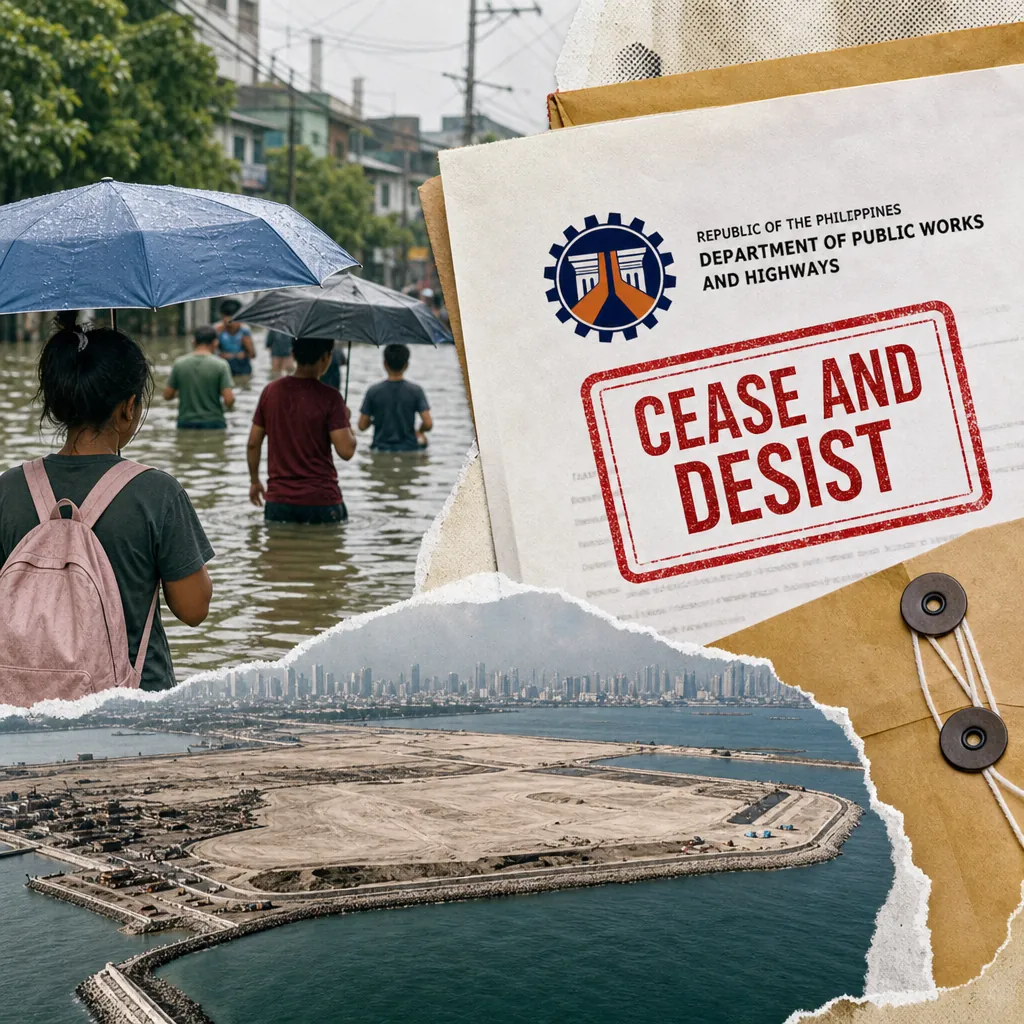
In Cavite, Public Works officials turned over the P2.4-billion Imus Retarding Basin to the provincial government. 27 The facility, built with support from the Japan International Cooperation Agency, uses two off-site retarding basins to capture and temporarily hold heavy surface runoff during intense rainfall, protecting downstream communities from prolonged inundation. 27 Interior Secretary Jonvic Remulla, who attended the turnover, emphasized the need for "unity and zero politics" in implementing infrastructure projects. 67
The read for the sector: these measures provide immediate relief but also signal that flooding remains a persistent operational concern. Developers with projects accessible via NLEX or in affected provinces should monitor the situation closely, as commute disruptions and flood perceptions directly affect property desirability.
Peso hits record low, stocks fall
The Philippine peso fell to a new all-time low of P62.565 to the dollar on Wednesday, weakening by 16.5 centavos from the previous record set just a day earlier. 59 It marked a fourth straight trading day of record lows, beginning Thursday when the peso hit P61.888, followed by Friday's P62.265 and Tuesday's P62.40. 59 The decline was driven by continued inflation worries, heightened geopolitical tensions following renewed US-Iran hostilities, and a stronger greenback. 59
The Philippine Stock Exchange Index declined by 0.67 percent, or 40.66 points, to close at 6,053.23, giving back part of the previous day's 2.31-percent rebound. 55 Luis Limlingan, head of sales at Regina Capital Development Corp., said the market underwent a correction following the previous day's strong buying activity, with weakness driven by the continued depreciation of the peso. 55 Trading remained tepid with net value turnover reaching P5.14 billion, and foreign investors posted net outflows of P559.82 million. 75
The read for the sector: a weaker peso cuts both ways for real estate. It makes Philippine property more affordable for foreign buyers and overseas Filipino workers sending remittances, but it raises construction costs for imported materials and increases the burden of dollar-denominated debt. Developers with significant foreign currency exposure should monitor the currency's trajectory closely.
Megawide's affordable housing venture takes shape
Megawide Construction Corp.'s venture into the government's flagship housing program could generate P28.3 billion in incremental revenues over the next three years, according to a report by First Metro Securities and DBS Bank. 17 The estimate covers 16,700 "live-only" units under the Expanded Pambansang Pabahay para sa Pilipino (4PH) Program, which aims to address the country's housing backlog by building affordable units across the country. 17
The report expects 4PH to account for 36 percent of Megawide's revenues by 2028. "We believe 4PH could become a significant incremental growth driver for Megawide," the report said. 17 Megawide has a bigger pipeline ahead, aspiring to launch 100,000 affordable housing units over the long term, with the first 50,000 units already identified in its five-year pipeline, including projects across five locations in Cavite. 17
The read for the sector: the 4PH program represents a significant opportunity for construction firms and developers willing to engage with the government's affordable housing agenda. Megawide's aggressive pipeline suggests the program is gaining momentum, and other players may follow suit.
Ayala Land consolidates estate operations
Ayala Land, Inc. will merge its Urban Estates and Regional Estates businesses into the AyalaLand Estates Group starting January 1, 2027, under the leadership of Jaime Z. Urquijo. 22 In a regulatory filing, the listed property developer said the reorganization is intended to strengthen its long-term growth strategy and improve organizational effectiveness. 22 Urquijo, currently senior vice-president and head of Urban Estates, will lead the consolidated group. 22
The read for the sector: Ayala Land's consolidation reflects a broader trend among large developers to streamline operations and present a unified approach to estate development. The move could signal more coordinated marketing and development strategies across the company's nationwide portfolio.
MREIT and Megaworld complete P27-billion asset swap
MREIT Inc. sealed a P27.01-billion property-for-share swap with its sponsor Megaworld Corp., Travelers International Hotel Group Inc., and Southwoods Mall Inc., adding 12 income-generating properties to its portfolio. 53 The deed of exchange, executed on September 2, covers 1.64 billion common shares in MREIT and 12 properties with a combined gross leasable area of 303,936.21 square meters. 53 The shares were priced at P16.50 each, an 18.6-percent premium over MREIT's 30-trading-day volume-weighted average price of P13.91. 53
The read for the sector: the asset swap demonstrates the continued vitality of real estate investment trusts as vehicles for property monetization. By injecting income-generating properties into MREIT, Megaworld effectively raises capital while retaining exposure to the assets through its shareholding.
Senate approves condominium redevelopment bill
The Senate approved on third and final reading a bill that will allow the redevelopment of condominium units in the Philippines. 38 Senate Bill 2420, or the proposed Condominium Redevelopment Act, seeks to amend Republic Act 4726, the nearly 60-year-old Condominium Act, and establish updated rules for the maintenance, repair, reconstruction, redevelopment, and dissolution of condominium projects. 38
"Currently, a unanimous vote from every unit owner is required, which we know is impossible. This bill aims to change that," Sen. Francis Escudero said during his sponsorship of the bill. 38 The bill also aims to promote redevelopment by exempting conveyance of common areas to condominium corporations from all national and local taxes. 38
The read for the sector: this legislation could unlock redevelopment opportunities for aging condominium buildings across the country. Developers and condominium corporations should monitor the bill's progress in the House of Representatives, as it could create new opportunities for urban renewal projects.
Environmental incidents raise water quality concerns
A fish kill incident in Laguna de Bay—where thousands of kilograms of tilapia and bighead carp died, with fisherfolk suspecting chemical waste or wastewater as aggravating factors—garnered attention and reinforces environmental vulnerability narratives in the Laguna lake region. 3 The incident adds an environmental quality dimension to conversations about the area, which is relevant to residential developments in Cavite, Laguna, and nearby corridors where water quality perception affects desirability. 3
The read for the sector: developers with lakeside or waterways-adjacent projects should proactively address environmental management in their project narratives. Environmental incidents like fish kills can raise scrutiny over industrial and residential runoff management, potentially affecting regulatory approvals or community reception of nearby developments. 3
Conversation trajectory
- Flood control implementation progress (7–14 days): The rollout of the flood control master plan will draw public commentary about prioritization of affected areas and could extend to questions about whether new housing developments are being approved in flood-prone zones. 1 Media coverage is likely to expand from the presidential visit to long-term planning details, keeping the topic in the news cycle.
- NLEX free toll duration (days to weeks): The free toll on NLEX will continue until the situation returns to normal. 40 The duration of the waiver will signal how quickly floodwaters recede and normal mobility resumes, affecting commuter confidence in the corridor.
- Peso trajectory (days to weeks): The peso's slide to record lows shows no immediate sign of reversal, with continued inflation worries and geopolitical tensions weighing on the currency. 59 Further weakness could affect developer financing costs and construction input prices.
- Laguna fish kill investigation (weeks): Any official findings on the Laguna de Bay fish kill could introduce regulatory scrutiny themes that property developers in the area should monitor. 3 If investigations reveal industrial or residential runoff as a cause, it could create a cautionary context for developments in the Laguna Lake watershed.
- Condo redevelopment bill in the House (months): The Senate's approval sends the Condominium Redevelopment Act to the House of Representatives, where its progress will determine whether the measure becomes law. 38 Developers and condominium corporations should track the bill's movement.
Trigger events to watch: The presentation of five priority rain catchment projects to Executive Secretary Ralph Recto on Thursday; 26 the rollout of the flood control master plan; the NLEX Corporation's response to the Pampanga coordination efforts; 2 official findings on the Laguna de Bay fish kill; 3 and the next peso trading sessions.
Response guidance
Flood resilience messaging: For property stakeholders in Central Luzon flood-prone corridors, proactively document and communicate any on-site flood mitigation measures—elevated access points, drainage systems, retention areas—while public attention remains focused on government flood control planning. This positions developments as forward-thinking on resilience rather than reactive to infrastructure gaps. 1
Environmental stewardship: For developers with projects near Laguna de Bay or other environmental asset areas, monitor the fish kill investigation closely. Prepare messaging around environmental compliance, waste management partnerships, and community engagement that addresses potential concerns before they attach to specific properties. 3
Infrastructure coordination as a positive hook: Leverage the visible government-NLEX coordination on expressway flood response as a positive example in investor or buyer communications about regional infrastructure improvements, particularly for projects along major transport arteries in Pampanga and neighboring provinces. 2
Currency sensitivity: For developers with significant foreign currency exposure or imported materials, prepare communications that address how currency movements affect project costs and pricing. Transparency about these factors can build trust with buyers and investors.
Regulatory responsiveness: With DHSUD directing regional offices to resolve homebuyer complaints within 30 days, developers should ensure their customer service and complaint-handling processes are responsive and well-documented. 86 Proactive resolution of buyer concerns can prevent escalation to regulators.
Sensitive topics to navigate: Avoid appearing to use disaster-affected communities' suffering as a marketing backdrop. The phrase "Ngayon pa lamang sinisimulang ipatupad"—"only now beginning to implement"—explicitly signals that government action is late, and developers referencing government plans must be careful not to seem opportunistic. 1 Similarly, avoid promotional posts about property development in flood-affected areas while the relief and rehabilitation narrative dominates.
See the full picture behind today's signals.
This report draws from Media Meter's MediaWatch, our real-time monitoring engine tracking 2,470+ Philippine sources across print, broadcast, digital, and social. Explore how the platform turns raw coverage into decision-grade intelligence, then see how it's configured for teams like yours — whether you're in PR agencies, corporate comms, government, or marketing.
Want more? Browse our Report Library for sector and crisis intelligence, or request a demo and we'll have your brand set up before the call.
Want this kind of intelligence on your brand?
This brief is built on the same MediaWatch methodology that runs continuously across every brand we monitor. See your competitive landscape, Impact Score, and narrative trajectory in a 30-minute demo.