Flood crisis dominates as SM posts record occupancy
The September 1 conversation was dominated by flooding narratives, from a viral Olongapo exchange to a wedding in hip-deep water, while SM Supermalls reported record revenues and occupancy. Government responses, including a Senate defunding of new flood projects and a Palace sensitivity appeal, drew public skepticism.
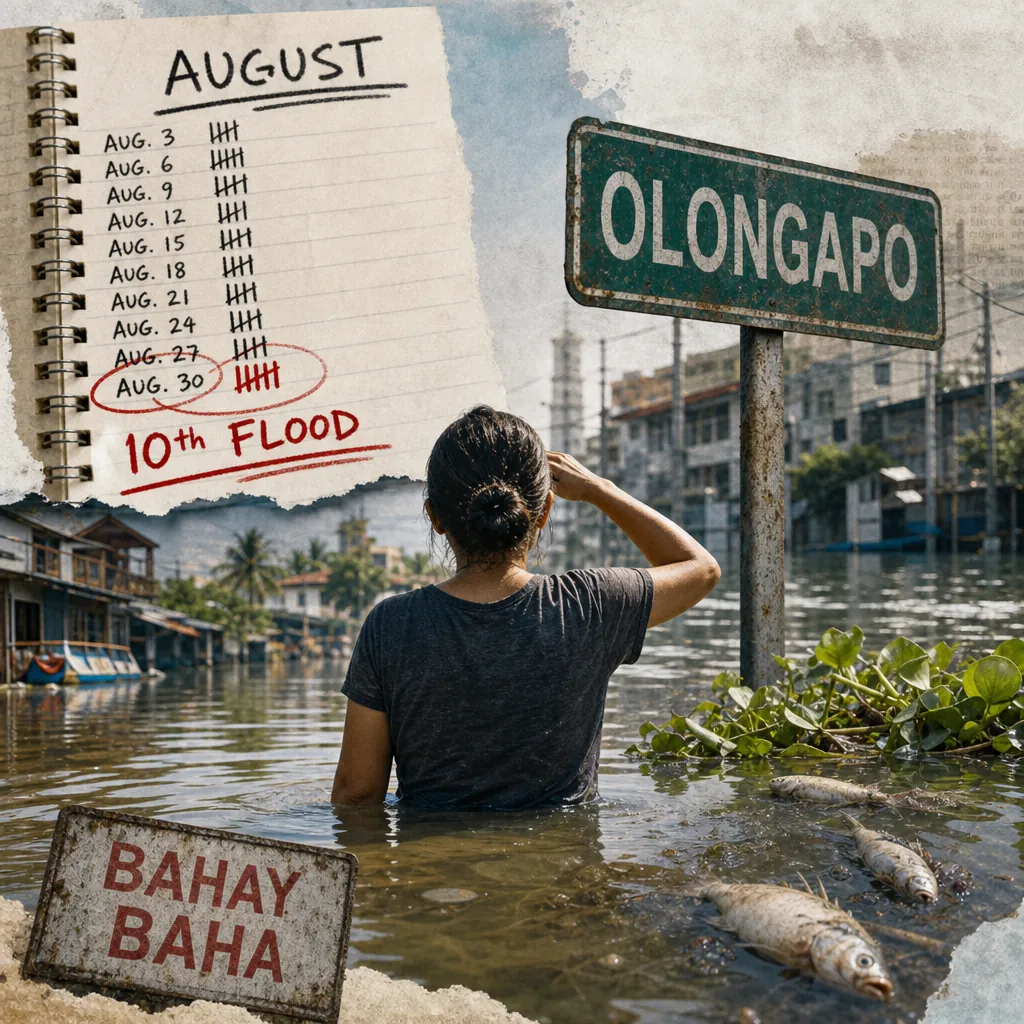
The day's conversation opened on a stark contrast: a viral video of a former mayor telling a flood-weary resident that the water would persist "hanggang buhay tayo... Kalikasan 'yan" (as long as we live... that's nature), and a corporate announcement from SM Supermalls of record revenues and an all-time-high occupancy rate.15 The former drew over 5,500 combined reactions and shares on Facebook; the latter drew one like and one share.15 That gap in public attention is the day's central signal: crisis and governance stories are generating far more conversation than corporate performance updates, and the flood narrative is increasingly being framed as a permanent condition rather than a temporary inconvenience.
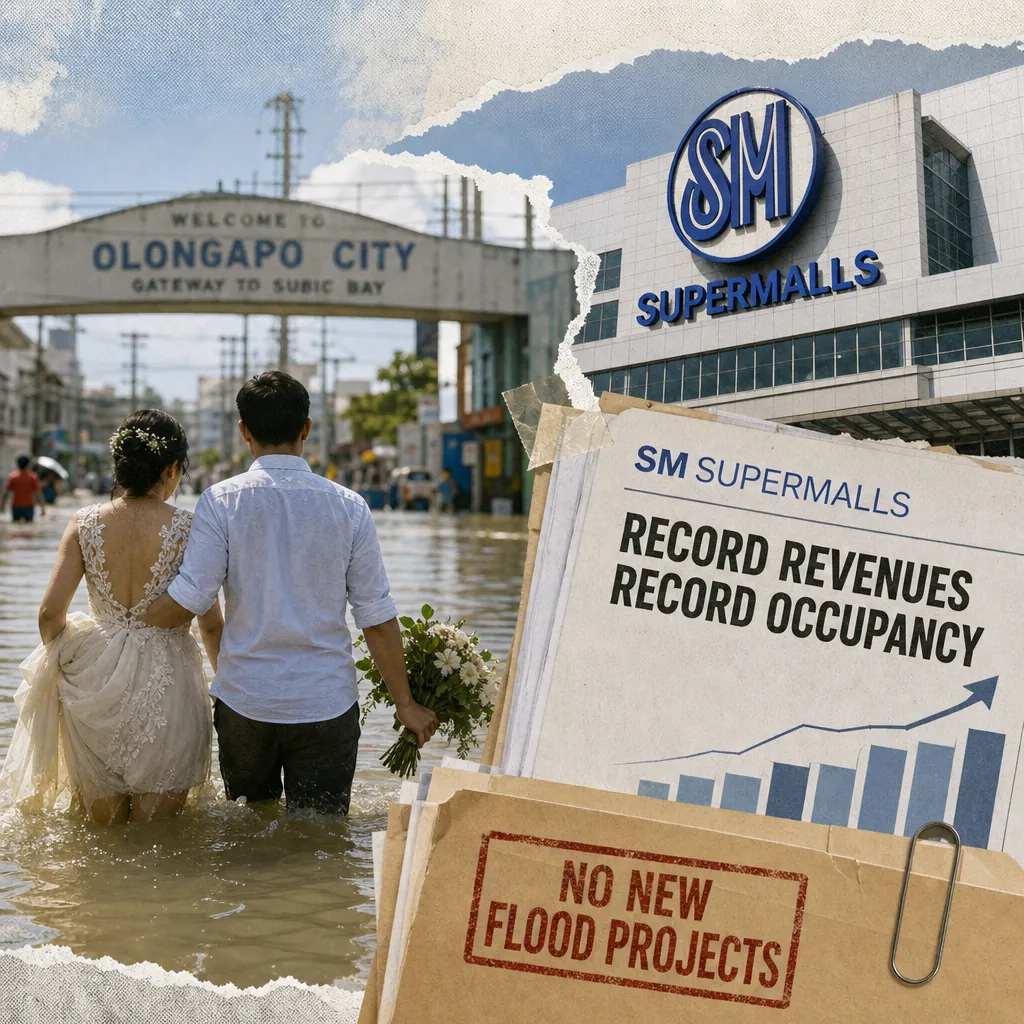
The flooding story is not just a weather event; it is a political and reputational crisis with direct implications for property development. As of August 30, more than 8.1 million Filipinos in 10 regions had been affected by the combined southwest monsoon and tropical cyclones Luis, Maymay and Neneng, with at least 32 dead and infrastructure damage reaching P6.11 billion.39 By September 1, 178 cities and municipalities in Luzon, including the entire province of Pangasinan, had been placed under a state of calamity.105 The human toll was captured in a viral image of a couple getting married in hip-deep floodwater inside a church in Hagonoy, Bulacan, a story that drew heavy coverage across outlets.114798 The wedding, which the couple chose to push through despite the water, became a symbol of both Filipino resilience and the absurdity of the situation.
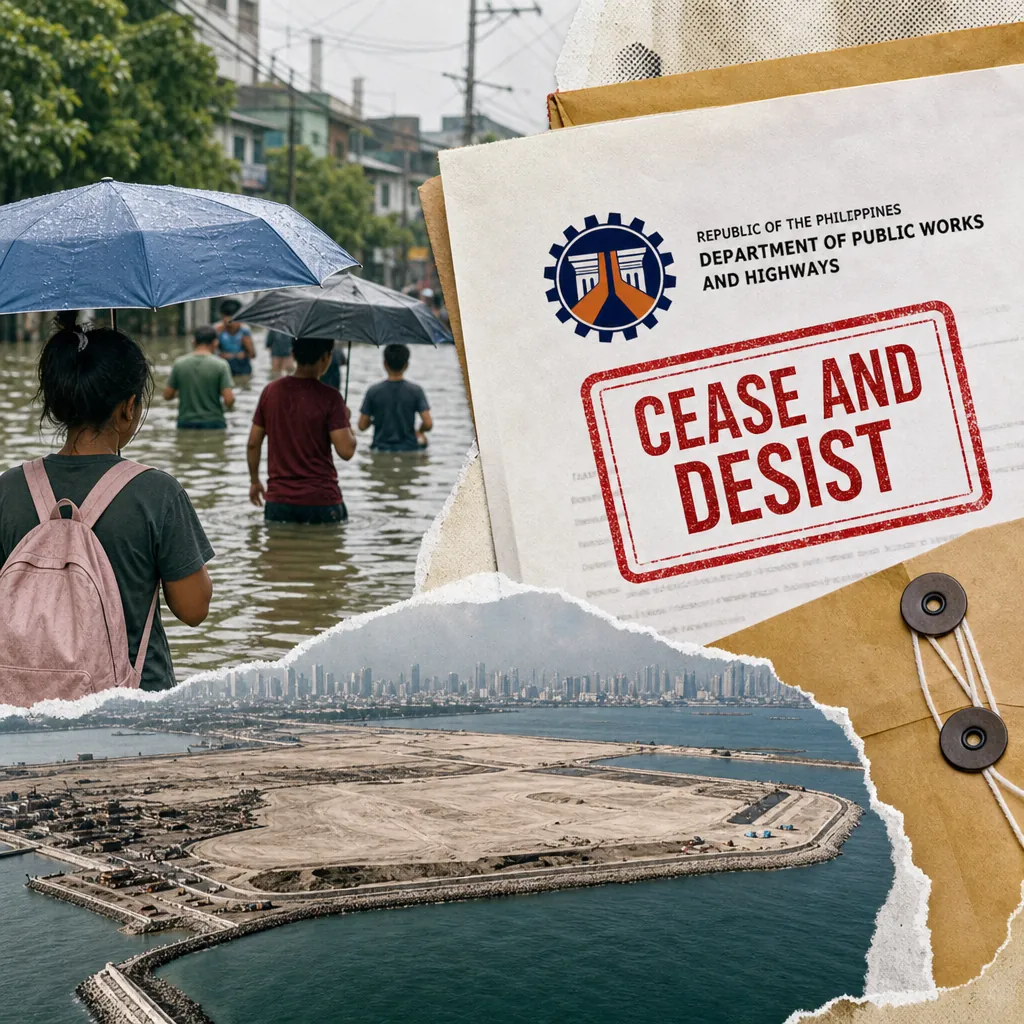
Amid this, the government's response has been met with public skepticism. Malacañang issued a call for officials to be sensitive in their attire and conduct when facing flood victims, a statement that drew only three laughing reactions and three comments on Facebook — a telling sign of public dismissal.2 Pampanga Governor Lilia Pineda apologized for wearing a branded raincoat during an inspection, saying "if we made a mistake in wearing such attire, sorry," while a Palace official defended the administration, saying "service is not seen in clothes, it is seen in deeds."7875 The disconnect between official messaging and public frustration was further highlighted by Senator Joel Villanueva's call for the North Luzon Expressway (NLEx) to refund toll fees for motorists stranded for up to 22 hours in floodwater, a plea echoed by other lawmakers.195355 The Senate Finance Committee's decision to again adopt a zero-funding policy for new flood control projects in the 2027 budget, focusing instead on completing unfinished ones, added a policy dimension to the crisis.69
Key themes
- Flooding is now a permanent condition in public discourse: The viral Olongapo exchange, where a former mayor told a resident the flooding would last "as long as we live," has become a reference point for public frustration.1 The video drew nearly 4,700 likes and over 830 comments, with more than 550 shares, making it the most widely circulated piece of content in the captured set.1 This framing — that flooding is inevitable and unaddressed — is a direct reputational risk for developers in flood-prone areas.
- Government flood response is met with public skepticism: Malacañang's appeal for officials to be sensitive in attire and conduct drew only three laughing reactions and three comments, signaling dismissal rather than approval.2 The Senate's decision to defund new flood control projects in the 2027 budget, focusing on completing unfinished ones, adds a policy layer to the crisis.69 Senator Joel Villanueva's call for NLEx to refund toll fees for stranded motorists, and Representative Perci Cendaña's criticism of continued toll collection during flooding, reflect a broader demand for accountability.1955
- SM Supermalls posts record results, but the news is not resonating publicly: SM reported first-half revenues of P41.8 billion, up 8 percent year-on-year, with occupancy at an all-time high of 96 percent.5 The announcement of SM Nuvali's November 27 opening, featuring a one-hectare indoor garden, was also highlighted.108 Yet the post drew only one like and one share, indicating that corporate performance updates are not currently driving public conversation.5
- Political transitions in Cavite draw derision, not support: The swearing-in of Jenny Barzaga as Cavite 4th District representative, replacing her expelled son Kiko, drew 463 "haha" reactions against 199 likes on one post.3 The public framed the event as spectacle rather than governance, a sentiment that could subtly affect investor confidence in a key growth corridor.35
- Infrastructure accountability is under scrutiny: The Sandiganbayan dropped plunder and graft charges against former Public Works Secretary Manuel Bonoan, paving the way for him to turn state witness in the flood control corruption scandal.9100 Bonoan testified that President Marcos asked him to resign a year ago amid public outrage.46 Separately, the Philippine Reclamation Authority is investigating unauthorized reclamation projects in Laguna de Bay, and Senator Alan Peter Cayetano defended Taguig's management of the Lakeshore area against claims of wasted funds.3381
- Climate resilience is becoming a property value driver: The Manila Times ran an opinion piece titled "Worst flooding under the worst presidency," and another on green space becoming "more than a luxury."3948 The Laguna Lake Development Authority warned lakeshore communities as water levels exceeded critical marks.95 These narratives suggest that flood resilience and sustainability are increasingly central to property decisions.
- The stock market rebounded on strong manufacturing data: The Philippine Stock Exchange index jumped 2.31 percent to close at 6,093.89, snapping a four-day losing streak, as investors hunted for bargains.49 Sentiment improved after the S&P Global Philippines Manufacturing PMI climbed to 54.9 in August from 51.8 in July, the strongest reading since December 2016.99
- Entertainment and lifestyle content is not driving property sentiment: Posts about the Harry Potter Yule Ball at Solaire and The Notebook musical at Circuit Makati drew minimal engagement.828 While these events reinforce the lifestyle appeal of mixed-use developments, they are not currently generating significant conversation.
How the narratives stack
Dominant: The flooding crisis and its governance failures dominate the captured conversation. The viral Olongapo video, the widespread displacement, and the political fallout — from the Palace's sensitivity appeal to the Senate's defunding of new flood projects — constitute the day's most significant news.16939 This is a crisis with visible harm: 8.1 million affected, 32 dead, and 178 areas under a state of calamity.39105 The public response, measured in engagement, is overwhelmingly focused on this narrative.
Counter-narrative: SM Supermalls' record performance provides a counterpoint of corporate resilience.5 The 96 percent occupancy rate and P41.8 billion in revenues suggest that consumer confidence in major retail destinations remains robust despite economic challenges.31 However, this narrative is not resonating publicly — the announcement drew minimal engagement, indicating that the story is not yet translating into grassroots confidence.5
Emerging: The intersection of climate resilience and property value is an emerging narrative. The Manila Times' opinion pieces on flooding and green space, the Laguna Lake water level warnings, and the DA's assessment of the Pax Silica project's impact on farmers all point to a growing awareness that environmental factors are central to development decisions.39489566 This is a story that will likely intensify as the monsoon season continues.
Under-covered: The theft of grounding cable from a Navotas pumping station, which disabled the facility during severe flooding, received relatively little attention.52 The Philippine National Police condemned the theft as not an ordinary crime because it compromised flood control operations.52 This story highlights a critical vulnerability in flood infrastructure that deserves more scrutiny than it received in the captured set.
Platform insights
- Facebook: Facebook carried the heaviest volume and the most engaged reactions, particularly for the flooding and political stories.13 The Olongapo video drew nearly 4,700 likes and over 830 comments, while the Barzaga oath-taking drew 463 "haha" reactions.13 Facebook is where community frustration and political satire are most visible.
- X (Twitter): Twitter served as a secondary distribution channel for news headlines, with the Inquirer's posts on the Barzaga story and the flooding drawing thousands of views but generating less sustained dialogue than Facebook.7 It is a platform for news amplification rather than community discussion.
- YouTube: The House of Representatives' livestream of Jenny Barzaga's oath-taking was a source for the story, but engagement on YouTube itself was not a significant factor in the captured conversation.35
Key voices and communities
- Flood-affected community advocates and local government critics: Residents in Olongapo and other flooded areas are the most vocal group, using Facebook Live to confront officials.1 Their frustration, captured in the viral exchange, is a direct challenge to both government and developer credibility.
- Mainstream media and institutional broadcasters: Outlets like the Inquirer, Manila Times, and Philstar are amplifying both the flood crisis and the political fallout.39105100 Their framing shapes public interpretation, and their coverage of the Bonoan testimony and the Senate defunding adds policy depth to the crisis.
- National and regional political leadership circles: The Barzaga transition in Cavite is a focus of public attention, with the "haha" reactions signaling derision.3 This group's actions are under scrutiny, and any perceived instability could affect investor confidence in the province.
- Property and retail sector reporters, plus corporate communications teams: Business reporters covering SM's mid-year review and Megaworld's board appointment of former Finance Secretary Carlos Dominguez are circulating positive corporate narratives.571 Though engagement is modest, these posts reach decision-makers and investors.
- Senators and lawmakers: Figures like Joel Villanueva, Perci Cendaña, and JV Ejercito are driving the accountability narrative, calling for toll refunds and defunding new flood projects.195569 Their statements are being covered across outlets and add a policy dimension to the crisis.
Narrative streams
The flood crisis is a political and reputational liability
The scale of the flooding is staggering. As of August 30, more than 8.1 million Filipinos in 10 regions had been affected, with at least 32 dead and infrastructure damage reaching P6.11 billion.39 By September 1, 178 areas were under a state of calamity.105 The human cost was captured in the viral image of a couple marrying in hip-deep water in Hagonoy, Bulacan, a story that drew heavy coverage across outlets including the Inquirer, Bandera, and Philstar.114798 The couple chose to proceed with their wedding despite the water, a decision that became a symbol of both resilience and the absurdity of the situation.
The government's response has been met with skepticism. Malacañang's appeal for officials to be sensitive in attire and conduct drew only three laughing reactions and three comments on Facebook.2 Pampanga Governor Lilia Pineda apologized for wearing a branded raincoat, saying "if we made a mistake in wearing such attire, sorry," while Palace official Claire Castro defended the administration, saying "service is not seen in clothes, it is seen in deeds."7875 The disconnect between official messaging and public frustration is palpable.
The Senate's decision to again adopt a zero-funding policy for new flood control projects in the 2027 budget adds a policy dimension.69 Senator JV Ejercito said the panel would not approve new projects, focusing instead on completing unfinished ones, citing past instances where local governments were unaware of projects in their areas.69 This decision, while fiscally prudent, could be seen as a failure to address the root causes of flooding.
Read for the sector: For property developers, this crisis is a direct reputational risk. Any development in flood-prone areas — Cavite, Bulacan, Laguna, Pampanga — is now associated with the public's frustration. Developers must proactively address flood resilience in their communications or risk being cast as indifferent. The window between now and mid-October is the highest-risk period for flood-related reputational challenges.
SM's record results are a counterweight to consumer fears
SM Supermalls reported first-half revenues of P41.8 billion, up 8 percent year-on-year, with occupancy at an all-time high of 96 percent.5 President Steven Tan emphasized that "value drives the Filipino consumer now more than ever."5 The company is set to open its 91st mall, SM Nuvali, on November 27, featuring a one-hectare indoor garden using technology similar to Singapore's Gardens by the Bay.108 Tan said the mall would feature an "innovative upscale mall concept never experienced in the Philippine market before."108
The company is also targeting 100 malls by 2028 despite construction delays, with new openings planned in Tagum, General Trias, Harrison Plaza, Bohol, and Malolos.59 SM is differentiating its malls by adapting architecture and tenant mix to local communities.59
However, the announcement drew minimal public engagement — one like and one share on the Facebook post.5 This suggests that while the corporate narrative is positive, it is not yet translating into grassroots confidence. The lack of conversation around the record results means the story is not resonating with the public, who are more focused on the flood crisis.
Read for the sector: The 96 percent occupancy figure is a counterweight to fears about consumer pullback, but the lack of public conversation around it means the narrative is not yet translating into grassroots confidence. For developers, this suggests that operational strength alone is not enough to shift public sentiment during a crisis. The SM Nuvali opening in November will be a key test of whether positive corporate narratives can break through the flood-dominated conversation.
The Bonoan testimony and the flood control corruption scandal
The Sandiganbayan dropped plunder and graft charges against former Public Works Secretary Manuel Bonoan, paving the way for him to turn state witness in the flood control corruption scandal.9100 Bonoan was accused alongside Senator Jinggoy Estrada and others over an alleged scheme involving P573 million in kickbacks.9 In testimony, Bonoan said President Marcos asked him to resign a year ago amid public outrage over the scandal.46 The Ombudsman moved for Bonoan's exclusion, saying he could be a witness in cases being readied against President Marcos's cousin, former House Speaker Martin Romualdez.100
This story is significant because it ties the flood crisis directly to corruption. The public's frustration over flooding is compounded by the perception that funds meant for flood control were stolen. The Bonoan testimony, covered by the Inquirer and Philstar, adds a layer of accountability to the crisis.46100
Read for the sector: For developers and contractors, this scandal is a reminder that infrastructure projects are under intense scrutiny. Any perceived involvement in corrupt practices could have severe reputational consequences. The ongoing investigation into unauthorized reclamation projects in Laguna de Bay, and the Senate's defunding of new flood projects, signal a more cautious approach to infrastructure spending.3369
The Cavite political transition and its implications for development
Jenny Barzaga was sworn in as Cavite 4th District representative, replacing her son Kiko, who was expelled from the House for unruly behavior.35 The public reaction was predominantly derisive, with 463 "haha" reactions against 199 likes on one post.3 The event was framed as spectacle rather than governance, a sentiment amplified by follow-up posts.4
Cavite is a key growth corridor for affordable housing and township developments. The political transition, while drawing public mockery, could have implications for permitting and zoning approvals. The Barzaga family's dominance in Dasmariñas since 1998 suggests continuity, but the public's derision could subtly affect investor confidence.35
Read for the sector: For developers with projects in Cavite, this political instability narrative is worth monitoring. Any perceived governance volatility could delay permits or zoning approvals. The public's mocking reaction suggests a low tolerance for political dynasties, which could extend to how government-linked development projects are received.
Climate resilience is becoming a property value driver
The Manila Times ran an opinion piece titled "Worst flooding under the worst presidency," which argued that the floods are "a visual indictment of a state that has spent hundreds of billions of pesos supposedly to prevent precisely this."39 Another piece argued that green space is "becoming more than a luxury," as residents increasingly consider how communities use energy and how much nature remains part of everyday life.48
The Laguna Lake Development Authority warned lakeshore communities as water levels exceeded critical marks, reaching 12.67 meters against a critical high of 12.50 meters.95 The Department of Agriculture is assessing the impact of the proposed Pax Silica project on farmers in Tarlac, with around 15,200 farmers potentially losing agricultural land.66
Read for the sector: These narratives suggest that flood resilience and sustainability are increasingly central to property decisions. Developers who can demonstrate genuine climate adaptation — not just greenwashing — will have a competitive advantage. The question is no longer just how much green space can be provided, but how sustainability can be built into the entire community.
Conversation trajectory
- Flood-related reputational risk will intensify through mid-October: The monsoon season is ongoing, and each significant weather event will likely amplify the Olongapo-style discourse into adjacent markets.1 Engagement on resilience-related content typically spikes 2-3 times following major flooding events. The window between now and mid-October represents the highest-risk period for flood-related reputational challenges. Observation window: 2-6 weeks.
- SM Nuvali opening on November 27 will be a key test: The opening of SM's 91st mall, featuring a one-hectare indoor garden, will generate substantial content across property and consumer channels.108 Pre-opening conversations typically start 4-6 weeks before launch, providing early indicators of how the "experience-driven development" narrative resonates. Observation window: 8-12 weeks.
- The Bonoan testimony and corruption scandal will continue to unfold: Bonoan's potential role as state witness in cases against Martin Romualdez could reshape the political landscape.100 The Sandiganbayan's decision and any subsequent developments will keep the flood control corruption scandal in the news. Observation window: 4-8 weeks.
- The Senate's zero-funding policy for new flood projects will be tested: The 2027 budget deliberations will determine whether the policy holds. Senator Ejercito's statement that the panel would not approve new projects, focusing on completing unfinished ones, will be scrutinized as the budget process moves forward.69 Observation window: 4-12 weeks.
- First quarter 2027 earnings will test the occupancy resilience narrative: Major developers' earnings, typically released in late April or early May, will provide the next major dataset for comparing the occupancy resilience narrative that SM has established.5 Observation window: 6-8 months.
Trigger events to watch: The next major weather event that causes significant flooding; the opening of SM Nuvali on November 27; any developments in the Bonoan testimony or the Romualdez cases; the Senate's final budget deliberations; and any policy announcements from the Climate Change Commission or the Department of Public Works and Highways.
Response guidance
Flood resilience communications: For developers with projects in flood-prone areas, proactively publish flood-resilience documentation, including drainage plans, elevation data, and historical incident responses. This is particularly urgent for developments in Cavite and Laguna given their proximity to affected regions and the upcoming holiday season when buying decisions peak. Use plain language and visual proof of drainage systems, elevated road designs, and retention ponds to preemptively counter flooding concerns.
Government sensitivity messaging: For government-adjacent clients, avoid issuing advice that could be perceived as tone-deaf during disaster periods. The Palace's sensitivity appeal was broadly mocked. Instead, demonstrate presence and action, such as on-the-ground coordination or visible resource deployment, which can be documented and shared through trusted media partners.
Corporate performance narratives: While SM's record results are positive, the lack of public engagement suggests that operational strength alone is not enough to shift sentiment during a crisis. For companies with strong performance data, consider pairing it with tangible community impact stories, particularly around flood relief or climate resilience, to break through the crisis-dominated conversation.
Political monitoring in Cavite: Monitor political developments in Cavite's 4th District for potential delays in local permitting or land-use approvals, given the disruptive transition and negative public sentiment. Adjust project timelines or communication strategies if regulatory friction emerges.
Climate resilience as a value proposition: Position climate adaptation as a core value proposition, not an afterthought. The Manila Times' coverage of green space and the Laguna Lake warnings suggest that environmental factors are increasingly central to property decisions. Highlight specific investments in flood mitigation, sustainable design, and community resilience in all marketing materials.
Sensitive topics to navigate: Flooding and climate vulnerability are emotionally charged topics. Avoid appearing defensive or dismissive of genuine community concerns. Acknowledge the hardship, commit to action, and maintain visual and verbal sensitivity when engaging affected communities. Political disruptions and governance stability are also sensitive; avoid commenting on political transitions, but be prepared to address questions about regulatory continuity.
See the full picture behind today's signals.
This report draws from Media Meter's MediaWatch, our real-time monitoring engine tracking 2,470+ Philippine sources across print, broadcast, digital, and social. Explore how the platform turns raw coverage into decision-grade intelligence, then see how it's configured for teams like yours — whether you're in PR agencies, corporate comms, government, or marketing.
Want more? Browse our Report Library for sector and crisis intelligence, or request a demo and we'll have your brand set up before the call.
Want this kind of intelligence on your brand?
This brief is built on the same MediaWatch methodology that runs continuously across every brand we monitor. See your competitive landscape, Impact Score, and narrative trajectory in a 30-minute demo.