BSP summons banks over transfer fees as UnionBank, LandBank go free; SEC reopens online lending
The Bangko Sentral ng Pilipinas calls banks and e-wallets to explain high transfer fees, while UnionBank and LandBank announce zero-fee InstaPay and PESONet transfers. The SEC lifts its five-year ban on new online lending platforms, and consumer complaints about billing errors and app outages persist.
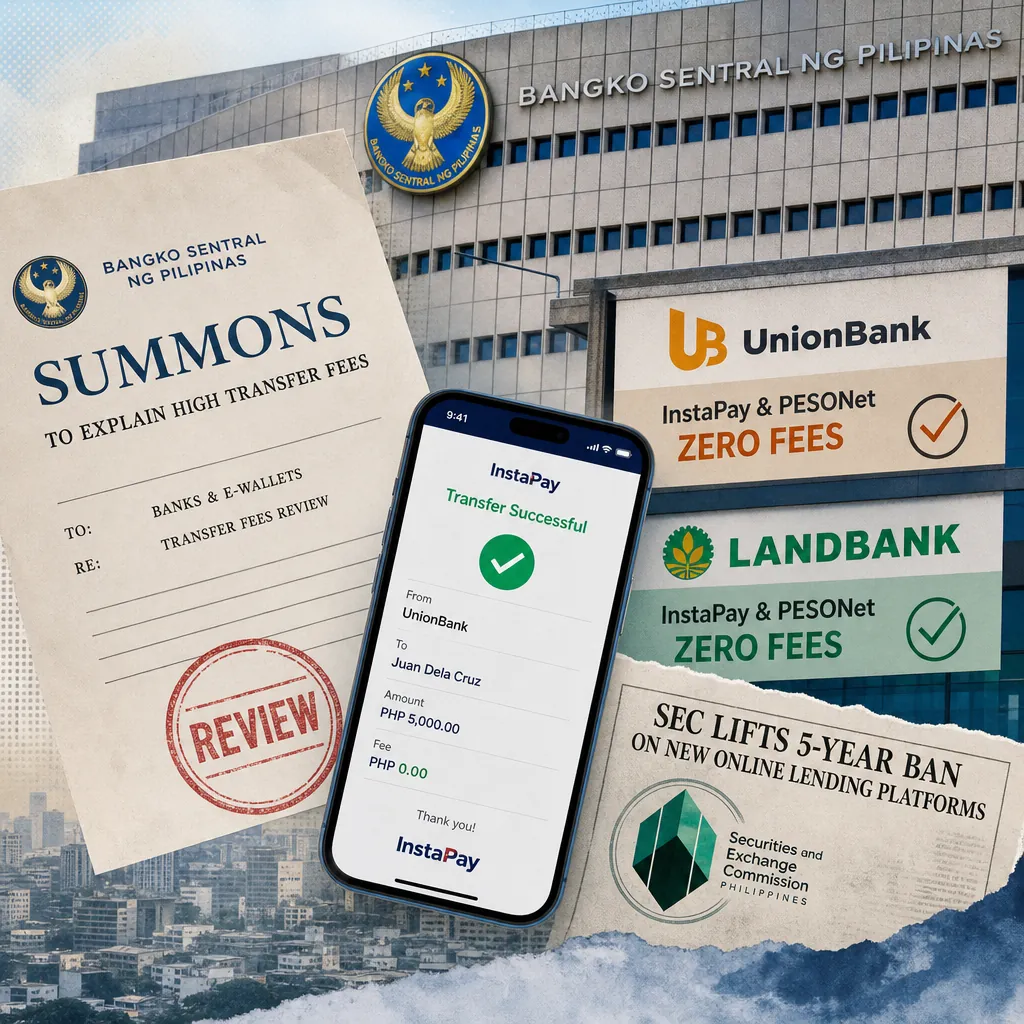
The Bangko Sentral ng Pilipinas (BSP) summoned several banks and e-wallet operators this week to explain why their digital fund transfer fees remain high or unchanged, even as competitors move to waive charges entirely. The central bank's push for fairer pricing comes as UnionBank and LandBank both announced zero-fee InstaPay and PESONet transfers starting July 7, 2026, intensifying competitive pressure in the Philippine digital payments space. Meanwhile, the Securities and Exchange Commission (SEC) lifted its nearly five-year moratorium on new online lending platforms, replacing it with stricter capital and disclosure requirements. Consumer frustration over billing errors and service outages at major banks continues to simmer on social media, even as positive news about fee waivers generates goodwill.
Key themes
- BSP cracks down on high transfer fees – The Bangko Sentral ng Pilipinas (BSP) has summoned several banks and e-wallet operators to explain why their InstaPay and PESONet fees remain high or unchanged, warning that penalties may follow if they fail to comply with new fair-pricing rules. BSP Deputy Governor Mamerto Tangonan said the central bank invited institutions that have not yet adjusted their fees or whose charges appear noncompliant with BSP Circular No. 1238, which requires that fees for person-to-person transfers across different banks or e-wallets should not exceed the fees for transfers within the same institution, except for the actual switch cost paid to the network. Tangonan emphasized that the BSP is opting for dialogue first, but sanctions could come later.
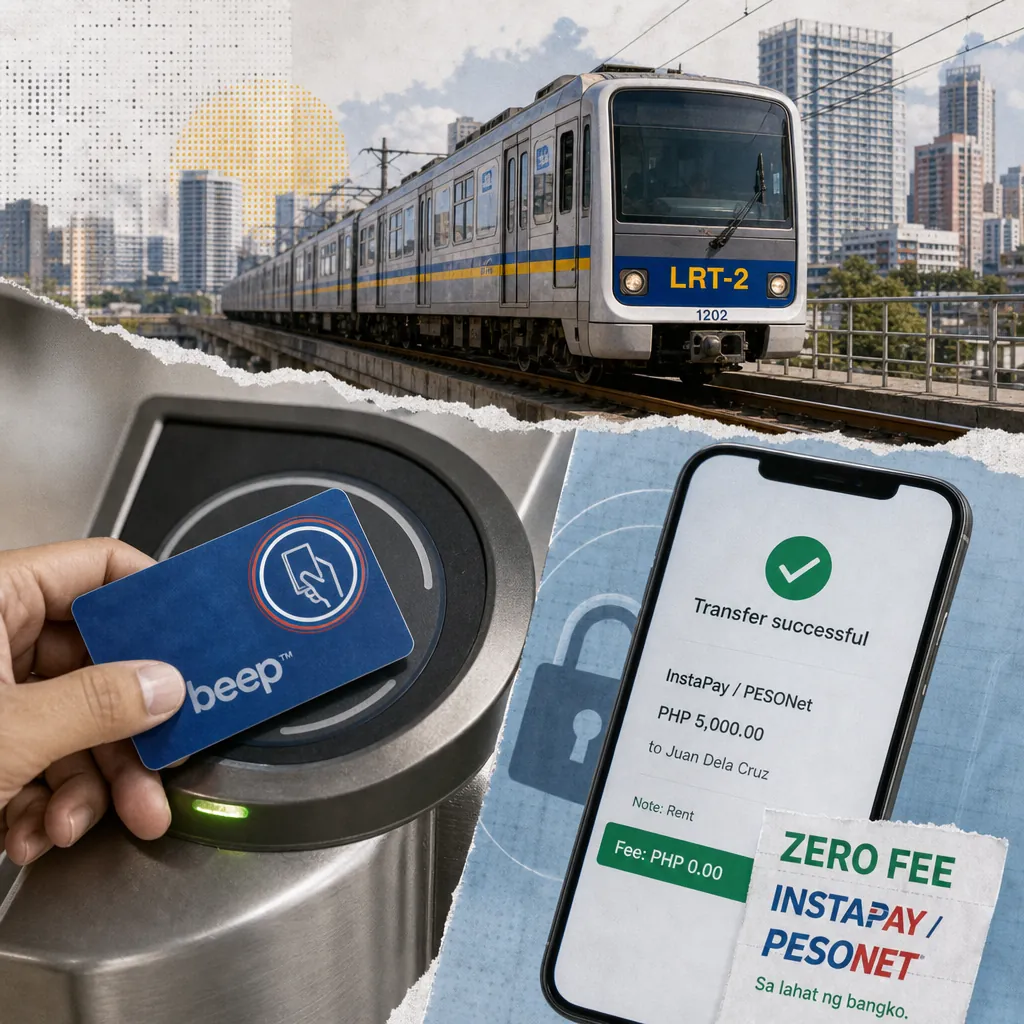
- UnionBank and LandBank go fee-free – On July 7, 2026, both UnionBank and LandBank announced zero-fee InstaPay and PESONet transfers for their mobile banking apps and online platforms. LandBank's policy also covers Overseas Filipino Bank (OFBank) clients worldwide. UnionBank's free transfers apply to person-to-person transfers via its mobile app, including in-store QRPh payments. These moves follow BPI's earlier announcement on July 1 that it would waive InstaPay and PESONet fees on its app, BPI Online, VYBE e-wallet, and BizKo. The announcements were widely shared on social media, with LandBank's official tweet receiving nearly 2,000 views and UnionBank's news generating positive reactions.
- SEC lifts ban on new online lending platforms – The Securities and Exchange Commission (SEC) lifted its nearly five-year moratorium on the registration of new online lending platforms (OLPs) starting August 1, 2026, under Memorandum Circular No. 20. The new framework raises capital requirements and imposes stricter disclosure and market conduct rules for financing and lending companies. The SEC said the move aims to promote responsible innovation, stimulate economic activity, and ensure consumer protection. The ban had been in place since 2021 due to widespread complaints about harassment, high interest rates, and unfair debt collection practices by online lending apps.
- Consumer billing errors and service outages persist – Social media posts from February to July 2026 reveal a pattern of unresolved billing errors at UnionBank and BPI, including annual fee reversals that later reappear as late charges, unauthorized deductions from savings accounts, and billing statements for cards never received. A BPI app and online banking outage on June 14-16 drew nearly 20,000 views on Twitter, with users expressing urgency to complete time-sensitive payments. These incidents highlight systemic friction points in customer service and backend billing systems.
- Inflation eases to 6.4% in June – The Philippine Statistics Authority reported that headline inflation slowed to 6.4% in June from 6.8% in May, driven by slower increases in transport and food costs. Core inflation, which excludes volatile food and energy items, rose to 4.4%, its highest in 31 months. The June print was within the BSP's forecast range of 6-7% and brought the first-half average to 4.8%, still above the central bank's 2-4% target. The BSP warned that inflationary pressures remain strong and could stay above target through 2027.
- BSP warns banks to prepare for frontier AI cyber risks – The BSP issued Memorandum No. M-2026-034, urging financial institutions to bolster defenses against advanced artificial intelligence (AI) systems that could launch sophisticated cyberattacks with minimal human intervention. The memo warns that frontier AI models can identify software vulnerabilities, generate exploit pathways, and execute multi-stage attacks targeting financial systems, third-party service providers, and critical infrastructure. Institutions are required to improve attack surface visibility and maintain updated inventories of internet-facing assets.
- Voice phishing scam drains Pangasinan man's bank account – A 58-year-old man from Mangaldan, Pangasinan lost P230,000 after falling victim to a voice phishing scam. The victim received a call from someone posing as a bank agent who instructed him to wait for an ATM replacement. When no one arrived, he checked his account and found it empty, with withdrawals starting days earlier. The incident underscores the growing threat of social engineering attacks targeting bank customers.
- UnionBank wins global wealth management awards – UnionBank's private wealth management arm, UnionBank Private, won three awards at the Global Private Banker Innovation Awards 2026: Best Next-Generation Offering – Philippines, Best Private Bank for Client Experience – Philippines, and Excellence in Intergenerational Services by a Private Bank. The awards recognize the bank's programs for next-generation leadership, client experience, and family succession planning.
How the narratives stack
Dominant – Within the captured set, the dominant narrative is the BSP's regulatory push for fairer digital transfer fees, combined with the competitive response from banks like UnionBank and LandBank announcing zero-fee transfers. This story generated the most news articles (at least 10 across multiple outlets) and significant social media engagement, with official announcements and news tweets drawing thousands of views. The BSP's summons of noncompliant institutions adds a regulatory enforcement angle that reinforces the narrative of a shifting landscape in digital payments.
Counter-narrative – Despite the positive news about fee waivers, consumer complaints about billing errors and service outages at major banks continue to surface on social media. Posts detailing unresolved annual fee reversals, unauthorized deductions, and app outages generate emotional engagement and community support, suggesting that the underlying trust issues remain unresolved. The UnionDigital billing gap – where UnionBank credit cards are not recognized as affiliate billers in UnionDigital's app – highlights that even as banks remove fees, internal integration challenges persist.
Emerging – The SEC's lifting of the moratorium on new online lending platforms signals a potential resurgence of digital lending apps, but with stricter regulations. This could reshape the consumer credit landscape, especially as global content about Buy Now Pay Later (BNPL) debt traps continues to gain traction among Filipino audiences. The BSP's warning about frontier AI cyber risks also points to an emerging threat that banks must prepare for.
Suppressed – The voice phishing scam that drained a Pangasinan man's bank account received relatively limited coverage compared to the fee waiver announcements, despite its serious implications for consumer security. Similarly, the BPI MS Car Insurance claims handling complaint on Reddit, which threatens escalation to the Insurance Commission and media, has not yet been picked up by mainstream news outlets. These stories could amplify if left unaddressed.
Platform insights
- Facebook – Facebook hosted the most emotionally charged personal narratives, especially around billing disputes. A February 2026 post about a UnionBank annual fee reversal that later resulted in late fees and a UMID deduction received 7 likes, 3 sad reactions, and 26 comments, showing that users turn to Facebook for venting and seeking community support when customer service fails. The platform's comment sections often fill with similar grievances, amplifying individual complaints into collective frustration.
- Twitter (X) – Twitter served as the real-time alert system for service disruptions and policy announcements. The BPI outage update on June 14 drew 22 comments and nearly 20,000 views within two days, while the LandBank and UnionBank zero-fee tweets were shared multiple times by news accounts and official handles, amplifying reach quickly. User complaints about billing errors also gained traction, but with fewer reactions, suggesting Twitter is used more for public accountability than emotional sharing.
- Reddit – Reddit focused on analytical and comparative critiques. A post about the UnionDigital billing gap – noting the irony that UnionBank credit cards are not accepted as billers in UnionDigital's app – received 5 upvotes and provoked snarky comments about systemic inconsistencies. Another thread about a BPI MS Car Insurance claim detailed slow response times and incorrect documentation, with the author threatening escalation to the Insurance Commission and media. Reddit users treated banking issues as systemic puzzles rather than personal stories.
- YouTube – While not directly captured in the monitoring writeup for this day, the broader conversation about BNPL debt traps continues on YouTube, with a video on Klarna's reporting practices amassing over 770,000 views and 21,000 likes. These global creators resonate with Filipino audiences as digital lending grows locally.
Key voices and communities
- Frustrated retail banking customers – Individual consumers on Facebook and Twitter are the most vocal group, directly sharing negative service experiences with UnionBank and BPI. Their posts generate low to moderate engagement but high emotional weight, with comments sections often filled with similar grievances. This group lacks formal coordination but can amplify reputational risks quickly, especially around billing errors and app downtime.
- Financial media and news aggregators – Journalists and news outlets tracking banking developments are highly influential, shaping public narrative through official announcements and analysis. Accounts like those of news anchors and reporters typically gather hundreds to thousands of views per post. This group serves as a bridge between bank communications and the broader public, often framing fee waivers and service upgrades as consumer wins.
- Fintech critics and financial literacy advocates – Long-form content creators on YouTube, particularly those analyzing BNPL platforms like Afterpay and Klarna, are building significant audiences by warning about debt traps. While global, their content resonates strongly in markets like the Philippines where digital lending is growing rapidly. Their central argument is that BNPL products create hidden debt cycles through late fees, aggressive collections, and credit report impacts.
- Reddit community of informed consumers – Reddit users on Philippine-focused subreddits contribute detailed, peer-reviewed critiques of banking services, insurance claims, and digital product quirks. Posts receive modest upvotes but trigger nuanced discussions that often surface systemic issues not captured by official feedback channels. This group is highly analytical and values transparency.
- Official bank social accounts – Verified accounts for BPI, LandBank, and other institutions serve as authoritative sources for announcements and crisis updates. Their tweets on fee waivers and outage statuses are widely shared and quoted by media, making them central to narrative control. While not participants in the same sense as consumers, their actions directly shape stakeholder perceptions.
Narrative streams
BSP's fair-pricing push and the zero-fee race
The Bangko Sentral ng Pilipinas (BSP) has taken a firm stance on digital fund transfer fees, summoning several banks and e-wallet operators to explain why their charges remain high or unchanged. BSP Deputy Governor Mamerto Tangonan told reporters on July 7 that the central bank invited institutions that have not yet adjusted their fees or whose charges appear noncompliant with BSP Circular No. 1238. The circular, which took effect on July 4, requires that fees for person-to-person transfers across different banks or e-wallets should not exceed the fees for transfers within the same institution, except for the actual switch cost paid to the network. Tangonan said the BSP wants to understand why operating costs for IT systems, fraud management, cybersecurity, and customer support are largely passed on to interbank transfers while same-bank transactions are often free.
Meanwhile, UnionBank and LandBank both announced zero-fee InstaPay and PESONet transfers starting July 7, 2026. LandBank's policy covers its Mobile Banking App and iAccess, including OFBank clients worldwide. UnionBank's free transfers apply to person-to-person transfers via its mobile app, including in-store QRPh payments. These moves follow BPI's earlier announcement on July 1 that it would waive fees on its app, BPI Online, VYBE e-wallet, and BizKo. The announcements were widely shared on social media, with LandBank's official tweet receiving nearly 2,000 views and UnionBank's news generating positive reactions. However, the BSP's summons suggests that not all institutions have followed suit, and the central bank is prepared to escalate if necessary.
For the sector, this stream signals a structural shift in digital payments pricing. The BSP's regulatory push, combined with competitive pressure from early movers, is likely to force all major banks and e-wallets to reduce or eliminate transfer fees. This benefits consumers but also puts pressure on institutions that rely on fee income from transfers. The BSP's warning of potential sanctions adds urgency for noncompliant institutions to adjust their pricing models.
SEC lifts ban on online lending platforms
The Securities and Exchange Commission (SEC) lifted its nearly five-year moratorium on the registration of new online lending platforms (OLPs) on July 7, 2026, under Memorandum Circular No. 20. The ban had been in place since 2021 due to widespread complaints about harassment, high interest rates, and unfair debt collection practices by online lending apps. The new framework raises capital requirements and imposes stricter disclosure and market conduct rules for financing and lending companies. The SEC said the move aims to promote responsible innovation, stimulate economic activity, and ensure consumer protection.
This development is significant for the digital lending ecosystem in the Philippines. The moratorium had effectively frozen the entry of new players, allowing existing ones to dominate the market. Lifting the ban could lead to a wave of new entrants, but the stricter requirements may also weed out bad actors. The SEC's emphasis on consumer protection and market integrity suggests a more regulated environment going forward. For consumers, this could mean more choices but also a need for vigilance, as the history of online lending abuses remains fresh. The BSP's warning about frontier AI cyber risks adds another layer of concern, as new digital lenders may be targets for sophisticated cyberattacks.
Consumer billing errors and service outages
Social media posts from February to July 2026 reveal a pattern of unresolved billing errors at UnionBank and BPI. In February, a UnionBank cardholder reported that an annual fee reversal of P2,500 was later reversed, resulting in a late charge and an unauthorized deduction of P348 from their UMID savings account. Another user received a billing statement for a P2,500 annual fee on a card they had never received or activated, and could not file a dispute because the card was not enrolled in the app. These posts generated significant engagement, with the first receiving 26 comments.
In June, BPI experienced a major app and online banking outage that began around mid-June. On June 14, the official BPI account posted an update stating that the team was working to restore access, which accumulated nearly 20,000 views and 22 comments. Users expressed urgency to complete time-sensitive payments, such as insurance premiums. The outage narrative evolved into broader concerns about digital reliability.
These incidents highlight systemic friction points in customer service and backend billing systems. The pattern of approved reversals being later reversed or resulting in unauthorized deductions suggests a disconnect between customer service approvals and backend billing systems. For the sector, this stream underscores the importance of investing in robust IT infrastructure and seamless customer service processes to maintain trust in digital banking.
Inflation eases but remains above target
The Philippine Statistics Authority reported on July 7 that headline inflation slowed to 6.4% in June from 6.8% in May, driven by slower increases in transport and food costs. Core inflation, which excludes volatile food and energy items, rose to 4.4%, its highest in 31 months. The June print was within the BSP's forecast range of 6-7% and brought the first-half average to 4.8%, still above the central bank's 2-4% target. The BSP warned that inflationary pressures remain strong and could stay above target through 2027.
The easing inflation is positive for consumer sentiment and may reduce pressure on the BSP to raise interest rates. However, the elevated core inflation suggests that underlying price pressures persist, particularly in services and other non-food items. For banks, lower inflation could support loan demand and reduce the risk of non-performing loans, but the BSP's cautious stance means monetary policy may remain tight.
Voice phishing and cybersecurity threats
A 58-year-old man from Mangaldan, Pangasinan lost P230,000 after falling victim to a voice phishing scam. The victim received a call from someone posing as a bank agent who instructed him to wait for an ATM replacement. When no one arrived, he checked his account and found it empty, with withdrawals starting days earlier. The incident was reported by GMA News Online.
This story, while receiving limited coverage, highlights the growing threat of social engineering attacks targeting bank customers. The BSP's memorandum on frontier AI cyber risks adds a technological dimension to this threat, warning that advanced AI systems could enable more sophisticated and scalable cyberattacks with minimal human intervention.
For the sector, this stream emphasizes the need for banks to invest in customer education and fraud detection systems. The BSP's directive to improve attack surface visibility and maintain updated inventories of internet-facing assets is a step in the right direction, but individual customers also need to be vigilant against phishing attempts.
Conversation trajectory
Over the next 4-6 weeks, the conversation around digital banking fees is likely to intensify as the BSP's summons leads to either compliance or penalties. If major holdouts like GCash and Maya (which have already lowered fees to P10 but may face further scrutiny) are forced to reduce charges further, the narrative could shift to consumer victory. However, if the BSP's dialogue fails to produce results, the story could evolve into a regulatory showdown.
The SEC's lifting of the online lending moratorium will take effect on August 1, 2026. Expect a wave of new applications and media coverage about the return of online lending apps. Consumer advocacy groups and financial literacy advocates may ramp up warnings about debt traps, especially given the popularity of BNPL content on YouTube. The BSP's AI cyber risk memo may also gain traction as banks begin to implement the required measures.
Consumer complaints about billing errors and service outages are likely to continue, especially if banks do not address the systemic issues highlighted in social media posts. The UnionDigital billing gap and BPI MS insurance claim complaint on Reddit could escalate if left unresolved, potentially attracting media attention.
Key trigger events include: the BSP's next monetary policy meeting (likely late July 2026), which will refocus attention on inflation and interest rates; any formal Insurance Commission action on BPI MS (triggered by the escalating Reddit thread); and the expected BPI competitive response to the zero-fee transfers announced by UnionBank and LandBank. Additionally, the SEC's implementation of the new OLP framework on August 1 will be a major milestone.
Response guidance
For retail banking clients (BPI, UnionBank, LandBank): The most immediate opportunity lies in addressing the gap between official communication and consumer experience. The frustrated customers group is primed for a positive outcome if their complaints are acknowledged publicly and resolved quickly. Issuing a transparent breakdown of fee reversal processes, for instance, could turn a pain point into a loyalty builder. Engaging with Reddit's detailed critiques – especially around insurance claims and billing errors – would signal that the bank values customer feedback beyond formal channels.
For fintech and BNPL stakeholders (e.g., GCash, Maya, Tonik): The YouTube financial literacy advocates represent both a threat and a partnership avenue. Collaborating on co-branded educational content that explains responsible BNPL use, credit reporting, and dispute resolution could preempt negative viral videos while positioning the brand as consumer-friendly. Given the high view counts of these creators, even a single joint video could reach tens of thousands of potential users who are skeptical of digital lending.
For regulators (BSP, Insurance Commission): The financial media group is the most efficient channel for amplifying policy announcements such as free transfer mandates or consumer protection circulars. Providing embargoed briefings to key journalists can ensure accurate framing when these policies take effect. Additionally, monitoring the Reddit community can surface emerging consumer protection issues – like the BPI MS claim process – that may warrant regulatory attention or guidance.
Platform-specific approaches:
- Facebook: Address billing and fee concerns directly in comment threads on posts where users share detailed experiences. Pin a consolidated FAQ-style comment on high-engagement posts covering common issues. Leverage positive news about free transfers by sharing the announcement in comments where users express frustration about banking costs.
- Twitter (X): Deploy rapid, personalized replies to users reporting billing anomalies. Create a pinned thread that aggregates all service updates (outages, fee changes, known issues) and update it in real time. Retweet and quote positive media coverage with a short call-to-action.
- Reddit: Monitor subreddits like r/PHCreditCards and r/Philippines for detailed complaint threads. Reply with official account responses that offer to investigate and provide a direct contact. Avoid defensive language. Use an "acknowledge and redirect" approach for BNPL-related posts.
Key messages:
- "We are committed to resolving billing discrepancies quickly and transparently. If an annual fee reversal was applied correctly but a late fee still posted, please reach out so we can correct this immediately."
- "Your financial security and convenience are our priorities. That's why we are eliminating InstaPay and PESONet fees – to help you save more with every transaction."
- "We understand how critical uninterrupted access to your accounts is. When outages occur, we provide regular updates on restoration progress and alternative banking options."
- "Claims handling should be straightforward, especially during stressful times. We are actively improving our internal coordination to ensure documents are reviewed thoroughly and errors are avoided."
Sensitive topics to navigate:
- Billing errors leading to collections: Users report that annual fee reversals were reversed again or late fees were charged incorrectly, and accounts were threatened with collections. Avoid blaming the customer's payment timing; instead, acknowledge system delays and commit to manual correction of the ledger.
- Outage impact on essential payments: Customers express urgency (e.g., paying insurance) when apps are down. Do not minimize the disruption; provide concrete alternative channels (over-the-counter, ATM, other mobile wallets) and a clear timeline.
- BNPL debt perception: Third-party content (YouTube, Reddit) warns about debt traps. Avoid appearing defensive about BNPL if the institution offers similar products. Instead, position financial literacy resources and responsible borrowing guidance.
See the full picture behind today's signals.
This report draws from Media Meter's MediaWatch, our real-time monitoring engine tracking 2,470+ Philippine sources across print, broadcast, digital, and social. Explore how the platform turns raw coverage into decision-grade intelligence, then see how it's configured for teams like yours — whether you're in PR agencies, corporate comms, government, or marketing.
Want more? Browse our Report Library for sector and crisis intelligence, or request a demo and we'll have your brand set up before the call.
Want this kind of intelligence on your brand?
This brief is built on the same MediaWatch methodology that runs continuously across every brand we monitor. See your competitive landscape, Impact Score, and narrative trajectory in a 30-minute demo.