Jollibee picks Hong Kong for international listing
Jollibee Foods Corp. announced plans to list its international business on the Hong Kong Stock Exchange, separating overseas operations from its Philippine business. The day also saw the peso hit a record low, LPG price rollbacks, and social media speculation about provincial branch closures.
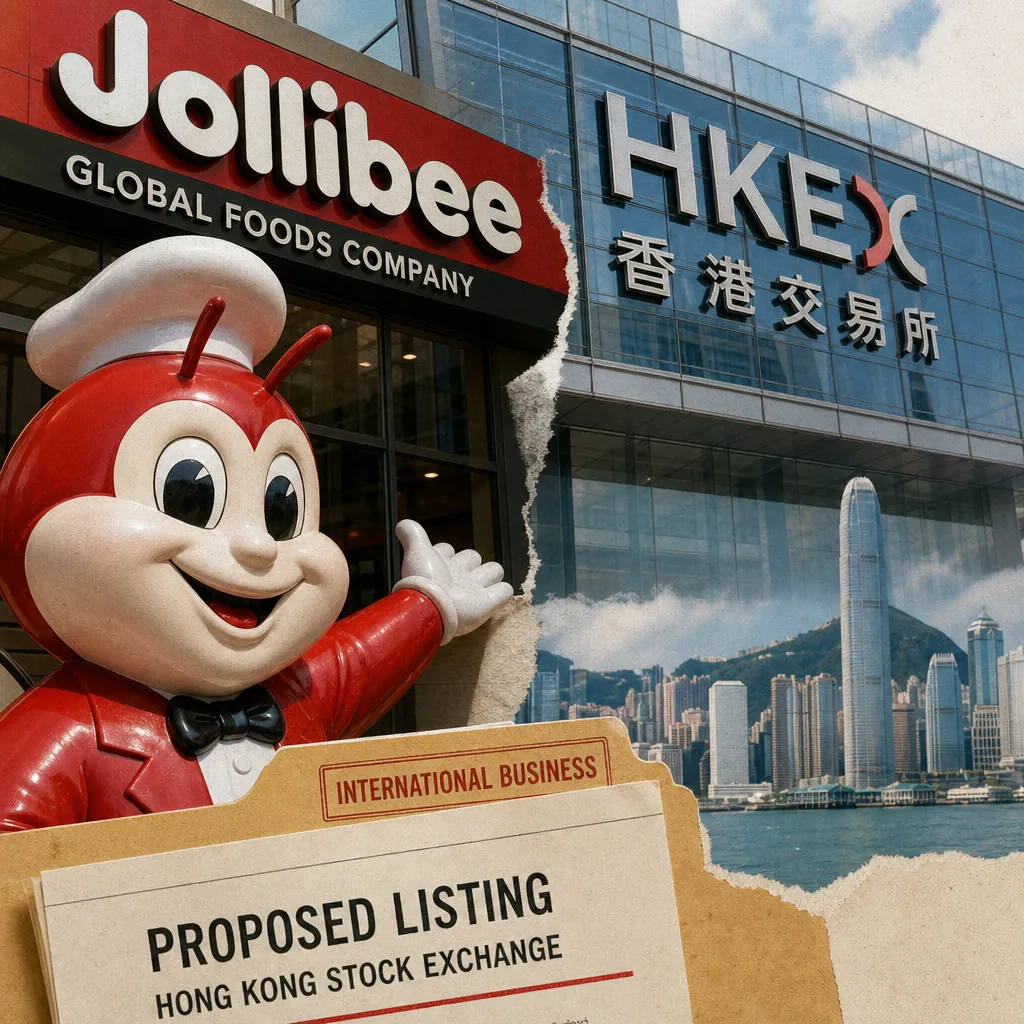
Jollibee Foods Corp. (JFC) said on Tuesday it will pursue a separate listing of its international business on the Hong Kong Stock Exchange, a decisive step in a plan to split the homegrown fast-food giant into two independently traded companies.7 The announcement, made eight months after JFC first floated the idea of a spin-off, names Hong Kong as the venue for Jollibee Foods Corporation International (JFCI), the unit that will hold all of the group's operations outside the Philippines.43 JFC will retain the domestic business and stay listed on the Philippine Stock Exchange.7 The company also named Richard Chong Woo Shin as chief executive of JFCI, putting a single leader in charge of the global expansion.7
The corporate news landed in a day otherwise dominated by consumer cost anxieties. The Philippine peso closed at a record low of ₱62.40 against the U.S. dollar, extending a slide that began before the long weekend.21 On the same day, the Department of Energy announced a rollback in liquefied petroleum gas (LPG) prices—a 40-centavo cut per kilo, or about ₱4.40 off a standard 11-kilogram tank—even as some industry players disputed the government's computation.56 On social media, a rumor about multiple Jollibee and Chowking branch closures in Oriental Mindoro circulated on Facebook, drawing a mix of laughter and curiosity rather than alarm.3
The Jollibee Hong Kong listing is the most consequential development for the food sector in this window, but the day's conversation was not confined to the corporate pages. A Department of Agriculture advisory on El Niño preparedness, a Reddit thread tying food prices to corruption, and the provincial closure rumor each drew distinct audiences. Together they sketch a sector facing two pressures at once: a major player restructuring for global growth while consumers at home grow more sensitive to every peso spent on food.
Key themes
- Jollibee picks Hong Kong for its international spin-off listing. JFC will list JFCI, the unit holding all overseas operations, on the Hong Kong Stock Exchange's main board, with Richard Chong Woo Shin as CEO.7 The move creates two independent companies—one for the Philippines, one for the rest of the world—each with its own strategy and access to capital.51
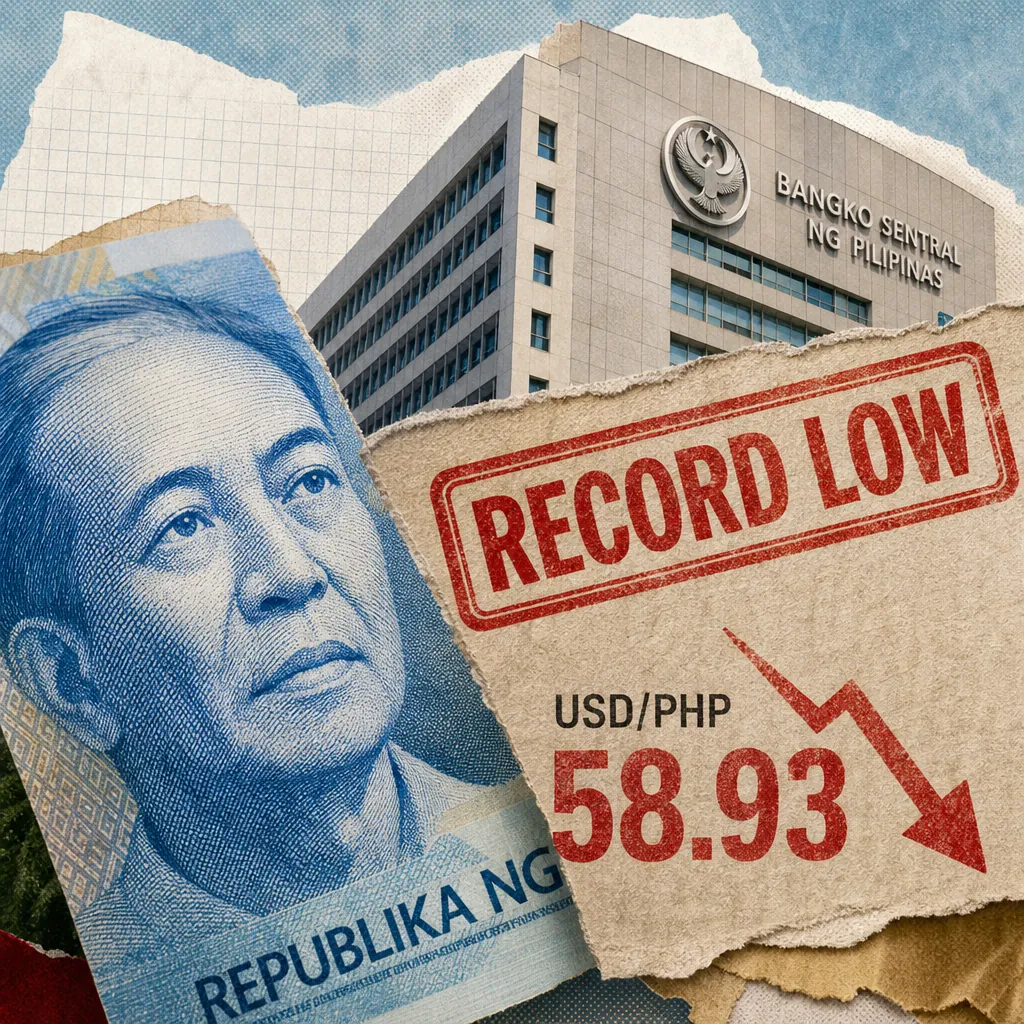
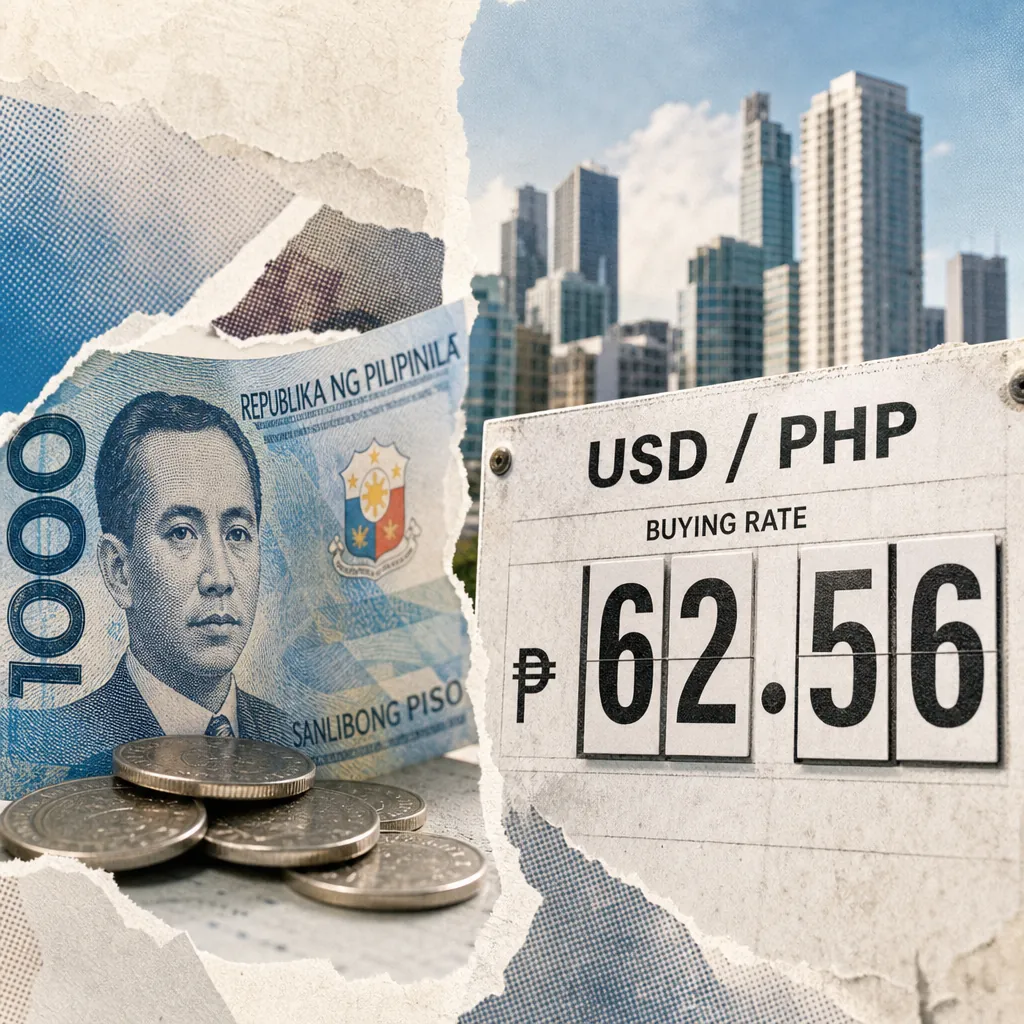
- The peso hit a record low of ₱62.40 per dollar. The currency weakened 13.5 centavos from its previous record low of ₱62.265 set on August 28, with no trading on Monday due to the National Heroes Day holiday.21 Economists cited a strong dollar, high oil prices, and market doubts about whether the central bank's interest rate hikes are enough to tame inflation.21
- LPG prices fell 40 centavos per kilo, but industry players disputed the government's math. The Department of Energy ordered the rollback, citing lower freight costs and a stronger peso in August.56 At least one company, Regasco, said the cut had no basis given higher world market contract prices and shipping costs.38
- A Facebook rumor about Jollibee and Chowking closures in Oriental Mindoro drew more laughs than concern. The post accumulated 12 reactions—eight of them "haha"—and 12 comments, suggesting the audience treated it as gossip rather than fact.3 The story remains unverified and could escalate if any confirmation emerges.
- Food prices are being folded into a broader narrative of corruption and governance failure. A Reddit thread asking "Why does corruption in the Philippines feel so impossible to escape?" drew 30 comments, with users citing rising costs of food, gas, electricity, and water as evidence of systemic failure.4 This framing creates a politically charged environment for any brand perceived as profiting from inflation.
- The Department of Agriculture is preparing for El Niño's impact on food supply and prices. The agency posted an advisory citing Bangko Sentral ng Pilipinas warnings that the weather pattern could add to inflation.1 The post drew 296 views but zero engagement, suggesting official messaging is being watched but not amplified.
- A Reddit post on food costs was removed by moderators after drawing 9 comments. The deletion points to active moderation of price-related discourse, potentially pushing such conversations to less verifiable channels like Facebook.2
How the narratives stack
Dominant: The Jollibee Hong Kong listing is the day's most significant business story for the food sector. It was covered by multiple outlets—Bilyonaryo, Business Mirror, Inquirer, Manila Standard, and Insider PH among them—and represents a concrete strategic decision with long-term implications for how the company is valued and governed.743466551 Within the captured set, this story drew the most sustained news attention, with each outlet framing it as a major step in Jollibee's global ambitions.
Counter-narrative: The consumer-facing story runs against the corporate optimism. The peso's record low, the LPG rollback dispute, and the Reddit corruption thread all point to a public that feels squeezed by rising costs and skeptical of both government and business messaging.214 This narrative is less about any single brand and more about the economic environment in which all food companies operate.
Emerging: The Oriental Mindoro branch closure rumor is the story to watch. It is currently small—one Facebook post with modest engagement—but it carries the potential to expand into a broader conversation about franchise viability and brand retreat from provincial markets.3 The reaction mix suggests the public is not yet alarmed, but the story has not been verified or denied by Jollibee.
Under-covered: The removal of a Reddit post about food costs received no mainstream attention but signals that price-related discourse is being actively moderated.2 This is a structural dynamic—platforms or communities filtering sensitive economic talk—that could push consumer frustration into less monitored spaces.
Platform insights
- Facebook: The platform hosted the most commercially relevant content of the day: the Oriental Mindoro closure rumor. The post's reaction profile—eight "haha" reactions out of 12 total—suggests the audience initially processed it as entertainment, but the 12 comments indicate active verification-seeking.3 Facebook is where such rumors either get corrected or escalate, and the current state is too early to call.
- Reddit: This platform carried the most emotionally developed discourse. A removed post about food costs drew 9 comments before deletion, while a corruption thread that wove in food prices drew 30 comments.24 The discussion was analytical and despairing, framing food inflation as one element of collective national failure. Reddit's culture punishes corporate self-promotion, making it a listening post rather than an engagement channel.
- Twitter/X: The Department of Agriculture's El Niño advisory drew 296 views but zero engagement—no likes, shares, or comments.1 This suggests official channels are being watched but not trusted or amplified. The platform served as a source document for other channels but did not evolve beyond its initial broadcast.
Key voices and communities
- Consumer sentiment communities (Reddit & Facebook): Everyday consumers are the most active voices, discussing food prices and availability through lived experience. Their comments reflect anxiety about economic strain tied directly to basic household goods.43 Their perception of affordability is a leading indicator of reputational risk for food brands.
- News and media outlets: Philippine media reporting on food security and economic policy drive a parallel conversation focused on institutional response. Their posts are widely shared and serve as the primary reference point for consumers seeking authoritative updates.1 Coverage of the Jollibee listing and the peso's fall set the agenda for downstream discussion.
- Anti-corruption political activists: A smaller but vocal segment uses food price increases as evidence of broader governance failures. Their commentary, primarily on Reddit, connects the cost of meals to corruption in law enforcement and political patronage.4 While not directly targeting food brands, this group amplifies consumer anger by politicizing price increases.
- Regional consumer watchdogs (localized Facebook communities): Facebook communities in Oriental Mindoro are surfacing localized concerns about fast food branch closures.3 Their influence is geographically concentrated but intense, acting as an early-warning network for brand presence issues in lower-tier cities.
Narrative streams
Jollibee's Hong Kong listing: a bet on separation
Jollibee Foods Corp. announced Tuesday it will list its international business on the Hong Kong Stock Exchange, a decision that reshapes the company into two independent entities.7 JFCI will hold all operations outside the Philippines, while JFC retains the domestic business and its Philippine Stock Exchange listing.43 The company said Hong Kong offers the market environment and investor relevance to support its long-term ambitions, leveraging its Asia presence and brand recognition to support North American expansion.46 JFC chair Tony Tan Caktiong said the detailed work to establish two strong, independent companies has been underway since the plan was first announced on January 6.51 The company initially considered a U.S. listing but shifted to Hong Kong after assessing which market best suited JFCI's geographic footprint.65 The read for the sector: Jollibee is signaling that its growth story now lives overseas, and the Philippine market—while still profitable—is no longer the primary engine. Competitors and suppliers should watch how the separation affects capital allocation, franchise support, and brand investment at home.
The peso's record low and what it means for food costs
The Philippine peso closed at ₱62.40 per dollar on Tuesday, a record low, extending a decline that began before the National Heroes Day holiday.21 The currency weakened 13.5 centavos from its previous record of ₱62.265 set on August 28.21 Economists offered competing explanations: former central bank deputy governor Diwa Guinigundo said the market is not convinced that monetary policy alone can address underlying pressures, while Security Bank chief economist Angelo Taningco pointed to rising global oil prices driven by U.S.-Iran tensions.21 The peso's fall matters for food companies because it raises the cost of imported inputs—wheat, cooking oil, dairy, and fuel for logistics. For consumers, it feeds directly into the inflation anxiety visible on Reddit, where users listed food among the necessities whose prices keep rising.4 The read for the sector: a weaker peso puts pressure on food manufacturers' margins and on consumers' wallets simultaneously, making price positioning a delicate balancing act.
LPG rollback: a rare piece of good news, with a dispute underneath
The Department of Energy announced a 40-centavo per kilo rollback in LPG prices for September, translating to about ₱4.40 off a standard 11-kilogram tank.56 The agency attributed the cut to lower freight costs and a stronger peso against the dollar in August.56 Retail prices for an 11-kg tank are expected to range from ₱1,031 to ₱1,536 depending on brand and location.56 But the rollback was not universally accepted. Regasco, an LPG company, said the government's computation had no basis, citing higher world market contract prices, increased shipping costs, and a weaker peso.38 The dispute highlights a recurring tension: the government sets price guidance, but companies say their costs tell a different story. For food businesses—especially the small eateries and karinderyas that rely on LPG for cooking—the rollback offers modest relief. One karinderya owner interviewed on DZMM said she uses three to four tanks a week and hoped prices would not rise.38 The read for the sector: any reduction in cooking fuel costs helps small food vendors, but the dispute over the government's computation suggests future price movements could be contentious.
The Oriental Mindoro closure rumor: a provincial story with national potential
A Facebook post circulating Monday afternoon claimed that multiple Jollibee and Chowking branches in Oriental Mindoro were closing.3 The post drew 12 reactions—eight "haha" and one each of "sad" and "wow"—and 12 comments, suggesting the audience treated it as rumor or exaggerated gossip rather than a crisis.3 The absence of "angry" reactions is notable; it suggests the audience was not yet emotionally invested, possibly because the affected locations are provincial rather than metro-area hotspots. But the story has legs: 12 comments and 12 shares within the first day indicate active verification-seeking behavior. If any local news outlet or verified account confirms even one closure, the sentiment could flip to "angry" or "care" within 24 hours.3 The read for the sector: for brands with physical retail footprints, this is an early-warning signal. A single post about closures in one province can seed broader narratives about brand instability if left unaddressed.
Food prices as a political grievance
A Reddit thread titled "Why does corruption in the Philippines feel so impossible to escape?" drew 30 comments, with users weaving food prices into a broader critique of governance.4 One user wrote: "Gas prices, food, electricity, water, bills—lahat tumataas pero yung sahod? Parang ayaw sumabay" (everything keeps rising but wages don't seem to keep up).4 Another lamented: "Ang daming areas na puro basura, poorly maintained, or parang walang proper system. Ang lungkot isipin na ang ganda-ganda ng bansa natin, pero ang pangit ng management" (so many areas are full of trash, poorly maintained, or seem to lack a proper system. It's sad to think how beautiful our country is, but how poor the management is).4 The thread included a first-hand account from a criminology student who described encountering corrupt practices during an internship at a tri-bureau agency.4 This framing matters for food brands because it treats price increases as a symptom of systemic failure rather than an industry-specific issue. A brand that raises prices during the El Niño period could be pulled into a narrative about profiteering, even if the causes are external. The read for the sector: affordability messaging—value meals, budget offerings, community support—will be essential to preempt backlash in an emotionally charged environment.
El Niño: the seasonal risk that hasn't landed yet
The Department of Agriculture posted an advisory Monday about preparing for El Niño's potential impact on food supply and prices, directly citing Bangko Sentral ng Pilipinas warnings that the weather pattern could add to inflation.1 The post drew 296 views but zero engagement—no likes, shares, or comments.1 This low engagement suggests official channels are being watched but not trusted or amplified. The advisory is a forward-looking risk factor: historically, El Niño narratives escalate as weather forecasts firm up, with rice and agricultural commodity price speculation dominating food-related conversations. The read for the sector: food manufacturers and QSR operators should prepare for rice and produce price speculation in the coming month, and should have scenario-based messaging ready for potential supply chain disruptions.
Conversation trajectory
- Jollibee Hong Kong listing details (2–4 weeks): The company will need to file a prospectus and secure regulatory approvals. Watch for the valuation range and timeline for the listing, which will signal how the market prices Jollibee's international growth. A formal filing could come within weeks, given the company said it has been doing the detailed work since January.51
- Oriental Mindoro closure rumor verification (3–7 days): The story is in its early circulation phase. If any local news outlet or verified account confirms even one closure, sentiment could flip from amusement to concern within 24 hours.3 A formal response from Jollibee Foods Corporation would transform speculative discussion into a structured corporate narrative.
- El Niño advisory issuance (2–4 weeks): The official El Niño advisory from weather authorities will likely trigger a wave of food price projections and consumer concern content.1 Food manufacturers should prepare for rice and agricultural commodity price speculation to dominate conversations.
- Consumer price index release (mid-September): The next CPI data will either validate or challenge current inflation narratives. If inflation comes in hot, expect the corruption-linked economic sentiment on Reddit to intensify, potentially spilling into brand conversations.1
- Month-end household budgeting stress (2–3 weeks): As household budgeting stress peaks toward month-end, food prices are likely to become a recurring anchor for anti-government sentiment. Expect the integration of food costs into systemic frustration narratives to intensify.4
Trigger events to watch: A confirmed branch closure in Oriental Mindoro; a formal Jollibee response to the closure rumor; the official El Niño advisory; the mid-September CPI release; any major price increase announcement from a food brand during the El Niño period.
Response guidance
Branch closure rumors: Verify the Oriental Mindoro reports immediately with franchise operations teams. Prepare a holding statement that acknowledges awareness of the reports while committing to verify operational status directly with affected franchisees. If closures are confirmed, communicate transparently about operational decisions, emphasizing employee reassignment options and ongoing investment in the region. Avoid issuing denials without verified information—a premature denial followed by confirmation would damage credibility.3
Food price inflation framing: Public sentiment strongly associates rising food costs with systemic government failure and corruption. Frame any pricing decisions within the context of global supply chain pressures and local agricultural challenges, not as corporate choices. Emphasize value offerings—value meals, budget options, community support—to preempt backlash. Acknowledge the cost-of-living pressure in corporate communications without appearing defensive.4
El Niño supply chain communications: While proactive communication about potential shortages is advisable, avoid alarming consumers with speculative scarcity messaging that could trigger panic buying. Prepare scenario-based messaging that addresses potential supply chain disruptions for key ingredients like rice, poultry, and vegetables. Position brands as proactive partners in food security, not passive victims of macroeconomic forces.1
Reddit sentiment monitoring: Monitor Reddit conversations for emerging boycott calls or "shrinkflation" accusations targeting specific brands. Do not directly engage on corruption threads; instead, use the sentiment data to refine messaging around affordability commitments, local sourcing, and community support. The platform's culture punishes corporate self-promotion, so a "listen and learn" approach is recommended.4
Pricing communication framework: Develop a framework that addresses "shrinkflation" accusations before they emerge. Catalog current product weights and portion sizes against historical data, and prepare justifications for any changes that cite specific input cost increases. This is particularly important given the emotionally charged narrative environment around food prices.4
See the full picture behind today's signals.
This report draws from Media Meter's MediaWatch, our real-time monitoring engine tracking 2,470+ Philippine sources across print, broadcast, digital, and social. Explore how the platform turns raw coverage into decision-grade intelligence, then see how it's configured for teams like yours — whether you're in PR agencies, corporate comms, government, or marketing.
Want more? Browse our Report Library for sector and crisis intelligence, or request a demo and we'll have your brand set up before the call.
Want this kind of intelligence on your brand?
This brief is built on the same MediaWatch methodology that runs continuously across every brand we monitor. See your competitive landscape, Impact Score, and narrative trajectory in a 30-minute demo.