PH Daily: Brownouts, Poverty, Wages, ASF, Food Safety
A snapshot of September 8, 2026, Philippine conversation covering daily brownouts in Iloilo, rising self-rated poverty, wage-setting disputes, African swine fever in Isabela, and global food safety concerns.
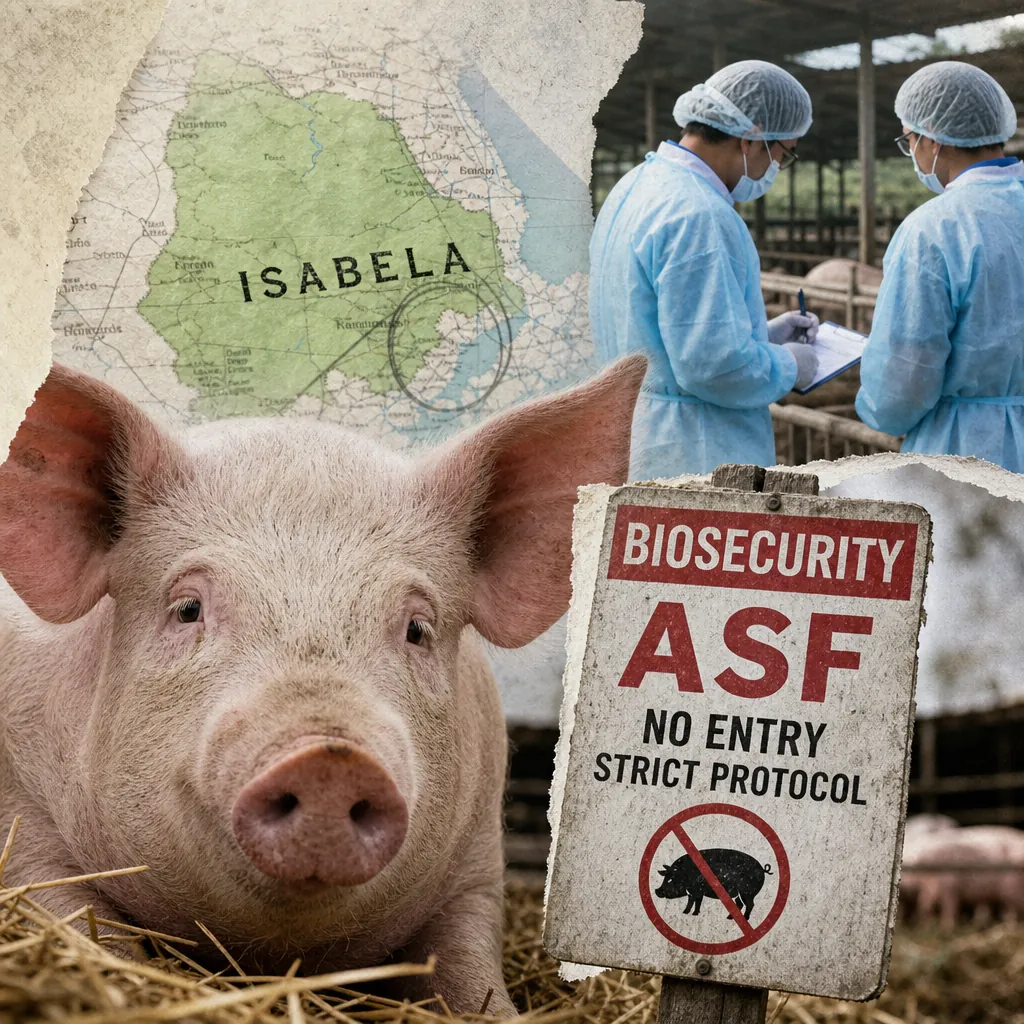
Rotating brownouts in Iloilo City are forcing small businesses to absorb losses from spoiled goods and damaged appliances, while a new survey shows self-rated poverty in the Philippines climbed to 39% in July. These two stories, along with a dispute over an P85 minimum wage hike, dominated the day's news. The brownouts, which Panay News reports are now a daily occurrence, are eating into livelihoods and worsening financial strain on families already grappling with high electricity, fuel, and living costs 17. The OCTA Research survey, conducted from July 4 to 11, found that 39% of Filipino families consider themselves poor, up from 35% in March, translating to an additional one million families now identifying as poor 33. The wage dispute centers on the Department of Labor and Employment's (DOLE) unilateral decision to raise the daily minimum wage by P85 in Metro Manila, a move the Employers Confederation of the Philippines (ECOP) says politicizes the wage-setting process 42. Meanwhile, African swine fever (ASF) has affected seven towns in Isabela province 38, and global food safety concerns continue to dominate headlines with recalls and expert commentary on salmonella and listeria 112632. The day's conversation also touched on international stories with local resonance, including the UK's sanctions on Israeli settlements 24834 and the release of 9/11 documents in New York 10, but the domestic economic and public health issues drew the most sustained attention across the captured items.
Key themes
- Daily rotating brownouts in Iloilo are damaging livelihoods and appliances — Panay News reports that recurring outages lasting hours are forcing small entrepreneurs to absorb losses from spoiled goods and damaged electrical equipment, with no instant solution in sight as the city mayor pushes for additional power generation 17.
- Self-rated poverty rose to 39% in July, adding one million families — The OCTA Research survey found 10.3 million families now consider themselves poor, up from 9.2 million in March, while 5.6 million families reported experiencing hunger 33.
- ECOP criticizes DOLE's P85 minimum wage hike as politicized — The Employers Confederation of the Philippines argues the unilateral wage order distorts the tripartite wage-setting process, which normally involves labor, employers, and government 42.
- African swine fever has spread to seven towns in Isabela — The hog disease continues to affect provinces, threatening livelihoods and pork supply 38.
- Food safety concerns dominate global headlines with recalls and expert analysis — From listeria in imported pork to salmonella outbreaks linked to various foods, consumers are on high alert, though experts note more recalls can indicate better detection 112632.
- UK sanctions on Israeli settlements trigger diplomatic row — The UK announced sanctions on illegal West Bank settlements, prompting Israel to close the British Consulate in Jerusalem and impose countermeasures, with the US also criticizing the move 24834.
- EU businesses show limited interest in entering the Philippine market — Only 8% of EU firms not currently active in the Philippines plan to enter, trailing Vietnam at 34% and Indonesia at 32% 18.
- Local food businesses and tourism initiatives show resilience and growth — From a Bulacan food cart that grew into a restobar 1214 to digital training for Zambales tourism entrepreneurs 36, small businesses are adapting and expanding.
How the narratives stack
- Dominant — Within the captured set, the domestic economic hardship narrative dominates, anchored by the Iloilo brownouts story and the OCTA poverty survey. The brownouts piece from Panay News carries substantial coverage value, and the poverty survey from Saksi Ngayon speaks to a widespread concern. These stories directly affect daily life for millions of Filipinos and connect to broader issues of infrastructure, energy policy, and cost of living.
- Counter-narrative — The ECOP critique of the minimum wage hike offers a business perspective that pushes back against government action, arguing that the process was politicized and distorts the tripartite system. This provides a counterpoint to the labor-friendly narrative of raising wages to help workers cope with rising costs.
- Emerging — Food safety is an emerging theme, with multiple items covering recalls and expert commentary. The listeria recall of imported pork products 32 and the salmonella explainer 26 suggest growing consumer awareness and concern about foodborne illness, potentially leading to increased scrutiny of food supply chains.
- Under-covered — The EU-ABC survey showing weak appetite among EU firms to enter the Philippine market 18 received relatively little attention compared to its economic significance. This story about foreign investment sentiment could signal longer-term challenges for the Philippine economy but was overshadowed by more immediate domestic concerns.
Platform insights
- Facebook — Facebook is likely the primary platform for sharing local news stories like the Iloilo brownouts and the OCTA poverty survey, given the platform's dominance in the Philippines. Community groups and local news pages would drive engagement through shares and comments, with residents sharing their own experiences of outages and financial strain.
- X (formerly Twitter) — X serves as the real-time news and opinion platform, where journalists, politicians, and commentators discuss policy issues like the minimum wage hike and the UK-Israel diplomatic row. Hashtags and trending topics would amplify these stories, with engagement driven by retweets and quote-tweets of key statements.
- YouTube — YouTube is relevant for the entertainment and lifestyle content in the set, such as the One South P-pop group showcase 6 and the Glastonbury ticket announcement 9. Video content from GMA News and other outlets covering the Iloilo crime story 1529 would also find an audience here.
- Instagram — Instagram is the platform for visual storytelling, particularly for lifestyle and food content. The Glastonbury announcement was made on Instagram 9, and food-related stories like the Vietnamese restaurant opening 37 and the best cookbooks of fall 39 would perform well with visually-driven audiences.
Key voices and communities
- Local news outlets and journalists — Panay News, GMA News Online, and SunStar provide on-the-ground reporting of local issues like brownouts, crime, and health concerns. Their reporting shapes the narrative and gives voice to affected residents.
- Business and employer groups — The Employers Confederation of the Philippines (ECOP) represents business interests and provides a counterpoint to government and labor positions on wage policy. Their statements are picked up by business media and influence the policy debate.
- Government agencies and officials — DOLE, the Department of Health (DOH), and local government officials like Iloilo City Mayor Raisa Treñas are key voices, either announcing policies or responding to crises. Their statements set the agenda and provide official positions.
- Consumer and public health advocates — Food safety experts and consumer groups commenting on recalls and contamination risks help translate complex issues for the public. Their voices build trust and guide consumer behavior.
- Entertainment and lifestyle communities — Fans of P-pop groups like One South, followers of celebrity news, and food enthusiasts form a significant part of the online conversation, driving engagement on lighter content that nonetheless reflects cultural and economic trends.
Narrative streams
Daily brownouts in Iloilo are forcing businesses and families to absorb mounting losses
Panay News reports that recurring rotational brownouts in Iloilo City are no longer merely an inconvenience but are eating into livelihoods, damaging appliances, disrupting education, and worsening financial strain 17. Small entrepreneurs, drivers, and parents described repeated outages lasting for hours, sometimes during critical business hours and at night. Ma. Eida Villasis, 60, of Barangay Calubihan, Jaro district, told Panay News that every outage threatens several sources of livelihood, with ice melting and goods spoiling. The story highlights the human cost of infrastructure failure, with families already grappling with high electricity, fuel, and living costs. Iloilo City Mayor Raisa Treñas is pushing for additional power generation capacity, including a planned integrated liquefied natural gas (LNG) facility, while acknowledging there is "no instant solution." The read for the sector is that energy reliability is a binding constraint on small business growth and household welfare, and until new capacity comes online, businesses must invest in backup power or absorb losses, which disproportionately affects micro-entrepreneurs with thin margins.
Self-rated poverty climbs to 39%, adding one million families to the ranks of the poor
The OCTA Research "Tugon ng Masa" survey, conducted from July 4 to 11, found that 39% of Filipino families consider themselves poor, up from 35% in March 2026 33. This four-percentage-point increase translates to over one million additional families, bringing the total to 10.3 million. The survey also found that 5.6 million families reported experiencing hunger, up from 4.5 million earlier in the year. While most said hunger was not frequent, the increase of 1.1 million families who cannot eat adequately is a concern. The Saksi Ngayon column emphasizes that these are not just percentage changes but stories of millions of hungry stomachs and families struggling daily. The read for the sector is that consumer sentiment is deteriorating, which will likely lead to reduced discretionary spending and increased demand for affordable goods and services, while also putting pressure on government to expand social protection programs.
ECOP says DOLE's P85 wage hike politicizes the wage-setting process
The Employers Confederation of the Philippines (ECOP) criticized the Department of Labor and Employment's (DOLE) decision to unilaterally raise the daily minimum wage by P85 in Metro Manila, implemented in two tranches of P60 this year and P25 next year through Wage Order NCR-27 42. ECOP Director General Jose Roland Moya said this politicizes the wage-setting process and distorts the tripartite wage process, which normally involves labor, employers, and government. The wage order was issued as a response to rising costs of living, but employers argue it was done without proper consultation and will burden businesses. The read for the sector is that the wage hike will increase labor costs for businesses, potentially leading to reduced hiring or increased prices for consumers, and the dispute may discourage investment if the policy environment is seen as unpredictable.
African swine fever spreads to seven towns in Isabela, threatening hog industry
Philstar reports that seven towns in Isabela province are now affected by African swine fever (ASF) 38. ASF is a highly contagious viral disease affecting pigs, with no cure or vaccine, and it causes severe economic losses to hog farmers. The spread in Isabela, a major hog-producing province, threatens livelihoods and pork supply. The read for the sector is that ASF outbreaks require strict biosecurity measures and culling of infected animals to prevent further spread, and the government must support affected farmers while ensuring pork supply and prices remain stable.
Food safety concerns dominate global headlines with recalls and expert analysis
Multiple items in the captured set focus on food safety. The U.S. Department of Agriculture's Food Safety and Inspection Service announced a recall of over 1,500 pounds of imported, ready-to-eat pork products due to potential listeria contamination 32. The pork was produced in Italy and distributed by Prime Line Distributors Inc. and Ferrarini USA Inc. The recall was classified as Class I, meaning there is a reasonable probability of serious health consequences or death. Separately, a food safety expert explained that more recalls aren't necessarily a bad thing, as AI is improving outbreak detection 11. Willette M. Crawford, a food science consultant, said AI helps workers sift through vast datasets to enable faster, more targeted approaches to outbreaks. Another piece detailed how salmonella contaminates various foods, with the CDC reporting 10 outbreaks in 2026 linked to jalapeño peppers, backyard poultry, shell eggs, moringa leaf powder, and reptiles 26. The read for the sector is that food safety is a growing consumer concern, and while better detection leads to more recalls, the industry must invest in prevention and transparent communication to maintain trust.
UK sanctions on Israeli settlements trigger diplomatic row with Israel and US criticism
The United Kingdom announced sweeping new measures targeting Israeli settlements in the West Bank, triggering an immediate diplomatic rupture with Israel and a sharp warning from a senior Trump administration official 24834. Foreign Secretary Ed Miliband set out the sanctions as part of a reset in how the Labour Government will deal with Israeli Prime Minister Benjamin Netanyahu's administration. The UK accused the Israeli government of turning a blind eye to the "ethnic cleansing" of Palestinians and said the occupation of the West Bank as a whole was unlawful, going beyond the previous position that only described the settlements themselves as illegal. Israel responded by closing the British Consulate in Jerusalem, removing British representatives from the International Gaza Support Center, ending British activities training Palestinian Authority forces, and denying entry to 12 British officials. Prime Minister Andy Burnham said "Britain will continue to act in support of our values" 4. The read for the sector is that the UK's tougher stance may affect businesses with exposure to Israeli settlements and could influence other countries' policies, while the diplomatic fallout may have broader implications for international relations and trade.
EU businesses show limited interest in entering the Philippine market
A business sentiment survey of EU businesses in Southeast Asia found that only 8% of respondents not currently active in the Philippines reported plans to enter the market 18. This trailed Vietnam at 34%, Indonesia at 32%, and Malaysia and Thailand at 20% each. The EU-ASEAN Business Council (EU-ABC) report said that while the Philippines shows strong European business presence and substantial expansion intent among existing operators, there is relatively limited planned market entry. The read for the sector is that the Philippines is not attracting new foreign investment from EU firms at the same rate as regional competitors, which may be due to concerns about infrastructure, regulatory environment, or market size, and this could limit job creation and economic growth.
Local food businesses and tourism initiatives show resilience and growth
Amid the economic hardship stories, there are positive narratives of small business success. Zhigs Bulalord Restobar in Malolos, Bulacan, started as a simple food cart and grew into a restobar specializing in bulalo, a beef bone marrow soup 1214. Owner Jenalyn Aya said the trigger point was when rain would stop their sales, prompting them to find their own space with a roof. A month after opening, the business was already seeing good returns. In Zambales, PLDT Enterprise organized MSME Biz Up!, a learning session for tourism entrepreneurs in Cabangan to strengthen their online presence and protect against cyber threats 36. The read for the sector is that small businesses are resilient and can grow with the right support, and digital skills are increasingly essential for reaching customers and securing operations.
Conversation trajectory
- Over the next 1–2 weeks — Expect continued coverage of the Iloilo brownouts as residents and businesses push for solutions. Mayor Treñas's push for an LNG facility will likely generate debate about energy policy and the pace of new power generation. Watch for any announcements from the national government on addressing the power supply.
- Over the next month — The OCTA poverty survey results may prompt government responses and policy proposals. Watch for statements from the Department of Social Welfare and Development (DSWD) and other agencies on programs to address poverty and hunger. The wage hike dispute may also escalate if employers challenge the order or if labor groups push for more.
- Over the next quarter — The ASF situation in Isabela will be monitored for further spread and its impact on pork prices. The government may implement measures to contain the disease and support affected farmers. Food safety recalls and outbreaks will continue to be a topic as detection improves.
- Trigger events — A major power plant outage or a significant escalation of brownouts in other cities would amplify the energy narrative. A new round of wage negotiations or a court challenge to the wage order would keep that story alive. A major ASF outbreak in a larger province or a spike in pork prices would raise the stakes. Any new foodborne illness outbreak linked to a widely consumed product would dominate headlines.
Response guidance
- Energy and utilities communicators — Acknowledge the inconvenience and economic impact of brownouts directly. Provide clear, timely information on outage schedules and restoration efforts. Communicate investments in grid reliability and new capacity, but avoid overpromising. Emphasize safety precautions for businesses and households during outages.
- Government and policy communicators — Address the poverty and hunger data head-on. Explain existing programs and any new initiatives to provide relief. Be transparent about the wage-setting process and the rationale for decisions. Engage with employer and labor groups to explain policy choices and seek input.
- Food industry communicators — Proactively communicate food safety measures and traceability. When recalls occur, provide clear, actionable information to consumers. Highlight investments in detection and prevention. Avoid defensive messaging; instead, emphasize commitment to safety and continuous improvement.
- Business and employer communicators — Frame concerns about wage hikes and regulatory costs in terms of impact on jobs and competitiveness. Provide data and real-world examples of how policies affect businesses. Engage constructively with government and labor to find balanced solutions.
- Tourism and small business communicators — Celebrate success stories and resilience. Highlight the availability of digital tools and training for MSMEs. Show how businesses are adapting to challenges like weather and infrastructure issues. Encourage community support for local enterprises.
See the full picture behind today's signals.
This report draws from Media Meter's MediaWatch, our real-time monitoring engine tracking 2,470+ Philippine sources across print, broadcast, digital, and social. Explore how the platform turns raw coverage into decision-grade intelligence, then see how it's configured for teams like yours — whether you're in PR agencies, corporate comms, government, or marketing.
Want more? Browse our Report Library for sector and crisis intelligence, or request a demo and we'll have your brand set up before the call.
Want this kind of intelligence on your brand?
This brief is built on the same MediaWatch methodology that runs continuously across every brand we monitor. See your competitive landscape, Impact Score, and narrative trajectory in a 30-minute demo.