Peso Weakness, FDI Slump Dominate PH Business News
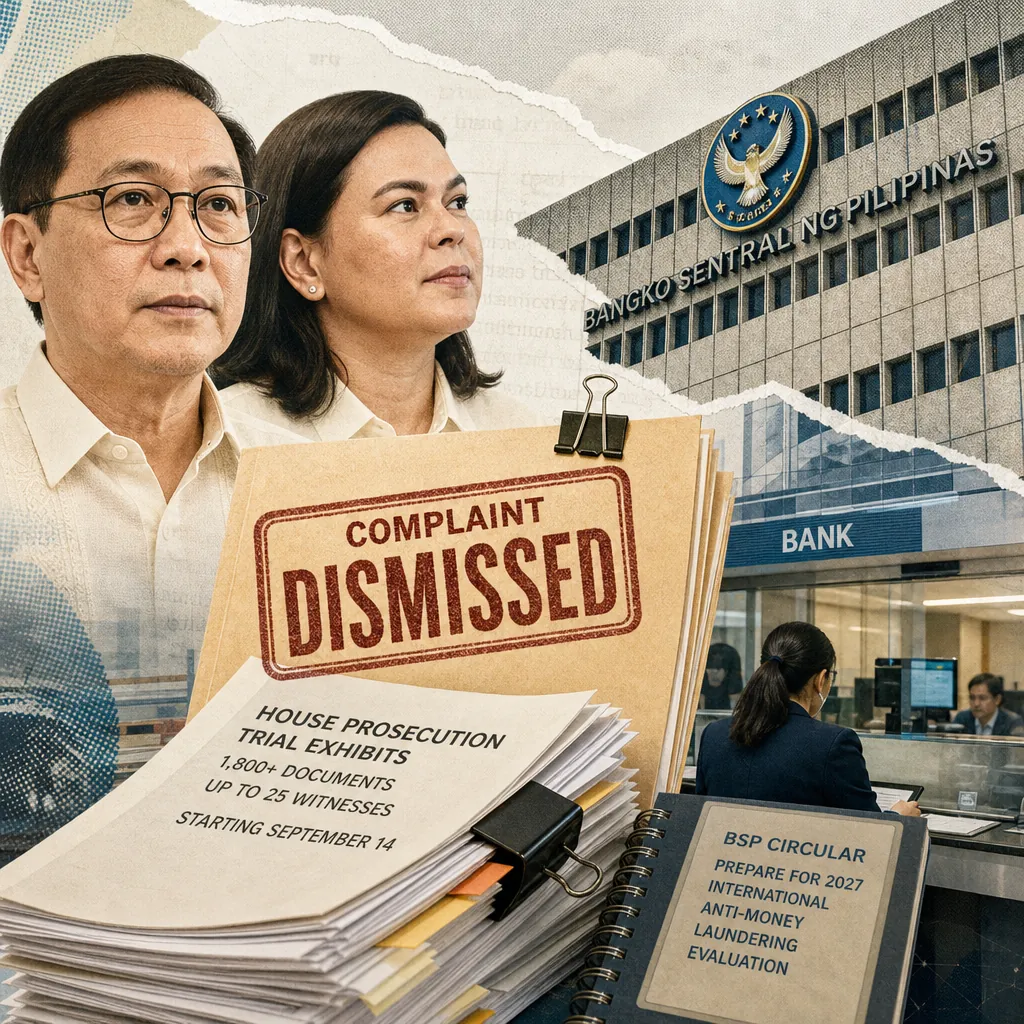
The peso's slide and a 17.8% first-half drop in foreign direct investment led Philippine business coverage, alongside central bank moves to ease sukuk rules and Security Bank's three-year profitability plan.
The Conversation
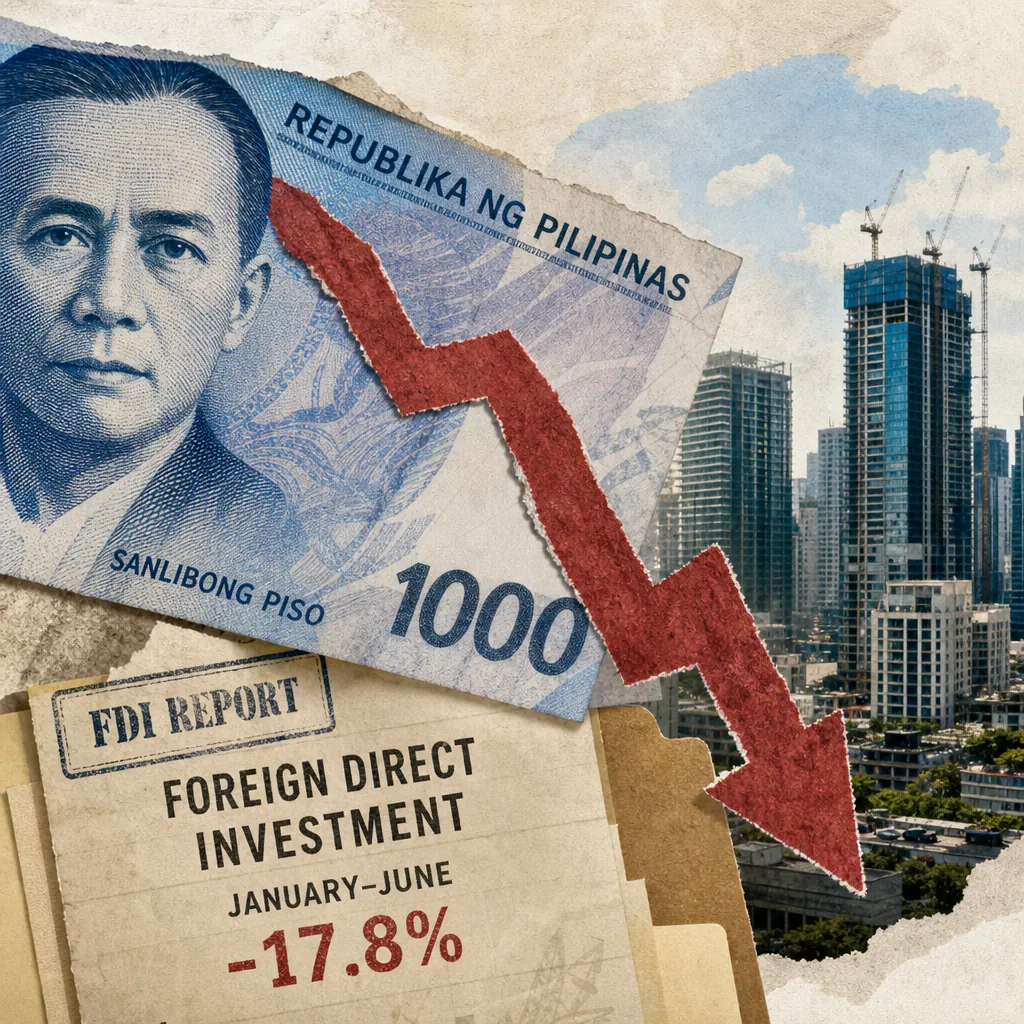
The peso's slide and its consequences for foreign capital dominated Philippine business coverage on Thursday, September 10, 2026, as the currency traded at ₱62.62 to the dollar and a fresh central bank data release showed foreign direct investment (FDI) net inflows falling 17.8 percent in the first half of the year to $3.38 billion from $4.12 billion a year earlier4751. The FDI figures, reported by the Bangko Sentral ng Pilipinas (BSP), the country's central bank, were picked up by at least six outlets in the monitored set — BusinessWorld, the Philippine Daily Inquirer, The Manila Times, BusinessMirror, Philstar, and the Daily Guardian — making it the single most widely covered story of the day1820424473.
Manulife Investments Philippines added a second layer to the currency story, with two of its executives offering contrasting assessments of how much damage the weak peso is doing. Elle Jamil, the firm's head of equities, said persistent peso weakness "effectively raises the hurdle rate for allocating capital to the Philippines relative to other Asean markets" because currency losses can erode stock market gains when foreign investors convert returns into their home currencies2. Jean de Castro, Manulife's head of fixed income, said the depreciation "has not yet become a structural threat" to Philippine bonds but could become more disruptive if it feeds into inflation expectations5. Both commentaries ran on the Inquirer's business site and the Manila Times, drawing a combined estimated advertising-equivalent value of ₱725,464 across the two items — a measure of the cost of buying the same column space as paid advertising, not of readership.
The day's coverage also carried a cluster of banking and capital-markets developments: the BSP proposed easing rules on sukuk, the Islamic equivalent of bonds, to encourage Shariah-compliant finance162552; Security Bank Corp. laid out a three-year plan to return to the Philippine Stock Exchange Index (PSEi) by targeting a double-digit return on equity21295478; PNB Holdings Corp. set a ₱1.20-per-share reference price for its September 25 listing125564; and RCBC doubled its credit facility to consumer lender Billease to ₱1 billion416176. A separate BSP data release showed bank lending and domestic liquidity both growing at double-digit rates in July68.
Key themes
- FDI net inflows fell 17.8% in the first half to $3.38 billion. The decline was driven by lower intercompany borrowings and reduced reinvestment of earnings, even as equity capital investments rose 129.4% in June alone4247. The first-half tally covered about 49% of the BSP's revised full-year estimate of $7 billion18.
- The peso traded at ₱62.62 to the dollar, and analysts disagree on how much it matters. Manulife's equities head said currency weakness raises the return threshold for foreign investors; its fixed-income head said the depreciation has not yet become a structural threat to bonds25.
- The BSP proposed removing the prior Monetary Board approval requirement for sukuk issuance. Under the draft circular, Islamic banks, Islamic banking units, and conventional banks could issue sukuk for funding or operational purposes without prior central bank approval, provided they notify the BSP within five banking days1652.
- Security Bank targets a 12% return on equity by 2029. The bank's ROE stood at about 8% as of end-June, and management aims to reach double digits by end-2027 before climbing to 12% by 202978. A return to the PSEi would be its first since August 202221.
- PNB Holdings set a ₱1.20 reference price for its September 25 listing. The price is near the lower end of the ₱1.18-to-₱1.89 range in an independent fairness opinion, giving the company an indicative market capitalization of about ₱56.3 billion5564.
- RCBC doubled its credit line to Billease to ₱1 billion. The expanded partnership now covers corporate cash management, deposit accounts, and foreign exchange services, up from term lending alone4176.
- Bank lending grew 10.4% in July, the fastest pace in months. Outstanding loans issued by universal and commercial banks reached ₱14.98 trillion, though consumer loan growth slowed to 17.1% from 17.8% in June68.
- The PSEi slipped below 6,100 as rising oil prices weighed on sentiment. The benchmark index fell 0.28% or 17.30 points to 6,099.23, with Brent crude futures crossing $100 per barrel amid Middle East hostilities80.
How the narratives stack
Dominant: The FDI decline and peso weakness formed the day's dominant narrative, appearing across at least six outlets in the monitored set182042444773. The story's dominance within this set reflects both the breadth of pickup — the same BSP data release was rewritten by multiple newsrooms — and the fact that it connected to a broader economic anxiety: Bank of America's forecast that the Philippines would grow just 2.5% in 2026, tying Thailand as the slowest-growing economy among the ASEAN members it tracked3936. A Philstar column put the disconnect bluntly: GDP growth at 2.6%, inflation at 6.1%, and unemployment at 6%74. The BSP's own July Business Expectations Survey showed business confidence at -20.3%, down from neutral53.
Counter-narrative: Two Manulife executives offered a more measured read on the peso. De Castro said the currency's weakness "did not necessarily imply a deterioration in the country's creditworthiness" and that "not all peso depreciation episodes are equally disruptive for bonds"5. Jamil acknowledged that currency is only one of several factors foreign investors weigh, alongside earnings growth, valuations, liquidity, and governance2. The counter-narrative did not dispute that the peso is weak; it disputed the inference that weakness automatically translates into capital flight or a bond-market problem.
Emerging: The BSP's draft circular on sukuk rules represents an emerging regulatory shift that has not yet been finalized. The proposal would implement provisions of the Islamic Banking Law, which established the legal framework for Shariah-compliant banking in the Philippines, and would remove the requirement for prior Monetary Board approval of sukuk transactions covered by SEC rules2552. The central bank is seeking comments from supervised financial institutions before finalizing the circular. Separately, the growth of digital finance infrastructure — Maya's Visa wallet cards becoming available on Google Pay3270, GCash's push to speed up Philippines-Australia remittances23, and the SSS LoanLite microloan program becoming available through UnionDigital Bank's mobile app43 — points to a steady expansion of digital payment and lending channels that has not yet drawn the same level of policy attention as the currency story.
Under-covered: Several stories in the monitored set received only single-outlet coverage despite carrying significant implications. The BSP's proposed sukuk rules ran in three outlets162552 but drew no social media pickup in the writeups provided. The Palawan mining controversy — a column by Fr. Shay Cullen alleging that three mining corporations plan to cut more than 188,765 trees with permits from the Department of Environment and Natural Resources45 — appeared in only one outlet. The National Youth Commission's plan to bring a Meta team to Iloilo for a youth social media safety initiative35 also ran in a single outlet. These stories were not suppressed; they simply placed low in a news cycle dominated by macroeconomic data.
Platform insights
Facebook: The monitored writeups did not capture significant Facebook activity on the financial stories. The platform's most notable appearance in the day's coverage was as a distribution channel: Sun Life Philippines released two new videos in its "Stories to Live Bright Now" series on its official Facebook page, featuring Filipino business owners who overcame obstacles50. The BSP's proposed sukuk rules and the FDI data, despite their policy weight, generated no measurable Facebook engagement in the writeups provided.
X (formerly Twitter): No significant X activity was captured in the monitoring writeups for this window. The financial stories in the monitored set were primarily text-based news items from online news outlets, and the writeups did not record X posts or engagement figures for them.
Reddit: No Reddit activity was captured in the monitoring writeups. The absence of Reddit discussion on the peso and FDI stories is notable given the platform's typically active Philippine finance communities, but the writeups provided do not include Reddit data for this window.
YouTube: AIA Philippines launched its flagship podcast, "FutureProofing with AIA," debuting with a four-episode investment-focused series available on Spotify and YouTube8. The podcast is described as the Philippine insurance industry's first dedicated to investing, covering topics such as variable unit-linked (VUL) insurance plans, which combine life insurance protection with investment opportunities. No engagement figures were provided for the podcast's YouTube presence.
Key voices and communities
Manulife Investments Philippines: Two executives from the firm shaped the day's currency debate. Elle Jamil, head of equities, framed peso weakness as a hurdle-rate problem for foreign investors2. Jean de Castro, head of fixed income, framed it as a manageable external shock rather than a structural threat5. Their comments carried weight because they came from a major asset manager with direct exposure to Philippine markets. Manulife also appeared in the day's coverage through a separate announcement: the appointment of Sarah Chapman as Global Chief Marketing and Customer Experience Officer, effective January 1, 202714.
Bangko Sentral ng Pilipinas: The central bank was the source of the day's most-covered data (FDI, bank lending) and the author of the draft sukuk circular16255268. BSP Governor Eli Remolona Jr. also drew attention for a comment made at a Senate budget hearing, where he attributed the peso's weakness partly to a "culture of consumption" — "mayabang tayo" — a remark that became the subject of two opinion columns4851. The BSP's role as both data provider and policy actor made it the day's most cited institution.
Security Bank Corp.: President and CEO Victor Lee and Chief Financial Officer John David Yap presented the bank's three-year plan at a media roundtable, targeting a return to double-digit ROE by end-2027 and 12% by 20295478. Lee said the bank's price-to-book ratio of about 0.3 times was among the lowest compared with peers29. The bank's return to the PSEi would be its first since August 202221.
Philippine National Bank / PNB Holdings Corp.: PNB Holdings, the real estate arm of Philippine National Bank, set its listing reference price and positioned the offering as a way to provide liquidity for shareholders who received a property dividend in 20215564. Chief Financial Officer Ponciano Carreon Jr. said the listing offers "an opportunity for investors to participate in a company backed by strategically located and irreplaceable real estate assets"55.
Business columnists and opinion writers: Two columns engaged directly with Remolona's "mayabang" comment. BusinessWorld's opinion piece placed the remark in the context of the Philippines' persistent savings-investment gap48. BusinessMirror's Ma. Stella Arnaldo used the comment as a hook to examine the disconnect between government optimism and ground-level economic conditions51. A Philstar column by Cito Beltran published reader responses that raised consumer debt and online gambling as additional factors82.
Narrative streams
FDI falls 17.8% in first half as foreign firms cut intercompany lending
The BSP reported that FDI net inflows — cross-border investments in which a nonresident investor holds at least 10% equity in a Philippine enterprise — fell to $3.38 billion in January-June 2026 from $4.12 billion in the same period of 20254247. The decline was driven by a 25.8% drop in net investments in debt instruments, which fell to $2.06 billion from $2.78 billion, reflecting reduced intercompany borrowing between foreign investors and their local affiliates44. Reinvestment of earnings also declined 19.4% to $829 million from $1.03 billion47. Equity capital investments, by contrast, rose, with June alone seeing a 129.4% year-on-year increase to $78 million from $34 million42.
In June, net FDI inflows rose 35.1% year on year to $447 million from $331 million, but fell 29.9% month on month from $638 million in May4273. Union Bank chief economist Ruben Carlo Asuncion said the decline was "not entirely surprising given the challenging global investment environment" and noted that the shift toward equity capital suggested foreign investors remained interested in actual business operations even as they pulled back on lending to affiliates20.
The read for the sector: FDI is generally viewed as more durable than foreign portfolio investment, which can be quickly withdrawn during periods of market stress18. The decline in intercompany borrowing matters because it reduces the capital available to Philippine affiliates for expansion, equipment, and working capital. If the trend continues, it could constrain the job creation and industrial development that FDI typically supports. The BSP's full-year estimate of $7 billion in net inflows means the first half covered about 49% of the target, leaving the second half to make up the difference18.
Peso weakness raises the return threshold for foreign investors
The peso traded at ₱62.62 to the dollar as of Wednesday, and Manulife's equity strategist said the currency's persistent weakness makes Philippine stocks less attractive to foreign investors because currency losses can erode gains when returns are converted into home currencies251. "A strong equity return can be partially or fully offset by currency depreciation, so persistent peso weakness effectively raises the hurdle rate for allocating capital to the Philippines relative to other Asean markets," Jamil said2.
Manulife's fixed-income head offered a more measured assessment, saying the depreciation "has not yet become a structural threat" to Philippine bonds but could become more disruptive if it feeds into inflation expectations and broader economic imbalances5. De Castro attributed the peso's slide to external pressures including elevated oil prices, a wider trade deficit, US dollar strength, and persistent global risk aversion5.
The peso's weakness also drew commentary from BSP Governor Remolona, who told senators at a budget hearing that the long-term solution was to increase savings and that Filipinos have a "culture of consumption" — "mayabang tayo"4851. The remark became the subject of two opinion columns. BusinessWorld's piece explained the economic logic: if an economy invests more than it saves, it must finance the difference from abroad, which can mean a current-account deficit and sustained demand for foreign exchange48. BusinessMirror's column noted that the comment came during the Development Budget and Coordination Committee's presentation of the proposed ₱7.2 trillion national budget for 202751.
The read for the sector: For foreign institutional investors, the peso's trajectory is now a factor in allocation decisions alongside earnings growth, valuations, liquidity, and governance2. For Philippine companies that borrow in dollars or rely on foreign capital, a weaker peso raises the cost of servicing debt and reduces the attractiveness of peso-denominated returns. For the BSP, the challenge is that the tools available to support the currency — such as raising interest rates — could slow an economy already forecast to grow at just 2.5% in 202639.
BSP proposes easing sukuk rules to build Islamic finance market
The BSP released a draft circular that would allow Islamic banks, Islamic banking units, and conventional banks to issue sukuk — Islamic bonds that comply with Shariah law by avoiding interest payments and instead tying returns to underlying assets — without securing prior approval from the Monetary Board, the BSP's policy-making body1652. Banks would instead be required to notify the BSP within five banking days after issuance and submit documents showing compliance with prudential, securities, and Shariah requirements16.
The proposal implements provisions of the Islamic Banking Law, which established the legal framework for Shariah-compliant banking in the Philippines, and aligns with regulations issued by the Securities and Exchange Commission (SEC), which regulates securities offerings2552. The BSP said the flexible framework is intended to "promote Islamic finance in the Philippines and support efforts to deepen the domestic capital market"52. The central bank is seeking comments from supervised financial institutions before finalizing the circular25.
The read for the sector: Islamic finance remains a small segment of the Philippine banking system, but the BSP's move signals a policy intent to grow it. Sukuk issuance could give banks a new funding channel and give investors a Shariah-compliant alternative to conventional bonds. The change matters most for banks with Islamic banking units and for the country's sole Islamic bank, which has been the subject of reform efforts. If the circular is finalized, it would reduce the regulatory friction for sukuk issuance, potentially lowering the cost and time required to bring a sukuk to market.
Security Bank targets 12% ROE by 2029 and a return to the PSEi
Security Bank Corp. President and CEO Victor Lee said the bank aims to return to double-digit return on equity — a measure of how much profit a bank generates from shareholders' capital — by end-2027, with a longer-term target of 12% by 20295478. The bank's ROE stood at about 8% as of end-June, and it last achieved at least 10% in 20172154. Chief Financial Officer John David Yap said the bank's growth would be driven by small business, project financing, and corporate lending, with a strategic focus on wealth management, entrepreneurial banking, and corporate and institutional banking5478.
Lee said a return to the PSEi — the benchmark index of the Philippines' 30 largest and most liquid listed companies — would depend on rebuilding financial performance and improving the share price29. A successful comeback would mark Security Bank's return to the index for the first time since August 2022, when Semirara Mining and Power Corp. took its place21. The bank currently has a price-to-book ratio of about 0.3 times, which management said was among the lowest compared with peers29.
The read for the sector: Security Bank's plan reflects a broader shift among Philippine banks from balance-sheet expansion to profitability and efficiency. The bank's low price-to-book ratio suggests the market values it at a discount to its book value, which management attributes to weak returns. If the bank can deliver on its ROE targets, it could narrow that discount and improve its chances of re-entering the PSEi, which would bring index-fund buying and greater liquidity. For corporate borrowers and small businesses, the bank's stated focus on lending to those segments could mean more available credit if the plan succeeds.
PNB Holdings sets ₱1.20 reference price for September 25 listing
PNB Holdings Corp., the real estate subsidiary of Philippine National Bank, set an initial reference price of ₱1.20 per share for its planned September 25 listing by way of introduction — a listing method that does not involve selling new shares to the public but instead establishes a market for existing shares5564. The price is near the lower end of the ₱1.18-to-₱1.89-per-share valuation range cited in an independent fairness opinion, giving the company an indicative market capitalization of about ₱56.3 billion55. The company is expected to have about 46.93 billion outstanding shares upon listing55.
Chief Financial Officer Ponciano Carreon Jr. said the listing is intended to provide liquidity and price discovery for shareholders who received a property dividend in 202155. "This presents an opportunity for investors to participate in a company backed by strategically located and irreplaceable real estate assets with significant long-term development potential," he said55. The listing follows the SEC's approval in May 2023 of the company's application55.
The read for the sector: The listing gives PNB shareholders who received property dividends in 2021 a way to sell their holdings, which they could not easily do before. For the broader market, it adds a new real estate play with a portfolio of Metro Manila properties that could be redeveloped. The reference price sitting near the low end of the fairness opinion range suggests the company and its advisers are being conservative, which could limit the upside for existing shareholders but may make the shares more attractive to new investors.
RCBC doubles Billease credit facility to ₱1 billion
Rizal Commercial Banking Corp. (RCBC) doubled its credit facility to Billease, a consumer finance and buy-now-pay-later (BNPL) provider, to ₱1 billion from ₱500 million a year earlier4176. The expanded partnership now includes corporate cash management, deposit accounts, and foreign exchange services, up from term lending alone41. Billease Chief Financial Officer Garret Go said the expansion reflects "the kind of confidence that only comes from a track record both sides can underwrite"41.
Billease's push to partner with Philippine banks is part of its strategy to increase local funding, reduce reliance on offshore debt, and optimize capital costs41. The company offers consumer loans and BNPL services, allowing customers to purchase goods and pay in installments76.
The read for the sector: The deal signals that Philippine banks are increasingly willing to fund consumer lenders that operate in the BNPL and digital lending space, a segment that has grown as more Filipinos shop online. For Billease, the expanded facility reduces its dependence on offshore borrowing, which is more expensive and exposed to currency risk — a particular concern given the peso's weakness. For RCBC, the partnership provides a channel into consumer lending without the bank having to build its own BNPL platform. The broader implication is that bank funding for digital consumer finance is deepening, which could lower borrowing costs for consumers who use these services.
Bank lending grows 10.4% in July as consumer credit slows
The BSP reported that loans from universal and commercial banks grew 10.4% in July from 9.8% in June, with outstanding loans reaching ₱14.98 trillion68. Business loans accelerated to 9.8% growth from 9.2% in June, driven by lending to electricity, gas, steam, and air-conditioning supply; wholesale and retail trade; repair of motor vehicles and motorcycles; financial and insurance activities; and information and communication68. Consumer loans to residents slowed to 17.1% growth from 17.8% in June as credit card and motor vehicle loan growth softened due to weak consumer confidence68.
The read for the sector: The acceleration in business lending suggests companies are still borrowing for operations and expansion despite the uncertain economic outlook. The slowdown in consumer lending is consistent with the weak consumer confidence that Bank of America cited in its forecast of 2.5% GDP growth for 202639. For banks, the mix matters: business loans are typically larger and less risky than consumer loans, but consumer lending carries higher margins. If consumer confidence remains weak, banks may lean more heavily on corporate lending to sustain growth.
PSEi slips below 6,100 as oil prices cross $100
The benchmark Philippine Stock Exchange index (PSEi) fell 0.28% or 17.30 points to close at 6,099.23, slipping below the 6,100 level80. The broader All Shares index declined 0.08% or 2.54 points to 3,383.3180. Franco Fernandez, an equity research analyst at DragonFi Securities Inc., said sentiment remained weighed down by higher oil prices, with Brent crude futures crossing $100 per barrel amid escalating Middle East hostilities80.
The read for the sector: The PSEi's slide reflects the same external pressures that are weighing on the peso and FDI. Higher oil prices raise costs for Philippine businesses and consumers, since the country imports most of its fuel. For investors, the combination of weak growth, a weak currency, and rising energy costs makes Philippine equities less attractive relative to other markets in the region. The index's move below 6,100 is a psychological threshold, but the more consequential issue is whether oil prices stay above $100, which would feed into inflation and further complicate the BSP's policy choices.
Conversation trajectory
Over the next 4–6 weeks: The BSP's draft circular on sukuk rules is open for comment from supervised financial institutions. Watch for the central bank to finalize the circular or revise it based on feedback. If finalized, the first sukuk issuance under the new rules could follow within months, though no bank has announced plans yet. The window is defined by the comment period and the BSP's typical timeline for finalizing draft circulars.
By September 25: PNB Holdings Corp. lists on the Philippine Stock Exchange. The listing will test investor appetite for real estate exposure and provide a market price for the company's shares, which have not traded publicly before. The reference price of ₱1.20 is near the low end of the fairness opinion range, so the first-day trading price will indicate whether investors see more value than the company's advisers did.
Over the next 3–6 months: Security Bank's progress toward its ROE targets will be measured in quarterly earnings reports. The bank aims to reach double-digit ROE by end-2027, so the next few quarters will show whether its strategy of focusing on wealth management, entrepreneurial banking, and corporate lending is gaining traction. A return to the PSEi would require sustained improvement in the share price and market capitalization.
Over the next 1–2 quarters: The BSP's next FDI data release, covering July-September, will show whether the first-half decline was a temporary dip or the start of a longer trend. The June figure showed a year-on-year increase but a month-on-month decline, so the July data will clarify the direction. Similarly, the BSP's next bank lending release will show whether the acceleration in business lending continued or whether the slowdown in consumer credit spread to the corporate segment.
Trigger events: A sustained move in the peso past ₱63 to the dollar would intensify the currency debate and could prompt the BSP to adjust policy. A decision by the US Federal Reserve on interest rates — with markets pricing a 70% chance of a September hike according to CME FedWatch data cited in Chinese financial media37 — would affect the dollar's strength and, by extension, the peso. Any escalation in Middle East hostilities that pushes oil prices higher would feed into inflation and further weigh on the PSEi. On the domestic political front, the impeachment trial of Vice President Sara Duterte continues, with the prosecution shifting toward allegations of unexplained wealth381; developments in that trial could affect market sentiment if they raise concerns about political stability.
Response guidance
For banks and financial institutions: The BSP's draft sukuk circular is open for comment, and institutions with Islamic banking units or an interest in Shariah-compliant finance should review the proposed rules and submit feedback before the comment period closes. The proposal would remove the prior Monetary Board approval requirement, which could shorten the timeline for sukuk issuance. Banks that have considered sukuk but been deterred by regulatory friction may find the new framework more workable.
For companies with foreign investors or dollar-denominated debt: The peso's weakness is now a factor in how foreign investors evaluate Philippine assets. Companies that report in pesos but have foreign shareholders should be prepared to explain how currency movements affect their reported returns. Those with dollar-denominated debt should assess whether hedging or refinancing makes sense given the current exchange rate.
For consumer lenders and fintechs: RCBC's expanded facility to Billease signals that Philippine banks are willing to fund consumer finance and BNPL providers at scale. Companies in this space that have relied on offshore borrowing may find it worthwhile to explore local bank partnerships, which reduce currency risk and may offer better terms given the peso's weakness.
For investors and analysts: The divergence between the FDI headline (down 17.8% in the first half) and the June figure (up 35.1% year on year) means the story is more nuanced than a single number suggests. The shift from intercompany borrowing toward equity capital is worth watching: it could indicate that foreign investors are more interested in owning Philippine businesses than in lending to them, which would be a positive signal for long-term investment.
For communicators in the financial sector: The BSP Governor's "mayabang tayo" comment has become a focal point for public discussion about consumption, savings, and the peso. Financial institutions that communicate with retail customers should be prepared for questions about what the comment means for them and whether it signals a policy shift. The comment was an observation about national savings behavior, not a policy announcement, but it has been interpreted by some columnists as a critique of consumer spending485182.
For companies planning IPOs or listings: PNB Holdings' listing by introduction on September 25 will provide a test case for how the market values a real estate portfolio in the current environment. Companies considering similar listings should watch the first-day trading and the weeks that follow to gauge investor appetite. The reference price near the low end of the fairness opinion range suggests the company prioritized a successful listing over maximizing the initial valuation.
For policymakers and regulators: The combination of weak FDI, a weak peso, and slow GDP growth has created a challenging environment for the BSP. The central bank's moves to ease sukuk rules and support digital finance are supply-side measures that could deepen capital markets over time, but they are unlikely to reverse the near-term trends in FDI and currency. The BSP's next policy meeting will be closely watched for signals on interest rates, which affect both the peso and domestic borrowing costs.
See the full picture behind today's signals.
This report draws from Media Meter's MediaWatch, our real-time monitoring engine tracking 2,470+ Philippine sources across print, broadcast, digital, and social. Explore how the platform turns raw coverage into decision-grade intelligence, then see how it's configured for teams like yours — whether you're in PR agencies, corporate comms, government, or marketing.
Want more? Browse our Report Library for sector and crisis intelligence, or request a demo and we'll have your brand set up before the call.
Want this kind of intelligence on your brand?
This brief is built on the same MediaWatch methodology that runs continuously across every brand we monitor. See your competitive landscape, Impact Score, and narrative trajectory in a 30-minute demo.