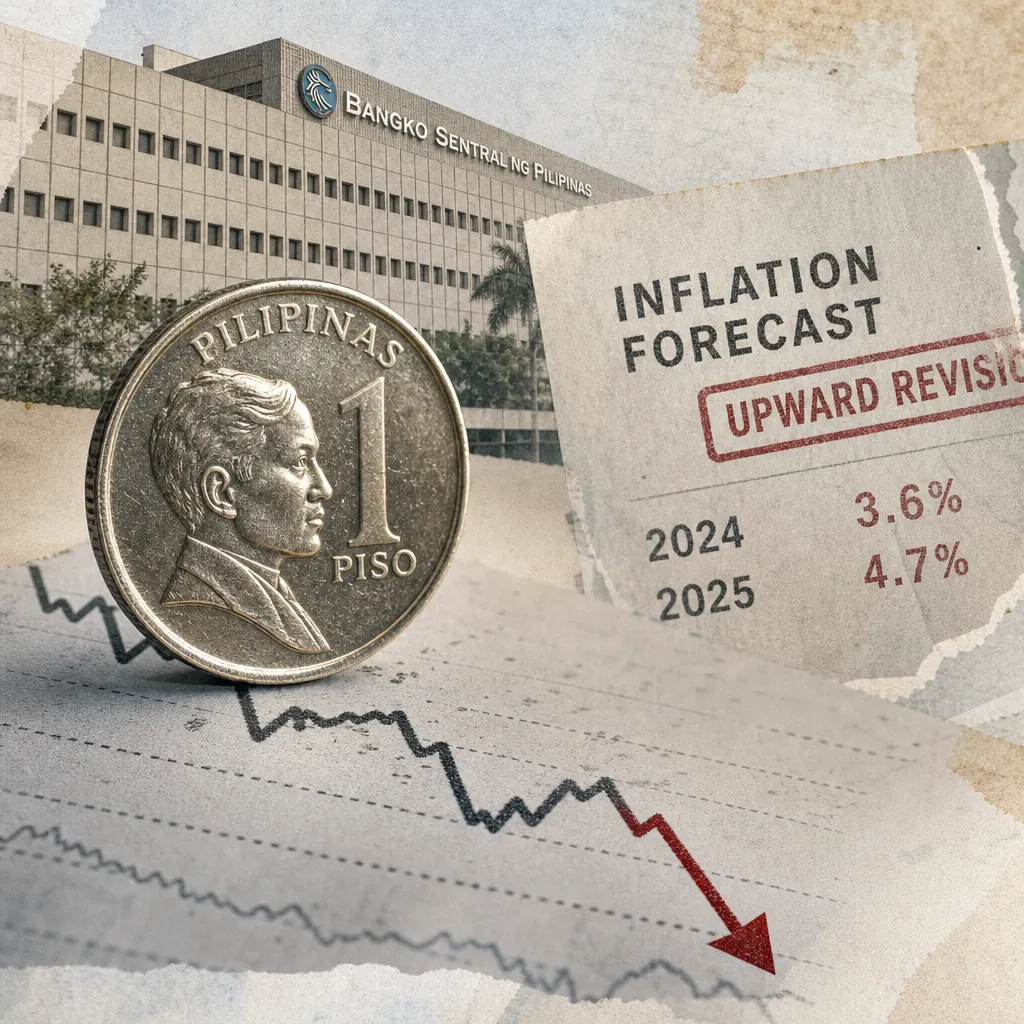
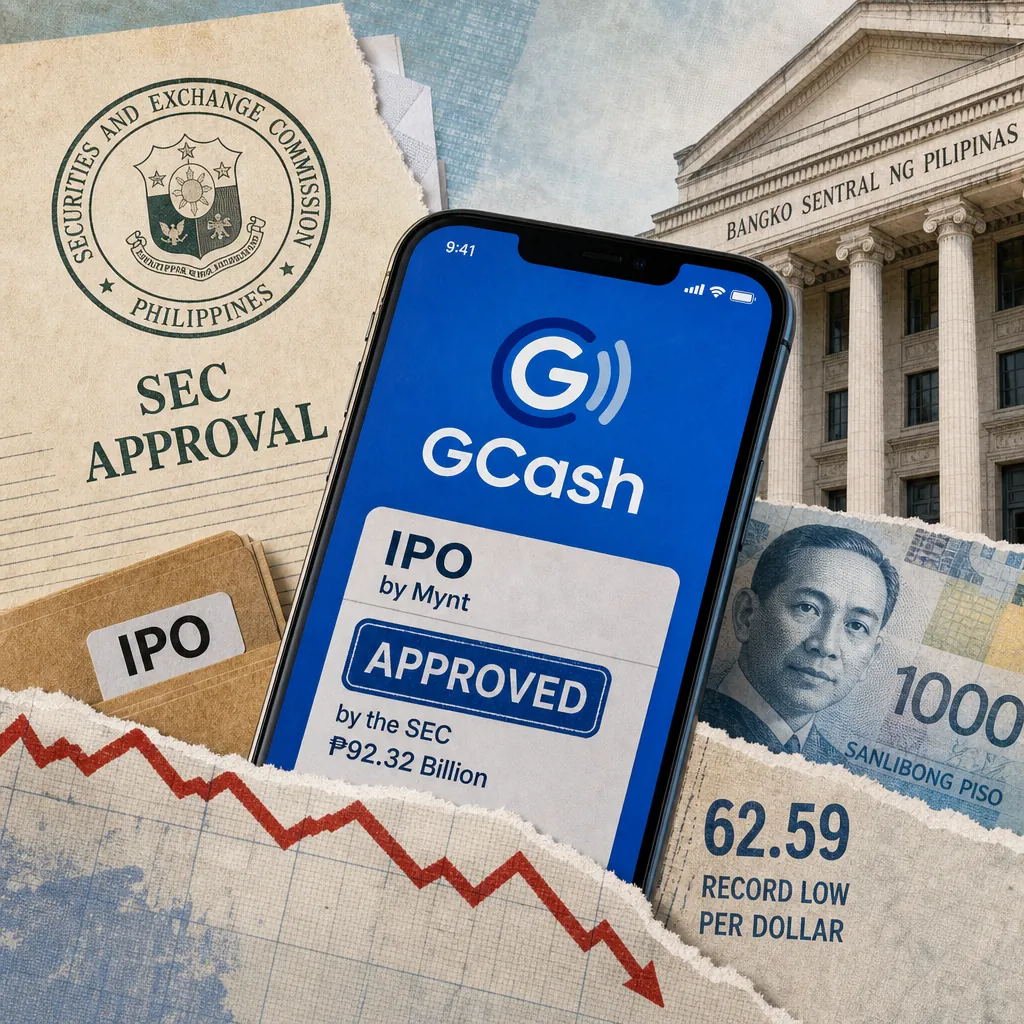
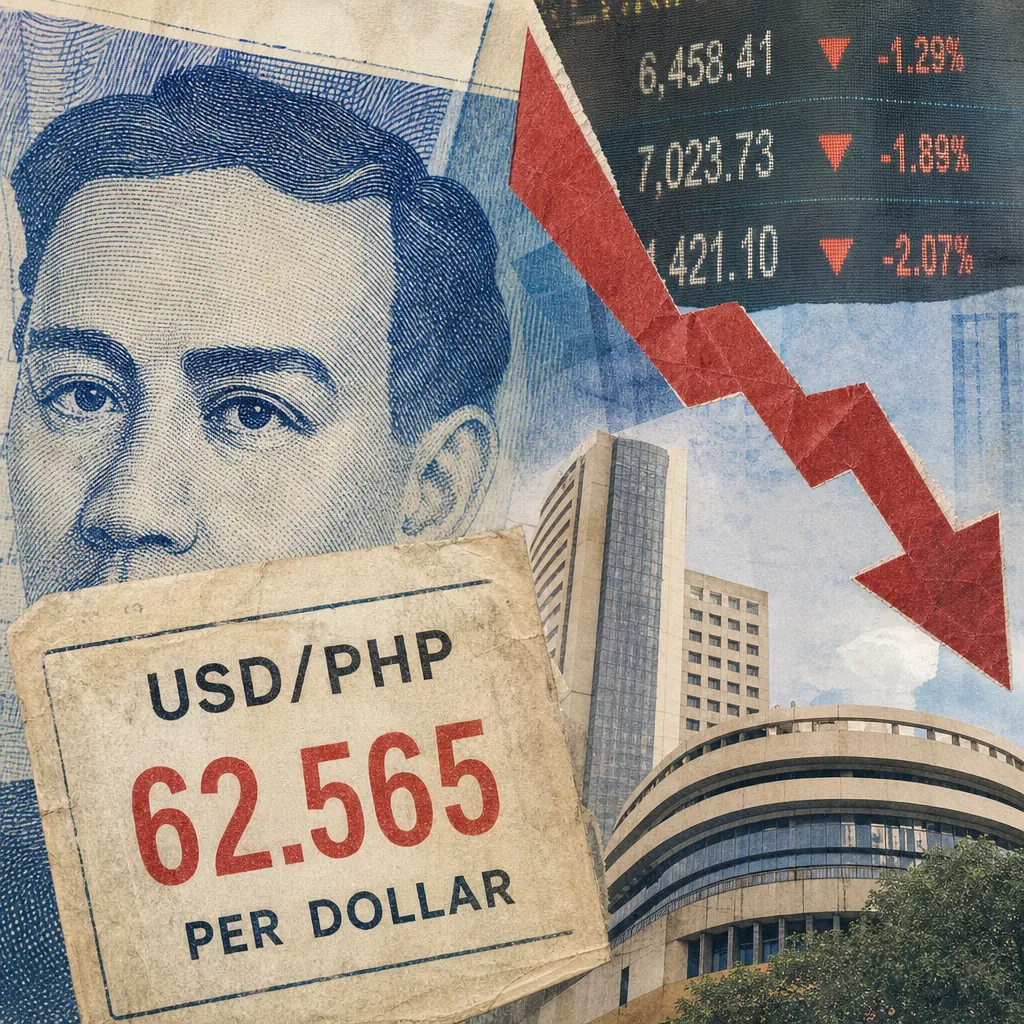
Philippines falls behind in race for foreign investments
BDO Capital says global investors are overlooking the Philippines due to weak growth and political noise, even as corporate earnings stay resilient. The stock market rose on softer inflation, while GCash expands into tax refunds and National ID registration.
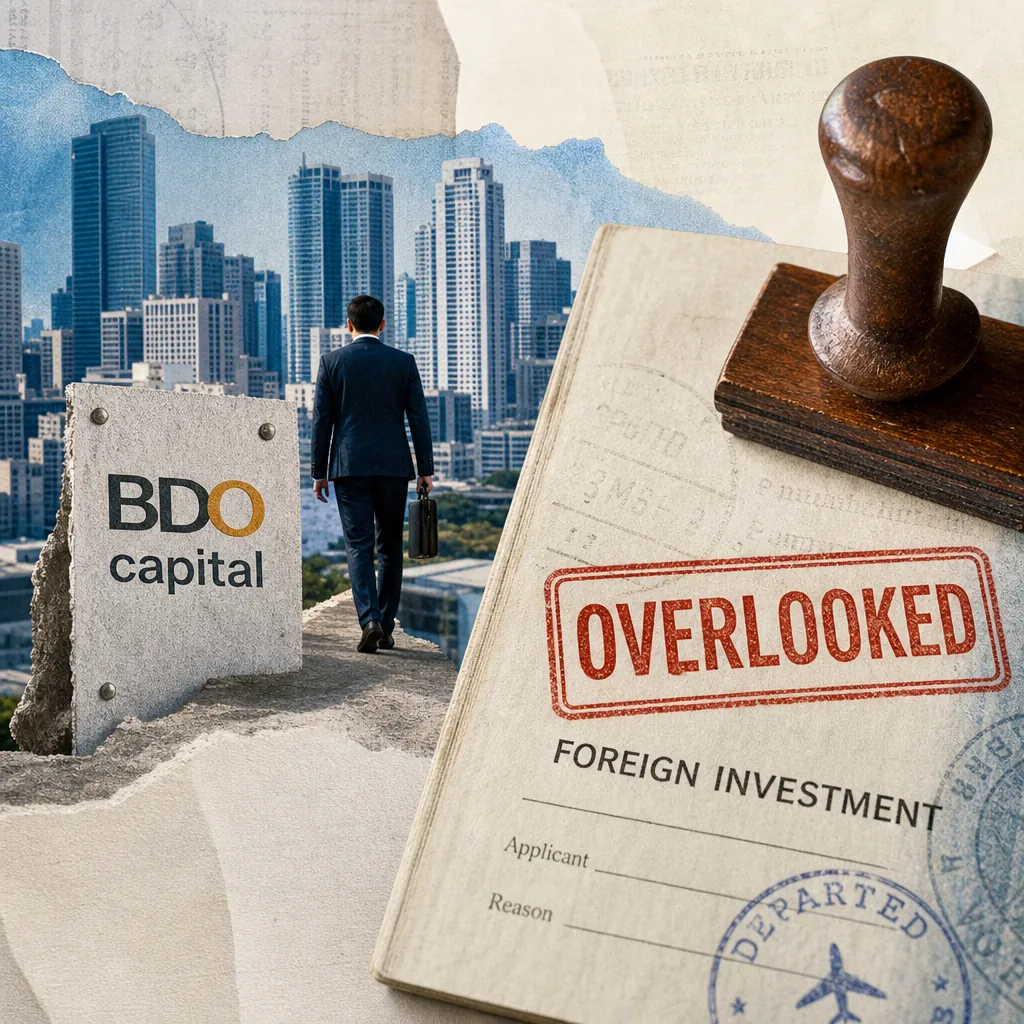
Global investors are increasingly overlooking the Philippines, according to BDO Capital and Investment Corp. president Eduardo Francisco, who said in an interview with Money Talks that "foreign investors are not really looking at the Philippines anymore. We're so small. We're really negligible as part of the overall index." 34 The comment came as the Philippine Stock Exchange index (PSEi) closed the week higher by 0.35 percent, or 21.18 points, at 6,090.60 on Friday, September 4, buoyed by softer-than-expected inflation figures. 4 The contrast between resilient corporate earnings and a tepid investment climate framed much of the day's business conversation, with analysts and officials weighing in on what it will take to attract capital and deepen domestic savings.
The day's coverage also featured several corporate moves aimed at broadening financial inclusion and consumer access. GCash, the country's leading e-wallet, announced a partnership with the Philippine Statistics Authority (PSA) to bring National ID registration closer to underserved communities, and separately entered the tax refund market for travelers in 16 countries. 2 35 Sun Life of Canada (Philippines) launched a new insurance product with guaranteed payouts, responding to demand for financial stability amid rising living costs. 3 These developments, alongside commentary on the national savings rate and the growth of retirement accounts, painted a picture of an industry focused on resilience and inclusion even as the broader investment climate drew criticism.
The day's most prominent business story, however, was the blunt assessment from BDO Capital that the Philippines has fallen behind in the race for foreign investment. The story, carried by Philstar Online, drew attention for its direct language and its timing — coming as the stock market posted gains and as the government touted infrastructure spending. 34 The coverage set also included an editorial in The Manila Times on why Filipinos don't save, citing central bank Governor Eli Remolona Jr.'s remarks about a "culture of consumption," and a column on the growth of Personal Equity and Retirement Accounts (PERA) as a channel for long-term domestic savings. 20 38 Together, these pieces formed a coherent narrative about the structural challenges facing the Philippine economy: low savings, weak foreign investment, and the need for domestic capital to fund growth.
Key themes
- Foreign investors are overlooking the Philippines, says BDO Capital president — Eduardo Francisco said the country is "negligible" in global indices, citing weak economic growth and political noise, even as corporate earnings remain resilient and valuations cheapen. 34
- Stock market rises 0.35% on softer inflation — The PSEi gained 21.18 points to close at 6,090.60 on Friday, September 4, with 108 advancers against 93 decliners, as investors reacted to lower-than-expected inflation figures. 4
- GCash expands National ID registration to underserved communities — A partnership with the Philippine Statistics Authority has helped more than 2,000 Filipinos across 25+ barangays secure IDs and open verified accounts, addressing a key barrier to digital financial inclusion. 2
- GCash enters the tax refund market for travelers — The e-wallet teamed up with Alipay+ and Global Blue to offer instant tax refunds in pesos across 16 countries, eliminating weeks of waiting and the need to carry foreign currency. 35
- Sun Life launches guaranteed-payout insurance plan — Sun Life Wealth Prosper 7 offers life insurance coverage for seven years with a guaranteed annual payout of 4.50% and full return of premium at maturity, responding to demand for financial certainty. 3
- Central bank chief says low savings is a structural problem — BSP Governor Eli Remolona Jr. said increasing national savings is the long-term solution to strengthening the peso, attributing low saving rates to a "culture of consumption." 20
- PERA growth seen deepening the long-term savings pool — Personal Equity and Retirement Accounts have grown nearly fivefold in contributors, and officials say retirement savings can serve as development capital for bonds, equities, and infrastructure. 38
- Economy may post above 4% growth in Q4, says UA&P — The University of Asia and the Pacific expects a rebound in infrastructure spending and stronger demand to lift GDP growth above four percent in the fourth quarter, after a tepid 2.3% gain in Q2. 39
How the narratives stack
Dominant — Within the captured set, the dominant narrative is the Philippines' struggle to attract foreign investment. The BDO Capital interview, carried by Philstar Online, was the most direct statement of this theme, with its president saying global investors are no longer looking at the country. 34 This narrative was reinforced by the Manila Times editorial on low national savings, which quoted the central bank governor on the need for a structural fix, and by the UA&P forecast of modest growth. 20 39 The dominance of this theme within the set reflects both its news value and the monitoring's emphasis on business and financial media.
Counter-narrative — Against the gloomy investment outlook, a counter-narrative of resilience and inclusion emerged. Corporate earnings remain resilient, with many companies surpassing guidance, according to BDO Capital itself. 34 GCash's expansion into National ID registration and tax refunds shows fintech companies pushing ahead with inclusion and international growth. 2 35 Sun Life's new product launch responds to consumer demand for guaranteed returns. 3 The stock market's positive close on softer inflation also supports this more optimistic reading. 4
Emerging — A notable emerging theme is the role of domestic savings as development capital. The PERA column in Philstar argued that retirement accounts can finance bonds, equities, and infrastructure, channeling household savings into productive investment. 38 This connects to the central bank governor's call for higher national savings and suggests a policy direction focused on deepening domestic capital markets rather than relying on foreign investment. 20
Under-covered — The Pagcor revenue target story, which ran as an opinion piece in Inquirer Plus, raised a structural question about the state's financial stake in gambling. 28 The piece noted that Pagcor expects to earn about P87 billion this year even as gambling activity cools, and asked what happens when the state needs revenue from an activity it is supposed to regulate. This fiscal-logic question received limited coverage in the set but carries implications for public finance and regulation.
Platform insights
- Facebook — Business news stories from Philstar, Inquirer, and Manila Times were shared across Facebook pages, with the BDO Capital interview and the GCash tax refund story drawing the most attention. The engagement pattern suggests Filipino readers are most responsive to stories that combine national economic concerns with practical consumer impact.
- X (formerly Twitter) — Financial commentators and business journalists used X to share the stock market close and inflation data, with the PSEi's 0.35% gain and the softer inflation reading generating discussion about the central bank's next policy move. The platform served as a real-time hub for market reaction.
- YouTube — No significant YouTube activity was captured in the set for this topic on this day.
- Reddit — No significant Reddit activity was captured in the set for this topic on this day.
Key voices and communities
- BDO Capital and Investment Corp. — The investment bank's president, Eduardo Francisco, provided the day's most quotable assessment of the Philippines' investment climate, saying foreign investors are no longer looking at the country. 34 As a major player in capital markets, BDO's views carry weight with both domestic and international investors.
- Bangko Sentral ng Pilipinas (BSP) — Central bank Governor Eli Remolona Jr.'s remarks on national savings, made at a Senate Finance Committee hearing, framed the day's discussion of structural economic challenges. 20 The BSP's policy stance on interest rates and inflation directly affects the savings and investment environment.
- GCash and Mynt Inc. — The e-wallet's parent company is preparing for a listing, and its expansion into National ID registration and tax refunds positions it as a key player in financial inclusion and international payments. 2 35 GCash's moves are closely watched as indicators of the fintech sector's growth trajectory.
- University of Asia and the Pacific (UA&P) — The school's economics research unit provided the Q4 growth forecast of above four percent, offering a more optimistic counterpoint to the foreign investment concerns. 39 Academic institutions like UA&P are influential in shaping policy discourse through their research.
- Sun Life of Canada (Philippines) — The insurer's launch of a guaranteed-payout product reflects consumer demand for financial certainty, and its communications emphasize listening to client feedback. 3 Insurance companies are significant voices in discussions of household financial security.
Narrative streams
Foreign investors are overlooking the Philippines, says BDO Capital
The most direct statement of the day's dominant concern came from Eduardo Francisco, president of BDO Capital and Investment Corp., who told Money Talks that "foreign investors are not really looking at the Philippines anymore. We're so small. We're really negligible as part of the overall index." 34 Francisco acknowledged that Philippine companies continue to perform well, with many surpassing their earnings guidance, but said the country's appeal has been eroded by weak economic growth and political noise. The interview, carried by Philstar Online, drew attention for its blunt language and its timing — coming as the stock market posted gains and as the government touted infrastructure spending. 4 The comment reflects a broader concern among market participants that the Philippines is being passed over in favor of larger or more stable markets in the region. For the sector, the read is that investment banks and listed companies will need to work harder to tell the Philippines' story to international investors, emphasizing corporate earnings resilience and the potential for policy reform to restore confidence.
Stock market rises on softer inflation, but gains are modest
The Philippine Stock Exchange index (PSEi) gained 0.35 percent, or 21.18 points, to close at 6,090.60 on Friday, September 4, according to a report by LionhearTV. 4 The broader All Shares Index also advanced by 0.23 percent, or 7.63 points, to 3,377.44. Luis Limlingan of Regina Capital said the positive performance was supported by the country's latest inflation figures, which came in lower than the previous month's reading. "The softer inflation reading prompted some buying activity among investors, supporting the broader market," Limlingan said. 4 The market favored gainers, with 108 advancers against 93 decliners, while 54 remained unchanged. The modest gain — less than half a percent — suggests investors are cautiously optimistic but not yet convinced that the worst is over. For the sector, the read is that softer inflation provides room for the central bank to consider rate cuts, which would support equity valuations and reduce borrowing costs for companies, but the market's tepid response indicates lingering concerns about growth and political stability.
GCash expands National ID registration to bridge the inclusion gap
GCash and the Philippine Statistics Authority (PSA) are bringing National ID registration closer to underserved communities, according to a report on the blog BENTEUNO. 2 Through PSA Co-location and GCash Barangay Outposts, more than 2,000 Filipinos across 25+ barangays have been assisted in securing IDs and opening verified GCash accounts. The initiative addresses a persistent barrier to digital financial inclusion: a study by the Bangko Sentral ng Pilipinas (BSP) shows that 40 percent of adult Filipinos remain unbanked due to lack of documents, including IDs. 2 The National ID system, formally known as the Philippine Identification System (PhilSys), provides a single official identification for all citizens and resident aliens, streamlining access to government services and financial products. For the sector, the read is that fintech companies are taking on the infrastructure gap themselves, partnering with government agencies to bring the unbanked into the digital economy — a strategy that expands their customer base while addressing a national policy priority.
GCash enters the tax refund market for travelers
GCash is introducing a tax refund feature that will allow Filipinos traveling abroad to receive their value-added tax (VAT) refunds instantly in pesos, according to Philstar Online. 35 The e-wallet teamed up with Alipay+ and Swiss company Global Blue to bring Digital Tax Refund to the platform, enabling users to receive refunds in 16 countries without waiting weeks for banks to credit their accounts. GCash vice president for international payments Carlos Bauza said the feature eliminates weeks of waiting and the need to carry leftover foreign currency on the return home. 35 Traditionally, travelers claiming tax refunds overseas could receive them in foreign currency or wait up to four weeks for the refund to be processed. The move is part of GCash's broader international expansion ahead of the listing of its parent, Mynt Inc. For the sector, the read is that fintech competition is moving beyond domestic payments into cross-border services, with companies like GCash leveraging partnerships with global players like Alipay+ to offer seamless experiences that traditional banks have been slow to provide.
Sun Life launches guaranteed-payout insurance plan
Sun Life of Canada (Philippines), Inc. has introduced Sun Life Wealth Prosper 7, a limited-offer life insurance product that combines protection with guaranteed payouts, according to a report on LionhearTV. 3 The product offers life insurance coverage for seven years and a guaranteed annual payout of 4.50% based on a one-time premium payment. At the end of the seven-year period, clients receive 100% of their money back. "Listening to our Clients feedback led us to understand that they want financial solutions that offer greater certainty, stability, and dependable income," the company said. 3 The launch comes amid rising living costs and an increasingly cautious economic environment, with households balancing today's needs against tomorrow's goals. For the sector, the read is that insurers are responding to a shift in consumer preferences toward guaranteed returns and capital preservation, moving away from products whose payouts depend on market performance. This trend reflects broader economic uncertainty and a demographic shift toward retirement planning.
Central bank chief says low savings is a structural problem
Bangko Sentral ng Pilipinas (BSP) Governor Eli Remolona Jr. told a Senate Finance Committee hearing that increasing national savings is the long-term structural solution to strengthening the peso and improving the country's current-account position, according to a Manila Times editorial. 20 Remolona said high spending habits relative to national income contributed to a low saving rate. "As much as possible, I hope our savings increase. That is the long-term solution," Remolona said in Filipino. "It's a bit difficult to say this... but we tend to be showy. It's what you call a culture of consumption." 20 The central bank chief explained that insufficient foreign currency stays in the domestic system when consumption patterns lean heavily toward spending rather than accumulating national savings and capital reserves. The editorial framed this as a cultural as well as an economic challenge. For the sector, the read is that policymakers are looking beyond monetary policy to structural reforms — including financial literacy and savings incentives — to build the domestic capital base that would reduce reliance on foreign investment and strengthen the currency.
PERA growth seen deepening the long-term savings pool
The rapid expansion of Personal Equity and Retirement Accounts (PERA) is widening a channel for long-term domestic savings that can support businesses and infrastructure, according to Philstar Online. 38 Presidential Legislative Liaison Office secretary Joey Salceda said retirement accounts could serve a broader economic purpose by channeling savings into productive investments while helping Filipinos prepare for old age. "Retirement savings are also development capital. PERA funds can finance bonds, equities, infrastructure," Salceda said. 38 PERA is a voluntary retirement savings program established under Republic Act No. 9505, which provides tax incentives to encourage Filipinos to save for retirement. Despite its nearly fivefold increase in contributors, the program remains small relative to the population. For the sector, the read is that policymakers see retirement savings as a dual-purpose tool — providing for individual old-age security while building a domestic pool of capital that can fund long-term projects, reducing the economy's dependence on foreign investment.
Economy may post above 4% growth in Q4, says UA&P
The Philippine economy may grow above four percent in the fourth quarter, supported by a rebound in infrastructure spending and stronger demand, according to the University of Asia and the Pacific (UA&P). 39 "While we expect GDP growth in Q3 much like the tepid 2.3 percent Q2 gain amid August floodings and delayed infrastructure spending, some green shoots have emerged," UA&P said in the August edition of The Market Call Capital Markets Research. 39 The research unit cited record employment figures, export performance, and overseas Filipino workers' remittances in June as factors expected to shield the economy from temporary disruptions. For the sector, the read is that the economy is expected to recover in the fourth quarter, but the modest growth forecast — above four percent but below the government's target — suggests that structural constraints, including infrastructure delays and weak investment, continue to hold back the economy's potential.
Conversation trajectory
Foreign investment flows (next 3–6 months) — The BDO Capital assessment that foreign investors are overlooking the Philippines will be tested by upcoming data on foreign direct investment and portfolio flows. 34 If the trend of outflows or stagnation continues, expect more commentary from market participants and potentially policy responses aimed at improving the investment climate. Watch for the next BSP balance of payments data release and any announcements from the Department of Finance on investment incentives.
Central bank policy (next 1–3 months) — The softer inflation reading that boosted the stock market on Friday will feed into the BSP's next policy decision. 4 If inflation continues to moderate, the central bank may have room to cut interest rates, which would support economic growth and equity valuations. Watch for the next inflation data release and the BSP's monetary policy meeting, typically held every six to eight weeks.
GCash international expansion (next 6–12 months) — GCash's entry into the tax refund market and its National ID registration partnership signal a broader push toward international payments and financial inclusion. 35 2 The listing of its parent, Mynt Inc., will be a major event for the fintech sector. Watch for announcements about the listing timeline and any new international partnerships.
PERA program growth (next 12 months) — The nearly fivefold increase in PERA contributors suggests growing interest in voluntary retirement savings. 38 If policymakers follow through on proposals to expand the program's reach, it could deepen the domestic savings pool over time. Watch for legislative action on PERA-related bills and BSP data on retirement account growth.
Trigger events — The next BSP policy meeting and inflation data release; the Mynt Inc. listing announcement; any major foreign investment deal or withdrawal; and the government's infrastructure spending trajectory, particularly whether Q4 spending rebounds as UA&P expects. 39
Response guidance
Foreign investment narrative — For companies in capital-intensive sectors, prepare messaging that emphasizes corporate earnings resilience and specific growth drivers, countering the narrative that the Philippines is being overlooked. Use data on earnings beats and sector-specific opportunities to tell a more nuanced story than the broad "negligible" characterization.
Financial inclusion — For fintech and financial services firms, highlight concrete inclusion milestones like the GCash-PSA National ID partnership, which demonstrates progress on a national priority. 2 Emphasize the human impact — the 2,000+ Filipinos who gained access to digital payments — rather than abstract metrics.
Consumer financial products — For insurers and savings products, respond to the demand for certainty by emphasizing guaranteed returns and capital preservation, as Sun Life did with its Wealth Prosper 7 launch. 3 Avoid overpromising returns; focus on the stability and peace of mind that guaranteed products provide.
Savings culture — For banks and financial institutions, the central bank governor's "culture of consumption" remark is a sensitive topic. 20 Frame savings messages positively — building toward goals and security — rather than shaming spending behavior. Emphasize tools and products that make saving easier, such as automatic deduction and retirement accounts.
Political noise — Given the BDO Capital reference to "political noise" as a factor in investment decisions, communicators should be prepared to address questions about political stability. 34 Stick to factual statements about the business environment and avoid commenting on political controversies that are outside the company's expertise.
See the full picture behind today's signals.
This report draws from Media Meter's MediaWatch, our real-time monitoring engine tracking 2,470+ Philippine sources across print, broadcast, digital, and social. Explore how the platform turns raw coverage into decision-grade intelligence, then see how it's configured for teams like yours — whether you're in PR agencies, corporate comms, government, or marketing.
Want more? Browse our Report Library for sector and crisis intelligence, or request a demo and we'll have your brand set up before the call.
Want this kind of intelligence on your brand?
This brief is built on the same MediaWatch methodology that runs continuously across every brand we monitor. See your competitive landscape, Impact Score, and narrative trajectory in a 30-minute demo.