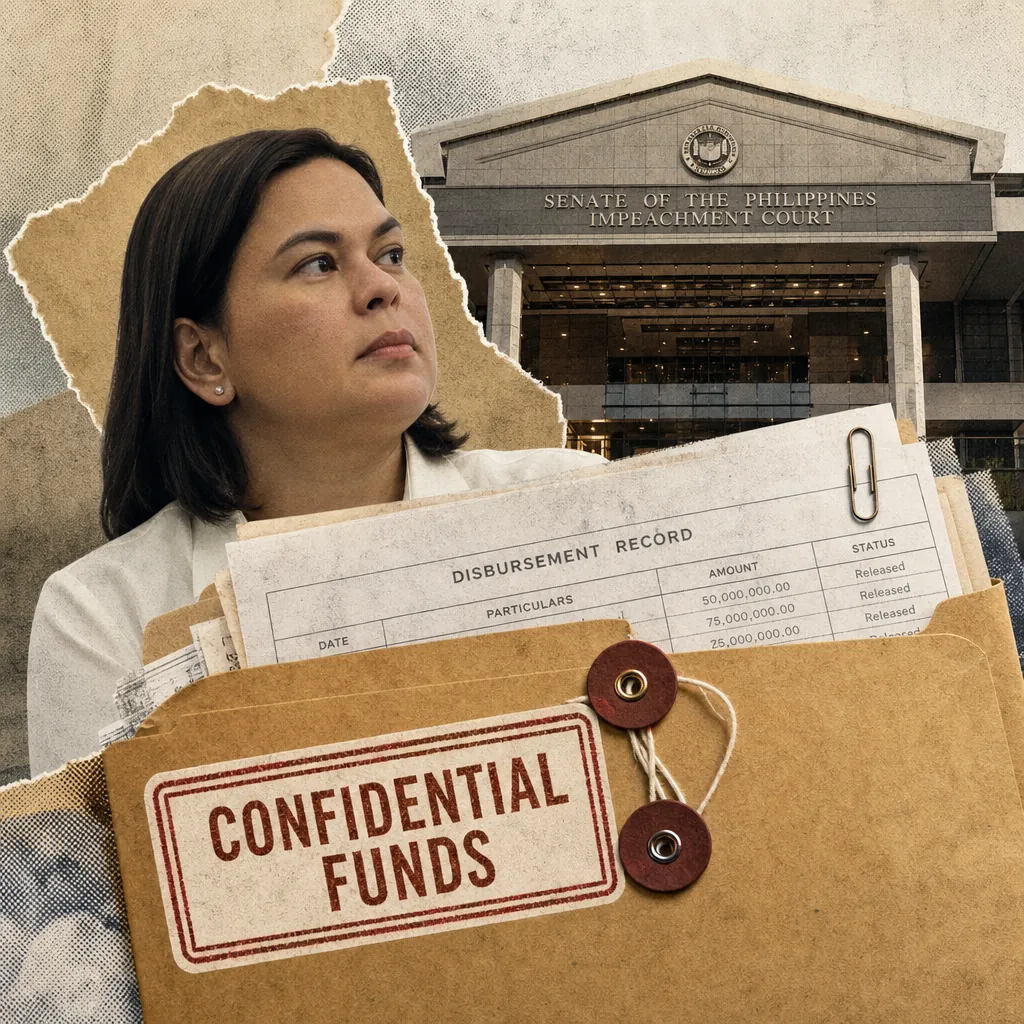
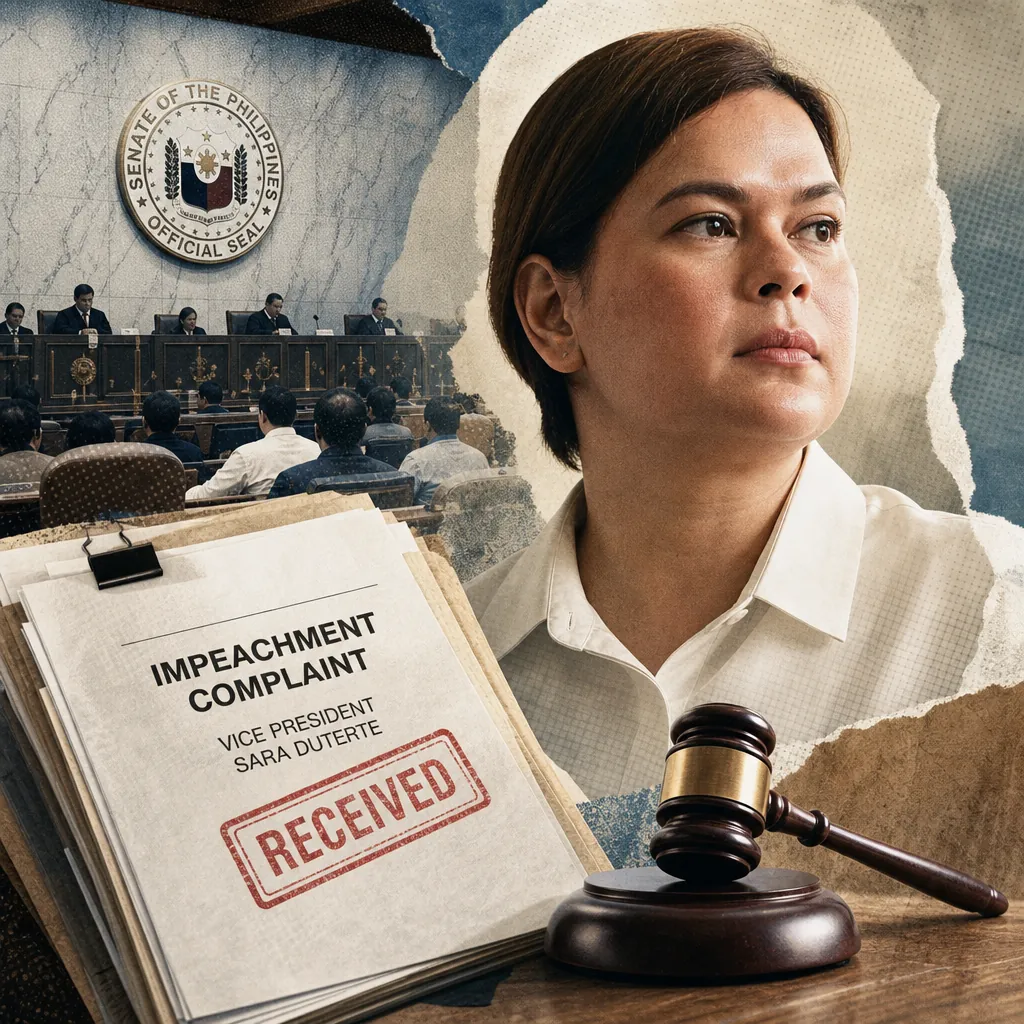
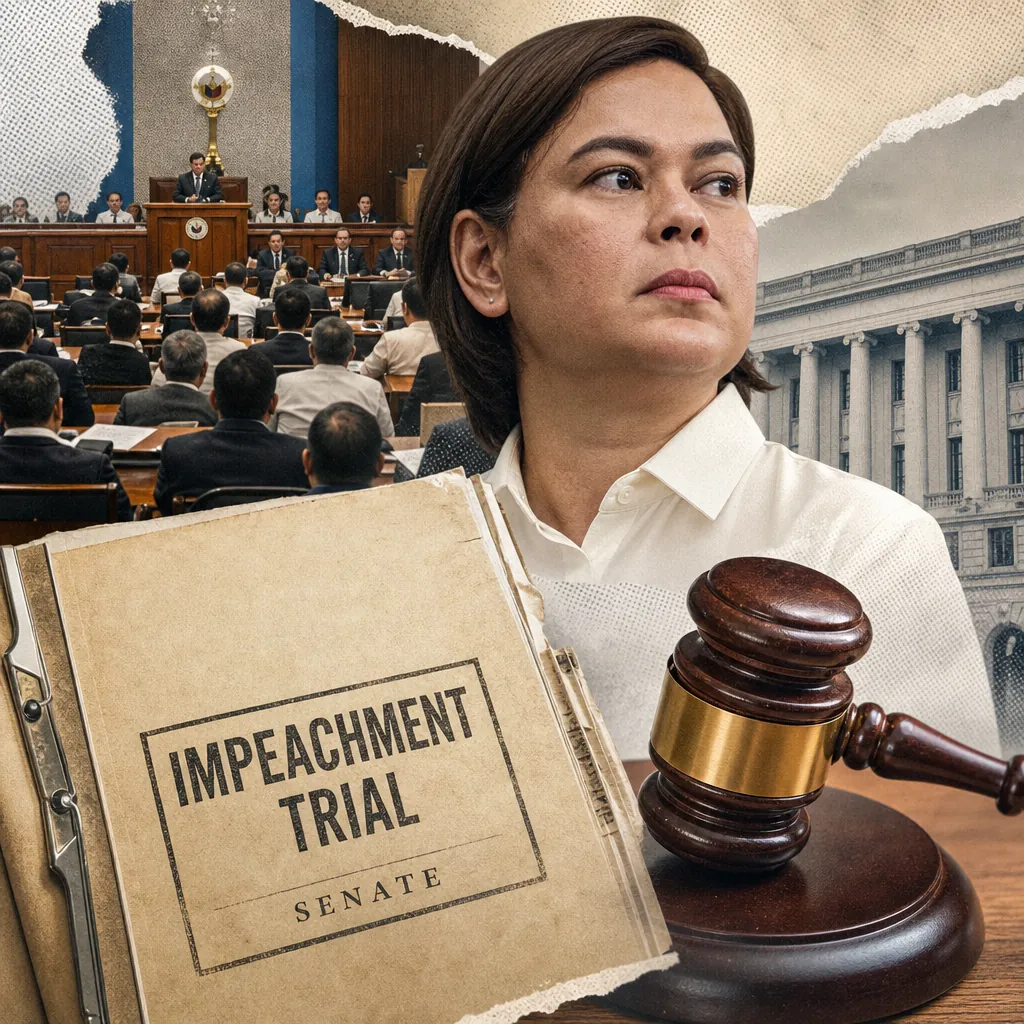
Philippine political crisis deepens as Senate leadership change, impeachment trial, and corruption probes converge
A daily snapshot of the escalating political turmoil in the Philippines, covering the Senate leadership crisis, the impeachment pre-trial of Vice President Sara Duterte, the Ateneo drowning investigation, and the PhilHealth fund transfer controversy, with analysis of public sentiment and strategic communication guidance.
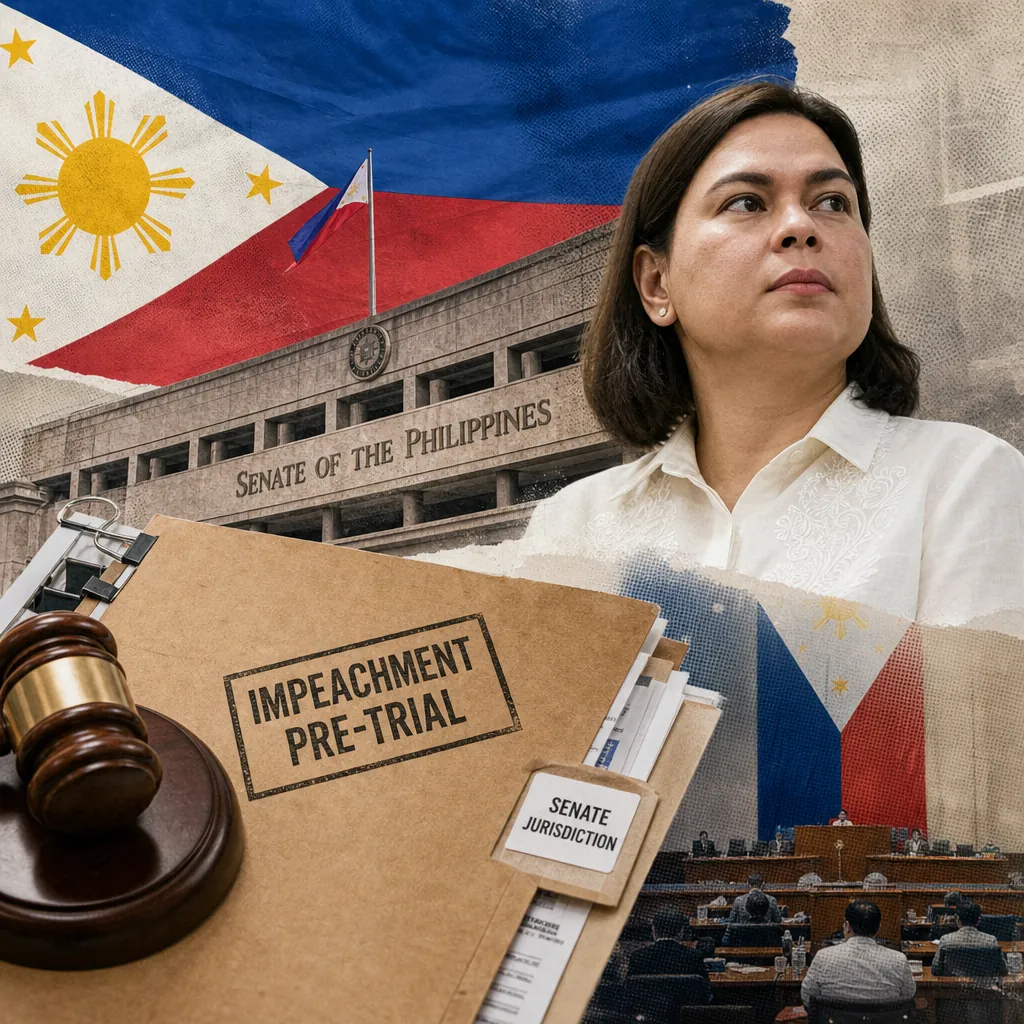
The conversation across Philippine social and traditional media on June 18–19, 2026, was dominated by a convergence of political crises: the bitter Senate leadership change, the opening of the impeachment pre-trial of Vice President Sara Duterte, the escalating investigation into the drowning deaths of two Ateneo student-athletes, and the ongoing controversy over a P60-billion PhilHealth fund transfer. These threads, while distinct, are increasingly interwoven in public discourse, creating a volatile information environment that is eroding trust in institutions and dominating the national conversation.
The most prominent story thread was the Senate leadership crisis, which reached a new peak on June 18 when ousted Senate President Alan Peter Cayetano accused the new majority of attempting to "cover up" a flood control corruption scandal and to control the pace of the impeachment trial against Vice President Sara Duterte. Cayetano's allegations, delivered via Facebook Live, drew tens of thousands of views and thousands of reactions, with his post accusing the Department of Health of politicizing medical assistance receiving nearly 19,000 likes and over 5,500 sad reactions. The following day, the rhetoric escalated further when Cayetano labeled Senators Sotto, Raffy Tulfo, and Ping Lacson with derogatory terms like "tuta" (lapdog) and "aso" (dog), generating over 4,000 "haha" reactions on Facebook and sparking widespread condemnation. This personalization of the conflict has shifted the conversation from procedural legitimacy to ad hominem attacks, with the public increasingly viewing the spectacle as political theater.
Simultaneously, the impeachment pre-trial of Vice President Sara Duterte opened on June 18, immediately generating tension. The House prosecution panel dismissed the defense's pre-trial brief as "tunog lata" (empty can), a comment that drew over 1,000 laughing reactions on Facebook. The defense countered by listing 25–30 witnesses, including former Senator Trillanes, signaling a broad political battle. A critical sub-narrative emerged around the selection of the presiding officer, with civil society groups warning that Senator Chiz Escudero's appointment would be "dangerous" and further erode the Senate's credibility. An OCTA Research survey released on June 19 underscored the public's deep skepticism: only 19% of Filipinos trust senators to decide by evidence, while 32% doubt their impartiality. This low trust is a backdrop that makes every procedural move highly consequential.
The Ateneo drowning investigation added another layer of institutional crisis. On June 18, the CIDG declared the deaths of student-athletes Rene Baterbonia and Divine Adili were "not an accident," suggesting possible hazing. The narrative shifted dramatically on June 19 when Tab Baldwin finally appeared before the CIDG after days of defying subpoenas, and DILG Secretary Jonvic Remulla revealed "inconsistencies" between players' and coaches' accounts. This admission fueled public distrust, with a YouTube short summarizing the inconsistencies reaching over 40,000 views within hours. The investigation has become a flashpoint for broader questions about institutional accountability and student-athlete safety.
Finally, the PhilHealth fund transfer controversy continued to generate outrage. On June 18, Dr. Tony Leachon posted a blistering critique calling the transfer "unconstitutional," drawing nearly 2,000 likes and over 760 sad reactions. The next day, Executive Secretary Ralph Recto issued a denial on Facebook, asserting the transfer did not affect operations, but the post was met with overwhelming mockery: 1,112 "haha" reactions and 50 angry emojis. The Ombudsman's dismissal of plunder complaints did little to quell the anger, as a motion for reconsideration was immediately filed. This issue is directly undermining public trust in the administration's fiscal management.
Conversation snapshot. The conversation was driven by high emotional engagement across platforms. On Facebook, Cayetano's post accusing the DOH of politicizing medical assistance garnered 18,995 likes, 5,537 sad reactions, and 1,410 comments. His "tuta" remarks on a post from @todaypampanga accumulated 4,039 "haha" reactions. On Twitter, a post from @abscbnnews about Senator Hontiveros's potential 2028 presidential run reached 267,738 views, 10,610 likes, and 1,210 shares. The OCTA survey tweet from @gmanews received 1,269 likes. On YouTube, a video titled "What became of the Senate under 1 month of Cayetano" drew 35,291 views, while a short on the Ateneo inconsistencies reached 40,468 views. The PhilHealth denial post from Recto's official Facebook page had 1,112 "haha" reactions and 330 comments.
Key themes
- Senate leadership legitimacy and procedural conflict. The ouster of Cayetano and the election of Gatchalian have created a sustained constitutional debate. Cayetano's bloc argues the June 3 session lacked quorum and has filed a Supreme Court petition, while the new majority asserts the change was lawful. This dispute is directly tied to the legitimacy of the impending impeachment trial.
- Impeachment trial as a proxy for broader political loyalties. The pre-trial conference has become a battleground for the Duterte-Marcos alliance. The prosecution's strategy of publicly mocking the defense's brief as "tunog lata" signals a media-savvy approach that generates viral moments. The unresolved question of the 16-vote threshold for conviction adds legal uncertainty.
- Personalization of political debate. The use of derogatory terms like "tuta" and "aso" by Cayetano marks a dangerous erosion of decorum. This personalization is driving high engagement but undermining public trust in the Senate as an institution.
- Fiscal accountability and the P700 million waste claim. Senator Lacson's allegation that P700 million was wasted during Cayetano's 28-day tenure has become a central narrative. The "chaos, gunfire, Bato's escape" framing is being widely shared, shifting the conversation from procedural disputes to fiscal accountability.
- Ateneo drowning investigation and institutional accountability. The CIDG's reclassification of the drowning from an accident to a potential hazing case has intensified scrutiny on coaching staff and university protocols. The "inconsistencies" admission by Remulla has deepened public distrust.
- PhilHealth fund transfer and public outrage. The P60-billion transfer continues to generate anger, with official denials met with widespread mockery. The issue is linked to broader concerns about healthcare access and fiscal mismanagement.
- Early positioning for the 2028 presidential race. Senator Hontiveros's statement that she is "seriously considering" a presidential run has generated significant engagement, injecting long-term electoral speculation into the short-term impeachment conversation.
- Compounding disasters and weather threats. The ongoing earthquake response in Mindanao and the approach of a tropical depression are creating a dual-disaster scenario that is straining government resources and public attention.
How the narratives stack
Dominant narrative. The dominant narrative is that the Philippine political system is in a state of deep crisis, with the Senate leadership change, the impeachment trial, and the Ateneo investigation all pointing to a breakdown of institutional integrity and public trust. The public is increasingly viewing these events as a political spectacle rather than a serious governance process, as evidenced by the high number of "haha" reactions on posts about serious procedural matters.
Counter-narrative. The new Senate majority, led by Gatchalian and Hontiveros, is attempting to project stability and normalcy. Hontiveros has publicly denied any cover-up in the flood control scandal, emphasizing that the Blue Ribbon investigation originated from a member of the new majority. Gatchalian has called for an end to "infighting" and a return to legislative work. This counter-narrative frames the leadership change as a restoration of order, but it is struggling to gain traction against the dominant crisis narrative.
Emerging narrative. The early positioning for the 2028 presidential race is an emerging narrative that is beginning to intersect with the impeachment trial. Hontiveros's potential candidacy is generating significant grassroots energy, but it also creates a conflict of interest as she serves as a senator-judge. This narrative is likely to intensify as the trial progresses, with each procedural decision being scrutinized for its impact on her political future.
Suppressed narrative. The positive outcomes of the ASEAN-Russia Summit, including the release of 24 detained Filipinos, are being largely drowned out by the domestic political noise. While official accounts are amplifying this achievement, independent media and public commentary are focusing on the optics of the summit and the geopolitical implications, rather than the humanitarian success. This represents a missed opportunity for the administration to shift the conversation toward tangible diplomatic wins.
Platform insights
Facebook. Facebook was the primary platform for raw emotional engagement and the amplification of partisan narratives. Cayetano's Facebook Live broadcasts and official posts generated the highest levels of engagement, with thousands of likes, sad reactions, and comments. The platform's reaction system allowed users to express complex emotions—sadness, anger, mockery—in ways that text alone cannot. The high number of "haha" reactions on serious political posts suggests that a significant segment of the audience views the conflict as entertainment. Official government accounts received more positive reactions, but independent media pages saw higher levels of skepticism and mockery.
Twitter/X. Twitter served as the primary venue for breaking news, official statements, and rapid-fire accusations. News outlets like ABS-CBN News and GMA News dominated the timeline with real-time updates on the impeachment pre-trial, the Ateneo investigation, and the Senate leadership dispute. The platform also hosted more analytical and legal commentary, with users like @jesusfalcis shaping opinion on the presiding officer issue. Engagement on Twitter was lower in volume than Facebook but higher in terms of influence among political elites and media.
YouTube. YouTube became the venue for deeper explanatory content and long-form commentary. News channels like ANC and ABS-CBN provided contextual coverage of the Senate sessions and pre-impeachment conferences, while independent vloggers offered analysis and opinion. The most-watched videos were those that consolidated the day's events, such as TV Patrol's full episode replay, which garnered nearly 300,000 views. YouTube comment sections were more analytical than Facebook, with users debating legal implications and procedural details.
Reddit. Reddit served as a space for technical legal debates and long-form commentary. Threads on r/Philippines discussed the vote-counting calculus for the impeachment trial, the implications of Senator Bato Dela Rosa's absence, and the potential for a Supreme Court ruling on the Senate leadership dispute. Engagement on Reddit was lower in volume but higher in depth, with users engaging in detailed discussions about constitutional law and procedural fairness.
Key voices and communities
- The Cayetano-Loyalist Bloc. This coalition of senators and their supporter networks operates primarily through Facebook Live broadcasts, YouTube channels, and partisan news pages. Their content consistently drives tens of thousands of views and thousands of reactions. Their narrative centers on claims that the ouster is a coordinated effort to protect Vice President Sara Duterte from a fair impeachment trial and to bury the flood control corruption scandal. Their most inflammatory content labels opponents as "tuta" and "aso," effectively delegitimizing the opposition as co-opted actors.
- The Sotto-Lacson-Tulfo Alliance. This opposition coalition consolidates around figures who were removed from leadership or who oppose the Cayetano faction. They leverage traditional media outlets and their own Twitter and Facebook accounts to project institutional legitimacy. Their narrative frames Cayetano's 28-day Senate presidency as a catastrophic waste of public funds—estimated at P700 million—yielding only "chaos, gunfire, Bato's escape" and a session boycott. They dismiss Cayetano's accusations as "mala-telenovelang ingay" (telenovela-like noise).
- The Gatchalian-New Majority Coalition. The newly installed Senate leadership under Sherwin Gatchalian has quickly moved to project stability and normalcy through official statements and mainstream media appearances. Their narrative denies any cover-up, asserting that the flood control investigation originated from a member of the new majority and that the impeachment trial will proceed on its own merits. Their content generates moderate viewership but derives authority from official institutional framing.
- Government Investigative and Oversight Bodies. The CIDG, DILG, NBI, and PNP form a tightly coordinated institutional stakeholder bloc driving the official narrative and investigation into the Ateneo drowning deaths. Their framing has shifted from accidental drowning to potential hazing or criminal liability under the Anti-Hazing Act. DILG Secretary Jonvic Remulla and CIDG Director Robert Morico serve as primary spokespersons, maintaining high public visibility through consistent media briefings.
- Accountability Advocates and Civil Society. A coalition of medical professionals, legal practitioners, and civil society groups is driving sustained scrutiny of the PhilHealth fund transfer and the flood control scandal. Their content generates high emotional engagement, with posts emphasizing constitutional violations and the need for accountability. They have filed a motion for reconsideration after the Ombudsman dismissed initial complaints, keeping the issue alive.
Narrative streams
Senate leadership crisis and the flood control cover-up allegation
The Senate leadership crisis has been the dominant narrative thread since May 11, when Alan Peter Cayetano was elected Senate President moments before the House impeached Vice President Sara Duterte. The crisis escalated on June 3 when the Cayetano-led majority boycotted a session, allowing the rump session to elect Sherwin Gatchalian as acting Senate President. Cayetano's bloc immediately challenged the move before the Supreme Court as unconstitutional due to lack of quorum.
By June 18, Cayetano had explicitly claimed that the new majority wanted to replace him to "ensure the impeachment proceedings against Vice President Sara Duterte continue" and to "cover up" the flood control scandal. This allegation directly links the leadership change to the two other major crises: the impeachment trial and the corruption probe. The flood control scandal involves allegations of kickbacks and anomalies in projects worth P1.3–P1.7 trillion, with witnesses including former soldiers and a whistleblower named Curlee Discaya.
The personalization of the debate reached a new low on June 19 when Cayetano called Senators Sotto and Raffy Tulfo "tuta ng Malacañang" (lapdogs of Malacañang) and Senator Ping Lacson a "dog" ("aso"). These remarks generated over 4,000 "haha" reactions on Facebook, indicating that many users found the spectacle entertaining rather than serious. Sotto dismissed the remarks as a "waste of airtime" and "mala-telenovelang ingay" (telenovela-like noise), urging the public to "move on for the good of the country."
The fiscal damage claim introduced by Senator Lacson on June 18 added a new dimension to the crisis. Lacson alleged that the Senate wasted approximately P700 million in public funds during Cayetano's 28-day tenure, citing "chaos, gunfire, Bato's escape despite ICC-issued warrant... session boycott, failed destabilization attempt" as the only outputs. This claim quickly spread across platforms, with @cebudailynews repeating the figure and @gmanews reporting Lacson's "output ang pinag-uusapan" retort to Cayetano's defense, which gained 1,269 likes. Cayetano fired back on Facebook Live, accusing Lacson and the Tulfo brothers of engaging in a "tag team" effort to provoke him, and claimed the P700 million figure was an "intriga" designed to discredit him.
Impeachment pre-trial and the question of Senate credibility
The impeachment pre-trial of Vice President Sara Duterte opened on June 18, immediately generating tension. The House prosecution panel, led by Representatives Gerville Luistro and Renee Co, dismissed the defense's pre-trial brief as "tunog lata" (empty can), lacking detailed evidence. The prosecution also expressed disappointment over Duterte's absence, with Rep. Zia Adiong and Renee Co stating she was "not taking this seriously." By June 19, defense lawyer Michael Poa countered that disagreements are normal, and lead counsel reportedly outgunned House lead prosecutor Gerville Luistro during the meet.
The question of the presiding officer became a major narrative. On June 18, Senate President Win Gatchalian said the decision was not final, but the majority bloc endorsed Senator Chiz Escudero. President Marcos expressed full confidence from Russia, noting Escudero wrote the Senate rules and that the previous trial's halt was due to the Supreme Court, not him. However, Tindig Pilipinas and other civil society groups called Escudero "dangerous," arguing his legal background does not guarantee impartiality. On Twitter, lawyer Jesus Falcis argued that "Win Gatchalian should preside" to prove a non-lawyer can lead. This clash between administration support and grassroots opposition highlighted deep distrust in the process.
An OCTA Research survey released on June 19 showed that only 19% of Filipinos trust senators to decide by evidence, while 32% doubt their impartiality. This low trust is a critical backdrop for the trial, as every procedural move will be scrutinized for bias. The threshold for conviction also became a legal flashpoint, with former Senate President Franklin Drilon arguing on June 19 that the 16-vote requirement was "not yet settled," citing the Avelino v. Cuenco doctrine, which triggered 635 haha reactions—suggesting public cynicism about legal loopholes.
Ateneo drowning investigation: From accident to potential hazing
The conversation around the Ateneo drowning tragedy unfolded rapidly over June 18–19, driven by a cascade of official statements, contradictory accounts, and public outrage. On Thursday, June 18, the CIDG publicly declared the deaths of student-athletes Rene Baterbonia and Divine Adili were "not an accident," citing evidence that participants knew of hazardous sea conditions before a team-building exercise in Dipaculao, Aurora. That same day, DILG Secretary Jonvic Remulla and PNP Chief Gen. Jose Melencio Nartatez visited CIDG headquarters, signaling high-level attention, while parallel investigations were launched by the NBI, DOJ, and CHED.
The narrative shifted dramatically on Friday, June 19, when Tab Baldwin finally appeared before the PNP-CIDG after days of defying subpoenas—his lawyer had claimed he was "not in a good condition to appear." By late Friday, Remulla revealed "inconsistencies" between players' and coaches' accounts, attributing them to different vantage points and the chaos of the moment, a remark that ignited fierce social media debate. A YouTube short by @azziazzi19 summarizing the inconsistencies reached 40,468 views within hours, amplifying public distrust.
The CIDG's classification of players' denials of hazing as "hearsay" further polarized the audience, with some accusing authorities of a cover-up and others demanding Baldwin's full accountability. The DILG's promise to submit a full report to the DOJ by June 23 created an expectation of rapid legal action. The investigation has become a flashpoint for broader questions about institutional accountability and student-athlete safety, with Senators Bam Aquino and Robinhood Padilla calling for a Senate inquiry.
PhilHealth fund transfer and the erosion of fiscal trust
The conversation around the P60-billion PhilHealth fund transfer erupted on June 18 when Dr. Tony Leachon posted a blistering critique on Facebook, calling the transfer "unconstitutional" and demanding to know which cabinet member was responsible for the "abuse of power." His post quickly drew 1,978 likes, 311 shares, and 762 sad reactions—a clear signal of public outrage. The next day, news outlets reported that the Ombudsman had dismissed plunder and graft complaints against Executive Secretary Ralph Recto and former PhilHealth chief Emmanuel Ledesma Jr., but a motion for reconsideration was immediately filed by a group of doctors and lawyers.
By the evening of June 19, Recto's own Facebook page posted a lengthy denial, asserting that the fund transfer did not affect PhilHealth operations and that "walang katotohanan" that services were harmed. The post received an overwhelmingly negative reaction: 1,112 "haha" reactions and 50 angry emojis, with 330 comments largely questioning his credibility. The comment section became a battleground, with users calling for accountability under RA 3019 (Anti-Graft and Corrupt Practices Act).
The conversation also linked the PhilHealth issue to other alleged fund mismanagement. Senator Alan Peter Cayetano's June 15 remark on flood control funds drew parallels to the PhilHealth issue, arguing that misused funds could have been used for classrooms and hospitals. This added a layer of systemic corruption narrative, linking the PhilHealth controversy to other alleged fund mismanagement.
Conversation trajectory
Escalation of personalized attacks and fragmentation of Senate blocs. The rapid succession of leadership changes—Cayetano elected on May 11, then replaced by Gatchalian on June 17—has produced increasingly vitriolic exchanges, with "tuta" (lapdog) and "aso" (dog) accusations becoming dominant framing devices. This trajectory indicates that public discourse will shift further away from substantive policy debate toward ad hominem narratives over the next 2–3 weeks, particularly as the impeachment trial of Vice President Sara Duterte approaches its July 6 start date. The minority bloc, led by Cayetano, is using Facebook Live broadcasts to bypass traditional media filters, generating viewer counts in the tens of thousands and high interaction rates, which suggests grassroots mobilization efforts will intensify rather than de-escalate.
Convergence of flood control scandal and impeachment as linked narratives. Cayetano has consistently framed the leadership change as a coordinated attempt to "cover up" alleged anomalies in flood control spending, while simultaneously arguing it ensures the impeachment process moves forward without obstruction. This dual narrative is gaining traction among his support base—posts linking these issues received high shares and love reactions from aligned pages—and will likely be repeated during the June 22 pre-trial conference continuation and the July trial proper. Meanwhile, the new majority has countered by emphasizing the Blue Ribbon Committee investigation under Erwin Tulfo, creating a competing accountability frame that could split public attention.
Fiscal accountability theme emerging as a double-edged weapon. Senator Lacson's claim that P700 million was wasted during Cayetano's 28-day tenure has generated significant discussion, with multiple traditional media outlets amplifying the figure. The "chaos, gunfire, Bato's escape" framing is being widely shared, and posts tagging Lacson's statement earned hundreds of haha reactions, indicating public frustration with perceived dysfunction. This cost-focused narrative is likely to dominate mainstream news cycles in the near term, but risks being countered by Cayetano's accusation that the new majority is responsible for delaying legislative output and inflating expenses through the leadership dispute itself. Expect the fiscal angle to be a central battleground over the next 7–10 days, particularly as the Senate resumes regular sessions.
Platform divergence in conversation tone and audience. Facebook posts from Cayetano-aligned pages show overwhelmingly high haha reaction counts (often exceeding likes), suggesting that supporters treat his attacks as entertainment or satire, while Twitter/X posts from mainstream news accounts and political commentators generate higher angries and serious debate. YouTube reactions show a split: Cayetano's own channel has high like ratios, while news outlets' coverage of the same events receives mixed sentiment. This divergence suggests that the conversation will continue to polarize along platform lines, making it critical to monitor both spaces for shifting sentiment rather than relying on aggregate data alone.
Key trigger events that will reshape this conversation include: the June 22 continuation of the impeachment pre-trial conference (where procedural decisions could ignite fresh accusations of bias); the Supreme Court's ruling on Cayetano's petition challenging the June 3 session's legality (projected within 30–60 days, but any interim order could immediately alter power dynamics); and the resumption of Blue Ribbon Committee hearings on the flood control scandal (likely to be weaponized by both sides to either validate or refute cover-up claims). Additionally, potential ICC-related developments concerning Senator Bato Dela Rosa (who reportedly escaped Senate custody) could inject an international dimension that reshapes public attention toward human rights narratives rather than purely domestic governance.
Response guidance
Platform-specific approaches. On Facebook, deploy community management teams to moderate high-engagement threads where claims about "puppet" or "lapdog" labels dominate, redirecting conversations toward legislative accomplishments rather than personal attacks. Produce short-form video explainers featuring neutral policy experts on flood control oversight and impeachment trial procedures to cut through the partisan noise. Leverage Facebook Live sessions from institutional voices (e.g., Senate public affairs) to provide real-time updates on legislative output, countering the narrative that the chamber is paralyzed. On Twitter, create a pinned "fact-check" thread that addresses the P700 million waste claim by Lacson, providing a line-item explanation of Senate operational costs without engaging in personal retorts. Engage with opinion leaders who are amplifying institutional integrity messages by quoting their posts and adding value-added context about pending legislation. Develop a rapid-response template for when derogatory terms ("tuta", "aso") trend, pivoting to the specific policy issues at hand—such as the flood control investigation or impeachment trial fairness. On YouTube, produce a 3-minute "Senate Week in Review" series that summarizes hearings, approved bills, and committee actions without editorializing. Host a live Q&A with a non-partisan Senate resource person (e.g., a legislative analyst) to answer public questions about the impeachment trial process. Optimize video titles to include search terms like "Senate leadership change explained" and "flood control scandal update" to capture organic traffic from disoriented viewers.
Key messages. 1. "The Senate remains fully operational—legislative work continues even amid leadership transitions. Our committees are holding hearings on flood control, education, and infrastructure, and the impeachment trial will proceed according to constitutional rules." 2. "Every peso of taxpayer money is accounted for. Claims of wasted funds should be verified against official Senate budget reports, not political talking points." 3. "The impeachment process is a legal, not political, proceeding. The Senate is committed to a fair and impartial trial guided by evidence, not affiliation." 4. "Accountability for flood control projects is a shared priority across blocs. Investigations by the Blue Ribbon Committee will continue without interruption."
Sensitive topics to navigate. Personal attacks between senators: Terms like "tuta" and "aso" are highly inflammatory and carry class/regional connotations. Avoid repeating them in official communications; instead, describe the behavior as "unparliamentary language" and emphasize the need for decorum. Impeachment as a political weapon: Accusations that leadership changes are meant to "control" the trial outcome risk delegitimizing the process. Frame the trial as a constitutional duty overseen by all senators, not any single bloc. Flood control corruption cover-up allegations: The new majority denies covering up the scandal. Engage by pointing to actual hearings and invited witnesses rather than engaging in a he-said/she-said.
Response priorities. 1. Reframe the narrative from "chaos" to "consolidation." After Gatchalian's election, the chamber has a recognized majority and is resuming session. Produce a concise "state of the Senate" video or infographic listing bills passed and committee hearings held in the past week. 2. Provide transparent cost data. The P700 million claim by Lacson needs a credible response—either a breakdown of standard Senate operational costs for 28 days, or a correction if the figure is inflated. Use official COA or internal budget reports. 3. Amplify non-partisan voices. Encourage neutral senators or former officials to comment on the importance of institutional integrity. Their statements can be repurposed across platforms.
See the full picture behind today's signals.
This report draws from Media Meter's MediaWatch, our real-time monitoring engine tracking 2,470+ Philippine sources across print, broadcast, digital, and social. Explore how the platform turns raw coverage into decision-grade intelligence, then see how it's configured for teams like yours — whether you're in PR agencies, corporate comms, government, or marketing.
Want more? Browse our Report Library for sector and crisis intelligence, or request a demo and we'll have your brand set up before the call.
Want this kind of intelligence on your brand?
This brief is built on the same MediaWatch methodology that runs continuously across every brand we monitor. See your competitive landscape, Impact Score, and narrative trajectory in a 30-minute demo.