Senate salary waivers draw mockery as trial looms
The day's conversation centered on the Senate salary waivers of four absent senators, which drew overwhelming public mockery, and the impeachment trial of Vice President Sara Duterte, with warnings about disinformation and a potential 92-day duration. Economic news included a BSP rate hike and AMRO's growth forecast cut.
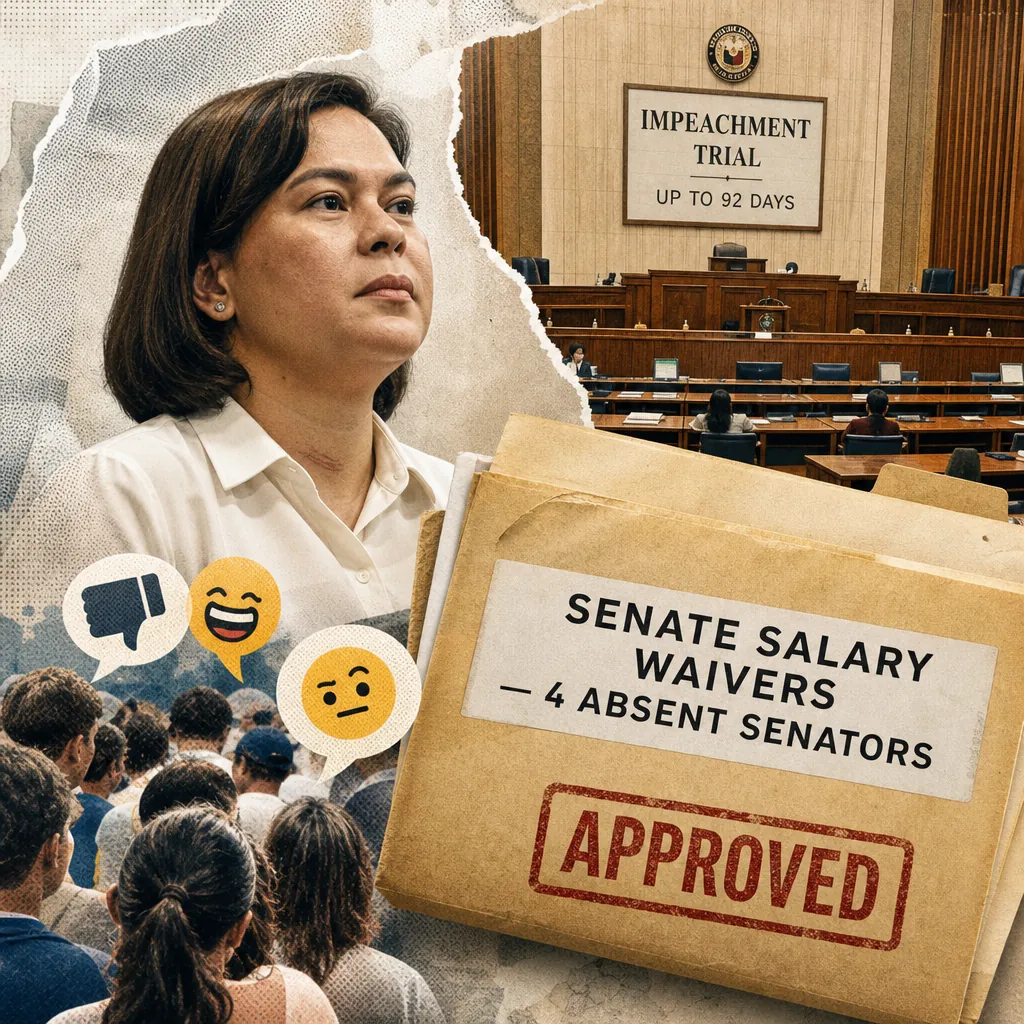
The Senate's announcement that four absent senators—Loren Legarda, Jinggoy Estrada, Rodante Marcoleta, and Ronald "Bato" dela Rosa—had voluntarily waived their salaries during their absence was met with a wave of public mockery, not sympathy. The flagship Facebook post from the Philippine Daily Inquirer drew 523 likes but a striking 1,556 "haha" reactions and 367 comments, signaling that many Filipinos viewed the gesture as performative rather than substantive.3 The reaction was amplified by the context: Estrada and Marcoleta face plunder charges, dela Rosa is at large while facing an International Criminal Court case over the drug war, and Legarda's extended medical leave coincided with her son's departure to France amid an Ombudsman investigation.4 The public's derision was a clear signal of deep skepticism toward institutional accountability, a theme that would dominate the day's political conversation.
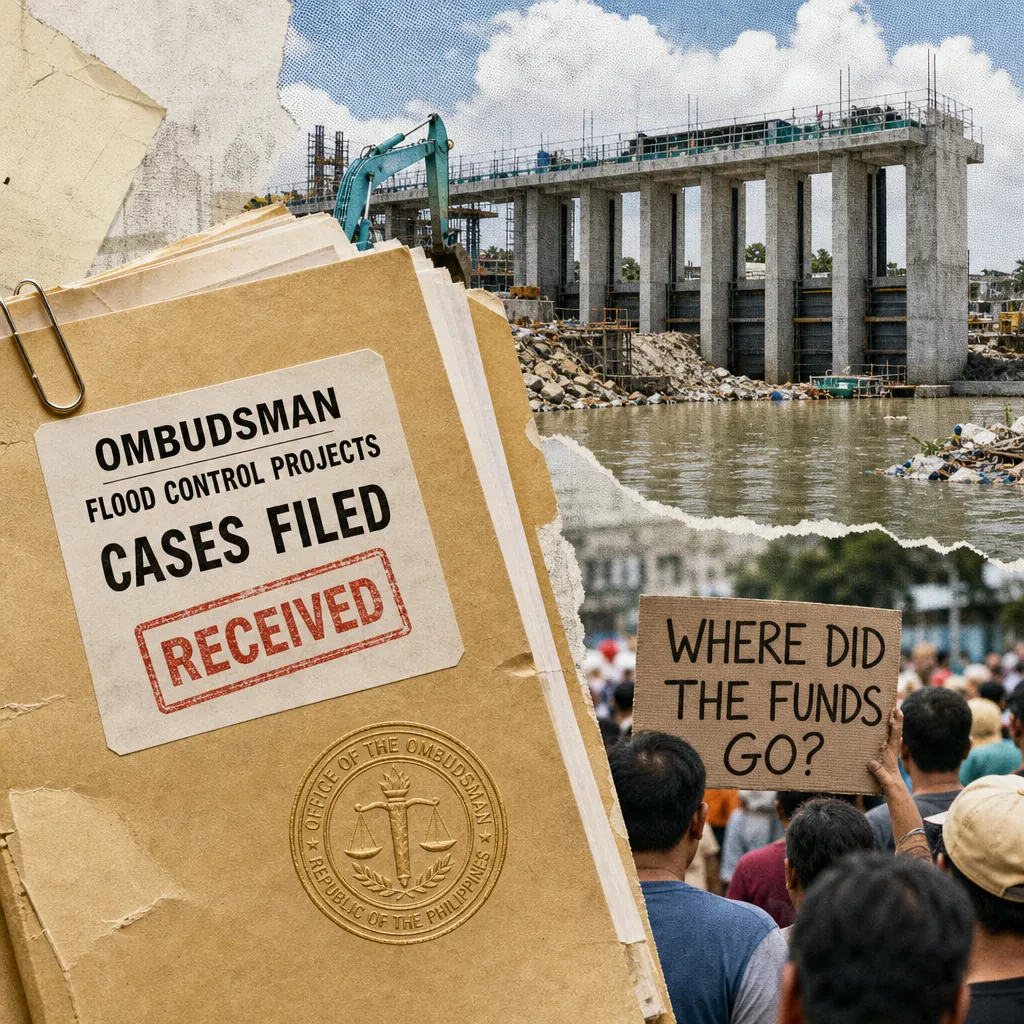
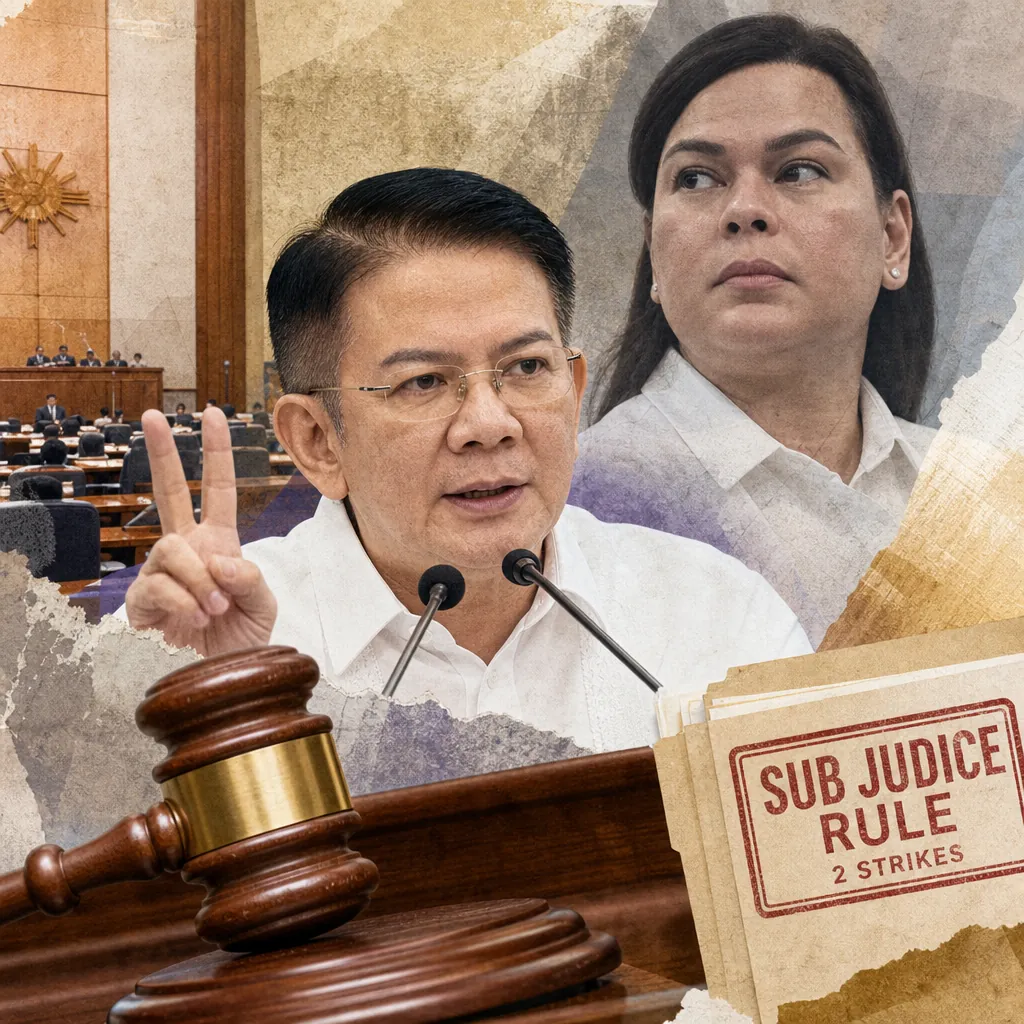
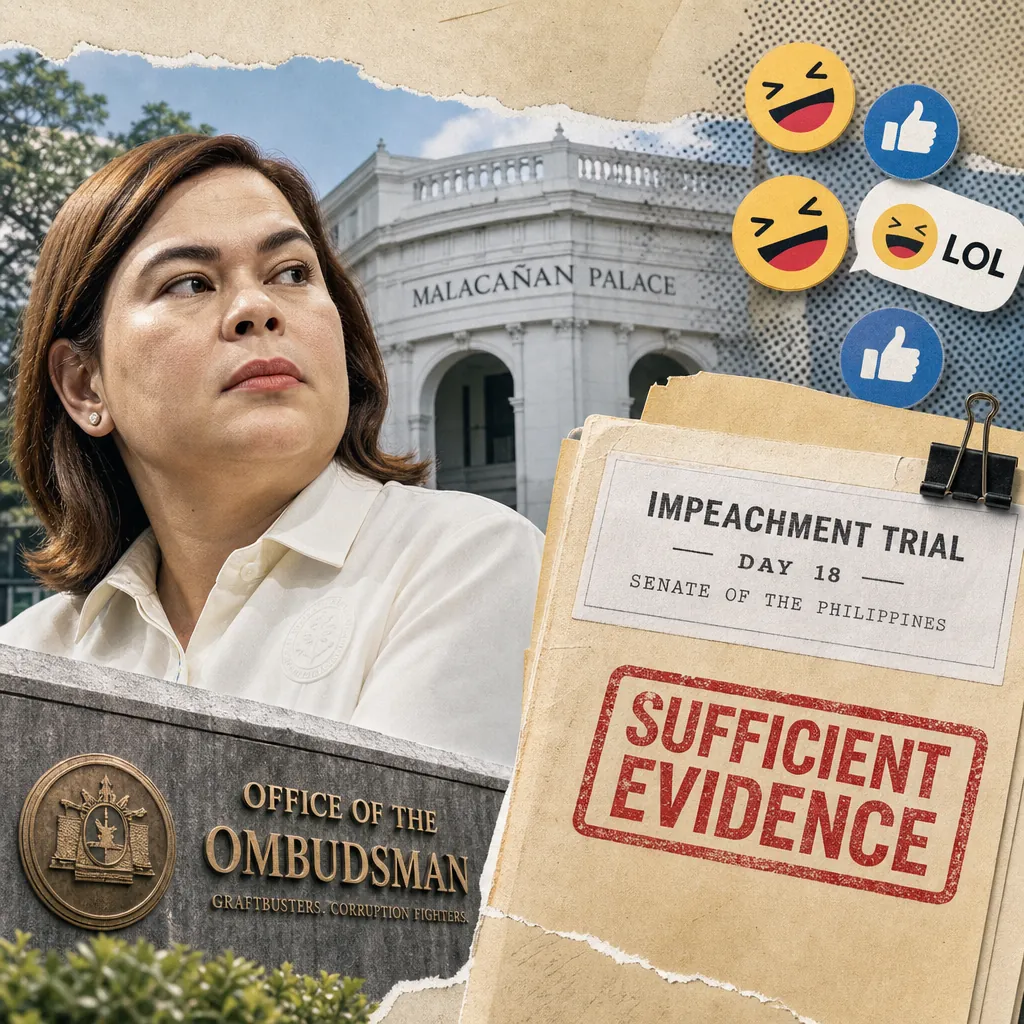
Meanwhile, the impeachment trial of Vice President Sara Duterte continued to generate intense scrutiny, with Senate President Sherwin Gatchalian advising her to be mindful of her public statements.10 The trial's potential length—up to 92 days, which would make it the longest in Philippine history—drew 815 "haha" reactions on Facebook, reflecting public disbelief.57 Senator Robin Padilla's dismissive "trolls" remark after criticism of his historical reference to Ninoy Aquino's alias drew more mockery than defense.55 The day also saw the Ombudsman push back against former House Speaker Martin Romualdez's bid to dismiss flood control corruption charges, with Assistant Ombudsman Mico Clavano declaring, "Recantation is not an eraser."36
Beyond the political theater, the day's news was shaped by significant economic developments. The Bangko Sentral ng Pilipinas (BSP) raised its key interest rate to 5%, the highest in over a year, as it battles inflation.132 The peso sank to a new all-time low of 61.888 against the US dollar.132 The ASEAN+3 Macroeconomic Research Office (AMRO) cut its Philippine growth forecast for 2026 to 3.4%, citing weaker consumption and subdued investment.128 These economic signals, combined with the political turmoil, painted a picture of an administration under pressure on multiple fronts.
Key themes
- Public mockery greets Senate salary waivers: The announcement that four senators waived their salaries drew over 1,500 "haha" reactions on a single Facebook post, signaling that the public viewed the gesture as insincere given the senators' legal troubles.3
- Impeachment trial could last 92 days: Reports that the trial of Vice President Sara Duterte could stretch to 92 days—the longest in Philippine history—drew widespread disbelief, with 815 "haha" reactions on Facebook.57
- Ombudsman: 'Recantation is not an eraser': Assistant Ombudsman Mico Clavano's statement countered former House Speaker Martin Romualdez's bid to dismiss flood control corruption charges, framing recantations as additional evidence, not a dismissal trigger.36
- BSP raises rates to 5%, peso hits new low: The central bank's third consecutive rate hike pushed the key rate to 5%, while the peso closed at a record low of 61.888 against the dollar.132
- AMRO cuts PH growth forecast to 3.4%: The ASEAN+3 Macroeconomic Research Office slashed its 2026 GDP forecast, citing weaker consumption and subdued investment, below the government's target range.128
- School safety reforms gain momentum: Following recent school shootings, the Department of Education announced plans to hire nearly 10,000 counselor associates, while the DILG proposed police inspections of gun owners' homes, sparking debate.1314
- Flood control master plan debate intensifies: Malacañang signaled openness to revisiting an Aquino-era flood control master plan, while Project Noah proposed 150 detention basins for Metro Manila.4973
- Disaster response under scrutiny: With a looming storm and monsoon rains causing class suspensions and a landslide closing the Baguio-Bontoc Road, public attention focused on government preparedness.8986
How the narratives stack
Dominant: The impeachment trial of Vice President Sara Duterte and its political fallout dominated the conversation, with the Senate salary waivers and the trial's potential length drawing the most engagement. The public's mocking tone toward the waivers and the trial's spectacle indicated a deep cynicism about political accountability.357
Counter-narrative: The Ombudsman's pushback against Romualdez's dismissal bid offered a counter-narrative of institutional integrity, asserting that recantations do not erase evidence. This framing gained traction, with the "Hindi eraser ang recantation" quote becoming a rallying point for those seeking accountability.36
Emerging: The economic narrative emerged as a significant undercurrent, with the BSP rate hike and AMRO's growth forecast cut signaling potential economic headwinds. These stories, while less engaging on social media, carry substantial consequence for the public.132128
Under-covered: The Dinagat Islands state of calamity due to a water crisis affecting 18,000 residents received minimal engagement (316 views on Twitter), highlighting a public attention deficit on disaster issues compared to political drama.52
Platform insights
- Facebook: The primary battleground for emotional reactions, with the salary waiver post drawing 1,556 "haha" reactions and the 92-day trial post drawing 815. The platform amplified mockery and skepticism, with users using reaction buttons to express derision rather than engaging in substantive debate.357
- Twitter/X: Served as a breaking news feed with rapid updates on the trial, economic data, and disaster response. Engagement was lower but more measured, with posts on the flood control master plan drawing 10,829 views, the highest of the day, indicating public interest in long-term solutions.19
- Reddit: Hosted more analytical discussions, with a post mocking Padilla's alias logic gaining 34 upvotes and a thread on Cayetano's defense drawing 122 comments. Reddit users engaged in deeper critique of the trial's conduct.5611
- YouTube: Video coverage of the trial and related news drew moderate views (e.g., 4,422 for Gatchalian's statement), but engagement was minimal, suggesting video audiences were less active in commenting.10
Key voices and communities
- Mainstream news publishers: Outlets like the Philippine Daily Inquirer, Manila Bulletin, and Daily Guardian set the agenda, with their Facebook posts generating the highest engagement. Their framing directly influenced public sentiment.34
- Engaged Facebook commenters: The skeptical public, expressing views through reaction buttons, particularly "haha," signaled widespread distrust of political gestures. Their mockery of the salary waivers and trial length reflected a broader cynicism.357
- Political elites and senators: Figures like Senate President Gatchalian, Senator Padilla, and former Senate President Drilon drove news cycles with their statements, which were amplified across platforms.1054
- Legal and evidentiary trackers: A niche community focused on the trial's procedural details, engaging with prosecution developments and the Ombudsman's statements. Their content was more measured and legally grounded.3660
- Disaster response observers: Regional news outlets and government agencies provided real-time updates on weather and infrastructure, with the Palace's flood control statement drawing significant viewership.1952
Narrative streams
Senate salary waivers: A gesture met with derision
The announcement that four senators had voluntarily waived their salaries during their absence was intended as a governance accountability measure, but the public response was overwhelmingly sarcastic. The flagship Facebook post from the Philippine Daily Inquirer drew 523 likes but 1,556 "haha" reactions and 367 comments, indicating that many viewed the gesture as performative.3 The context fueled the mockery: Senators Estrada and Marcoleta face plunder charges, dela Rosa is at large while facing an International Criminal Court case over the drug war, and Legarda's extended medical leave coincided with her son's departure to France amid an Ombudsman investigation into solar project plunder allegations.4 Senate President Gatchalian's admission that unclaimed salaries could be declared as Senate savings for other expenditures added a fiscal angle that invited scrutiny.4 The read for the sector: public trust in institutional gestures is low, and communications teams must anticipate that good-faith actions will be met with skepticism when legal troubles are involved.
Impeachment trial: A 92-day spectacle?
Reports that the impeachment trial of Vice President Sara Duterte could stretch to 92 days—potentially the longest in Philippine history—drew widespread disbelief, with a Facebook post on the topic accumulating 460 likes and 815 "haha" reactions.57 Senate President Gatchalian expressed confidence the trial would conclude before Christmas, but public reaction remained skeptical.58 The trial's proceedings were marked by controversy, including Senator Robin Padilla's reference to Ninoy Aquino's alias, which drew criticism from former Senate President Franklin Drilon.54 Padilla's dismissive response—saying he was happy as long as "trolls" were fed—generated 57 "haha" reactions on Facebook, reinforcing the perception of the trial as political theater.55 The prosecution's decision to skip a military witness after establishing misuse of confidential funds signaled case readiness, but this substantive development received less attention than the personality-driven controversies.60 The read for the sector: the trial's length and conduct are eroding public faith in the process, and communicators should focus on procedural integrity rather than spectacle.
Ombudsman vs. Romualdez: 'Recantation is not an eraser'
The Ombudsman's pushback against former House Speaker Martin Romualdez's bid to dismiss flood control corruption charges became a key narrative of institutional accountability. Assistant Ombudsman Mico Clavano's statement, "Hindi eraser ang recantation," was amplified across platforms, with one post drawing 103 likes and 65 "haha" reactions.37 The defense argued that 32 witnesses had recanted, leaving no credible witness, but the Ombudsman countered that recantations become additional evidence to weigh, and that the case does not rise or fall on witness statements alone.36 Clavano's pointed questions—"Bakit biglang nagtago pagkatapos magrecant? Bakit maraming info na binayaran para magrecant?"—shifted the narrative toward potential witness intimidation or bribery.36 The read for the sector: the Ombudsman's procedural clarity is gaining public sympathy, but the case's outcome depends on whether the promised documentary evidence materializes.
BSP rate hike and peso slump: Economic pressures mount
The Bangko Sentral ng Pilipinas raised its key interest rate by 25 basis points to 5%, the highest in over a year, as it battles inflation.132 The decision, the third consecutive hike, was in line with market expectations, with 19 of 24 analysts polled by BusinessWorld predicting the move.147 The peso weakened by 23.8 centavos to close at 61.888 against the US dollar, a new all-time low.132 The BSP cited underlying inflation risks from volatile oil prices, the looming "Super El Niño," and a potential wage hike.147 The read for the sector: higher borrowing costs will weigh on consumers and businesses, and communicators should prepare for increased public concern about the cost of living.
AMRO cuts growth forecast: Weakest since 2009?
The ASEAN+3 Macroeconomic Research Office (AMRO) slashed its Philippine growth forecast for 2026 to 3.4% from 4.1%, citing weaker private consumption and subdued investment.128 This would be the slowest pace of expansion since 2009, excluding the pandemic year.151 The revised forecast falls below the government's target of 3.5-4.5% for 2026.128 AMRO's mission chief noted that growth would be weighed down by higher inflation and subdued investment, although a gradual recovery in public construction in the second half of the year could provide some support.131 The read for the sector: the economic outlook is deteriorating, and government communicators must address public concerns about jobs and incomes.
School safety reforms: From grief to policy
Following recent school shootings in Tacloban and Zamboanga, the Department of Education announced plans to deploy nearly 10,000 School Counselor Associates by year's end to address mental health needs.13 The Department of the Interior and Local Government proposed allowing police to conduct inspections inside gun owners' homes, a move that sparked debate over civil liberties.14 The Philippine Medical Association called for a pilot run of school safety drills before nationwide implementation.95 Education Secretary Sonny Angara backed a bill to institutionalize learner protection efforts.99 The read for the sector: the government is moving from reactive grief to systemic reform, but implementation will be scrutinized, and communicators should emphasize concrete milestones.
Flood control: A national plan in question
Malacañang signaled openness to revisiting an Aquino-era national flood control master plan, which was not endorsed by the Duterte administration.49 The Palace also explored river basin planning as an alternative approach, reflecting the country's complex geography.143 Project Noah proposed constructing more than 150 detention basins across Metro Manila to reduce flooding.73 The Palace's statement on the flood control master plan drew 10,829 views on Twitter, the highest of the day, indicating strong public interest.19 The read for the sector: the flood control debate is a reputational opportunity for the administration to demonstrate responsiveness, but it must move from statements to concrete action.
Conversation trajectory
- Impeachment trial duration and conduct (observation window: next 2-4 weeks): The trial's length and the conduct of its participants will continue to dominate discourse. Expect renewed engagement spikes with each procedural development, particularly as the "finish before Christmas" deadline approaches. The public's mocking tone may intensify if the trial appears to drag.5758
- Ombudsman's next move in Romualdez case (observation window: next 3-5 weeks): The Ombudsman's next substantive filing or hearing will test whether the recantation strategy holds. If the promised documentary evidence surfaces, the narrative could shift from witness credibility to hard evidence, potentially escalating the case's political weight.36
- BSP rate trajectory and peso movement (observation window: next 1-3 months): With inflation risks from oil prices and El Niño, the BSP may hike rates further. The peso's slide to record lows could fuel public concern about the economy, potentially overshadowing political stories.132
- School safety implementation (observation window: next 1-2 months): The DepEd's counselor hiring and the DILG's gun inspection proposal will be scrutinized for implementation. Expect intensified conversation as the public monitors whether pronouncements translate into action.1314
- Flood control master plan (observation window: next 7-10 days): The Palace's openness to revisiting the Aquino-era plan presents a window for constructive engagement. If the government announces concrete steps, it could shift the narrative from criticism to approval.49
- Trigger events: The potential formation of Typhoon Pilandok within 48 hours could dominate all government response narratives.31 The September 14 BARMM elections may serve as a flashpoint for security and governance discussions.32 Any official statement on alleged payments to recanting witnesses would dramatically accelerate the Romualdez case conversation.37
Response guidance
Impeachment trial communications: For government communicators, maintain strict separation between official agency communications and commentary on the trial. Avoid engaging with "troll" rhetoric; instead, provide factual, legally sound clarifications. Emphasize the trial's constitutional importance rather than its length to counter the spectacle framing.4555
Salary waiver narrative: Address public skepticism by clarifying the procedural basis for the salary suspensions and distinguishing between the different circumstances of each senator—medical leave, detention, and at-large status. Avoid defensive posturing; a measured, factual response is more likely to regain trust.34
Economic messaging: With the BSP rate hike and peso slump, communicators should proactively address public concerns about inflation and the cost of living. Highlight government measures to mitigate economic pressures, such as social assistance programs, to counter negative sentiment.132144
School safety: Frame the DepEd counselor hiring as a tangible solution, not a symbolic gesture. Provide clear timelines and regional deployment targets to counter perceptions of delayed reaction. Coordinate messaging between education, interior, and justice agencies for a unified response.1314
Flood control: Use the Palace's openness to the Aquino-era plan as a template for constructive engagement. Share infographics about inter-agency coordination and concrete projects like detention basins to demonstrate responsiveness beyond headlines.4973
Disaster response: Prioritize timely updates on weather and infrastructure status. The public's high interest in flood control and monsoon updates indicates that effective crisis management can rebuild trust. Coordinate with PAGASA and DPWH for consistent messaging.1986
Sensitive topics: Avoid commenting on the impeachment trial's progress or the Vice President's case. Keep messaging strictly to administrative facts. When addressing the Romualdez case, emphasize the Ombudsman's independence and procedural rules, avoiding commentary on personalities.3639
See the full picture behind today's signals.
This report draws from Media Meter's MediaWatch, our real-time monitoring engine tracking 2,470+ Philippine sources across print, broadcast, digital, and social. Explore how the platform turns raw coverage into decision-grade intelligence, then see how it's configured for teams like yours — whether you're in PR agencies, corporate comms, government, or marketing.
Want more? Browse our Report Library for sector and crisis intelligence, or request a demo and we'll have your brand set up before the call.
Want this kind of intelligence on your brand?
This brief is built on the same MediaWatch methodology that runs continuously across every brand we monitor. See your competitive landscape, Impact Score, and narrative trajectory in a 30-minute demo.