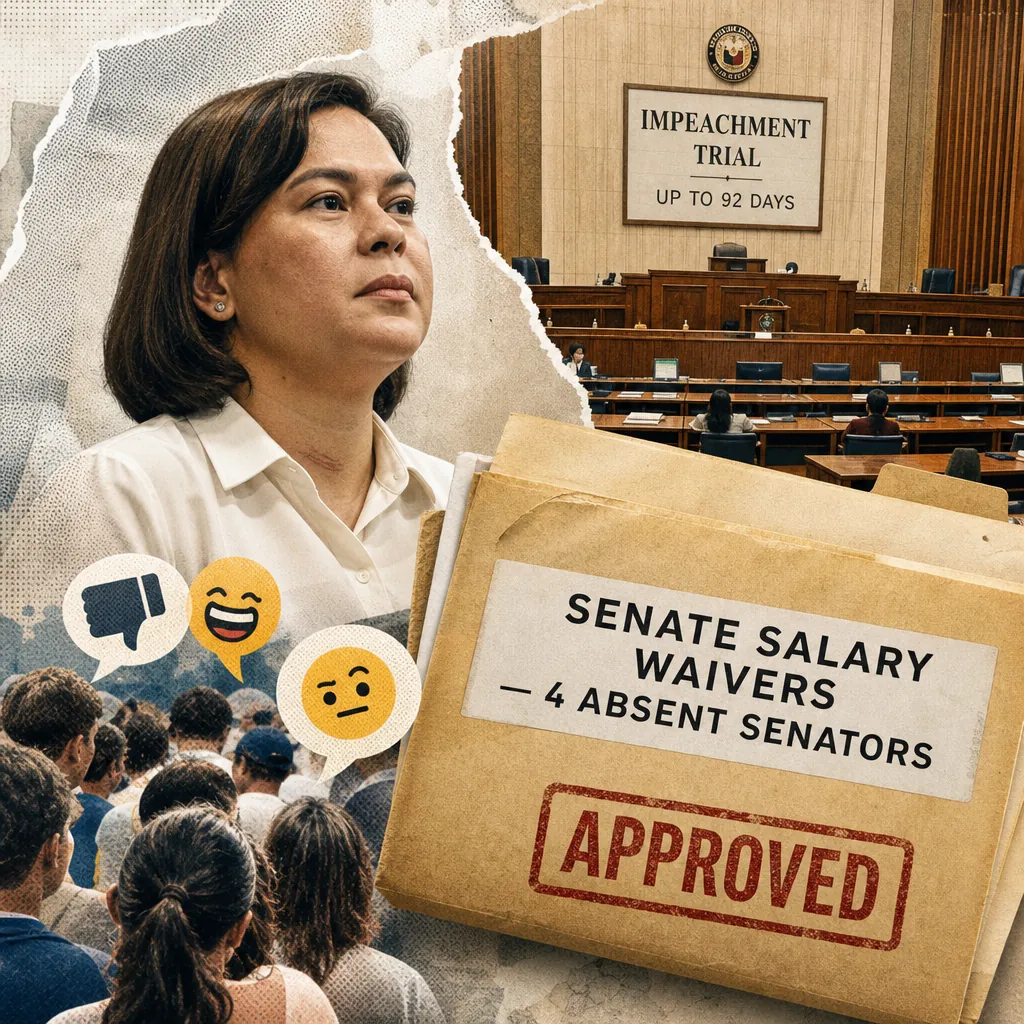
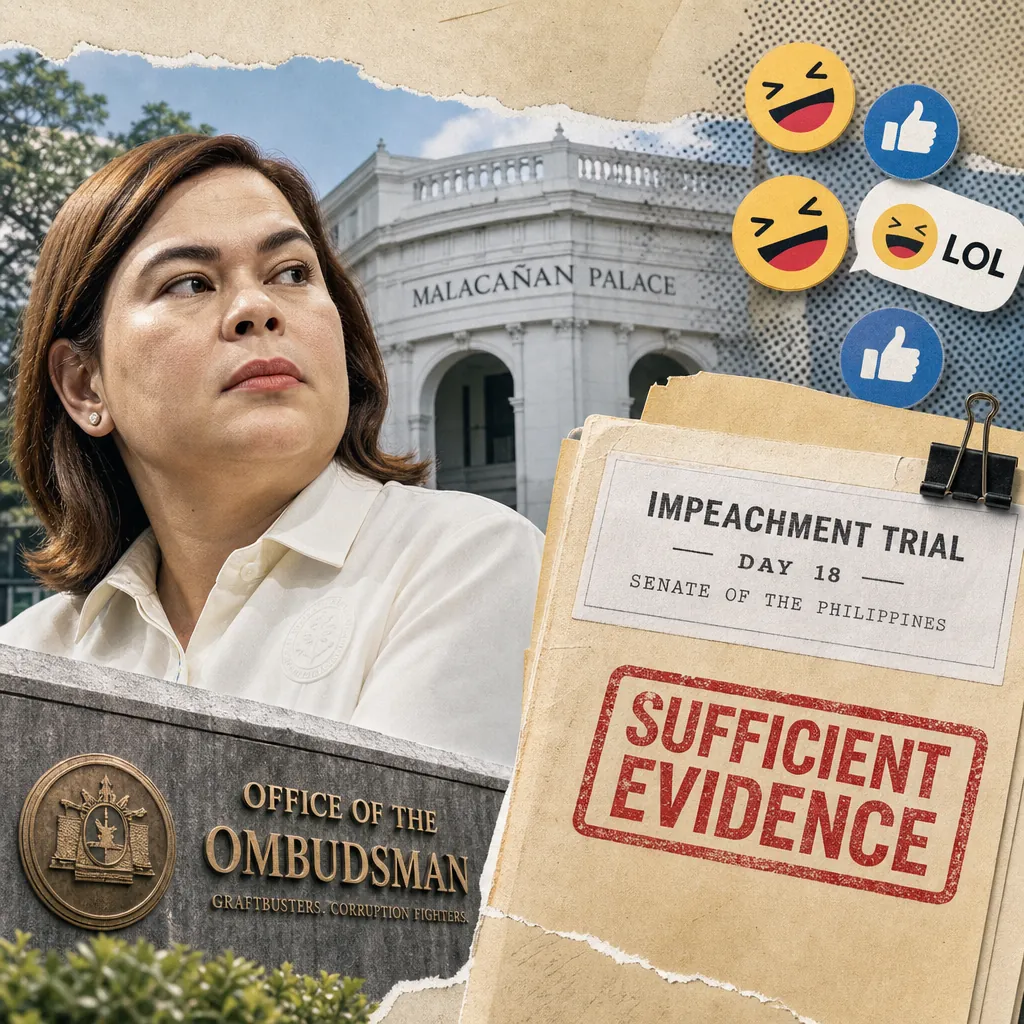
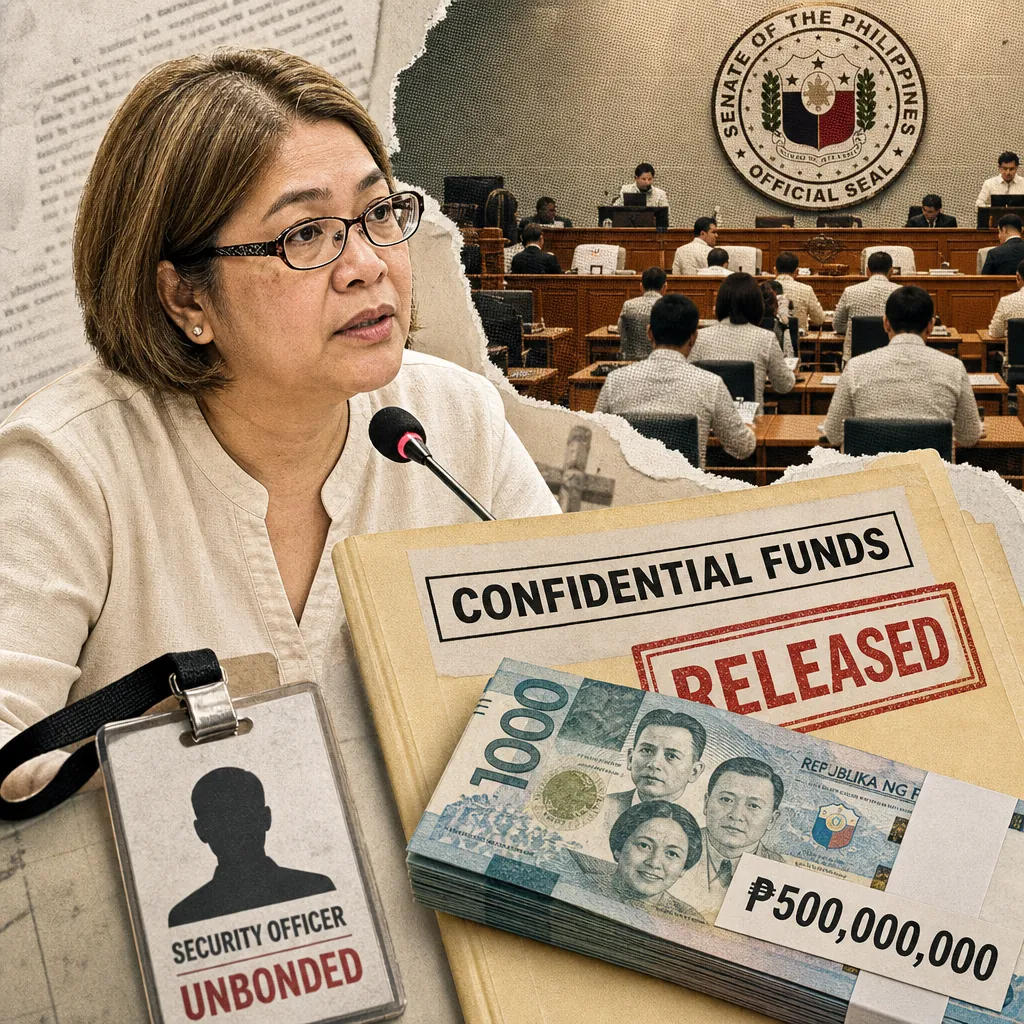
Impeachment trial dominates as sub judice rule tightens
The impeachment trial of Vice President Sara Duterte dominated Philippine conversation on August 26, with presiding officer Chiz Escudero enforcing a two-strike sub judice rule. The day also saw the Palace counter-narrative on flood control, school safety concerns, and the prosecution's request for defense counsel Michael Poa to testify.
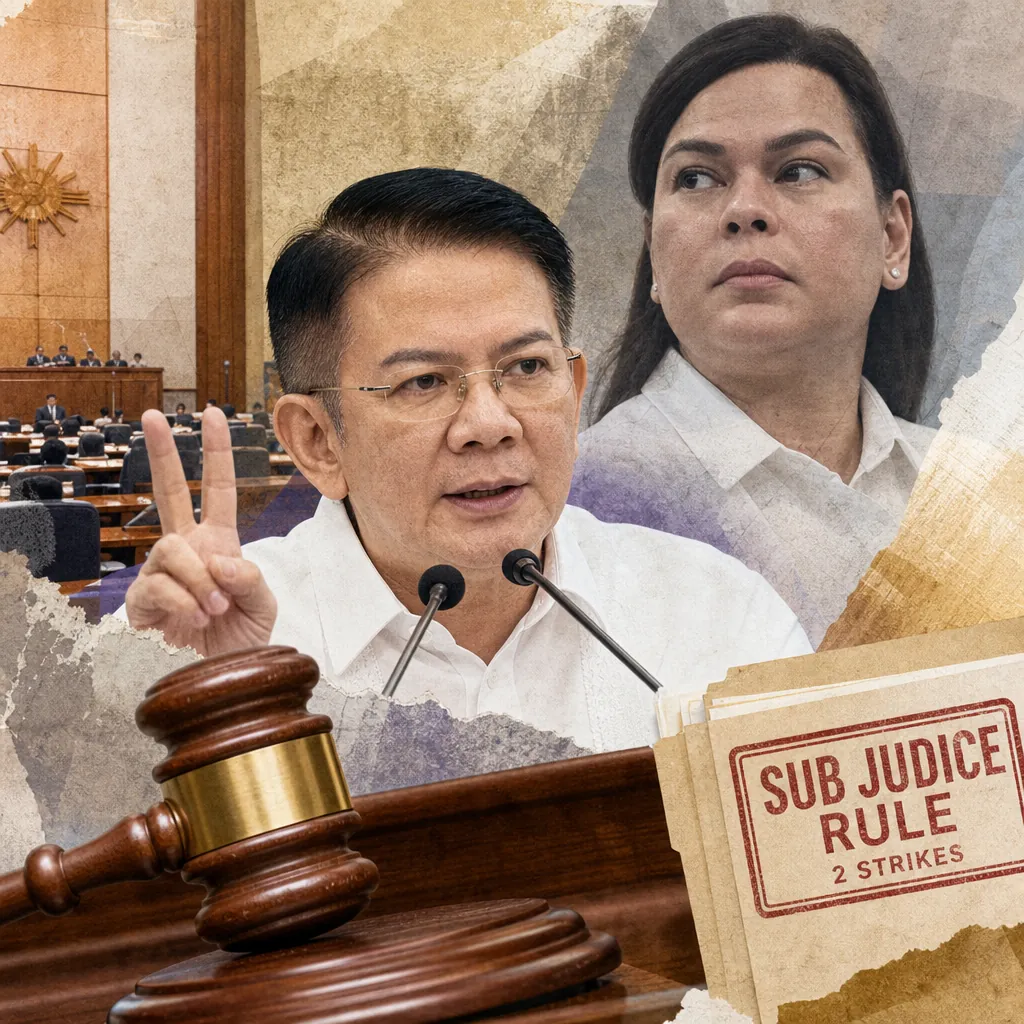
The impeachment trial of Vice President Sara Duterte consumed Philippine public conversation on Wednesday, August 26, opening with a procedural ruling that set the day's parameters and expanding into historical disputes, witness credibility battles, and a parallel Palace counter-narrative on flood control. Presiding Officer Senator Chiz Escudero drew a firm line on the sub judice rule, warning senator-judges and lawyers from both prosecution and defense teams against making statements on the case's merits—a two-strike muzzle policy that immediately shaped public discourse. Twitter users amplified the reminder directly to Vice President Duterte within hours. The conversation gained momentum when Senator-Judge Robin Padilla invoked former senator Benigno "Ninoy" Aquino Jr.'s alias "Marcial Bonifacio" to argue for the legitimacy of using aliases, prompting Senator-Judge Bam Aquino to immediately correct the record, clarifying that Ninoy did not have confidential funds and was not listed in acknowledgment receipts. This exchange on YouTube and Reddit created a rapid-fire factual dispute that defined the morning's narrative thread, with the Reddit post drawing 3 upvotes but generating significant cross-platform engagement due to the historical significance of the exchange.
By midday, the conversation shifted toward witness testimony and the prosecution's evidentiary strategy. House Deputy Speaker Benny Abante told Rappler that OVP assistant chief of staff Lemuel Ortonio was "not telling the whole truth" and should tell the "truth and nothing but the truth" about confidential funds. The YouTube interview accumulated 2,643 views and 60 likes, positioning Abante's comments as a pivotal moment that sharpened the prosecution's narrative arc. House prosecution panel spokesperson Zia Alonto Adiong reinforced this trajectory, expressing belief that national heroes would be displeased by comparisons made between them and confidential fund recipients, while House Deputy Speaker Paolo Ortega V drew a sharp distinction between heroes who used aliases for the country's sake and those who allegedly received funds while hiding their identities. By late afternoon, the prosecution panel formally requested that defense counsel Michael Poa be summoned as a witness for the following week, a development that generated substantial engagement across Twitter and YouTube.
A second major thread developed around the Marcos administration's defensive posture regarding flood response and infrastructure, directly engaging the VP's criticisms of widespread flooding and poverty amid the trial. Palace Press Officer Claire Castro defended the administration while announcing a review of 13,970 flood control projects reported completed under former President Rodrigo Duterte by March 2022, explicitly calling out Davao City's unresolved flooding issues—a politically significant move given the Duterte family's stronghold there. The Facebook post drew a notable reaction pattern with 4 laughter reactions and 1 haha reaction, suggesting public skepticism toward the administration's framing. Simultaneously, DPWH Secretary Vince Dizon denied his predecessor Manuel Bonoan's allegation of a "leadership fund" in the agency's 2027 budget, with the denial gaining 608 views on Twitter. However, a separate Twitter post alleged that former House Speaker Martin Romualdez and Batangas Rep. Leandro Leviste were among the top congressional recipients of allocables for DPWH projects in 2026, complicating the administration's clean-hands narrative.
A third narrative thread developed around school safety following the August 18 Ateneo de Zamboanga shooting, with the PNP announcing active monitoring of internet users accused of grooming minors for violence. PNP Chief General Jose Melencio Nartatez Jr. emphasized that "police presence is not only active and visible on the streets and in the community" but also extends to cyberspace to protect children. The conversation intensified when San Beda College Alabang suspended face-to-face classes on August 26 following an alleged shooting threat that spread through group chats, with police deploying EOD units for security sweeps while emphasizing the measures were precautionary. The Reddit post drew 24 upvotes and generated discussion about school security protocols, while the PNP completed its Zamboanga investigation, finding no conspiracy but filing complaints for Reckless Imprudence Resulting in Homicide and Physical Injury against the firearm owner and school security personnel. Two police officers in Cagayan de Oro were also removed from their posts for allegedly harassing criminology interns, adding to the PNP's accountability narrative on the same day.
The conversation on YouTube centered heavily on news coverage and official testimonies. The Inquirer's livestream of the trial proceedings and coverage of Escudero's sub judice ruling generated 63 views with zero comments, indicating passive consumption of procedural news rather than active debate. However, Rappler's interview with Abante drew 2,643 views and 60 likes, with 10 comments engaging substantively with his claims about Ortonio and the P125 million confidential funds transfer. The video announcing Poa's scheduled testimony generated 2,529 views with 3 comments, showing sustained interest in the trial's procedural developments. Twitter served as the real-time news distribution platform, with multiple Philippine Daily Inquirer posts aggregating the day's developments—from Escudero's reminders to prosecution requests—each drawing between 72 to 248 views, with the highest engagement going to the Awra Briguela post at 248 views and the Ivana Alawi ayuda post at 156 views, indicating that entertainment-adjacent content outperformed pure political news. Reddit hosting the "Drug War (2026) Final Trailer" announcement with 18 upvotes suggests cultural production around the trial narrative is actively emerging.
Platform-specific dynamics revealed distinct audience behaviors. YouTube served as the venue for official journalistic content and trial-related updates, where the sentiment was informational rather than combative, with viewers primarily seeking procedural clarity. Twitter functioned as the rapid-fire rumor and reaction hub, where political statements from both camps circulated within hours, exemplified by the speed with which the Padilla-Aquino exchange was shared across networks. Reddit emerged as the space for longer-form analysis and commentary, with posts on the trial and the drug war trailer generating upvotes and comments that suggested a more reflective audience. The "Drug War 2026" trailer announcement on Reddit with 18 upvotes, alongside the Chinese warship shadowing post with 20 upvotes, indicates that geopolitical and historical narratives remain intertwined in public consciousness with the impeachment proceedings.
The most actionable insights for media monitoring emerged from the convergence of narratives around credibility and institutional trust. Confidence in witness testimony emerged as a critical vulnerability, with Abante's public questioning of Ortonio marking a turning point where the prosecution began actively managing public perception of its evidence. The "Marcial Bonifacio" dispute highlighted how historical analogies are being weaponized by both sides, with the prosecution using national hero comparisons to delegitimize confidential fund recipients—a narrative that carries reputational risk for the OVP and may influence public perception beyond the trial. The administration's simultaneous counter-attack on Duterte-era infrastructure, combined with the DPWH leadership fund denial and the allocables allegations, suggests a coordinated messaging strategy that will likely intensify as the trial progresses. The "Ivana Alawi" thread, where users were outpaced by netizens posting ayuda distribution vlogs amid ongoing flood relief, demonstrates how influencer-led storytelling continues to shape public conversation around disaster response and government accountability.
Key themes
- Sub judice rule enforcement tightens trial discourse: Presiding Officer Chiz Escudero's two-strike warning on public comments about the case's merits set the day's parameters, with both prosecution and defense panels assessing whether to replace their spokespersons. The rule, under Rule 18 of the impeachment court's procedures, carries escalating penalties from public reprimand to a P30,000 fine and restrictions on courtroom participation.
- Historical analogies weaponized in confidential funds debate: Senator-Judge Robin Padilla's invocation of Ninoy Aquino's alias "Marcial Bonifacio" to justify unusual names on OVP acknowledgment receipts sparked immediate pushback from Senator Bam Aquino and the prosecution panel, who called the comparison an insult to national heroes. The dispute dominated morning conversation and drew sharp rebukes from House prosecution spokespersons.
- Prosecution questions witness credibility and fund handling: House Deputy Speaker Benny Abante publicly challenged OVP assistant chief of staff Lemuel Ortonio's testimony, saying he was "not telling the whole truth". The prosecution panel argued Ortonio's explanations showed the OVP treated confidential funds "like petty cash," with Deputy Speaker Paolo Ortega V citing gaps in liquidation and fund management.
- Palace counter-narrative targets Duterte-era infrastructure: Palace Press Officer Claire Castro announced a review of 13,970 flood control projects reported completed under former President Rodrigo Duterte by March 2022, explicitly calling out Davao City's flooding issues. The Facebook post drew laughter reactions, suggesting public skepticism about the timing and motives.
- School safety concerns create parallel urgency: Following the Ateneo de Zamboanga shooting, the PNP announced active monitoring of online groomers targeting minors, while San Beda College Alabang suspended classes over an alleged shooting threat. The Senate advanced the Comprehensive School Safety Act, with Senator Bam Aquino reciting the names of students who recently lost their lives.
- Defense counsel Poa's scheduled testimony generates anticipatory engagement: The prosecution's formal request to summon defense counsel Michael Poa as a witness drew 2,529 views on YouTube, with engagement levels exceeding typical trial coverage. Poa separately confirmed that Vice President Duterte is not considering resignation.
- DPWH leadership fund denial and allocables allegations complicate clean-hands narrative: Secretary Vince Dizon denied predecessor Manuel Bonoan's allegation of a "leadership fund" in the 2027 budget, while a separate Twitter post alleged top congressional recipients of DPWH allocations for 2026. Dizon also described the agency's compliance with the Accessibility Law as "terrible".
- Economic and trade policy observers track FTA and rate decisions: A smaller but notable cluster engaged with the anticipated Philippine-Chile free trade agreement and Bangko Sentral ng Pilipinas rate decisions, with Bank of America expecting one more rate hike to 5.0 percent.
How the narratives stack
Dominant: The impeachment trial of Vice President Sara Duterte is the dominant narrative, consuming institutional attention and driving both legal-process stories and political framing battles. Within the captured set, trial-related items drew the most substantial coverage, with the Inquirer's Day 19 highlights carrying an estimated advertising-equivalent value of ₱362,124 and the prosecution's fair implementation statement worth ₱721,980. The sub judice ruling and the Padilla-Aquino exchange defined the day's conversation, with the prosecution's evidentiary strategy and witness credibility questions shaping public perception.
Counter-narrative: The Marcos administration's defensive posture on flood response and infrastructure serves as the primary counter-narrative, directly engaging the VP's criticisms of widespread flooding. The Palace's announcement of a review of 13,970 flood control projects under the previous administration, combined with the DPWH leadership fund denial, creates a parallel conversation stream that competes with trial coverage for public attention. However, public reaction is mixed, with laughter reactions on Facebook suggesting skepticism about the timing.
Emerging: School safety and online child protection is an emerging narrative, driven by the aftermath of the Ateneo de Zamboanga shooting and copycat threats. The PNP's active monitoring of online groomers, the San Beda College Alabang class suspension, and the Senate's advancement of the Comprehensive School Safety Act signal a coordinated focus on protecting minors. This narrative carries both reputational risk and opportunity for security agencies to demonstrate proactive, visible digital presence.
Under-covered: The Philippine-Chile free trade agreement and its implications for agriculture received modest but relevant engagement, with DTI Secretary Cristina Roque announcing the October signing timeline. This economic narrative offers a potential diversion from political controversies but placed low in the captured set, likely reflecting the monitoring scope's weighting toward political and security stories rather than the story's actual importance to trade-dependent sectors.
Platform insights
- Facebook: The platform carried both supportive and critical framing around the Vice President's public activities and the sub judice rule. The Palace's flood response post drew laughter reactions, indicating public skepticism toward the administration's framing. The Ivana Alawi ayuda distribution thread shifted into a political proxy debate, with netizens outpacing the influencer's content with flood relief vlogs.
- Twitter: Functioned as the real-time news distribution hub, with political statements from both camps circulating within hours. Multiple Philippine Daily Inquirer posts aggregated the day's developments, each drawing between 72 to 248 views. Entertainment-adjacent content outperformed pure political news, with the Awra Briguela post drawing 248 views and the Ivana Alawi post drawing 156 views. The DPWH leadership fund denial gained 608 views.
- YouTube: Served as the venue for official journalistic content and trial-related updates, where sentiment was informational rather than combative. The Inquirer's livestream drew 63 views with zero comments, indicating passive consumption of procedural news. Rappler's interview with Abante drew 2,643 views and 60 likes, with 10 comments engaging substantively. The Poa testimony announcement drew 2,529 views with 3 comments.
- Reddit: Emerged as the space for longer-form analysis and commentary, with posts on the trial and the drug war trailer generating upvotes and comments suggesting a more reflective audience. The "Drug War (2026) Final Trailer" announcement drew 18 upvotes, while the Chinese warship shadowing post drew 20 upvotes. The San Beda College threat story drew 24 upvotes. A critical post about Vice President Duterte's flood response drew 40 upvotes and 16 comments.
Key voices and communities
- Impeachment Trial Coverage Networks: Traditional media outlets and their social extensions dominate the conversation, functioning as primary information brokers. The most engaged content revolves around sub judice rule enforcement, witness credibility, and defense strategies, drawing viewership in the low thousands per video post. This group directly shapes public perception of the trial's legitimacy and progress.
- Government Agency Communicators and Palace Sources: Official government channels and Palace spokespersons actively manage messaging around infrastructure accountability and public safety. Their content centers on defending the administration's flood response, initiating audits of predecessor projects, and projecting institutional responsiveness. Their posts typically generate modest engagement but carry significant authoritative weight.
- Public Safety and Security Monitoring Communities: Online communities tracking law enforcement and security developments amplify content related to school shooting threats, police conduct, and digital safety concerns. These participants demonstrate high sensitivity to institutional accountability, with engagement patterns suggesting active verification and local knowledge-sharing rather than passive consumption.
- Political Commentary and Advocacy Circles: Active political commentators and partisan advocacy communities shape discourse around the trial's underlying political dynamics. Content ranges from substantive procedural analysis to satirical commentary, with a viral critical post about Vice President Duterte's flood response drawing 40 upvotes and 16 comments on Reddit. This group's commentary directly influences mid-level influencers and can shift public sentiment.
- Economic and Trade Policy Observers: A smaller but notable cluster engages with trade and economic policy developments, specifically the anticipated Philippine-Chile free trade agreement and BSP rate decisions. While engagement volume remains low, the specialized nature of the content indicates a niche but informed audience that monitors regulatory changes for business implications.
Narrative streams
Sub judice rule enforcement reshapes trial communication
Presiding Officer Chiz Escudero's ruling on Wednesday placed both prosecution and defense on notice that public commentary on the pending case will now be subject to stricter enforcement. The ruling came after prosecution counsel Amando Ligutan appeared before the court to explain a Facebook post that the defense claimed commented on the proceedings. Under Rule 18 of the impeachment court's Rules of Procedure, senator-judges, prosecutors, and the impeached official and their counsel shall refrain from making any public comments "pertaining to the merits of a pending impeachment trial". Violators face public reprimand with admonition on their first strike, while a monetary fine of P30,000 with the possibility of being restricted from speaking, objecting, or examining witnesses on the floor may be imposed upon a second strike.
Both panels responded by assessing whether to replace their respective spokespersons. The prosecution team, through Deputy Speaker Jefferson Khonghun and impeachment spokesperson Robert Ace Barbers, said they respect the court's decision and will comply with the directives. The prosecution also sought clarification on the ruling's scope, with spokesman Benjamin Tolosa Jr. saying the panel still needs clarity on what constitutes a comment on the merits.
For the sector, this procedural shift means communications teams must prepare rapid-response materials that emphasize factual clarifications over case merits, and monitor for any violations that could become ammunition for procedural challenges. The sub judice enforcement signals a shift toward greater editorial discipline, meaning client communications should increasingly emphasize factual accuracy and avoid speculative commentary.
Historical analogies weaponized in confidential funds debate
Senator-Judge Robin Padilla's lengthy historical recount on the use of aliases during Day 19 of the trial created a rapid-fire factual dispute that defined the morning's narrative thread. Padilla cited historical figures including national heroes, the Trece Martires, and former Sen. Benigno "Ninoy" Aquino Jr., who reportedly used the pseudonym "Marcial Bonifacio," asking the prosecution panel about the relevance of aliases to the OVP's acknowledgment receipts. Senator Bam Aquino immediately corrected the record, clarifying that his grandfather Ninoy did not have confidential funds and was not listed in acknowledgment receipts.
The prosecution cited the Anti-Alias Law, saying aliases are permissible as long as the person's real identity is officially disclosed. The prosecution also stressed that the use of aliases was not an issue in the case because it had not been raised by the defense or included in the pre-trial stipulations. House prosecution panel spokesperson Zia Alonto Adiong called the comparison an insult to the memory of national heroes, saying the heroes mentioned would probably be rolling in their graves if they knew their nom de guerre were being invoked to justify the use of "weird and funny" names. Deputy Speaker Paolo Ortega V drew a sharp distinction between heroes who used aliases for the country's sake and those who allegedly received funds while hiding their identities.
For the sector, this historical framing carries high emotional and historical weight, and any official response risks inflaming nationalist sentiment. The narrative will likely intensify as both camps seek to control the historical narrative, with the "Marcial Bonifacio" reference serving as a recurring touchpoint in coming days. Communications teams should monitor this high-risk discursive space carefully and avoid engaging in the online arguments.
Prosecution questions witness credibility and fund handling
House Deputy Speaker Benny Abante's public questioning of OVP assistant chief of staff Lemuel Ortonio marked a turning point where the prosecution began actively managing public perception of its evidence. Abante told Rappler that Ortonio was "not telling the whole truth" and should tell the "truth and nothing but the truth" about confidential funds. The YouTube interview accumulated 2,643 views and 60 likes, with 10 comments engaging substantively with his claims about Ortonio and the P125 million confidential funds transfer.
The prosecution panel argued Ortonio's testimony suggests the OVP treated its confidential funds like petty cash. Deputy Speaker Paolo Ortega V said Ortonio's explanations appeared to show gaps in the OVP's liquidation and fund management, a problem caused not by a lack of skill, but whether the funds were handled competently and properly. Senator-Judge Panfilo "Ping" Lacson flagged what he described as "copy-paste" programs in the OVP's regular budget and its Confidential and Intelligence Funds, calling it "stupid" and "an insult to common sense".
For the sector, confidence in witness testimony emerged as a critical vulnerability, with the prosecution actively managing public perception of its evidence. The narrative carries reputational risk for the OVP and may influence public perception beyond the trial. Communications teams should prepare factual summaries of testimony that highlight due process and evidentiary standards rather than partisan interpretations.
Palace counter-narrative targets Duterte-era infrastructure
The Marcos administration's defensive posture regarding flood response and infrastructure directly engaged the VP's criticisms of widespread flooding and poverty amid the trial. Palace Press Officer Claire Castro defended the administration while announcing a review of 13,970 flood control projects reported completed under former President Rodrigo Duterte by March 2022, explicitly calling out Davao City's unresolved flooding issues. The Facebook post drew a notable reaction pattern with 4 laughter reactions and 1 haha reaction, suggesting public skepticism toward the administration's framing.
Simultaneously, DPWH Secretary Vince Dizon denied his predecessor Manuel Bonoan's allegation of a "leadership fund" in the agency's 2027 budget, with the denial gaining 608 views on Twitter. However, a separate Twitter post alleged that former House Speaker Martin Romualdez and Batangas Rep. Leandro Leviste were among the top congressional recipients of allocables for DPWH projects in 2026, complicating the administration's clean-hands narrative. Dizon also described the agency's compliance with the Accessibility Law as "terrible," noting that the agency still has much to do to make public infrastructure accessible to persons with disabilities.
For the sector, the Palace's flood response messaging is a high-stakes reputation play. The claim that 13,970 flood control projects were reported as completed by March 2022 but are now under verification for physical existence creates a direct attack line against the prior leadership. However, public reaction is mixed, with some online comments expressing amusement or skepticism about the timing of these revelations relative to the impeachment trial. Communications teams should prioritize proactive release of the verification results, framing it as a transparency initiative rather than a political attack, and pair it with tangible completion timelines for Davao City flood control projects to neutralize charges of opportunistic timing.
School safety and online child protection create parallel urgency
Following the August 18 Ateneo de Zamboanga shooting, the PNP announced active monitoring of internet users accused of grooming minors for violence. PNP Chief General Jose Melencio Nartatez Jr. emphasized that "police presence is not only active and visible on the streets and in the community" but also extends to cyberspace to protect children. The conversation intensified when San Beda College Alabang suspended face-to-face classes on August 26 following an alleged shooting threat that spread through group chats, with police deploying EOD units for security sweeps while emphasizing the measures were precautionary. The Reddit post drew 24 upvotes and generated discussion about school security protocols.
The PNP completed its Zamboanga investigation, finding no conspiracy but filing complaints for Reckless Imprudence Resulting in Homicide and Physical Injury against the firearm owner and school security personnel. Two police officers in Cagayan de Oro were also removed from their posts for allegedly harassing criminology interns, adding to the PNP's accountability narrative on the same day. The Senate advanced the Comprehensive School Safety Act, with Senator Bam Aquino reciting the names of students who recently lost their lives and pushing for immediate approval. The Department of Education also launched LIGTAS+, an AI-powered multi-hazard platform that monitors risks from storms, heat, and volcanic activity near more than 47,000 public schools nationwide.
For the sector, the convergence of violent incident reporting and online safety concerns creates both reputational risk and an opportunity for security agencies to demonstrate proactive, visible digital presence. Communications teams should leverage the school shooting aftermath and PNP cyber-monitoring announcements to launch a coordinated public safety campaign focused on firearm safekeeping and parental digital supervision, using the verified findings—no conspiracy, but lapses—to position the government as evidence-driven and preventive rather than reactive.
Defense counsel Poa's scheduled testimony generates anticipatory engagement
The prosecution panel formally requested that defense counsel Michael Poa be summoned as a witness for the following week, a development that generated substantial engagement across Twitter and YouTube. The video announcing Poa's scheduled testimony generated 2,529 views with 3 comments, showing sustained interest in the trial's procedural developments. This development is projected to draw substantially higher attention than previous testimonies, particularly given the prosecution's formal request for this appearance.
Separately, Poa confirmed that Vice President Duterte is not considering resignation, saying "Hindi po. I think I can answer that categorically. Hindi namin pinag-uusapan ng vice presidente iyan" (No. I think I can answer that categorically. The vice president and I are not talking about that). Poa acknowledged that resignation was one of the options considered but said the vice president has no plans of resigning.
For the sector, the scheduled defense witness testimony on September 2 is likely to generate a significant engagement spike and potentially shift narrative momentum. The strategic timing of this testimony suggests a deliberate effort to reshape conversation focus, with implications for how both sides manage their public narratives. Communications teams should prioritize monitoring of procedural rulings and witness testimony scheduling over the next two weeks, as these developments will likely define the trial's narrative arc.
Conversation trajectory
- Procedural discipline becoming the dominant storyline: The presiding officer's explicit warning on the sub judice rule signals a shift from substantive arguments toward process-focused coverage. Expect traditional media and social platforms to increasingly frame stories around courtroom conduct and procedural fairness rather than the underlying allegations, with this narrative likely consolidating within the next 3-5 sessions. This creates a risk that public discourse becomes procedural rather than substantive, potentially reducing emotional engagement but increasing credibility of the proceedings. Observation window: 1-2 weeks.
- Historical analogies weaponized in political messaging: The comparison of confidential fund recipients to national heroes using aliases has generated significant cross-platform traction, with multiple voices engaging in this historical framing. This narrative will likely intensify as both camps seek to control the historical narrative, with the "Marcial Bonifacio" reference serving as a recurring touchpoint in coming days. The trajectory suggests this framing will expand beyond the trial into broader discussions of nationalism and accountability. Observation window: 1-2 weeks.
- Defense witness strategy generating anticipatory engagement: The scheduled testimony of defense counsel Michael Poa as witness has created a notable spike in viewership and commentary, with engagement levels significantly exceeding typical trial coverage. This development is projected to draw substantially higher attention than previous testimonies, particularly given the prosecution's formal request for this appearance. Observation window: Next 1-2 trial sessions.
- Government infrastructure narratives intersecting with trial coverage: The administration's defense of flood response and simultaneous review of past infrastructure projects creates a parallel conversation stream that will likely compete with trial coverage for public attention. The public works leadership fund denial and allegations regarding budget allocations for specific legislators are gaining traction, indicating emerging scrutiny of infrastructure spending. This dual-track conversation suggests that governance and accountability themes will dominate media discourse for the immediate future. Observation window: 2-4 weeks.
- School safety and online child protection as a sustained narrative: The convergence of the Zamboanga shooting investigation completion, the San Beda College threat, and the Senate's advancement of the Comprehensive School Safety Act suggests this narrative will remain active. The PNP's cyber-monitoring announcement and the DepEd's LIGTAS+ platform launch provide institutional hooks for continued coverage. Observation window: 1-2 months.
Trigger events to watch: The scheduled defense witness testimony on September 2, which is likely to generate a significant engagement spike and potentially shift narrative momentum. The announcement of a completed investigation into the Zamboanga school shooting, coinciding with ongoing trial coverage, will likely sustain public attention on security and governance themes. The upcoming signing of a free-trade agreement with Chile in October provides a potential diversion of attention toward economic achievements, which could offer a counter-narrative to ongoing political controversies. The BSP's rate decision, with Bank of America expecting one more hike to 5.0 percent, could shift economic discourse.
Response guidance
Sub judice compliance: Draft and circulate a consistent sub judice message framework across all client communication channels to preempt any trial-related queries. The two-strike warning establishes a clear enforcement threshold that should inform public statements. Responses should consistently reference the sub judice rule and trust in the judicial process, avoiding any comment on substantive allegations or witness credibility.
Flood response and infrastructure verification: Prepare a fact sheet on the DPWH project verification initiative that lists timelines, agency processes, and expected outcomes. This allows for proactive communications rather than reactive defenses as the story evolves. Frame the review as institutional diligence rather than political targeting, and pair it with tangible completion timelines for Davao City flood control projects to neutralize charges of opportunistic timing.
School safety cluster: Monitor school-related security stories as a cluster rather than individual incidents. The pattern of gun-related threats and completed probes presents a broader public safety narrative that requires a coordinated response framework. Leverage the verified findings—no conspiracy, but lapses—to position the government as evidence-driven and preventive rather than reactive.
Historical analogies discourse: Avoid engaging in the "Marcial Bonifacio" historical comparison thread. This is a high-risk discursive space where national hero narratives are being weaponized in the trial context. Any official response risks inflaming nationalist sentiment, so these online arguments should remain unacknowledged.
Economic counter-narrative: Deploy positive economic messaging that connects trade agreements to concrete benefits for agriculture and consumers, leveraging the DTI's announcement of the October FTA signing with Chile. This provides a potential diversion of attention toward economic achievements, which could offer a counter-narrative to ongoing political controversies.
See the full picture behind today's signals.
This report draws from Media Meter's MediaWatch, our real-time monitoring engine tracking 2,470+ Philippine sources across print, broadcast, digital, and social. Explore how the platform turns raw coverage into decision-grade intelligence, then see how it's configured for teams like yours — whether you're in PR agencies, corporate comms, government, or marketing.
Want more? Browse our Report Library for sector and crisis intelligence, or request a demo and we'll have your brand set up before the call.
Want this kind of intelligence on your brand?
This brief is built on the same MediaWatch methodology that runs continuously across every brand we monitor. See your competitive landscape, Impact Score, and narrative trajectory in a 30-minute demo.