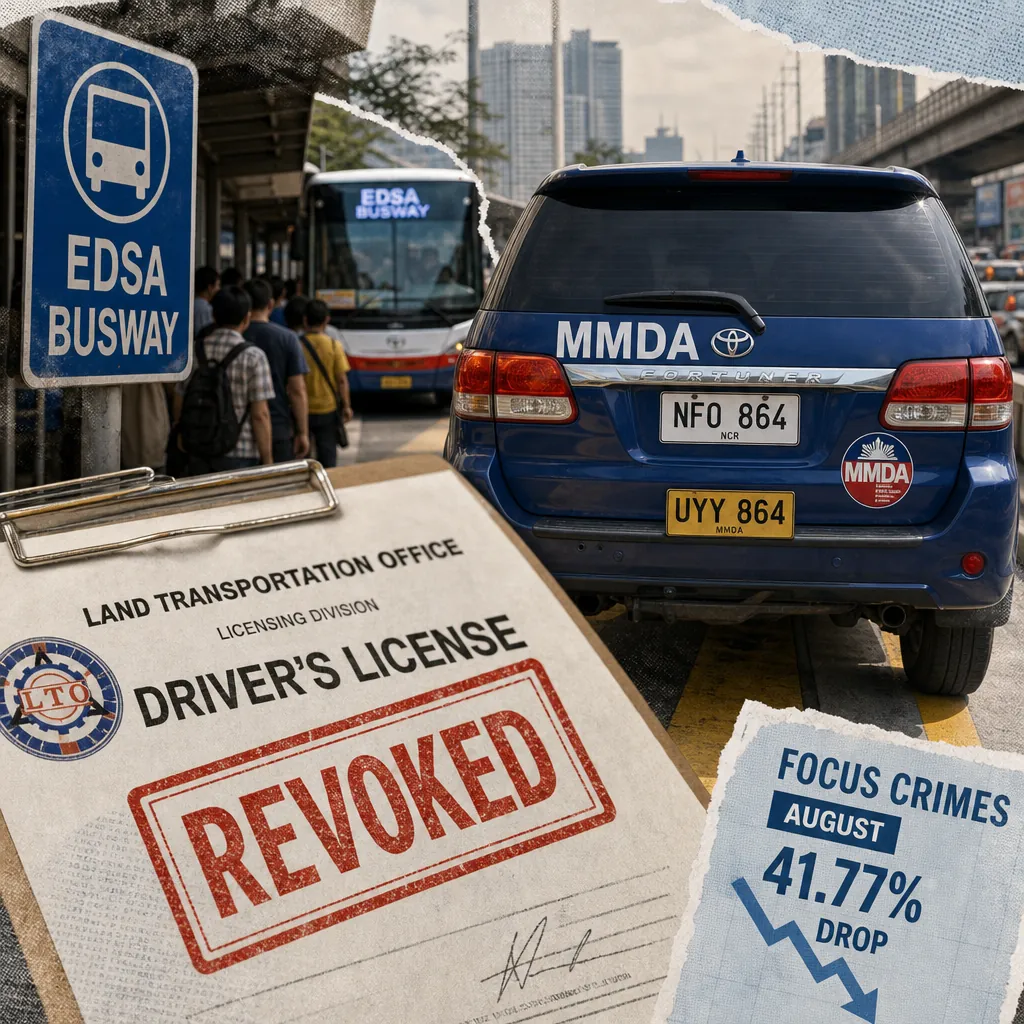
Transport Leads Sept 10 Coverage as LRT-1 Deal Signed
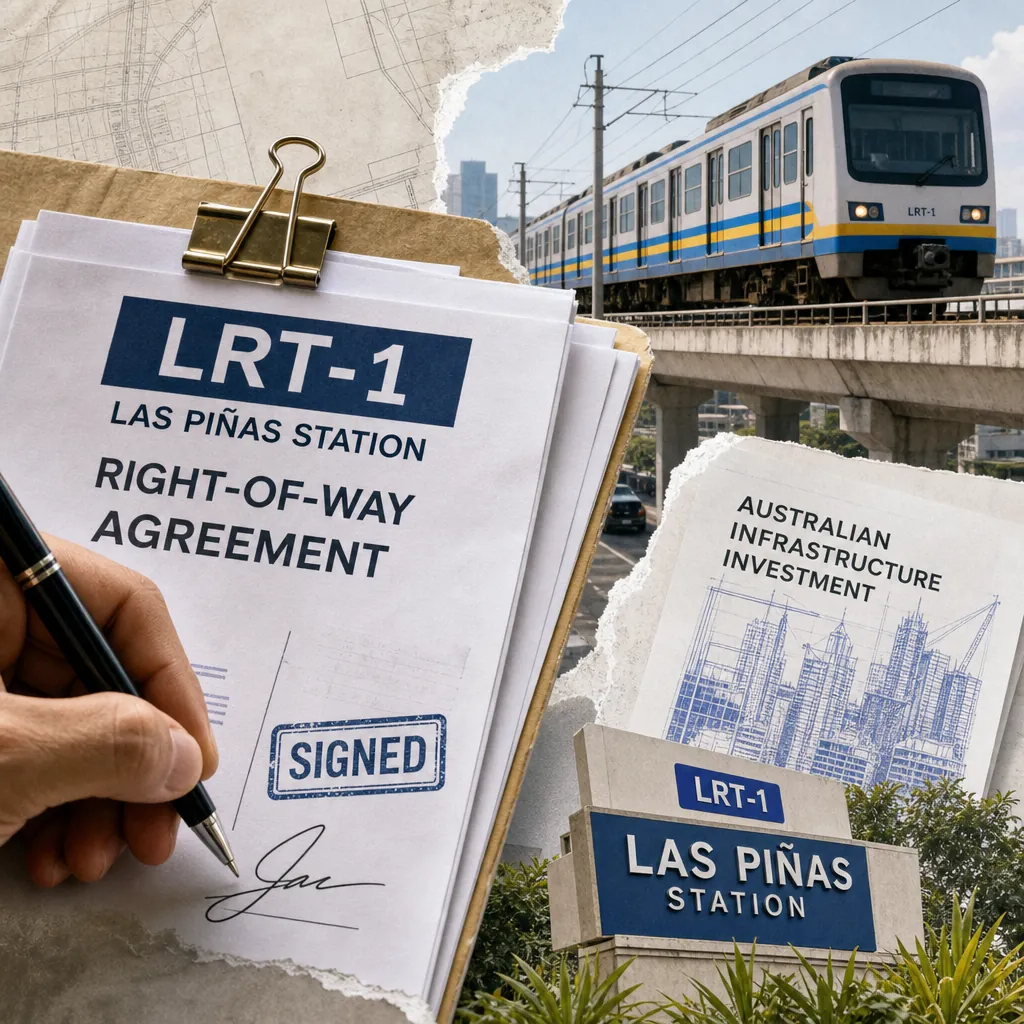
The Department of Transportation signed a right-of-way agreement for the LRT-1 Las Piñas station and pitched Australian infrastructure investment, while transport cooperatives and legal groups pressed separate funding and accountability demands.
The Conversation
The Department of Transportation (DOTr) signed a right-of-way agreement with the Villar Group of Companies for the Las Piñas station of the Light Rail Transit Line 1 (LRT-1) South Extension, the agency announced on Thursday, September 10, 2026. The Light Rail Transit Authority (LRTA) secured roughly 4,465 square meters of land for the station through a memorandum of agreement, and the DOTr said the donation would let the government avoid a significant land-acquisition cost while keeping the Cavite-bound extension on schedule1. The same day, Transportation Secretary Giovanni Lopez said he had raised the prospect of Australian investment in Philippine transport infrastructure during a meeting with Australian Ambassador to the Philippines Marc Innes-Brown, naming the Metro Manila Subway Project and the North-South Commuter Railway among the flagship projects presented12.
Two other transport stories ran alongside those announcements. Transport and legal groups called on the DOTr to resolve the "ghost rider" controversy — discrepancies in the beneficiary lists for a government cash-assistance program for riders — with the Lawyers for Commuter Safety and Protection (LCSP) arguing that September, which the group noted coincides with Rule of Law Month, was the right time for the agency to explain what happened and who, if anyone, was held accountable2. In Cagayan de Oro, transport cooperatives from across Northern Mindanao began a series of meetings with their congressional representatives to press for sustained funding for the government's public transport modernization program in the 2027 national budget, saying they had already invested heavily in new fleets and were now struggling with rising operating costs and debt49.
The Land Transportation Franchising and Regulatory Board (LTFRB) also opened 500 taxi slots reserved exclusively for electric vehicles in the Bicol Region and Palawan, part of a push to electrify public transport that acting chairman Greg Pua Jr. tied to President Ferdinand Marcos Jr.'s stated goal of having half the vehicles on Philippine roads be electric17.
Key themes
- LRT-1 Cavite extension gains a Las Piñas station site through a land donation. The LRTA secured about 4,465 square meters from the Villar Group under a memorandum of agreement, which the DOTr said saves public funds and keeps the rail line's southward extension moving1.
- The DOTr courts Australian capital for rail and commuter projects. Secretary Lopez told Ambassador Innes-Brown that Australia could invest in the Metro Manila Subway and the North-South Commuter Railway, framing the talks as part of a presidential directive to work with allied nations on transport12.
- The "ghost rider" aid-list controversy returns to the agenda. Transport and legal groups asked the DOTr to explain how duplicate and conflicting entries entered the beneficiary lists for a ₱5,000 rider cash-assistance program, and whether anyone was disciplined2.
- Northern Mindanao transport cooperatives lobby Congress for modernization funding. Cooperative leaders said members have taken on debt to buy new vehicles and now need the 2027 budget to carry a larger share of the program's cost49.
- The LTFRB reserves 500 taxi slots for electric vehicles in Bicol and Palawan. The slots add to roughly 8,000 electric-only transport network vehicle service (TNVS) slots the agency has already approved, covering plug-in hybrid and battery electric vehicles17.
- A Cebu hit-and-run case puts driver licensing and enforcement in view. The Land Transportation Office in Central Visayas suspended a lawyer's driver's license and issued a show-cause order after he allegedly struck several motorcycles and crashed into a bakery in Cebu City on September 953.
- Motorcycle manufacturing's local footprint draws a policy ask. A Manila Bulletin column marking Honda Philippines' 10-millionth locally assembled motorcycle argued the country's motorcycle industry needs more government support to keep production and exports growing48.
- Road safety and emergency response surface in separate local stories. A Quezon City police report logged a 42.86 percent week-on-week drop in eight index crimes51, while Iloilo City Council opened an inquiry into hospitals that allegedly refused or delayed patients brought in by the city's emergency response service2734.
How the narratives stack
Dominant. The LRT-1 Las Piñas station agreement is the day's clearest transport development: a signed memorandum of agreement, a named land area, and a stated benefit to the public purse1. It drew the most prominent placement among the transport items captured here, and the DOTr's simultaneous pitch to Australia for infrastructure investment reinforced the same theme of moving long-delayed rail projects forward12. Within the items reviewed, these two stories carried the most institutional weight because they involve signed commitments and named projects rather than complaints or proposals.
Counter-narrative. The "ghost rider" controversy and the Northern Mindanao cooperatives' funding lobby both push back on the idea that transport policy is simply progressing. The ghost-rider issue, which first surfaced in April during a fuel-price spike when beneficiary lists for the Department of Social Welfare and Development's ₱5,000 cash aid were found to contain duplicate and conflicting entries, is being used by the LCSP to test whether the DOTr enforces its rules evenly2. The cooperatives' message is that modernization has a cost that operators, not just government, are absorbing49. Neither story disputes the direction of policy; both question who bears the burden and whether commitments are honored.
Emerging. The electric-vehicle franchising push is the clearest forward-looking signal in the set. The 500 new electric taxi slots in Bicol and Palawan follow roughly 8,000 electric-only TNVS slots already approved, and the LTFRB is explicitly tying the program to the President's target of 50 percent electric vehicles on the road17. The numbers are still small relative to the national fleet, but the direction is set by policy rather than by market demand alone.
Under-covered. The Cebu hit-and-run case53 and the Iloilo emergency-room inquiry2734 each raise questions about enforcement and public safety, but they appeared in single outlets and did not generate the same volume of coverage as the rail and investment stories. The motorcycle manufacturing column48 similarly made a policy argument — that local production needs government backing — that did not appear elsewhere in the captured set.
Platform insights
The monitoring writeup for this window did not include platform-level engagement data, so this section is limited to what the article set itself shows about where transport coverage appeared.
- Online news. Every transport item in the captured set ran online, across national outlets (Inquirer Online, Manila Times Online, Manila Bulletin Online, Philstar Online, Business Mirror Online) and regional or specialist sites (Panay News Online, Daily Guardian online, 2Ner, TESSDrive). The LRT-1 story and the Australian investment pitch appeared in national outlets112, while the Iloilo emergency-room inquiry ran in two Visayas-based outlets2734.
- Blogs. One blog item, from Davao Plus, aggregated several unrelated stories including a wildlife enforcement update and a Korea travel promotion, with no transport-specific content40.
- No social platform data. The writeup did not supply Facebook, X, Reddit, or YouTube engagement figures for this window, so no platform-level behavior can be described.
Key voices and communities
Government transport agencies. The DOTr, LRTA, and LTFRB drove the day's announcements, from the Las Piñas land agreement1 to the electric taxi slots17 and the Australian investment talks12. Their framing centers on project delivery and compliance with the President's electrification target.
Transport cooperatives. The Northern Mindanao Federation of Transport Services Cooperative, led by chairperson Luzviminda Escobar, is pressing Congress for larger modernization subsidies, arguing that operators have already shouldered fleet costs and now face rising expenses49. This group represents the operators who must actually buy and run the vehicles the government wants on the road.
Legal and commuter advocacy groups. The Lawyers for Commuter Safety and Protection, through president Atty. Ariel Inton, is using the ghost-rider issue to press the DOTr on enforcement and accountability, asking whether corrective action was taken and whether anyone was held responsible2.
Local government and civic bodies. The Iloilo City Council, through Councilor Sedfrey Cabaluna, opened an inquiry into hospital emergency response after a motorcycle rider died near a hospital emergency room2734. The Quezon City Police District reported crime statistics and credited patrols and intelligence work for the decline51.
Industry and manufacturing voices. A Manila Bulletin column highlighted Honda Philippines' 10-millionth locally produced motorcycle and argued for more government support for the domestic motorcycle industry48.
Narrative streams
LRT-1 South Extension secures Las Piñas station land
The Light Rail Transit Authority obtained approximately 4,465 square meters of land from the Villar Group of Companies for the Las Piñas station of the LRT-1 South (Cavite) Extension, formalized through a memorandum of agreement signed on September 101. The DOTr said the donation would let the government save a significant amount of public funds and help move the project forward. The LRT-1 South Extension is the segment extending the country's oldest light rail line — which runs from Baclaran in Pasay City to Roosevelt in Quezon City — further south toward Cavite province, a corridor that carries heavy commuter traffic between Metro Manila and its southern suburbs. Right-of-way acquisition is one of the most common causes of delay in Philippine rail projects, because the government must negotiate with private landowners before construction can proceed on each station site. A donated parcel removes one such negotiation from the critical path.
For commuters along the corridor, the practical effect is that the Las Piñas station moves closer to construction, though no completion date was given in the announcement. For the DOTr, the agreement is a deliverable it can point to as evidence the extension is advancing. The read for the sector is that land assembly, not construction capacity, remains the binding constraint on this line, and each donated or negotiated parcel is a measurable step toward opening the extension.
DOTr pitches Australian investment in subway and commuter rail
Transportation Secretary Giovanni Lopez said he discussed Australian investment in Philippine transport infrastructure with Ambassador Marc Innes-Brown earlier in the week, presenting the Metro Manila Subway Project and the North-South Commuter Railway as flagship opportunities12. Lopez framed the talks as aligned with President Marcos Jr.'s directive for the DOTr to pursue collaboration with allied nations, and said sustained international collaboration would directly improve daily commutes.
The Metro Manila Subway is a planned underground rail line intended to run across the capital region, and the North-South Commuter Railway is a large rail project linking Clark in Pampanga to Calamba in Laguna through Metro Manila. Both are among the most capital-intensive projects in the government's infrastructure pipeline, and both have relied on official development assistance from Japan and other partners. Adding Australia as a potential financier or partner would diversify the funding base at a time when the government is trying to accelerate infrastructure spending.
For the sector, the significance is less in any immediate commitment — none was announced — than in the signal that the DOTr is actively courting new bilateral partners for rail. Contractors, suppliers, and engineering firms watching the pipeline will read the talks as a sign that project financing is being broadened rather than concentrated.
Ghost rider controversy tests DOTr enforcement
Transport and legal groups called on the DOTr to resolve the "ghost rider" controversy, which involves discrepancies in the beneficiary lists for a ₱5,000 cash-assistance program for riders2. The issue first surfaced in April during a period of high fuel prices, when the lists were found to contain duplicate and conflicting entries. The Lawyers for Commuter Safety and Protection, through president Atty. Ariel Inton, said September — which the group noted is Rule of Law Month — was the right time for the DOTr to clarify what happened.
"If there was a problem with rider lists and onboarding, what was the result? Was there corrective action? Has anyone been held accountable?" Inton asked2. The group framed the issue as a test of the agency's equal enforcement of regulations.
The cash-assistance program was set up to cushion riders from fuel-price increases, and the beneficiary list is the mechanism that determines who receives the money. Duplicate or conflicting entries mean either that ineligible people received aid, that eligible people were excluded, or both. For the sector, the unresolved question is whether the DOTr has a functioning process for verifying beneficiary lists and correcting errors — a capability that matters for any future subsidy or aid program aimed at transport workers.
Northern Mindanao cooperatives press for modernization funding
Transport cooperatives across Northern Mindanao began meetings with their congressional representatives on September 10 to demand sustainable funding for the public transport modernization program in the 2027 national budget49. Luzviminda Escobar, chairperson of the Northern Mindanao Federation of Transport Services Cooperative, said members have invested heavily in fleet modernization but are now struggling with rising operating costs and significant financial obligations.
The public transport modernization program is the government's effort to replace aging jeepneys, buses, and other public utility vehicles with newer, safer, and more environmentally compliant units. Operators are expected to consolidate into cooperatives or corporations and to purchase new vehicles, often with government subsidies or loan programs. The program has been criticized for years by operators who say the subsidies are insufficient and the timelines unrealistic.
Escobar's group is asking for a larger budget line in 2027. For the sector, the cooperatives' lobbying signals that the modernization program's financial model remains under strain: operators who complied with the consolidation and fleet-replacement requirements are now carrying debt that the current subsidy structure does not fully cover. If Congress does not increase the budget, the cooperatives argue, more operators may default or exit routes.
LTFRB opens 500 electric taxi slots in Bicol and Palawan
The Land Transportation Franchising and Regulatory Board made 500 taxi slots available exclusively for electric vehicles in the Bicol Region and Palawan province17. Acting chairman Greg Pua Jr. said the initiative complies with the law promoting electric vehicles in public transportation and noted the agency had already approved roughly 8,000 transport network vehicle service slots reserved for electric vehicles, specifically plug-in hybrid electric vehicles and battery electric vehicles. Pua tied the program to President Marcos Jr.'s State of the Nation Address statement that he wanted 50 percent of vehicles on the road to be electric.
A franchise slot is a government-issued permit to operate a public vehicle on a given route or service. Reserving slots for electric vehicles means the LTFRB is limiting competition for those permits to operators who will use electric units, effectively using the franchise system to push fleet electrification.
For the sector, the program creates a defined market for electric vehicle suppliers and charging infrastructure in two regions outside the capital. The number of slots is small relative to the national taxi fleet, but the policy mechanism — reserving franchise slots rather than offering subsidies — is one the LTFRB can scale to other regions without new legislation.
Cebu hit-and-run case triggers license suspension
The Land Transportation Office in Central Visayas issued a show-cause order against veteran lawyer Edgar Gica and preventively suspended his driver's license after he allegedly figured in a series of hit-and-run incidents in Cebu City on the evening of September 953. Initial information showed his Mercedes-Benz allegedly hit several motorcycles around 11 p.m. before proceeding toward the San Nicolas area, where it reportedly crashed into a bakery. Law enforcement tried to stop the vehicle, and a brief chase ended with his interception along V. Rama Avenue. The LTO-7 said the incident is under administrative investigation for possible violations including reckless or imprudent operation of a motor vehicle.
A show-cause order requires the license holder to explain why his license should not be suspended or revoked. The preventive suspension means Gica cannot legally drive while the investigation proceeds. For the sector, the case is a test of how quickly the LTO can act on a high-profile traffic incident, and it puts the agency's administrative enforcement process in public view.
Motorcycle manufacturing milestone draws a policy argument
A Manila Bulletin column reported that Honda Philippines recently marked its 10-millionth motorcycle produced at its manufacturing facility in Tanauan, Batangas, a milestone reached barely a year after the company's 9-millionth unit and ten years after its 5-millionth48. The facility produces about one motorcycle every 21 seconds and makes eight models for local consumption and export to Laos and Cambodia. The column noted that Yamaha, Suzuki, Kawasaki, and Kymco also have manufacturing operations in the country, and argued that the Philippine motorcycle manufacturing industry needs more government support.
The motorcycle is the most common motor vehicle in the Philippines and a primary mode of transport for millions of commuters and delivery workers. Local manufacturing supports jobs and export revenue, but the column's argument is that the industry competes with imports and needs policy backing to sustain production growth. For the sector, the milestone is evidence of manufacturing capacity; the policy ask signals that industry players see the current support framework as insufficient.
Iloilo emergency-room inquiry and Quezon City crime data
The Iloilo City Council opened an investigation into hospital emergency response protocols after a motorcycle delivery rider died following an incident in which a private hospital allegedly refused to assist him despite his being found injured a few meters from its emergency room2734. The incident occurred around 4 a.m. on August 27 on Dra. Rizalina V. Bernardo Avenue in Barangay San Rafael, Mandurriao district. A video showed the rider lying injured and bleeding while a witness repeatedly asked hospital personnel to help; security guards and staff allegedly refused to bring out a stretcher or provide first aid and instead told the witness to call the Iloilo City Emergency Response (ICER) and the police. Councilor Sedfrey Cabaluna raised the issue in a privilege speech, and the council is considering a 100-meter emergency response rule that would require hospitals to respond to incidents within that distance of their facilities27.
Separately, the Quezon City Police District reported that eight index crimes — a standard set of serious offenses that includes murder, homicide, rape, robbery, theft, and vehicle theft — fell 42.86 percent in the week of August 29 to September 4 compared with the previous week, from 28 cases to 1651. Murder and motorcycle carnapping each fell 100 percent, physical injury and rape fell 66.67 percent, robbery fell 25 percent, and theft fell 15.38 percent. The QCPD credited increased police visibility, patrols, and intelligence-driven operations.
For the sector, the Iloilo case raises a question about whether hospitals can be required to respond to emergencies just outside their doors, and the proposed 100-meter rule would create a measurable standard. The Quezon City data is a one-week comparison, not a trend, but it gives the police district a baseline to report against in future weeks.
Conversation trajectory
Watch the LRT-1 South Extension's remaining right-of-way acquisitions over the next quarter. The Las Piñas station land is secured, but the extension has multiple stations, and each requires its own land agreement. The DOTr's next announcement on the project — whether a construction milestone, another land deal, or a target opening date — will indicate whether the extension is on schedule or still working through property issues1.
Track whether the DOTr responds to the ghost-rider accountability demand within September. The LCSP framed its call around Rule of Law Month, which gives the agency a defined window to answer or explain. If no response comes by the end of September, the group is likely to escalate, and the issue could resurface in congressional budget hearings2.
Watch the 2027 budget deliberations for the public transport modernization program. The Northern Mindanao cooperatives are meeting their congressional representatives now, ahead of the budget cycle. The size of the modernization line item in the House and Senate versions of the 2027 budget will show whether the cooperatives' lobbying moved the number49.
Monitor the rollout of the 500 electric taxi slots in Bicol and Palawan. The LTFRB has set the policy; the next signal is how many operators apply and whether charging infrastructure in those regions can support the vehicles. A low take-up rate would suggest the franchise-slot approach needs complementary incentives17.
Follow the LTO-7 investigation into the Cebu hit-and-run case. The administrative case will determine whether Gica's license is revoked or restored, and the speed of the resolution will indicate how the LTO handles high-profile enforcement cases53.
Watch the Iloilo City Council's proposed 100-meter emergency response rule. If the council passes the measure, it would create a local standard that other cities could adopt, and hospitals would need to adjust their intake procedures for patients brought by emergency responders2734.
Response guidance
For transport agencies communicating project progress: Lead with the specific deliverable — the signed agreement, the land area, the number of slots — rather than the general goal. The LRT-1 announcement worked because it named a station, a land area, and a funding benefit1. Vague statements about "moving forward" do not give commuters or contractors anything to track.
For agencies facing accountability questions: Answer the specific questions asked. The LCSP asked three: what was the result of the list problem, was there corrective action, and was anyone held accountable2. A response that addresses each question directly, even if the answer is that an investigation is ongoing, is more credible than a general statement about commitment to good governance.
For cooperatives and operator groups engaging Congress: Pair the funding ask with the cost data. The Northern Mindanao cooperatives' case is strongest when it shows what members have already spent on new vehicles and what their monthly debt service looks like49. Legislators respond to numbers tied to constituents.
For electric vehicle suppliers and charging infrastructure firms: The LTFRB's franchise-slot model creates a defined market in Bicol and Palawan17. Communicate with operators in those regions about vehicle availability, financing, and charging options before the application window closes.
For hospitals and local governments reviewing emergency protocols: The Iloilo case shows that the gap between a hospital's front door and an emergency room can be a matter of public controversy2734. Reviewing intake procedures for patients brought by emergency responders, and documenting them, reduces the risk of a similar incident becoming a council inquiry.
For manufacturers and industry associations: Milestones like Honda's 10-millionth unit are effective platforms for policy asks because they demonstrate capacity48. Pair the milestone announcement with a specific, costed request — a tariff adjustment, an incentive, or a training program — rather than a general call for support.
See the full picture behind today's signals.
This report draws from Media Meter's MediaWatch, our real-time monitoring engine tracking 2,470+ Philippine sources across print, broadcast, digital, and social. Explore how the platform turns raw coverage into decision-grade intelligence, then see how it's configured for teams like yours — whether you're in PR agencies, corporate comms, government, or marketing.
Want more? Browse our Report Library for sector and crisis intelligence, or request a demo and we'll have your brand set up before the call.
Want this kind of intelligence on your brand?
This brief is built on the same MediaWatch methodology that runs continuously across every brand we monitor. See your competitive landscape, Impact Score, and narrative trajectory in a 30-minute demo.