Bulacan flood failures drive accountability push
A day of Philippine conversation centered on substandard flood control in Bulacan, drawing official calls for prosecution and public skepticism. Real estate and development stories on retail expansion, office demand, and housing tenure ran alongside, while a political endorsement of foreign investment drew mockery online.
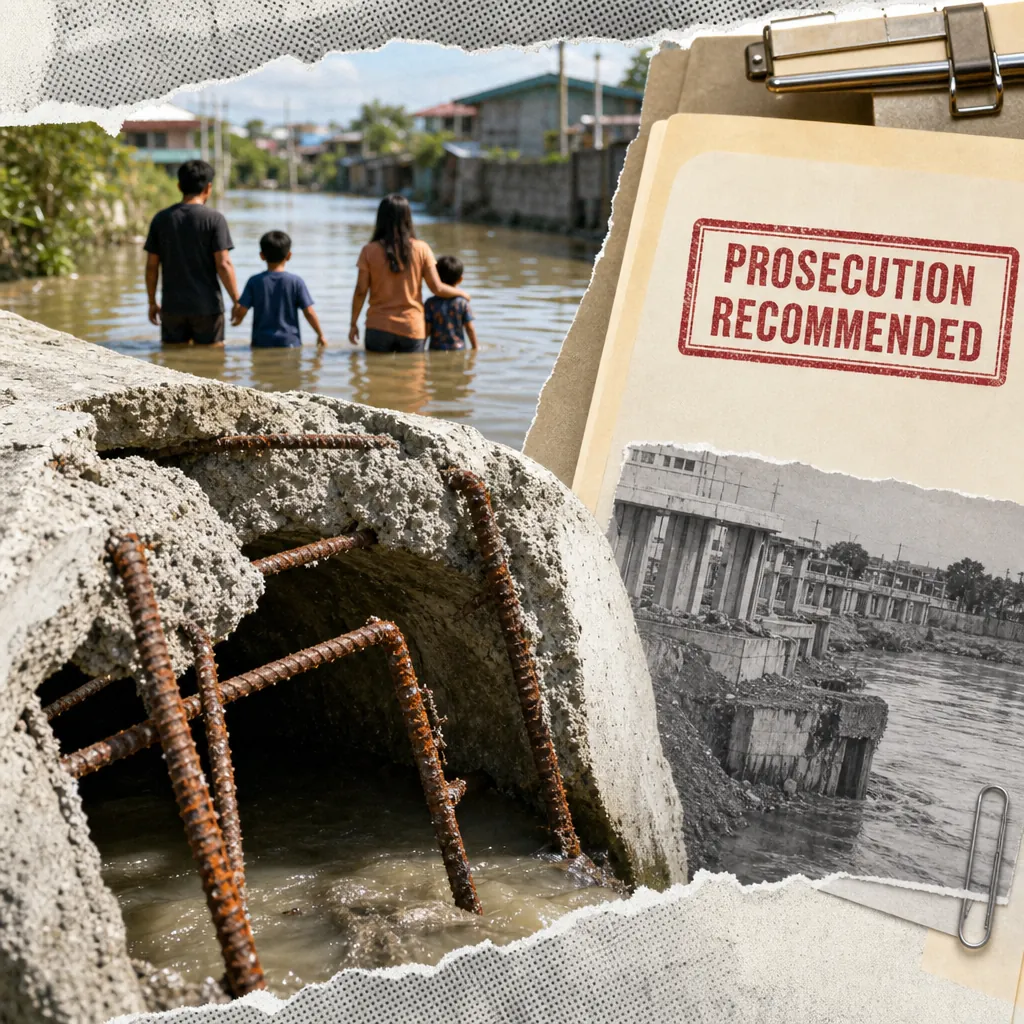
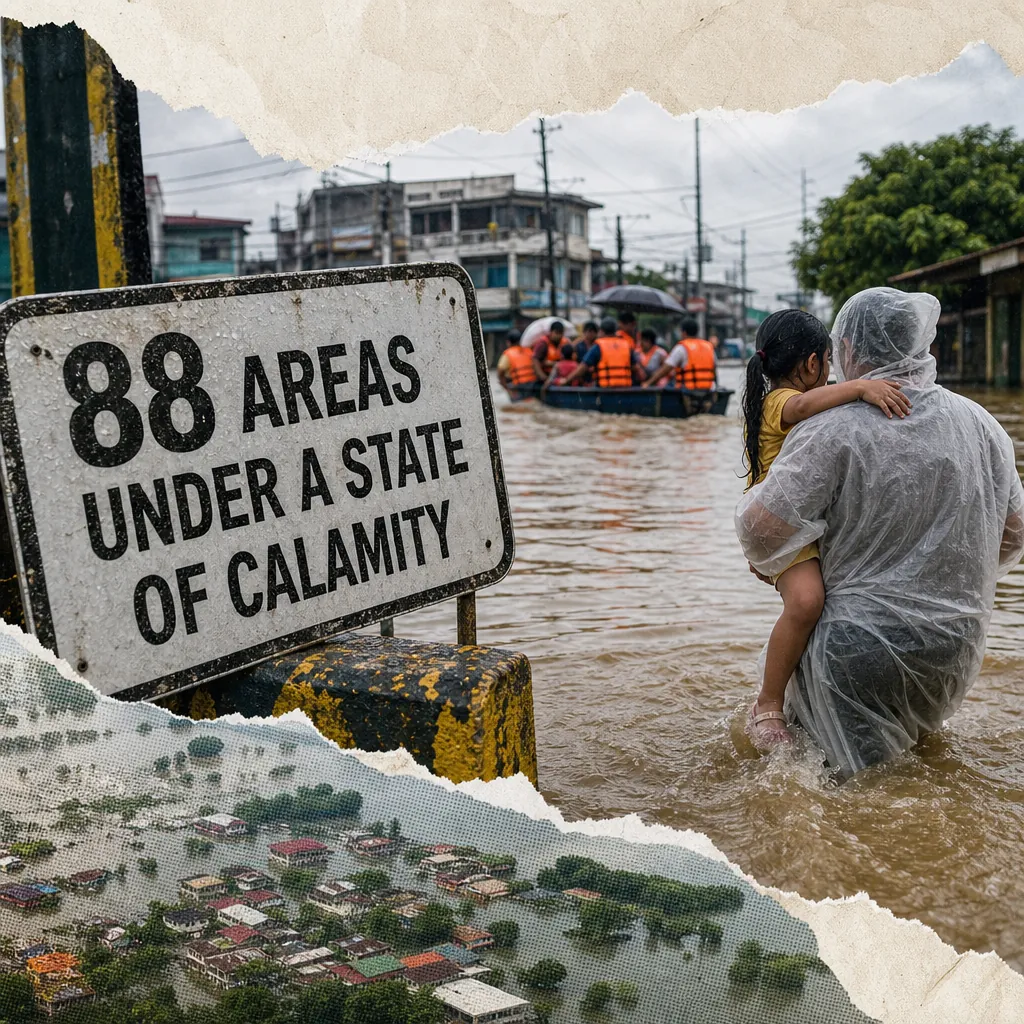
The day's most consequential thread ran through Bulacan, where the aftermath of severe flooding turned into a public accounting of failed infrastructure. Cabinet Secretary Benhur Abalos, acting on President Ferdinand Marcos Jr.'s orders, inspected the flooded coastal towns of Hagonoy and Paombong on Saturday and called for the imprisonment of those responsible for substandard flood control projects, saying the province had been "severely abused" by structures that failed to protect communities. Public Works Secretary Vince Dizon, who joined the inspection, said the seawalls and coastal dikes were improperly designed as inland dikes despite facing the open waters of Manila Bay, leaving them vulnerable to waves and strong currents. The officials found dilapidated seawall sections in Paombong's Barangays Masukol and Sta. Cruz, and Dizon said contractors would be compelled to rehabilitate structures still under warranty. The Department of Public Works and Highways (DPWH) also plans to install hexapods — concrete armor units that absorb wave energy — in vulnerable areas and develop a comprehensive coastal protection master plan. The National Disaster Risk Reduction and Management Council (NDRRMC) reported that damage from storms Luis, Maymay, and Neneng, aggravated by the southwest monsoon, reached ₱6.6 billion, with ₱4.9 billion in infrastructure losses including 2,300 damaged houses, and ₱1.7 billion in agriculture. Over 2.1 million families, or 7.4 million people, were affected, with 89 cities and towns under a state of calamity. The human toll was visible in the recovery of three bodies in Bulacan on Saturday — a 15-year-old boy, a 66-year-old man, and an unidentified person — as 79 villages remained flooded. The provincial government distributed relief to more than 50,000 families across ten municipalities, while the Meralco Foundation delivered packs to some 2,500 families in Bulacan, Cavite, and Rizal. The conversation around these events was not uniformly sympathetic. A Facebook post about Abalos's call for jail time drew 90 likes, 115 "haha" reactions, and 59 comments, a reaction profile suggesting public weariness with government promises rather than confidence in enforcement. The day's other major thread was political: Senator Robin Padilla's endorsement of the Pax Silica initiative, discussed at a Bulacan event, drew a striking 4,653 "haha" reactions against 519 likes and 821 shares on Facebook, with 1,050 angry reactions — a profile of mockery and skepticism toward foreign investment proposals. The same content on Twitter drew 12,120 views but only 18 likes, indicating passive consumption without endorsement. A quieter thread on Reddit revived Enchanted Kingdom's shelved 2017 "Eldars Village" expansion concept, drawing 64 likes and 6 comments in a discussion questioning why ambitious leisure and mixed-use projects fail to materialize.
Key themes
- Bulacan flood failures trigger official accountability push: Cabinet Secretary Benhur Abalos called for jail time for those behind substandard flood control projects in Bulacan, following an inspection of damaged seawalls in Hagonoy and Paombong. Public Works Secretary Vince Dizon said the structures were improperly designed as inland dikes despite facing Manila Bay. The NDRRMC reported ₱6.6 billion in total damage from recent storms and monsoon rains.
- Public skepticism greets government enforcement promises: A Facebook post about Abalos's call for prosecution drew more "haha" reactions (115) than likes (90), signaling public disbelief in accountability efforts. This cynicism extends to developers in the Bulacan corridor, where construction quality narratives could gain negative traction.
- Foreign investment endorsement draws mockery online: Senator Robin Padilla's endorsement of the Pax Silica initiative generated 4,653 "haha" reactions on Facebook against 519 likes, with 1,050 angry reactions. The reaction profile suggests the public viewed the proposal as impractical or a political stunt, reflecting anxieties about foreign ownership and economic control.
- Ayala Land expands retail anchors across four estates: Ayala Land Inc. signed land lease agreements with Makro Philippines covering Cloverleaf in Quezon City, Broadfield in Biñan, Evo City in Kawit, and Arca South in Taguig. The wholesale retailer will develop and operate stores while ALI retains ownership, generating recurring lease income and adding high-traffic anchors.
- Office demand evolves rather than collapses under AI: Robinsons Land Corp. expects artificial intelligence to reshape office demand rather than weaken it, as BPO firms shift toward higher-value functions. CFO Kerwin Tan said more than 70 percent of RLC's office tenants are BPO firms, and new roles in analytics, AI coaching, and governance could emerge.
- Housing tenure expands for low-income families: More than 1,400 Naga residents are gaining land ownership through the Enhanced Community Mortgage Program, part of President Marcos Jr.'s Expanded Pambansang Pabahay para sa Pilipino Program. The Social Housing Finance Corp. awarded loan assistance to three homeowners associations in Barangay Pacol.
- Shelved master plans resurface as trust benchmarks: A Reddit thread revived Enchanted Kingdom's shelved 2017 "Eldars Village" expansion, questioning the viability of ambitious leisure and mixed-use projects. The discussion reflects public memory of unfulfilled promises, a sentiment that extends to township developments delivering in phases.
- Flood response draws corporate and government relief efforts: The Meralco Foundation delivered relief packs to some 2,500 families in Bulacan, Cavite, and Rizal, while the provincial government of Bulacan distributed aid to over 50,000 families. The government is also considering allocating part of local governments' National Tax Allotment to solid waste management to mitigate flooding.
How the narratives stack
Dominant: The Bulacan flood control failure and the official push for accountability dominated the day's news coverage. The story carried the highest advertising-equivalent value in the captured set — the Inquirer's report on Abalos's call for jail time was worth an estimated ₱508,032 in ad space, and the Philstar editorial "The tides of wrath" was valued at ₱860,585. The narrative combined a natural disaster, infrastructure failure, and government response, with direct implications for developers and contractors in one of the country's most active residential corridors. The NDRRMC's ₱6.6 billion damage figure and the recovery of three bodies gave the story human and economic weight.
Counter-narrative: The public's skeptical reception of government accountability efforts formed a quiet counter-current. The "haha" reaction dominance on the Abalos post and the editorial frustration in "The tides of wrath," which argued that flood mitigation is possible with long-term planning and good governance, both pushed back against official narratives. This counter-narrative suggests that even legitimate enforcement actions may be met with public disbelief, complicating trust-building for both government and developers.
Emerging: The intersection of political endorsement and foreign investment is an emerging narrative with direct real estate implications. Senator Padilla's Pax Silica endorsement drew massive but mocking engagement, and the Bases Conversion and Development Authority (BCDA) discussed the initiative during a briefing in New Clark City. As the election cycle approaches, foreign ownership narratives could influence public perception of developers marketing to overseas buyers, particularly around constitutional restrictions on land ownership and the Condominium Act's 60/40 Filipino-foreign ratio.
Under-covered: The Quezon City office market's weak demand despite a large inventory of new, PEZA-accredited space received limited attention relative to its significance. CBRE recorded 384,300 square meters of office space in Quezon City with 55 percent unleased, and 83 percent of available stock is PEZA-accredited. This story matters for the broader office sector because it suggests that even well-located, modern, tax-incentivized space is struggling to find tenants — a signal that the office market's challenges run deeper than supply quality.
Platform insights
- Facebook: The platform served as the primary battleground for emotionally charged reactions, particularly around the Pax Silica endorsement where "haha" reactions (4,653) far exceeded likes (519) and comments. The reaction profile indicates passive emotional engagement rather than deliberate discussion. The Abalos post on substandard Bulacan projects showed a similar pattern, with "haha" reactions (115) outpacing likes (90). Facebook's reaction system allows users to express mockery or anger without engaging in substantive debate, making it a barometer of sentiment rather than a forum for reasoned discussion.
- Twitter: The Pax Silica content generated significantly lower engagement relative to views, with only 18 likes on 12,120 views. This suggests Twitter audiences scrolled past the content or engaged only superficially with the political angle. The platform's format favors concise commentary and fact-checks, and the low like-to-view ratio indicates the topic failed to inspire active endorsement despite driving passive consumption.
- Reddit: The Enchanted Kingdom thread exemplified Reddit's role as a space for longer-form reflection on development failures. The original poster encouraged substantive debate through a direct question about investment viability, and the 6 comments suggest a small but engaged community of urban development enthusiasts. Reddit's format allows for nuanced discussion that other platforms' reaction systems cannot capture.
Key voices and communities
- National policymakers and political figures: A small but highly influential cluster of political voices dominates reach on housing and regulatory matters. Senator Robin Padilla's Pax Silica endorsement drew over 12,000 views and 4,600-plus reaction-driven interactions on Facebook and Twitter combined. Cabinet Secretary Benhur Abalos's call for jail time over substandard Bulacan projects carried institutional weight and was amplified by news media. These figures set the agenda for housing and real estate policy discussions, and their statements directly shape the regulatory environment affecting developers.
- Regulatory and enforcement authorities: Government oversight voices, particularly those addressing construction quality and compliance, represent a distinct stakeholder cluster focused on accountability. The Department of Public Works and Highways, under Secretary Vince Dizon, is investigating and rehabilitating damaged seawalls, while the NDRRMC reported on the scale of damage. Their content carries significant reputational risk for developers, and their statements influence media coverage of substandard projects.
- Property developers and their executives: Corporate voices from Ayala Land, Robinsons Land, and Cebu Landmasters shaped the day's business coverage. Ayala Land's regional estates head Christopher Maglanoc framed the Makro partnership as creating "value beyond the retail customer". Robinsons Land CFO Kerwin Tan articulated a measured view of AI's impact on office demand. Cebu Landmasters CEO Jose Franco Soberano accepted the Best Developer award at the PropertyGuru Philippines Property Awards, noting the company is approaching 50,000 homes. These voices represent the industry's response to both opportunities and challenges.
- Regional development and investment advocates: A smaller but symbolically relevant group engages with large-scale, leisure-oriented development concepts. The Reddit discussion on Enchanted Kingdom's shelved expansion drew from urban development enthusiasts who follow forums like SkyscraperCity. This community questions whether the Philippines lacks world-class leisure infrastructure to justify large capital outlays, and their conversations offer insight into perceptions of long-term real estate plays in Laguna and adjacent areas.
- Affected communities and consumers: The human dimension of the flood story came through in reports of relief distribution and recovered bodies. The provincial government of Bulacan, led by Gov. Daniel Fernando and Vice Gov. Alexis Castro, personally visited affected communities. The Meralco Foundation's employee-volunteers waded through deep waters to deliver relief packs. These voices represent the lived experience of flooding and infrastructure failure, grounding the policy discussion in human consequences.
Narrative streams
Bulacan's flood control failures draw official calls for prosecution
The most significant news story of the day centered on Bulacan's failed flood control infrastructure. Cabinet Secretary Benhur Abalos, acting on direct orders from President Ferdinand Marcos Jr., inspected the severely flooded coastal municipalities of Hagonoy and Paombong on Saturday. The inspection revealed that dilapidated and damaged portions of seawalls left Barangays Masukol and Sta. Cruz in Paombong heavily exposed to severe coastal flooding. Public Works Secretary Vince Dizon said the seawalls and coastal dikes were improperly designed as inland dikes despite facing the open waters of Manila Bay, leaving them vulnerable to waves and strong currents. Dizon said contractors would be compelled to rehabilitate structures still covered by warranties, and the DPWH plans to install hexapods in vulnerable areas and develop a comprehensive master plan for coastal protection. The scale of the problem was underscored by the NDRRMC's report of ₱6.6 billion in total damage from storms Luis, Maymay, and Neneng, aggravated by the southwest monsoon. Of this, ₱4.9 billion was in public and private infrastructure, mainly to 2,300 houses damaged by floods and landslides, and ₱1.7 billion was in agriculture. Over 2.1 million families, or 7.4 million people, were affected, with 89 cities and towns declared under a state of calamity. The human cost was visible in the recovery of three bodies in Bulacan — a 15-year-old boy found at Catmon River in Santa Maria, a 66-year-old man retrieved along a river in Calumpit, and an unidentified person found in Bulakan town. As of Saturday, 79 villages remained flooded due to "backflood" or river overflow and heavy rains. The read for the sector: developers and contractors operating in flood-prone areas like Bulacan face heightened scrutiny and potential legal liability. The official framing of "substandard" projects, combined with calls for prosecution, creates a reputational risk environment where quality assurance and compliance documentation become essential. The government's push to replace undersized culverts and upgrade aging drainage systems nationwide signals a broader infrastructure investment cycle that could benefit compliant contractors but expose those with poor track records.
Public skepticism greets accountability promises
The public's response to the Bulacan accountability push was notably cynical. A Facebook post about Abalos's call for jail time drew 90 likes, 115 "haha" reactions, and 59 comments. The "haha" reaction count outpacing likes suggests a dismissive view of government accountability efforts, reflecting public fatigue with promises that have not translated into results. This sentiment was echoed in a Philstar editorial titled "The tides of wrath," which argued that flood mitigation is possible with long-term planning, efficient engineering, and good governance, and that "without corruption" is the key qualifier. The editorial noted that in other countries, public officials see extreme rainfall as problems calling for durable solutions, while in the Philippines, officials blame high tide, soil erosion, and extreme rainfall. The editorial's advertising-equivalent value of ₱860,585 indicates it was a prominent piece in the day's coverage. The read for the sector: developers cannot rely on government enforcement actions to restore public trust. The skepticism extends to all actors in the construction and development chain, meaning that even reputable developers with strong quality assurance may face guilt-by-association narratives. Proactive communication about certifications, third-party inspections, and compliance with agencies like the Department of Human Settlements and Urban Development (DHSUD) becomes essential to differentiate from bad actors.
Foreign investment endorsement draws mockery and anger
Senator Robin Padilla's endorsement of the Pax Silica initiative generated the day's most striking social media response. A Facebook post drew 519 likes, 821 shares, 4,653 "haha" reactions, and 1,050 angry reactions. The reaction profile — with "haha" reactions nearly nine times the like count — suggests the public viewed the proposal as either impractical or a political stunt. The same content on Twitter drew 12,120 views but only 18 likes, indicating passive consumption without endorsement. The Pax Silica initiative was also discussed during a BCDA briefing in New Clark City, where BCDA President and CEO Joshua Bingcang mentioned it in the context of the agency's property plans. The proposal touches on constitutional restrictions on foreign land ownership, a sensitive topic for residential developers. The Condominium Act's 60/40 Filipino-foreign ratio and the 99-year lease framework are the legal structures governing foreign participation in Philippine real estate. The read for the sector: any public association with foreign investment schemes may trigger negative social media blowback, particularly for high-end developments marketed toward foreign buyers or mixed-use townships reliant on foreign capital. Developers should be prepared to clarify their compliance with existing legal frameworks and emphasize the job-creation and economic benefits of foreign investment rather than abstract policy positions.
Ayala Land expands retail anchors across four estates
Ayala Land Inc. signed land lease agreements with Makro Philippines covering four of its mixed-use estates in Luzon: Cloverleaf in Balintawak, Quezon City; Broadfield in Biñan, Laguna; Arca South in Taguig City; and Evo City in Kawit, Cavite. Under the lease structure, ALI will retain ownership of the properties in Broadfield, Evo City, and Cloverleaf, while Makro will develop and operate the stores. In Arca South, Makro will operate within the local Ayala Mall. The arrangement is expected to generate recurring lease income for ALI while bringing high-traffic retail anchors into its estates. Christopher Maglanoc, ALI's regional estates head, said the agreements "underscore the role of Ayala Land's estates as strategic gateways where communities, businesses and commerce come together". The BusinessWorld report on the expansion was valued at ₱251,729 in advertising-equivalent terms, and the Business Mirror report at ₱363,912. The read for the sector: the wholesale retail format is becoming a key anchor for mixed-use estates, providing recurring income for developers while enhancing the value proposition for residential and commercial tenants. This model strengthens the case for master-planned communities that combine residential, business, and retail uses, and it signals confidence in the long-term growth of provincial corridors like Biñan, Kawit, and Taguig.
Office demand evolves rather than collapses under AI
Robinsons Land Corp. expects artificial intelligence to reshape demand for office space rather than significantly weaken the market, as BPO companies shift toward higher-value functions. RLC Chief Financial, Risk and Compliance Officer Kerwin Tan said more than 70 percent of the company's office tenants are BPO firms, making changes in the sector important to its office business. "We believe the office sector will continue to evolve rather than be displaced," Tan said. He said AI would likely automate more routine and repetitive functions over the next five to 10 years, but new roles involving analytics, judgment, creativity, and client management could emerge. He cited data annotators, data analysts, content moderators, AI coaches and trainers, AI quality assurance specialists, and AI governance professionals among the roles that could support the evolving BPO industry. The read for the sector: office developers should prepare for a shift in tenant mix toward higher-value functions rather than a collapse in demand. This means designing flexible office spaces that can accommodate evolving BPO needs and positioning properties to attract tenants in emerging AI-related roles. The Quezon City office market data from CBRE, showing 55 percent of 384,300 square meters unleased despite 83 percent of available stock being PEZA-accredited, suggests that even well-located, modern, tax-incentivized space is struggling — a cautionary signal for office developers in secondary markets.
Housing tenure expands for low-income families in Naga
More than 1,400 Naga residents are poised to gain a stronger foothold on the land they call home through the Enhanced Community Mortgage Program (CMP), a people-centered housing initiative under President Marcos Jr.'s Expanded Pambansang Pabahay para sa Pilipino Program. The Social Housing Finance Corp. awarded loan assistance to three homeowners associations in Barangay Pacol — Mabolo Village Homeowners Association Phases 1 and 2 and Saint Joseph Homeowners Association. The awarding was held during the recent commemoration of Jesse Robredo Day, with DHSUD Assistant Secretary Johnson Domingo in attendance. The CMP allows low-income families to purchase the land they occupy through community-based mortgage financing, providing security of tenure. The read for the sector: the government's expanded housing programs are creating a pipeline of formalized land ownership that could stimulate demand for construction services and building materials. Developers serving the socialized and economic housing segments should monitor these programs for partnership opportunities and to understand the competitive landscape.
Shelved master plans resurface as trust benchmarks
A Reddit thread revived Enchanted Kingdom's shelved 2017 "Eldars Village" expansion concept, drawing 64 likes and 6 comments. The original post asked whether sinking capital into massive expansions would have been a strong investment, implicitly questioning the viability of ambitious real estate-based tourism projects in the Philippines. The concept involved international designers like Falcon's Creative Group and promised a multi-day resort experience. The discussion reflects a quieter but persistent interest in why large-scale leisure and mixed-use projects stall, and it underscores that consumers recognize the gap between master-planned visions and actual delivery. The read for the sector: developers should emphasize tangible milestones and completed amenities rather than conceptual master plans in public communications. The public's memory of shelved projects creates a trust deficit that can be addressed through transparent communication about project status, permits, and realistic turnover schedules. For township developments with leisure components, particularly in high-growth areas like Laguna and nearby economic corridors, this conversation offers insight into how urban planning communities perceive long-term real estate plays.
Conversation trajectory
- Regulatory enforcement actions (1–4 weeks): The investigation into substandard flood control projects in Bulacan is likely to produce formal charges or administrative actions against contractors. The DPWH's plan to compel warranty-based rehabilitation and install hexapods suggests active enforcement. Monitor for the filing of cases, which would dramatically amplify coverage and shift public sentiment toward punitive narratives. The government's push to replace undersized culverts and upgrade drainage systems nationwide indicates a broader infrastructure review that could expose more substandard projects.
- Foreign investment policy debate (2–6 weeks): The Pax Silica endorsement, despite its mocking reception, could embolden discussions around foreign ownership of land and condominium units. The BCDA's mention of the initiative during a briefing suggests it is being discussed at the institutional level. As the election cycle approaches, expect political figures to engage with foreign investment narratives, potentially influencing public perception of developers marketing to overseas buyers. Monitor for legislative discussion around foreign investment incentives, which could spark renewed debate on ownership structures.
- Office market evolution (3–12 months): Robinsons Land's expectation that AI will reshape rather than displace office demand will be tested as BPO firms adapt. The Quezon City office market data showing 55 percent unleased space suggests near-term weakness, but the emergence of AI-related roles could drive new demand. Monitor quarterly office market reports from CBRE and Savills for signs of absorption or further softening.
- Housing program expansion (3–6 months): The Enhanced Community Mortgage Program's expansion in Naga is part of a broader push under the Pambansang Pabahay program. Monitor for similar awards in other cities and the pipeline of formalized land ownership, which could stimulate construction demand.
- Trigger events: Formal charges filed against Bulacan contractors; further legislative discussion on foreign investment incentives; official response from major developers regarding shelved expansion plans; the October announcement of Camp John Hay's management partner search; the next NDRRMC damage assessment update; and the potential entry of typhoon "Saudel" into the Philippine Area of Responsibility, which could bring more rain to already-flooded areas.
Response guidance
- Construction quality and compliance: Prepare a reactive media statement template for developer clients addressing construction quality and regulatory compliance, specifically referencing DHSUD accreditation and third-party audits. The current conversation is reactive, but a prompt, credible response could position clients as industry leaders on safety rather than targets of scrutiny. Acknowledge that quality failures harm buyer trust and that the broader industry supports enforcement actions against bad actors.
- Foreign investment and ownership: Monitor discussions around the Pax Silica endorsement for spillover into property-ownership discourse. Frame responses around compliance with the 1987 Constitution, the Condominium Act's 60/40 Filipino-foreign ratio, and the 99-year lease framework, emphasizing investor certainty through legal structures. Avoid endorsing or rejecting the proposal outright; instead, emphasize that all proposals are evaluated against national interest and existing laws.
- Master plan communication: Explore content opportunities that showcase conceptual master plans or community visions, drawing on the public fascination with unbuilt projects. While the Enchanted Kingdom expansion was shelved, the persistent engagement with its concepts suggests that behind-the-scenes or future-oriented storytelling could humanize developers. Reinforce the distinction between conceptual plans and legally binding contracts to sell with approved permits and realistic turnover schedules.
- Flood response and community engagement: For clients with operations in flood-affected areas, emphasize tangible relief efforts and community support. The Meralco Foundation's delivery of relief packs to 2,500 families and the provincial government's distribution to 50,000 families demonstrate the reputational value of visible, on-the-ground response. Avoid defensive positioning; instead, signal openness to regulatory scrutiny and commitment to affected communities.
- Office market positioning: For office developers, emphasize flexibility and adaptability in response to AI-driven changes in BPO demand. Highlight features that support higher-value functions such as analytics, AI coaching, and governance roles. The Quezon City data showing weak demand despite PEZA accreditation suggests that tax incentives alone are insufficient; location, quality, and tenant mix matter.
See the full picture behind today's signals.
This report draws from Media Meter's MediaWatch, our real-time monitoring engine tracking 2,470+ Philippine sources across print, broadcast, digital, and social. Explore how the platform turns raw coverage into decision-grade intelligence, then see how it's configured for teams like yours — whether you're in PR agencies, corporate comms, government, or marketing.
Want more? Browse our Report Library for sector and crisis intelligence, or request a demo and we'll have your brand set up before the call.
Want this kind of intelligence on your brand?
This brief is built on the same MediaWatch methodology that runs continuously across every brand we monitor. See your competitive landscape, Impact Score, and narrative trajectory in a 30-minute demo.