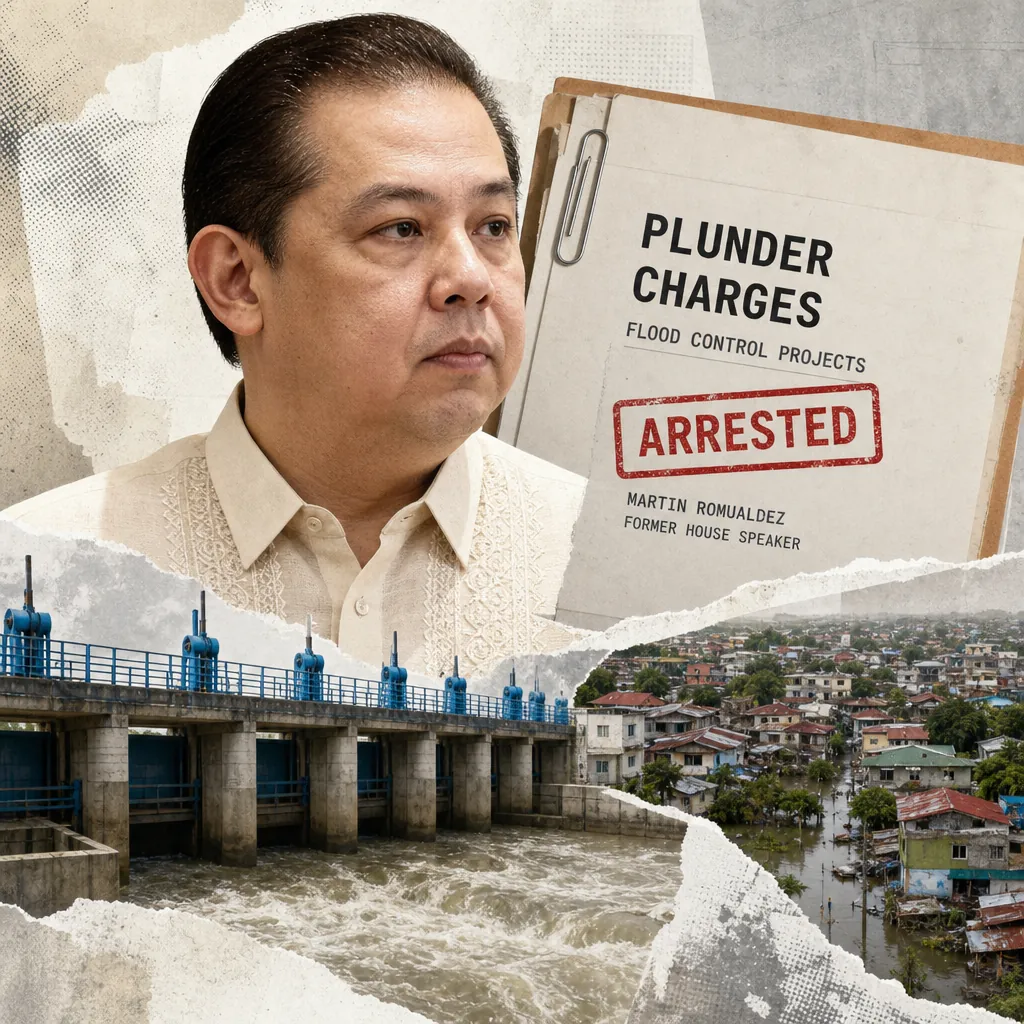
Habagat floods, ₱3.7B fund probe dominate
Severe southwest monsoon flooding across Luzon strands motorists and submerges hundreds of barangays, while senators allege ₱3.7 billion in wasted flood-control funds tied to Laguna Lake reclamation. The day's conversation blends immediate disaster response with demands for infrastructure accountability.
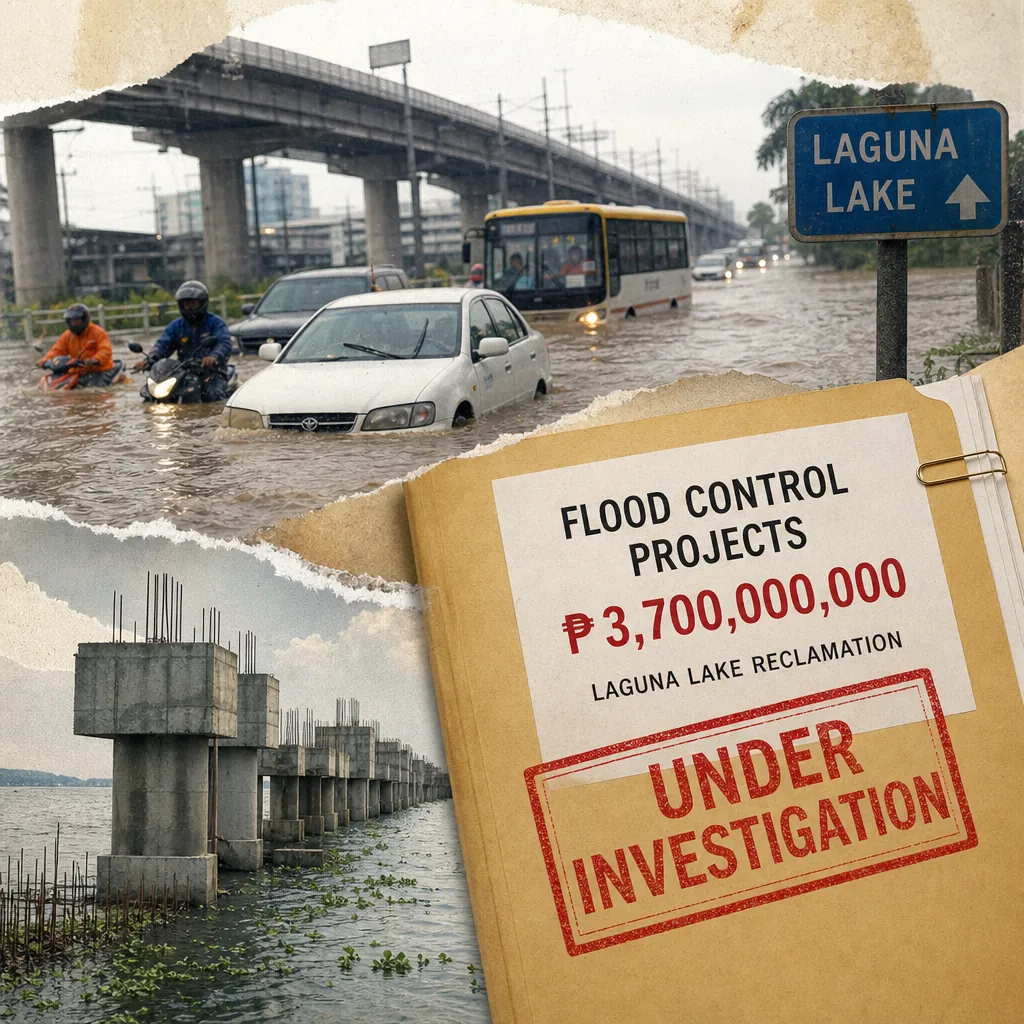
The southwest monsoon, known locally as Habagat, has turned Luzon's highways into rivers and its lowlands into lakes, and on September 1 the online conversation moved from reporting the disaster to dissecting its causes. A Reddit user stranded on the Subic–Clark–Tarlac Expressway (SCTEX) near the Mexico exit described waist-deep water and Class 1 vehicles barred from the road, writing, "Dami tuloy stranded. Stay safe sa lahat. Sana huminahon muna ang habagat" (Many are stranded. Stay safe, everyone. I hope the monsoon calms down).1 That personal account set the tone for a day in which official warnings, political accusations, and raw public frustration competed for attention.
By midday, the narrative had expanded beyond immediate hazard to systemic grievances. Senator Panfilo Lacson flagged that ₱3.713 billion in public funds may have been wasted on flood-control and multipurpose projects tied to disputed reclamation areas in Laguna Lake under Taguig City — a claim that drew modest engagement on social media but carried heavy weight for anyone tracking government spending and real estate development.45 The convergence of flooding and corruption allegations created a volatile mix of public anger and political accountability, setting the stage for further reactions.
As the day progressed, the conversation evolved into a mix of civic action and sharp criticism of local governance. A "Kilos Bulacan" rally calling for an end to flooding and a fight against corruption drew 124 likes on Facebook, underscoring how the disaster had mobilized community activism.15 A Reddit thread highlighted Pampanga Governor Lilia Pineda's defensive response to netizens criticizing officials for wearing designer clothes during flood relief visits, with her remark, "Kung nagkamali kami sa gano'ng attire namin, sorry" (If we made a mistake in our attire, sorry), receiving 72 upvotes and sparking 57 comments that largely mocked the prioritization of optics over substance.6 The most contentious moment came when a story circulated about Montalban's mayor suggesting residents build two-storey houses to cope with floods; the Reddit post drew 118 upvotes and 47 comments, with many users expressing disbelief at the suggestion, framing it as an abdication of government responsibility rather than a viable solution.7
Key themes
- Flooding strands thousands on NLEX and SCTEX for hours, even days — Motorists reported being stuck on the North Luzon Expressway (NLEX) for over 12 hours, with some entering on August 31 and exiting on September 1. Senators Robin Padilla and Lito Lapid were among those affected, with Padilla's seven-hour trip to San Simon becoming a symbol of the gridlock.76 TV reports showed truck drivers running out of fuel and food, and residents selling snacks to stranded travelers.7071
- Senator alleges ₱3.7 billion wasted on flood-control projects tied to Laguna Lake reclamation — Senator Panfilo Lacson claimed that ₱3.713 billion in public funds may have been wasted on flood-control and multipurpose projects linked to disputed reclamation areas in Taguig. The allegation, which drew limited social engagement but significant media pickup, directly questions the integrity of infrastructure spending and the legality of land development in the area.45
- Public officials' tone-deaf remarks draw widespread derision — The Montalban mayor's suggestion that residents build two-storey houses to cope with flooding, and Governor Pineda's apology over designer clothing during relief visits, both became lightning rods for criticism on Reddit. Users saw these as evidence that officials are out of touch with the realities of flood-prone communities.67
- Marcos orders stricter enforcement of no-build zones — President Ferdinand Marcos Jr. directed agencies and local governments to strictly enforce no-build zones and other climate-related regulations, citing decades of unimplemented urban master plans. The directive, relayed by Palace Press Officer Claire Castro, acknowledges that structures built in hazard areas have worsened flooding.4356
- Air quality in Metro Manila reaches 'acutely unhealthy' levels due to haze from Indonesia — Smoke from wildfires in Kalimantan, Indonesia, carried by the monsoon, pushed air quality indices in several Metro Manila cities to 201–300, a level that can cause breathing difficulties. The DENR reported that areas including Parañaque, Quezon City, and Las Piñas were affected, leading to class suspensions in some areas.3659
- Fish kill in Laguna de Bay adds economic toll to environmental crisis — A fish kill affecting an estimated 6.4 hectares of fish cages in Jala-Jala, Rizal, resulted in the death of over 20,000 kilograms of fish, including tilapia, worth around ₱700,000. Fisherfolk groups called on the Laguna Lake Development Authority to investigate, linking the event to algal blooms exacerbated by heavy rains.69
- SM Supermalls reports record occupancy and bullish Q4 outlook despite economic headwinds — SM Supermalls president Steven Tan announced an 8% rise in first-half revenue to ₱41.8 billion and a record 96% occupancy rate. Tan expressed optimism for the fourth quarter, citing Christmas crowds and new cinema formats, even as he acknowledged the cost pressures from the national energy emergency.2130
- Senate approves bill to ease condominium redevelopment rules — The Senate passed the Condominium Redevelopment Act, which lowers the threshold for unit owner approval needed to redevelop aging condominiums, replacing the current unanimous consent requirement that Senator Francis Escudero called "impossible." The bill aims to address the aging stock of condominiums and facilitate urban renewal.44
How the narratives stack
Dominant — The dominant narrative is the flooding crisis itself, framed as a failure of infrastructure and governance. Within the captured set, this story drew the most extensive coverage across television, online news, and social media. TV networks like GMA 7 and A2Z ran multiple segments on NLEX standstills, stranded motorists, and the human toll, with one GMA 7 report on the NLEX traffic jam alone carrying an estimated advertising-equivalent value of over ₱21 million — the highest in the set.70 The narrative is not just about weather; it is about why, after decades and trillions of pesos spent on flood control, the water still rises. Senator Lacson's ₱3.7 billion allegation provided a concrete target for public anger, linking the immediate flooding to long-term mismanagement.5
Counter-narrative — A counter-narrative emerged from those defending local governance and corporate projects. A Reddit user, citing Professor Gerry Cacanindin, defended Marikina's flood-clearing operations, arguing that critics misunderstood the city's use of skid-steer loaders and that "Marikina has successfully solved its flooding problem and routinely restores mud-soaked areas to normal in a matter of hours each time the Marikina River overflows."10 Similarly, San Miguel Corporation chairman Ramon Ang denied allegations that the New Manila International Airport (NMIA) in Bulacan caused flooding, insisting that the airport is surrounded by rivers with water level control and that the site is not reclaimed land but former fishponds.62 These defenses, however, drew far less engagement than the criticisms, suggesting that the public is skeptical of official reassurances.
Emerging — An emerging narrative centers on the legal and regulatory implications of the flooding, particularly the enforcement of no-build zones and the redevelopment of aging condominiums. President Marcos's directive to strictly enforce no-build zones signals a policy shift that could affect property development in hazard-prone areas.43 The Senate's approval of the Condominium Redevelopment Act, which lowers the threshold for redevelopment, points to a growing recognition that the country's housing stock needs updating to meet climate challenges.44 These developments, while not yet dominating the conversation, could reshape the regulatory landscape for real estate.
Under-covered — The fish kill in Laguna de Bay received some coverage but was overshadowed by the flooding and corruption stories. The event, which destroyed over 20,000 kilograms of fish worth around ₱700,000, highlights the environmental degradation of the lake and its impact on fisherfolk livelihoods.69 This story is directly relevant to the reclamation issue, as both involve the health of Laguna Lake, yet it did not gain the same traction. Similarly, the air quality crisis in Metro Manila, while covered by several outlets, was treated as a secondary concern to the flooding, even though it poses immediate health risks to millions.36
Platform insights
- Facebook — Facebook served as the primary battleground for political narratives and relief efforts. Senator Risa Hontiveros's visit to Paombong, Bulacan, to deliver aid drew 4,112 likes, indicating strong public approval of direct relief actions.9 In contrast, the Lacson allegation post drew only 13 likes and 12 haha reactions, signaling both concern and skepticism.4 The platform also hosted the "Kilos Bulacan" rally announcement, which drew 124 likes, and the Iglesia Ni Cristo relief efforts, which generated 685 likes and 94 comments.1415 Facebook's engagement patterns suggest that users respond more positively to concrete help than to political accusations.
- Reddit — Reddit became the hub for critical analysis and user-driven commentary. The designer clothing controversy and the two-storey house suggestion were dissected at length, with the latter's 47 comments reflecting a sustained debate on government competence.67 Users also engaged with the Marikina defense post, which received 59 upvotes and 11 comments, showing that the community values technical explanations that counter superficial criticism.10 Reddit's tone is more analytical and cynical than Facebook's, with users often mocking official statements and demanding evidence-based solutions.
- Twitter/X — Twitter functioned as a rapid alert system, with government aerial inspection updates and flood relief notices gaining traction. The Department of National Defense inspection post reached 7,612 views and 63 likes, but generated a mixed reaction of 266 sad and 123 angry emojis on Facebook's cross-post, indicating public frustration with the pace of response.11 News outlets like Inquirer.net and UNTV used Twitter to disseminate updates on the flooding and the Lacson allegation, with the latter drawing 1,183 views.5 Twitter's real-time nature makes it a key platform for breaking news and official statements.
- YouTube — YouTube served as a platform for longer-form video content, including TV news segments and vlogs. GMA News and other networks posted their reports on the flooding, which accumulated significant viewership. The platform also hosted content from the Iglesia Ni Cristo and other organizations documenting their relief efforts.14 YouTube's engagement is less immediate than other platforms but provides a lasting record of the crisis.
Key voices and communities
- Local Government and Political Figures — Provincial and municipal officials, along with national legislators, are the most prominent voices in this conversation. Their actions and statements directly shape the flooding narrative affecting residential areas. Senatorial voices like Lacson and Hontiveros emphasize accountability and relief, while local executives like Governor Pineda and the Montalban mayor face criticism for their responses. Their messaging oscillates between demonstrating responsive governance and defending against accusations of negligence.569
- Affected Residents and Community Voices — Residents directly experiencing flooding constitute a highly engaged but fragmented group, primarily surfacing through Reddit and Facebook posts detailing personal hardships. Their influence stems from authenticity rather than reach, with individual posts generating modest viewership but high trust among local audiences. The tone is pragmatic—focused on immediate survival, mobility, and the adequacy of infrastructure.17
- Institutional and Advocacy Groups — Religious organizations, civic coalitions, and national agencies like the DSWD and DOH occupy a distinct stakeholder space, combining relief operations with public health advisories and political advocacy. The Iglesia Ni Cristo relief efforts drew 685 likes and 94 comments, while the Kilos Bulacan rally tied flooding to corruption. These groups carry moral weight and can influence policy decisions on land use and flood mitigation.1415
- Media and Commentary Platforms — News organizations like GMA Network, Inquirer.net, and Daily Tribune serve as amplifiers for all other stakeholder voices. Their reporting frames the severity and scope of flooding—such as the 965 affected barangays across CALABARZON—and shapes public understanding of whether this is a seasonal nuisance or a systemic failure. Media framing directly affects investor and buyer confidence in regions associated with flooding.1213
- Corporate and Business Leaders — Executives like SM Supermalls president Steven Tan and San Miguel Corporation chairman Ramon Ang represent the business community's response to the crisis. Tan's bullish outlook on consumer spending and Ang's denial of the NMIA's role in flooding highlight how corporations are navigating the reputational risks of operating in flood-prone areas. Their statements are closely watched by investors and the public.2162
Narrative streams
Flooding as Infrastructure Failure: The NLEX Standstill and the Human Toll
The flooding of the North Luzon Expressway (NLEX) became the day's most visceral symbol of infrastructure failure. TV reports showed motorists stranded for over 12 hours, with some entering the expressway on August 31 and only exiting on September 1. A GMA 7 report captured truck driver Edgardo, who ran out of fuel and had his power steering fail, saying, "Gutom, puyat, pagod... Halos bumigay na nga, pati yung app ko nag-alala" (Hungry, sleep-deprived, exhausted... I almost gave up, even my app was worried).70 The report also noted that residents near the expressway were selling food to stranded motorists, turning the crisis into an impromptu market. Senator Robin Padilla shared his own seven-hour ordeal on the Senate floor, saying, "Umalis po kami ng 4:30 ng umaga... Nakalabas po kami ng San Simon 11:30 na ng tanghali. Pitong oras po... sa San Simon lang po 'yon" (We left at 4:30 in the morning... We only managed to exit San Simon at 11:30 in the morning. Seven hours... and that was just to San Simon).76 The human cost extended beyond inconvenience: agricultural products rotted on trucks, and a vehicle caught fire in the gridlock.70 The read for the sector: For developers and businesses reliant on logistics and commuting, the NLEX standstill is a stark reminder that infrastructure resilience is not just a government concern but a commercial one. Companies with operations in Central Luzon must factor in climate-related disruptions to their supply chains and employee mobility, and they should advocate for more robust infrastructure investment.
The ₱3.7 Billion Question: Corruption Allegations and the Laguna Lake Reclamation
Senator Panfilo Lacson's allegation that ₱3.713 billion in public funds may have been wasted on flood-control projects tied to disputed reclamation areas in Laguna Lake injected a corruption angle into the flooding narrative. The claim, which drew limited social engagement but significant media pickup, directly questions the integrity of infrastructure spending and the legality of land development in Taguig. The issue is not new: Senator Alan Peter Cayetano had earlier raised allegations of illegal titling in the area, and the conversation quickly spread across Facebook and Twitter.3 The reclamation projects are part of the Taguig Bay Area's development, which includes Entertainment City and other high-value real estate. If the Senate pursues an investigation, it could cast doubt on the security of property titles in reclaimed areas, affecting buyer confidence and potentially delaying projects. The read for the sector: Developers with exposure to the Taguig reclamation area should anticipate heightened due diligence from buyers and potential regulatory delays. They must verify the legality of their land titles and be prepared to communicate transparently about their compliance with environmental and zoning regulations. The allegation also underscores the reputational risk of being associated with projects perceived as corrupt or environmentally damaging.
Tone-Deaf Officials and the Public's Patience: The Two-Storey House Suggestion and Designer Clothing Controversy
The Montalban mayor's suggestion that residents build two-storey houses to cope with flooding became a flashpoint for public anger. The Reddit post drew 118 upvotes and 47 comments, with users expressing disbelief at the suggestion. One user commented, "Ano 'to, payag ka bang lumubog ang bahay mo?" (What is this, are you okay with your house sinking?).7 The suggestion was seen as an abdication of government responsibility, implying that flooding is an accepted lifestyle risk rather than a solvable problem. Similarly, Governor Pineda's apology over designer clothing during relief visits drew 72 upvotes and 57 comments, with many mocking the prioritization of optics over substance.6 These incidents reflect a broader frustration with officials who seem out of touch with the realities of flood-prone communities. The read for the sector: For developers and government agencies, these reactions highlight the reputational risk of appearing insensitive to the struggles of affected communities. Any communication about flood resilience must be grounded in empathy and concrete action, not just marketing claims. The public is highly attuned to hypocrisy and will quickly call out statements that seem detached from reality.
Marcos's No-Build Zone Directive: A Policy Shift with Real Estate Implications
President Ferdinand Marcos Jr. directed government agencies and local government units to strictly enforce no-build zones and other climate-related regulations, citing decades of unimplemented urban master plans. Palace Press Officer Claire Castro relayed the directive, noting that the Lina Law, which prohibits construction in hazard areas, has been in place since 1995 but has not been effectively enforced.56 The directive acknowledges that structures built in flood-prone areas have worsened the impact of flooding. For the real estate sector, this could mean stricter enforcement of zoning regulations, which may affect projects in hazard-prone areas. Developers may need to reassess the viability of projects in no-build zones and ensure compliance with environmental regulations. The read for the sector: This policy shift could lead to increased regulatory scrutiny and potential delays for projects in flood-prone areas. Developers should proactively review their projects' compliance with no-build zone regulations and engage with local governments to understand how the directive will be implemented. The directive also presents an opportunity for developers to differentiate themselves by building in safer, more resilient locations and marketing those attributes to buyers.
SM Supermalls' Bullish Outlook Amidst the Floods: Consumer Spending Holds Up
Despite the flooding and economic headwinds, SM Supermalls reported a record 96% occupancy rate and an 8% rise in first-half revenue to ₱41.8 billion. President Steven Tan expressed optimism for the fourth quarter, citing Christmas crowds and new cinema formats like ScreenX and LED screens. "We are very optimistic about it," Tan said, noting that mall traffic had stayed resilient despite the heavy rains.21 The company is also expanding its green recycling machine network to 30 malls, part of its sustainability efforts.48 Tan acknowledged the cost pressures from the national energy emergency, which has raised electricity and fuel costs for tenants. The read for the sector: SM's performance suggests that consumer spending remains robust even during crises, but the cost of doing business is a growing concern. Developers and retailers should prepare for higher operating costs and consider how to pass on or absorb these increases. The resilience of consumer spending also indicates that well-located, well-managed properties can weather short-term disruptions, but long-term climate risks remain a factor in investment decisions.
The Air Quality Crisis: Haze from Indonesia Chokes Metro Manila
The southwest monsoon brought not only rain but also haze from wildfires in Kalimantan, Indonesia, pushing air quality in Metro Manila to "acutely unhealthy" levels. The Department of Environment and Natural Resources (DENR) reported that areas including Parañaque, Quezon City, and Las Piñas recorded air quality indices between 201 and 300, a level that can cause breathing difficulties and other health risks.36 The haze led to class suspensions in some areas and prompted residents to wear face masks. TV reports showed drone footage of the smog blanketing the city.59 The read for the sector: The air quality crisis adds another layer of environmental risk to the real estate sector. Developers should consider air quality in their site selection and building design, particularly for projects in Metro Manila. The haze also highlights the transboundary nature of environmental challenges, which require regional cooperation to address.
Fish Kill in Laguna de Bay: Environmental Degradation and Livelihood Loss
A fish kill in Laguna de Bay affected an estimated 6.4 hectares of fish cages in Jala-Jala, Rizal, resulting in the death of over 20,000 kilograms of fish, including tilapia, worth around ₱700,000. Fisherfolk groups called on the Laguna Lake Development Authority to investigate, linking the event to algal blooms exacerbated by heavy rains.69 The fish kill is a reminder of the environmental toll of pollution and reclamation in the lake, which is also the subject of the reclamation controversy. The read for the sector: The fish kill underscores the environmental risks associated with development around Laguna Lake. Developers with projects near the lake should be aware of the potential for environmental degradation and the reputational risks of being associated with pollution. The event also highlights the need for sustainable development practices that protect natural resources and the livelihoods of communities that depend on them.
Conversation trajectory
- Next major weather system (2–3 weeks) — The next typhoon or monsoon surge will resurface all flood-related narratives and amplify scrutiny of development decisions. Expect renewed calls for accountability and increased attention to flood-prone areas. Developers should have flood-resilience messaging ready and be prepared to respond to questions about their projects' vulnerability.1
- Senate investigation into flood-control anomalies (1–3 months) — If the Senate pursues an investigation into the ₱3.7 billion allegation, it could trigger a wave of accountability-focused conversations and potentially lead to regulatory changes. Developers with exposure to the Taguig reclamation area should monitor developments closely and prepare legal and communications responses.5
- Release of investigative reports or legislative inquiries (1–2 months) — Any formal inquiry into the flood-control projects or the reclamation issue could lead to heightened scrutiny of land titles and environmental compliance. Developers should ensure all documentation is in order and be prepared to demonstrate compliance.4
- Implementation of no-build zone enforcement (3–6 months) — The directive to strictly enforce no-build zones could lead to increased regulatory scrutiny and potential delays for projects in hazard-prone areas. Developers should proactively review their projects' compliance and engage with local governments to understand how the directive will be implemented.43
- Condominium Redevelopment Act implementation (6–12 months) — The Senate's approval of the bill to ease condominium redevelopment rules could spur a wave of redevelopment projects, particularly for aging buildings. Developers should assess the potential opportunities and challenges presented by the new law.44
Trigger events to watch:
- The next major weather system affecting Luzon, which will resurface all flood-related narratives.
- Any Senate hearing or investigative report on the alleged flood-control anomalies.
- Official announcements on the implementation of no-build zone enforcement.
- The passage of the Condominium Redevelopment Act into law and its implementing rules.
Response guidance
Flood resilience messaging — Proactively release flood-resilience messaging for existing and upcoming projects in affected regions, emphasizing engineering solutions such as elevated ground floors, drainage integration, and flood mitigation partnerships with local governments. This directly counters the "build two-story homes" narrative that positions flooding as unavoidable. Use specific data and examples to demonstrate credibility, as audiences are highly informed and emotionally invested.7
Legal and communications response to reclamation allegations — Prepare a legal and communications response to the Taguig reclamation allegations, including verification of land titles and environmental compliance certificates for any projects in the disputed areas. Given the Senate's stated interest, anticipate heightened due diligence from buyers and potential regulatory delays. Communicate transparently about compliance and due process.5
Community support programs — Activate community support programs in flood-affected areas near existing developments, modeled on the positive reception of relief initiatives like those from the Iglesia Ni Cristo. Demonstrating localized commitment can build goodwill and buffer against broader anti-development sentiment linked to infrastructure failures.14
Air quality and health advisories — For developments in Metro Manila, consider air quality in building design and operations, such as installing air filtration systems. Communicate any measures taken to protect residents' health during haze events. Coordinate with health authorities to provide accurate information to residents.36
Engage with local governments — Proactively brief local government units in flood-prone areas on your projects' resilience measures and long-term solutions. Co-develop resilience standards that can be publicly communicated to reassure buyers and demonstrate alignment with community needs.5
Monitor social sentiment — Use social listening on Reddit and Facebook to inform FAQ content and site-specific reassurances. The public is highly critical of tone-deaf remarks, so ensure all communications are empathetic and grounded in action. Avoid defensive responses to criticism; instead, redirect focus to tangible relief actions and long-term solutions.6
Prepare for regulatory changes — Stay informed on the implementation of no-build zone enforcement and the Condominium Redevelopment Act. Review your project portfolio for compliance with new regulations and assess potential opportunities for redevelopment or adaptive reuse.4344
See the full picture behind today's signals.
This report draws from Media Meter's MediaWatch, our real-time monitoring engine tracking 2,470+ Philippine sources across print, broadcast, digital, and social. Explore how the platform turns raw coverage into decision-grade intelligence, then see how it's configured for teams like yours — whether you're in PR agencies, corporate comms, government, or marketing.
Want more? Browse our Report Library for sector and crisis intelligence, or request a demo and we'll have your brand set up before the call.
Want this kind of intelligence on your brand?
This brief is built on the same MediaWatch methodology that runs continuously across every brand we monitor. See your competitive landscape, Impact Score, and narrative trajectory in a 30-minute demo.