BSP Sees October Inflation Hitting 8.1%
The Bangko Sentral ng Pilipinas projected October inflation at 7.1 to 8.1 percent, the fastest pace since February 2023, as fuel, electricity and transport costs climbed. Banks, the peso and the stock market moved on the same day's data, with BDO posting a record nine-month profit and the peso strengthening for a third session.
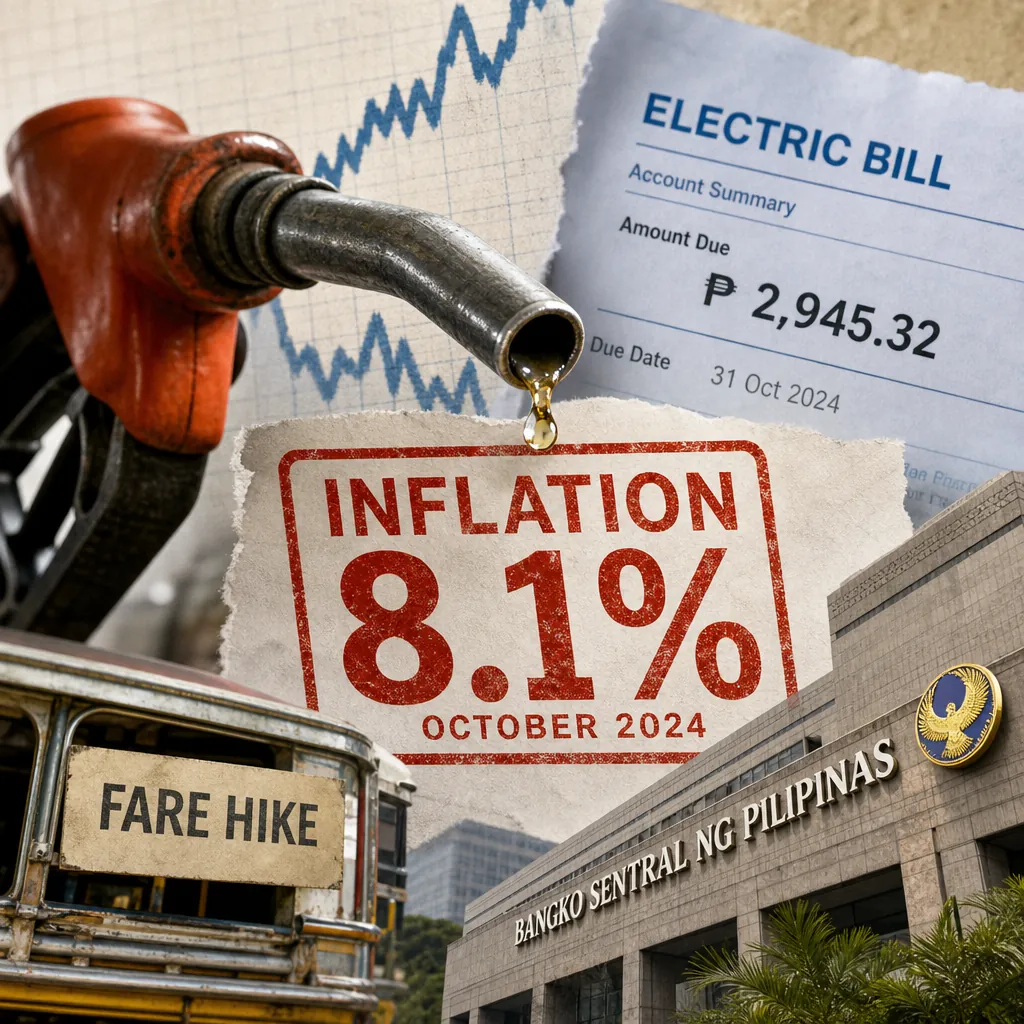
The Bangko Sentral ng Pilipinas (BSP), the country's central bank, said on Friday that inflation in October likely landed somewhere between 7.1 and 8.1 percent, a range whose top end would be the fastest rise in consumer prices since February 2023, when the rate hit 8.6 percent1264. The forecast, released in a statement and carried by outlets from the Manila Times to a Davao community paper, set the terms for a day of financial news in which the cost of living, the peso, bank earnings and the stock market all moved on the same set of numbers221. The Philippine Statistics Authority, the government's statistics agency, will publish the official October figure on November 5, and until then the central bank's range is the best available guide to how much more expensive the month was than the one before12.
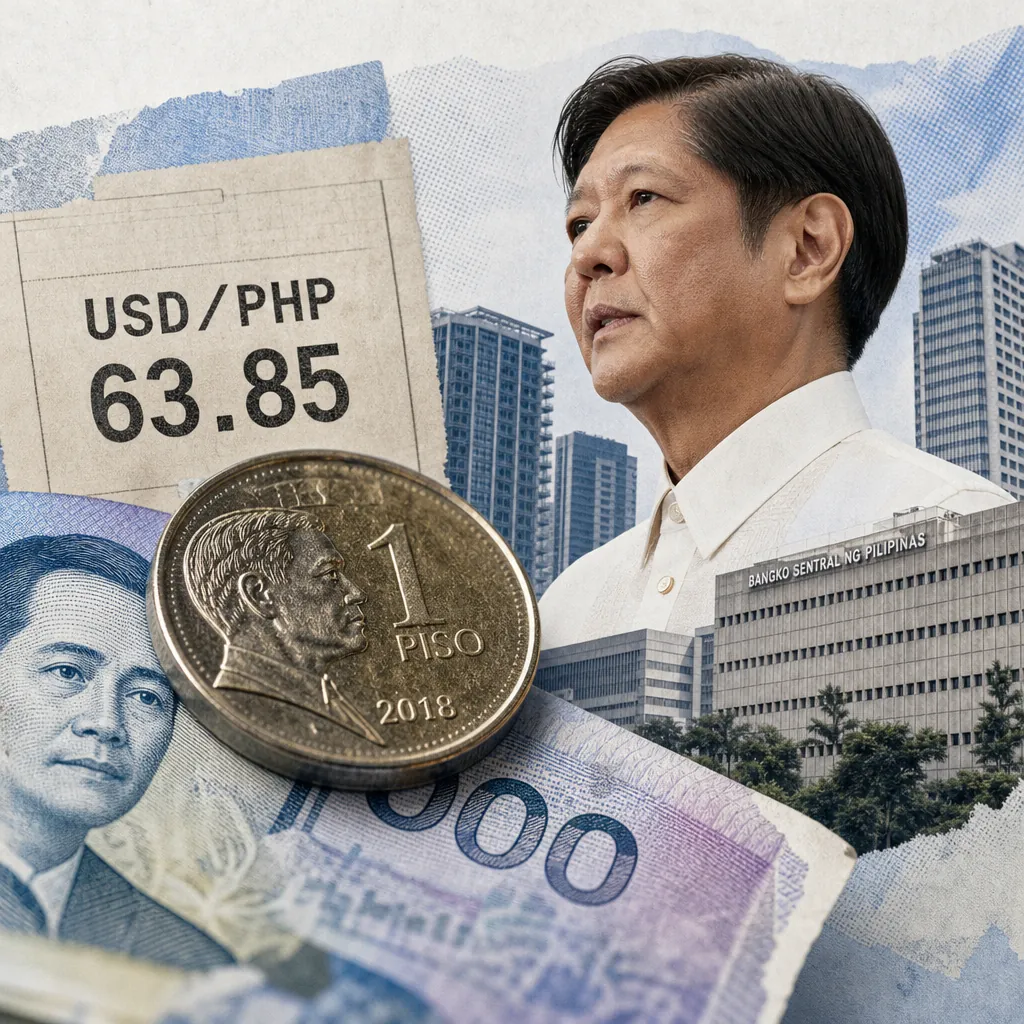
The BSP attributed the expected increase to higher domestic fuel prices, electricity charges and transport fares, partly offset by cheaper rice, vegetables, meat and fish on favorable supply conditions219. September's inflation rate was 7.2 percent, so the lower end of the forecast implies a slight easing and the upper end an acceleration12. The peso, meanwhile, strengthened for a third straight trading day, closing at P63.74 to the dollar from P63.85 on Thursday, its strongest close since October 23, after touching an all-time low of P64.20 on October 27429. The Philippine Stock Exchange Index (PSEi), the benchmark for the local bourse, fell 25.23 points, or 0.44 percent, to 5,680.35 as investors took profits and weighed higher oil prices and Middle East tensions40.
Beneath the macro numbers, the day's corporate news was dominated by bank earnings. BDO Unibank Inc., the country's largest bank by assets, reported a record nine-month net income of P63.6 billion, up 0.8 percent from P63.1 billion a year earlier, on loan growth of 16 percent to P4.1 trillion that outpaced the industry's 11 percent1751. East West Banking Corp. went the other way, with net income down 24.2 percent to P5 billion after it set aside P15.9 billion for expected credit losses14. Metrobank was named the Philippines' strongest bank for a sixth year by The Asian Banker, and Moody's Ratings gave the BSP a top-grade assessment for monetary and macro policy effectiveness8159. The coverage in this set ran almost entirely through online news channels, and the items reviewed carried substantial advertising-equivalent value — the estimated cost of buying the same space as paid advertising — with the inflation story alone running across at least six outlets212192164.
Key themes
- October inflation forecast at 7.1 to 8.1 percent, fastest since February 2023. The BSP's month-ahead projection put the top of the range at 8.1 percent, above September's 7.2 percent, driven by fuel, electricity and transport costs212. The official figure from the Philippine Statistics Authority is due November 512.
- The peso recovered to P63.74 after touching a record P64.20. The currency gained 11 centavos on Friday, its third consecutive session of strengthening, after President Ferdinand Marcos Jr. said the government would do everything it could to defend it429. The peso has still weakened about 9.15 percent since the end of 202582.
- BDO set a nine-month profit record of P63.6 billion. Loan growth of 16 percent to P4.1 trillion outpaced the banking industry's 11 percent, and the non-performing loan ratio improved to 1.60 percent from 1.77 percent174251.
- EastWest's profit fell 24.2 percent to P5 billion on credit provisions. The Gotianun-led bank booked P15.9 billion for expected credit losses, citing a more difficult economic environment, even as revenues grew 16 percent to P43.4 billion14.
- Moody's affirmed the Philippines' resilience and graded BSP policy effectiveness at "a." The credit rating agency cited a stable banking system, ample foreign-currency reserves and the central bank's ability to move rates in either direction as conditions change359.
- Most banks expect steady credit standards in the fourth quarter. In the BSP's Senior Bank Loan Officers Survey, 80.8 percent of respondent banks expected unchanged standards for enterprise loans and 85.7 percent for household loans, both higher than the third quarter6269.
- The PSEi slipped 0.44 percent to 5,680.35 on oil and Middle East concerns. Rising global oil prices and fears of renewed US strikes on Iran pulled the index back from Thursday's gains40.
- Small businesses face a double squeeze from inflation and a 5 percent policy rate. The BSP raised its benchmark rate to 5 percent in October, making borrowing more expensive just as input costs climb53.
How the narratives stack
Dominant. The inflation forecast was the day's most widely carried story in this set, appearing in at least six of the items reviewed across the Manila Times, the Inquirer, the Manila Bulletin, BusinessMirror and SunStar Davao212192164. The breadth reflects the story's consequence: inflation determines what every household pays for fuel, electricity and transport, and it sets the frame for the central bank's next interest-rate decision. The BSP's statement was short and identical across outlets, which is why the coverage reads as repetition rather than development — the same range, the same drivers, the same caveat about agricultural prices. The one outlet that added analysis was the Manila Bulletin, which argued in an opinion piece that the central bank cannot fight inflation alone because the drivers are structural supply shortages and transport costs, not excess demand71.
Counter-narrative. The peso's recovery and Moody's endorsement of the BSP's policy framework ran against the inflation story's gloom. The peso closed at P63.74, stronger for a third day, after the President's reassurance and seasonal remittances from overseas Filipino workers ahead of the Undas holiday429. Moody's gave the BSP an "a" for monetary and macro policy effectiveness, citing the credibility of its framework and its ability to tighten as energy prices raised inflation risks in 202659. The counter-narrative does not cancel the inflation problem — a currency that has weakened 9.15 percent since December 2025 is still weak — but it shows the central bank retains institutional credibility even as prices climb82.
Emerging. The bank earnings season produced two contrasting results on the same day. BDO's record profit and improving asset quality suggest the largest lenders are managing the higher-rate environment well1751. EastWest's 24.2 percent profit decline and P15.9 billion in credit provisions suggest smaller banks are absorbing more stress14. The BSP's loan officers survey, which found most banks expect steady credit standards, sits between the two: lending is not tightening sharply, but a small share of banks still leans toward tighter rules6269. The divergence between the largest and mid-sized banks is the pattern to watch as the full third-quarter earnings season unfolds.
Under-covered. The squeeze on small and medium enterprises appeared in only one item in this set, a Manila Times corporate news piece noting that inflation at 7.2 percent in September and a 5 percent policy rate make borrowing more expensive for businesses that already lack cash to fill orders53. The story matters because small and medium enterprises employ the majority of Filipino workers, and the combination of higher input costs and higher interest rates hits them harder than large firms with access to capital markets. It placed low in the day's coverage because it lacks a single dramatic number.
Platform insights
The items reviewed for this snapshot came through online news channels, with no social-media monitoring writeup available for the day. The distribution of attention within the set is therefore a measure of which stories the news outlets chose to carry, not of public engagement.
- Online news portals. The inflation forecast dominated, with the Manila Times, Inquirer, Manila Bulletin, BusinessMirror and SunStar Davao all carrying versions of the BSP statement212192164. The Inquirer's business desk paired it with the peso and stock market stories, treating the three as a single package for readers tracking the economy440.
- Community and regional outlets. SunStar Davao ran the BSP statement verbatim under its #wegotmail reader-contribution format, and Bombo Radyo Cauayan carried the peso story in Cebuano, indicating the inflation and currency stories reached regional audiences through local-language channels2129.
- Specialist and trade publications. BusinessMirror carried the most detailed treatment of the bank survey and the Moody's assessment, including the specific percentages of banks expecting steady standards6259. Philstar's Freeman Cebu edition ran a detailed analysis of the peso's decline, tracing it to dollar strength, oil imports and the breach of the government's P60-P62 assumption82.
Key voices and communities
The Bangko Sentral ng Pilipinas. The central bank was the day's primary source, issuing the inflation forecast and the loan officers survey on the same day262. Its statement was careful and conditional — "likely to come from," "could be partially offset" — and it committed to remaining "vigilant and guided by incoming data"21. The BSP's credibility is the anchor for the peso's recovery and Moody's assessment59.
Bank economists and analysts. Michael Ricafort, chief economist at Rizal Commercial Banking Corp., attributed the peso's recovery to the President's reassurance and seasonal remittance flows429. Alvin Arogo, an economist at Philippine National Bank, forecast October inflation at 7.4 percent, near the middle of the BSP's range2. Luis Limlingan of Regina Capital Development Corp. attributed the stock market's retreat to profit-taking after Thursday's gains40.
The Marcos administration. President Marcos said the government would do everything it could to defend the peso, a statement that Ricafort credited with helping the currency recover29. The Manila Bulletin's opinion piece argued that the administration is expecting the central bank to defend the currency and stabilize the economy single-handedly, which it called a serious mistake71.
Bank executives. BDO's disclosure emphasized "robust loan growth, double-digit pre-provision operating profit growth and further improvement in asset quality"17. Metrobank president Fabian Dee attributed the bank's sixth straight strongest-bank recognition to customer trust and employee dedication81. Security Bank chairman Cirilo Noel said the bank's Three Golden Arrows governance award reflected its commitment to sound oversight28.
Narrative streams
The BSP projects 7.1 to 8.1 percent inflation for October
The central bank's month-ahead forecast, released Friday, put October inflation in a range whose top end would be the fastest since February 202312. The drivers are specific: higher domestic fuel prices, electricity charges and transport fares, partly offset by lower prices for rice, vegetables, meat and fish because of favorable supply conditions219. The BSP said it would remain vigilant and guided by incoming data, particularly on inflation and growth prospects, and would assess the impact of developments in the Middle East on the country's inflation and economic outlook21.
The forecast matters because it sets expectations before the Philippine Statistics Authority releases the official figure on November 512. If inflation lands at the top of the range, it would be the fastest pace in three years and eight months, and it would increase pressure on the BSP to raise its policy rate again64. The BSP already raised the benchmark rate to 5 percent in October, and Nomura has said it could deliver another 50-basis-point hike in December and 25 basis points in early 20275355. A basis point is one-hundredth of a percentage point, so 50 basis points is half a percentage point.
The read for households and businesses is that borrowing costs are likely to stay high or rise further, and that the prices of fuel, electricity and transport will continue to pressure household budgets even if food prices ease. For retailers and transport operators, the offsetting decline in agricultural prices offers limited relief because fuel and electricity are larger cost items. For the central bank, the forecast is a test of its credibility: Moody's has graded its framework highly, but the same agency noted that inflation expectations have stayed "anchored" only because the BSP has been willing to tighten59.
The peso closes at P63.74 after a record low of P64.20
The peso's recovery on Friday was its third consecutive session of strengthening, bringing it to P63.74 from P63.85 on Thursday and further below the intraday record of P64.20 reached on October 274. Ricafort attributed the gain partly to President Marcos's reassurance that the government would defend the currency, and partly to the public's preparation for the long Undas weekend and remittances from overseas Filipino workers29. The peso opened at P63.67, reached a high of P63.61 and a low of P63.77 during the day29.
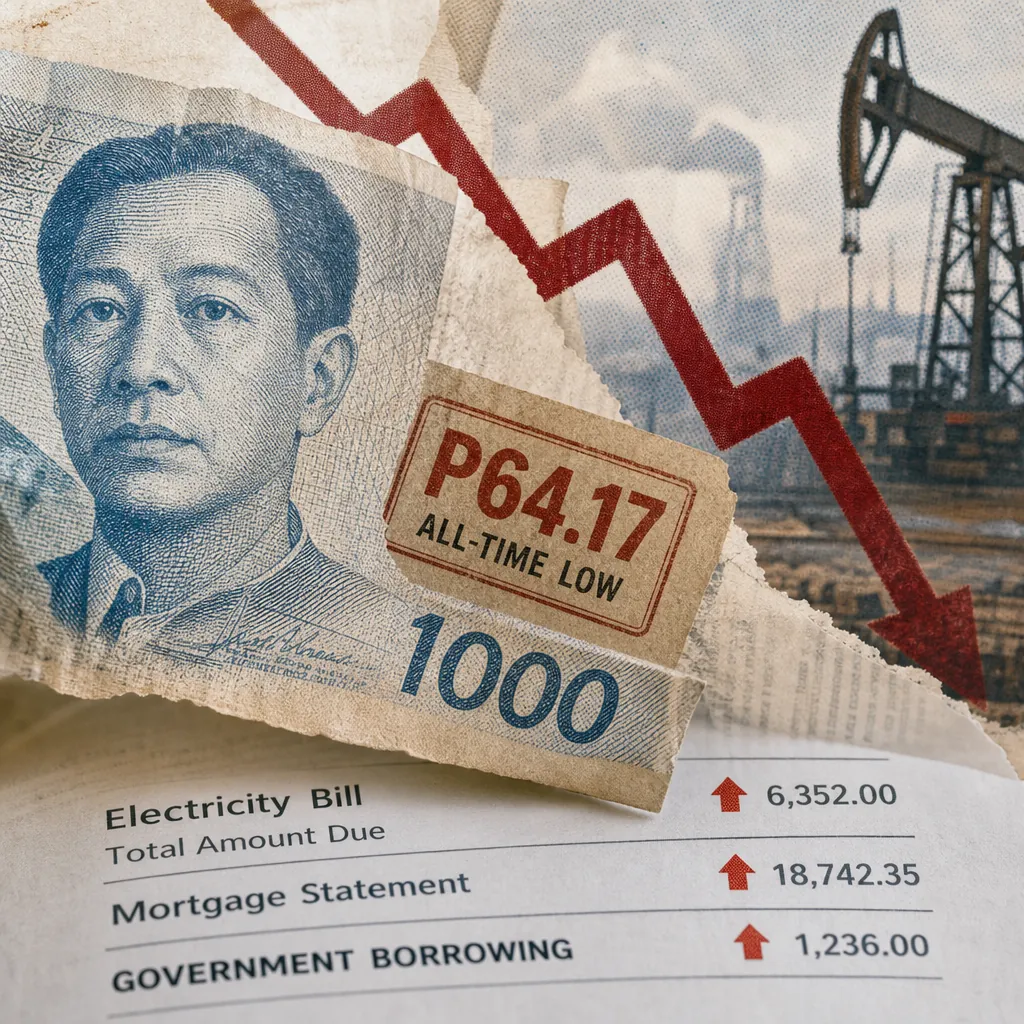
The currency's longer trajectory is weaker. It has fallen about 9.15 percent since December 29, 2025, when it stood at P58.79, and it has closed at an all-time low 33 times this year82. The government's official assumption of P60 to P62 through 2030 has already been broken82. The Freeman's analysis attributed the decline to a combination of dollar strength, oil imports — the Philippines imports 98 percent of its oil, mostly from the Middle East — and the peso's breach of psychological barriers82.
The read for importers and consumers is that the peso's Friday gain is a pause, not a reversal. A weaker peso makes imported fuel and goods more expensive, which feeds directly into the inflation the BSP is forecasting. For the central bank, defending the currency with higher interest rates risks slowing the economy; allowing it to fall risks importing more inflation. The BSP has said it is ready to intervene in the foreign exchange market to curb excessive volatility, a commitment that sets a floor under the currency without fixing it at a particular level4.
BDO posts a record P63.6 billion nine-month profit
BDO Unibank's net income rose 0.8 percent to P63.6 billion in the first nine months of 2026 from P63.1 billion a year earlier, a record for the period1751. Gross customer loans expanded 16 percent to P4.1 trillion, outpacing the banking industry's 11 percent growth, with all lending segments recording double-digit increases1742. Net interest income grew 11 percent, non-interest income rose 3 percent, and pre-provision operating profit — earnings before setting aside money for potential loan losses — grew 10 percent51. Return on equity stood at 13.1 percent17. The non-performing loan ratio improved to 1.60 percent from 1.77 percent, and the bank's coverage ratio for those loans stood at 132 percent51.
The read for the banking sector is that the largest lender is gaining market share while maintaining asset quality, which gives it room to absorb higher funding costs if the BSP raises rates again. For borrowers, BDO's expansion means credit is available, but at rates that track the policy rate. For competitors, the 16 percent loan growth sets a benchmark that mid-sized banks will be measured against.
EastWest's profit falls 24.2 percent on credit provisions
East West Banking Corp. reported net income of P5 billion for the first nine months, down 24.2 percent from P6.6 billion a year earlier, after booking P15.9 billion in provisions for expected credit losses14. The provisions reflect what the bank called a more difficult and uncertain economic environment. Its non-performing loan coverage stood at 90 percent14. The decline came despite revenue growth: net revenues climbed 16 percent to P43.4 billion, net interest income rose 22 percent to P36.2 billion, and service charges, fees and commissions grew 10 percent to P5.8 billion14. Operating expenses rose 10 percent to P21 billion, slower than revenue growth14.
The read for mid-sized banks is that revenue growth alone does not protect earnings when credit costs rise. EastWest's 90 percent coverage ratio is lower than BDO's 132 percent, which means it has less of a buffer if more borrowers default1451. For borrowers, the provisions signal that banks are pricing in more risk, which could mean tighter lending standards for customers with weaker credit histories even as the BSP survey shows most banks holding standards steady62.
Moody's grades BSP policy effectiveness at "a"
Moody's Ratings said the Philippines' monetary policy flexibility, resilient banking system and substantial foreign exchange reserves strengthen the country's ability to withstand domestic and global risks3. In its Issuer In-Depth report, the agency gave the BSP an "a" assessment on monetary and macro policy effectiveness, citing the credibility of the monetary policy framework, exchange-rate flexibility and effective banking sector oversight59. It said the BSP has demonstrated its ability to respond to changing conditions, easing when inflationary pressures were subdued and tightening as higher energy prices increased inflation risks in 202659. BSP Governor Eli Remolona Jr. said the assessment affirms the country's resilience amid evolving domestic and global risks3.
The read for investors and creditors is that the Philippines retains an investment-grade policy framework even as inflation accelerates. That matters for the cost of government borrowing and for the peso: a central bank that is seen as credible can raise rates without triggering a loss of confidence. For households, the assessment offers no immediate relief from higher prices, but it reduces the risk of a disorderly currency move that would make imports even more expensive.
Most banks expect steady credit standards in the fourth quarter
The BSP's Senior Bank Loan Officers Survey, which gathered responses from 55 of 60 banks between September 2 and October 6, found that 80.8 percent of respondents expected unchanged credit standards for enterprise loans in the fourth quarter, up from 71.2 percent in the third quarter6269. For household loans, 85.7 percent expected steady standards, up from 77.1 percent62. Among banks expecting changes, the bias toward tightening moderated, and a small share expected to ease standards62. Respondents cited uncertainty over the economic outlook as a factor62.
The read for businesses and households is that access to credit is unlikely to tighten sharply in the last three months of the year, but it is also unlikely to loosen much. The survey's positive diffusion indexes — a measure that weighs the share of banks tightening against the share easing — show that banks still lean toward tighter rules even as loan demand strengthens69. For small and medium enterprises, which borrow at higher rates than large firms, the practical effect is that credit remains available but expensive, especially with the policy rate at 5 percent53.
The PSEi falls 0.44 percent on oil and Middle East tensions
The Philippine Stock Exchange Index closed at 5,680.35 on Friday, down 25.23 points or 0.44 percent, while the broader all-shares index declined 0.51 percent40. Philstocks Financial Inc. attributed the retreat to higher oil prices amid fears of renewed US attacks on Iran after next week's US midterm elections, and to Houthi attacks on Saudi Arabia and incidents involving tankers struck by mines in the Strait of Hormuz40. Limlingan of Regina Capital also cited profit-taking after Thursday's gains40.
The read for investors is that the local market is trading on external risk rather than domestic fundamentals. Higher oil prices raise import costs, which weakens the peso and feeds inflation, creating a loop that the central bank can only partly offset with interest rates. For companies that rely on imported fuel or raw materials, the market's decline reflects expected pressure on margins in the fourth quarter.
Small businesses face higher costs and a 5 percent policy rate
A Manila Times corporate news piece described the squeeze on small and medium enterprises: a construction company with projects lined up but no funds for materials, a distributor with a large purchase order but no capital to replenish inventory, a logistics provider with regular clients but rising fuel costs and delayed payments53. Inflation rose to 7.2 percent in September from 6.1 percent in August, and the BSP raised its policy rate to 5 percent in October53. For small and medium enterprises, higher prices mean spending more on supplies, transportation and utilities, while higher interest rates make additional capital more expensive53.
The read for the sector is that the combination of inflation and higher rates hits businesses that lack access to capital markets hardest. Large firms can issue bonds or borrow at benchmark rates; small firms borrow at spreads that widen when credit risk rises. The BSP's survey showing steady credit standards offers some reassurance, but the cost of that credit is the issue, not its availability62.
Brand value and governance recognition round out the corporate news
Brand Finance's Asean 500 2026 report found that the combined value of Philippine brands rose 11 percent to $35.9 billion, the second-fastest growth among the six Asean markets covered, behind Vietnam's 15 percent and ahead of the regional average of 8 percent63. Yet Philippine brands represented only 11.4 percent of the Asean 500's combined value of $315.6 billion, placing the country sixth among the markets ranked, with the fewest entries at 66 companies63. SM Investments Corporation received the Five Golden Arrow Award from the Institute of Corporate Directors for the third consecutive year, based on its 2025 Asean Corporate Governance Scorecard assessment68. Security Bank earned Three Golden Arrows from the same institute28.
The read for Philippine companies is that brand value is growing faster than the regional average but from a smaller base, and that governance recognition is becoming a differentiator for banks and conglomerates seeking to attract institutional investment. The Asean Corporate Governance Scorecard evaluates how companies protect shareholder rights, disclose material information, maintain accountability and exercise board oversight68.
Conversation trajectory
November 5: Philippine Statistics Authority releases official October inflation. The official figure will confirm whether inflation landed at the low, middle or high end of the BSP's 7.1 to 8.1 percent range12. A print above 8 percent would increase pressure on the BSP to raise rates again at its next meeting; a print near 7.1 percent would support the view that inflation is easing. Watch the fuel, electricity and transport components specifically, because those are the drivers the BSP named2.
December: BSP policy meeting and Nomura's forecast of another 50-basis-point hike. Nomura has said the BSP could raise its policy rate by another 50 basis points in December and 25 basis points in early 202755. The December meeting will be the first opportunity for the central bank to respond to the official October and November inflation data. A hike would raise borrowing costs for businesses and households and could support the peso, but it would also slow demand in an economy already facing weak consumer sentiment.
Ongoing: peso trading around P64. The peso's record low of P64.20 on October 27 and its recovery to P63.74 on Friday set a range that traders will test482. Watch whether the BSP intervenes to defend the currency and whether oil prices continue to rise. The Strait of Hormuz, through which much of the Philippines' imported oil passes, remains a flashpoint40.
Fourth quarter: bank earnings season continues. BDO and EastWest have reported; other banks will follow. Watch whether the divergence between the largest banks' record profits and mid-sized banks' credit provisions widens1714. The BSP's loan officers survey suggests credit standards are steady, but the cost of credit is rising62.
November 3: US midterm elections. The elections could affect oil prices and global risk sentiment, which in turn affect the peso and the PSEi40. The Inquirer published an opinion piece on the challenges of polling the 486 races, a reminder that the results may take time to settle67.
Trigger events. A print above 8 percent on November 5, a BSP rate hike in December, a peso breach of P64.50, or a sharp rise in oil prices would each change the trajectory of the stories above. A print below 7 percent would ease pressure on the central bank and support the peso.
Response guidance
Inflation communication: lead with the components, not the headline. When the official October figure is released on November 5, explain which components drove the number — fuel, electricity, transport — and which offset it, such as rice and vegetables2. Households experience inflation through specific prices, not the aggregate rate. A message that names the items people buy is more credible than one that repeats the headline.
Peso messaging: avoid predicting a level. The peso's recovery to P63.74 after a record low of P64.20 shows how quickly sentiment can shift4. Communicators should explain what the exchange rate means for imported goods and travel without forecasting where it will settle. The BSP's commitment to intervene against excessive volatility is the anchor message4.
Bank earnings: distinguish revenue growth from credit costs. BDO's record profit and EastWest's decline both reflect the same environment of higher rates and rising credit risk1714. When discussing bank results, separate the revenue line from the provisions line so that audiences understand why one bank can grow while another's profit falls.
Small business support: name the specific cost pressures. The Manila Times piece described construction companies short of materials funding, distributors short of inventory capital and logistics providers facing fuel costs53. Guidance for small businesses should address the specific cost lines — fuel, electricity, transport, interest — rather than offering general advice to "manage costs."
Interest-rate expectations: prepare for a possible December hike. Nomura's forecast of another 50 basis points in December is not the BSP's own guidance, but it is a widely circulated expectation55. Businesses and households planning borrowing should stress-test their budgets against a policy rate of 5.5 percent or higher.
Governance and brand recognition: use third-party validation carefully. SM Investments' Five Golden Arrows and Metrobank's strongest-bank recognition are third-party assessments, not self-generated claims6881. Communicators should cite the assessing institution and the criteria — balance sheet strength, profitability, asset quality, liquidity and risk management — rather than presenting the award as a general endorsement81.
See the full picture behind today's signals.
This report draws from Media Meter's MediaWatch, our real-time monitoring engine tracking 2,470+ Philippine sources across print, broadcast, digital, and social. Explore how the platform turns raw coverage into decision-grade intelligence, then see how it's configured for teams like yours — whether you're in PR agencies, corporate comms, government, or marketing.
Want more? Browse our Report Library for sector and crisis intelligence, or request a demo and we'll have your brand set up before the call.
Want this kind of intelligence on your brand?
This brief is built on the same MediaWatch methodology that runs continuously across every brand we monitor. See your competitive landscape, Impact Score, and narrative trajectory in a 30-minute demo.